Ljubljana travel guide
Complete guide to Ljubljana — Slovenia's charming capital with a castle, riverfront café culture, dragon bridges and easy day trips to Lake Bled from…
Zagreb: Ljubljana with funicular and Lake Bled
Quick facts
- Best time
- Apr–Oct; Dec for Christmas markets
- Days needed
- 1 day (day trip) or 1–2 nights
- Getting there
- 2 hrs from Zagreb by bus or tour
- Budget per day
- €70–€180
Ljubljana (pronounced lyoob-LYAH-nah) is one of Europe’s smallest and most likeable capitals — a city of 300,000 that operates at human scale, where the castle watches over a sinuous river, cafes line the Ljubljanica year-round, and architect Jože Plečnik’s urban interventions give every public space a quiet dignity. For Croatian-based travellers, Ljubljana is the natural day trip from Zagreb or the starting point for exploring Slovenia’s extraordinary natural landscapes, particularly Lake Bled.
| Where | Slovenia, 2 hrs from Zagreb by bus or tour |
| Cost | €70–€180/day; Ljubljana Card €27 (24hr) covers castle + bus + funicular |
| Time needed | 1 day trip, or 1–2 nights to explore properly |
| Getting there | Bus/train from Zagreb (2–2.5 hrs) or fly into LJU |
| Best time | April–October for the café scene; December for the Christmas market |
Currency: Slovenia uses the euro (EUR) — same as Croatia, no exchange needed.
Getting to Ljubljana from Croatia
From Zagreb by bus or tour: The easiest connection. Buses run several times daily from Zagreb bus station (2 hours, €12–€18). Organised day trips from Zagreb often combine Ljubljana with Lake Bled in a single long day.
A combined Ljubljana and Lake Bled day trip from Zagreb is the most efficient way to cover both destinationsBy train: Zagreb to Ljubljana runs several times daily (2.5 hours, €15–€25). The train station is central in Ljubljana.
By car from Zagreb: 138 km via A2 motorway (Slovenian motorway vignette required, approximately €15 per week). Allow 1.5–2 hours.
Within Ljubljana: The old town is entirely walkable. Free electric Kavalir carts serve pedestrian zones for those with limited mobility. Bike rental is widely available.
What to see and do in Ljubljana
Ljubljana Castle
The castle above the old town offers the most complete panoramic view of Ljubljana and the surrounding Alps. Reach it by funicular (€5 return), via the old town path (20-minute climb), or by tourist train. The castle complex holds permanent exhibitions on Slovenian history, a temporary exhibition space, and a watchtower with a 360-degree view. The complex is larger than it appears from below and worth 2 hours.
The Ljubljanica riverfront
The Triple Bridge (Tromostovje), Dragon Bridge (Zmajski most), and Cobblers’ Bridge (Čevljarski most) are Plečnik’s three river crossings in the old town, each architecturally distinct and photographically excellent. The riverbanks between Triple Bridge and the Central Market run the city’s most atmospheric café strip, where terraces operate from April through October and Ljubljana’s social life plays out publicly and pleasantly.
The Ljubljana Dragon is the city’s emblem — four bronze dragons guard the corners of the Dragon Bridge. Legend holds that Ljubljana was founded when Jason of the Argonauts slew a local dragon; this improbable mythology is embraced with appropriate irony by residents.
Central Market and Plečnik’s Colonnade
The open-air market along the Ljubljanica serves as both shopping destination and civic gathering space. Plečnik’s neo-classical arcade provides covered market space selling cheese, honey, mushrooms, Slovenian pumpkin-seed oil, and seasonal produce. The fish market (Pogačarjev trg) and herb stalls are excellent.
Old town neighbourhoods
The medieval old town climbs from the riverfront toward the castle base. The main pedestrian streets — Stari trg, Mestni trg, Gornji trg — hold bars, shops, and restaurants in 18th-19th century buildings. The City Hall (Magistrat, Mestni trg 1) has a Renaissance courtyard open to visitors; the Ljubljana Cathedral (Metropolitana, Dolničarjev trg 1) has extraordinary bronze doors (1996) by sculptor Tone Demšar depicting the history of Slovenian Christianity.
Metelkova (alternative culture district)
Former Yugoslav Army barracks transformed since the 1990s into a self-organised arts and culture complex. Galleries, music venues, hostels (including the award-winning Celica, a converted prison), and street art fill six former military buildings. More energetic after midnight but visually interesting at any hour.
Where to stay in Ljubljana
Most Croatia-based travellers visit Ljubljana as a day trip. For overnight stays:
Grand Hotel Union (Miklošičeva 1): The landmark belle-époque hotel on Prešeren Square; doubles from €140–€250. The most atmospheric central option.
Hotel Lev (Vošnjakova 1): Reliable four-star one block from Tivoli Park; doubles from €90–€170. Convenient for those arriving by train.
Hostel Celica (Metelkova 8): The converted prison-hostel with individually decorated cells. One of the most distinctive budget accommodation options in Europe; dorm beds from €25.
Private apartments: Strong Airbnb and booking.com supply in the old town; €60–€120 per night.
Where to eat in Ljubljana
Gostilna Čad (Ribji trg 4): Excellent Slovenian traditional cuisine — jota (sauerkraut and bean soup), žlikrofi (herb-filled pasta), local meats. Booking advised.
Strelec (Ljubljana Castle): Fine-dining restaurant inside the castle with Slovenian tasting menu and castle views; reserve well ahead.
Odprta kuhna (Open Kitchen): Friday market in Pogačarjev trg (spring–autumn) where Ljubljana’s best restaurant chefs cook street-food versions of their menus. Outstanding variety, excellent prices (€5–€12 per dish).
Ribca (Adamič-Lundrovo nabrežje 1): Fish bar under the market colonnade; the best cheap seafood in the city (fried calamari, grilled fish).
Cafe Romanova (Rimska 28): Coffee culture at its best; excellent Slovenian pastries.
Best time to visit Ljubljana
April–October: The riverfront café scene requires warmth; the castle views need clear skies (which are more reliable from May to September). July–August is the most vibrant period but Ljubljana does not suffer the overtourism of coastal Croatia.
December: Ljubljana’s Christmas market (Advent season) is one of the finest in Central Europe — light installations on the river, mulled wine stalls, Slovenian craft markets. Genuinely atmospheric and not yet as crowded as Vienna or Strasbourg.
Winter (January–March): Cold, quiet, authentic. The castle sometimes has snow and is beautiful. Fewer restaurants open.
Ljubljana’s practical city guide
Getting around: The old town is walkable; electric Kavalir carts assist those with mobility difficulties in pedestrian zones. City bus tickets (€1.30 per journey, purchased from the driver) cover Metelkova and the train station. The Bicikelj bike-sharing system (free first hour for registered users) is practical for the flat riverside areas.
Ljubljana Card: The tourist pass (available at the tourist office, Adamič-Lundrovo nabrežje 2) covers unlimited bus travel, free funicular, free entrance to the castle, and discounts at dozens of businesses. The 24-hour card (€27) is worthwhile if you’re doing the funicular, castle, and at least two museums. The 48-hour version (€31) extends good value.
Weather and packing: Ljubljana sits in a continental-transitional climate — summer (June–August) averages 24–28°C with afternoon thunderstorms; winter (December–February) averages -1 to 5°C with frost and occasional snow. Rain is possible year-round; a packable waterproof layer is advisable regardless of season.
Slovenian language basics: Slovenian is the official language (closely related to Croatian). English is universally spoken in tourist contexts. German is widely understood. “Hvala” (HVAH-lah) means “thank you”; “prosim” (PROH-seem) means “please/you’re welcome.”
Ljubljana’s museum circuit
Ljubljana has a surprising density of quality museums for a small capital.
National Museum of Slovenia (Muzejska 1): Natural history, archaeological collections, and the remarkable Bronze Age situla (bucket) from Vace — one of the finest examples of Celtic-era metalwork in Europe.
Museum of Modern History (Park Tivoli 9): Excellent presentation of 20th-century Slovenian history, including WWII occupation, the Yugoslav period, and independence (1991). More balanced and informative than equivalent museums in many post-communist countries.
Museum of Contemporary Art (MSUM) (Metelkova): Strong permanent collection of Slovenian and international contemporary art; the building itself (converted barrack, 2011) is architecturally significant.
National Gallery of Slovenia (Cankarjeva 20): Historical Slovenian art; the Meštrović and Jakopič rooms are the highlights.
Museum of Architecture and Design (MAO) (Pot za Brdom 4): Occasional strong exhibitions on Slovenian design and Plečnik’s work; check what’s on before visiting.
Day trips from Ljubljana
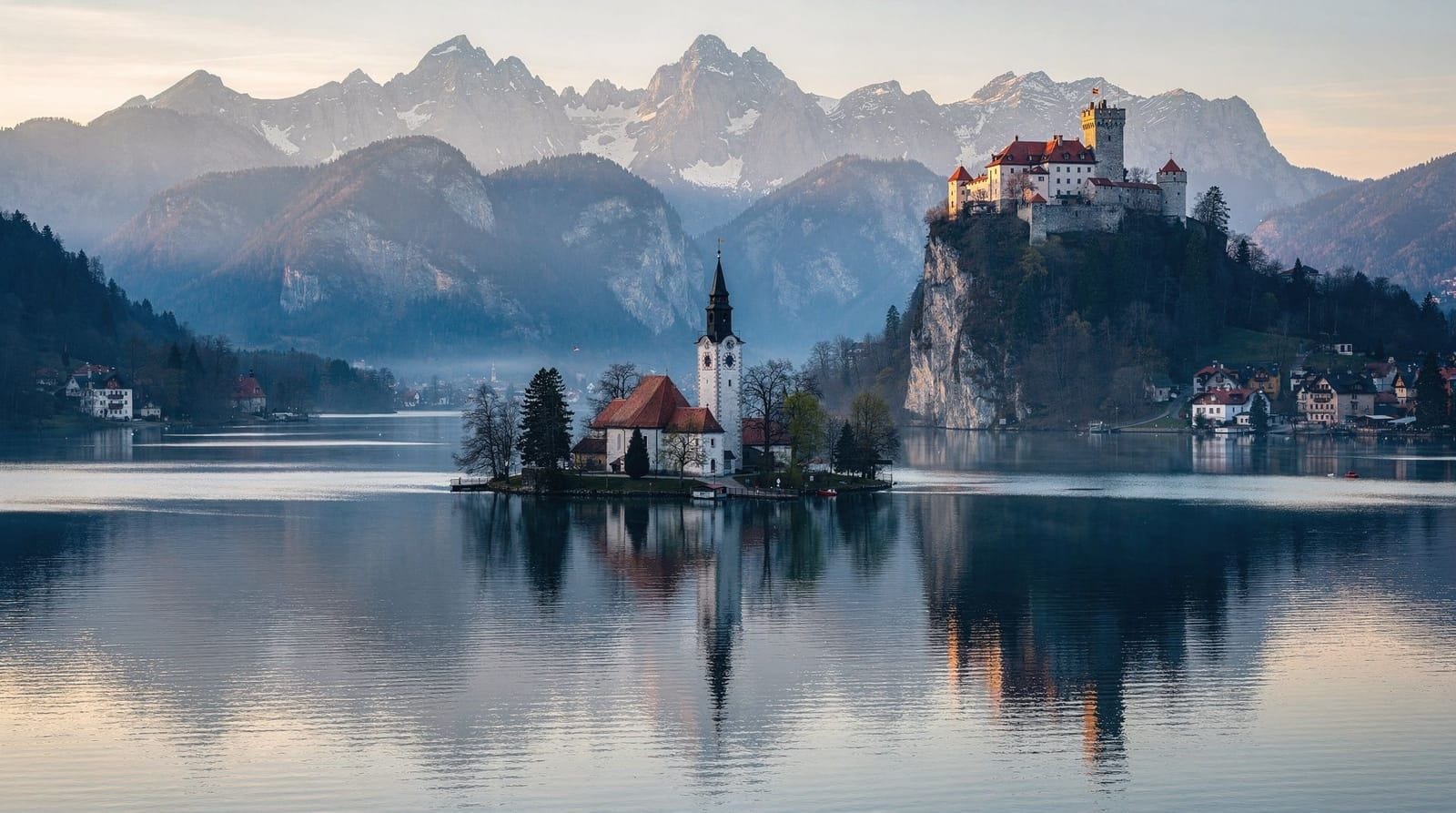
Lake Bled (55 km northwest) is the definitive Ljubljana day trip — see the Lake Bled guide for full details. Postojna Cave (52 km southwest) and Predjama Castle (9 km from Postojna) offer a full underground-and-fortress day.
A combined Bled, Postojna cave and Predjama castle tour from Ljubljana covers Slovenia’s three most popular attractions in one dayPiran (120 km southwest): Slovenia’s jewel of the Adriatic, a Venetian-era harbour town on the tiny Slovenian coast. Worth a full day independently.
Jože Plečnik and Ljubljana’s urban identity
More than any other architect in the 20th century, a single designer shaped Ljubljana’s public space: Jože Plečnik (1872–1957), a Slovenian who trained under Otto Wagner in Vienna and spent the middle decades of his career transforming Prague Castle for Tomáš Masaryk. Returning to Ljubljana in 1921, Plečnik spent the next 35 years redesigning virtually every significant public element of the city — the bridges, the covered market, the national and university library, the cemetery, park pavilions, water fountains, and street furniture.
The result is a city with unusual coherence: every major public space has been deliberately designed rather than accumulated. Plečnik’s aesthetic combines classical references (columns, pilasters, pediments) with vernacular Slovenian craft traditions and art nouveau sensibility. He is to Ljubljana what Gaudí is to Barcelona — the structuring imagination behind a city’s visual character.
Plečnik sites worth seeking:
- National and University Library (Turjaška 1): His masterpiece, built 1936–1941; the dark stone exterior opens to a marble interior staircase ascending from dark to light — a metaphor for knowledge.
- Žale Cemetery (Tomačevska): Designed as a “City of the Dead,” the chapel complex and arcaded galleries are among the most architecturally significant funerary spaces in Europe.
- Triple Bridge: Originally a single span; Plečnik added two pedestrian bridges on each side in 1931.
- Covered Market colonnades (along the Ljubljanica): Elegant arcaded loggia housing the central market.
- Cobblers’ Bridge (Čevljarski most): With the four philosopher sculptures at each end.
Slovenian cuisine and Ljubljana restaurants
Slovenia’s food culture sits at the crossroads of Mediterranean, Central European, and Balkan traditions, producing a distinctive hybrid cuisine that Ljubljana’s restaurants are beginning to present seriously.
Potica is Slovenia’s most recognisable sweet: a rolled dough filled with walnut, tarragon, or honey, cooked for Sunday dinners and celebrations. Žganci (buckwheat groats, the peasant staple) and jota (sauerkraut and bean soup with smoked pork, from the Karst region) represent the Central European-peasant strain. Idrijski žlikrofi (herb-filled pasta from the Idrija region) and prekmurska gibanica (a layered sweet pastry with poppy seeds, cottage cheese, walnuts, and apple from the Prekmurje region) show the range of Slovenia’s regional food traditions.
Ljubljana’s wine lists draw on three main Slovenian wine regions: Primorska (near the Italian border, producing excellent white wines including the orange-wine tradition of Goriška Brda), Podravje (northeastern Slovenia, crisp Riesling and Welschriesling), and Posavje (Cvičk, a light mixed red-white blend unique to Slovenia). The Goriška Brda producers (Movia, Edi Simčič, Marjan Simčič) have international reputations; their wines appear on better Ljubljana wine lists.
Ljubljana as a city break from Croatia
Ljubljana works particularly well as a 2–3 night extension to a Croatian coastal holiday. The contrast between Dalmatian maritime culture and Central European urban culture is striking; Ljubljana feels entirely different from Split or Dubrovnik despite being only 4 hours away.
Practical logistics for a Ljubljana extension:
- Fly into Ljubljana (Jože Pučnik Airport, LJU): Ryanair and Wizz Air connect to London, Manchester, Frankfurt, and other European hubs year-round.
- Drive from Split via the A1 motorway through Zagreb: 4–4.5 hours.
- Take the Arriva or FlixBus from Split or Zagreb to Ljubljana: 4–6 hours.
- The InterRail pass covers Ljubljana-Zagreb train connections.
From Ljubljana, Bled, Bohinj, Postojna Cave, and the Soča Valley are all day-trip accessible — making it a strong base for exploring Slovenia’s extraordinary natural landscapes after a Dalmatian coastal holiday.
Ljubljana’s street art and alternative culture
Ljubljana has a thriving alternative culture scene that goes beyond the formal museum circuit. The Autonomous Social Centre Rog (former bicycle factory, Trubarjeva 72) and the Metelkova Mesto complex represent a sustained tradition of squatter and artist collective culture that has been tolerated — sometimes supported — by the city government for over 30 years.
Street art appears throughout the city’s back streets and the Metelkova area; maps of the street art circuit are available at the tourist office. The quality ranges from commissioned murals to spontaneous work, with the Metelkova area providing the densest concentration.
Alternative music venues: The Klub Gromka and Klub Gala Hala at Metelkova host experimental music, punk, and electronic events from autumn through spring. In summer, outdoor concerts move to Park Tivoli and riverside venues.
Ljubljana as a Zagreb extension
Ljubljana is exactly 2 hours from Zagreb by direct bus (several departures daily, €12–€18) and makes an excellent 1–2 night extension to a Zagreb city break.
Suggested 3-night itinerary combining Zagreb and Ljubljana:
- Night 1–2: Zagreb (Gornji Grad, Dolac market, Museum of Broken Relationships, Jarun lake)
- Day 3 morning: Zagreb to Ljubljana by bus
- Afternoon 3: Ljubljana old town and castle
- Day 4: Lake Bled day trip (organised tour from Ljubljana, €25–€35)
- Evening 4: Ljubljana riverfront dinner and return to Zagreb or onward travel
This uses Ljubljana efficiently as a cultural extension rather than a standalone destination, and allows the Julian Alps experience of Lake Bled without dedicating an entire holiday to Slovenia.
Ljubljana vs Zagreb
Travellers weighing up which capital deserves more time often ask this directly. Zagreb is larger, has more museums and a livelier year-round restaurant scene, and works well as a multi-day base with its own day trips including Plitvice Lakes. Ljubljana is smaller, greener, and more immediately charming at street level — the riverfront café culture and Plečnik’s architecture reward a slow wander more than a checklist. Neither city needs more than 1–2 nights on a first visit; most travellers are well served doing both back to back rather than choosing, since the bus connection between them is only 2 hours.
Frequently asked questions
Is Ljubljana worth visiting if I’m already going to Lake Bled? Yes — the two are complementary rather than competing. Ljubljana gives you café culture, architecture and museums; Bled gives you alpine lake scenery. Most itineraries do Ljubljana as a half-to-full day and Bled as a separate day, either from Ljubljana itself or as a longer loop from Zagreb.
Can I visit Ljubljana as a day trip from Zagreb without a car? Yes, easily. Direct buses and trains run several times daily (around 2–2.5 hours each way), and organised day tours from Zagreb often combine Ljubljana with Lake Bled in a single long day departure.
Top experiences
Bookable activities with verified prices and instant confirmation on GetYourGuide.