Hvar travel guide
Complete guide to Hvar island: beaches, Pakleni Islands, wine trails, where to stay beyond Hvar town, and honest ferry advice from Split.
Split: Blue cave and 5 islands tour
Quick facts
- Best time
- May–June, September
- Days needed
- 3–5 days
- Getting there
- Catamaran from Split (50 min) or car ferry to Stari Grad (2 h)
- Budget per day
- €80–€200+
Hvar is Croatia’s most famous island — and for good reason. It holds the record for the most sunny days per year in Croatia (over 2,700 hours of sunshine annually), boasts a jaw-dropping medieval town rising above a harbour framed by Venetian palaces, and sits within easy reach of some of the Adriatic’s most beautiful sailing waters. It is also, in high summer, one of the most crowded and expensive places in the country. This guide gives you an honest picture of both the appeal and the realities — and how to get the best out of Hvar whatever your budget or travel style.
| Where | Central Dalmatia, ferry from Split |
| Cost | Around €80–€200+/day |
| Time needed | 3–5 days |
| Getting there | Catamaran from Split (~50 min) or car ferry to Stari Grad (~2 h) |
| Best time | May–June and September |
Getting to Hvar
Hvar town has no car ferry link — vehicles must cross to Stari Grad on the northern side of the island. That distinction matters, so read carefully.
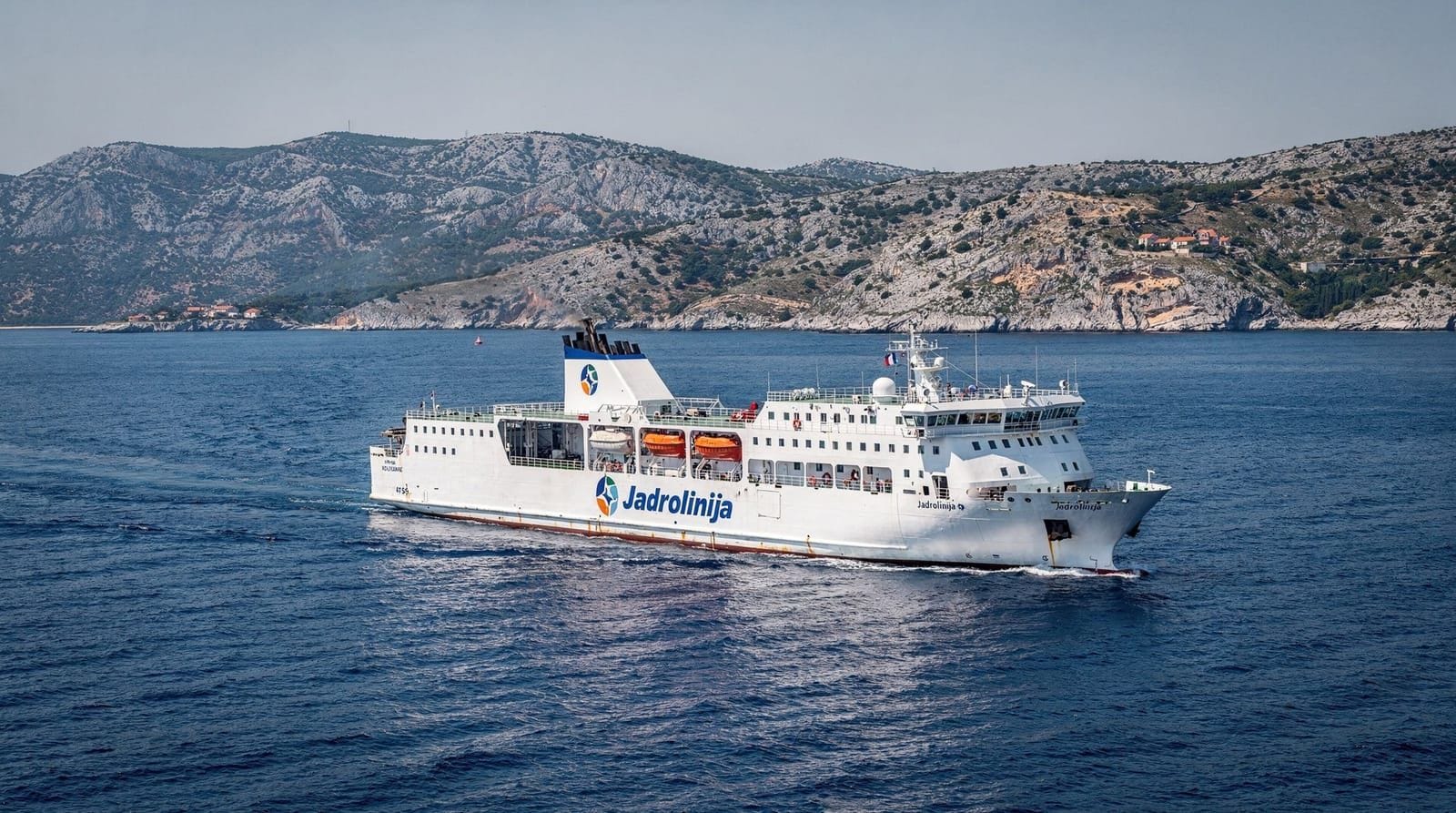
Catamaran to Hvar town (foot passengers only): Jadrolinija and Krilo operate fast catamarans from Split harbour to Hvar town, taking around 50 minutes to 1 hour 15 minutes depending on the service. In summer there are roughly 6–10 catamarans per day. A one-way foot-passenger ticket costs around €7–€10. These catamarans cannot carry bicycles during peak season on some services — check Jadrolinija’s site when booking.
Car ferry to Stari Grad: Jadrolinija runs car ferries from Split to Stari Grad on the north coast of Hvar, a 2-hour crossing. In peak summer there are up to 12 sailings per day. One-way for a car plus driver costs around €40–€55 depending on season; foot passengers pay around €5. From Stari Grad you need a 20-minute bus or taxi ride to reach Hvar town.
From Dubrovnik: Jadrolinija’s coastal catamaran runs Split–Hvar–Korčula–Mljet–Dubrovnik in summer. Journey time from Dubrovnik to Hvar is approximately 3.5–4 hours. Book ahead as this service fills fast.
Pro tip: Book catamarans online at least 2–3 days ahead in July and August. For car ferries, arrive at the Split ferry terminal 1–1.5 hours before departure. In peak season, missing your sailing is a real possibility if you arrive late.
What to see and do in Hvar
Hvar Town
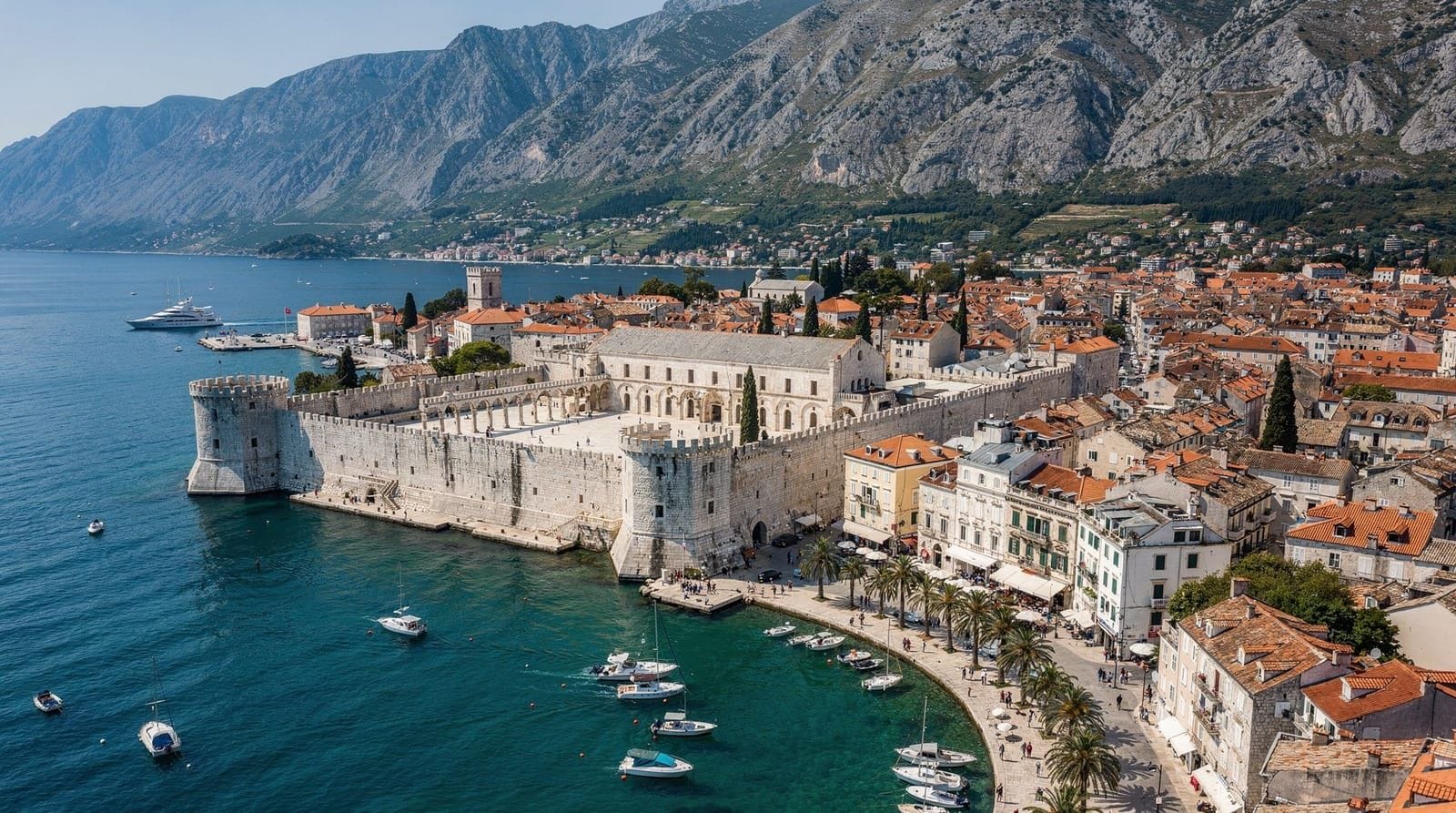
Hvar town is one of the Mediterranean’s most photogenic small cities. The Renaissance main square (Trg Svetog Stjepana) is the largest piazza in Dalmatia and hosts the magnificent St Stephen’s Cathedral, whose bell tower is part of a fortified 16th-century city wall system. The Venetian loggia and clocktower anchor the western end.
At the western end of the same square stands the Arsenal, a large 16th-century galley arsenal built to service the Venetian fleet — one of the finest examples of its kind on the Dalmatian coast. What makes it doubly remarkable is what sits above it: a theatre constructed in 1612, which is considered one of the oldest public theatres in Europe, predating many better-known continental venues. The theatre was built by the city’s citizens for the enjoyment of all social classes, an unusually democratic gesture for the era. Today the Arsenal building houses exhibitions and the theatre space can be visited; stepping inside gives a palpable sense of Hvar’s long history as a sophisticated and prosperous Venetian outpost. Close by, the Bishop’s Treasury is a small museum attached to the cathedral sacristy containing an impressive collection of Renaissance silverwork, liturgical objects, and paintings — understated but genuinely worth the few minutes it takes to look around.
Above town rises the Spanish Fortress (Tvrđava Španjola, also called Fortica), a 16th-century fortification offering panoramic views across the harbour and Pakleni Islands. The 10–15 minute walk up is steep but worth every step. Entry costs around €8.
The narrow lanes behind the main square — grisi — lead past wine bars, boutique galleries and konobas. Morning is the best time to explore before the day-trippers arrive.
Be honest with yourself about peak season: in July and August, Hvar town’s waterfront becomes extremely congested with cruise-ship visitors and yacht crowd. Restaurant prices in the harbour can be 40–60% higher than what you’d pay on nearby Brač or Korčula. If this bothers you, consider basing yourself elsewhere on the island.
Pakleni Islands (Paklinski Otoci)
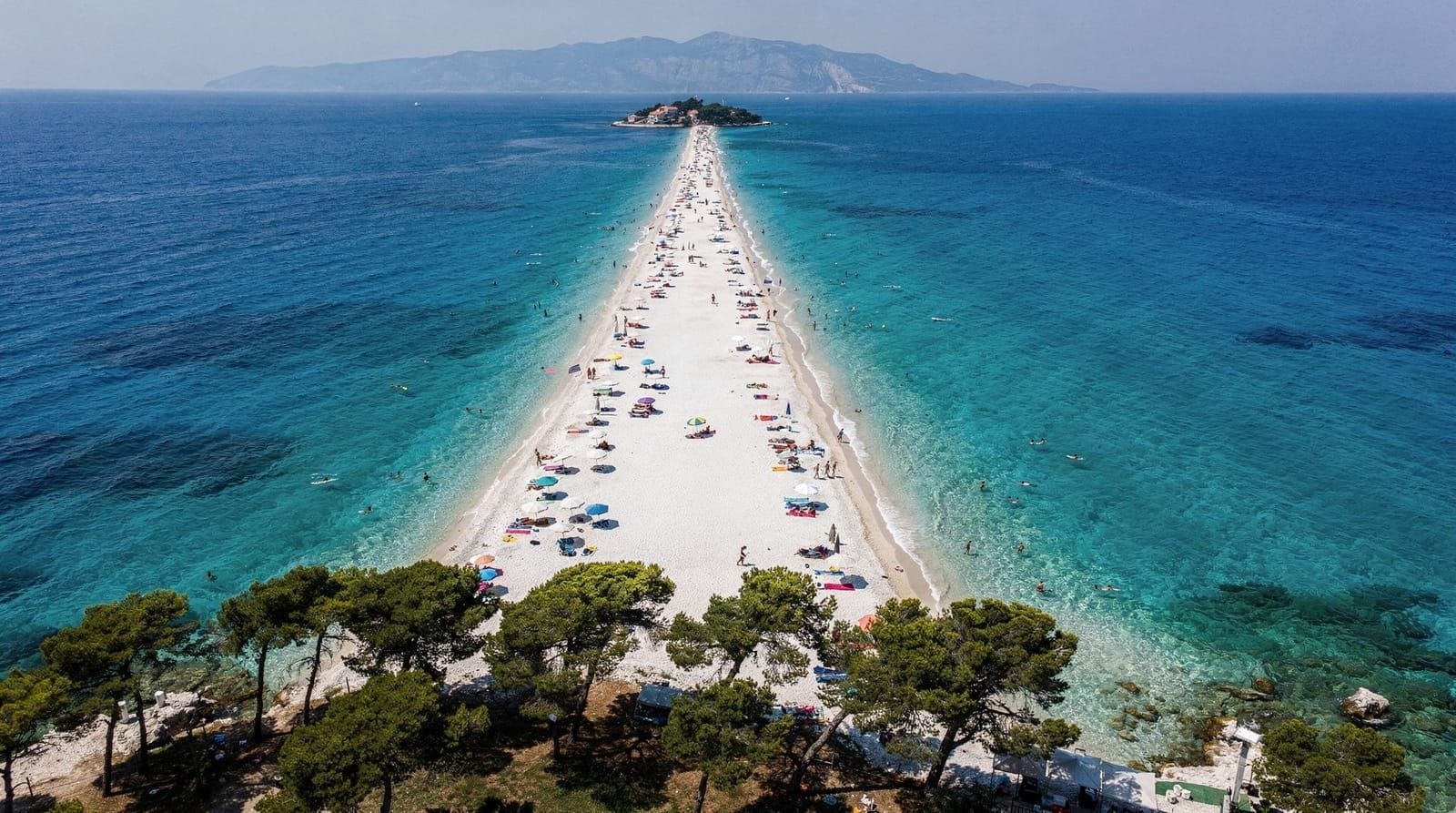
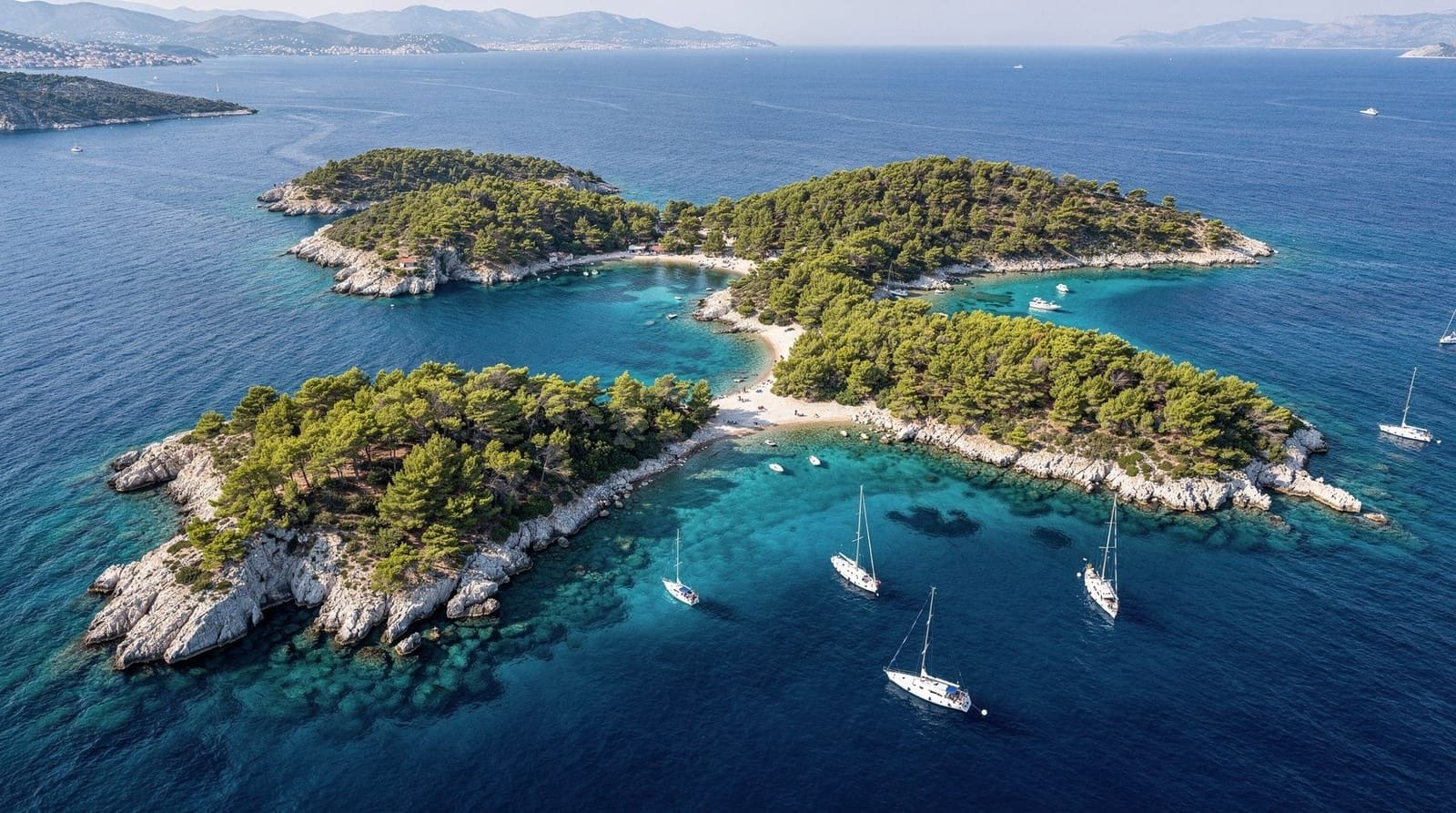
Stretching west of Hvar town, the Pakleni archipelago is a chain of small, wooded islands separated by channels of crystal-clear sea. The name sounds infernal but derives from paklina (pine resin), not the underworld.
The most popular islands to visit are Sveti Klement (with Palmižana bay and a famous restaurant), Marinkovac (home to Stipanska and Zdrilca beaches, plus the clothing-optional Stipanska cove), and Jerolim (entirely naturist). Water taxis from Hvar harbour run every 20–30 minutes in summer (€5–€8 each way).
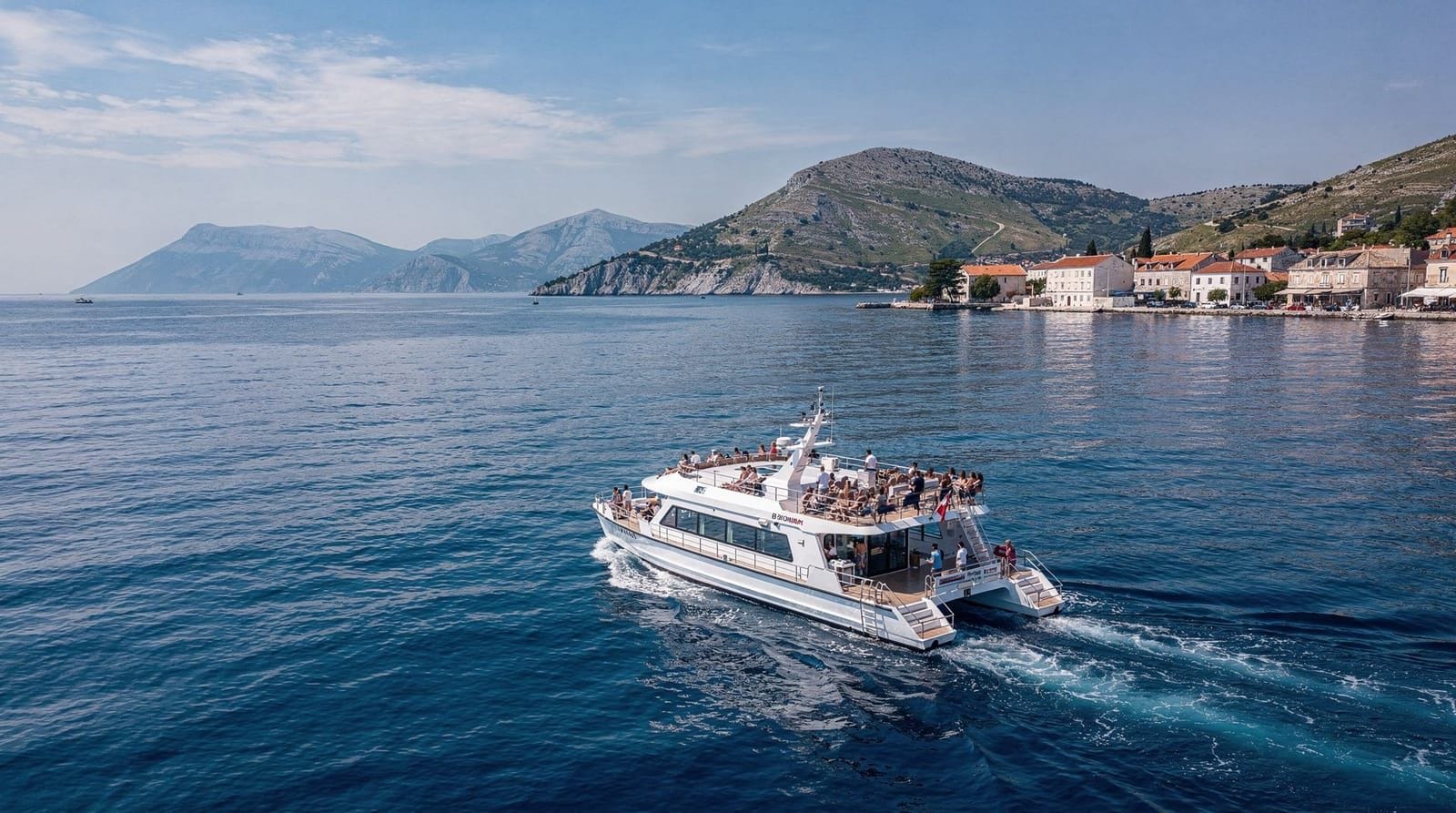
For something more immersive, a private or small-group boat tour lets you reach quieter anchorages that water taxis never visit.
Stari Grad Plain and Stari Grad Town
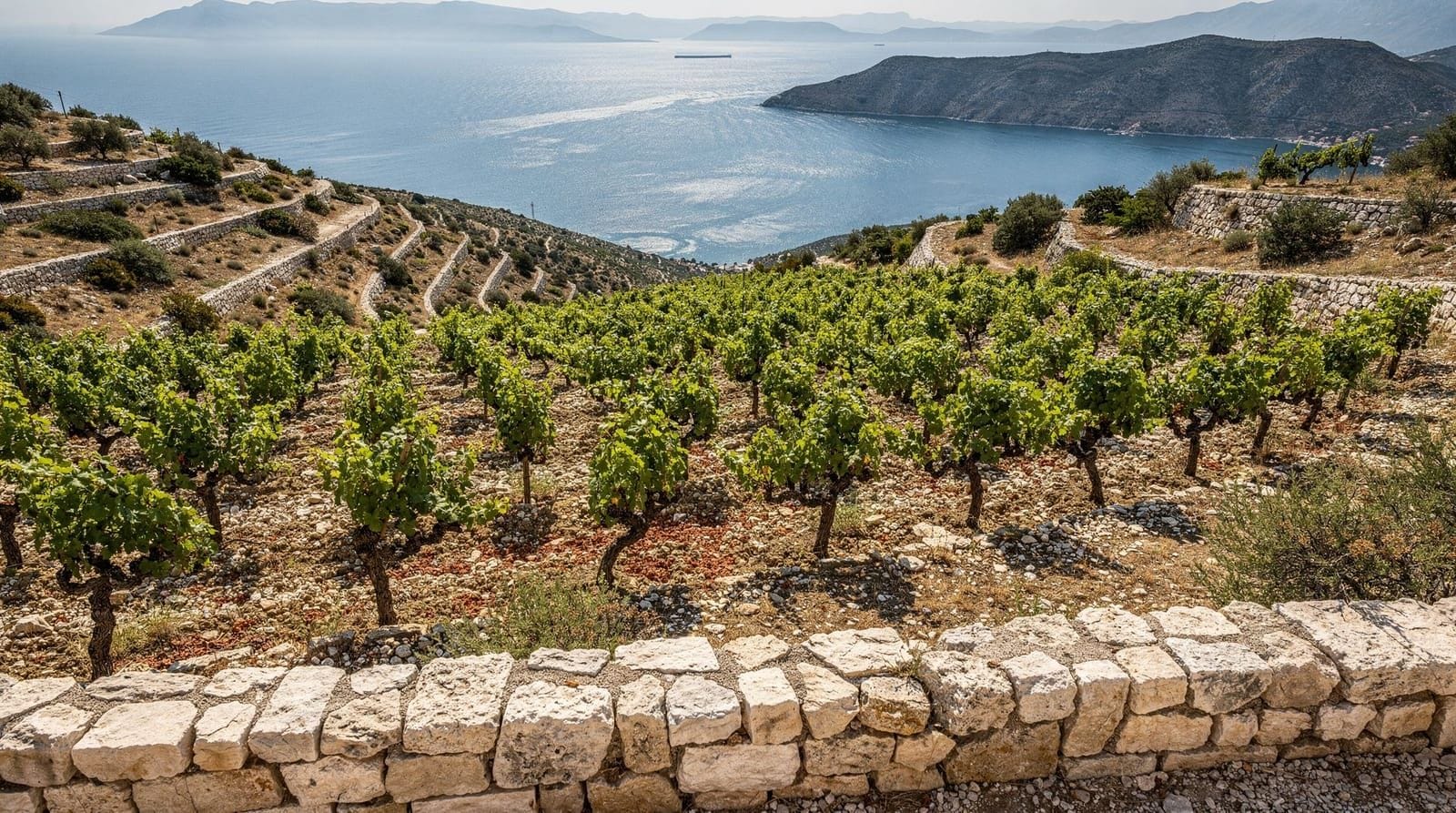
Stari Grad (Old Town) on Hvar’s north coast is often overlooked by visitors who shoot straight to Hvar town, which is a shame. Founded by Greek colonists around 384 BC, it is one of the oldest towns in Croatia. The Stari Grad Plain behind the town is a UNESCO World Heritage Site — a remarkably intact ancient Greek field system still farmed today, essentially unchanged for 2,400 years. Vineyards and olive groves fill the geometric plots divided by dry-stone walls.
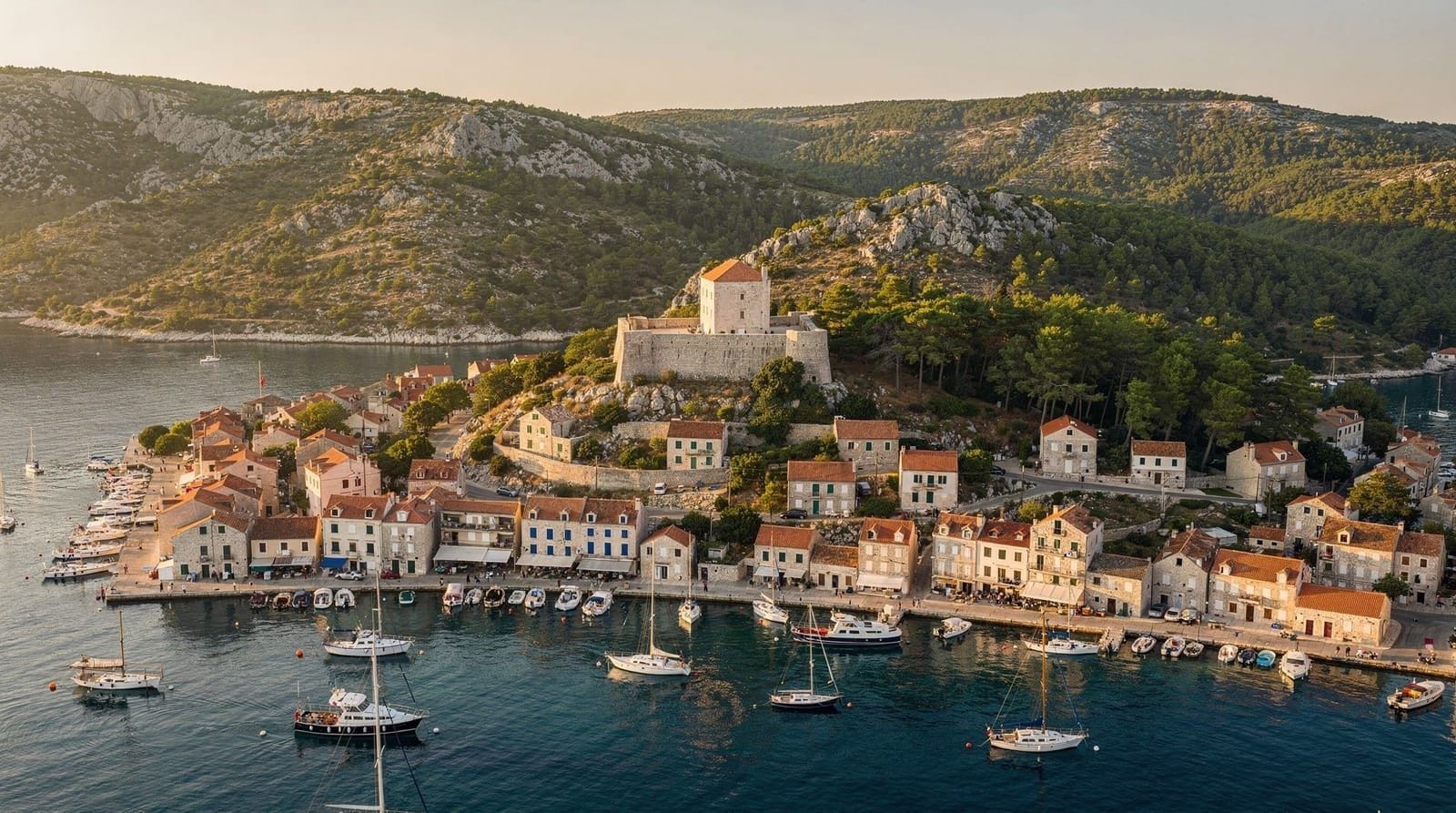
Stari Grad town itself has a lovely Renaissance old town, the Tvrdalj castle (poet Petar Hektorović’s fortified residence), and a fraction of the tourist pressure of Hvar town. It’s an ideal base if you have a car.
Jelsa and the Central Part of the Island
Jelsa, roughly midway along the island’s north coast, is a charming small town with a lively but more local atmosphere than Hvar town. Good konobas, a pretty harbour, and easy access to excellent beaches along the road towards Vrboska make it a practical and calmer alternative base.
Hvar Wine Trail
Hvar has its own indigenous grape variety, Bogdanuša, producing a distinctive dry white wine. The Stari Grad Plain and the villages around Sveta Nedjelja on the south coast are the main wine-growing areas. Several konobas in the interior offer wine tastings with island olive oil and local cheese — a genuinely enjoyable afternoon away from the beach.
Beaches on Hvar
Hvar’s beaches are predominantly rocky and pebbly — Croatia’s Adriatic coast has very few sand beaches. Water shoes are strongly recommended (sea urchins are common).
Dubovica: Perhaps the island’s most beautiful beach — a white pebble cove backed by a 16th-century house, 8 km east of Hvar town along a scenic coastal road. No parking at the beach itself; park above and walk down. Gets busy in peak season but remains less chaotic than in-town options.
Milna: A small cove about 7 km west of Hvar town accessible by a clifftop walk (30–40 minutes) or taxi boat. Calm water, good snorkelling.
Sveta Nedjelja: On the dramatic south coast beneath steep cliffs, this small village has a pleasant pebble beach and some of Hvar’s best konobas. Accessible by road from Jelsa or Hvar town (windy mountain road — quite the drive).
Mekićevica (Jerolim Island): Naturist beach on Jerolim, one of the nearest Pakleni Islands, reached by water taxi from Hvar harbour.
Gdinj: An almost secret long stretch of pebbly coast on the wild south side of the island, 45 minutes from Hvar town by car. You may have it nearly to yourself even in August.
Blue Cave and the 5 Islands Tour from Split
The Blue Cave on the island of Biševo (near Vis) is one of Croatia’s most famous natural wonders. To visit it from Hvar, you typically join a boat tour that combines Biševo with several other islands — Vis, Hvar, Pakleni, and often Biševo Blue Cave, Stiniva beach, and the Monk Seal cave (Zelena špilja / Green Cave). Most of these tours depart from Split and make a stop in Hvar.
Where to stay on Hvar
Hvar town is the highest-cost option and the most convenient for those without a car. Private apartments (Airbnb) run €80–€200/night in peak season; hotels from €150 to €800+ for the most luxurious options. Book months ahead for July.
Notable properties: Hotel Adriana (boutique, rooftop pool), Amfora Hvar Grand Beach Resort (big resort on the west side of town, private beach), and numerous small boutique hotels in the old town lanes.
Timing your booking matters enormously on Hvar. For the first two weeks of July and the whole of August — the absolute peak of the season — aim to secure accommodation 3 to 6 months in advance, particularly for anything in or near Hvar town. For private apartments in Hvar town, local agencies often have properties that never appear on the major platforms and can be more flexible with last-minute availability cancellations; it is worth emailing two or three directly once you have dates confirmed. If you are open to the island’s interior, villas and rooms in villages such as Dol and Brusje offer a genuinely rural experience — stone houses, olive groves, and a pace of life that feels entirely removed from the harbour crowds — at prices that can be 40–60% lower than equivalent Hvar town options. You will need a car, but the drive to the beaches and town takes under 15 minutes.
Stari Grad is a substantially calmer and cheaper option — private apartments from €50–€120/night. Good transport connections (the ferry terminal, regular buses to Hvar town).
Jelsa offers a relaxed, local atmosphere with decent apartment options from €40–€90/night. Best if you have a car.
Vrboska — a tiny village north of Jelsa with a beautiful inlet harbour, almost no tourists, and lovely local konobas. The most authentic experience on the island.
Where to eat on Hvar
Konoba Menego (Hvar town): A true classic in the lanes above the main square. Stone walls, excellent Dalmatian cold cuts, local cheeses, grilled fish. Book ahead in summer — it fills early.
Gariful (Hvar town): The waterfront splurge. Freshest lobster and fish on the harbourfront. Expensive, but the quality is there if your budget allows.
Konoba Stori Komin (Stari Grad): Excellent traditional Dalmatian cooking in a relaxed stone-walled setting. Significantly better value than Hvar town equivalents.
Konoba Kokot (Jelsa): Family-run, honest grilled fish and local wine. The kind of place that feels like a genuine discovery.
Palmižana (Sveti Klement, Pakleni): Worth the water-taxi fare for lunch — the restaurant at Meneghello Estate sits in a botanical garden and serves superb seafood with island wine. Iconic setting.
Best time to visit Hvar
May and early June are arguably the finest months. Temperatures reach 22–26°C, the sea is warm enough for swimming (18–20°C), the lavender fields in the interior bloom (usually June), and restaurants and tours operate at full capacity but at pre-peak prices. Accommodation is 30–50% cheaper than August.
September is the other golden window — sea temperature peaks (~24°C), crowds drop noticeably after the first week, and the island takes on a mellower, more atmospheric feel. Many locals say this is the real Hvar.
July–August is peak season in every sense: maximum heat (30–35°C possible), maximum crowds (Hvar town gets genuinely overwhelming by day), maximum prices. That said, for those who want the full Adriatic summer experience — boat parties, evening atmosphere, all businesses open — this is when the island is most alive. Book everything months ahead.
October sees some businesses closing from mid-month, but the island is beautiful and peaceful. Water stays swimmable until mid-October in warm years.
Winter: Most restaurants and hotels in Hvar town close November–March. Stari Grad and Jelsa retain a small year-round population, but it is very quiet.
Hvar vs Brač vs Korčula
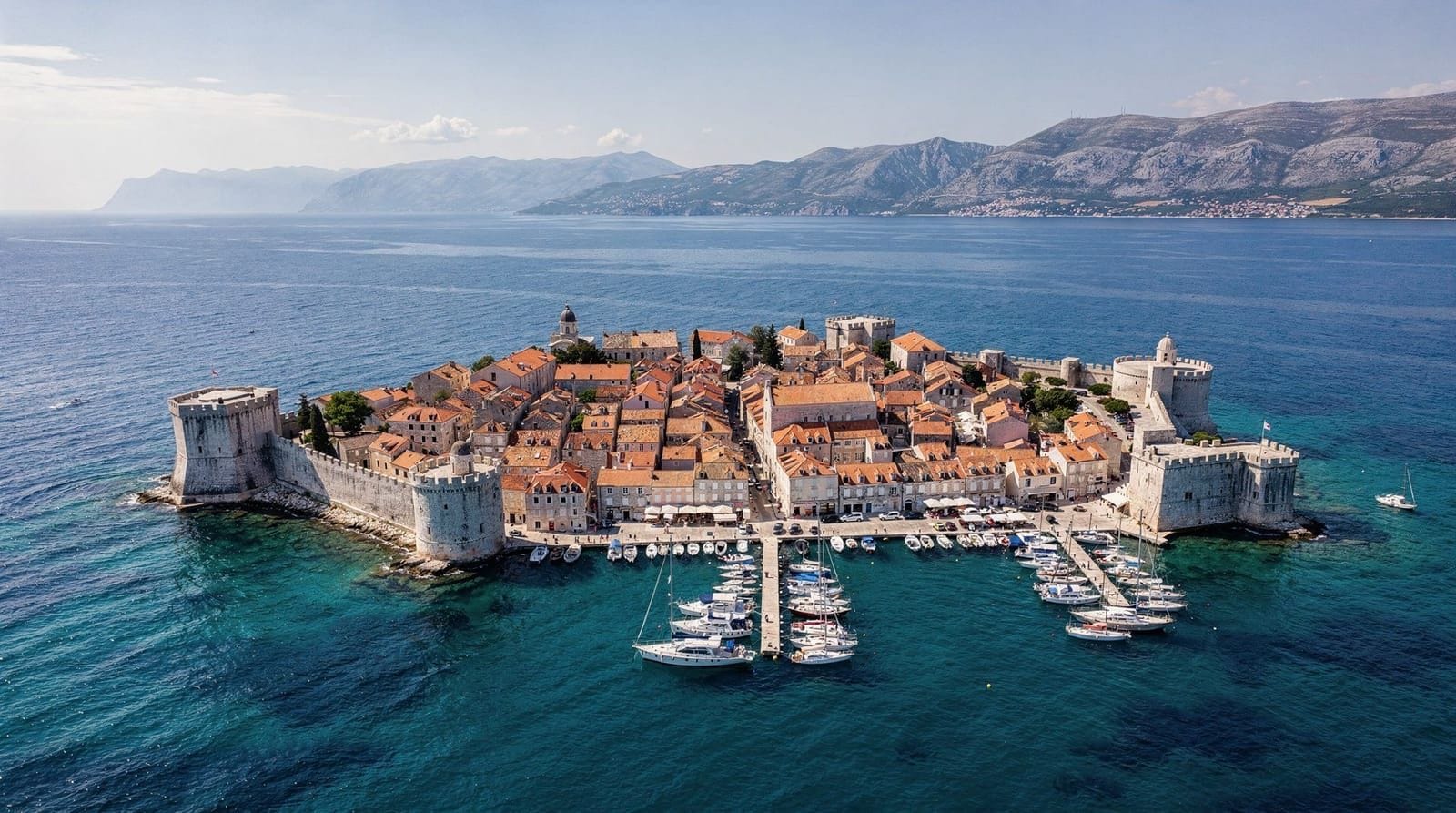
Hvar is the glamorous choice among Dalmatia’s big three islands, but it isn’t automatically the right one. Brač is calmer and 30–50% cheaper, with Zlatni Rat as its own headline beach. Korčula has a comparable medieval old town with a fraction of Hvar’s crowds and prices, plus its own distinctive wine culture. The full comparison, covering which island suits which kind of traveller, is in the Hvar vs Brač vs Korčula guide; for a simpler two-way comparison, see Hvar vs Brač.
Money and connectivity on Hvar
Hvar town’s restaurants, hotels, and larger shops all take cards, but the interior villages and smaller wine cellars around Sveta Nedjelja and Dol often expect cash — bring euros for these. The money in Croatia guide covers realistic daily budgets and where prices run highest. Mobile coverage is strong in Hvar town and along the coast, weaker in the island’s hilly centre; setting up a Croatia eSIM before you arrive (see the Croatia eSIM guide) avoids any gap in connectivity on your first day.
Hiking and walking on Hvar
Beyond the Spanish Fortress climb, Hvar has a network of walking trails through its interior lavender fields and pine forest that most beach-focused visitors never explore. A marked trail connects Hvar town to the hilltop village of Brusje (about 5 km, roughly 1.5 hours each way), passing through classic Hvar terrain — dry-stone terraces, wild rosemary, and views back over the town and the Pakleni archipelago. Brusje itself is a quiet stone village with a couple of simple konobas, worth the walk for lunch before returning by taxi or the same path.
Further east, trails through the interior toward Sveta Nedjelja connect with the dramatic south-coast road, though this route is steeper and better suited to confident walkers with a full day. The lavender fields around the island’s centre bloom in June, and a short interior walk during that window — even just from Hvar town toward Brusje — is one of the more distinctive things to do on the island outside the beach-and-boat routine. Good walking shoes, sun protection, and water are essential; there is minimal shade on the exposed sections.
Top experiences
Bookable activities with verified prices and instant confirmation on GetYourGuide.
Top-rated experiences in Hvar travel guide
Best-rated activities across GetYourGuide and Viator.

Blue Cave & Vis Island speedboat tour from Hvar
- Viator

Rafting on Cetina River Departure from Split or Blato na Cetini village
- Viator

Blue Cave and Pakleni Islands group Tour from Hvar
- Viator

Boat Tour at Delfina Hvar
- Viator

Korcula Buggy (Official) Safari Tour - Local Food & Wine Tasting
- Viator

Blue cave group tour with swimming and snorkelling from Hvar
- Viator