Plitvice Lakes National Park travel guide
Plitvice Lakes — Croatia's UNESCO park: 16 turquoise lakes, waterfalls, and boardwalks. Visit May–June or September. Book tickets early; sells out in
Zagreb: Plitvice Lakes full-day guided tour
Quick facts
- Best time
- May–June and September–October
- Days needed
- 1 full day; overnight for early access
- Getting there
- Bus from Zagreb (2–2.5 h) or Split (3.5–4 h)
- Budget per day
- Ticket €16–€40 (seasonal); half-board accommodation €70–€120
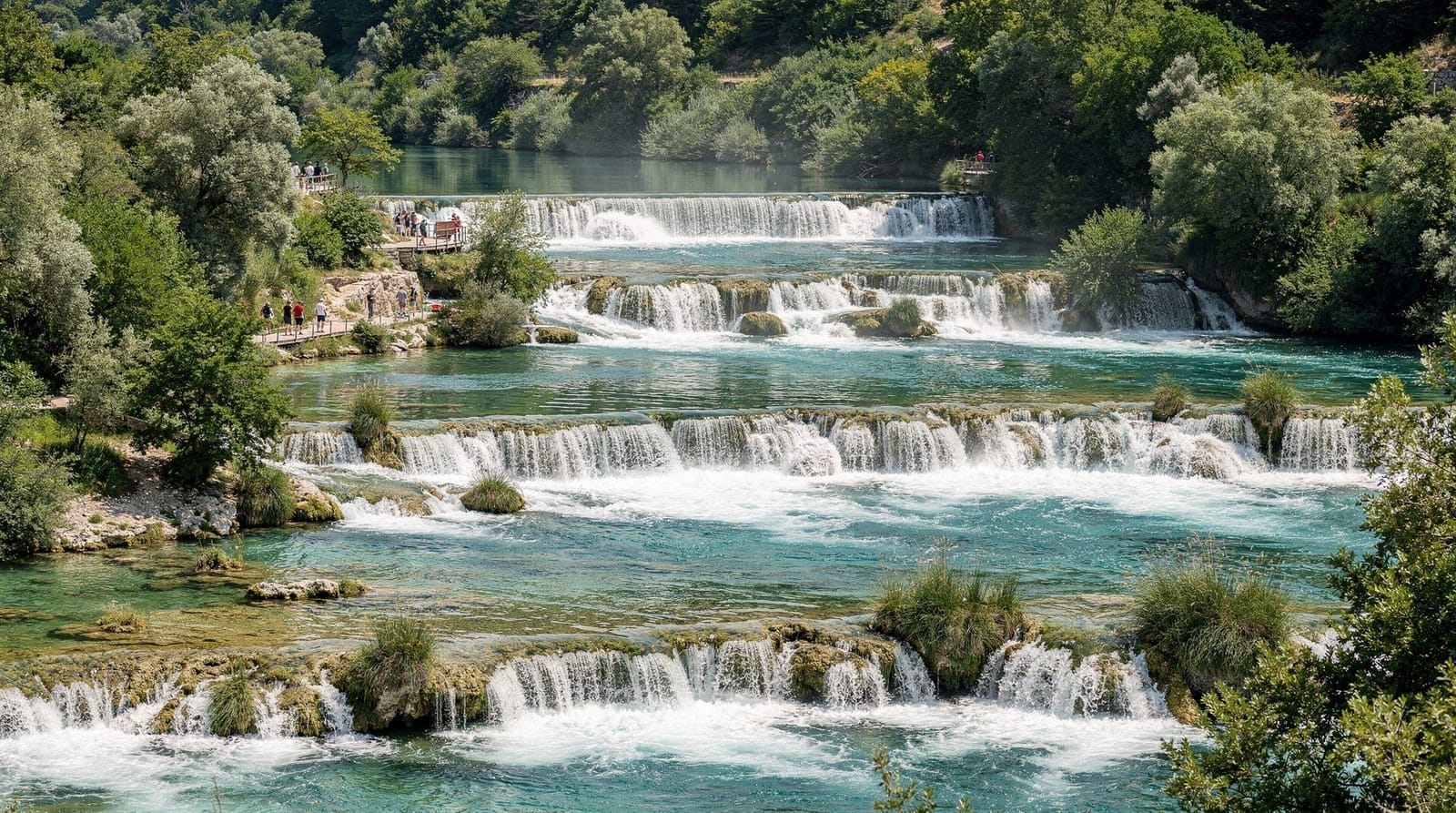
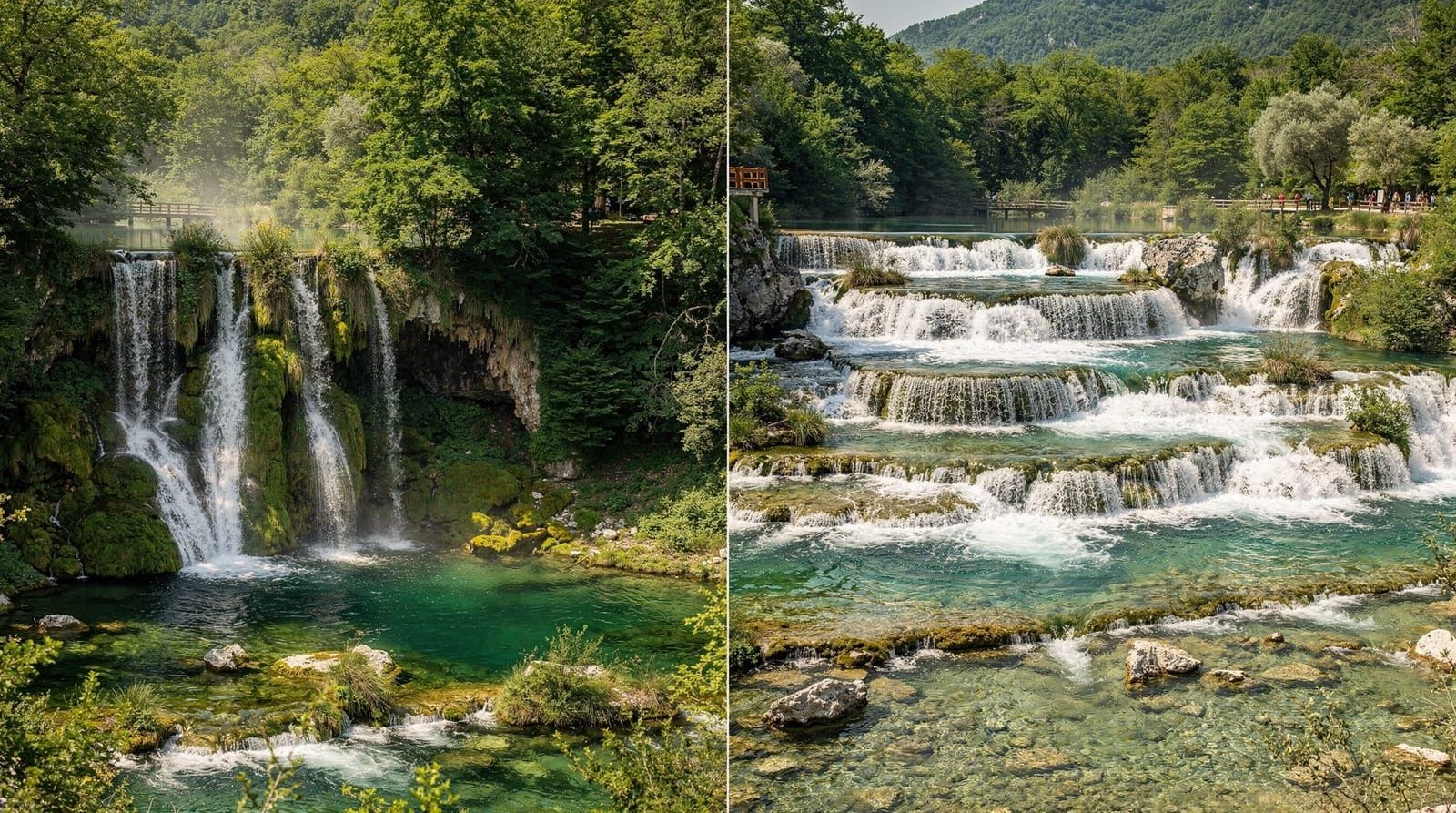
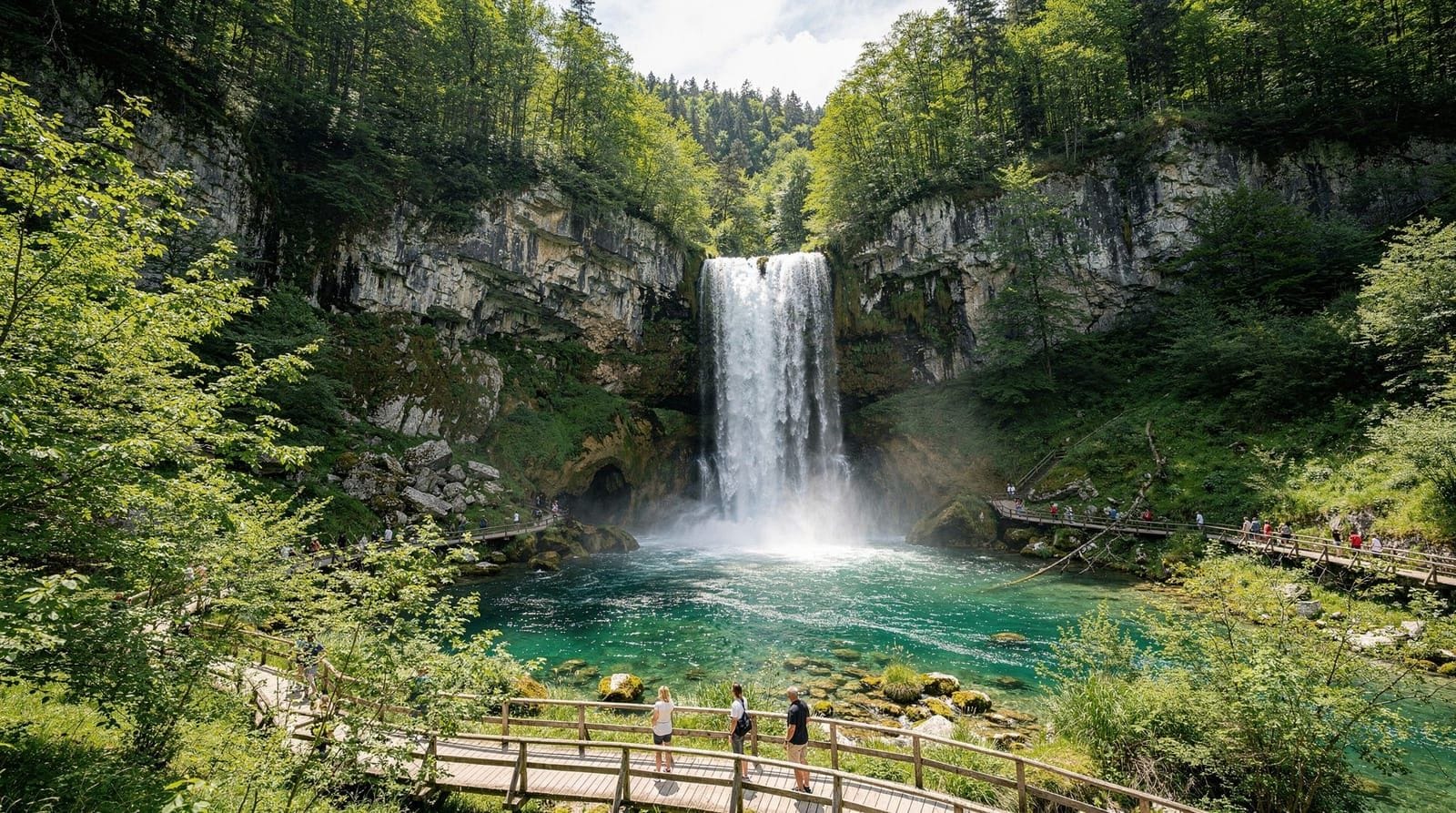
Plitvička jezera — Plitvice Lakes — is the single most visited site in Croatia and one of the most spectacular natural parks in Europe. Sixteen terraced lakes stacked over a 9-kilometre canyon, connected by over 90 waterfalls, with water the colour of turquoise glass shot through with green and blue. The boardwalk trails run directly over the water and alongside the falls, putting visitors in immediate, physical contact with the landscape rather than viewing it from a distance.
This proximity is the park’s great gift and, in peak summer, its problem: nearly 2 million people visit annually, and the narrow boardwalks in July and August can feel like a slow queue. The solution is not to avoid Plitvice — it is unmissable — but to choose your timing and your entrances carefully.
The lakes: Upper and Lower
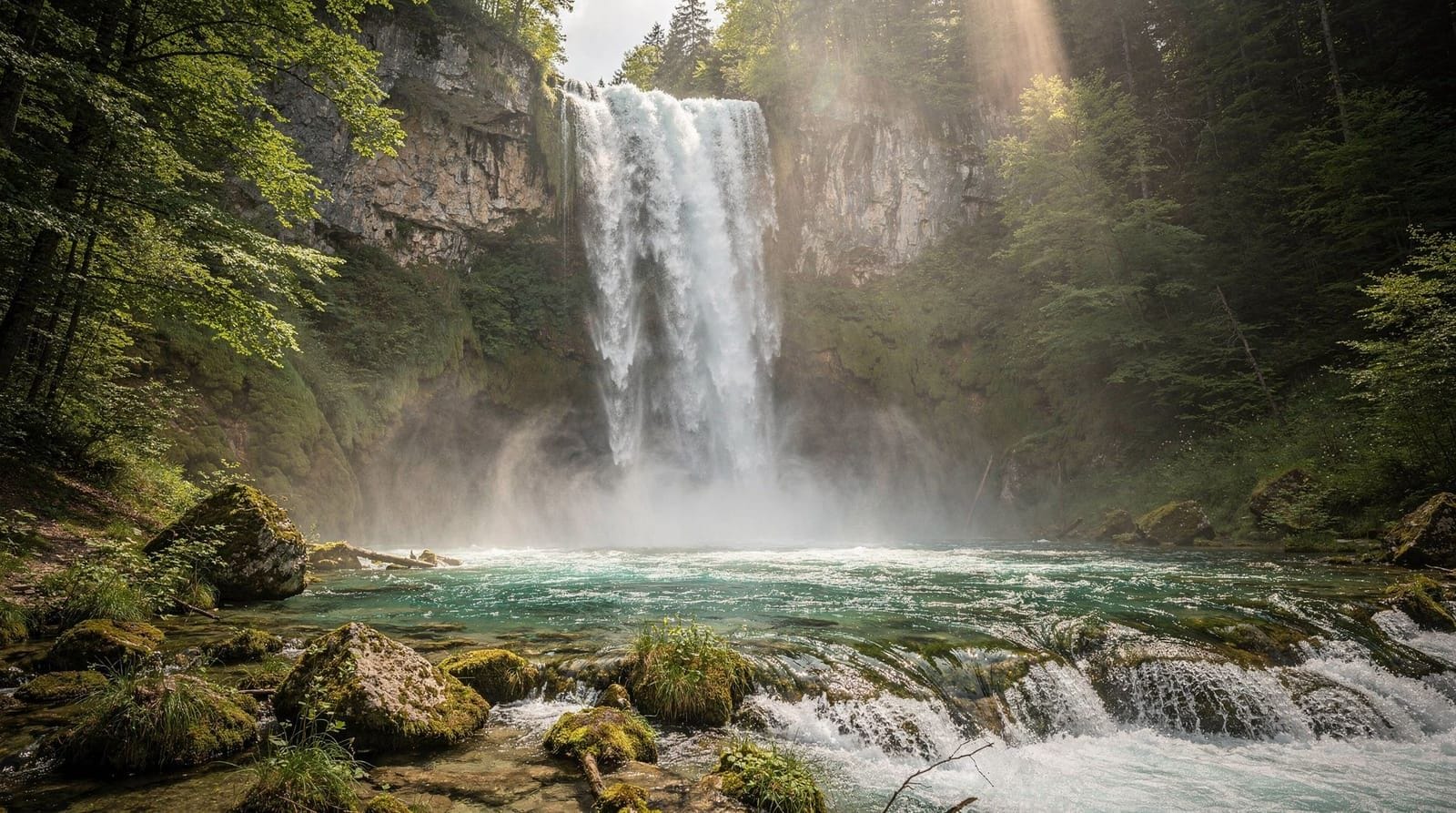
The park divides into Lower Lakes (Donja jezera) and Upper Lakes (Gornja jezera) — the lower section containing the most dramatic scenery (Veliki Slap, the largest waterfall in Croatia at 78 metres, and the famous Jezero Novakovića Brod) and the upper section offering the broader, gentler landscape of the interconnected upper basin.
Entrance 1 (Plitvički Ljeskovac) is the main entrance for the Lower Lakes and Veliki Slap. If you only have one day, start here.
Entrance 2 (Mukinje) is the standard starting point for programmes including the Upper Lakes. Most guided tours and longer routes use Entrance 2.
Both entrances include the same entry ticket (the price varies by season) and the internal transport (electric boats and trains/buses between zones) is included.
Ticket prices and booking
Tickets must be booked online in advance for summer visits — walk-up availability in July–August is essentially zero. Prices are tiered by season:
- Low season (November–March): approximately €16 per adult
- Shoulder season (April–May, October): approximately €23–26 per adult
- High season (June–September): approximately €35–40 per adult
Children under 7 are free. Tickets are available at the official Plitvice Lakes website (np-plitvicka-jezera.hr). Book as early as possible for July and August — tickets can sell out weeks in advance.
Entry timeslots operate in peak season (from around 8am, every 30 minutes). The earliest timeslot gives the best combination of light and crowd conditions.
Trails and routes
The park has several marked routes (A through K, plus H for hiking) that range from 2 to 8 hours. The park authority updates specific routes each season; always check the official website for current recommendations.
Route A or B (2–3 hours): Lower Lakes only. Includes Veliki Slap and the most iconic boardwalks. Good for one-day visitors arriving from the coast.
Route C or E (4–6 hours): Lower and Upper Lakes combined, including the electric boat across Lake Kozjak (the park’s largest lake). The boat ride is a highlight — gliding silently across the still, turquoise water is one of the park’s memorable moments.
Route H (longer hikes, 4–8 hours): For dedicated hikers wanting the perimeter trails with views over the canyon. Less crowded than the main boardwalk routes.
The train/bus shuttle connects Entrance 2 with the boat landing at Lake Kozjak; the electric boats cross Lake Kozjak to the Lower Lakes. This internal transport is included with the ticket.
How to get there
From Zagreb: Bus from Zagreb bus station to Plitvice Lakes takes 2–2.5 hours (around €10–14 one way). The bus stops at both Entrance 1 and Entrance 2. Frequency is good from Zagreb, with several daily departures. Return buses in the evening can fill up — book ahead or be at the stop early.
From Split: Around 3.5–4 hours by bus north toward Zagreb. The bus stops at Plitvice on the main Zagreb–Split road. Alternatively, many visitors use Plitvice as a stopping point on the Zagreb–Split transfer.
From Zadar: Around 2–2.5 hours by car or bus. Zadar is the third main access point, with organised day tours available from the city.
By car: Plitvice is on the main A1/E71 motorway corridor between Zagreb and Split. Exit at Grabovac or Plitvice Lakes and follow signs to the respective entrance car parks (paid parking included in ticket). It’s a natural stop on most 7-day or 10-day Croatia itineraries between the two cities.
Plitvice is one of Croatia’s core national parks and often features on any first-time Croatia planning list; see the Plitvice vs Krka guide if you’re deciding between the two, or the national parks and waterfalls route if you want to see several in one trip.
Best time to visit Plitvice Lakes
May–June is consistently the recommended window: spring snowmelt means the waterfalls are at their most powerful and voluminous, temperatures are comfortable for walking (18–24°C), and crowds — while building — have not yet reached peak intensity.
September–October is the other sweet spot: the autumn colour in the beeches and maples transforms the canyon into a warm palette of orange and gold, the water levels are lower (waterfalls less thunderous but still beautiful), and visitor numbers drop significantly after the school holiday season ends.
July–August is the most challenging: queues at the boardwalks, maximum prices, and crowded buses. If you must visit in peak summer, book the earliest possible entry timeslot and be at the entrance gate 15 minutes before your slot.
November–March: The park is open but many boats and trails are reduced. Ice and snow can make boardwalks slippery but also extraordinarily beautiful. Low-season prices apply.
Where to stay near Plitvice
The park’s own hotels — Hotel Jezero, Hotel Plitvice, and Hotel Bellevue — are located within or adjacent to the park, giving the advantage of early morning entry before day-trippers arrive. They are the best choice for serious photographers or anyone wanting to experience the park at dawn.
The village of Rastoke near Slunj (30 km from Plitvice on the road toward Zagreb) is a charming mill-village on waterfalls and is often combined with a Plitvice overnight — the Rastoke day trip guide covers the combination.
Private guesthouses and apartments in the surrounding villages (Plitvički Ljeskovac, Mukinje) offer good-value options close to the park.
What to skip and tourist trap warnings
The promenade around the main Sastavci viewpoint in July–August between 10am and 4pm — this is the single most congested point in the park. If you arrive after 10am in July, expect a slow shuffle rather than a walk. The solution is timing: 8am entry gives you 90 minutes before the tour groups arrive.
The park restaurants at lunchtime — the in-park restaurants (at both entrances and near the boat landing) are overwhelmed by group bookings at 12–2pm. The food is adequate but the queues are not. Pack your own lunch and eat at a quieter spot on the trail, or plan to eat after 3pm when the worst of the rush has passed.
Overloading your day — the park maps make it look like more is always better. For a single-day visit, one well-timed route (either Route A for Lower Lakes or Route C for combined) done properly is more satisfying than rushing through a longer route. The beauty is best absorbed slowly.
Entrance 2 in the morning and Entrance 1 in the afternoon (or vice versa): The shuttle buses and boat cross the lake to connect the two sections; entering from the less-busy direction in the morning avoids the worst queues. Entrance 1 (Lower Lakes direct) gets the most early-morning traffic; Entrance 2 (Upper Lakes start) is often quieter before 10am.
Practical tips
Footwear: Trainers or hiking shoes, not sandals — the boardwalks can be wet and slippery.
Crowds: The boardwalk around the Lower Lakes’ most famous viewpoints (Sastavci waterfall area) is the most congested. Head here first thing, or visit in the late afternoon after coach groups depart.
Food: The park has several restaurants (included facilities). Quality is acceptable rather than outstanding. Consider bringing your own snacks and lunch if you want to eat well.
Photography: The colour of the water photographs best in overcast light — harsh midday sun bleaches the turquoise. Late afternoon light through the trees above the falls is excellent.
No swimming: Swimming in the lakes is strictly prohibited within the park to protect the ecosystem.
Photography guide
Plitvice is one of Europe’s most photographed natural sites, and the images you see online create expectations that can be hard to live up to in July at 11am with 5,000 people on the boardwalk. Here is how to get photos worth keeping:
Best light: The canyon microclimate means soft, diffuse light for most of the morning — ideal for photographing water. Harsh midday sun (11am–3pm) bleaches the turquoise and creates harsh contrast between shaded water and bright rocky edges. Arrive at 8am when the light is gentle and the boardwalks are at their least crowded.
Overcast vs. sunny days: Counterintuitively, a lightly overcast day is better for photographing the lakes than a bright sunny day. Cloud cover creates even light that renders the turquoise colour accurately. Direct sun from above creates specular reflection that can wash out the colour. The most famous Plitvice photos were typically taken in diffuse light.
Best spots for photography:
- The Sastavci waterfall area at the junction of the Upper and Lower Lakes — the falls converge from multiple directions and can be framed in multiple ways.
- The viewpoint above Veliki Slap — the 78-metre falls are best seen from the path above, not the base (the spray at the base is heavy and limits visibility).
- Lake Kozjak from the boat — the electric boat crossing gives a mid-water perspective unavailable from the shore.
- The boardwalks in the Lower Lakes just after the entrance where the water is shallow enough to see individual stones through the turquoise — this clarity photographs exceptionally well.
Equipment: A wide angle lens (16–35mm equivalent) captures the canyon scale better than a standard zoom. A polarising filter removes surface reflection and deepens the turquoise considerably. A lightweight tripod is permitted in low season; in peak season it creates a hazard on the narrow boardwalks.
Avoid: The main Sastavci viewpoint platform between 10am and 3pm in July–August — it becomes so crowded that waiting for a clear shot takes 10–15 minutes per attempt.
Detailed trail descriptions with timings
Understanding the routes prevents wasted time and missed highlights. The following timings are for comfortable adults; add 25–30% for families with young children.
Route A — Lower Lakes (starting Entrance 1):
- Duration: 2–3 hours
- Distance: approximately 3.5 km
- Highlights: Veliki Slap, the lower canyon boardwalks, Sastavci junction
- Character: The most dramatic scenery, the narrowest boardwalks, the most concentrated visitor flow
- Tip: Do this first if you have limited time — it contains the park’s most iconic images
Route C — Lower and Upper Lakes combined (starting Entrance 2):
- Duration: 4–5 hours
- Distance: approximately 8 km
- Highlights: Upper Lakes panorama, electric boat crossing of Lake Kozjak, then all of Route A
- Character: Begins at the open upper basin (less dramatic but less crowded) and moves toward the canyon for the finale
- Tip: The boat crossing (Lake Kozjak, 15 minutes) is a highlight in itself — the silence of the electric motor in the middle of the turquoise lake
Route H — Hiking (perimeter, starting Entrance 2):
- Duration: 4–8 hours depending on sub-route
- Distance: 12–20 km
- Highlights: Ridge views over the canyon, the park perimeter with bears and deer (more active in early morning), quieter trails
- Character: For dedicated hikers; leaves the boardwalks mostly behind. The canyon viewpoints from the ridge above the Lower Lakes are magnificent and far less visited than the valley floor
- Tip: Start by 7am in summer; take plenty of water. The ridge trails in October colour are exceptional
Combined itinerary with Rastoke: The mill-village of Rastoke near Slunj (30 km north of Plitvice on the Zagreb road) can be combined with a Plitvice day to add a second waterfall-and-mill experience at very different scale. Plan to visit Rastoke in the morning (1–2 hours, including lunch at the mill-restaurant), then drive south to Plitvice for the afternoon (arrive by 2pm for the late afternoon light and fewer coach groups).
FAQ
Is Plitvice worth the crowds in peak summer? Yes, if you time it right — book the earliest entry timeslot and be at the gate 15 minutes early; the first 90 minutes before tour groups arrive are dramatically calmer than midday. If your dates are flexible, May–June or September–October avoid the worst of it entirely.
Can I swim at Plitvice Lakes? No — swimming is strictly prohibited throughout the park to protect the ecosystem. For a national park where swimming is allowed, Krka National Park permits swimming at its main waterfall (seasonal restrictions apply).
Top experiences
Bookable activities with verified prices and instant confirmation on GetYourGuide.