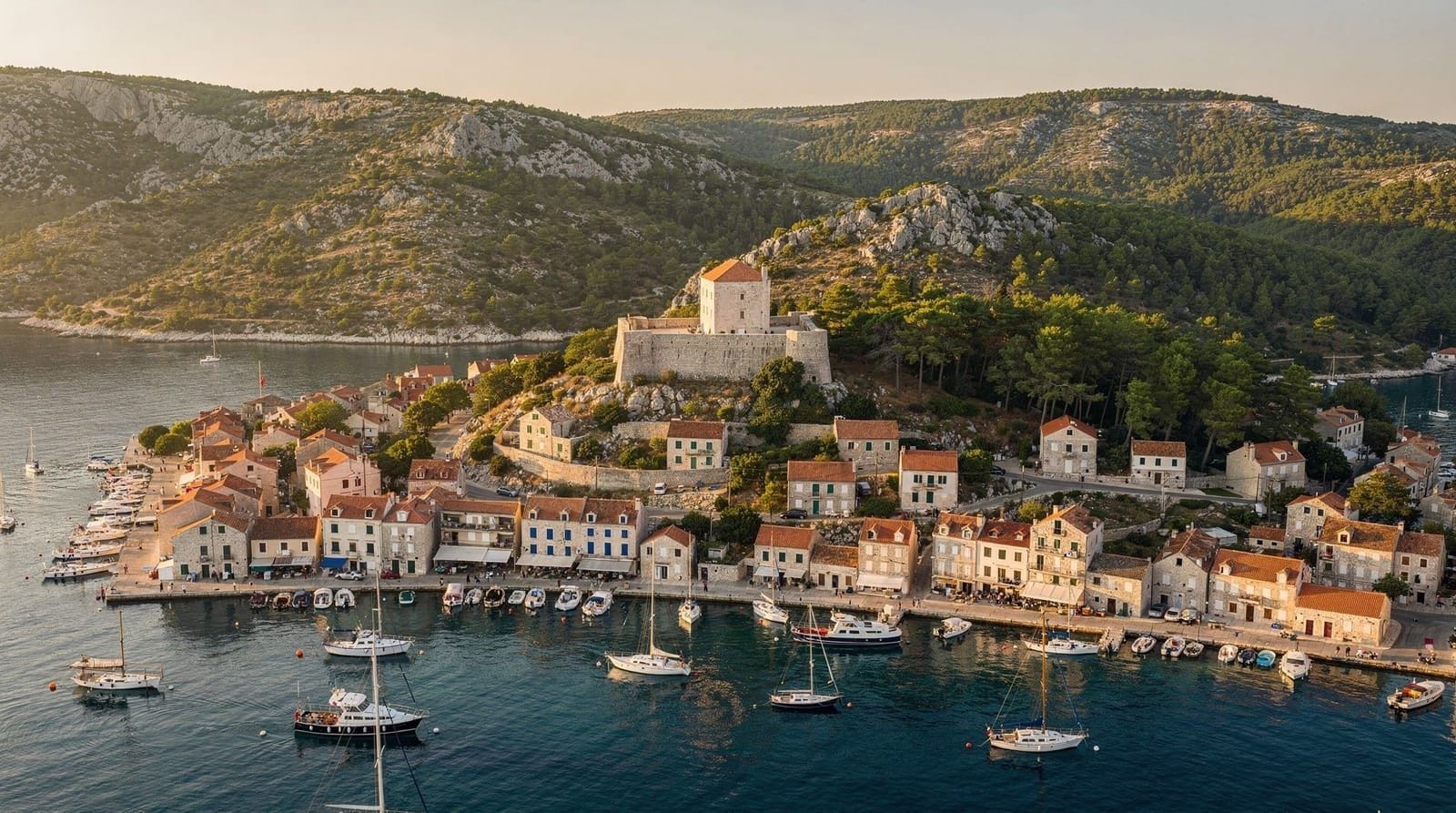
Split travel guide
Complete guide to Split — Diocletian's Palace, island ferry hub, beaches, food markets and honest tips for Croatia's most liveable coastal city.
Split: Group walking tour of old city and Diocletian's Palace
Quick facts
- Best time
- May–Jun & Sep–Oct
- Days needed
- 2–3 days
- Getting there
- Split Airport (SPU), 25 km north
- Budget per day
- €55–€160
Split is Croatia’s second-largest city and, for most visitors, the gateway to the Dalmatian islands. What makes it exceptional is not just geography but layering: a Roman emperor’s retirement palace that became a medieval town that became a living, breathing city of 180,000 people, none of whom seem remotely bothered that their apartment blocks abut 1,700-year-old walls. Unlike Dubrovnik, Split is not a museum. Fishermen argue over coffee at Vestibul, and teenagers kick footballs in the Peristyle courtyard. That unselfconsciousness is its greatest attraction.
Getting to and around Split
By air: Split Airport (SPU) at Kaštela, 25 km north, connects to European hubs year-round with budget carriers. A bus shuttle (around €8) runs to the city bus station on the Riva waterfront promenade. Taxis cost €25–€35.
By bus: Split is the main Dalmatian bus hub. Buses run hourly to Dubrovnik (4.5 hours, €15–€22), several times daily to Zadar (2.5 hours, €12–€18), and overnight to Zagreb (5–6 hours, €15–€25). The bus station is next to the ferry terminal on the harbour.
By ferry: Jadrolinija and other operators run ferries and catamarans to Hvar (1 hour car ferry; 45-minute catamaran), Brač (50 minutes), Vis, and Korčula. A fast catamaran from Dubrovnik takes 3.5 hours via Hvar and Korčula. The ferry terminal (Trajektna luka) is right next to the bus station — supremely convenient.
Within the city: Almost everything in old Split is walkable. City buses serve Meje, Žnjan, and Solin. The waterfront Riva is the natural gathering point.
What to see and do in Split
Diocletian’s Palace
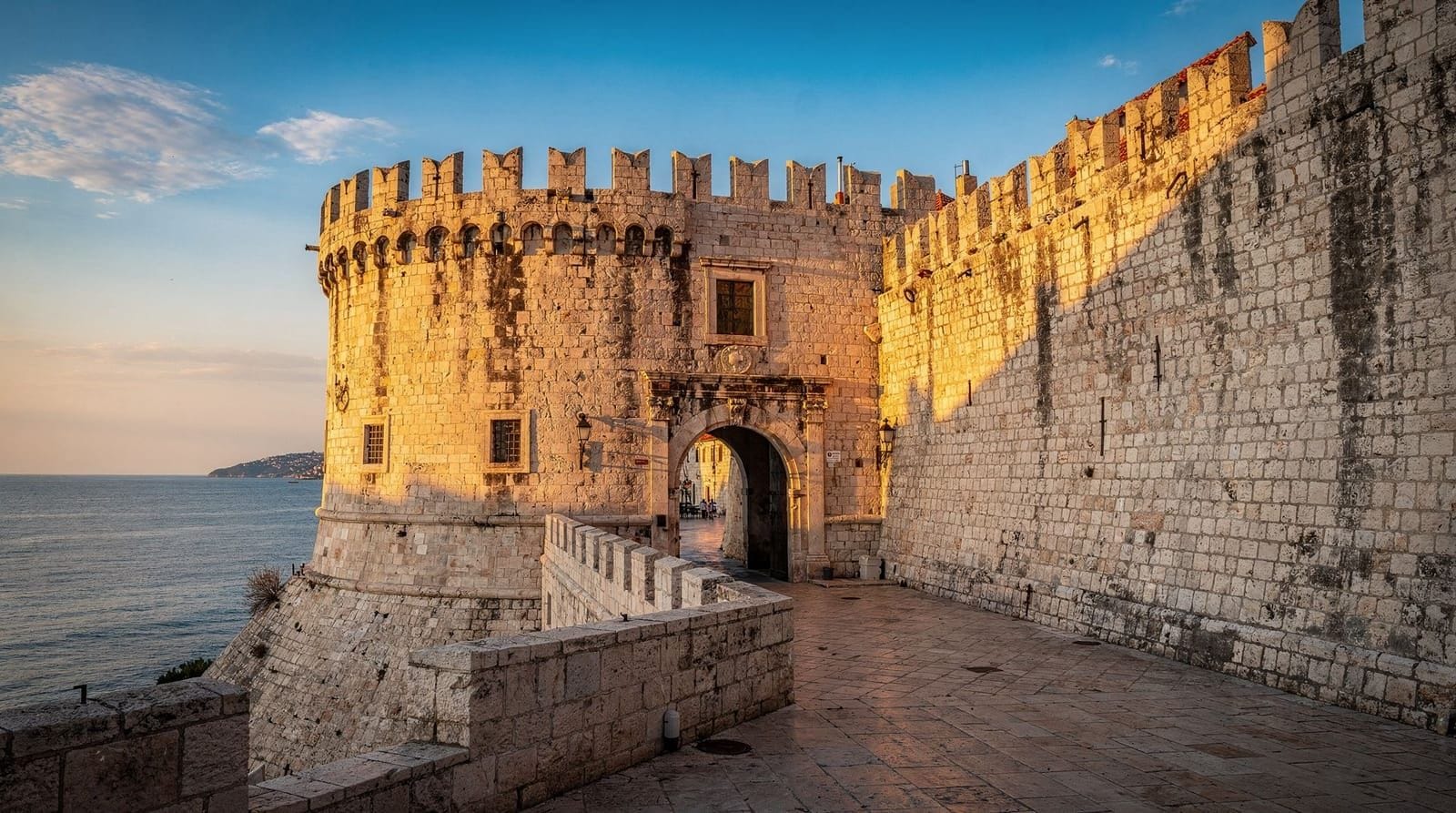
The UNESCO-listed palace is not a static monument but an inhabited neighbourhood of some 3,000 people. Emperor Diocletian built it between 295–305 AD as his retirement complex; after the fall of Rome, refugees from nearby Salona moved in and simply repurposed every arch and cellar as living space. Today the palace walls contain hotels, restaurants, apartments, nightclubs, and a cathedral that began life as Diocletian’s mausoleum — arguably the ultimate irony in Mediterranean history.
The Peristyle (the ceremonial central courtyard) is the social heart of the palace and free to enter at any hour. The basement cellars (Vestibul, accessed from the Riva) give the best sense of the palace’s Roman engineering and sometimes host exhibitions; entry costs around €5.
A guided walking tour of the palace puts the layers of 1,700 years of history into contextCathedral of Saint Domnius
Built inside Diocletian’s octagonal mausoleum, this is one of the oldest cathedrals in the world still in regular use. The cathedral treasury holds remarkable medieval goldsmithing; the adjacent bell tower offers excellent views over the palace rooftops and harbour. Combined entry around €8.
Game of Thrones sites in Split
Split served as Meereen and other Essos locations in Game of Thrones seasons four and five. The palace cellars doubled as the Dragon Pit, and Klis Fortress (15 km north of Split, accessible by bus or tour) served as the slaver city of Meereen’s exterior. The fortress itself, perched above a mountain pass, has a 2,000-year history of its own and is well worth visiting independently.
The Split Game of Thrones tour combines Klis Fortress and palace filming locationsMarjan Hill
The forested peninsula rising west of the old town is Split’s green lung, threaded with walking and cycling trails. The 15-minute climb to St. Michael’s Chapel viewpoint gives the most complete panorama of the city and harbour. The western tip has small beaches — Bene is the best, pebble and pine-shaded, popular with families.
Riva waterfront
The palm-lined Riva is where Split’s social life plays out in real time: coffee at sunrise, fishermen selling the morning catch, aperitivo at sunset. The Sunday morning green market behind the Riva sells local produce, cheese, and figs. The fish market (Ribarnica) inside the palace walls is one of the most evocative markets in Croatia — buy smoked tuna, fresh oysters from the Mali Ston beds, and sea bass at a fraction of restaurant prices.
Island and boat excursions from Split
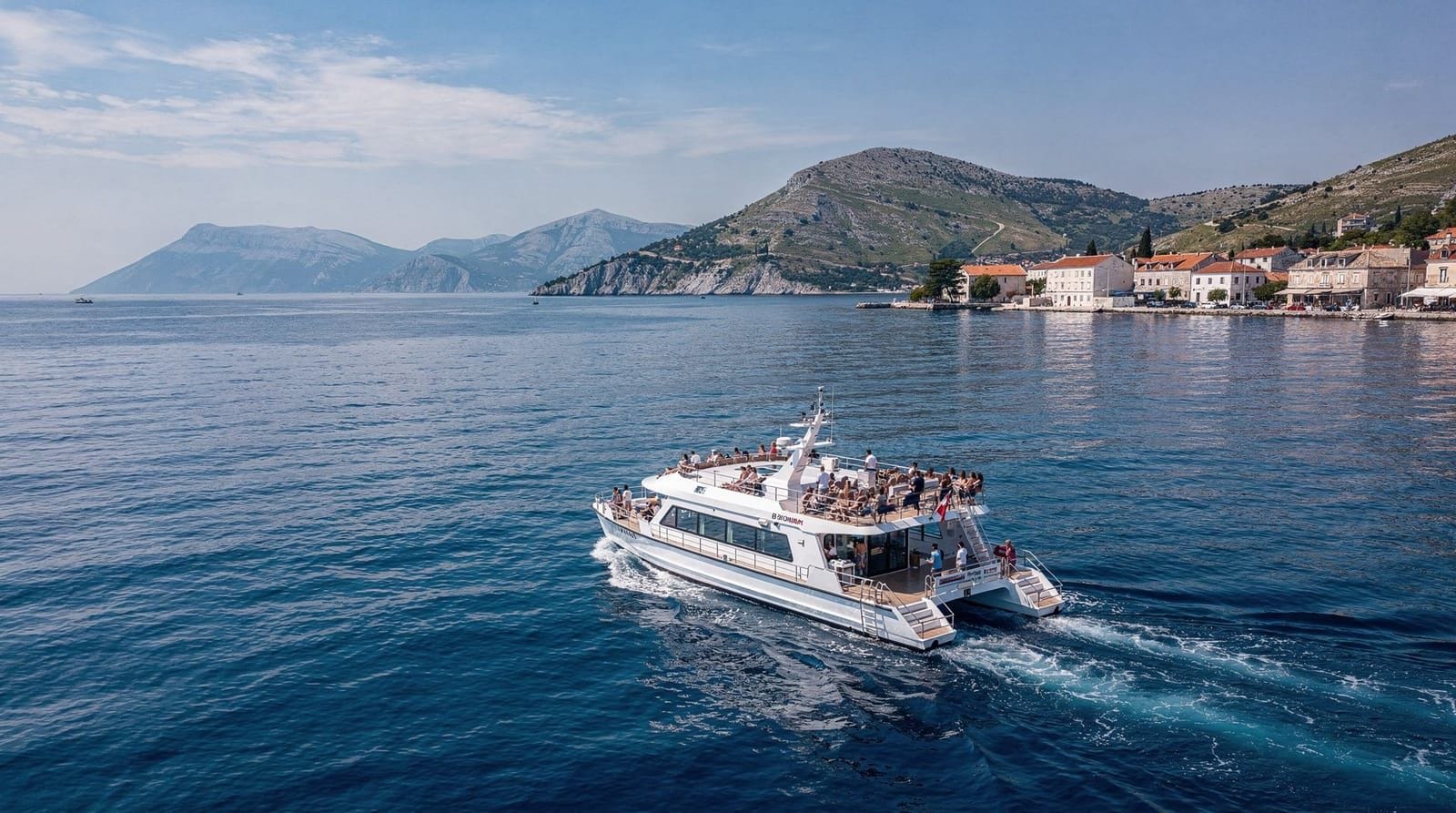
Split is the launch point for two of Croatia’s most famous boat trips. The Blue Cave and 5 Islands tour (departing from the Riva or harbour) visits the Blue Cave on Biševo, the Green Cave, Stiniva cove on Vis, Pakleni Islands, and the town of Hvar — a remarkable day on the water.
The Blue Cave and 5 Islands tour is the most popular full-day boat excursion from SplitWhere to stay in Split
Old town / Diocletian’s Palace: The most atmospheric location. Hotel Vestibul Palace (steps from the Peristyle) occupies parts of the original Roman structure; doubles from €180. Numerous boutique apartments inside the palace walls offer the authentic experience of sleeping in a Roman ruin (at modern prices).
Meje / Zvončac: A quiet residential area west of the centre, 20 minutes’ walk to the palace. Mid-range hotels and apartments at 30–50% below old-town rates.
Žnjan / Stobreč (east): Family-friendly resort area with pebble beaches, hotel complexes, and easy bus access. Better for families wanting beach time as a priority.
Budget: Hostel Green Lizard and several others near the bus station offer dorm beds from €20–€28.
Where to eat in Split
Figa Food Bar (Buvinina ul. 1): Tiny old-town konoba with an ever-changing menu of creative Dalmatian food. Lunch only, book ahead.
Zrno Soli (Šetalištte Petra Preradovića): Excellent coastal-cuisine restaurant on the Meje promenade; the tuna with Plavac wine reduction is exceptional.
Šperun Restaurant (Šperun 3): Consistently reliable, long-established fish restaurant two streets above the Riva; grilled fish, seafood pasta, excellent house wine.
Stara Split Gradska Vijećnica (Narodni trg): Café occupying the former city hall loggia on Republic Square — beautiful architecture, decent coffee, tourist-friendly prices.
Pivnica Pivac (Trogirska): Local craft beer bar and grill with Dalmatian peka and roasted meats; popular with locals on football nights.
Market eating: The green market behind the Riva sells local cheese (sir), cured meat (pršut), olives, and seasonal produce. Buy and picnic on Marjan for the cheapest quality meal in Split.
Best time to visit Split
May is nearly perfect: warm enough to swim (sea around 19–20°C), uncrowded ferries, full range of boat tours running, accommodation at 60% of peak prices.
June (early) remains excellent before the summer rush. Late June begins to feel peak-season.
July–August: Hot (32–36°C), busy with boats, but Split handles crowds better than Dubrovnik due to its larger urban area. Book everything 6–8 weeks ahead.
September: The best month. Water is warm (24–26°C), ferries still run full schedules, and the autumn light on the limestone is extraordinary.
October–April: The islands quieten dramatically; many restaurants and ferry services reduce. Split city itself stays lively year-round.
Day trips from Split
Trogir
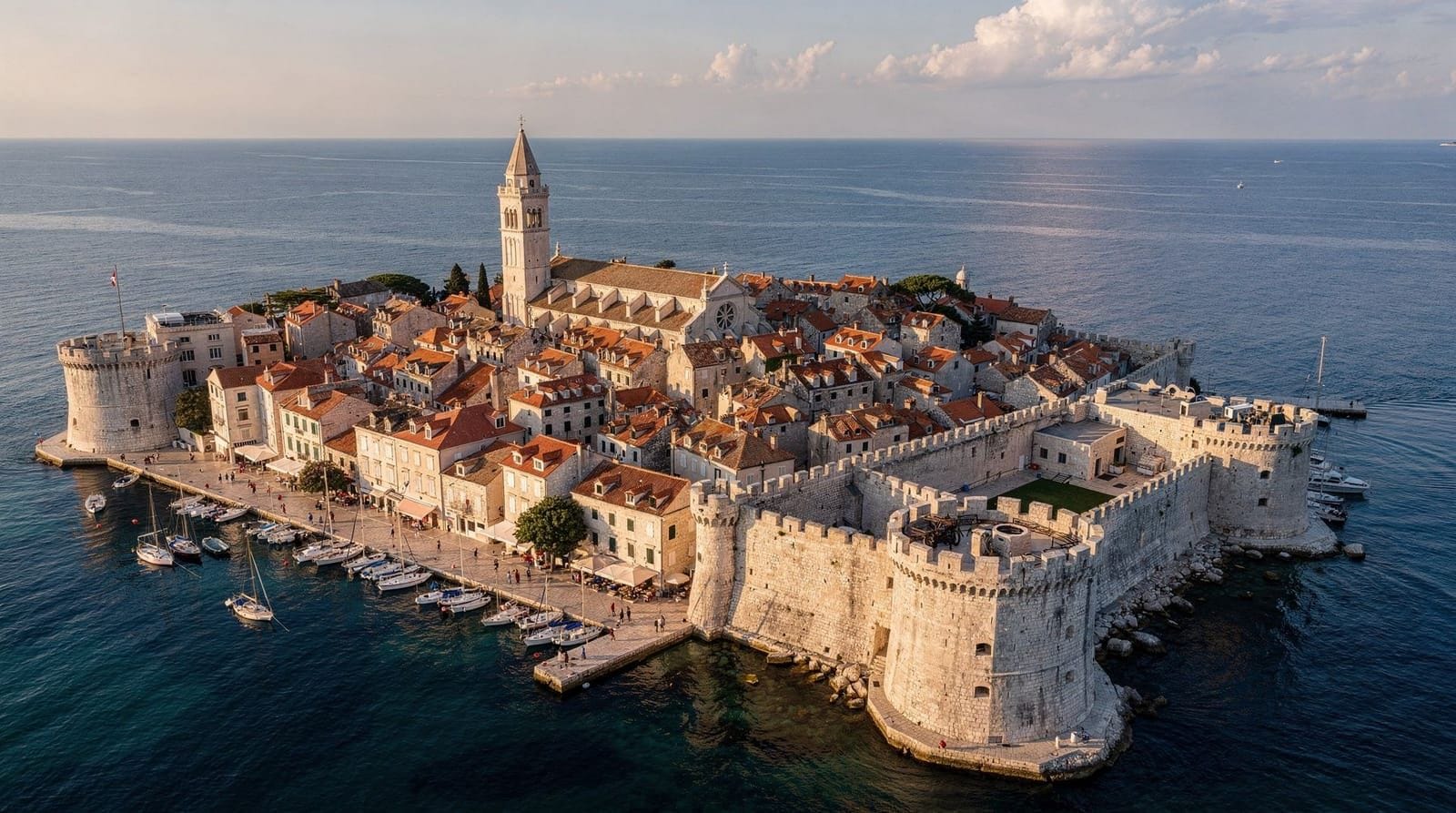
The UNESCO-listed island town of Trogir is 27 km west of Split, connected by local bus (every 20–30 minutes, 45 minutes, €4). Its Romanesque cathedral, medieval loggia, and Venetian towers make it one of the most complete historic towns in Dalmatia. A half-day is sufficient; combine with a Blue Lagoon boat trip.
Krka National Park
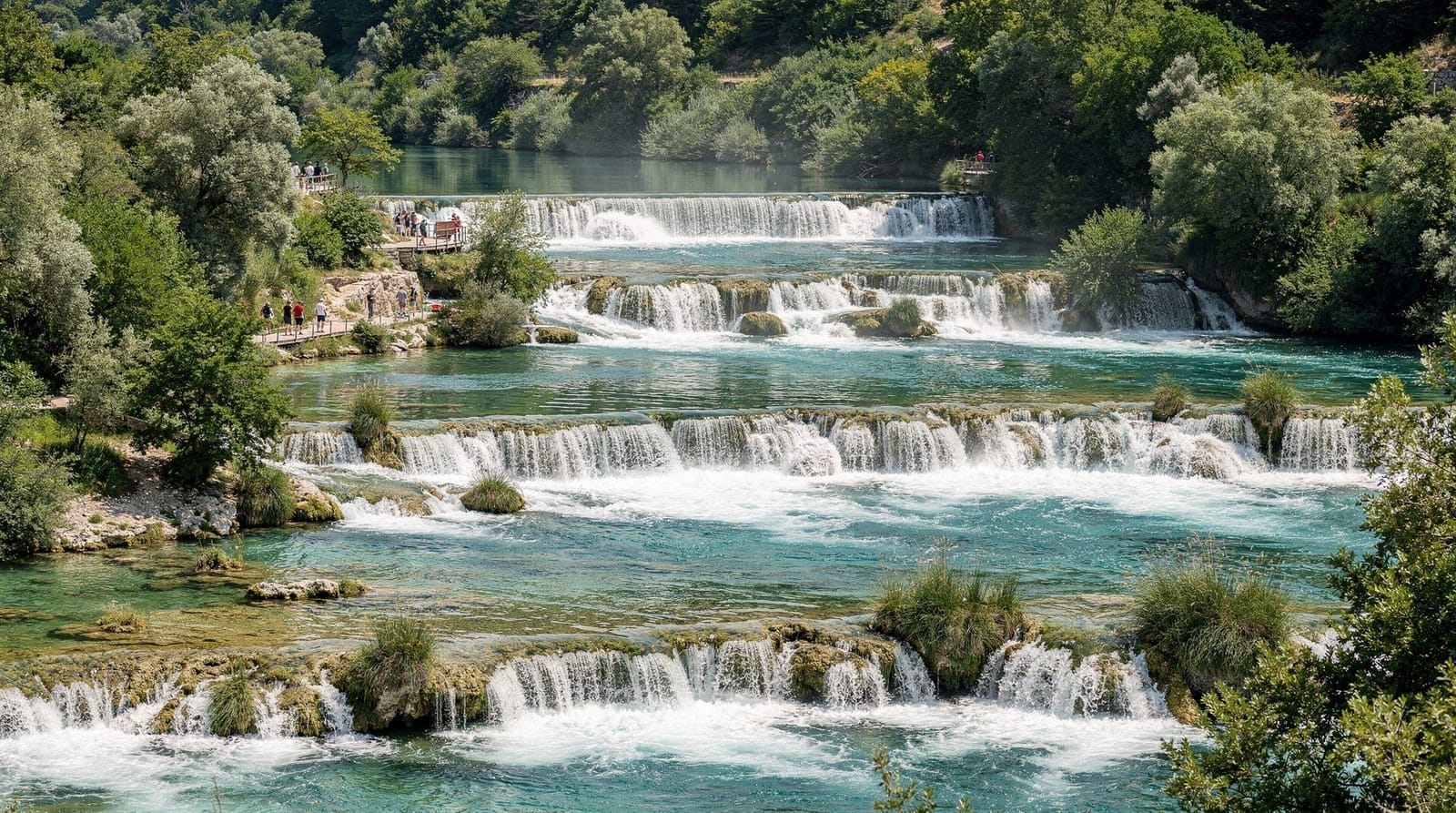
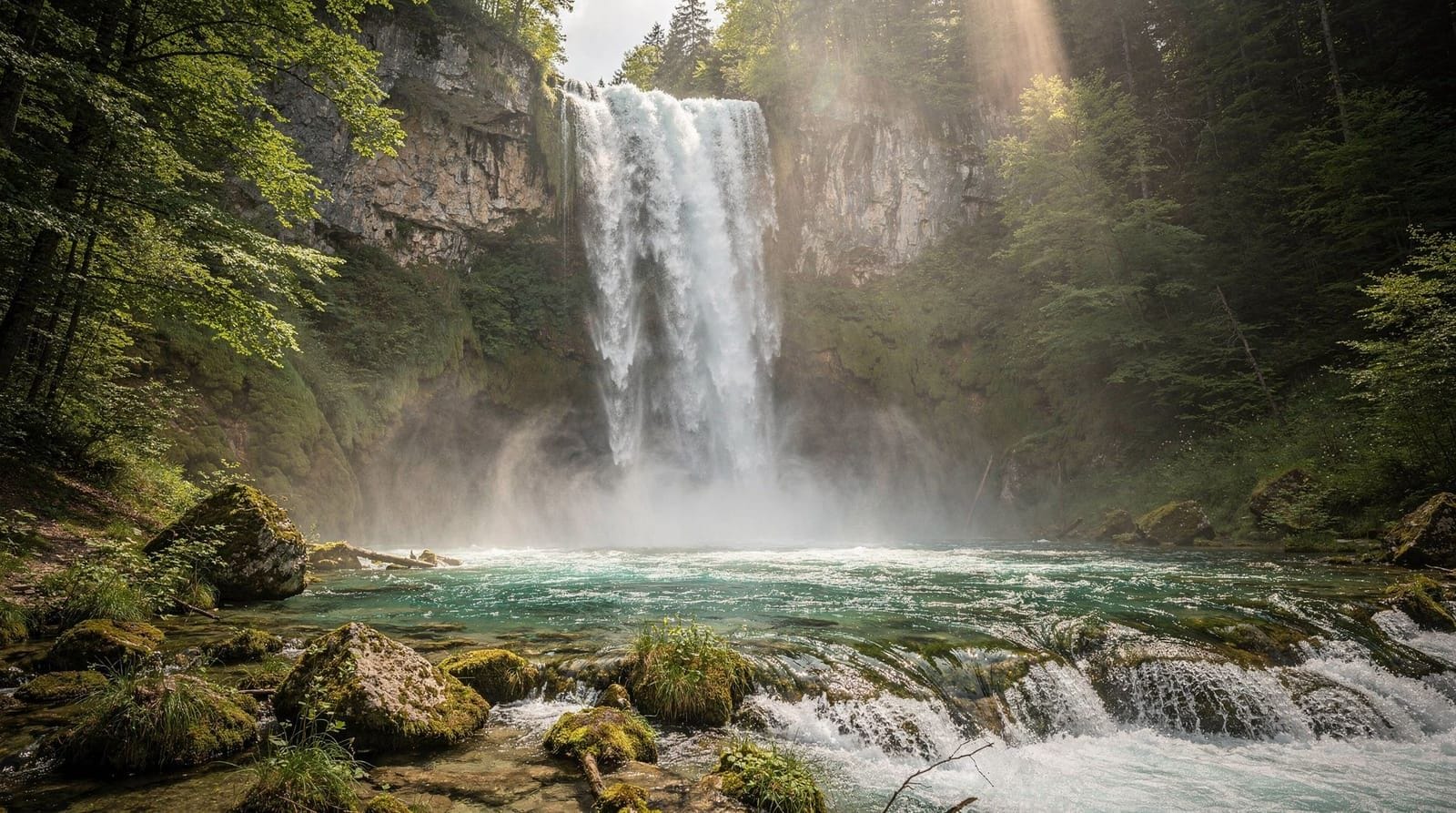
The Krka waterfalls are 90 km north, reached by organised day tour (most include entry ticket and boat ride) or public bus to Šibenik then local bus to Skradin. The Skradinski Buk cascade is the highlight; arrive early to beat the crowds.
Omiš and the Cetina Canyon
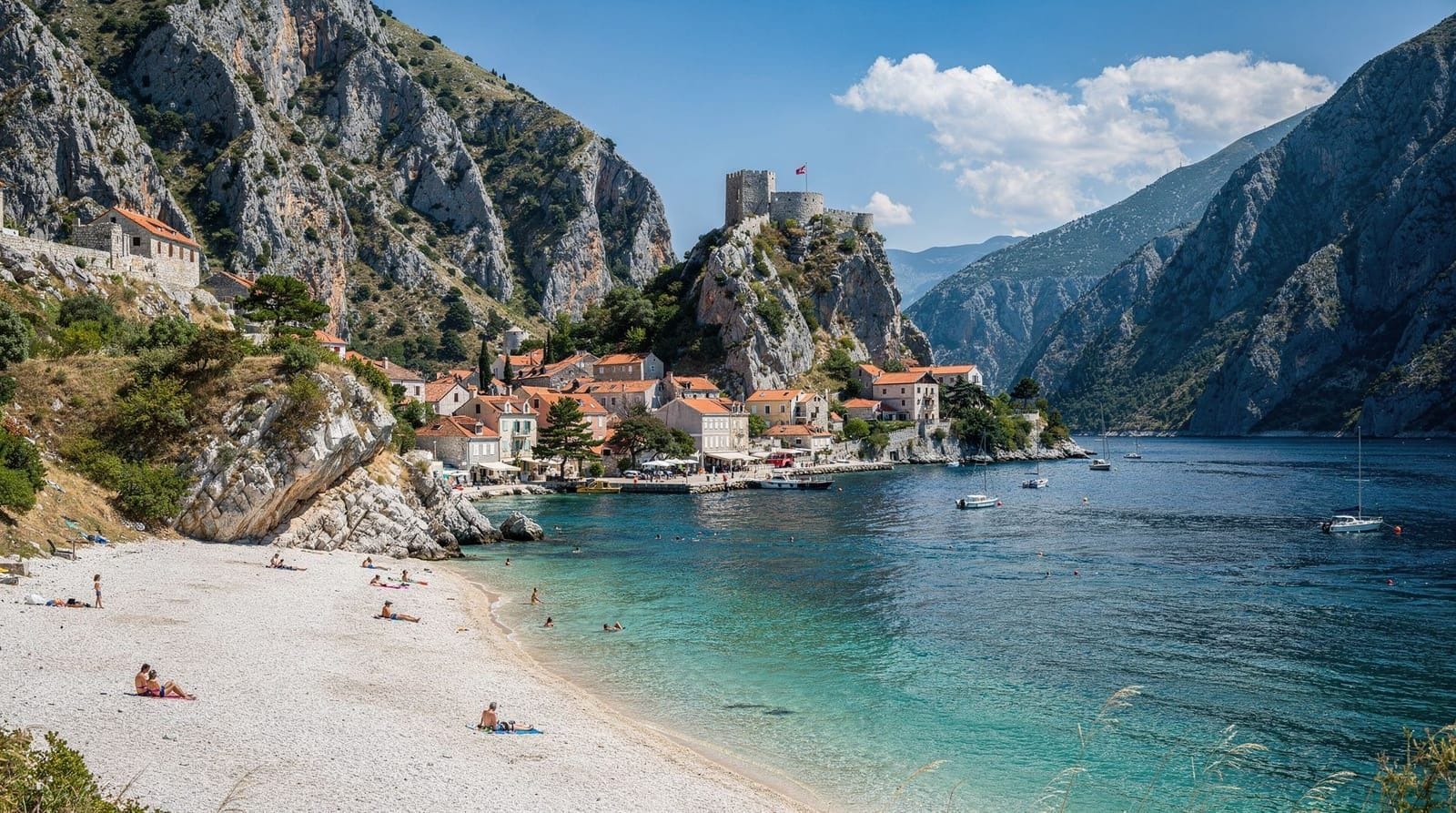
Omiš lies 25 km southeast (frequent buses, 40 minutes, €4). The Cetina River rafting is Croatia’s most popular adventure activity; the limestone canyon and medieval fortress town are worth the trip independently.
Šibenik
The Šibenik Cathedral of St James — the only Renaissance cathedral built entirely in stone without brick — is a UNESCO site and an extraordinary feat of 15th-century engineering. Reach it by bus (1.5 hours) or by taking the Krka day-tour route.
Split’s live music and cultural scene
Split is not a museum city — it is a culturally active Croatian urban centre with a year-round events calendar that complements the historical sightseeing.
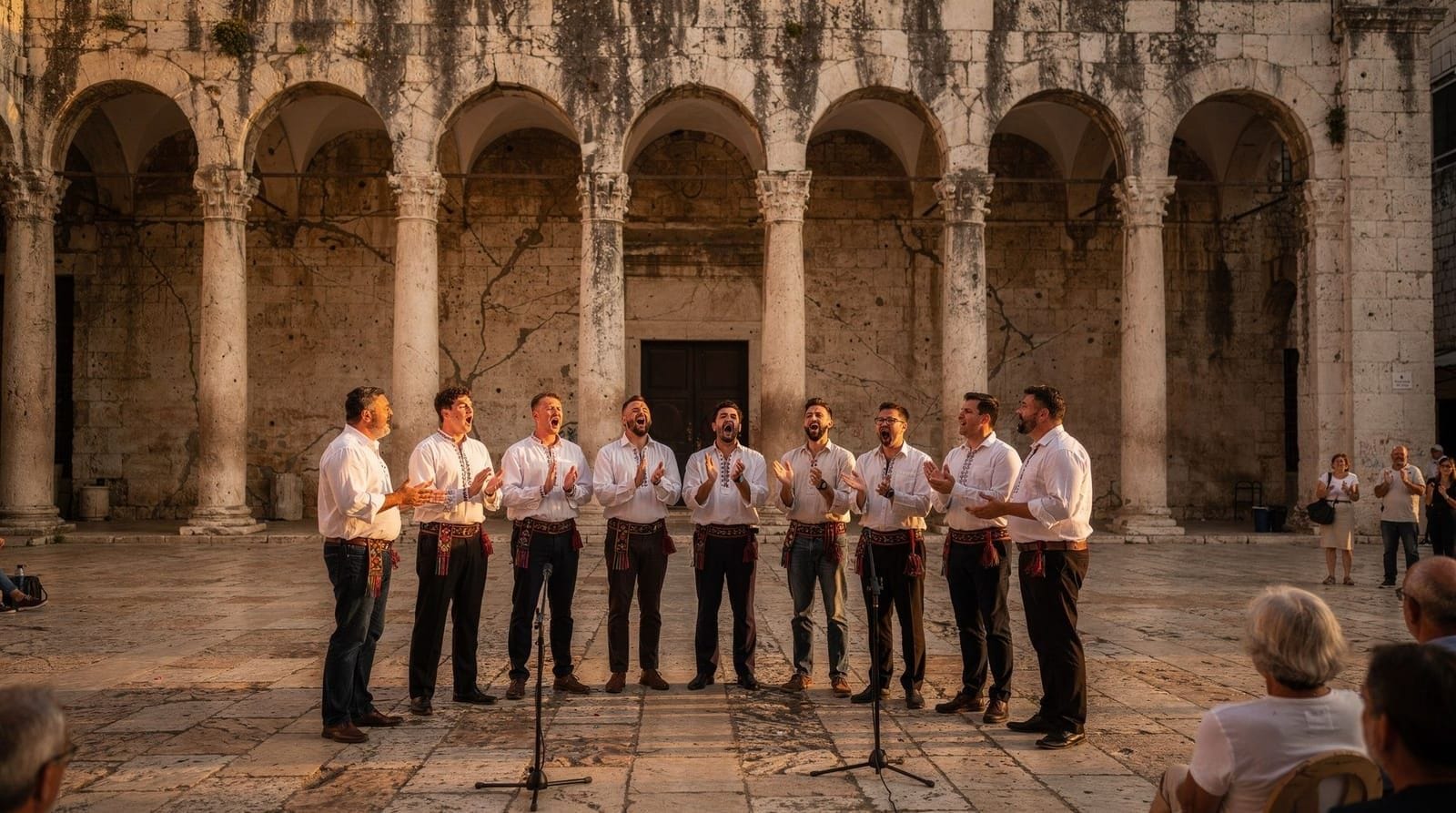
The Split Summer Festival (Splitsko ljeto, July–August) uses outdoor venues including the Peristyle, the adjacent Vestibul, and the open-air terrace of the Prokurative (Republic Square) for opera, theatre, and classical concerts. Performing in a Roman imperial courtyard gives these events an atmospheric quality unavailable anywhere else. Tickets sell out quickly for headline productions; book through the Croatian National Theatre (HNK Split) website.
The Ultra Europe Festival (July, Poljud Stadium) has transformed Split into one of Europe’s major electronic music destinations, attracting 150,000+ visitors annually. If this is not your scene, be aware that accommodation books out months ahead for this period and prices spike significantly.
The HNK Split (Croatian National Theatre, Trg Gaje Bulata 1) has a full programme of opera, ballet, and drama from September to June. Tickets are remarkably affordable by Western European standards (€15–€40 for opera) and the 19th-century theatre building is itself a heritage attraction.
Split’s neighbourhood character
The city beyond the palace is worth exploring even without a specific historical agenda.
Manuš (immediately north of the palace): A working-class neighbourhood of art-nouveau apartment buildings, local cafes, and the best morning market in Split. The narrow streets have avoided the gentrification that has made the palace interior unaffordable for ordinary Croatians.
Spinut (northwest): A residential area with the Spinut beach (less crowded than Bačvice) and the city’s tennis courts (the same courts where Goran Ivanišević first trained).
Bačvice: Split’s most famous urban beach (10-minute walk southeast of the palace) is a shallow sandy bay where the city’s traditional picigin game is played — a uniquely Dalmatian sport involving five players keeping a ball in the air with flat-hand strikes while standing waist-deep in the water. The beach clubs here are lively from 10 pm on summer weekends.
Diocletian’s legacy and Roman Split in depth
Diocletian (born ca. 245 AD, reportedly near modern Solin or on the island of Brač) is one of the most consequential Roman emperors — and the only one to abdicate voluntarily. He reorganised the empire’s administrative structure, stabilised the currency, and launched the final major persecution of Christians before Constantine reversed imperial policy. He retired to his palace in 305 AD and died there around 311. The man who ordered the execution of thousands of Christians is buried in a tomb that became a Christian cathedral — history’s sense of irony at its finest.
The palace was built between 295 and 305 AD using stone from Brač (the same Vranjica limestone used in Diocletian’s native region) and Egyptian granite for the 12 sphinxes that decorated the peristyle. Of those 12 sphinxes, three fragments survive; one largely intact sphinx remains in the Peristyle. The basilica structure along the eastern side of the palace, used for imperial administration, is now the Church of St Peter and Moses.
Split wine, food and local produce
Split sits at the geographic centre of Dalmatian wine production and is the best city on the coast for exploring Croatian wine culture.
White wines: The island of Vis produces Vugava, a rare indigenous white with oxidative character unique in Croatia. Hvar is the source of Bogdanuša (another rare indigenous white, delicate and floral) and Plavac Mali. The mainland hinterland produces Crljenak Kaštelanski — the direct ancestor of Zinfandel, discovered in vineyards near Kaštela between Split and Trogir in the 1990s.
Where to taste: Wine bar Split (Bastijunska 7), Paradigma (Subićeva 7, Split’s best wine bar), and the Wine & Friends bar near the palace all offer good selections of Croatian wines by the glass.
Markets: The Pazar (green market, open mornings, held behind the palace east wall) is Split’s finest local produce market — figs, pomegranates, dried figs stuffed with almonds, local cheeses (sheep’s milk sir from the islands), and seasonal vegetables. The Fish Market (Ribarnica) inside the palace walls opens at 6 am and sells out of the best fish by 10 am; arrive early for the freshest selection.
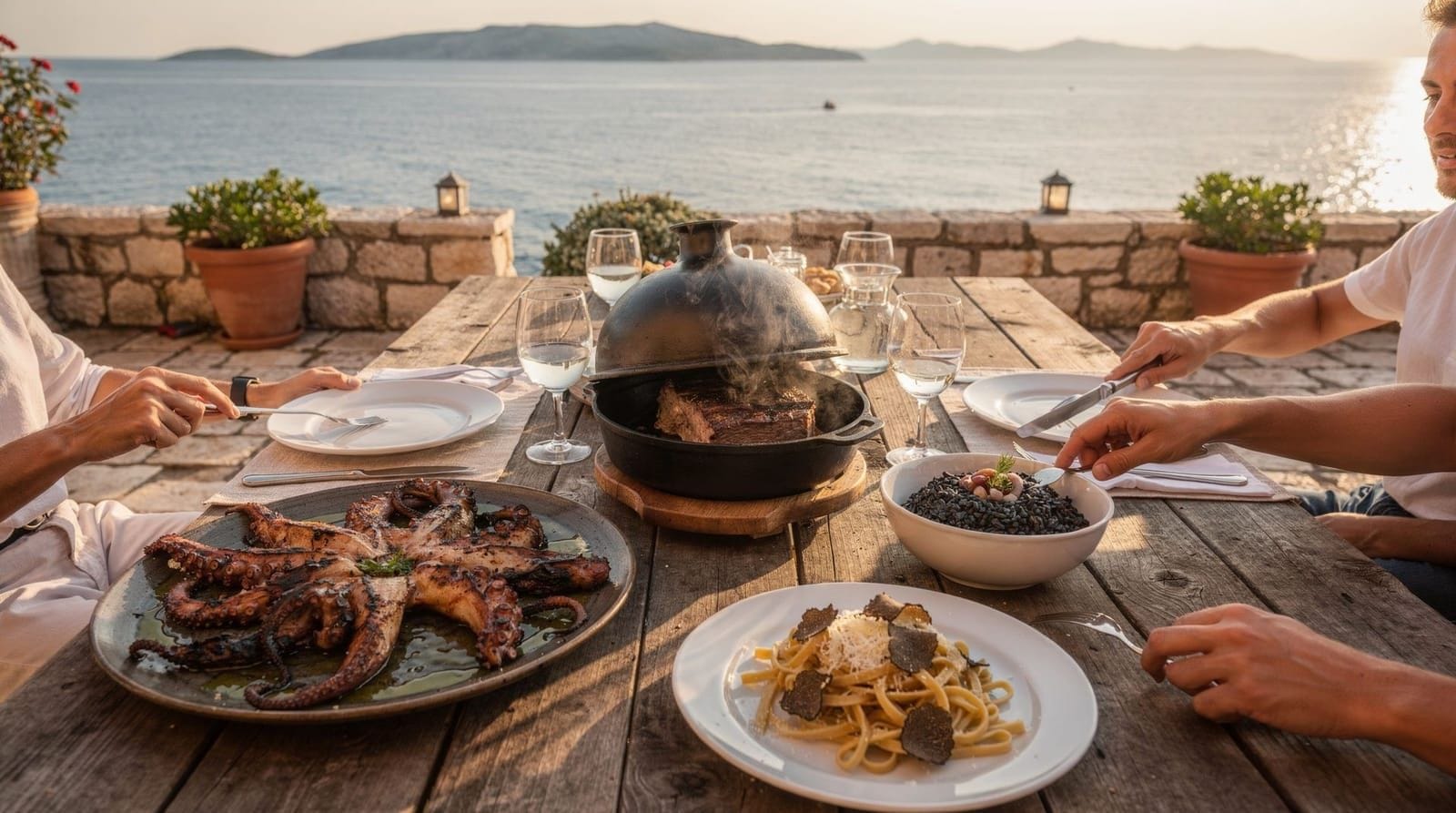
Split’s culinary identity: The city is associated with a few specific dishes. Brudet (a fish stew cooked with tomatoes, wine vinegar, and olive oil, eaten with polenta) is the sailor’s staple. Faširanci (a Croatian adaptation of Viennese Fleischlaibchen, a minced meat patty — evidence of Austro-Hungarian influence) appear on local menus alongside Dalmatian seafood. Fritule (small fried dough balls with raisins, lemon zest, and rakija) are the traditional street food at Christmas markets and summer festivals.
Island connections from Split ferry terminal
The Split ferry terminal is the busiest in Croatia and handles both car ferries and catamaran services to most Dalmatian islands. Understanding the schedule saves significant time.
Key routes and frequencies (peak season):
- Split–Supetar (Brač): Car ferry, every 60–90 minutes, 50 minutes crossing, ~€5 passenger
- Split–Hvar (Stari Grad): Car ferry, 5–7 daily, 2 hours, ~€5 passenger
- Split–Hvar (Hvar Town): Passenger catamaran (no cars), 4–5 daily, 45 minutes, ~€10
- Split–Vis: Car ferry + catamaran, 2–4 daily, 2 hours car ferry / 1 hour catamaran, ~€10–€15
- Split–Korčula: Passenger catamaran, 1–2 daily, 2.5 hours, ~€25
Booking ahead: Car space on island ferries books out weeks in advance for July–August. Foot passengers rarely need to book ahead but should arrive 30 minutes before departure in peak season.
Practical Split logistics
Split Card: The Split City Card offers free public transport, discounted museum entries, and various commercial discounts. Available at the tourist office and online; 24-hour (€20) or 72-hour (€32) versions.
Left luggage: Storage at the Split bus station (€3/bag/day) and at private storage shops near the Riva (€4–€6/bag). Useful for ferry arrivals and departures.
Medical: KBC Split (Spinčićeva 1) handles emergencies. The Jadran Medic private clinic offers English-language consultations.
Split Airport transfers: The airport (SPU) is 25 km north. Promet shuttle bus runs to the city bus station on the Riva (€8, 45 minutes). Uber and local taxis cost €25–€35. Pre-book airport transfers in July–August when demand is high.
Top experiences
Bookable activities with verified prices and instant confirmation on GetYourGuide.
Top-rated experiences in Split travel guide
Best-rated activities across GetYourGuide and Viator.

Blue cave, Mamma Mia and Hvar, 5 islands speedboat tour
- Viator

Blue Cave and Hvar Tour - 5 Islands Tour from Split and Trogir
- Viator

Blue cave, Mama Mia and Hvar, 5 Island Speedboat Tour from Trogir
- Viator

From Split: Plitvice Lakes National Park Guided Tour
- Viator

Krka Waterfalls Day Tour with Boat Ride from Split and Trogir
- Viator

Plitvice Lakes National Park Guided Day Tour from Split
- Viator