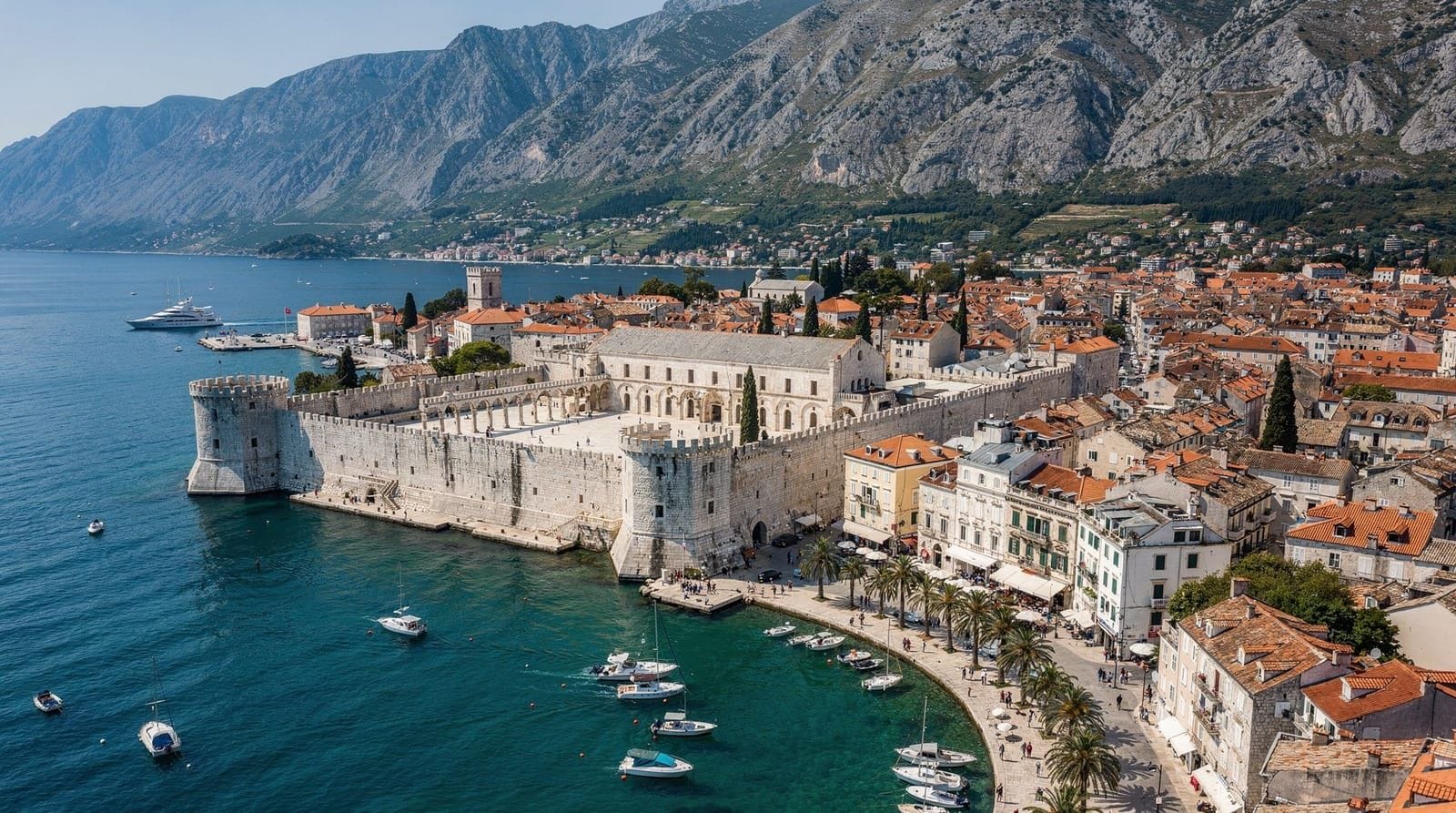
Zadar travel guide
Complete guide to Zadar — sea organ, Roman Forum, Plitvice day trips, island ferries and the sunset Alfred Hitchcock called the world's most beautiful.
Zadar: Roman ruins, old town walking tour and sea organ
Quick facts
- Best time
- May–Jun & Sep–Oct
- Days needed
- 2 days
- Getting there
- Zadar Airport (ZAD), 12 km east
- Budget per day
- €50–€130
What makes Zadar different from Dubrovnik and Split? It has all the Roman history, Adriatic light, and Dalmatian food — without the crushing summer crowds. Zadar is a proper mid-size Croatian city (75,000 people) built on a narrow peninsula that juts into the sea, and its old town packs 3,000 years of layered history into a 1.5 km stroll. Alfred Hitchcock, who visited in 1964, declared its sunsets the most beautiful in the world. The sea organ — architect Nikola Bašić’s installation that plays music using wave energy — remains one of the most genuinely surprising public artworks in Europe.
Getting to and around Zadar
By air: Zadar Airport (ZAD) is 12 km east of the city centre, served year-round by Ryanair from London Stansted and several other European cities. Airport buses connect to the main harbour bus stop (€5, 25 minutes). Taxis cost around €20.
By bus: The bus station is adjacent to the ferry terminal. Frequent buses run to Split (2.5 hours, €12–€18), Zagreb (3.5 hours, €15–€22), and Šibenik (1.5 hours). Zadar is also the departure point for the fastest Plitvice connections on the coast.
By ferry: Jadrolinija operates the main line between Zadar and the islands of Ugljan, Pašman, and — via longer services — the Kornati archipelago. The catamaran to Sali (Dugi Otok) takes 1.5 hours.
Within the city: The old town peninsula is entirely walkable (about 20 minutes end to end). City buses serve outlying neighbourhoods. The old town is car-free; park in the Jazine garage north of the sea organ.
What to see and do in Zadar
The sea organ and Greeting to the Sun
Zadar’s most extraordinary public space sits right on the waterfront: the sea organ (Morske orgulje) consists of 35 organ pipes set beneath the marble steps leading into the sea. Wave action pumps air through the pipes and generates a continuous, random, genuinely musical sound — part minimalist composition, part natural phenomenon. Best experienced at dusk when the sound carries across the flat water.
Ten metres away, the Greeting to the Sun (Pozdrav Suncu) is a 22-metre circular installation of photovoltaic panels set flush with the paving stones. After sunset it generates a mesmerising light show powered by solar energy stored during the day. Both installations are free.
The Roman Forum
Zadar’s Forum is the largest ancient Roman public space on the eastern Adriatic coast, dating to the 1st century BC. Today it’s an open square at the heart of the old town, anchored by a single standing column (the medieval “Column of Shame,” where wrongdoers were once displayed) and bordered by the Church of St Donat — a rotunda-plan pre-Romanesque church from the 9th century, built partly from Roman stonework and regularly used as a concert venue for its exceptional acoustics.
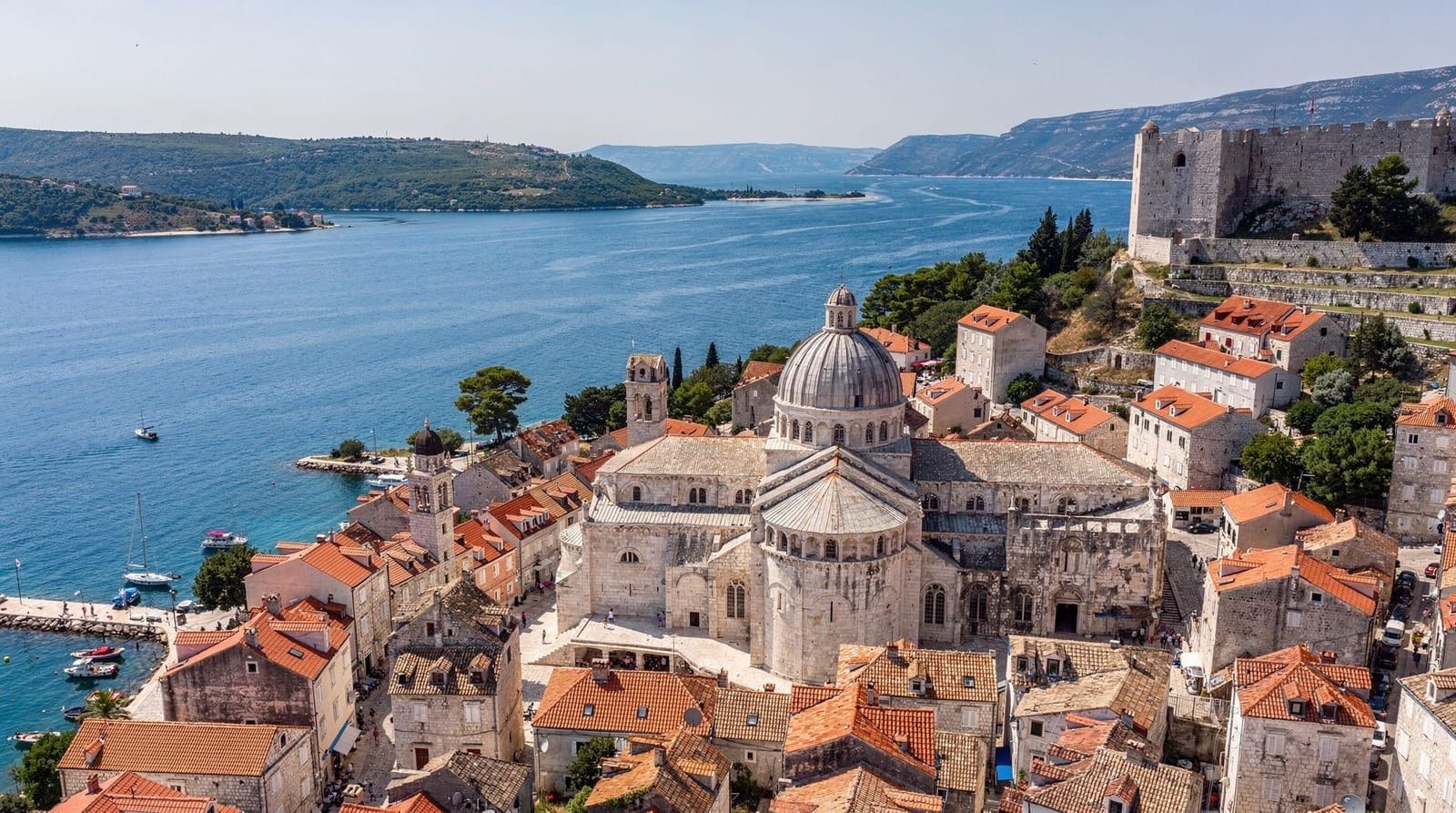
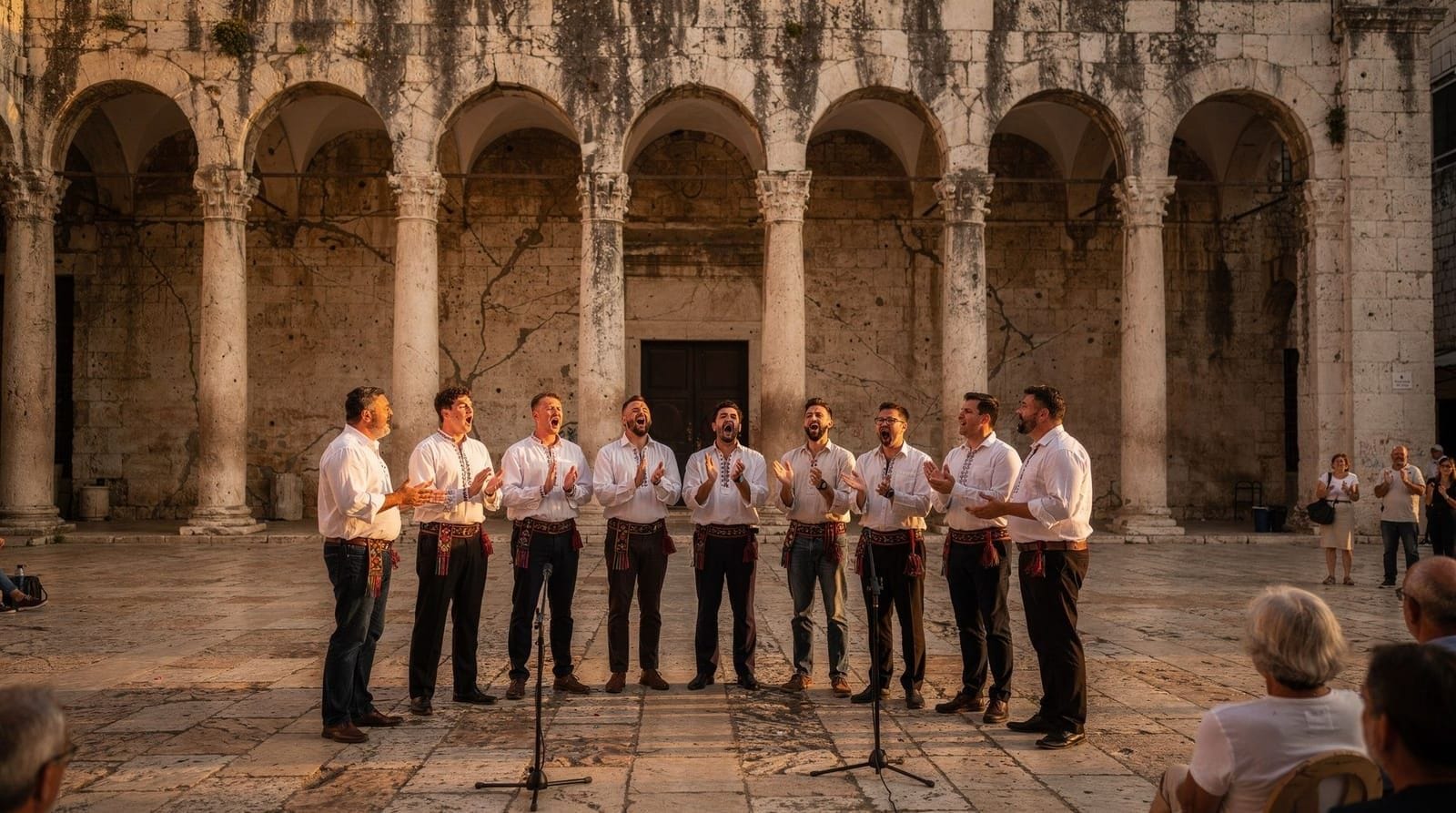
A guided old-town walking tour connects Zadar’s Roman, medieval and modern layersZadar museums
The Archaeological Museum (adjacent to the Forum) holds the best collection of Roman-era objects from the North Dalmatian coast, including glass, coins, and inscriptions. The Museum of Ancient Glass (Poljana Zemaljskog odbora) is an unexpected gem: an entire museum dedicated to Roman-period glassware found in the region, displayed with exceptional skill and context.
Beaches
The old town peninsula itself has no beaches, but the Borik resort area 4 km northwest (bus 5 or 8, 15 minutes) offers several pebble and sand beaches alongside hotel complexes. For the best swimming near Zadar, take the ferry to Ugljan Island (25 minutes, €3) which has calm, clear water and no tourist infrastructure.
Day trips: Plitvice Lakes and Kornati
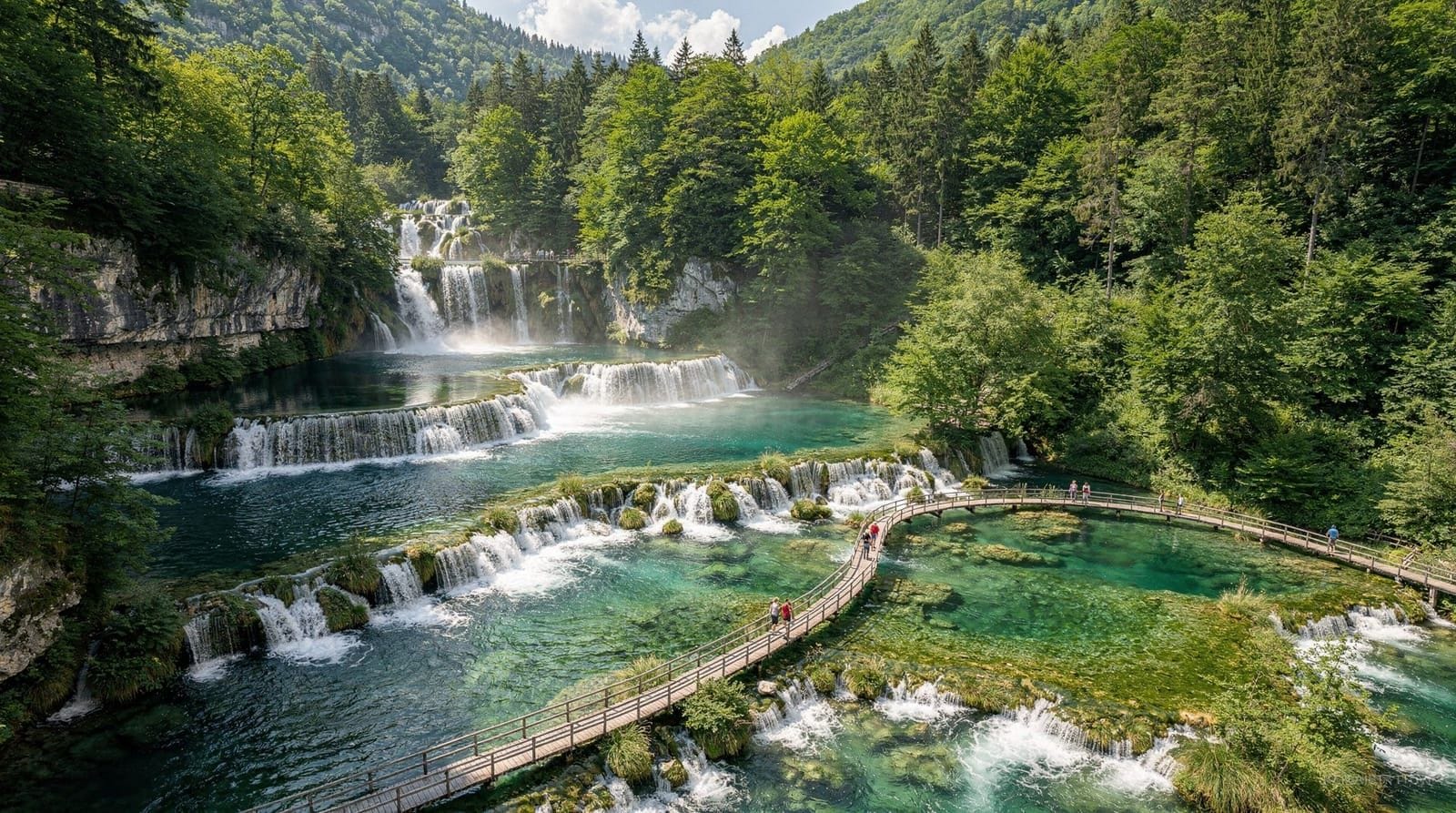
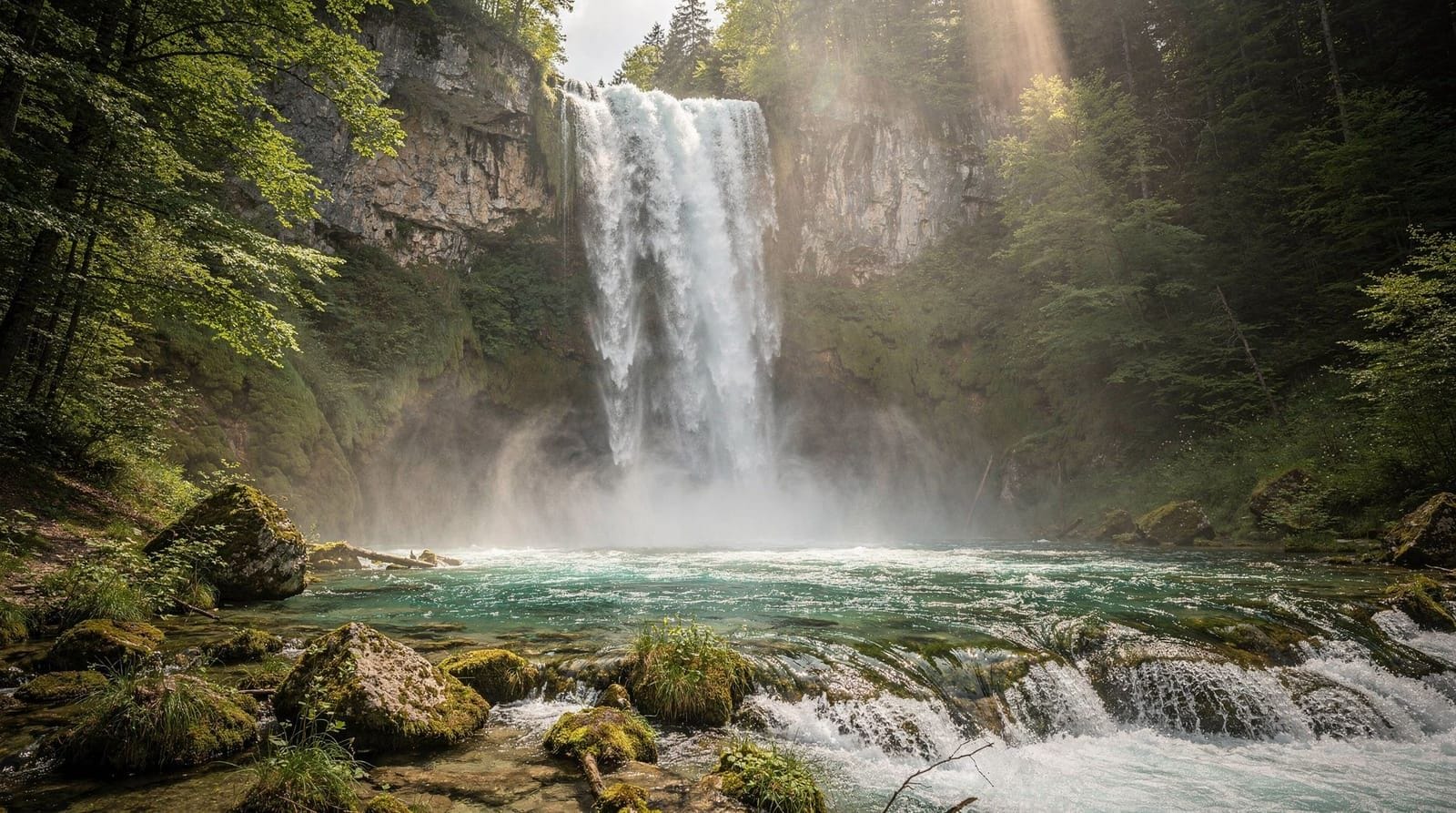
Zadar sits closest to Plitvice Lakes National Park of any coastal Dalmatian city — just 2 hours by road. Organised tours run daily in season and typically include entry tickets and a guided walk.
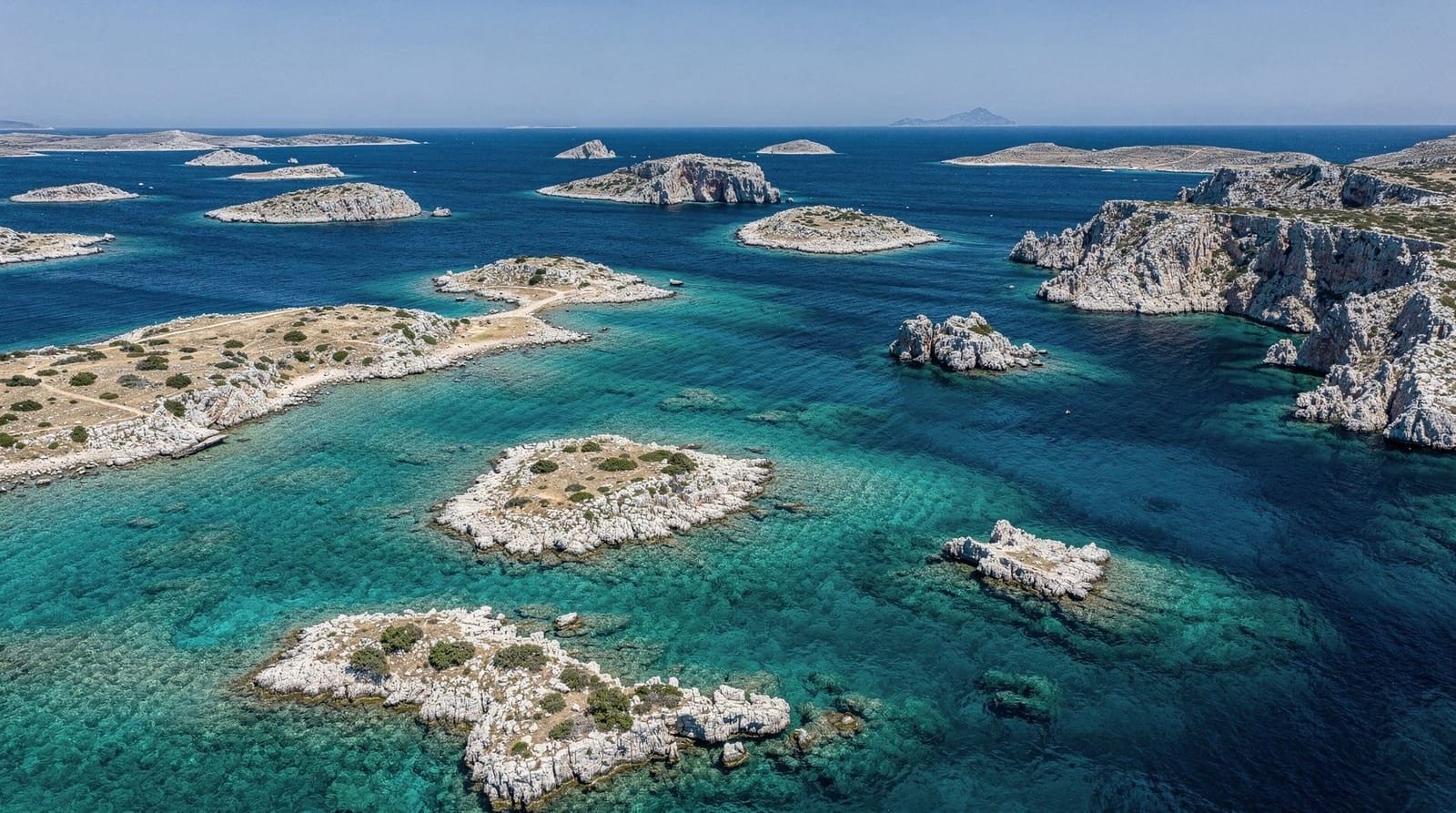
A guided Plitvice day tour from Zadar is the most efficient way to visit Croatia’s most famous national parkThe Kornati archipelago — 140 islands scattered across a shimmering sea of unusual geology — is best approached by organised boat tour from Zadar or Šibenik.
Where to stay in Zadar
Old town: Several boutique hotels and apartments within the city walls. Hotel Bastion (Bedemi zadarskih pobuna 13) is a design-forward four-star in a 13th-century citadel; doubles from €130–€200. Villa Hrešć on the waterfront promenade offers excellent value apartments.
Borik resort area: International chain hotels and apartment complexes with pools and beach access. More suited to families. Buses to the old town run every 15–20 minutes.
Budget: Zadar is notably cheaper than Dubrovnik or Split. Private rooms in the old town from €45–€70; hostels from €18–€25 per dorm bed.
Where to eat in Zadar
Pet Bunara (Trg pet bunara 1): The name (“Five Wells”) refers to the Renaissance cistern square where this restaurant sits. Creative Dalmatian cuisine, strong local wine list, pleasant outdoor terrace.
Konoba Skoblar (Jurja Bijankinija 4): Excellent traditional seafood konoba inside the old town; speciality is marinated anchovies from Zadar Bay and grilled fish by weight.
Foša (Kralja Dmitra Zvonimira 2): In the old harbour gatehouse, overlooking the port. Mid-range with reliable fish dishes and outdoor seating.
Bruschetta (Mihovila Pavlinovića): Best pizzeria in the old town; wood-fired, crisp, generous portions.
Tržnica (the market): The open-air market runs daily along the harbour side, with stalls selling dried figs, Pag cheese, pršut (cured ham), olives, and seasonal fruit. The best and cheapest eating in Zadar.
Best time to visit Zadar
May–June and September–October are ideal: warm enough to swim (sea temperature 20–24°C), boats and tours running, crowds manageable. Zadar never reaches Dubrovnik’s summer saturation because the city is genuinely lived-in rather than purely tourist-dependent.
July–August: Hot and busier, but more relaxed than the south Dalmatian coast. The city’s broader range of hotels means accommodation is available even with last-minute booking.
November–April: The old town is essentially a local city. Most island ferries still run. Plitvice Lakes are accessible year-round and are particularly photogenic in autumn mists and light snow. Accommodation drops to 40–50% of summer rates.
Zadar’s island access
Zadar has better ferry connections to the northern Dalmatian islands than any other coastal city, and these islands receive a fraction of the visitors that go to Hvar or Brač.
Ugljan (25 minutes by ferry): A large inhabited island with olive groves, small fishing villages, and the ruins of a Roman fortress. The island’s east coast has calm, clear swimming beaches; cycling is excellent. Ugljan-Pašman (the two islands are connected by a bridge) offer a quiet, authentic alternative to the more commercial southern islands.
Pag (car ferry from Prizna, 15 minutes; also accessible by bridge from the mainland): An extraordinary bare island with a Venetian-built old town, Croatia’s finest lace-making tradition (UNESCO-listed), and the source of the famous Paški sir (Pag cheese) — a hard ewe’s milk cheese with an intensely savoury character produced by sheep grazing on salt-wind-flavoured scrub. The northwest coast of Pag hosts Zrće Beach, a beach-club party scene that attracts electronic music fans in summer; the rest of the island has nothing to do with this.
Dugi Otok (1.5 hours by catamaran): Croatia’s least-visited major island, Dugi Otok offers the Telašćica Nature Park (a sheltered bay of extraordinary beauty), Sakarun beach (one of Croatia’s finest sandy beaches), and almost no tourist infrastructure. An excellent choice for those seeking genuine remoteness within easy reach of a coastal city.
Zadar’s cultural and food scene
Zadar has emerged as a serious food destination over the past decade, with a cluster of restaurants working with local producers in a way that goes beyond traditional konoba cooking.
Pet Bunara (see restaurants section) and Foša have been joined by newer arrivals: Bruschetta (creative Dalmatian small plates, wine bar character) and Arsenal (converted 18th-century arsenal building, cultural centre and restaurant, good for a drink or exhibition visit regardless of eating).
The Zadar Olive Oil Festival (November) celebrates the North Dalmatian olive harvest with tastings, producers, and competitions. Zadar’s hinterland (Ravni Kotari plateau) produces some of Croatia’s finest olive oil — distinctively light and fruity compared to Istrian or Greek oils.
Maraschino liqueur is Zadar’s signature product: a cherry liqueur produced since the 18th century from Marasca cherries grown in the Zadar hinterland. Luxardo, the most famous producer, was founded in Zadar in 1821 before moving to Italy after World War II. The local producer Maraska still operates in Zadar and produces maraschino, cherry brandy, and other liqueurs. The distillery is open for visits; cherry products are available throughout the city.
Adventure and outdoor activities around Zadar
The Zadar area offers outdoor activities that extend well beyond the old town.
Rock climbing: The limestone cliffs above the coast north of Zadar (Paklenica National Park, 40 km north) offer some of Croatia’s most established climbing routes. Paklenica canyon itself is a dramatic gorge through the Velebit Mountains with marked hiking trails.
Sea kayaking: Day kayak tours from Zadar harbour explore the islands of the archipelago; the shallow, sheltered water between the islands is ideal for beginners. Multi-day kayak camping trips to Kornati are available through specialist operators.
Cycling: The Ravni Kotari plateau behind Zadar is flat and trafficked by local roads through olive groves and vineyards — ideal for cycling. Bikes are rentable in Zadar.
Day trips from Zadar
Šibenik and Krka National Park
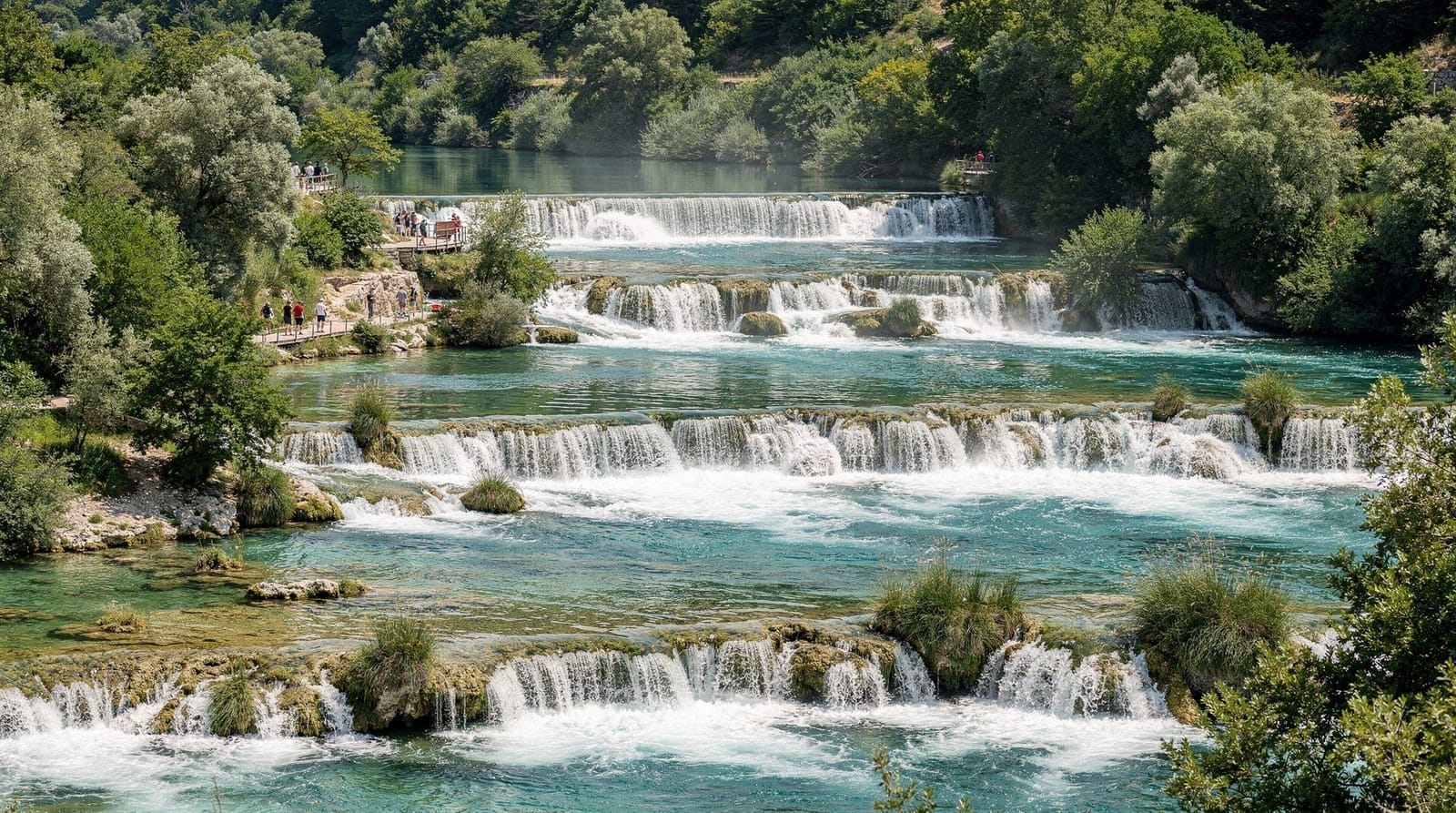
Šibenik (1.5 hours by bus) is worth a half-day for the cathedral alone. Combine with a visit to Krka National Park for a full day covering two UNESCO sites and Croatia’s most visited waterfalls.
Kornati National Park
The Kornati archipelago is accessible by organised boat tour from Zadar harbour — a full day of swimming, anchoring in sheltered bays, and marvelling at the bone-white islands stripped of virtually all vegetation by centuries of grazing. An experience unlike anything else on the coast.
Nin
Just 14 km north of Zadar (bus 24 minutes), Nin is a tiny island town connected by a Roman bridge, home to Croatia’s smallest cathedral and the magnificent sandy Queen’s Beach (Kraljičina plaža) — rare on this predominantly rocky coast. The Nin salt pans are a nature reserve where the salt-lake environment supports flamingos in late summer.
Paklenica National Park
Forty kilometres north of Zadar, Paklenica National Park is Croatia’s premier rock-climbing destination and also has well-marked hiking trails through dramatic canyon terrain. Mala Paklenica (the smaller canyon) is less visited and more atmospheric than the busier Velika Paklenica. A day trip from Zadar by bus (1 hour) gives a half-day in the park.
Zadar’s historical layers
Zadar has a 3,000-year documented history that makes its archaeological and architectural fabric exceptionally rich.
Liburnian and Illyrian period: The peninsula was inhabited by the Liburnian people from at least the 9th century BC; their settlement (Iadera) preceded the Roman conquest. Liburnian artefacts (notably the distinctive boat design that gave its name to the Liburnian warship, adopted by the Roman navy) are documented in the Archaeological Museum.
Roman Iadera: The Roman city occupied the entire peninsula with the orthogonal street grid still partially legible in today’s street plan. The Forum (1st century BC–1st century AD) was the largest on the eastern Adriatic. Four temples, a basilica, and a capitol occupied the forum area; only the podium of the largest temple survives, embedded in later construction.
Byzantine and medieval: After the fall of the western Roman Empire, Zadar remained under Byzantine control longer than most Adriatic cities, producing a distinctive church architecture (St Donat is the prime example, clearly Byzantine in plan). The city fell to Venice in 1409 and remained Venetian until 1797 — the longest Venetian possession on the Dalmatian coast, giving Zadar a Venetian civic legacy more complete than any other Croatian city.
Austro-Hungarian Zadar: Following Venice, the city became the capital of the Kingdom of Dalmatia under Austria (1813–1918), producing the classical and neo-baroque administrative buildings along the main street (Široka ulica). The city was briefly part of Italy (1920–1947) under the Treaty of Rapallo — an anomalous interlude that explains why several public buildings have Italian-period stonework.
Zadar’s nightlife and cultural calendar
Zadar has a livelier year-round cultural scene than many visitors expect from a mid-size coastal city.
The Garden Festival (Garden Lounge, near the Five Wells Square) launched in 2006 and helped establish Zadar as a destination for contemporary music. The Garden Club is the main venue for summer events; check the programme on arrival.
The Zadar Music Festival (spring, classical) and Choral Meetings (autumn, international a cappella competition) use the acoustics of St Donat’s Romanesque rotunda — one of the finest natural reverb spaces in Croatia.
Craft beer: Zadar has developed one of the better craft beer scenes on the coast. Pivnica Bura (Krste Tomislava) and several bars in the old town serve Croatian craft beers; the Tomislav and Ivo brand from Split is widely available alongside local Zadar producers.
Zadar accommodation guide
Old town (peninsula): Boutique hotels and apartments within the walls are the most atmospheric choice. Hotel Bastion (see main text) is the finest; several serviced apartment operations (Zadar Dreams, Old Town Apartments) offer well-equipped flats at mid-range prices.
Borik resort area: International chain hotels with pools (Falkensteiner Adriana, Iberostar) and a family-friendly beach strip, 4 km from the old town. Better for families wanting beach-resort facilities.
Budget and mid-range: Zadar’s accommodation prices are 20–30% lower than Split and 35–45% lower than Dubrovnik for comparable quality. Private rooms from €35; mid-range hotels from €75; four-star from €120.
Camping: Camping Borik (adjacent to the hotel strip) is one of the better-maintained campsites on the Dalmatian coast; well-suited for motorhome travellers.
Top experiences
Bookable activities with verified prices and instant confirmation on GetYourGuide.
Top-rated experiences in Zadar travel guide
Best-rated activities across GetYourGuide and Viator.

Blue cave, Mamma Mia and Hvar, 5 islands speedboat tour
- Viator

Blue Cave and Hvar Tour - 5 Islands Tour from Split and Trogir
- Viator

Blue cave, Mama Mia and Hvar, 5 Island Speedboat Tour from Trogir
- Viator

From Split: Plitvice Lakes National Park Guided Tour
- Viator

Krka Waterfalls Day Tour with Boat Ride from Split and Trogir
- Viator

Plitvice Lakes National Park Guided Day Tour from Split
- Viator