Rovinj travel guide
Plan your Rovinj visit: the old town peninsula, Lim Bay, truffles, day trips to Venice, beaches, and the best konobas in Istria.
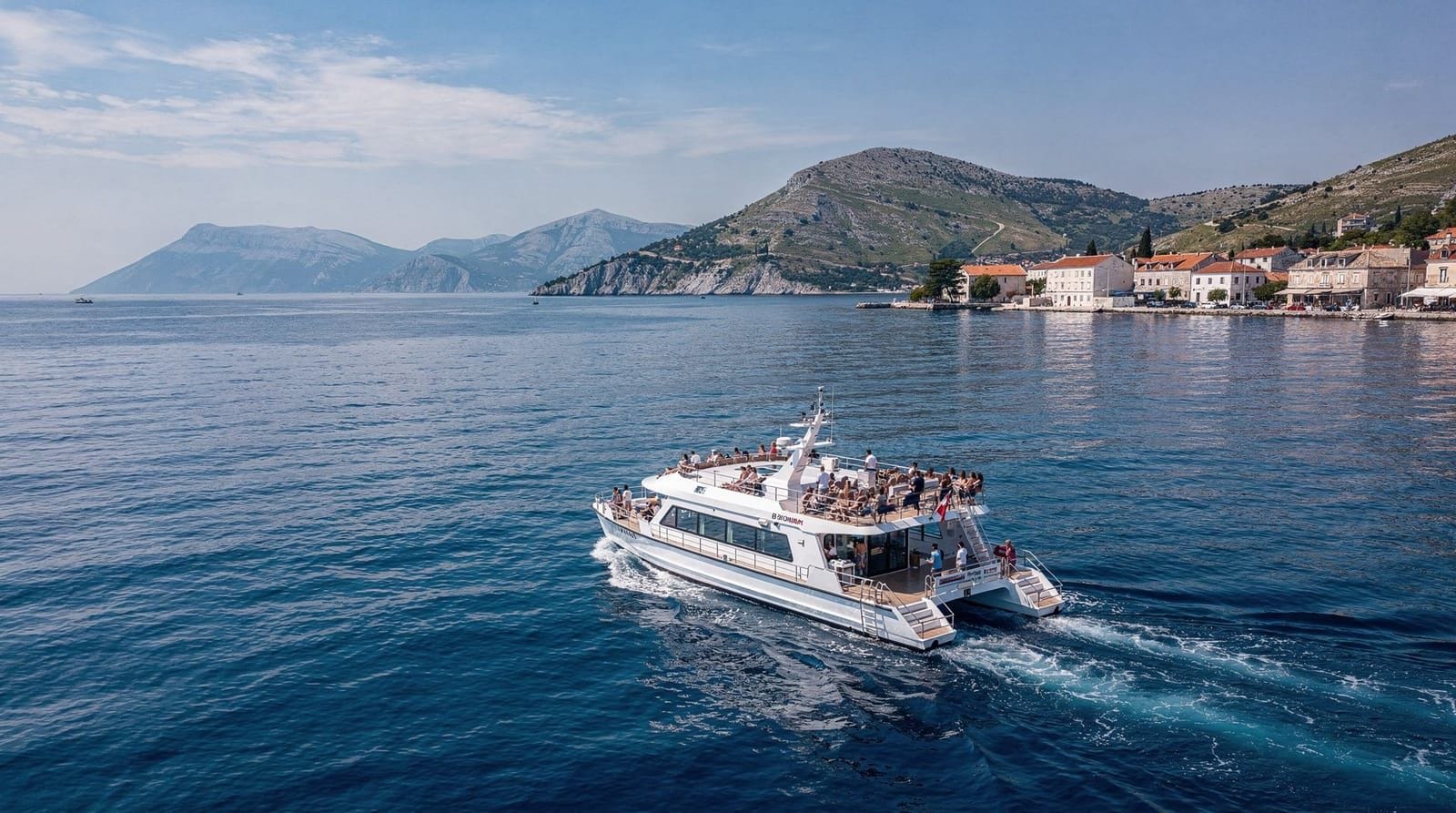
Rovinj: Lim fjord and pirate cave boat tour
Quick facts
- Best time
- May–June, September–October
- Days needed
- 2–3 days
- Getting there
- Car from Pula (35 km) or Poreč (40 km); no train
- Budget per day
- €70–€160
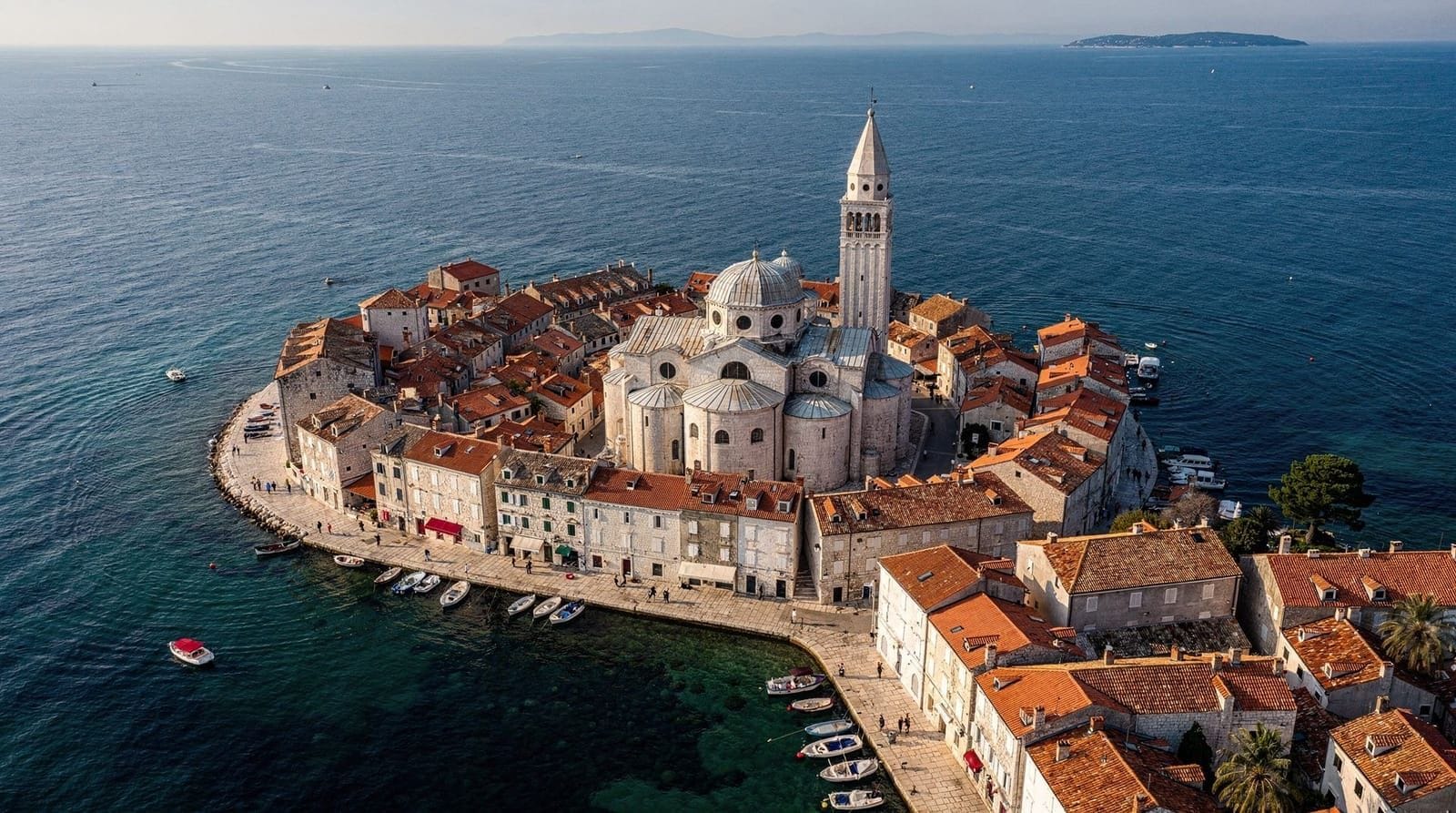
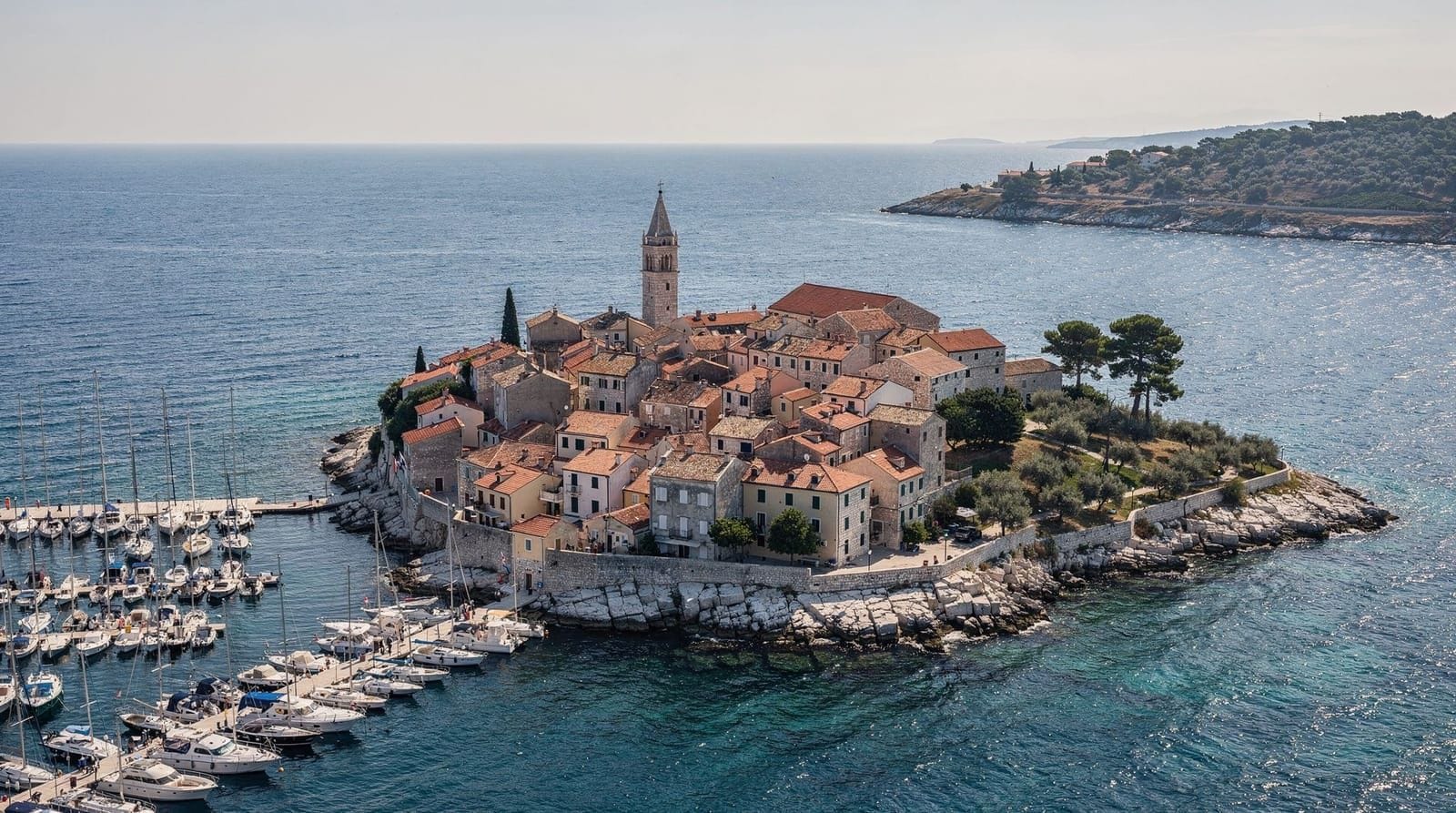
Rovinj is Istria’s most visually striking town — a baroque cluster of tall, multicoloured houses rising from a rocky peninsula into the Adriatic, crowned by the church of St Euphemia. On a calm evening with the sun dropping over the harbour, it’s one of the most beautiful sights in Croatia. The Venetian influence is palpable in the architecture, the dialect (many older residents still speak Istriot or Italian), and in the quality of the food and wine. This is a town that rewards slow travel: wandering narrow cobbled lanes, eating well, taking a boat to a quiet cove, and watching the fishing fleet return at dusk.
Getting to Rovinj
Rovinj has no railway station and no regular ferry connection to the rest of Croatia. Access is by road or boat.
By car: From Pula airport or town (35 km south, about 35 minutes). From Poreč (40 km north, around 45 minutes). From Zagreb (265 km, about 3 hours on the A7 motorway through Rijeka). From Zadar (320 km, around 3.5 hours).
By bus: Regular bus services connect Rovinj with Pula (around 1 hour), Poreč (45 minutes), Rijeka (2.5 hours), and Zagreb (5–6 hours). Buses arrive at the main bus terminal near the marina.
Speedboat from Venice: A seasonal speedboat service (run by Venezia Lines and similar operators) connects Venice with Rovinj in approximately 3 hours. This is popular with Italian visitors and is a remarkably scenic arrival. In 2026, one-way fares start around €60–€90.
By plane: Pula airport (PUY, 35 km south) is the nearest airport. Ryanair and other low-cost carriers operate seasonal routes from multiple European cities. A taxi from Pula airport to Rovinj costs approximately €40–€55.
What to see and do in Rovinj
Rovinj Old Town
Until 1763, Rovinj’s old town was an island — the channel between it and the Istrian mainland was filled in that year, creating the peninsula it stands on today. The old town’s interior is a maze of extremely narrow, steep cobbled lanes, with washing strung between windows and cats sleeping on doorsteps. The architecture is Venetian baroque — tall, thin houses of 5–6 floors in ochre, terracotta, and amber.
The Church of St Euphemia (Crkva Svete Eufemije) dominates everything from the highest point of the peninsula. Its 18th-century bell tower, modelled on Venice’s Campanile, is the town’s landmark. St Euphemia’s sarcophagus is kept inside — the saint’s remains reportedly washed ashore on a miraculous boat in the 9th century. Climb the bell tower (entry fee around €5) for views stretching to the islands.
The Balbi Arch (Gradska Vrata), built in 1679, is the ceremonial entrance to the old town and one of the finest surviving pieces of Venetian civic architecture on the eastern Adriatic. Passing through it, look up at both faces: the outer side facing the newer town bears a Venetian lion in bas-relief — the unmistakable symbol of the Republic’s authority — while the inner face, looking back toward the old town, carries a carved Ottoman turban. The pairing was deliberate. Venice was simultaneously managing the threat of Ottoman expansion from the east and projecting power over its Adriatic territories. The two emblems, lion and turban, encapsulate the geopolitical balancing act that defined Venetian diplomacy for centuries. Most visitors walk through without noticing the turban; take a moment to look back after you enter.
As evening settles over the harbour, the cobbled Obala Augusta Ferri fills with a ritual that feels entirely Italian in character. The aperitivo hour is sacred in Rovinj. Locals and visitors alike claim a table at one of the harbourfront terraces and order a spritz — the standard Aperol or the slightly more sophisticated Campari, both served with cold prosecco and a fat green olive. Local Malvazija by the glass is the alternative for those who prefer something Istrian. The spectacle matches the drink: fishing boats rock gently at their moorings, the old town facades turn deep amber in the last light, and wooden boats ease into the harbour after a day at sea. By around 7pm the light is extraordinary and the mood is entirely unhurried. This is the single best hour to be sitting at the water’s edge in Istria.
Lim Bay (Limski Kanal)
About 10 km north of Rovinj, the Lim Bay (also called Limski Fjord, though technically a drowned river valley) cuts 12 km inland from the coast — a dramatic, narrow inlet flanked by forested cliffs. The bay is famous for its oysters and mussels, cultivated here since Roman times. The high-quality marine environment (cold freshwater springs from the limestone karst mix with seawater) produces excellent shellfish.
Boat tours from Rovinj harbour typically combine Lim Bay with the pirate cave (Romualdova špilja), a deep sea cave in the cliff face at the bay’s mouth with colourful legends of medieval pirate treasure. Tours typically take 3–4 hours including swimming stops.
Rovinj Islands (Crveni Otok and Sv. Katarina)
Just offshore from Rovinj lie two small islands accessible by taxi boat from the harbour:
Crveni Otok (Red Island): Actually two islets (Maskin and Sveti Andrija) connected by a breakwater, home to the upscale resort hotel Maistra Crveni Otok and excellent swimming off the rocks. The pine and cypress garden is beautiful. Water taxi from the harbour takes about 15 minutes.
Sveti Katarina: The nearer island, also with a hotel (Maistra Hotel Katarina), good swimming, and a view back to Rovinj’s old town that is exceptional at sunset. Water taxi around 5 minutes.
Both islands charge a small boat fare (around €5–€8 each way) and are open to non-hotel guests.
Truffles: Istrian Black and White
Rovinj is one of the best bases for experiencing Istria’s celebrated truffle culture. The Motovun Forest and surrounding Mirna Valley are home to both black truffles (harvested year-round but best June–November) and white truffles (the most prized, harvested September–December). Istrian white truffles have won multiple international competitions against Italian competitors.
Organised truffle-hunting experiences typically combine a forest walk with truffle-hunting dogs, a cooking demonstration, and a tasting lunch. They can be arranged from Rovinj to the forest areas inland.
Day Trip to Venice
Rovinj is approximately 100 nautical miles from Venice — close enough for a day-return speedboat trip. The journey takes around 2.5–3 hours each way, leaving about 5–6 hours in Venice. This is an unusual and memorable experience, particularly if Venice is not otherwise on your itinerary.
Rovinj Heritage Museum and Grisia Art Street
The Heritage Museum (Zavičajni muzej) on the main square of the old town has a surprisingly good collection of local paintings, archaeological finds, and Venetian period artefacts. Worth an hour.
Grisia, the steepest and most atmospheric street in the old town, hosts an outdoor art exhibition every second Sunday in August — a tradition since 1967, with over 100 artists displaying work along the lane.
Cycling and Walking in the Rovinj Area
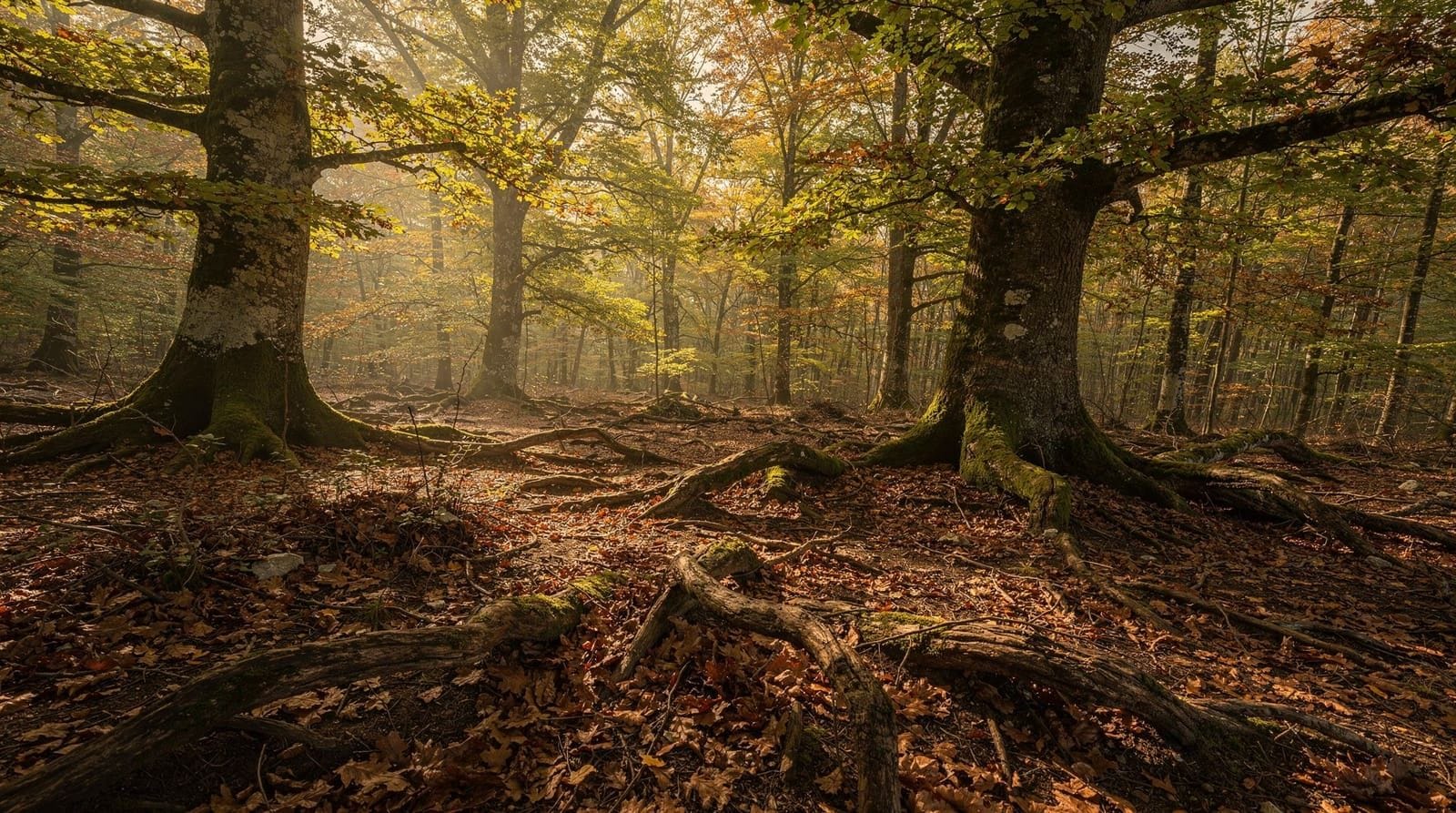
Rovinj is surrounded by the Golden Cape Forest Park (Zlatni Rt), a beautiful coastal park of ancient cedars, pines, and cypress planted in the 19th century by a Viennese industrialist. Well-marked trails make for excellent walking and cycling, with various rocky coves and swimming spots along the coast. Bicycles can be hired in town from €10–€15/day.
Rovinj for Cyclists and Walkers
Rovinj rewards those who explore it on foot or by bike more generously than almost any other town in Istria. The Golden Cape Forest Park (Zlatni Rt), immediately south of the old town, contains approximately 10 km of marked coastal paths threading through ancient cedars, holm oaks, and Mediterranean pines. The paths are well-maintained and largely flat, winding between rocky coves and swimming spots. The park feels genuinely wild despite being within walking distance of the harbour — a remarkable piece of Victorian-era landscape planning that has matured beautifully over 150 years.
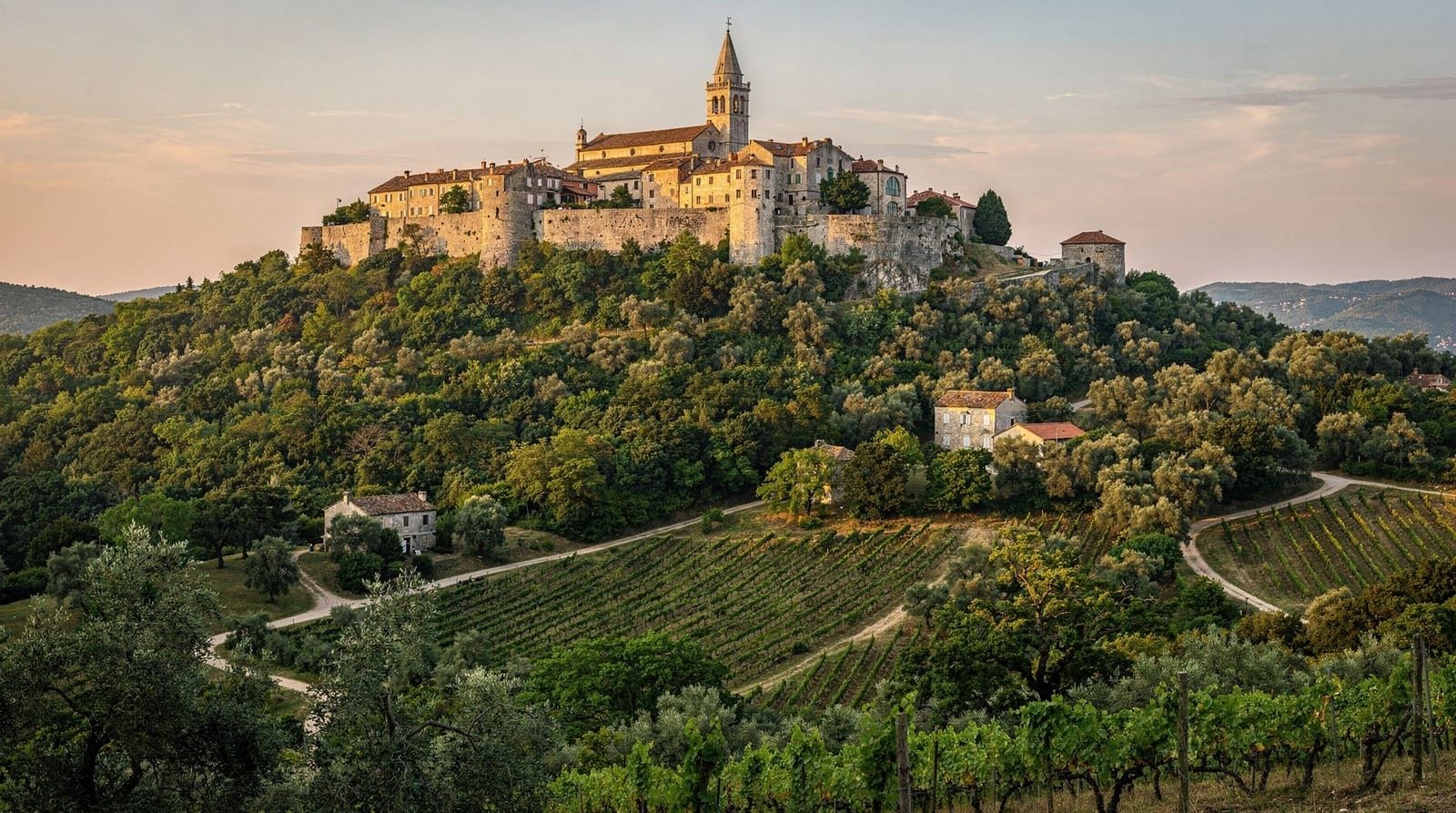
For road cyclists, the flat coastal road running south from Rovinj toward Pula is one of the more pleasant rides on the Istrian coast — low traffic outside peak season, good asphalt, and sea views for much of the route. It is also easily broken into stages: Rovinj to Bale (around 12 km inland) is a gentle introduction to the Istrian interior, with a medieval hilltop village as reward. The stretch south toward Vodnjan and onward to Pula suits those who want a half-day or full-day road ride with a destination.
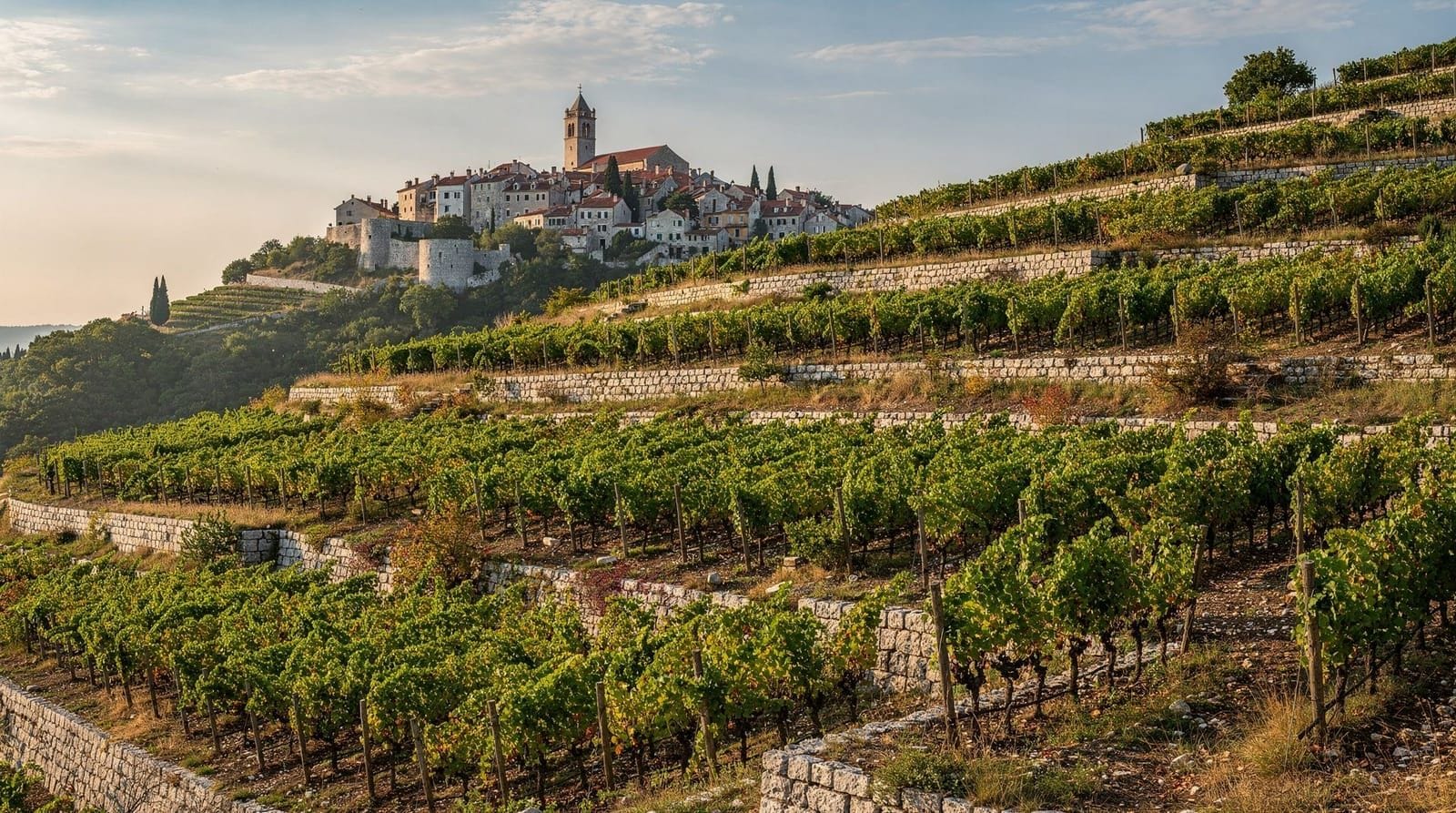
Less obvious but worth knowing: the old Parenzana railway route, a narrow-gauge line that once ran from Trieste through Istria to Poreč, was decommissioned in 1935 and its trackbed converted into a cycling and walking trail. From Rovinj, the path connects inland toward Kanfanar — a gentle climb through vineyard country — and from there links into the wider Istrian cycling network that eventually reaches Poreč to the north and the hill towns of the interior. The Parenzana trail is mostly unpaved (compacted gravel, suitable for touring or gravel bikes) and is well-signed in Croatia, Slovenia, and Italy.
Bicycles and e-bikes can be hired from several outlets in central Rovinj. Standard bikes typically cost €10–€15 per day; e-bikes, which make the inland climbs significantly easier, range from €25–€35 per day. Most rental shops can provide basic route maps and advice on trail conditions.
Beaches near Rovinj
Rovinj’s coast is rocky rather than sandy — the Adriatic at its crystal-clearest.
Mulini Beach (Zlatni Rt): A popular pebbly beach in the Golden Cape forest park, about 1 km from the old town. Good facilities, calm water.
Lone Bay: Within Zlatni Rt, a sheltered cove with excellent swimming.
Kuvi Beach: A quieter cove further around the Golden Cape, reached by a 30–40 minute coastal walk.
Monsena and Ambrela (north of town): Larger beach complexes with resort facilities, more suitable for families who want a traditional beach setup.
Where to stay in Rovinj
Old town: A handful of atmospheric boutique hotels inside the peninsula itself — expensive but extraordinary for location. Hotel Adriatic (elegant, boutique, excellent position) is the standout.
Maistra hotels: The local hotel group operates several good-quality properties around Rovinj, including the island hotels (Crveni Otok, Sv. Katarina) and the 5-star Lone (a design hotel in Zlatni Rt forest). Rates from €130 to €400+ per night in peak season.
Private apartments: Wide range from €60–€200/night. The old town has some spectacular apartments (book well ahead), and the surrounding area has many more at better value.
Eden Hotel: A large resort hotel outside the old town with a beach and pool — good value for families.
Where to eat in Rovinj
Konoba Monte (old town): Considered one of the finest restaurants in Istria — creative Istrian cuisine using truffles, local seafood, and Malvazija wine. Book several weeks ahead in summer. A splurge for a special dinner.
Konoba Veli Jože (old town): A local institution that has been feeding Rovinj residents for decades. The interior is everything a proper Istrian konoba should be: rough stone walls, barrels stacked in the corners, bundles of dried herbs hanging from the ceiling, and legs of prosciutto suspended above the bar. The menu is straightforward and excellent — hand-cut pršut to start, pasta with truffle shavings, grilled fish pulled from the Adriatic that morning. Prices are significantly more modest than Monte, and the atmosphere is considerably less formal. Veli Jože is the place locals actually eat rather than the place they send tourists; this distinction shows in both the cooking and the welcome.
Restaurant Kantinon (harbourfront): Good fresh fish at the water’s edge, with a terrace looking across the harbour. Consistent quality.
Konoba Da Sergio (old town): Wood-fired pizza and pasta in a convivial old-town atmosphere. The pizza is genuinely excellent — thin crust, Istrian ingredients.
Puntulina (old town): A restaurant and wine bar in a category of its own for sheer physical drama. The tables are set literally on top of the rocks at the base of the old town’s western cliff face, with the open sea directly below — so close that on anything other than a calm day you can hear the water moving beneath you. The restaurant is tiny, seating perhaps 30 people in total across its various terraces and ledges, which means booking well in advance is essential: in July and August, tables are typically gone three to four weeks ahead. Come for sunset if you can; the light on the old town walls from the water side at dusk is exceptional. The food — Istrian seafood and wine — is well executed, though the setting is the main reason people return.
Rovinjski pijac (morning market): Rovinj’s daily market sells excellent local produce — Istrian prosciutto (pršut), truffles in season, olive oil, Malvazija wine, locally made cheeses. The market runs through late morning.
Best time to visit Rovinj
June: Outstanding — warm, long days, full facilities, manageable crowds. The sea reaches swimming temperature by mid-June. This is arguably the finest month.
September–October: Equally good in many respects. September brings warm water and thinning crowds. October opens white truffle season (early to mid October) — one of the best times for food-focused travellers. Some beach-focused infrastructure closes by mid-October.
July–August: Busy — Rovinj is popular with Italian, German, and Austrian holidaymakers and reaches its capacity in peak weeks. The old town gets congested in the afternoon. Still enjoyable but book everything ahead.
May: Early season, cooler (18–22°C), beautifully green, very few tourists. Sea is still cold (16–18°C) but air temperature is pleasant for walking.
Winter: Many tourist restaurants close November–March, but the old town is atmospheric and peaceful. The truffle season runs through December.
Top experiences
Bookable activities with verified prices and instant confirmation on GetYourGuide.
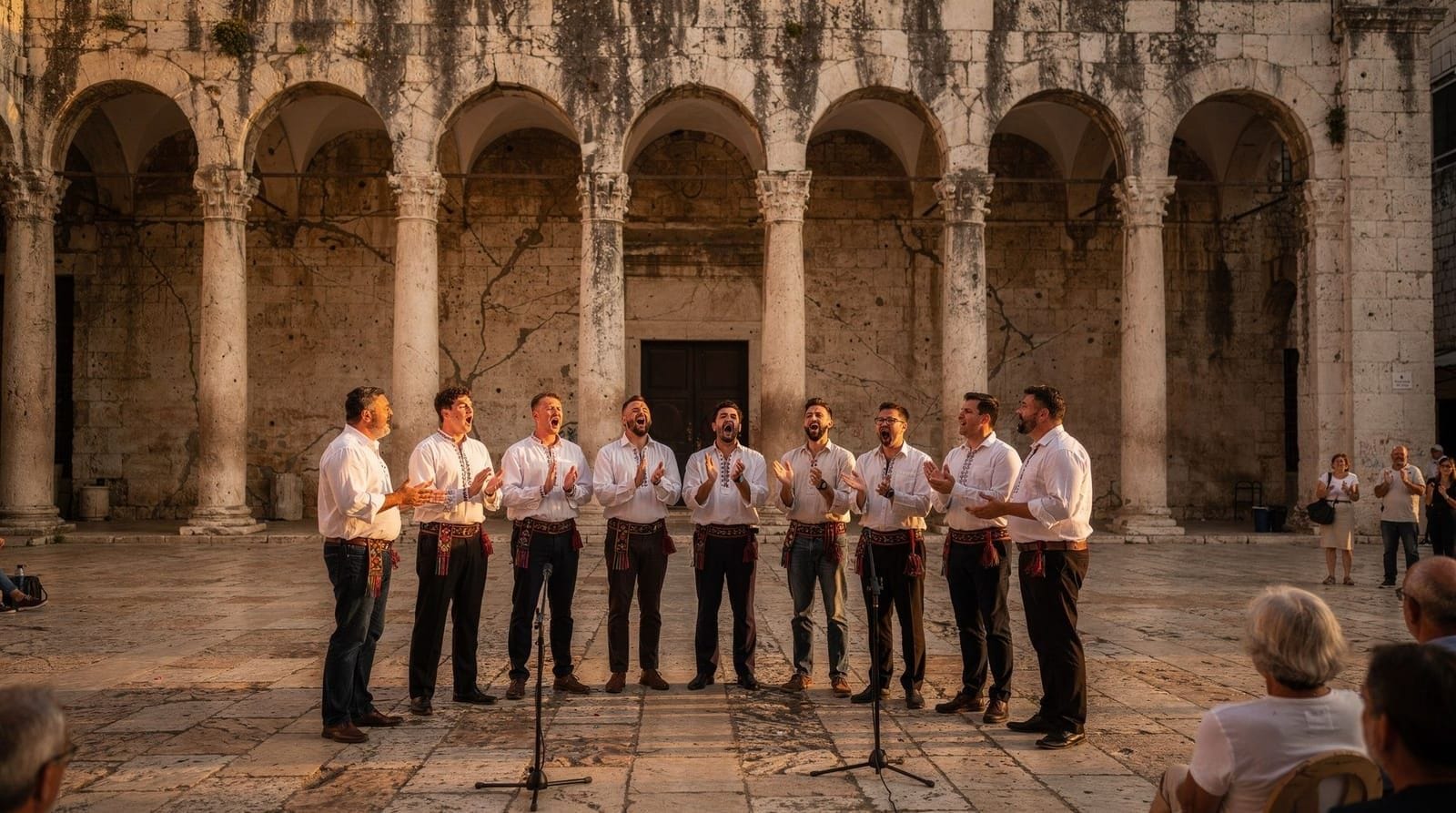
Top-rated experiences in Rovinj travel guide
Best-rated activities across GetYourGuide and Viator.