Šibenik travel guide
Complete guide to Šibenik — the only Renaissance cathedral built entirely in stone, two fortresses, Krka National Park access and an authentic…
Biograd: Krka National Park and Sibenik tour
Quick facts
- Best time
- May–Jun & Sep–Oct
- Days needed
- 1–2 days
- Getting there
- Bus from Split (1.5 hrs) or Zadar (1.5 hrs)
- Budget per day
- €45–€120
Is Šibenik worth a visit? More than most visitors realise. While Split and Dubrovnik dominate itineraries, Šibenik holds something genuinely unique: the Cathedral of St James, the only Renaissance cathedral in the world built entirely from stone (no brick, no wood), a 105-year engineering achievement that exhausted three generations of architects and craftsmen. The city also serves as the most logical gateway to Krka National Park, and its two Venetian fortresses give extraordinary views over the river mouth and sea.
Getting to and around Šibenik
By bus: The main way to arrive. Buses from Split run 8–10 times daily (1.5 hours, €8–€12). From Zadar, 1.5 hours (€8–€10). The bus station sits at the edge of the old town, five minutes’ walk from the cathedral.
By car: Šibenik is 80 km north of Split on the A1/E65 motorway, then D8 coastal road. Parking in the old town is limited; use the Mandalina or Vidici car parks on the approach.
By boat: Some organised Krka day tours arrive by boat from Primošten or Vodice. There is no regular passenger ferry to Šibenik from other major Dalmatian cities.
Within the city: Šibenik’s old town climbs a steep hillside and is compact enough to walk everywhere. The fortress of St Michael (Tvrđava Sv. Mihovila) is at the top; the cathedral and market square at the bottom.
What to see and do in Šibenik
Cathedral of St James
The cathedral (Katedrala sv. Jakova) is Šibenik’s singular reason to visit and one of the most remarkable buildings in Croatia. Construction began in 1431 under Venetian architect Francesco di Giacomo and continued until 1536 — three architects across a century. The crucial innovation is structural: the entire building, including the barrel vaults and ribbed dome, is constructed from precisely cut stone blocks without mortar or metal fittings. The 71 stone heads carved around the exterior — portraits, allegedly, of the cathedral’s donors and the citizens of 15th-century Šibenik — are extraordinary in their individual characterisation.
Entry to the cathedral costs approximately €4. UNESCO listed it in 2000. The baptistery (accessed separately) holds remarkable Renaissance reliefs.
Fortresses of St Michael and St John
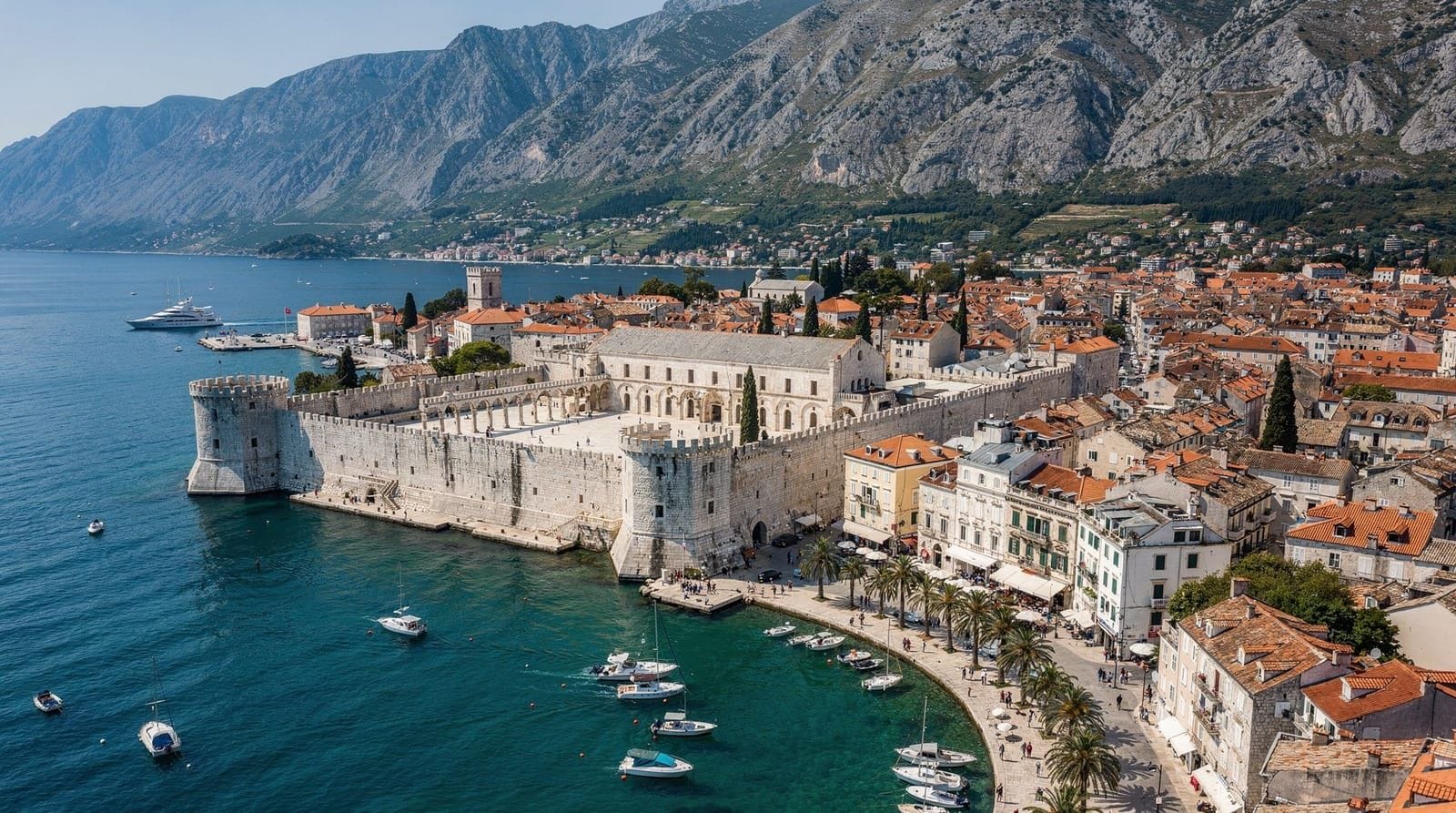
Tvrđava Sv. Mihovila (St Michael’s Fortress) is the older and higher of the two, reached by a steep staircase through the old town. The restored fortress hosts open-air concerts in summer and delivers the best views of the cathedral dome, river mouth, and Šibenik Channel. Tvrđava Sv. Ivana (St John’s Fortress) is more architecturally complete, a 16th-century Venetian star-fort; the third, Barone Fortress, was built in 1646 against Ottoman attack and now houses an excellent interactive museum of the 1646 siege.
Old town streets
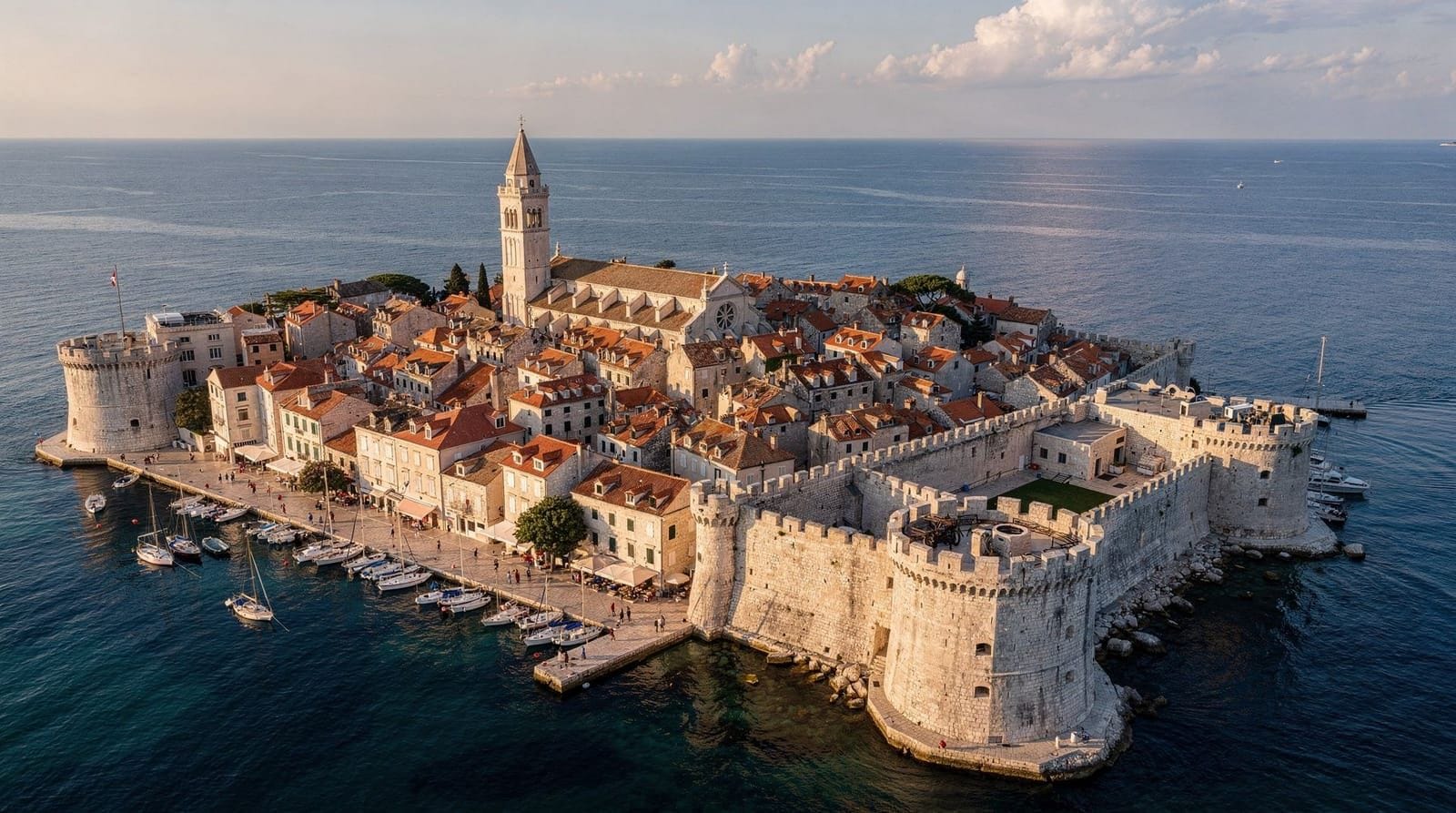
Šibenik’s medieval core, rising steeply behind the cathedral, is an authentic working neighbourhood with resident Croatians rather than a tourist zone. Narrow lanes, stone staircases, and occasional small squares reveal a textbook Dalmatian town that receives a fraction of Trogir’s or Dubrovnik’s visitors.
Krka National Park
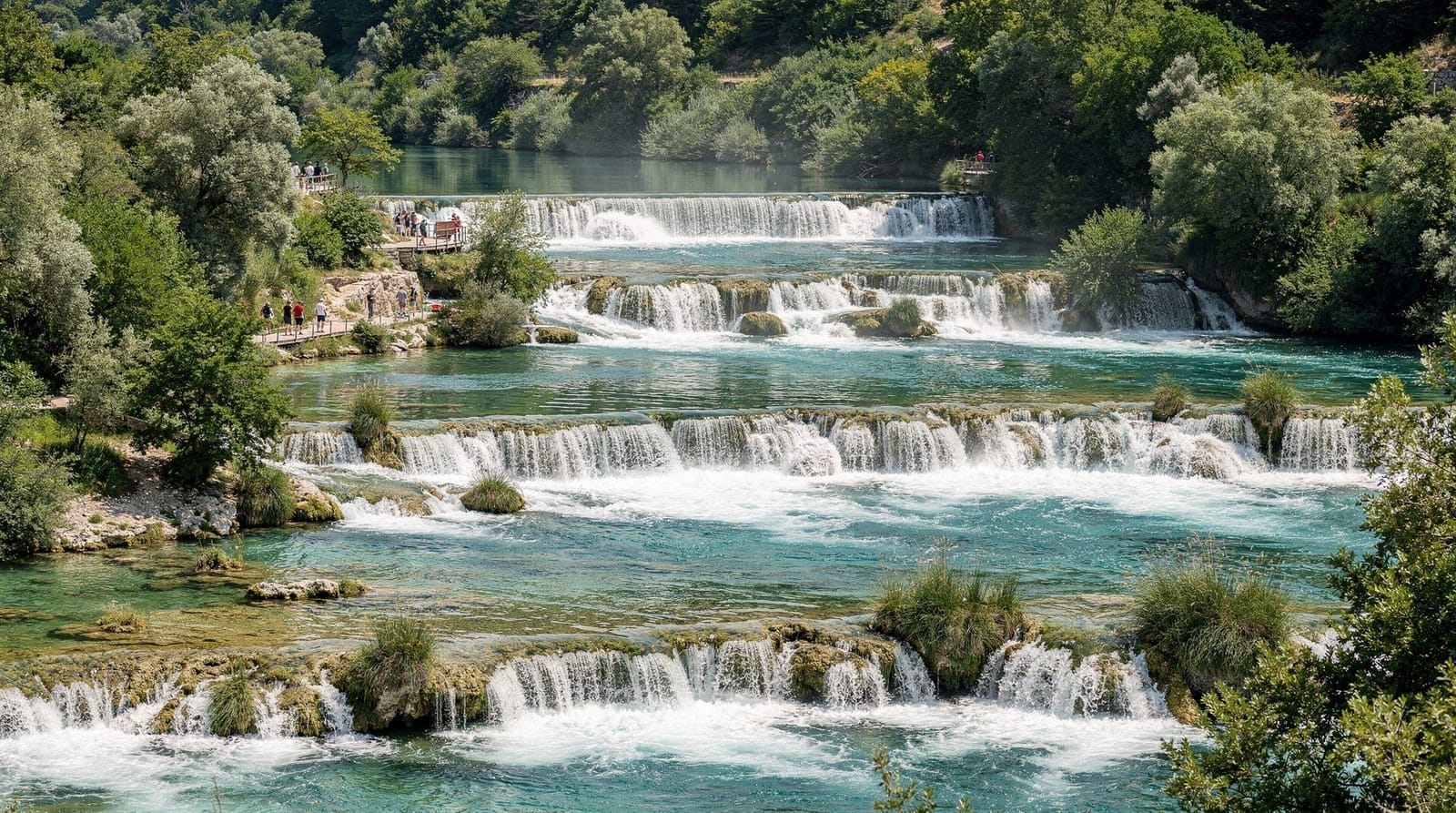
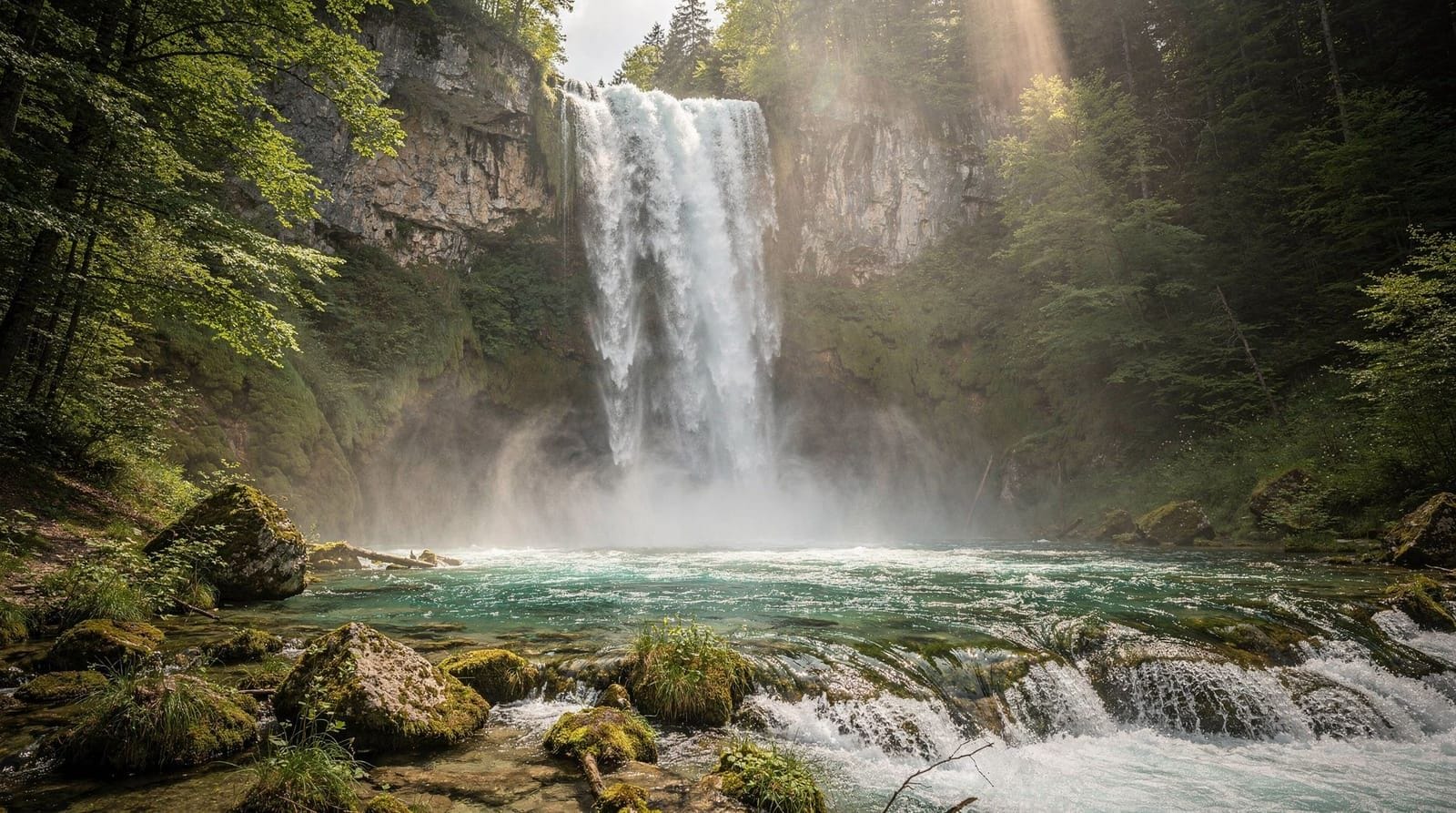
The park’s main entrance at Skradin is 14 km from Šibenik. Local buses connect the cities; from Skradin, a park boat takes visitors to Skradinski Buk falls (included in the entry ticket, around €30 in high season). A half-day is sufficient for the main falls circuit; a full day allows exploration of Visovac Island monastery and Roški Slap waterfall upstream.
Where to stay in Šibenik
Old town: Small boutique hotels and apartments built into medieval stone houses. Boutique Hotel Knez (Trg Republike Hrvatske 1) overlooks the cathedral square; doubles from €90–€150.
Šibenik riviera: Hotels south of the city (Solaris resort, Brodarica village) offer beach access and a more resort feel at competitive prices.
Budget: Šibenik has cheaper accommodation than Split or Zadar. Private rooms from €35–€60 in the old town.
Where to eat in Šibenik
Gradska Vijećnica (Trg Republike Hrvatske): Restaurant in the old town hall loggia opposite the cathedral; outdoor seating, Dalmatian classics.
Pelegrini (Jurja Dalmatinca 1): The finest restaurant in Šibenik, with a Michelin-recognised creative menu and a terrace overlooking the cathedral. Reserve well ahead; tasting menu around €70.
Konoba Šibenska noć (Ante Šupuka 46): Unpretentious local favourite, good grilled fish and meat, local wine, no tourist markup.
Market: The open-air morning market on the harbour quay sells seasonal produce, cheese, and local rakija.
Best time to visit Šibenik
May–June and September are ideal: Krka’s falls are at their most photogenic after spring rainfall or before autumn drawdown. The city is uncrowded, the cathedral receives fewer tour groups.
July–August: Busiest period, especially for Krka, which now operates a timed-entry system (purchase tickets online in advance). The city handles the summer influx without the congestion of Dubrovnik.
October–April: Šibenik functions as a proper North Dalmatian working city and is pleasant for an overnight stay even in low season. The cathedral and fortresses remain open; Krka National Park is open year-round with lower entry fees outside the peak season. November sees autumn light on the limestone that makes the cathedral and fortress views exceptionally photogenic.
Nightlife and cultural events in Šibenik
Šibenik’s cultural calendar is anchored by two events. The International Children’s Festival (Međunarodni dječji festival, late June–early July) has run since 1958 and brings theatre, puppet shows, music, and craft workshops to venues across the city — one of Europe’s longest-running children’s arts events and genuinely worth planning around for families.
The St Michael’s Fortress concerts (June–September) use the castle’s restored ramparts as an outdoor amphitheatre for Croatian and international artists. The acoustic quality, the fortress setting, and the sea views make this one of the finest open-air concert experiences in Croatia. Check the Šibenik Tourism Board website for the seasonal programme.
Craft beer bars and wine bars have multiplied in the old town since 2020; the Croatian food and drink scene here is authentic, with local Šibenski craft producers represented alongside the Dalmatian wine staples (Plavac Mali, Pošip, Babić).
Šibenik for families
The fortresses with their interactive museums and climbing ramparts appeal strongly to children aged 8+. Krka National Park’s boardwalk through the waterfall zone is manageable for young children and strollers on the main loop. The beaches at Šibenik riviera (Solaris, Brodarica, Primošten) are pebble-free in the resort areas and well-suited to families. The Children’s Festival in late June–early July is worth building an itinerary around.
Getting around the wider Šibenik area
The Šibenik area is best explored by rental car, which allows flexibility between the cathedral, the fortresses, Krka (14 km), the Kornati boat tours (departing from Šibenik harbour), and the riviera beaches. Car rental is available in Šibenik or via agencies in Split with drop-off options. Public buses connect the main towns but schedule gaps make spontaneous exploring difficult.
Day trips from Šibenik
Krka National Park is the primary excursion (see above). Zadar (1.5 hours north) and Split (1.5 hours south) are both easy half-day trips by bus. The Kornati archipelago can be reached by organised boat tour from Šibenik harbour. Primošten, a charming old town on its own islet 28 km south, makes a pleasant afternoon stop combining a swim and a konoba lunch.
Murter Island and Kornati access: The village of Betina on Murter Island (28 km from Šibenik by road) is the main departure point for Kornati boat tours. The island itself has sandy beaches and a quiet fishing character that offers a complete contrast to the historic city.
Vodice: 10 km north of Šibenik, Vodice is a resort town with beaches and nightlife popular with domestic Croatian tourists. It functions as a contrast to Šibenik’s cultural seriousness — useful if you have children who have had enough churches.
Šibenik’s history and identity
Šibenik is the youngest of the great Dalmatian coastal cities — it was not an ancient Greek or Roman foundation but grew from a Croatian medieval settlement documented from 1066. This means it has a different architectural DNA from Zadar (Roman forum, Venetian overlays) or Split (Roman palace nucleus). Šibenik’s old town is a Croatian-medieval creation with Venetian additions: the buildings are stone and irregular, the streets wind without Roman orthogonal planning, and the atmosphere is more organically accumulated than designed.
The city was the administrative centre of a major Venetian provveditorato (province) for most of the period 1412–1797 and was the scene of significant military action during the Ottoman wars of the 15th–17th centuries. The three fortresses were built against Ottoman attack and reflect the military engineering of their respective periods. St Michael (medieval), St John (16th-century Venetian), and Barone (17th-century, 1646) formed an interlocking defensive system that successfully protected the city.
Šibenik was also the birthplace of Juraj Dalmatinac (Giorgio da Sebenico, ca. 1410–1473), the most significant sculptor and architect of the 15th-century Dalmatian coast — the primary architect of the cathedral and one of the defining figures of late-Gothic/early-Renaissance stone carving. His portrait heads on the cathedral exterior (71 faces arranged in three rows around the building) include what is believed to be a self-portrait; the stone faces are extraordinary in their individuality.
Beaches near Šibenik
Šibenik itself has no beach in the old town, but the surrounding area has several excellent options accessible by car, bus, or organised trip.
Solaris Beach Resort (5 km south): The largest resort development near Šibenik, with multiple beaches (pebble and sand), water sports, and family facilities. Suitable for a relaxed beach half-day combined with a cathedral morning.
Jadrija Beach (5 km south, smaller): A quieter pebble beach with a konoba; accessible by local bus or bike.
Primošten beaches (28 km south): The town of Primošten occupies a small peninsula connected to the mainland by a causeway; the beaches on either side are generally excellent. The Babić grape vineyards around Primošten produce a distinctive red wine from vines trained on dry-stone terracing — one of Croatia’s most photographed agricultural landscapes.
Tisno and the Murter riviera (30 km north): Tisno is the base for Croatia’s alternative music festival scene (Outlook, Dimensions, Garden Festival). Between events, the beaches and bays of the Murter riviera are among the quietest on the northern Dalmatian coast.
Šibenik practical information
Entry fees (2026 approximations):
- Cathedral of St James: €4
- Barone Fortress (with interactive museum): €8
- St Michael’s Fortress: €7
- St John’s Fortress: €5
- Combined fortress ticket: €15
Guided tours: Several operators in Šibenik offer guided old-town walking tours (2 hours, around €15 per person) that combine the cathedral, all three fortresses, and the medieval street plan. Book via the Šibenik Tourism Board or local tour desks.
Internet and services: The old town has free Wi-Fi in the main square and harbour area. Banks and ATMs are available on the harbour promenade. The post office (Vladimira Nazora) handles currency exchange.
Šibenik and the River Krka
The Krka River empties into the sea at Šibenik, making the city the gateway to the river system that creates Krka National Park 14 km upstream. The river estuary (Šibenski kanal) is navigable and connects the city to the island chain of the Šibenik archipelago — a group of 200 smaller islands and islets immediately offshore that form one of the least-visited and most pristine coastal environments on the Dalmatian coast.
Šibenik archipelago: The islands of Zlarin (20 minutes by ferry), Prvić (25 minutes), and Krapanj (5 minutes) form a compact, car-free archipelago accessible by regular ferry from Šibenik harbour. Krapanj is notable as the smallest inhabited island in Croatia and the base for the last remaining traditional sponge-diving industry on the coast — a practice continuous since the 17th century. The island Sponge and Diving Museum tells the story.
Water taxis and boat tours: Several operators run day tours from Šibenik harbour to the Kornati islands (3 hours one-way), the Krka river, and Primošten. The boat ride from Šibenik into the Skradinski Buk section of Krka Park (through the estuary, upriver) is one of the most scenic approaches to any Croatian national park.
Šibenik accommodation in detail
Budget (€30–€60): Several hostels and private rooms in the old town offer good value. Hostel Šibenik (Stjepana Radića) and multiple booking.com-listed rooms in the old town streets provide excellent access to the cathedral and fortresses.
Mid-range (€70–€120): Boutique Hotel Knez (see main text) and Hotel Jadran (Šetalište Petra Šubića 23) on the harbour front are the main options. Several serviced apartment operations offer 2–3 bedroom units ideal for families.
Upper mid-range (€120–€200): The Solaris Beach Resort complex (5 km south) includes several hotels with pools, beach access, and family facilities — worth considering if beach time is a priority alongside the cathedral.
Camping: Camp Solaris and Camp Jadrija (both south of Šibenik) are well-maintained campsites suitable for tents, caravans, and motorhomes.
Šibenik transport connections
Train: Šibenik is connected to the Croatian rail network via a line to Perković junction (where the Zagreb–Split mainline passes). Trains are slow but scenic; not the primary transport choice.
Bus: The most practical connection. Šibenik bus station (Draga 14) handles frequent services to Split (1.5 hours, €8–€12), Zadar (1.5 hours, €8–€10), Zagreb (5 hours), and Dubrovnik (3.5 hours).
Car: Šibenik is 80 km north of Split on the A1 motorway (toll) or the slower coastal D8 road. Both options are used; the D8 through Trogir and Šibenik is more scenic but significantly slower in summer.
Top experiences
Bookable activities with verified prices and instant confirmation on GetYourGuide.
Top-rated experiences in Šibenik travel guide
Best-rated activities across GetYourGuide and Viator.

Blue cave, Mamma Mia and Hvar, 5 islands speedboat tour
- Viator

Blue Cave and Hvar Tour - 5 Islands Tour from Split and Trogir
- Viator

Blue cave, Mama Mia and Hvar, 5 Island Speedboat Tour from Trogir
- Viator

From Split: Plitvice Lakes National Park Guided Tour
- Viator

Krka Waterfalls Day Tour with Boat Ride from Split and Trogir
- Viator

Plitvice Lakes National Park Guided Day Tour from Split
- Viator