Krka National Park travel guide
Krka National Park protects Skradinski Buk — Croatia's finest waterfall cascade near Šibenik. Best April–June and September. Easier from Split than…
Krka National Park: All-sites entry ticket
Quick facts
- Best time
- April–June and September–October
- Days needed
- Half day to 1 full day
- Getting there
- From Šibenik (ferry or bus); from Split (1.5 h); from Zadar (1 h)
- Budget per day
- Ticket approx. €15–€30 (seasonal); all-sites ticket €35–€40
Krka National Park protects the middle and lower reaches of the Krka River as it cuts through a limestone canyon toward the Adriatic near Šibenik. Its signature attraction — Skradinski Buk, a 17-step travertine waterfall cascade 800 metres long and 46 metres high — is one of the most photographed natural sites in Croatia and consistently ranks among the finest waterfall landscapes in the Mediterranean.
While Plitvice Lakes is often described as Croatia’s finest national park, Krka has several practical advantages for visitors based on the Dalmatian coast: it is reachable from Split in 90 minutes, from Zadar in 60 minutes, and has a boat entrance option from the village of Skradin that is genuinely atmospheric. Many travellers who have visited both rate the experience as complementary rather than one-or-the-other.
| Where | Skradin / Lozovac, near Šibenik |
| Cost | around €15–25 single-site; €35–40 all-sites (peak season) |
| Time needed | Half day (Skradinski Buk only) to a full day (with Visovac and Roški Slap) |
| Getting there | 90 min from Split, 60 min from Zadar, 15 km from Šibenik |
| Best time | April–June or September for water flow and manageable crowds |
What to see in Krka National Park
Skradinski Buk
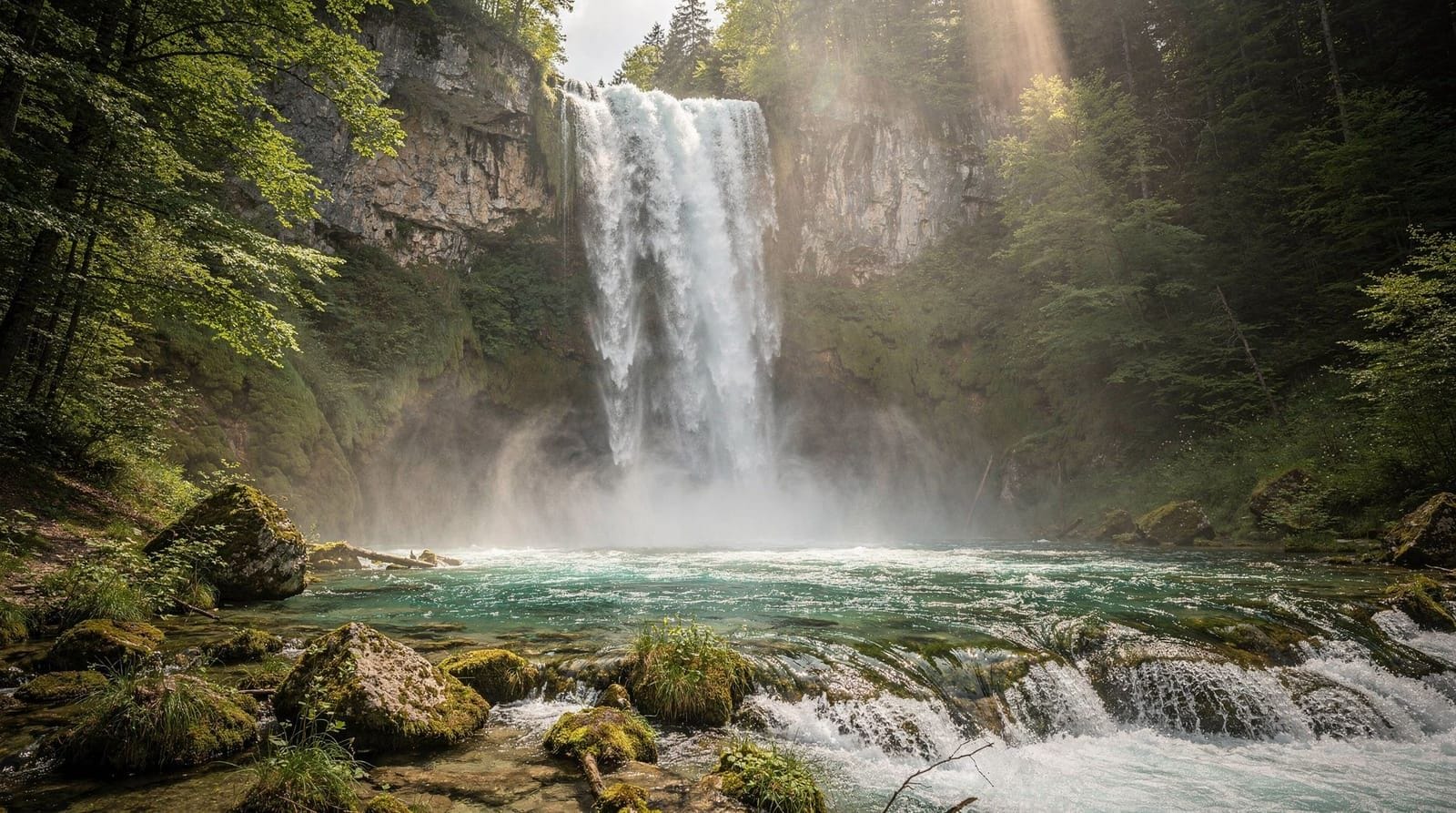
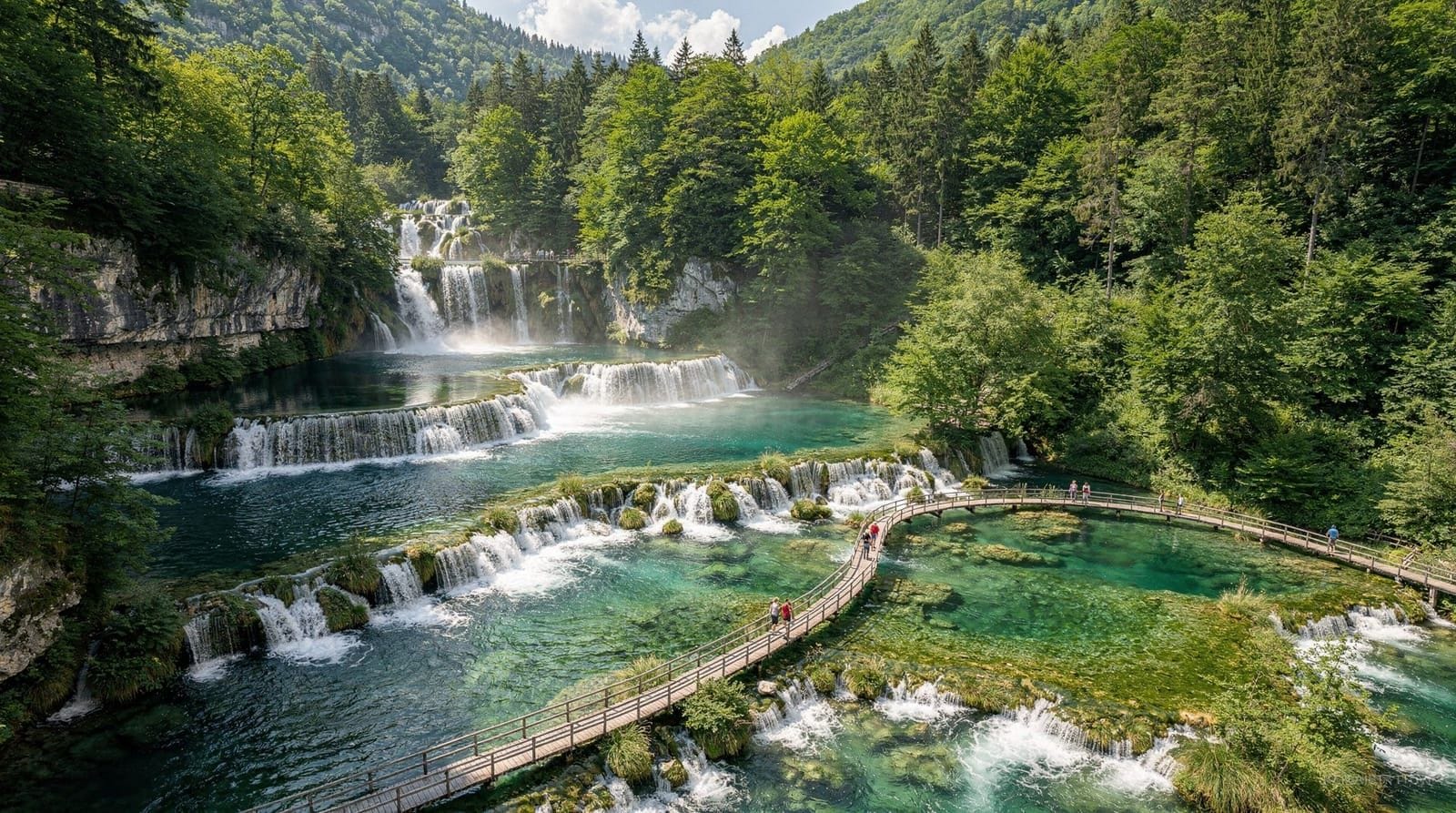
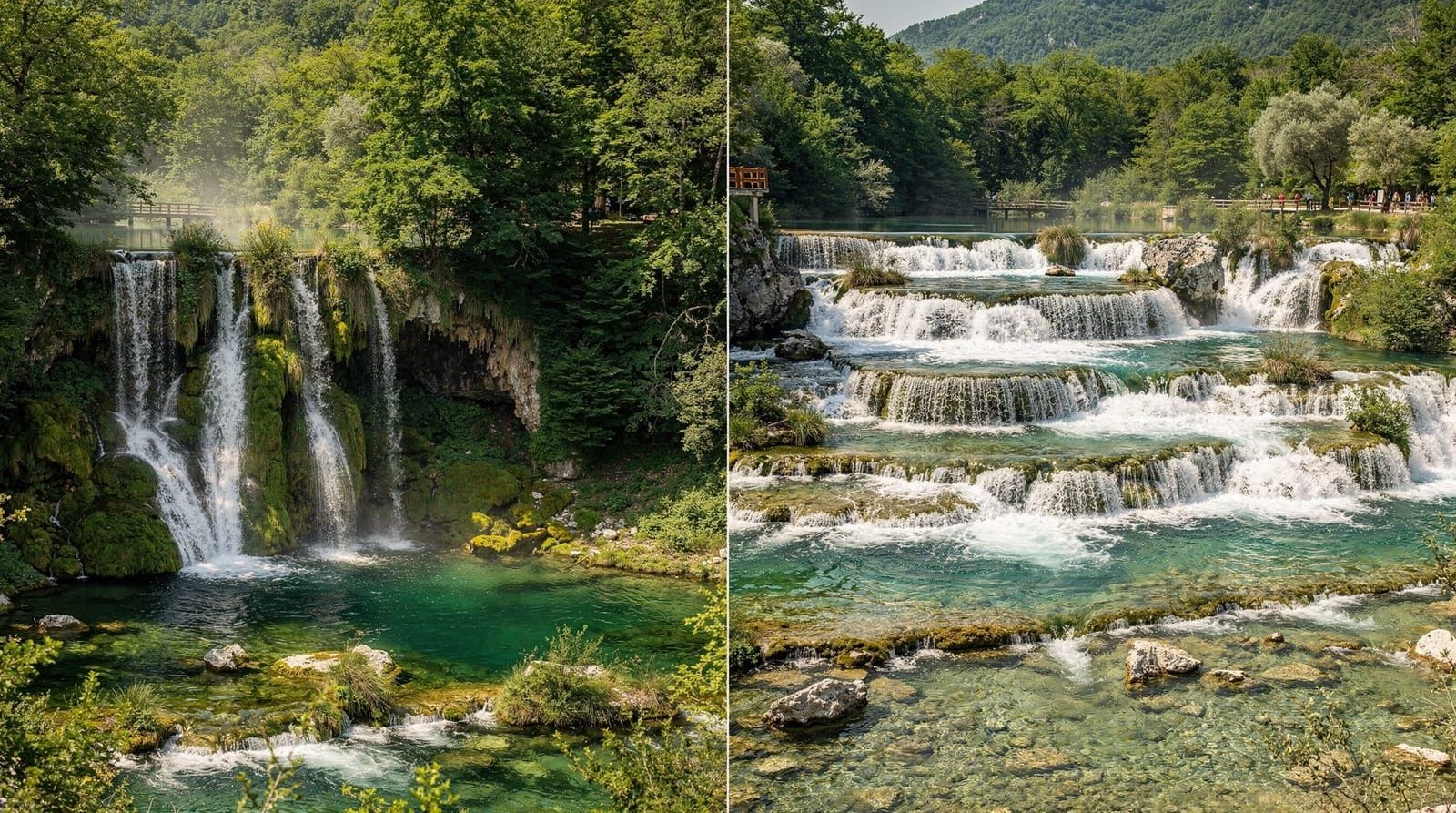
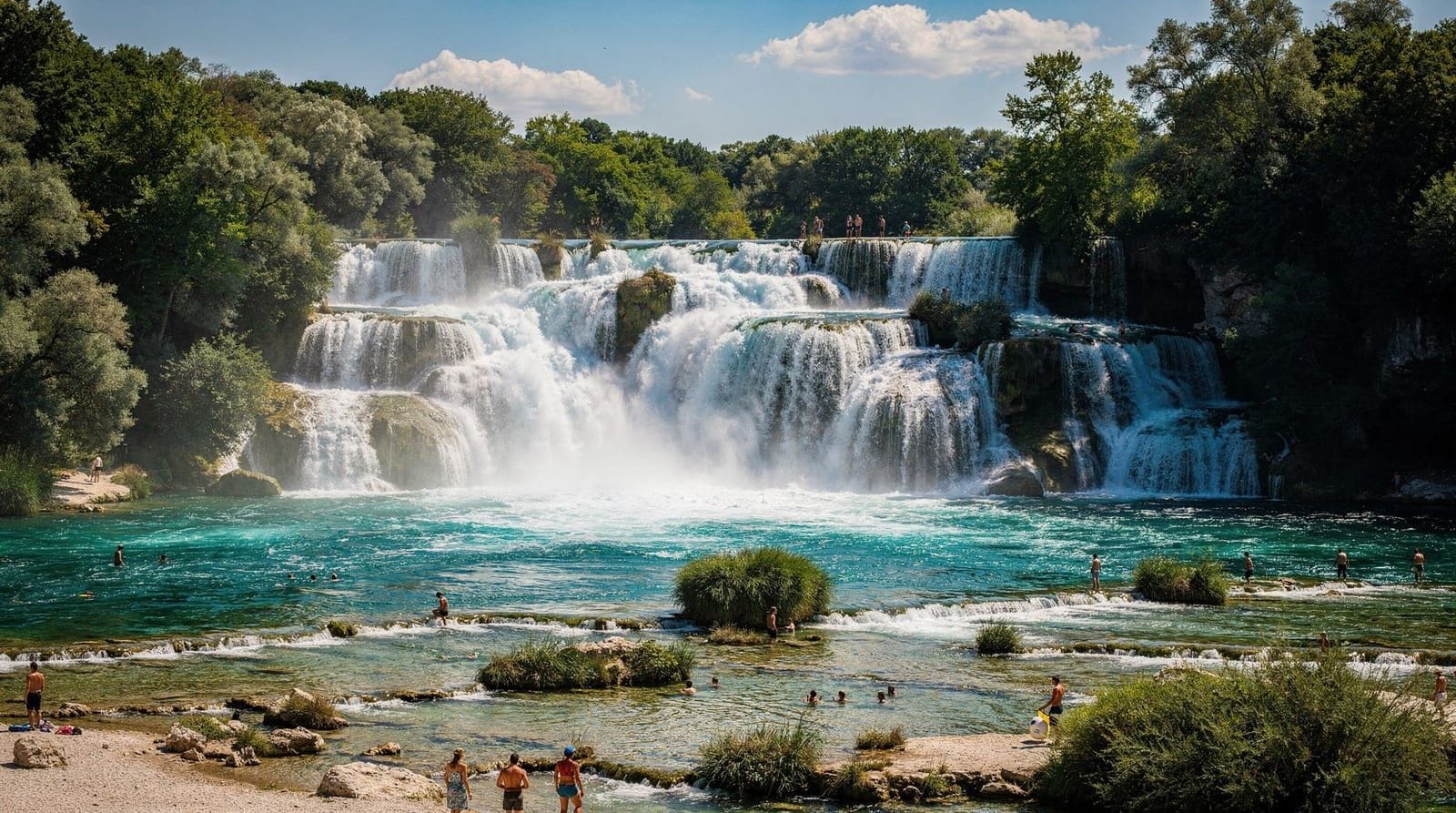
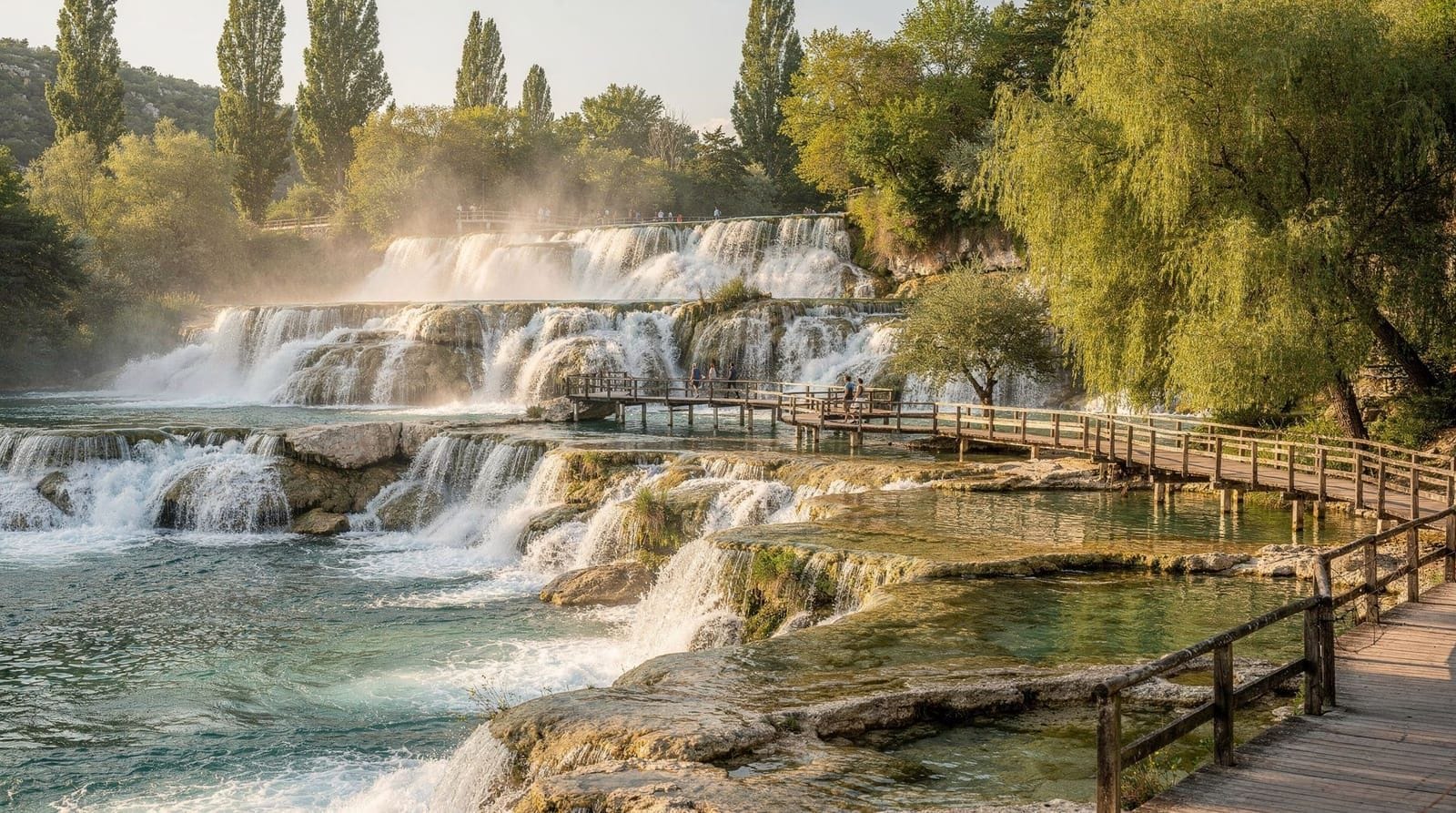
Skradinski Buk is the main attraction and one of the most remarkable waterfalls in Europe — not in terms of height (a modest 46 metres total), but in terms of scale and visual complexity. The Krka River descends over 17 travertine barriers in a 800-metre cascade, the water fanning into dozens of separate falls, channels, and pools set in green vegetation.
Visiting is from a marked circular trail (approximately 2–3 km) around the waterfall complex. The walk is straightforward and flat, with excellent viewing platforms at multiple levels.
Swimming at Skradinski Buk is now prohibited. Until 2021, swimming in the pools below the waterfall was one of Krka’s most popular activities; this was banned to protect the travertine formations. Anyone visiting who has seen older images or reviews mentioning swimming should note this change.
The boat from Skradin
One of the most pleasant ways to arrive at Skradinski Buk is by boat from the village of Skradin, 3 km downstream. Jadrolinija and private operators run boat services up the Krka River canyon — a 25–30 minute trip through willow-lined banks, past reed beds and occasional cormorants, arriving directly at the Skradinski Buk landing. The boat ticket is separate from park entry (or included in package tickets).
Visovac Island
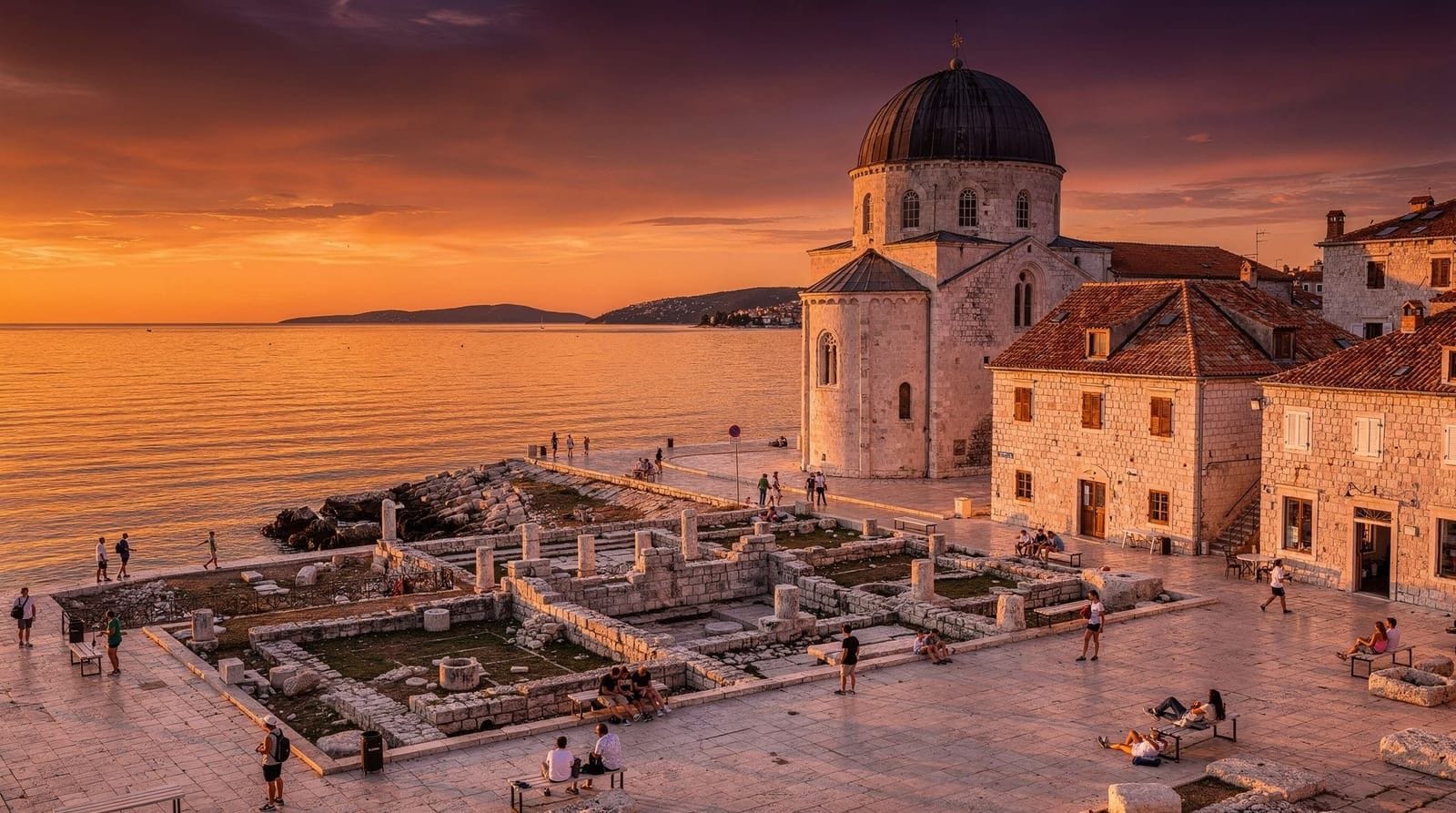
Mid-river between Skradinski Buk and the upper section of the park, the tiny island of Visovac rises from the lake-like widening of the Krka River. A Franciscan monastery has occupied the island since 1445, and the boat excursion from Skradinski Buk (included in some ticket packages) stops here for a guided visit of the church and the small museum.
The visual impact of the domed church and its cloisters surrounded by water is remarkable — Visovac is one of the most scenic religious sites in Croatia.
Roški Slap and the upper park
Around 13 km upstream from Skradinski Buk, the Roški Slap waterfall (22.5 metres, with a broad fan shape) is the second major cascade in the park. A separate entrance to the upper section of the park operates from near Skradin by boat or from Lozovac. The upper section also includes the Krka Monastery (Serbian Orthodox, 14th century) at Krka Canyon.
Most day visitors concentrate on Skradinski Buk and skip the upper section; for those with a full day, the Roški Slap and Visovac combination makes a complete circuit.
Ticket prices and entrances
Krka National Park has several entrance points and ticket options. As of 2026:
Single-site entry (Skradinski Buk only, via Lozovac or boat from Skradin): approximately €15–25 depending on season.
All-sites ticket (Skradinski Buk + Roški Slap + Visovac by boat): approximately €35–40 in peak season.
Season tiers:
- Low season (November–March): reduced rates
- Shoulder (April–May, October): mid-range rates
- High season (June–September): full rates
Tickets are bookable online at np-krka.hr. Book ahead for July–August.
Entrance 1: Lozovac (main road entrance)
The most common approach by car or bus. A shuttle bus (included in ticket) takes visitors from the Lozovac car park down to Skradinski Buk (10 minutes). This is the standard entrance for tours from Split and Zadar.
Entrance from Skradin (boat entrance)
Park at Skradin village and take the boat upstream to the waterfall. The scenic river journey is worth the slight extra organisation. Parking in Skradin is easy; boat schedules run throughout the day in season.
Getting to Krka National Park
From Split: Around 90 minutes by car via the A1 motorway north and then the coastal road to Skradin or Lozovac. Numerous organised day tours operate from Split, typically combining Krka with Šibenik or a wine/olive oil stop. The bus to Šibenik (1 hour from Split) connects with local buses to Skradin.
From Zadar: Around 60–70 minutes by car south on the A1. Organised day tours from Zadar to Krka are frequent. Bus connections run via Šibenik.
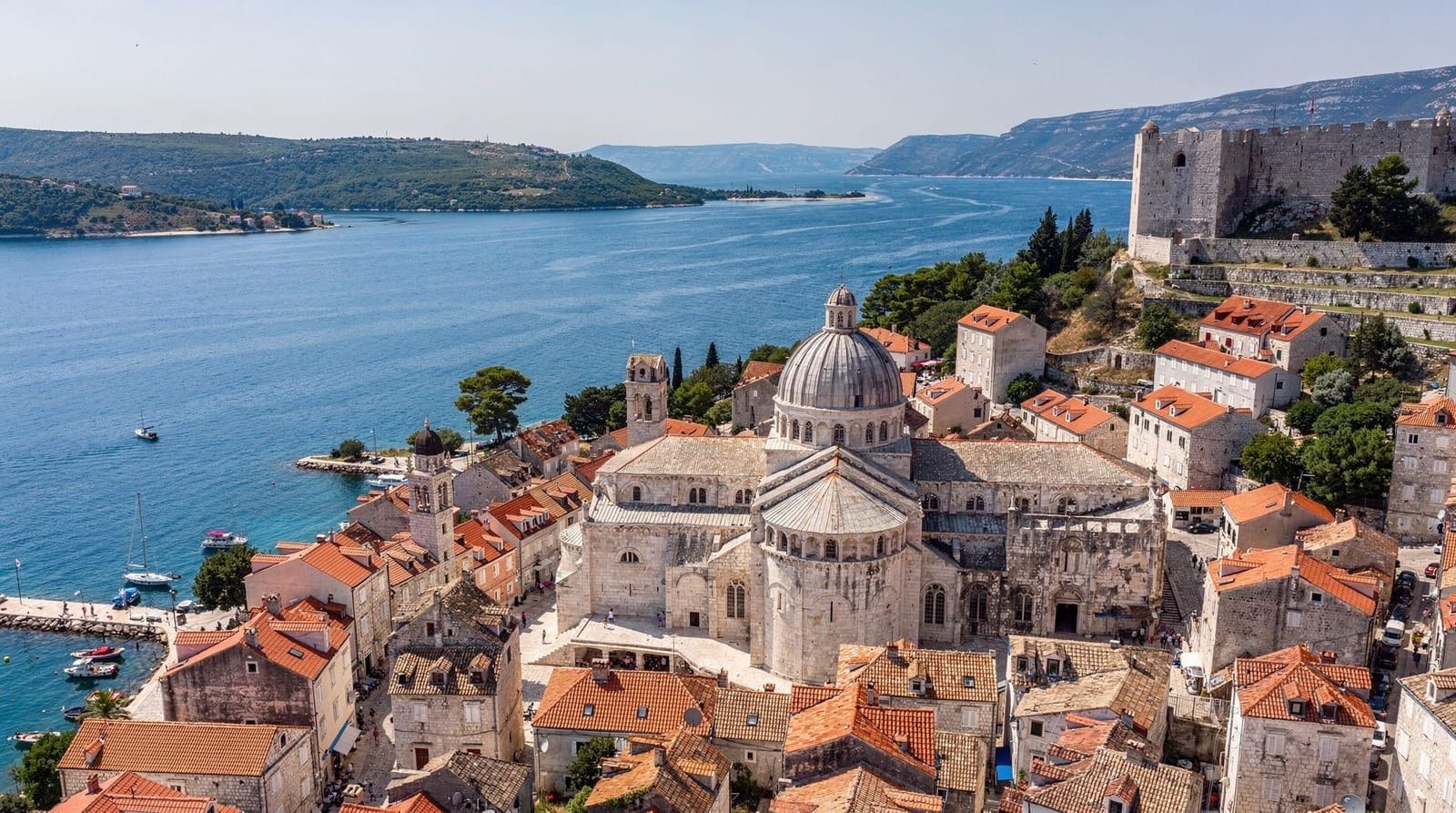
From Šibenik: The closest town to the park, just 15 km away. From Šibenik old town, a ferry/boat service runs directly to Skradin (seasonal) or local buses serve Lozovac. Šibenik is worth visiting in its own right — the UNESCO-listed Cathedral of St James is one of Croatia’s greatest Gothic-Renaissance monuments.
Krka vs Plitvice
The two parks attract the same question constantly: which is better? Honest answer:
Plitvice Lakes is larger, more dramatic, more immersive, and has the UNESCO designation. Its 16 lakes and 90+ waterfalls dwarf Krka in scale. The boardwalk experience — walking directly over the water — is unique. It is also more remote (2 hours from Zagreb, 3.5+ from Split) and can be overwhelmingly crowded in summer.
Krka is smaller but easier to visit from the Dalmatian coast. The boat approach from Skradin is a genuine highlight. Visovac island adds a dimension Plitvice lacks. And Skradinski Buk is stunning in its own right even if it cannot match Plitvice’s scale.
Both parks are worth doing. If you are based in Split or Zadar, Krka is the more practical choice. If you are travelling between Zagreb and Split, Plitvice is the essential stop.
See the full comparison at the Plitvice vs Krka guide.
Best time to visit Krka
April–June is optimal: high water from spring rain means the waterfalls are at maximum volume, the vegetation around the falls is lush, and crowds are manageable. The 8–9am morning is especially beautiful in early spring.
September brings warm water, warm air (late-summer temperatures persist), and significantly fewer visitors than July–August. This is arguably the best overall month.
July–August is the peak with crowds, queues at shuttle buses, and maximum ticket prices. Arrive at opening (8am or earlier if staying nearby) to beat the worst congestion.
November–March: reduced hours, some facilities closed, but dramatically beautiful in ice and low light. Check the park website for current winter opening before visiting.
Practical tips for visiting Krka
Comfortable shoes: The walkways around Skradinski Buk are paved but can be wet and misted by the falls. Walking shoes rather than sandals.
Sunscreen: The upper lake area is open and exposed. The canyon around Skradinski Buk is shaded and cool.
Timing: Aim for 8–9am at Skradinski Buk to experience the falls with morning light and before the tour groups arrive around 10–11am.
Combining with Šibenik: A logical pairing — visit Skradinski Buk in the morning and Šibenik’s Cathedral and old town in the afternoon. Šibenik is 15 km from the park entrance.
Photography guide
Krka rewards photographers differently from Plitvice — the scale is smaller and the light more complex, but there are genuinely excellent compositions available at all times of day.
Skradinski Buk — best angles:
- The overview platform on the southeastern edge of the walkway circuit gives the best wide-angle view of the full cascade system. This is where the famous “staircase of waterfalls” composition is taken.
- The lower boardwalk sections, where the water passes in shallow braids over tufa formations, give intimate close-up perspectives on the texture of the travertine.
- The pool at the base of the main falls — now no longer swimmable — is still accessible to view from the western boardwalk and photographs well in morning shadow when the falls are backlit.
Light: Morning light (8–10am) enters the canyon from the east and catches the mist from the falls. The waterfall face is lit from the front in morning; by afternoon it moves into shadow. For the overview shots, afternoon light works better. Overcast days make the turquoise pools richer and reduce harsh contrast.
Visovac island: The monastery island is best photographed from the boat approaching from the south — the dome reflected in the still water of the lake widening is the classic composition. Bring a medium telephoto (85–150mm equivalent) for details of the monastery walls from the water.
The Skradin boat journey: The river canyon between Skradin and Skradinski Buk is beautiful and underphoto-graphed. The willow-overhung banks, the reflections in the calm water, and occasional cormorants drying their wings on stumps all make excellent shots during the 25-minute journey. A wide angle is ideal; allow your eyes to adjust from the bright sky to the canyon shadow.
Expanded trail and site descriptions with timings
The Skradinski Buk circuit (from Lozovac shuttle):
- Time from shuttle landing to first viewpoint: 15 minutes (flat, wide path)
- Full circuit: 2–3 hours at a comfortable pace (approximately 3 km)
- The circuit is one-directional in peak season to manage flow; always check the signage at the start
- Highlight timing: arrive at opening (8am) for the first 30–60 minutes with dramatically fewer people. By 10am coach groups from Split and Zadar have arrived.
The Skradin boat entrance and return:
- Boat from Skradin harbour: departs every 30–60 minutes in season (check the board at Skradin harbour)
- Journey time: 25–30 minutes each way
- Allows you to arrive at Skradinski Buk by boat (atmospheric) and return by boat or vice versa (walk down, boat back)
- Combined with the Skradinski Buk circuit: allow 3.5–4 hours total
Visovac island excursion:
- Included with the all-sites ticket or as a separate add-on
- Boat from Skradinski Buk landing: 20 minutes to Visovac, 20 minutes guided visit, 20 minutes back
- The monastery church, the library (old manuscripts), and the island’s circular garden are all worth the visit
- Morning and late afternoon are less crowded for the boat
Roški Slap (upper park):
- Separate entrance and shuttle from the upper park access point
- The waterfall is 22.5 metres — smaller than Skradinski Buk but broader in fan shape; photogenic differently
- Combined with Visovac and the Skradin approach, a full upper-park circuit takes a full day (6–7 hours including travel between sections)
Combined day trip: Krka and Šibenik
The most efficient and rewarding day trip from Split or Zadar combines Krka National Park with the extraordinary UNESCO-listed city of Šibenik.
Suggested timing (arriving from Split):
- 8:30–9:00am: arrive at Lozovac entrance (or Skradin for the boat approach)
- 9:00am–12:30pm: Skradinski Buk circuit and, if time allows, Visovac boat excursion
- 1:00pm: drive to Šibenik (15 km, 20 minutes)
- 1:00–2:30pm: lunch in Šibenik old town
- 2:30–5:30pm: Šibenik Cathedral of St James (UNESCO), the old town, Barone Fortress with views, and the narrow medieval lanes
- Return to Split or Zadar by 7pm
This is a very satisfying combination — the natural drama of Krka contrasting with the architectural riches of Šibenik, all within a comfortable single day.
Where to stay near Krka National Park
Skradin is the most atmospheric base — a small stone-built river town 15 minutes’ walk from the boat jetty, with a handful of guesthouses and konobas on the waterfront. Staying here means you can be on the first boat of the day, ahead of the coach groups arriving from Split and Zadar.
Šibenik, 15 km away, has far more choice — hotels across every price bracket, better restaurants, and the advantage of pairing an early Krka visit with an afternoon exploring the Cathedral of St James. It is the more practical base if you are also visiting the old town.
Split and Zadar both work as a base if Krka is only one stop on a longer Dalmatian itinerary — see the day trips from Split guide for how it slots into a wider plan, or the Croatia national parks guide for combining Krka with Plitvice and Paklenica on a longer trip.
Camping is available near Skradin and along the Krka River for those touring by car; facilities are basic but the riverside settings are lovely outside July–August.
Frequently asked questions
Can you still swim at Krka National Park? No. Swimming at Skradinski Buk was banned in 2021 to protect the travertine formations that create the waterfalls. Some other stretches of the river outside the immediate falls area occasionally permit swimming depending on current park rules — check the official Krka website (np-krka.hr) before planning a swim, and never enter roped-off areas near the cascades.
Is Krka or Plitvice better for a day trip from Split? Krka is the easier and faster option from Split — about 90 minutes each way versus 3.5+ hours to Plitvice — and pairs naturally with Šibenik. Plitvice is larger and more dramatic but a long day from the coast. If you only have time for one national park and you are Dalmatia-based, Krka is the practical choice; see the full Plitvice vs Krka comparison for the complete breakdown.
Top experiences
Bookable activities with verified prices and instant confirmation on GetYourGuide.