Trogir travel guide
Complete guide to Trogir — the UNESCO-listed island town near Split with a Romanesque cathedral, Venetian walls, Blue Lagoon boat trips and no…
Split: Half-day blue lagoon, Ciovo and Trogir boat tour
Quick facts
- Best time
- May–Jun & Sep
- Days needed
- 1 day (or overnight)
- Getting there
- Bus from Split, 45 min (€4)
- Budget per day
- €50–€130
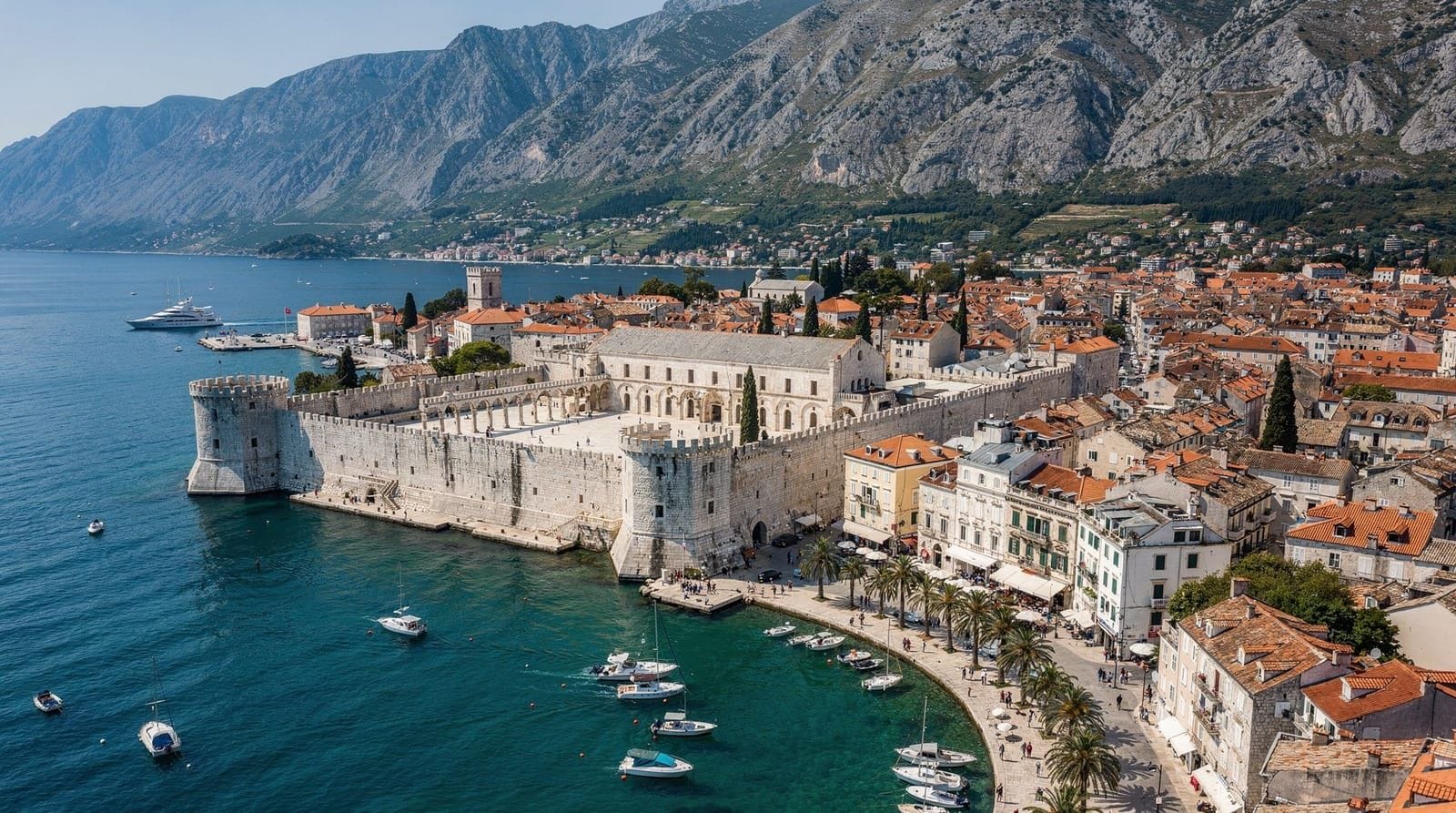
Trogir stands on a tiny island between the mainland and the larger island of Čiovo, connected by medieval bridges on each side — a setting that gives the old town a singular completeness. The UNESCO designation (since 1997) recognises a virtually intact medieval street plan with Romanesque-Gothic architecture laid down over Greek and Roman foundations. Unlike Dubrovnik, which can feel like a theme park in peak season, Trogir maintains a lived-in quality. Locals shop, socialise, and argue in the same alleys where tourists wander.
Getting to and around Trogir
By bus from Split: Line 37 runs between Split bus station and Trogir every 20–30 minutes, all day (45 minutes, €4). This is by far the most convenient connection. The bus stops on the mainland bridge approach.
By car: 27 km west of Split via the D8 coastal road or A1 motorway (Trogir exit). Parking available on the mainland side of the bridge, 5 minutes’ walk from the old town.
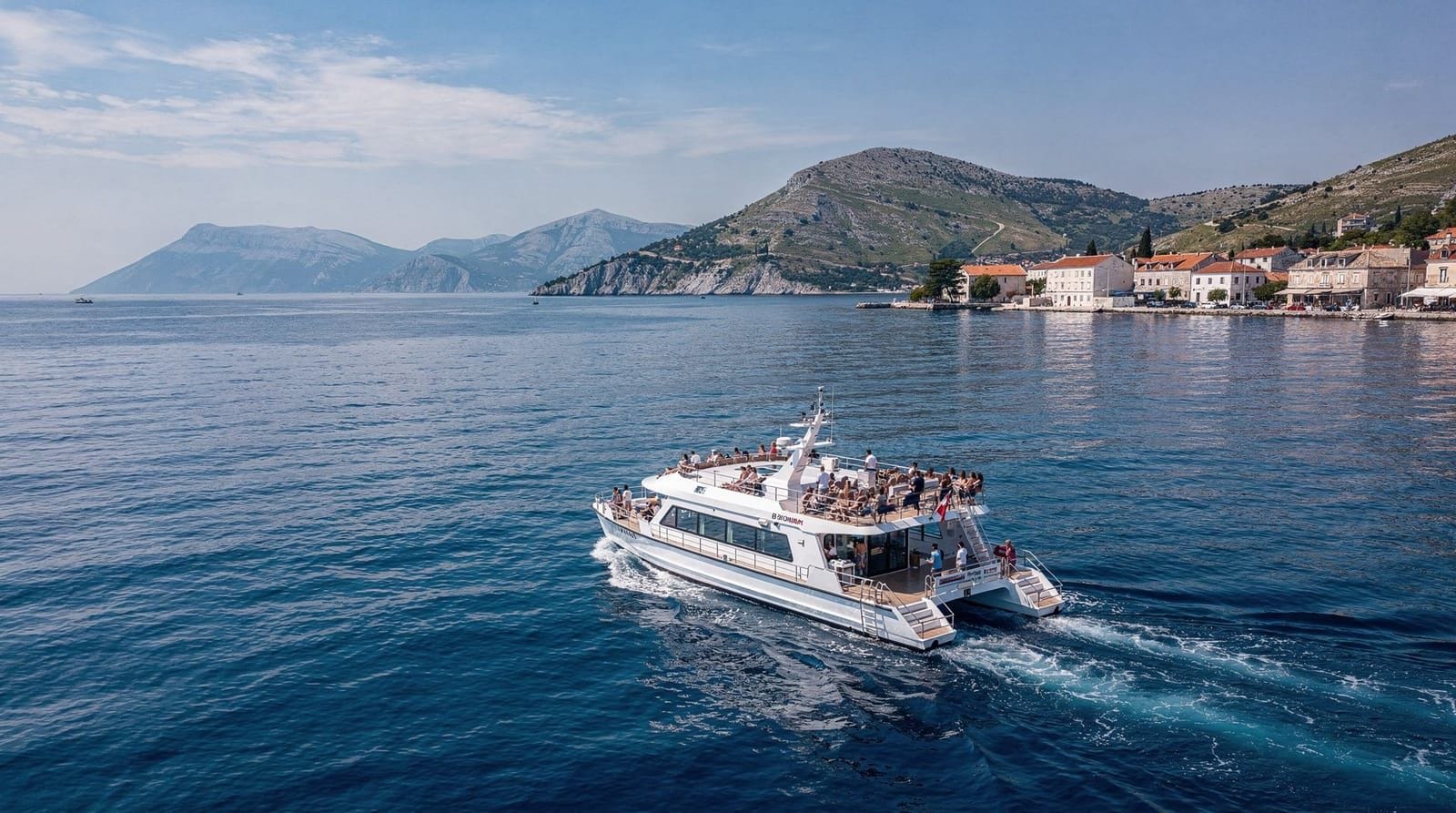
By boat: Numerous speedboat and catamaran day trips depart from Split harbour to Trogir, often combined with the Blue Lagoon on Čiovo Island. This is an excellent way to arrive and avoids the road traffic.
Within the city: Trogir’s old town island is tiny — you can walk from one end to the other in 8 minutes. Everything is on foot.
What to see and do in Trogir
Cathedral of St Lawrence
The cathedral (Katedrala sv. Lovre) is one of the finest examples of Romanesque-Gothic architecture in Central Europe, and the main reason Trogir received UNESCO status. Construction began in 1213 and continued across four centuries, resulting in a layered composition of Romanesque, Gothic, and Renaissance elements. The Portal of Master Radovan (1240) is the masterpiece: a carved stone doorway depicting scenes from the Nativity, calendar months, local saints, and figures emerging from fish and serpent mouths, with an extraordinary density of narrative detail for the period.
The bell tower, built in three distinct styles across three centuries, is the most photographed element from the outside. Entry around €4.
Kamerlengo Castle and the city walls
The 15th-century Venetian fortress at the island’s western tip is well preserved and offers excellent views over the strait from its ramparts. The fortress is now used for open-air concerts and events in summer. The connecting Venetian city walls are partially intact and form a pleasant waterfront promenade.
The Riva waterfront
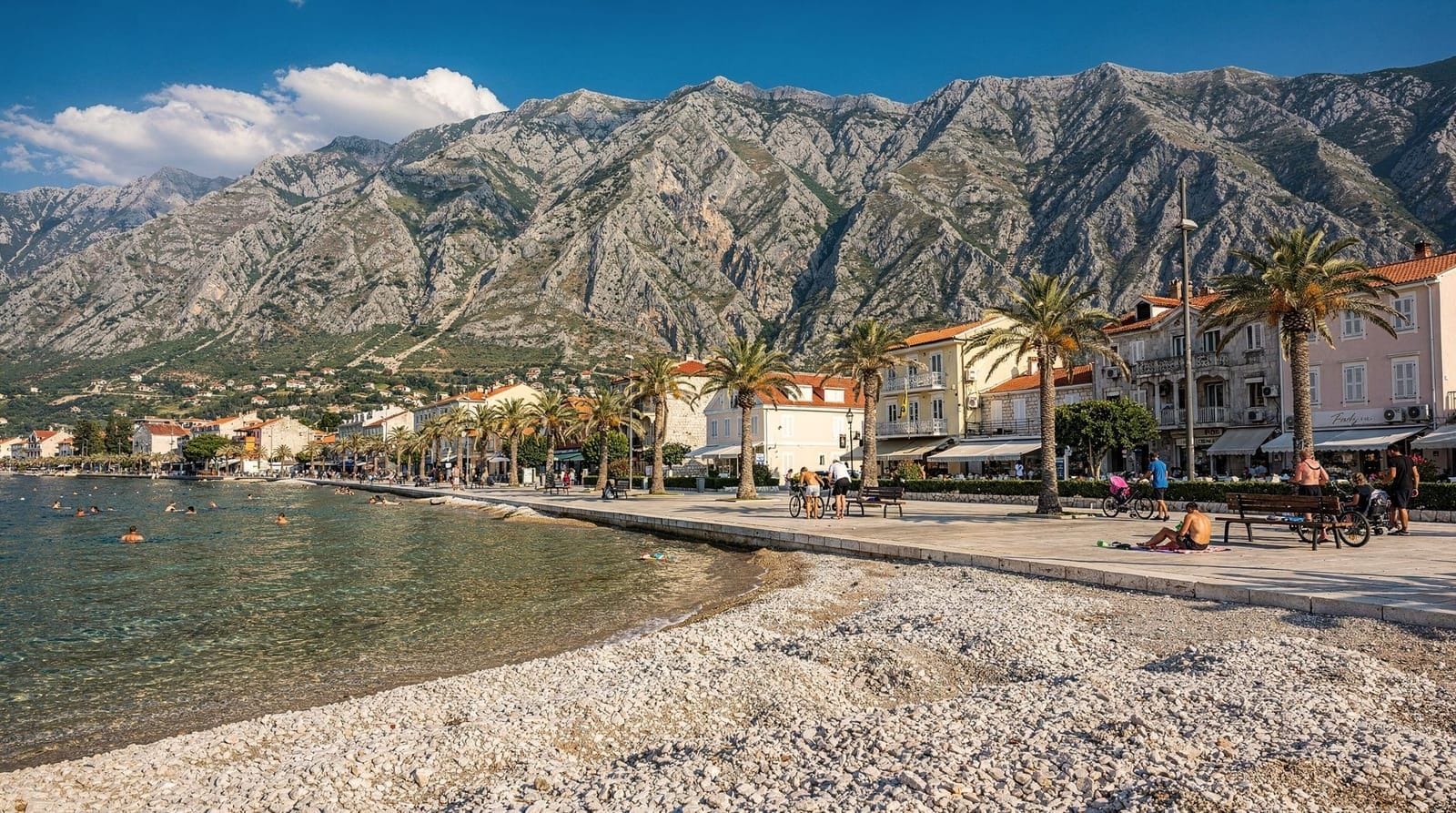
Trogir’s main promenade runs along the Čiovo-facing waterfront and fills with café tables, boats, and evening strollers. This is where the town’s social life plays out, particularly from 6 pm onwards when day-trippers leave and the authentic character of the place reasserts itself.
The Blue Lagoon
The most popular boat excursion from Trogir (and Split) is to the Blue Lagoon at Krknjaši, a natural shallow bay of extraordinary turquoise water on Drvenik Veli island, 45 minutes by speedboat. The colour results from the sand bottom and sheltered exposure; swimming is outstanding. Most tours combine the Blue Lagoon with Trogir as a half-day, or add Hvar and other islands for a full day.
Where to stay in Trogir
Old town: Several small hotels and apartments on the island itself. Hotel Concordia (Obrov 22) occupies an elegant palazzo on the waterfront; doubles from €100–€160. Private apartments on the island offer authenticity at better value.
Čiovo Island: The residential island linked to Trogir by bridge has affordable apartments, beaches, and a quieter atmosphere than the old town. 10-minute walk to the cathedral.
Seget Donji / Vinišće area: Small resort villages north of Trogir with hotels, campsites, and pebble beaches. Popular with families and sailors.
Where to eat in Trogir
Konoba Skradin (Augustina Kazotića 10): Reliable fish konoba with a stone-vaulted interior and terrace, good local wine, reasonable prices for the old town.
Tragos Restaurant (Budislavićeva 3): One of the better restaurants in the old town, specialising in creative Dalmatian cuisine with a strong seafood focus.
Pjaca café-bars: Several bars ring the main square (Trg Ivana Pavla II); good for coffee and people-watching under the cathedral facade. Prices are tourist-level but the setting justifies it.
Trogir’s maritime and sailing culture
Trogir is a significant sailing hub — the marina at Seget Donji immediately north of the old town is one of the largest on the Dalmatian coast, and the Trogir Channel (Trogirski kanal) provides some of the best-sheltered sailing water between Split and Šibenik. Many charter itineraries begin or end in Trogir.
For non-sailors, the proximity to Split Airport (8 km) makes Trogir an excellent first or last night stop on a Croatian island itinerary. Arriving by plane, spending the evening in Trogir’s old town, then joining a boat tour to Hvar or the Blue Lagoon the following morning is a logical and enjoyable sequence.
Trogir food and drink culture
Trogir’s restaurant scene punches above its weight for a small town, partly because it serves both locals and the sailing community. The fish market (open morning daily) supplies the old-town restaurants directly; the catch is predictably fresh. Local specialities to seek out:
Gregada (island fish stew with potatoes, olive oil, garlic, and white wine) is the definitive Dalmatian island one-pot dish — most authentically found in konobas away from the main square. Prstaci (date mussels, Lithophaga lithophaga) are technically protected but appear on older menus; the legal alternative is the cultivated mussel from the Šibenik region, smaller but excellent. Trogirska rozata (the local version of the Dalmatian caramel custard) is the dessert of choice.
The wine selection in Trogir’s better restaurants draws on both the Dalmatian hinterland and the Ston and Pelješac peninsula. Look for Plavac Mali from Pelješac, Pošip from Korčula, and the underrated Debit white wines from the Šibenik region.
Trogir and sailing itineraries
Trogir appears on most one-week Dalmatian sailing itineraries as a first or last stop, given its proximity to Split Airport and its good marina facilities. The classic sailing route runs Trogir–Hvar–Brač–Vis–Korčula and back, varying by wind and preference. Bareboat charter companies operating from Trogir include ACI Marina Trogir and several independent charter firms.
Best time to visit Trogir
Trogir works well year-round as a day trip from Split. May and September are the sweet spots — warm enough for Blue Lagoon swimming, uncrowded, with full bus and boat services. July–August brings cruise ship groups and day-trippers but the old town absorbs them better than Dubrovnik, partly because the old-town island disperses visitors across its walkable grid rather than funnelling them down a single Stradun.
October–April: The sailing marina stays open year-round; the old town is quiet and very pleasant for a half-day visit combined with Split. Some smaller restaurants close in November–March; the cathedral and fortresses remain open.
Day trips from Trogir
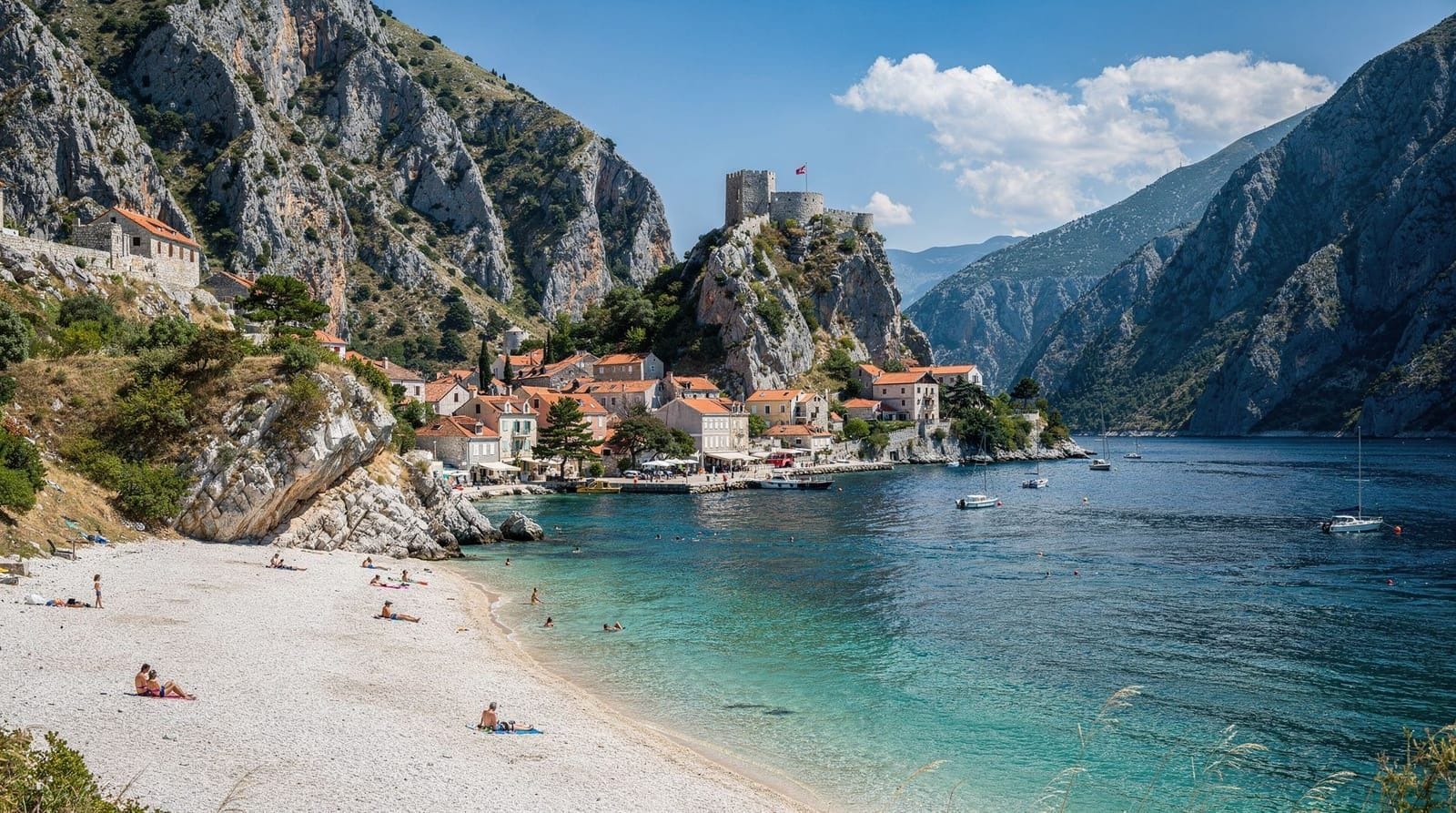
Split (45 minutes by bus) is the natural companion city — many visitors do Trogir as a half-day from Split. In the other direction, Šibenik and Krka National Park are accessible (1.5–2 hours), making Trogir a possible base for a longer coastal exploration. Omis (1.5 hours south by bus) and its Cetina canyon rafting add an adventure dimension. Primošten (40 km north) is a small walled town on its own island, with excellent Babić wine produced in the surrounding vineyards — a pleasant half-day circular.
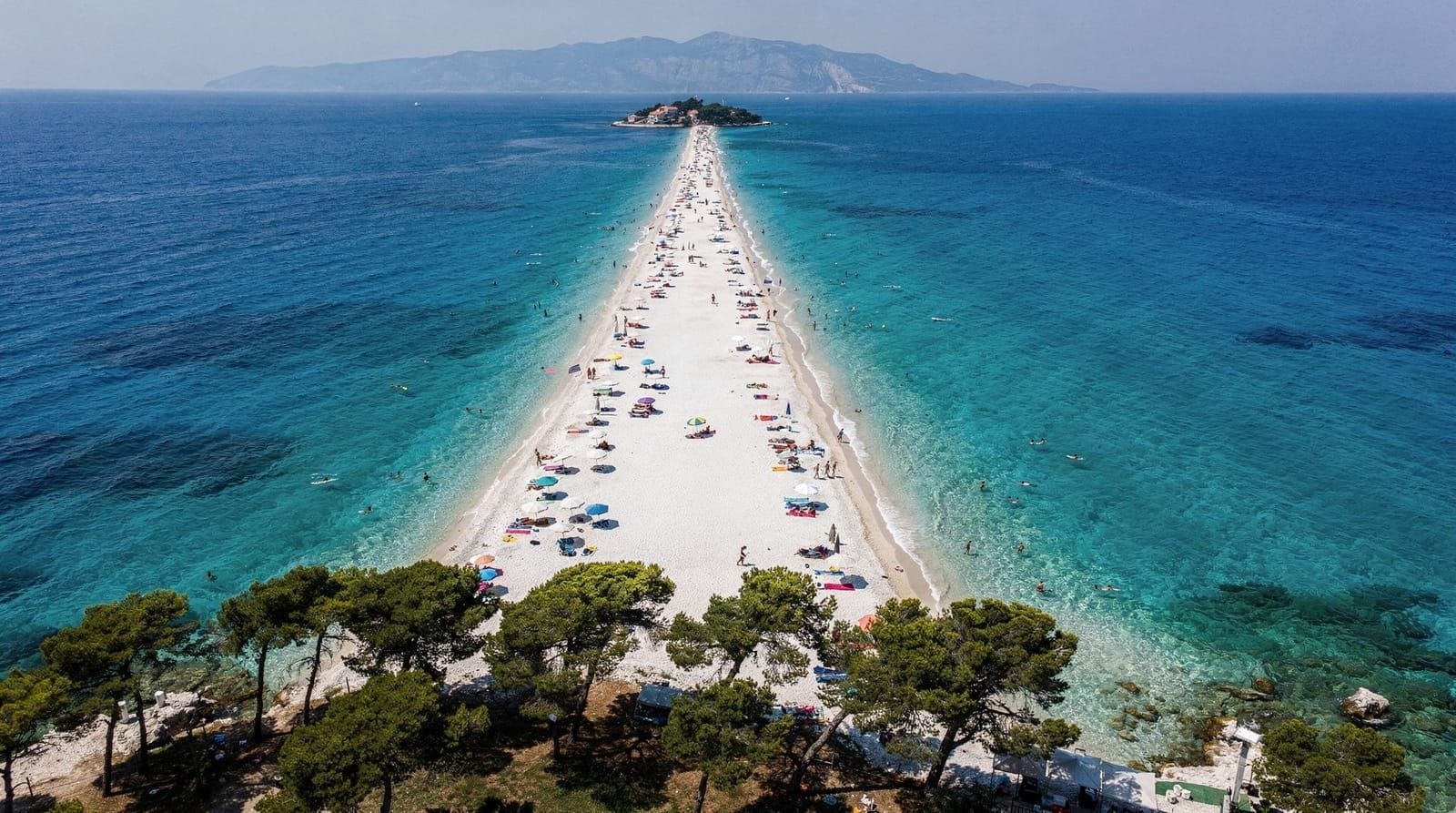
The island of Brač is reachable by speedboat from Trogir in approximately 30 minutes; organised excursions cover Bol and Zlatni Rat beach (the most photographed beach in Croatia) in a half-day.
Trogir’s history and the UNESCO designation
Trogir received UNESCO World Heritage status in 1997 as an outstanding example of urban continuity. The city has been continuously inhabited for 2,300 years (founded by Greek colonists from Issa, now Vis, in the 3rd century BC) and has retained its medieval street plan essentially intact. What makes Trogir remarkable architecturally is not any single monument but the density of quality building across a tiny area: 14 churches, 10 palaces, 7 towers, and 2 major fortresses compressed onto a 1 km island.
The most significant medieval period was the 13th–14th century, when Trogir was ruled by the Croatian-Hungarian crown (briefly autonomous between Venetian periods) and produced Master Radovan — the cathedral portal’s sculptor, whose work stands comparison with the finest Romanesque stone carving anywhere in Europe. The Portal of Master Radovan (1240) shows the Nativity cycle, months of the year, Apostles, and an extraordinary variety of animal and human figures emerging from architectural frames. The lion-pedestalled columns at the portal base and the Christ in the tympanum are the most studied elements; the entire portal takes 30–40 minutes to examine carefully.
Venice and Trogir: The city came under Venetian administration in 1420 and remained so until Napoleon in 1797. The Venetian period left the Kamerlengo fortress, several wellheads, and the loggia (open court hall) on the main square — a fine example of late-Gothic Venetian civic architecture. The Venetian lion of St Mark appears throughout the old town on walls, gates, and official buildings.
Walking Trogir’s old town
The island old town is best explored without a guidebook map — it is small enough that getting lost is impossible and serendipitous enough that wandering produces better discoveries than following a prescribed route. The main square (Trg Ivana Pavla II) with the cathedral and loggia is the obvious start; from there, three north-south streets (Gradska, Kamerlengo, and a third parallel lane) divide the island, with east-west alleys connecting them.
Key stops beyond the cathedral:
- Cipiko Palace (Gradska 22): A Gothic-Renaissance palace of the noble Cipiko family, with elaborate window tracery on the facade; the interior is not open, but the exterior is the finest secular building on the island.
- Convent and Church of St Nicholas (Gradska): The Benedictine convent holds a remarkable late-antique marble relief of Kairos (the Greek god of opportunity, 3rd century BC) — one of the most important ancient artifacts in Croatia. Admission for the relief only, around €3.
- Loggia (main square): Open arcade with a 15th-century carved relief by Nicola di Giovanni Fiorentino; the site functioned as a law court and civic assembly.
Trogir for families
The compact, car-free old town is excellent for young children: no traffic, clear sight lines, interesting food (ice cream is excellent throughout Trogir’s numerous gelaterias), and the harbour promenade for watching boats. Older children enjoy the Kamerlengo fortress ramparts and the water taxi rides to the Blue Lagoon.
The pebble beaches on Čiovo Island (10-minute walk across the bridge) are good for family swimming without the infrastructure of resort beaches.
Trogir practical guide
Entry fees:
- Cathedral of St Lawrence interior: ~€4
- Bell tower: ~€3 additional
- Kamerlengo Fortress: ~€3
- Church of St Nicholas (Kairos relief): ~€3
- Old town island itself: free
Guided tours: Trogir’s old town is explained well by guided tours (90 minutes, around €12 per person), which contextualise the Portal of Master Radovan and identify architectural elements non-specialists would otherwise miss. Tours depart from the main square; book at the tourist office (Trg Ivana Pavla II 1).
Practical logistics: Trogir has no ferry terminal for island connections (that infrastructure is in Split). The bus back to Split runs until approximately 11 pm; the last return allows a full dinner in Trogir followed by a comfortable return. Taxis from Trogir to Split cost €25–€35 if the bus is missed.
Trogir and the Šolta wine island
From Trogir’s marina, the island of Šolta (technically adjacent to Brač) is accessible by water taxi (30–40 minutes). Šolta is known for a single local product: Dalmatian olive oil of the Levantinka variety, considered among the finest in Croatia. The Olive Oil Museum at Maslinica village (western end of the island) explains the production history; several estate mills offer tastings.
Šolta has no developed tourist infrastructure and almost no nightlife — it is genuinely a place for swimming, cycling, and olive oil tasting rather than activity holidays. The contrast with peak-season Split (a 45-minute ferry away) is striking.
Trogir carnival and cultural events
The Trogir Carnival (February) is one of the oldest continuous carnival traditions in Croatia, with masked processions and satirical performances that trace back to Venetian-period celebration. The programme includes traditional costumes, street theatre, and music; the event is genuinely participatory rather than a tourist performance.
The Trogir Cultural Summer (July–August) uses the cathedral square, Kamerlengo fortress courtyard, and waterfront for classical music concerts, theatre, and dance performances. The Kamerlengo concerts are the highlight — performing in a 15th-century Venetian fortress on a warm Adriatic evening is a particular pleasure.
Top experiences
Bookable activities with verified prices and instant confirmation on GetYourGuide.
Top-rated experiences in Trogir travel guide
Best-rated activities across GetYourGuide and Viator.

Blue cave, Mamma Mia and Hvar, 5 islands speedboat tour
- Viator

Blue Cave and Hvar Tour - 5 Islands Tour from Split and Trogir
- Viator

Blue cave, Mama Mia and Hvar, 5 Island Speedboat Tour from Trogir
- Viator

From Split: Plitvice Lakes National Park Guided Tour
- Viator

Krka Waterfalls Day Tour with Boat Ride from Split and Trogir
- Viator

Plitvice Lakes National Park Guided Day Tour from Split
- Viator