Blue Cave Day Trip from Split — Five Islands, Hvar and What to Expect
Split: Blue cave and 5 islands tour
Is the Blue Cave day trip from Split worth it?
For most travellers, yes — but with clear expectations. The cave itself (Modra špilja on Biševo island) is genuinely extraordinary: electric blue light that is unlike anything else. The visit lasts 5 minutes. In July–August you queue 30–60 minutes in a boat. The total tour (Blue Cave + Hvar + 4 more islands) is 10–12 hours and costs €90–130. Many people call it a trip highlight. Some feel it was too rushed and too expensive for 5 minutes inside a cave.
What the Blue Cave day trip actually is
The “Blue Cave and 5 islands” speedboat tour from Split is the most popular single day trip booking on the entire Croatian coast. On any given summer morning, dozens of speedboats and catamarans depart Split harbour heading southwest to Biševo. The tour companies have their itinerary down to a science: Blue Cave, Vis, Hvar, Pakleni Islands, back to Split. Ten to twelve hours on the water.
Understanding exactly what you are getting — and what you are not — is the most useful thing this guide can do. For the wider island context, see best islands near Split and day trips from Split.
| Where | Blue Cave (Biševo), Vis, Hvar, Pakleni Islands |
| Cost | around €90–130, cave entrance often included |
| Time needed | Full day, 10–12 hours |
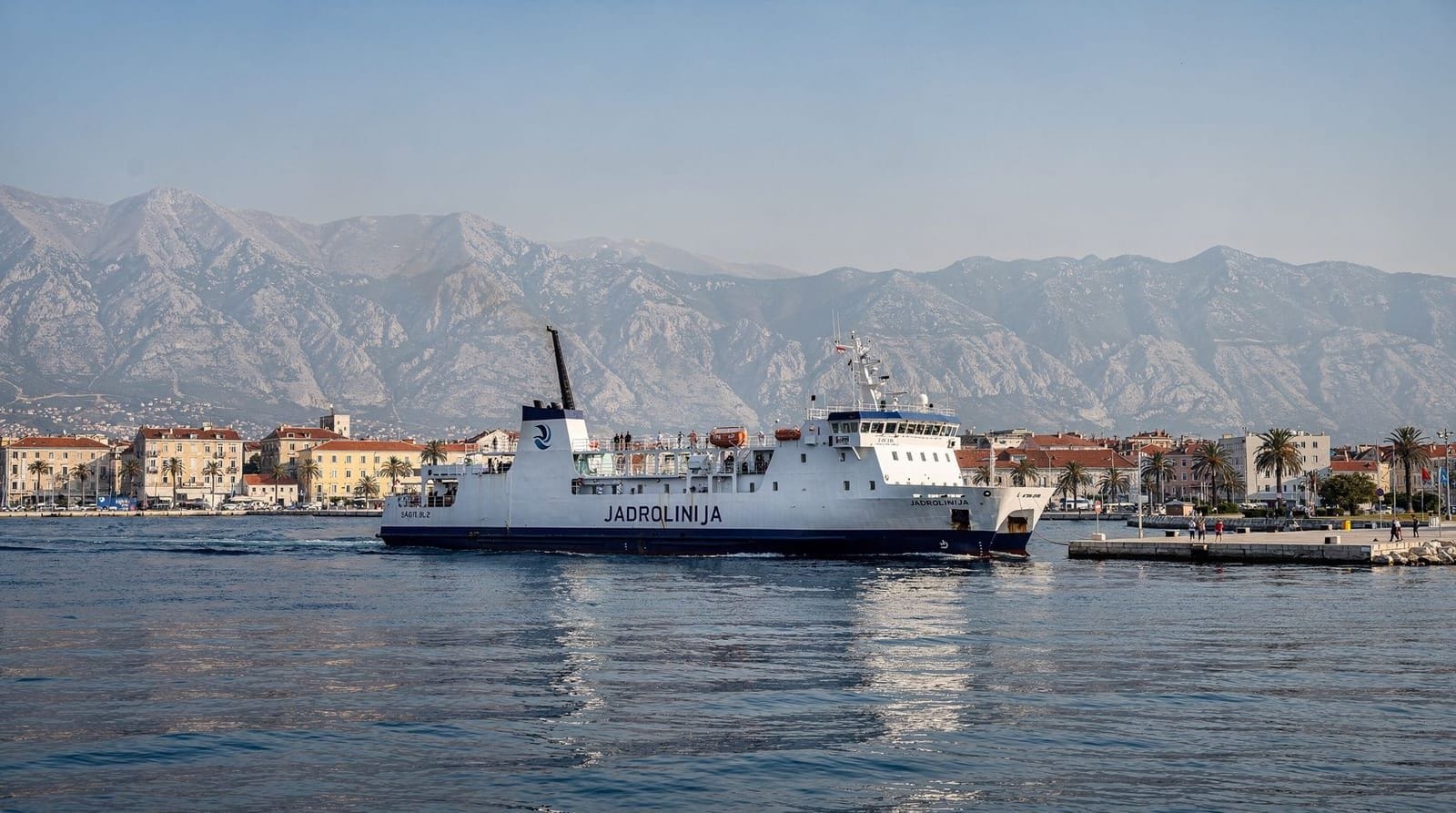
| Getting there | Speedboat or catamaran tour departing Split harbour |
| Best time | Book so you reach the cave by 10–11am for the best light |
The Blue Cave itself
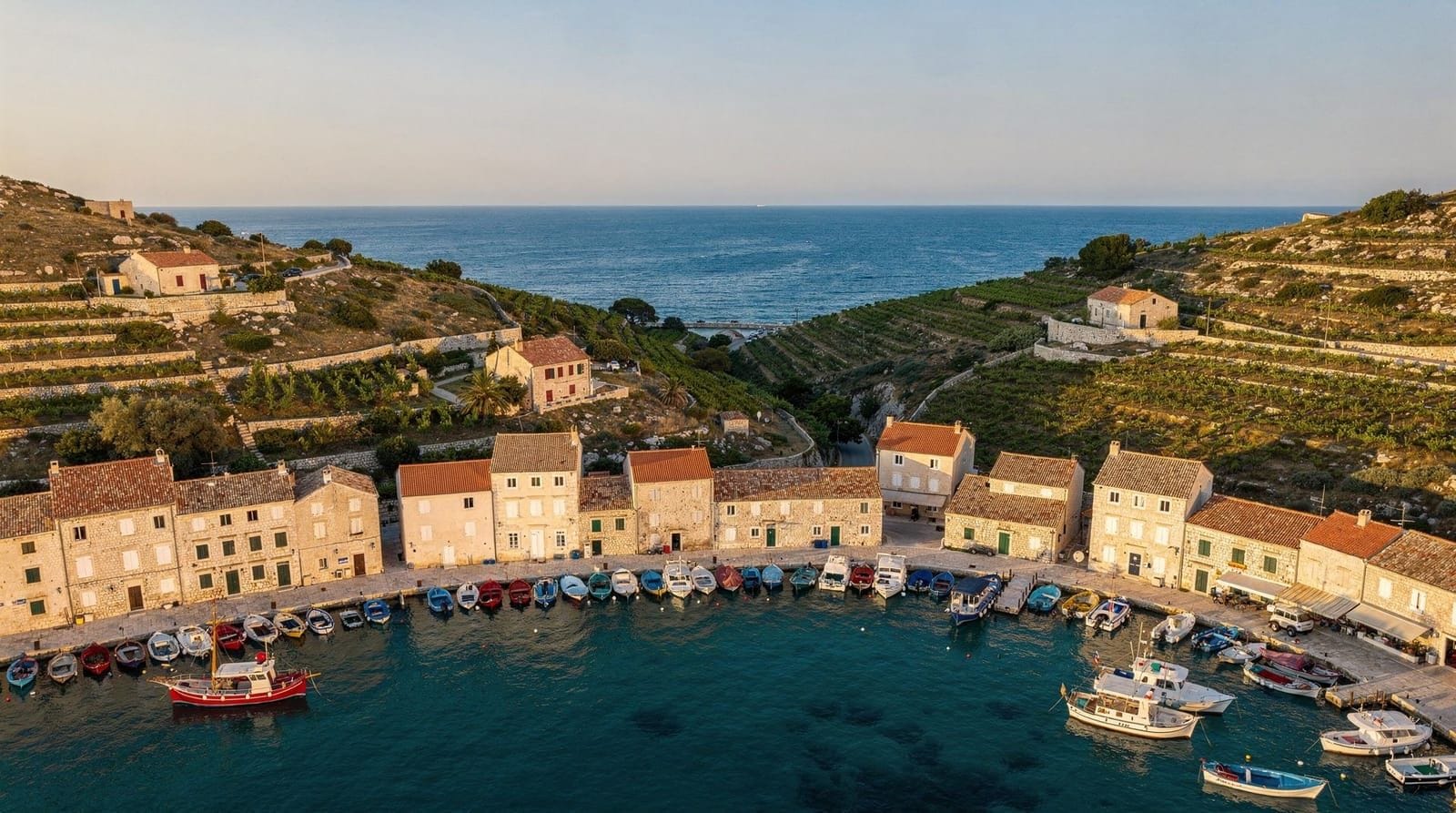
The cave (Modra špilja) is on Biševo — a tiny, almost uninhabited island 5 km southwest of Vis. A small community of fishermen, a few houses, a harbour, and the cave.
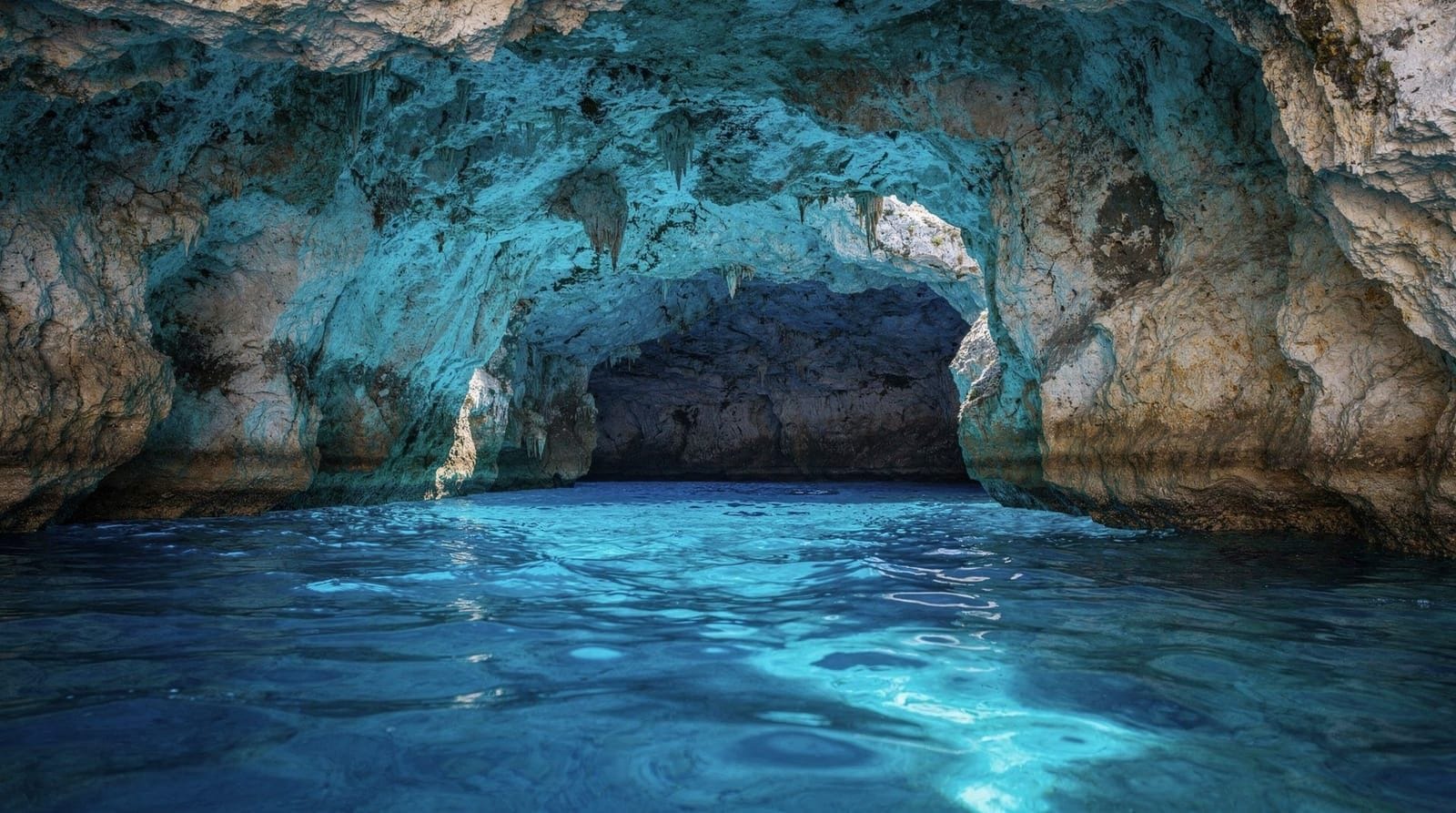
The cave entrance is at water level — barely large enough for a small wooden rowing boat to pass through when lying flat. Inside, the chamber is approximately 12 m wide and 15 m long. The floor of the cave is underwater. The ceiling and walls are white limestone. The entrance opening faces east.
At certain times of day, sunlight enters through an underwater opening (a submerged arch) at the cave’s base and refracts upward through the water, filling the cave with blue light from below. The effect is that the water glows a brilliant, otherworldly blue — and the cave walls above take on the same colour from reflection. It is genuinely extraordinary. Photographs almost capture it; being inside it is better.
The 5 minutes: The rowing boats take approximately 6–8 people per trip. You enter, spend 4–6 minutes inside the blue light, take your photographs, and exit. The brevity is real and is not a scam — the cave is small and the boats need to cycle through. In peak season, 30–60 minutes of waiting in the harbour for your turn is normal.
The full tour: what a day looks like
Most speedboat tours from Split follow a roughly similar pattern:
7–8 am: Depart Split harbour. The boat heads southwest past Šolta and Brač, then out into the open Adriatic toward Vis.
10–11 am: Arrive Biševo/Blue Cave. Wait in harbour, transfer to rowing boats, enter cave. Back to tour boat by 11:30–12.
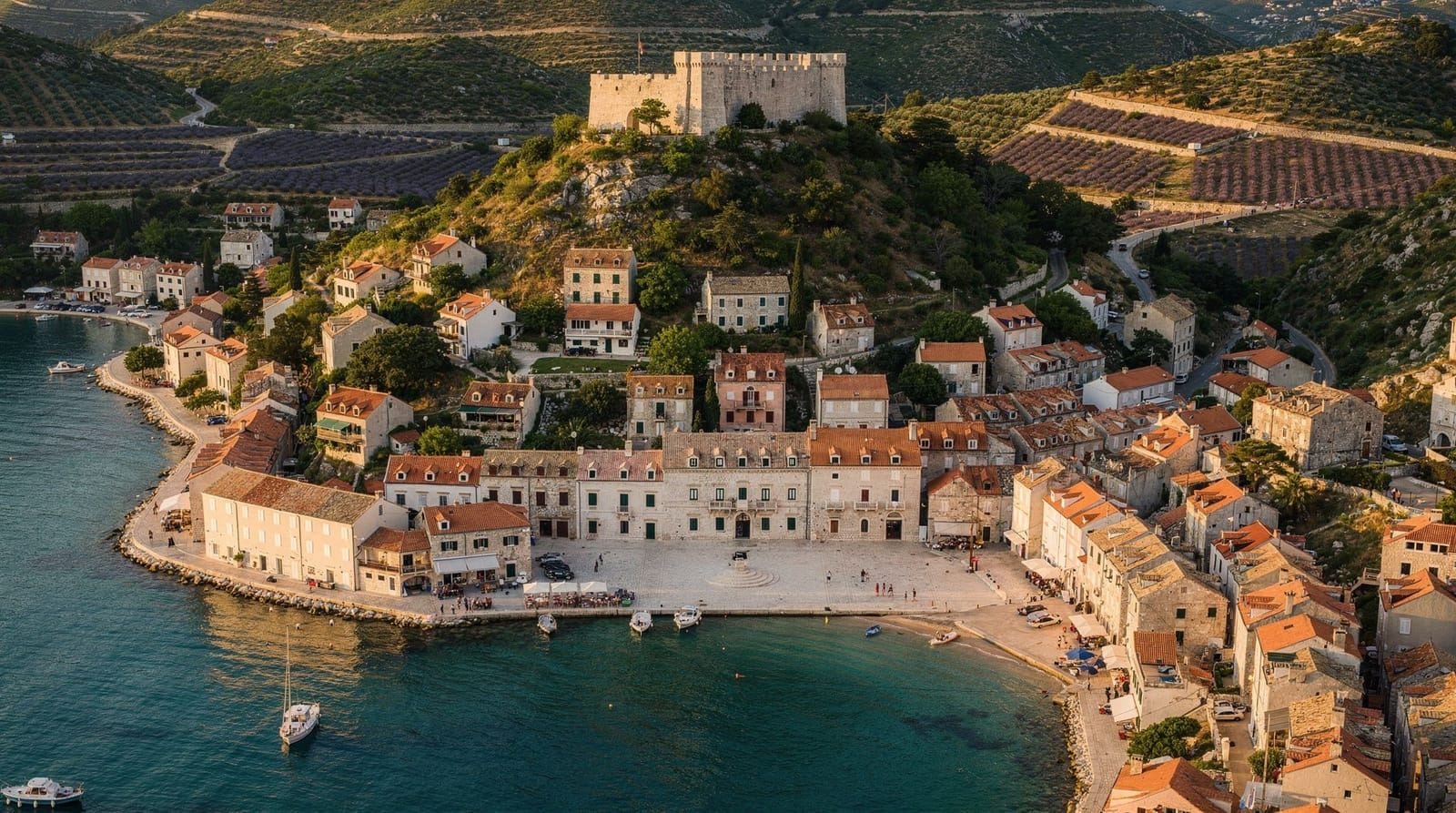
12–1 pm: Vis old town. The boat stops at Komiža (the main fishing village near Biševo) or Vis Town. Brief stop for coffee, lunch, or a walk. Vis is one of the most beautiful and least commercialised of Croatia’s larger islands — a shame to see only from the harbour.
2–3 pm: Hvar Town. The biggest chunk of free time on the tour — 1.5–2.5 hours. Walk to the fortress above town (free, views excellent), coffee on the waterfront, a swim if you have gear. Hvar Town is both genuinely beautiful (Venetian loggia, cathedral, fortress) and a significant tourist crowd scene in July–August.
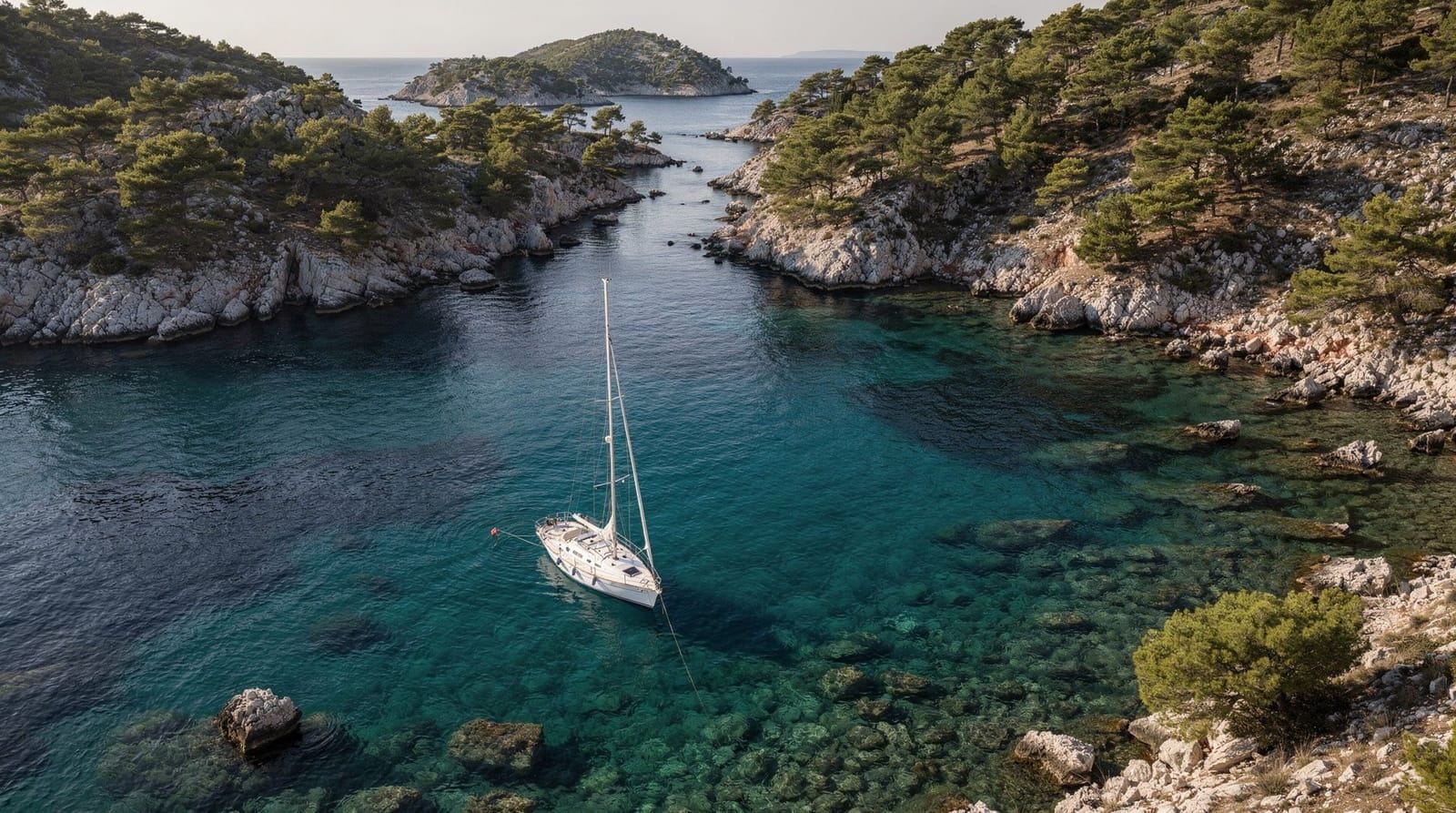
4–5 pm: Swimming stop at Pakleni Islands — a short archipelago across the water from Hvar Town with clear, sheltered water. Most tours anchor here for 30–60 minutes for a swim.
6–7 pm: Return to Split.
The honest assessment
What works well: The variety — Blue Cave + the most beautiful island (Vis) + the most lively island (Hvar) + swimming — means almost every traveller finds something they love in the day. The speedboat journey itself is genuinely exhilarating. The Adriatic at its bluest from the boat is a kind of beauty that is hard to articulate.
What does not work as well: The stops are short. Vis deserves 2–3 days; you get 45 minutes. Hvar deserves at least a night; you get 2 hours. The Blue Cave is 5 minutes. If you are a slow traveller who likes to linger and absorb, a day tour is a structural mismatch with that preference.
Weather risk: The cave closes in rough conditions. The speedboat journey in afternoon south wind can be genuinely unpleasant for people who do not sea-travel often. Check the weather forecast.
Better alternatives if you are staying longer: Catch the catamaran from Split to Vis independently (2–2.5 hours, foot passenger), stay overnight on Vis, visit the Blue Cave by local fisherman boat from Komiža the next morning (€20–25 per person, shorter queue, more atmospheric). Then continue to Hvar independently. This costs more days but infinitely more depth. The island hopping itinerary shows how this fits into a longer Dalmatian route.
Group tour vs. independent Vis-based visit
| Split day tour | Vis-based independent visit | |
|---|---|---|
| Total time | 1 day (10–12 hours) | 2–3 days minimum |
| Cave crowding | High — peak-season queues 30–60 min | Lower — local boats from Komiža, smaller groups |
| Cost | €90–130 all-in | Catamaran + accommodation + €20–25 cave entry, higher total cost |
| Depth of experience | Brief stops at Vis and Hvar (45 min–2.5 hrs) | Full days on Vis, time to explore properly |
| Flexibility | Fixed itinerary and timing | Choose your own morning, avoid the busiest window |
| Best for | Limited time in Croatia, first-time visitors | Travellers with a week or more who value depth over convenience |
Neither option is objectively better — it depends entirely on how much time you have and whether “seeing” the Blue Cave or “experiencing” Vis matters more to your trip.
Booking tips
Book in advance: In July–August, the best speedboat tours (small group, reputable operators) sell out days to weeks in advance. Budget catamarans (larger, noisier) have more capacity. Book the smaller, better-reviewed options early.
What to look for in a tour: Maximum group size matters — 8–12 people on a speedboat is a different experience from 30 on a larger catamaran. Check whether cave entrance fee is included. Look for reviews mentioning an actual guide (some tours are driver-only).
Private tours: For 4–8 people, a private speedboat tour is not dramatically more expensive per person than a group tour and gives you full schedule control. Worth calculating.
Practical details
What to bring: Sunscreen (apply before, not on the boat to protect the water), water, a light waterproof layer for spray, seasickness tablets if you are susceptible (take them before boarding), waterproof bag for your phone. Swimwear is essential.
Seasickness: The open Adriatic crossing to Biševo is the roughest part. On a calm day it is no problem. In afternoon south wind it can be rough. If you are at all susceptible, take tablets the night before and morning of. Catamarans are more stable; speedboats are more exposed.
Children: Possible but the long sea day (10–12 hours) can be exhausting for young children, and the speedboat is loud and bouncy. The cave entry requires ducking under a low arch while staying still in a small boat — manageable but potentially frightening for anxious children. Age 8+ is a rough guideline for comfortable participation.
Inside the cave: Stay seated and still in the rowing boat — the entrance arch is low and the boatman needs the boat balanced and steady while passing through. No swimming inside the cave itself (the current and the boat traffic make it unsafe and it’s generally not permitted). Photographs are fine; flash photography is pointless given the ambient blue light does the work, and a phone camera captures the effect surprisingly well without one.
For the complete Blue Cave natural history and all visiting options: Blue Cave complete guide.
Frequently asked questions about Blue Cave Day Trip from Split
How long does the Blue Cave visit actually last?
About 5 minutes inside the cave. You transfer from the tour speedboat into a small wooden rowing boat at the Biševo harbour, duck through the cave entrance (very low arch — everyone must sit), spend approximately 4–6 minutes in the blue light, take photographs, and exit. The visual impact is real — the light is extraordinary — but the visit is genuinely short.How far is the Blue Cave from Split?
The Blue Cave is on Biševo island, about 5 km southwest of Vis island and 75 km from Split as the crow flies. By speedboat from Split, the journey takes 2.5–3 hours. By catamaran it is longer. There is no public ferry to Biševo — an organised tour or private boat is the only practical way to visit.What time of day is the Blue Cave at its best?
The electric blue light effect is caused by sunlight entering through an underwater opening and refracting upward. It is most intense between 10 am and noon when the sun angle is optimal. This is also when queue times peak. Tours from Split typically arrive at Biševo by 10–11 am.How much does the Blue Cave cost?
The cave entrance fee is approximately €15–20 per person, paid at the Biševo harbour before entering. This is separate from (and in addition to) the tour cost. Organised five-island tours from Split usually include this entrance fee in the total price — confirm when booking. Total tour prices range from €90–130 for speedboat tours.Can the Blue Cave be closed?
Yes. The narrow entrance to the cave is dangerous for the small rowing boats in rough conditions. Strong south wind (jugo) or any significant swell closes the cave — the rowing boat cannot safely enter. Tours may continue to visit the other islands even if the cave is closed, but the cave itself is cancelled. Most reputable operators offer a credit or partial refund if the cave is closed, but check the terms before booking.What other islands are included in the 5-island tour?
The specific islands vary by operator, but a typical route covers: Biševo (Blue Cave), Vis (old town walk and lunch stop), Hvar (free time in Hvar Town), Pakleni Islands (swimming stop), and one or two smaller islands for snorkelling. The itinerary is packed — most stops are 45–90 minutes except Hvar (typically 2–2.5 hours).Is a speedboat or catamaran better for the Blue Cave tour?
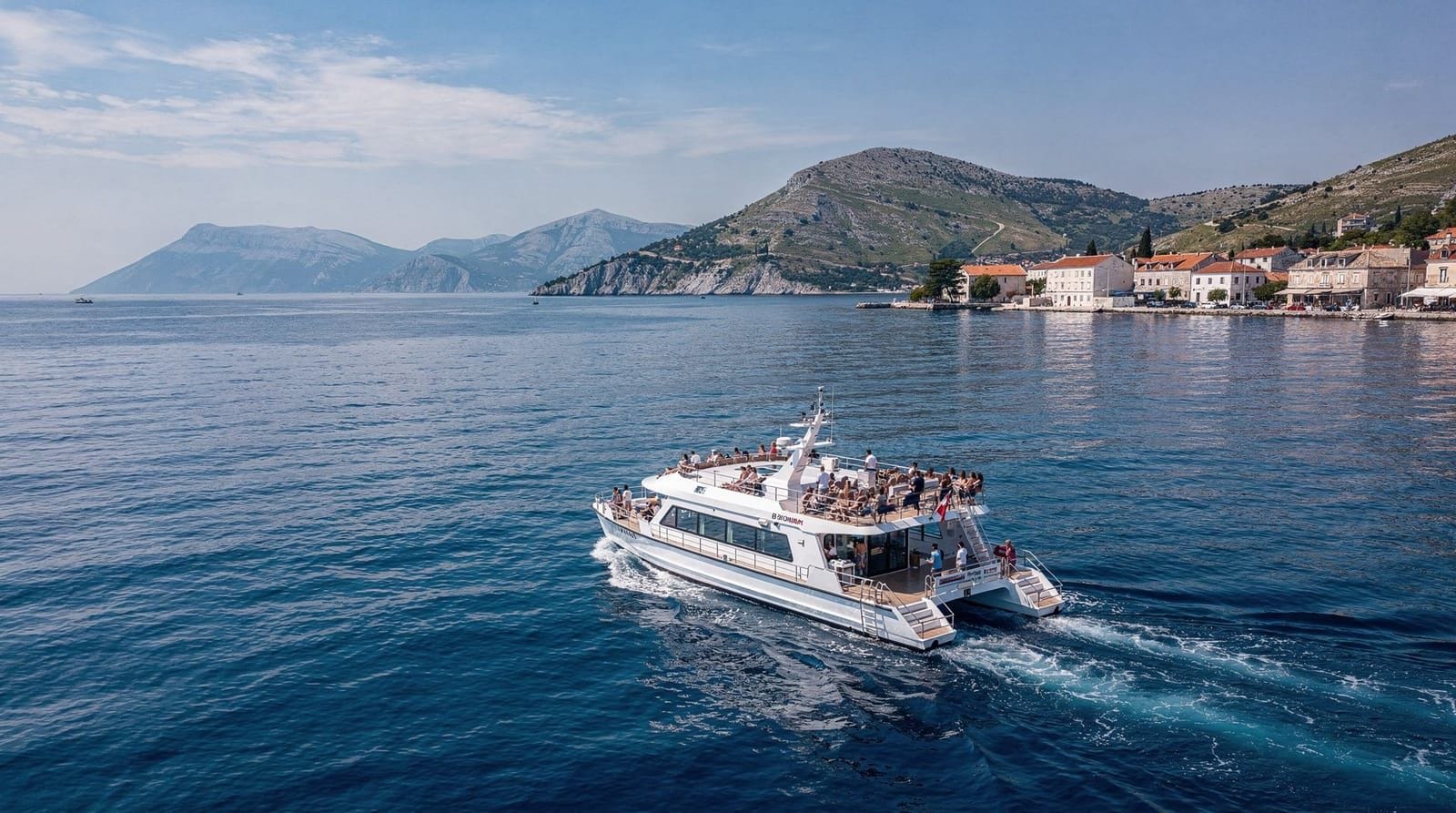
Speedboats cover the distance faster (2.5 h vs 3.5+ h for catamarans), carry fewer passengers (better for photos and less queuing at the cave), cost more, and can be rough on the open Adriatic in afternoon swell. Catamarans are slower, more stable, and carry more passengers. Both face the same cave queues. If you are prone to seasickness, a catamaran is more comfortable — particularly for the return leg in afternoon wind.
Top experiences
Bookable activities with verified prices and instant confirmation on GetYourGuide.
Top experiences
Best-rated activities across GetYourGuide and Viator.

Mostar and Herzegovina Tour with Kravica Waterfall from Split & Trogir
- Viator

Mostar & Kravice waterfalls full-day guided tour from Split
- Viator

Mostar and Kravica Waterfall Discovery Day Trip from Split or Trogir
- Viator

Taste of Bosnia: Private Trebinje Gastro & Wine Tour
- Viator

From Split/Trogir: Mostar and Medjugorje Tour with Wine Tasting
- Viator

Split to Dubrovnik Private Transfer with Mostar Town
- Viator