Blue Cave Guide — Croatia's Most Visited Natural Attraction (and Its Queues)
Split: Blue cave and 5 islands tour
Is the Blue Cave in Croatia worth visiting?
Yes, but with clear expectations. The Blue Cave (Modra špilja) at Biševo island is genuinely extraordinary — the electric blue light caused by sunlight refracting through an underwater opening creates a colour unlike anything else. The visit itself lasts about 5 minutes, and in peak summer you will queue for 30–60 minutes in a small boat on open water to enter. Many travellers still say it is one of the highlights of their Croatia trip. Come before 9 am or after 4 pm for shorter waits.
The Blue Cave draws more day-trippers out of Split than almost any other single attraction on the Dalmatian coast, and it earns that pull — but the logistics around it (queues, weather cancellations, a 5-minute visit at the centre of a 12-hour day) trip up travellers who arrive expecting a leisurely cave tour. This guide sets the practical expectations straight before you book.
| Where | Biševo island, 5 km southwest of Vis |
| Cost | Entrance ~€15–20/person, plus tour price |
| Time needed | 5 min inside; 45–90 min at the site with queuing |
| Getting there | Organised tour from Split, or independently from Vis |
| Best time | Before 9am or after 4pm for shorter queues |
What Is the Blue Cave?
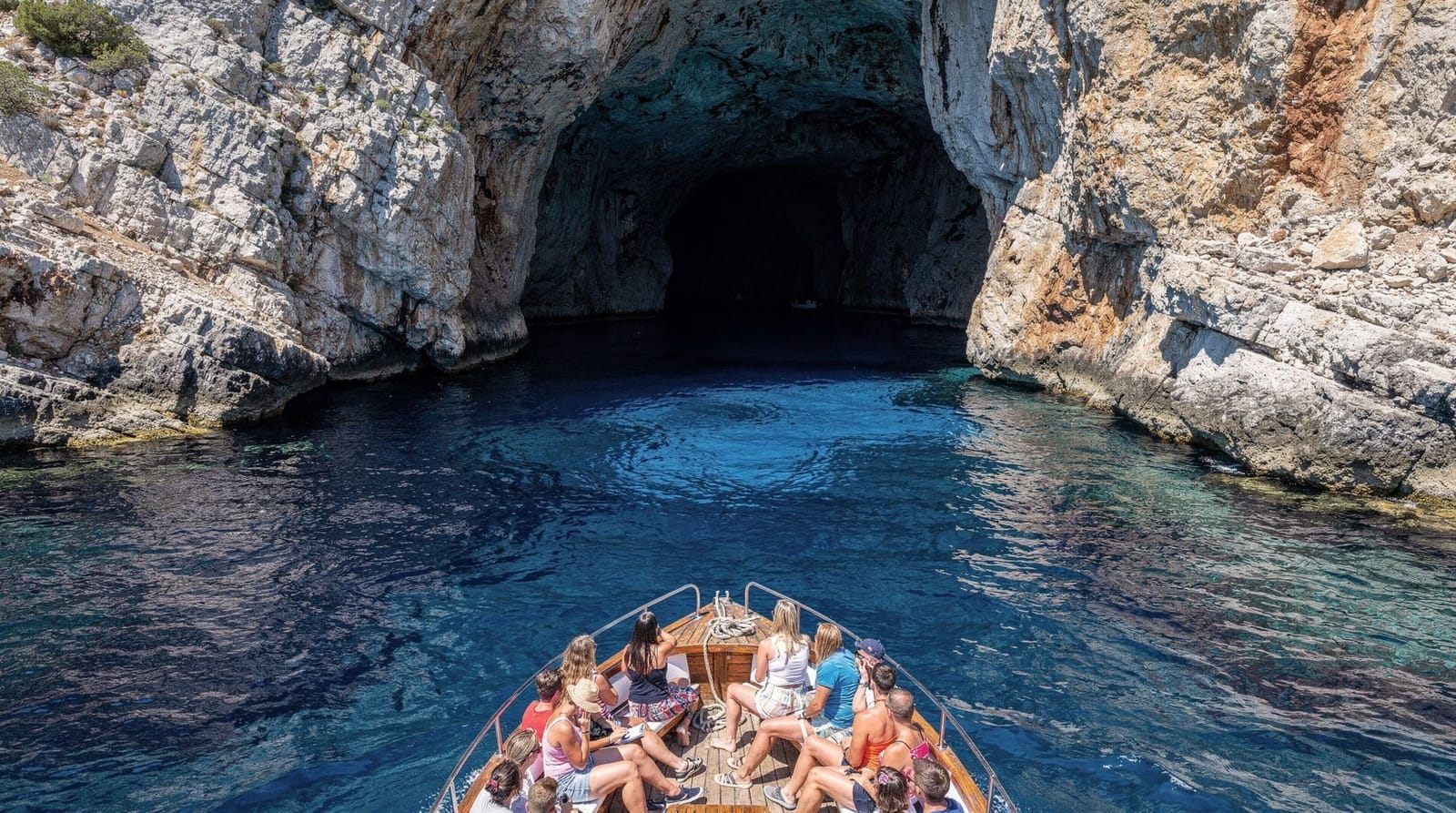
The Blue Cave — Modra špilja in Croatian — is a sea cave on the island of Biševo, a small, largely uninhabited island that lies about 5 km southwest of Vis. The cave itself is unremarkable from the outside: a low entrance in the limestone cliff, accessible only by rowing boat through a narrow arch that forces passengers to duck. The inside is what makes it extraordinary.
Sunlight enters the cave through an underwater opening in the limestone floor. As it refracts upward through the clear water, it fills the interior with an intense electric blue — walls, ceiling and the water itself illuminated in a colour that photographs consistently fail to capture accurately. Fish swimming near the opening appear silver against the blue. The effect lasts for the hours when the sun is at the right angle — roughly 10 am to noon — and it is, unambiguously, unlike anything most travellers have seen before.
The Blue Cave has been on the tourist map since Austrian explorer Friedrich Petter documented it in 1884. In 2026, it receives hundreds of thousands of visitors per year and is probably the single most visited natural attraction in Croatia. The queues are real. The experience, when you finally get inside, is worth them.
How to Get There
Biševo has no ferry connection. There is no public boat from Split, Vis or anywhere else. To visit the Blue Cave, you either join an organised tour or arrange your own boat.
The practical reality: Most visitors reach Biševo on a full-day organised tour from Split that combines the Blue Cave with several other island stops. These tours run daily in summer (roughly May to October), depart Split at 7–8 am, return by 7–8 pm and cover 100–130 km of Adriatic.
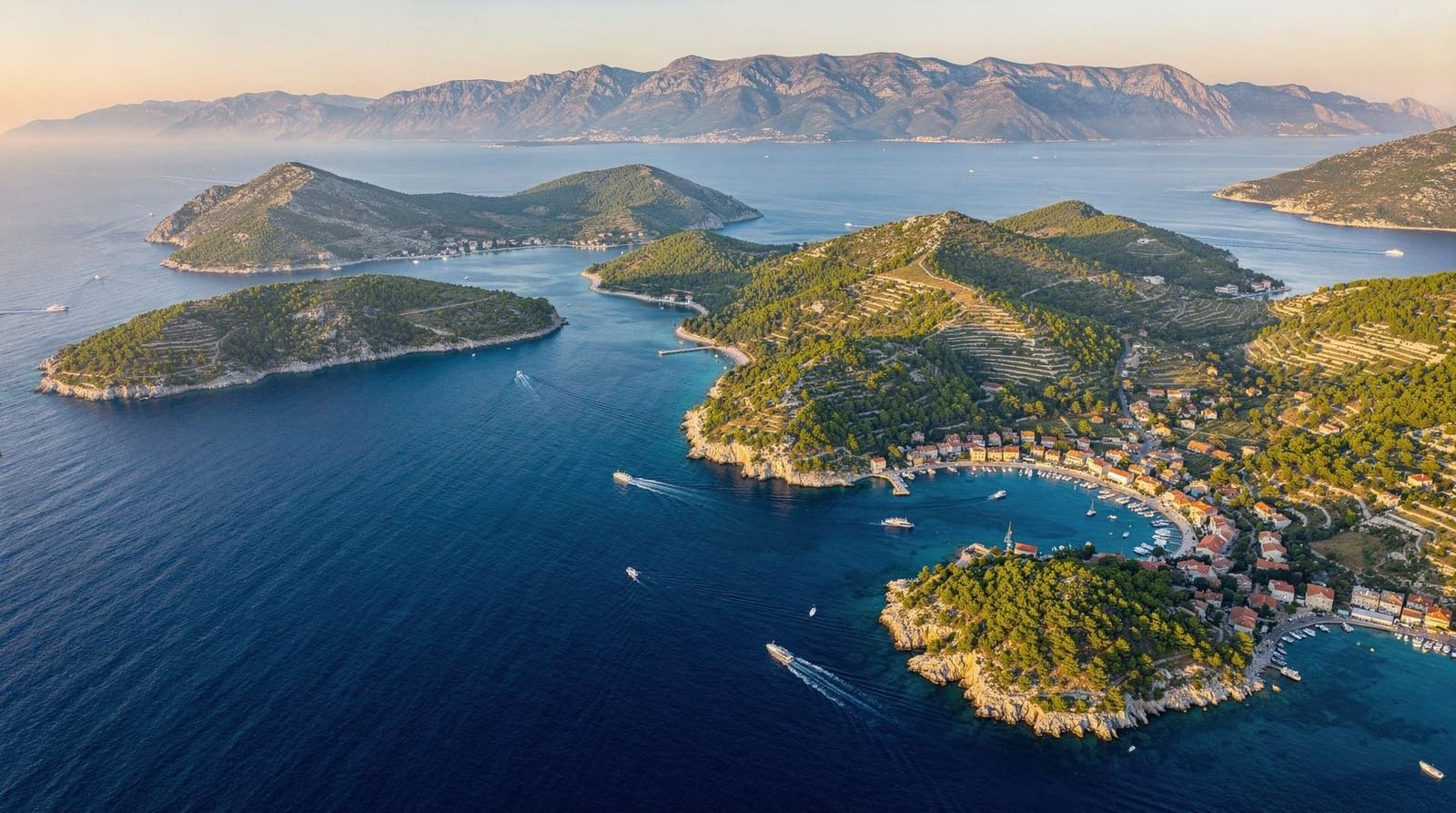
The stops on a typical five-island tour from Split: Šolta (or similar quick stop), Hvar, Pakleni Islands (swim stop), Vis, Biševo (Blue Cave), return to Split. Each stop is 45 minutes to 1.5 hours. The total experience is a very packed day — genuine highlights compressed into long boat travel.
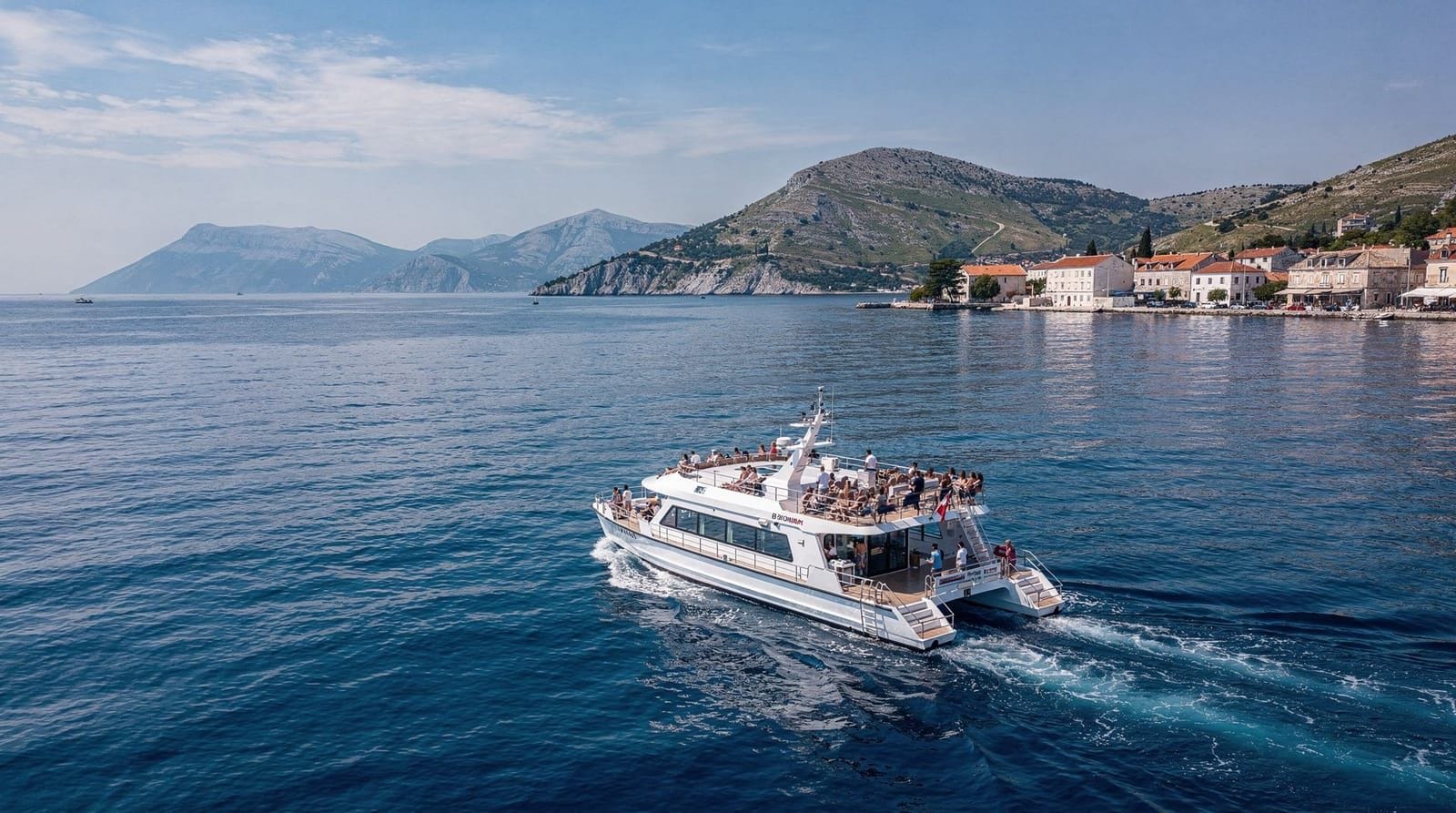
Speedboat vs catamaran tours: Speedboats cover the distance faster (Split to Biševo in 2–2.5 hours vs catamaran at 3+ hours) and can enter the cave entrance more easily. They are also more expensive, take fewer passengers (better for photos and less queuing at the cave) and are rougher on the sea — afternoon swells in the open Adriatic can make speedboat passengers uncomfortable, particularly on the outward leg. Catamarans are more stable but slower and typically carry more passengers.
The Queue — An Honest Account
In July and August, the queue to enter the Blue Cave involves 20–60 minutes waiting in small rowing boats on open water outside the cave entrance. The boats form a line. You wait your turn. In the afternoon, when the five-island tours arrive, the queue can extend to 60 or 90 minutes on the busiest days.
This is the least comfortable part of the Blue Cave experience. The small boat rocks. The sun is intense. There is no shade. Children and seasick-prone adults find it difficult.
Strategies that help:
- Choose a tour that departs very early (7 am from Split) — arriving at Biševo before 10 am means shorter queues
- Visit from Vis independently in the early morning (the cave opens at approximately 8 am)
- Accept that the queue is part of the experience and bring water, sun protection and patience
The queuing does not typically cause regret among visitors who manage the expectations going in. The Blue Cave genuinely is that impressive.
The Best Time to Visit
Optimal light: 10 am to noon, when the sun angle produces the most intense blue. This is also peak queue time.
Best queue time: Before 9 am or after 4 pm. The light is slightly less electric at these times but still exceptional, and the queues are dramatically shorter.
Best season: June or September — the cave is less visited than peak summer, weather is still reliably good and the boat transfers are less crowded. May works if the cave is open (check with tour operators — it sometimes does not open until late May depending on the season).
Weather-dependent: The cave closes when south wind or swell makes the entrance unsafe. This can happen without warning. Tours that are cancelled due to weather typically offer rescheduling or refunds — check the policy when booking. Having a flexible travel schedule gives you a second chance.
Visiting from Vis
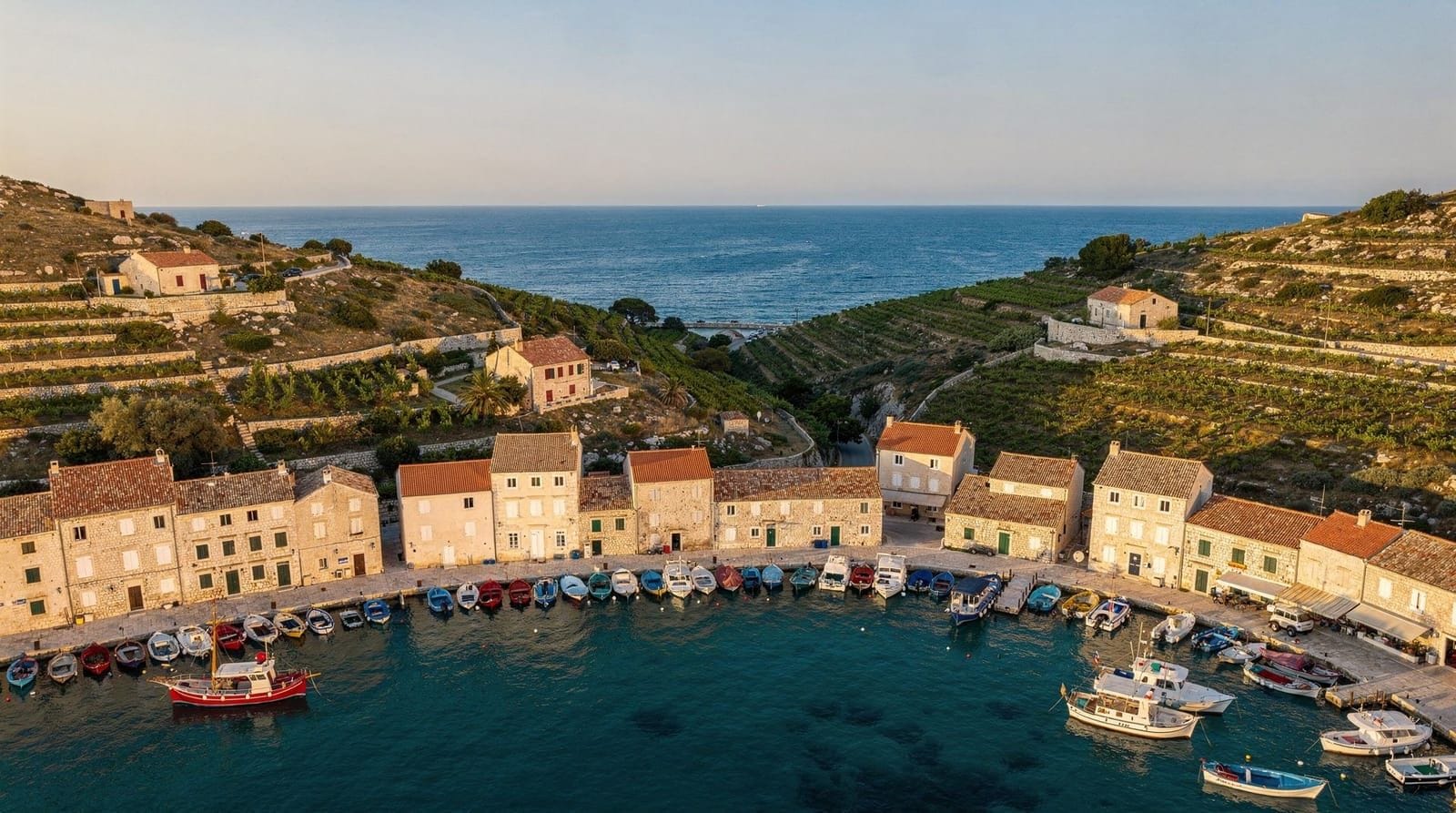
The island of Vis is the closest inhabited base to Biševo — the distance from Komiža harbour on Vis to Biševo is about 5 km. If you are staying on Vis (strongly recommended if you want the best Blue Cave experience), you can:
- Book a local boat transfer from Komiža to Biševo — early morning, before the big tours arrive from Split
- Arrive at the cave by 8 am, queue is minimal or non-existent
- Pay the entrance fee on arrival (approximately €15–20 per person)
- Enter, experience the cave, exit within an hour total
- Return to Komiža in time for a peaceful konoba breakfast
This is significantly better than the Split five-island tour for anyone who puts the Blue Cave high on their priority list and can dedicate two or more days to Vis. If Vis is your base, our Vis island guide covers where to stay and what else to do beyond the cave day.
Blue Cave vs Croatia’s other sea caves
The Blue Cave is the most famous, but not the only, blue-light cave on the Adriatic. Knowing the alternatives helps you decide whether the Biševo queue is worth it for your itinerary.
| Cave | Location | Queue in peak season | Best for |
|---|---|---|---|
| Blue Cave (Modra špilja) | Biševo, near Vis | 20–90 min | The most intense, best-known blue light |
| Green Cave | Ravlića Špilja area, Vis archipelago | Minimal | Swim-in access, no rowing boat needed |
| Blue Grotto equivalents elsewhere in Dalmatia | Various smaller sea caves | Low | Independent sailors and kayakers exploring off-route |
Many five-island tours from Split combine the Blue Cave with a stop at the Green Cave, which does not require the queue or the small rowing boat — you swim directly into it. If time or queue tolerance is limited, ask your tour operator whether the Green Cave stop is included; it is a genuinely good backup or complement.
Is It Worth It?
The honest answer depends on how you define “worth it.”
Worth it if: You can manage the queue, you are not susceptible to seasickness, you have appropriate expectations about the 5-minute visit duration and you enjoy the rest of the day’s island stops. The Blue Cave is genuinely extraordinary — the electric blue light is not something photographs capture and not something you forget.
Not worth it if: You struggle with rough water or small boat anxiety, queuing in direct sun is not something you enjoy, or you are hoping for a meditative natural experience. The five-island tour format, while a genuine way to see multiple islands, is also a genuinely exhausting full day.
The alternative verdict: If you are spending multiple days in Dalmatia and can visit Vis independently, do that — and visit the Blue Cave independently from Komiža rather than on a tour. This gives you the best of both: the cave without the tour rush, and one of Croatia’s best islands at your own pace. For a wider view of how the Blue Cave fits into a Dalmatian island-hopping trip, see island hopping in Croatia and the Croatia sailing guide.
Frequently asked questions about Blue Cave Guide
Where is the Blue Cave in Croatia?
The Blue Cave (Modra špilja) is on Biševo island, a small island about 5 km southwest of Vis island. Biševo is accessible only by boat — there are no ferries. The journey from Split is approximately 2.5–3 hours by speedboat or catamaran. Most visitors reach it on an organised day tour that also includes Vis, Hvar and other islands.How much does it cost to enter the Blue Cave?
The cave entrance fee is approximately €15–20 per person (paid at the Biševo harbour). This is separate from the tour boat cost. For organised tours from Split that include the Blue Cave, the total tour price covers the entrance fee — check what is included when booking.What time is the Blue Cave open?
The Blue Cave is open daily approximately 8 am to 12 pm, then 3 pm to 6 pm (times vary by season and official opening hours). The blue light effect is most intense between 10 am and noon, when the sun angle is optimal. This is also when queues peak. Entry is weather-dependent — rough sea or strong south wind closes the cave as the narrow entrance becomes dangerous for the small boats.Can you visit the Blue Cave independently without a tour?
Technically yes, but practically difficult. You need your own boat to reach Biševo (no public ferry), then pay the cave entrance fee on arrival. Local fishermen from Komiža on Vis have historically offered transfers. If you are staying on Vis, this is a viable option — visit early morning or late afternoon independently and skip the peak queues that the mass tours face.How long is the actual Blue Cave visit?
About 5 minutes inside the cave. You enter in a small wooden rowing boat, spend a few minutes in the extraordinary blue light, take photographs, then exit. The total experience including queuing, entering and exiting is typically 45–90 minutes at the cave location during peak hours.What is the best tour from Split to visit the Blue Cave?
The full-day five-island tours from Split are the most popular option — they combine the Blue Cave with stops at Vis, Hvar, and two or three smaller islands. Speedboat tours are faster (Split to Biševo in 2–2.5 hours vs catamaran at 3+ hours) but more expensive and rougher in any swell. Both get to the same cave and face the same queues.Can children visit the Blue Cave?
Yes, but the entry to the cave itself requires ducking under a very low stone arch in a small wooden boat. Children must stay seated and still. The sea journey from Split on a speedboat can be rough in typical summer afternoon conditions, and some children experience seasickness. A catamaran is more stable but slower. Infants and very young children are not ideal passengers for the speedboat option.Is there an alternative to the Blue Cave if it is closed or fully booked?
Yes. Many five-island tours from Split include a stop at the Green Cave, which is swim-in rather than boat-in and has no equivalent queue. It offers a different but still striking light effect and works well as a backup or complement if the Blue Cave is closed by weather or the queue is unmanageable that day.
Top experiences
Bookable activities with verified prices and instant confirmation on GetYourGuide.
Top experiences
Best-rated activities across GetYourGuide and Viator.

Blue cave, Mamma Mia and Hvar, 5 islands speedboat tour
- Viator

Blue Cave and Hvar Tour - 5 Islands Tour from Split and Trogir
- Viator

Blue cave, Mama Mia and Hvar, 5 Island Speedboat Tour from Trogir
- Viator

Medulin-Kamenjak 5h boat trip ALL-INCLUSIVE drinks on Sandra Boat
- Viator

Medulin: All-Inclusive Kraken Boat Tour to Kamenjak Cave & Levan
- Viator

3Hour ALL-INCLUSIVE Sunset Dolphin Watching from Medulin onSandra
- Viator