Croatia Island Hopping Itinerary — 7 to 14 Days from Split to Dubrovnik
Split: 5 islands full-day tour to blue cave, Vis and Hvar
What is the best island hopping itinerary in Croatia?
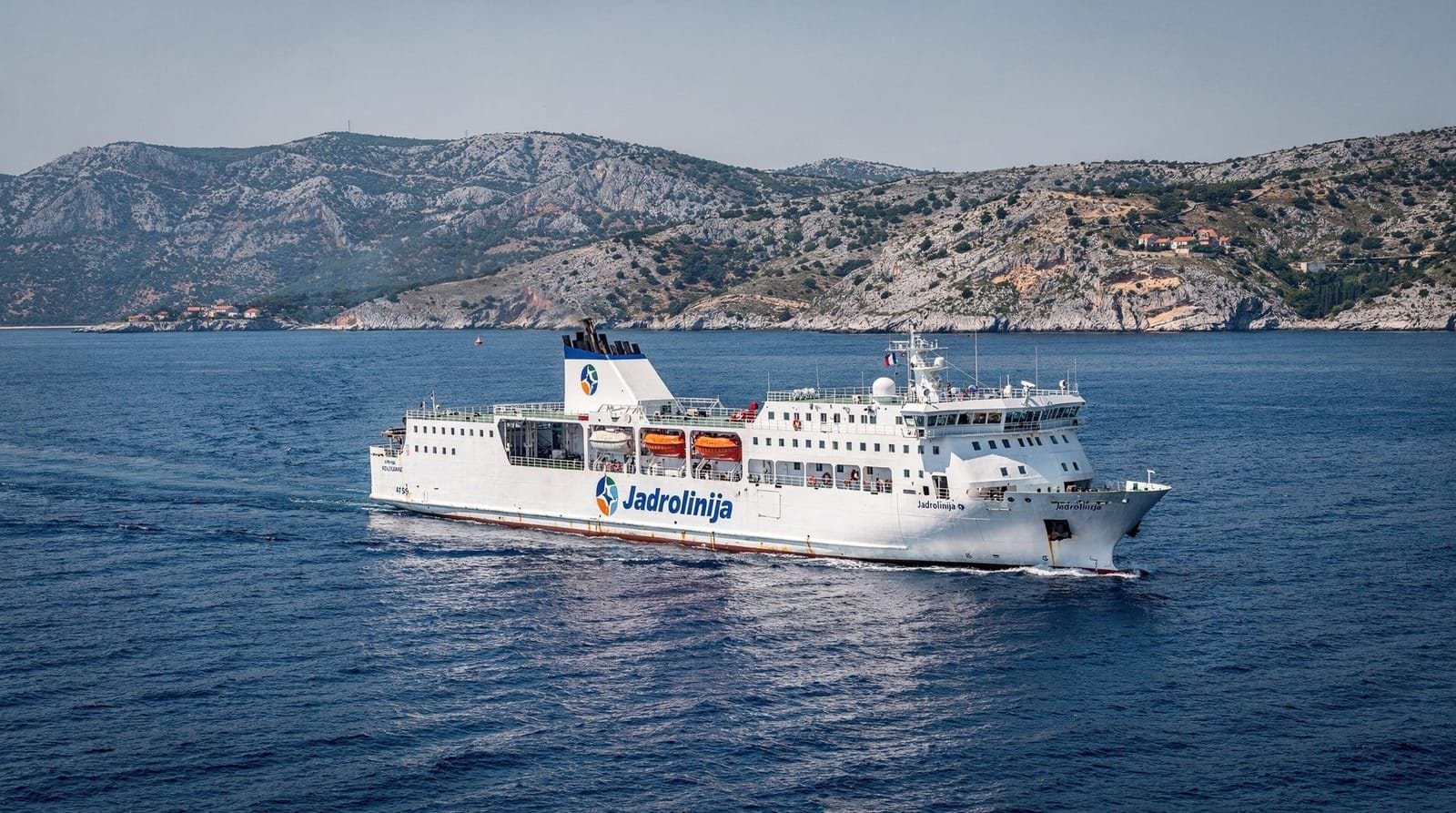
The classic route from Split takes you south through Hvar, Vis, Korčula and Mljet before ending in Dubrovnik. A 7-day version gives two nights on Hvar and two on Korčula or Vis. A 10-day version allows more depth, including time on Vis, which many consider Croatia's best island. Travel is by Jadrolinija catamaran — no car needed.
| Where | Split to Dubrovnik, via Brač, Hvar, Vis, Korčula, Mljet |
| Time needed | 7 days (classic) to 14 days (grand route) |
| Getting there | Jadrolinija coastal catamaran, foot passenger |
| Cost | around €50–80/person/day mid-range |
| Booking | Hvar accommodation weeks ahead in peak season |
Itinerary Length at a Glance
| Length | Islands covered | Nights per island | Best for |
|---|---|---|---|
| 7 days | Hvar, Vis, Korčula (half day) | 2, 2, 0.5 | First-timers, limited time |
| 10 days | Hvar, Vis, Korčula | 3, 2, 2 | Fuller experience, still one direction |
| 14 days | Brač, Hvar, Vis, Korčula, Mljet | 0 (day trip), 3, 2, 2, 2 | Repeat visitors, unhurried pace |
How Croatian Island Hopping Works
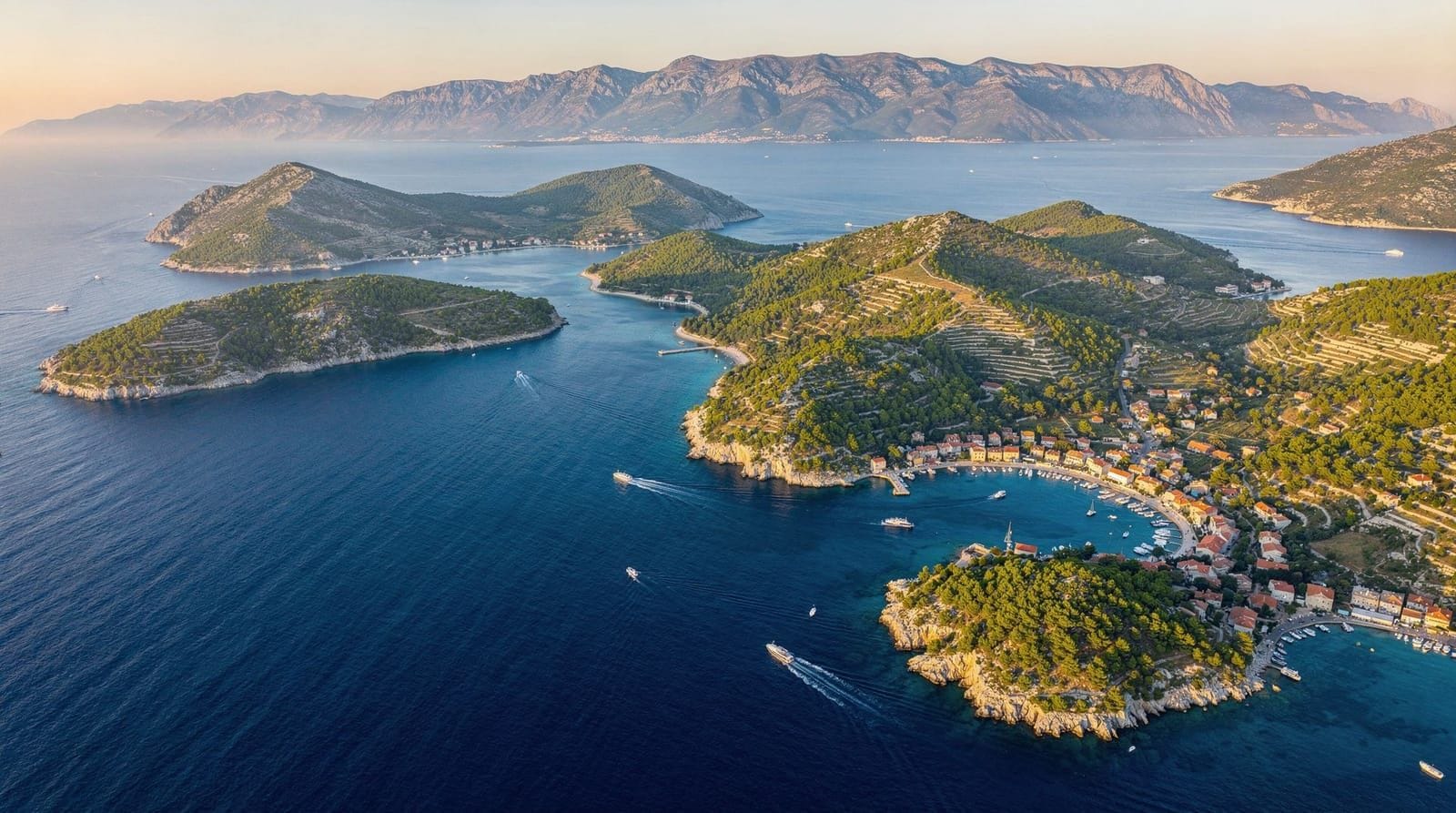
The Dalmatian island chain stretches south from Split to Dubrovnik — roughly 200 km of coastline punctuated by the islands of Brač, Hvar, Vis, Korčula and Mljet, plus smaller archipelagos including the Pakleni Islands and Elaphiti. Jadrolinija, Croatia’s national ferry operator, runs the catamarans and car ferries that connect them.
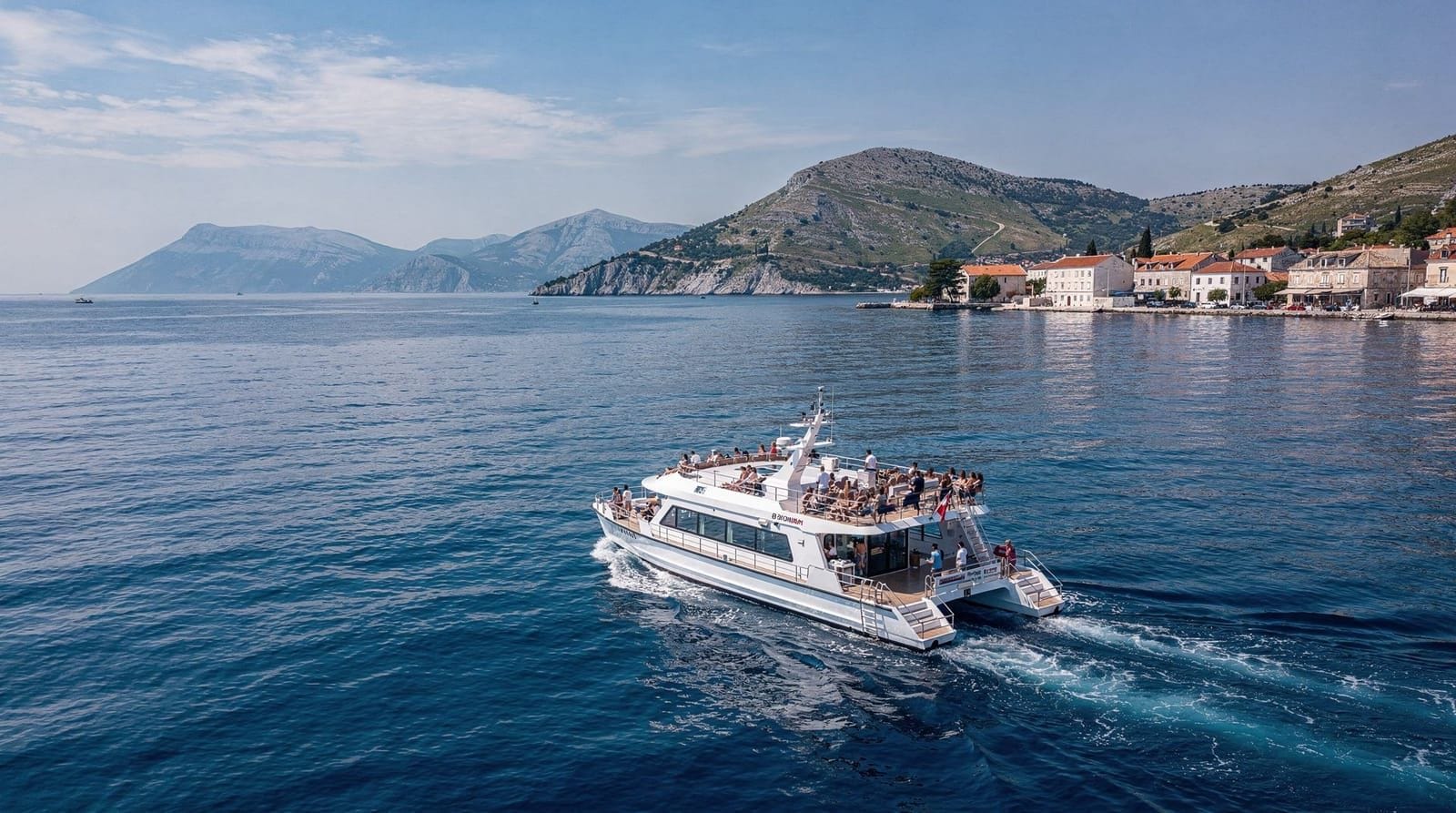
For island hopping, the key service is the coastal catamaran — a fast passenger-only service that runs once daily in summer from Split south through the islands to Dubrovnik. The full route takes approximately 5.5 hours if you travel non-stop, but the point is to stop at multiple islands en route. You board with your luggage, disembark wherever you choose, spend a night or more, then catch the same catamaran the following day.
This is the most accessible, least expensive and most flexible way to island-hop Croatia, and it requires nothing more than a valid ferry ticket bought at the port.
Choosing your pace before you book
The biggest decision is not which islands to visit but how many you can enjoy without spending the trip on a quayside. Every island you add means another ferry leg, another check-in and another morning spent repacking. Travellers who slow down and keep each stay to at least two nights usually come home happier than those who tick off a longer list. If you are still deciding how long to give the whole country, how many days in Croatia helps you see where an island week fits, and the Croatia itinerary planning guide shows how to combine the coast with the rest of the country.
Think too about what kind of days you want. Some people want lazy swims and long lunches, others want fortress climbs and wine tastings, and a few want both. Hvar suits lively evenings, Vis suits quiet ones, Korčula suits wandering and Mljet suits doing very little. Matching the islands to your mood matters more than following any fixed template. For a broader comparison before you commit, the best Croatian islands guide sets them side by side.
The 7-Day Classic: Split to Dubrovnik
This is the benchmark itinerary for first-time island hoppers with one week.
Day 1: Arrive Split Get your bearings in Split’s remarkable old town — Diocletian’s Palace, the waterfront Riva, the best seafood dinner you can afford. Book your forward ferry tickets at the Jadrolinija office or online.
Days 2–4: Hvar (2 nights) Take the morning catamaran from Split to Hvar Town (1 hour). Two nights gives you time to explore the old town and fortress on arrival day, and a half-day trip to the Pakleni Islands on the second day. The water taxi from Hvar harbour to Palmižana takes 10 minutes and the swimming is the best in the area.
Honest note: Hvar Town in July and August is very busy and very expensive. Book accommodation at least four to six weeks ahead in peak season.
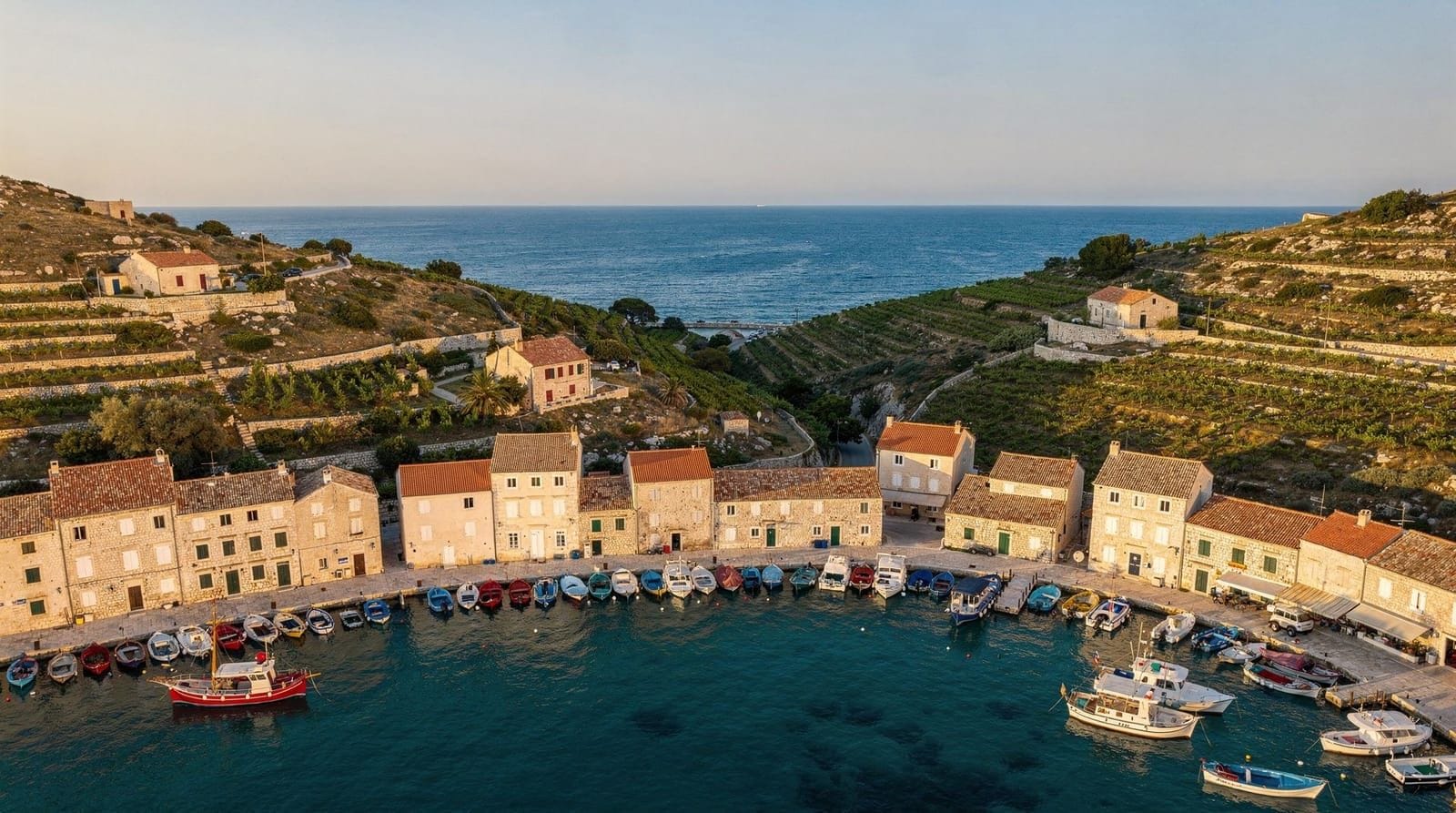
Days 5–6: Vis (2 nights) The catamaran from Hvar to Vis runs in approximately 1 hour 20 min (check current Jadrolinija timetable — connections vary by season). Vis is the highlight of this itinerary for many travellers — quieter, more authentic, with Croatia’s best beaches.
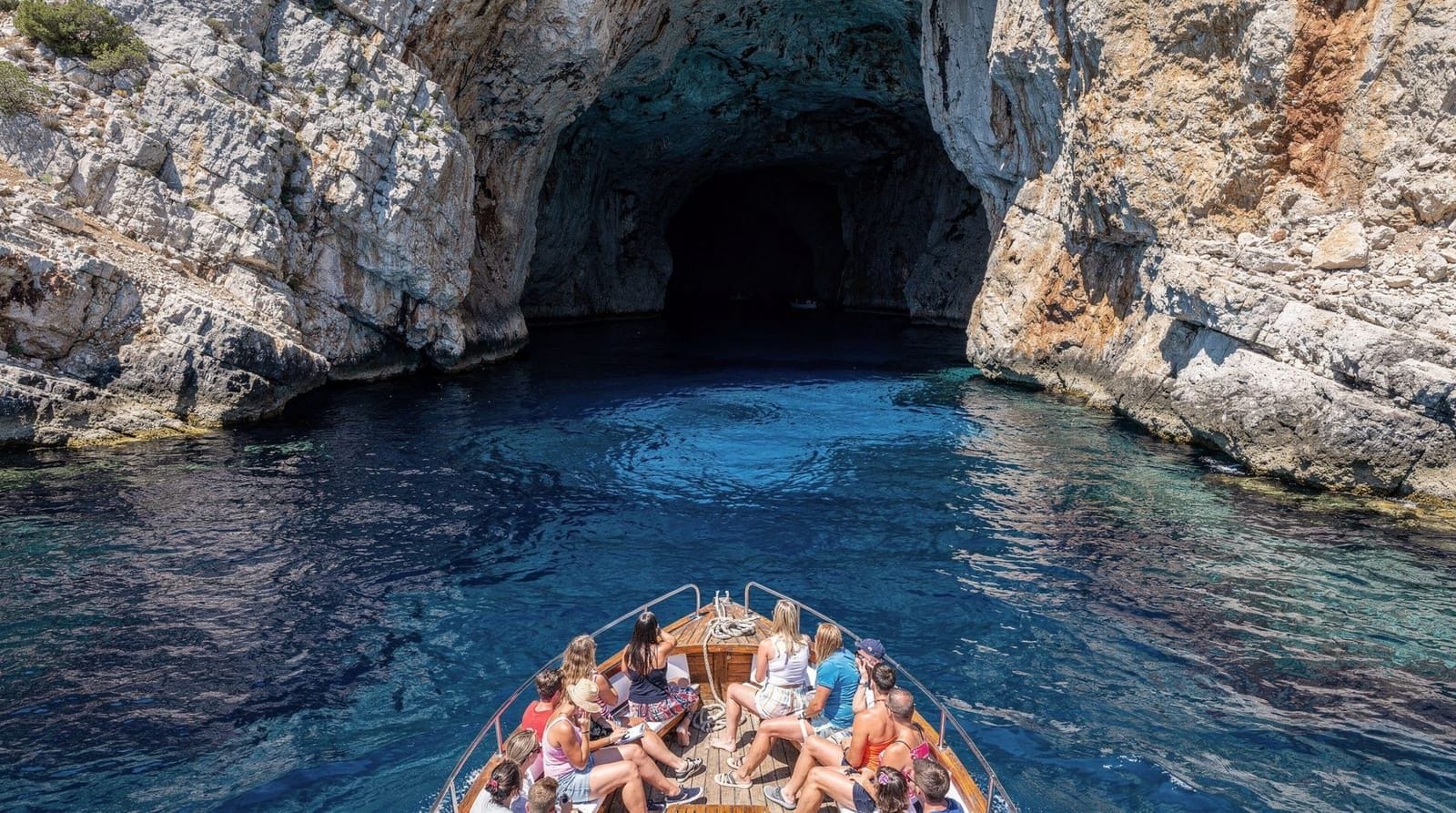
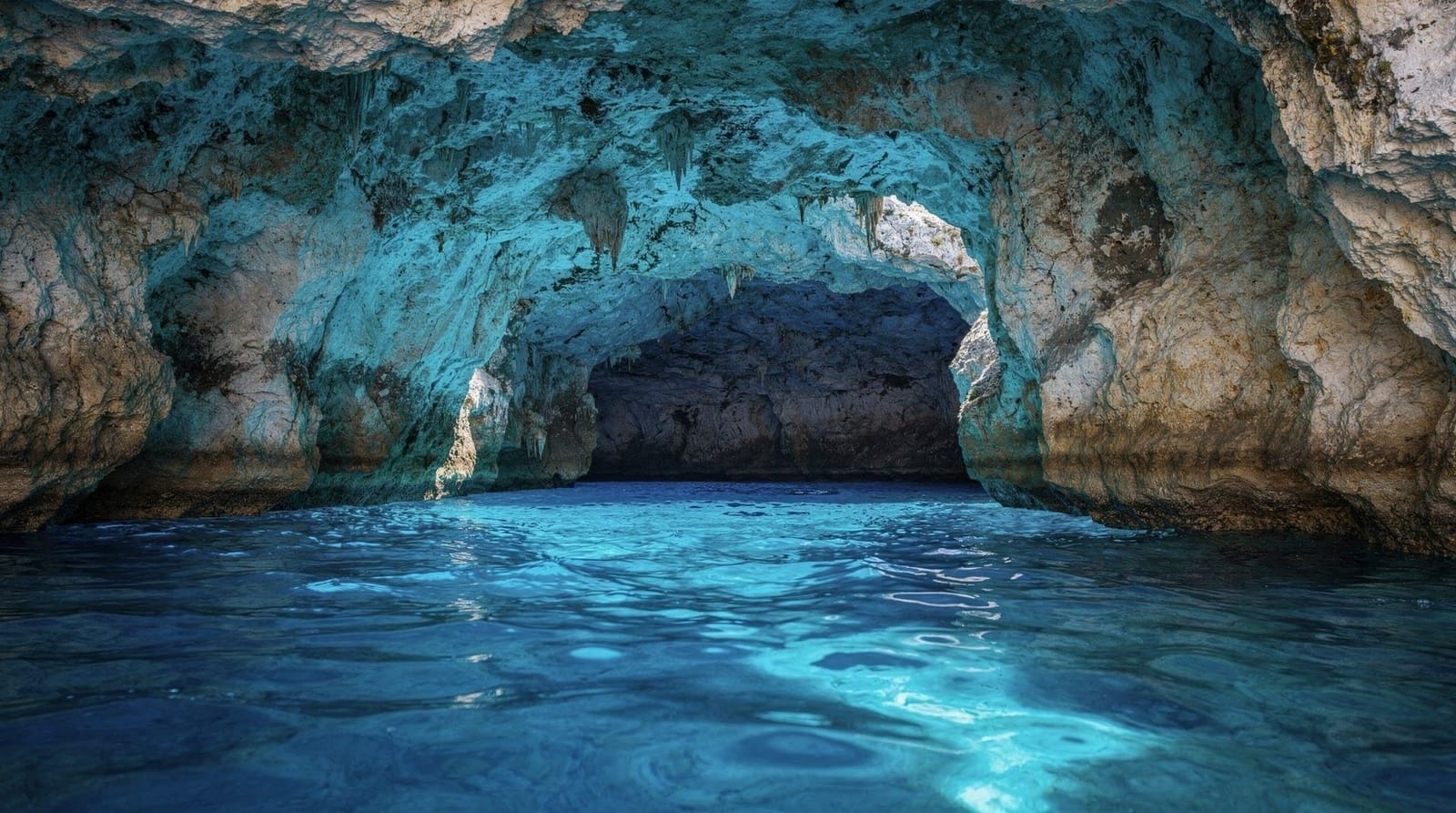
On Vis: Stiniva beach (boat or a 30-minute steep hike), the fortress above Vis Town, the fish restaurants in both Vis Town and Komiža. If you have time, the Blue Cave at Biševo is a short boat transfer from Komiža — book the morning transfer early.
Day 7: Korčula (half day) + Dubrovnik Take the coastal catamaran from Vis toward Dubrovnik, stopping in Korčula Town for 3–4 hours (check catamaran timing to ensure connection). Walk the old town, buy a bottle of Pošip wine, then board the continuing catamaran to Dubrovnik (arriving late afternoon).
Alternatively, skip the Korčula stop and head directly to Dubrovnik if you are flying out the next day.
The 10-Day Version — More Depth
Ten days allows a fuller experience of each island and the addition of Korčula properly.
Days 1–2: Split — Full exploration of Diocletian’s Palace, old town, nearby Trogir as a half-day trip.
Days 3–5: Hvar (3 nights) — Day one: Hvar Town exploration. Day two: Pakleni Islands full day. Day three: Rent a scooter or join a wine and olive oil tour of the island’s interior.
Days 6–7: Vis (2 nights) — Stiniva and the beaches. Optional Blue Cave from Komiža.
Days 8–9: Korčula (2 nights) — Old town properly, Lumbarda for Grk wine, the Moreška sword dance performance in summer.
Day 10: Dubrovnik — Catamaran from Korčula to Dubrovnik (approximately 2 hours via Jadrolinija).
The 14-Day Grand Route
Two weeks allows you to include Mljet, Croatia’s most peaceful island, and potentially Brač.
Days 1–2: Split
Day 3: Brač day trip — Car ferry to Supetar, local bus to Bol, morning at Zlatni Rat beach, return ferry.
Days 4–6: Hvar (3 nights)
Days 7–8: Vis (2 nights)
Days 9–10: Korčula (2 nights)
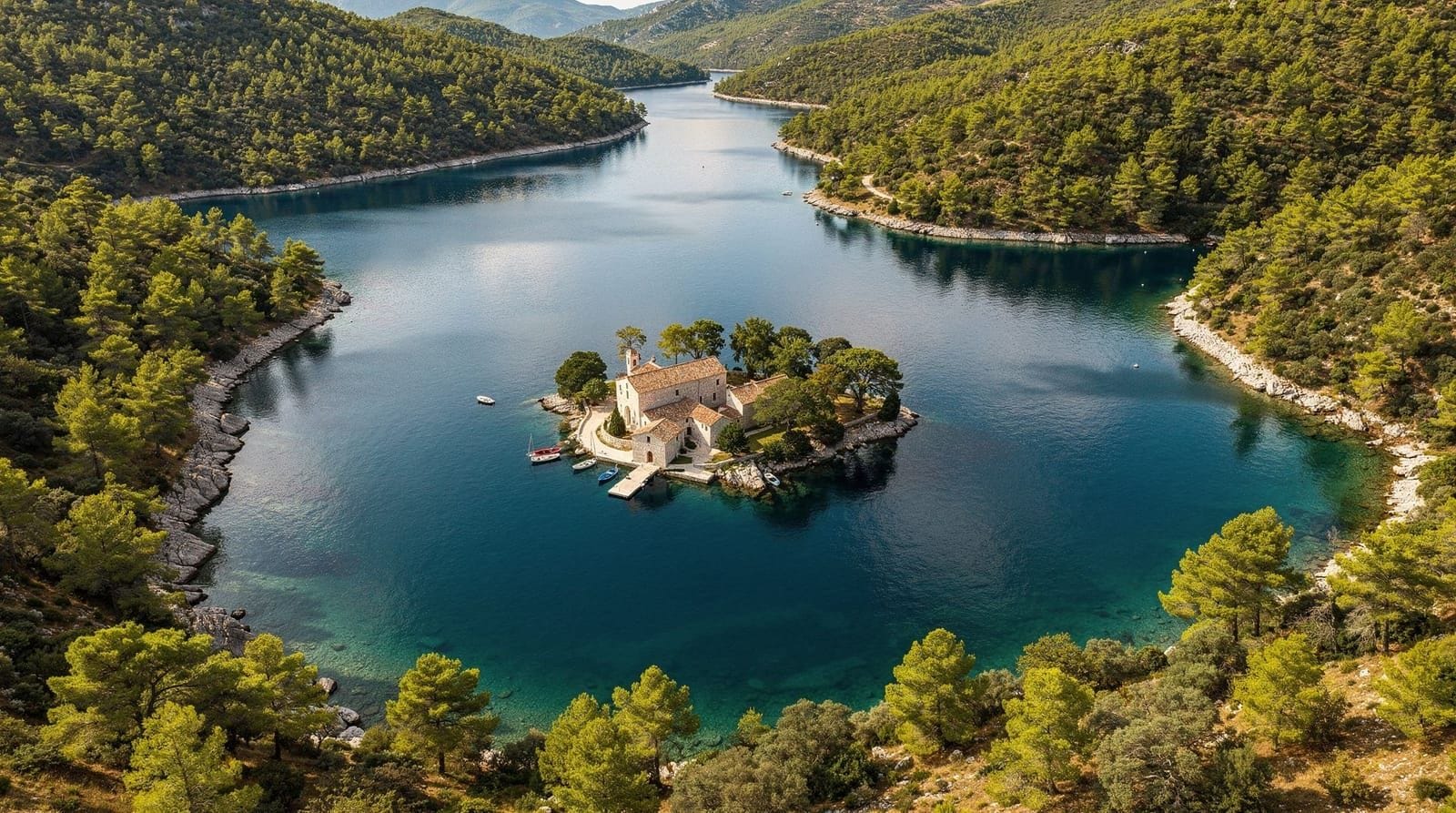
Days 11–12: Mljet (2 nights) — Take the coastal catamaran from Korčula to Mljet Polače. The national park (saltwater lakes, monastery island, cycling paths) requires a full day minimum. The pace on Mljet is slow by design.
Days 13–14: Dubrovnik — Catamaran from Mljet Polače to Dubrovnik (approximately 2 hours). Two nights gives time for the city walls, Old Town and the harbour area.
Ferry Logistics — What You Need to Know
The coastal catamaran: The Jadrolinija Split–Dubrovnik coastal service runs once daily in each direction. Check the current timetable at jadrolinija.hr — times change seasonally. In summer 2026, the southbound departure from Split is typically mid-morning (around 8–9 am). The boat stops at Bol (Brač), Hvar Town, Vis Town, Korčula and Mljet (Polače) before Dubrovnik.
Ticket purchasing: At the Jadrolinija ticket office at Split ferry terminal, online at jadrolinija.hr or at smaller ports. As a foot passenger without a reservation, you can usually buy same-day, but during the peak weeks of July–August, the Split–Hvar leg specifically can sell out. Booking 24–48 hours ahead is wise.
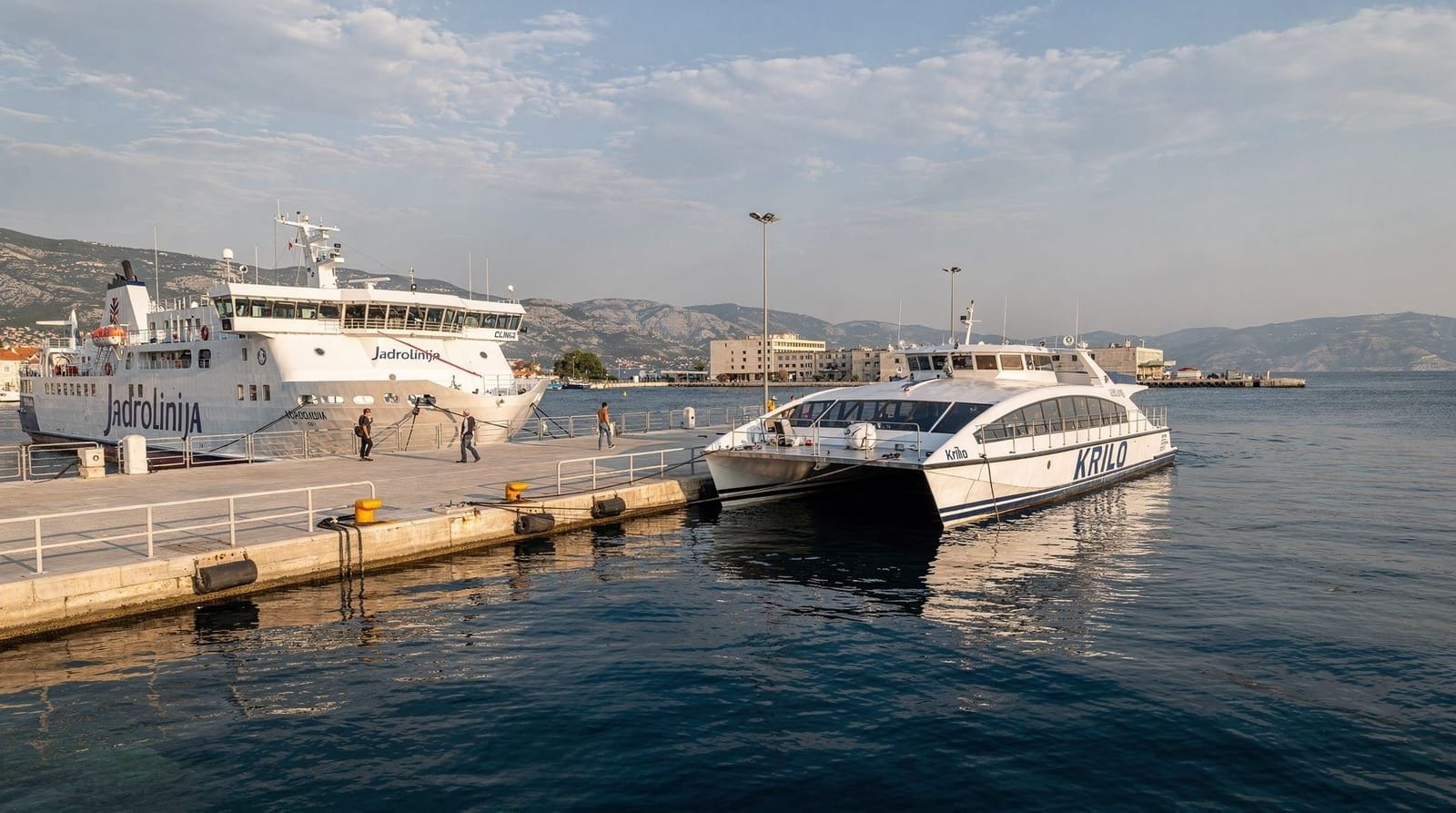
Krilo catamarans: Krilo operates a competing catamaran service on some routes. The schedule and stops differ from Jadrolinija — sometimes an earlier or later departure, sometimes a faster route. Worth comparing at krilo.hr.
Car ferries: If you want to bring a car, car ferries operate on specific routes (Split–Supetar/Brač is the most useful). You must book car space in advance for summer. Most island-hoppers do not bring a car — it adds cost and planning for minimal benefit on the main island towns.
Making each island stop count
Hvar. Go up to the fortress early, before the heat builds, and keep the evening for the harbour. For swimming, the Pakleni Islands are the obvious escape from the town crowds. If you are weighing it against its neighbours, Hvar vs Brač explains who each island suits.
Vis. The island was closed to foreign visitors for decades, and that history shows in its unhurried feel. Rent a scooter or join a boat trip to see the coast, and plan at least one long fish dinner in Komiža. The Vis island guide goes deeper on beaches and walks, and the Blue Cave guide explains how the Biševo trip works and why morning light matters.
Korčula. The old town rewards slow walking; the lanes are laid out to catch the breeze and shade, so even midday strolls are bearable. Pair it with the wines of the island — the Korčula wine guide is useful if you want to taste properly rather than just buy a bottle. The Korčula destination page has more on the town itself.
Mljet. Treat it as a place to slow down. Cycling and swimming in the lakes fill a day without any planning, and the Mljet island guide covers the park in detail. The Mljet destination page adds background on the villages.
Handling the ends of the trip
The island route begins and ends in two of Croatia’s biggest cities, and both deserve more than a transit night. In Split, leave a little time for the Split old town and Diocletian’s Palace, since you will be rushing past the quayside on departure morning otherwise. In Dubrovnik, the Dubrovnik old town guide and the city walls guide help you plan the last days, and arriving with a flexible schedule lets you pick the best weather for the walls.
If you are flying in and out, check the transfer options in advance: Split airport transfers and Dubrovnik airport transfers explain how to reach the ferry terminal or old town without stress. Allow a comfortable margin on your last day, because a delayed catamaran is a poor start to a flight home. Island schedules are the least forgiving part of the trip, so build a buffer wherever a fixed departure follows a ferry.
Accommodation Tips
Book Hvar in advance. This is not optional for July–August. Even June is busy. Apartments via Booking.com or local agencies — search for rooms in the Hvar old town for the best location, or in the village of Milna or Zavala on the southern coast for more space and quieter settings.
Vis: More available than Hvar, fewer chain options. Family-run apartments dominate. Booking two to three weeks ahead is typically sufficient except for peak weeks.
Korčula: Good availability relative to Hvar. The old town is very compact — staying inside the walls or immediately adjacent is the best experience.
Mljet: Very limited options. Pomena and Polače have a handful of hotels and apartments. Book as far ahead as possible.
Planning around money and paperwork
Island hopping is simple on paper, but a few practical points save headaches. Ferry tickets, small bars and market stalls may favour cash, so keep some on hand; the money in Croatia guide explains how to handle cards, cash machines and tipping, and Croatia daily costs helps you build a realistic budget. Non-EU visitors should also read the entry requirements guide before travelling.
Travel insurance is worth a thought for a trip that depends on ferries and weather. Rough seas can cancel sailings, and having a flexible plan for one spare day makes a cancelled crossing an inconvenience rather than a disaster. The Croatia travel insurance guide explains what to look for. For the wider ferry network and how services differ, the Croatia ferries guide is the reference to keep on your phone.
What to Pack
Light layers for evening on the water (catamarans are air-conditioned and sometimes cold). Good walking sandals or shoes for cobbled old towns. High-SPF sunscreen — the Adriatic amplifies UV. A small daypack. Enough cash for places that do not accept cards (some ferry kiosks, small bars, market stalls). A reusable water bottle.
When to Go
Best: June (early summer, full ferry schedule, manageable crowds) and September (warm sea at 23–24°C, much quieter, beautiful light). May works if you do not mind variable weather and some limited opening hours.
Peak: July–August (everything works, ferry schedules maximised, very busy, prices high).
Avoid for island hopping: October onwards (reduced catamaran schedule, some businesses closing, sea cooling rapidly).
See the best time to visit Croatia guide for a broader seasonal breakdown.
Alternatives to the classic route
The Split–Dubrovnik route above is the default because the coastal catamaran makes it simple, but it isn’t the only shape a Croatia island trip can take. If Hvar’s crowds and prices are the sticking point, swap in more Vis time — the Vis island guide covers why many repeat visitors rate it above Hvar. If you’d rather compare Hvar, Brač and Korčula directly before committing days to each, the Hvar vs Brač vs Korčula guide lays out the trade-offs. And if a fixed ferry schedule feels too rigid, sailing from Split covers chartering a boat instead, which trades ferry timetables for anchorage flexibility at a higher cost.
For the operator-level detail on which catamaran to book for each leg, see Jadrolinija vs Krilo — the differences in price and comfort matter most on the longer legs like Hvar–Vis or Korčula–Mljet.
Frequently asked questions about Croatia Island Hopping Itinerary
Can I do a Croatia island hopping trip without a car?
Yes, and this is the recommended approach. Ferries and catamarans connect all the main islands. The main towns — Hvar, Vis Town, Komiža, Korčula Town — are all walkable. A car is more useful for exploring island interiors (Brač, Korčula) but unnecessary for the classic island-hopping route.How much does island hopping in Croatia cost per day?
Budget approximately €50–80 per person per day for a midrange trip — including accommodation in a private apartment (€30–60 per person in shared room), one or two restaurant meals, ferry costs and incidentals. Hvar is the most expensive stop; Vis and Mljet are more affordable. Shoulder season (May–June, September) reduces accommodation costs by 30–50%.Which direction should I island hop — Split to Dubrovnik or Dubrovnik to Split?
Split to Dubrovnik is more natural — you move progressively south with good catamaran connections at each step. Starting in Dubrovnik and travelling north requires more backtracking on ferry routes. If you fly in and out of the same airport, choose whichever city has the better flights; if one-way, Split to Dubrovnik is the canonical direction.Do I need to pre-book ferries for island hopping?
As a foot passenger, you can typically board catamarans without advance booking except on the busiest peak summer sailings. Buy tickets at the port on the day or one day ahead. The Split–Hvar Town catamaran can be full in late July and August — booking 24 hours ahead is wise in peak season.Which island should I skip if I only have 7 days?
Mljet is the most likely cut if you are short on time — it is beautiful and peaceful but requires time to appreciate and adds a significant catamaran leg at the end of the route. With 7 days, a Hvar + Vis or Hvar + Korčula combination covers more ground than trying to squeeze in all four southern islands.Is a sailing week better than island hopping by ferry?
Different experiences. A sailing charter gives you anchorages in remote coves, flexibility of timing and the sailing itself as entertainment. Island hopping by catamaran is cheaper, requires no sailing experience and puts you in the middle of each island town rather than at anchor offshore. Most first-time visitors do the ferry route; repeat visitors often try sailing.What is the Split to Dubrovnik catamaran route?
The Jadrolinija coastal catamaran (Split–Bol–Korčula–Mljet Polače–Dubrovnik) runs once daily in summer, taking approximately 5.5 hours for the full route. It is the backbone of the island-hopping journey, allowing you to cover the entire distance with stops. Note: it is foot passengers only, no cars.
Top experiences
Bookable activities with verified prices and instant confirmation on GetYourGuide.

Top experiences
Best-rated activities across GetYourGuide and Viator.

Blue cave, Mamma Mia and Hvar, 5 islands speedboat tour
- Viator

Blue Cave and Hvar Tour - 5 Islands Tour from Split and Trogir
- Viator

Blue cave, Mama Mia and Hvar, 5 Island Speedboat Tour from Trogir
- Viator

Medulin-Kamenjak 5h boat trip ALL-INCLUSIVE drinks on Sandra Boat
- Viator

Medulin: All-Inclusive Kraken Boat Tour to Kamenjak Cave & Levan
- Viator

3Hour ALL-INCLUSIVE Sunset Dolphin Watching from Medulin onSandra
- Viator