Vis Island Guide — Croatia's Most Authentic Dalmatian Island
Split: 5 islands full-day tour to blue cave, Vis and Hvar
Why is Vis considered Croatia's best island?
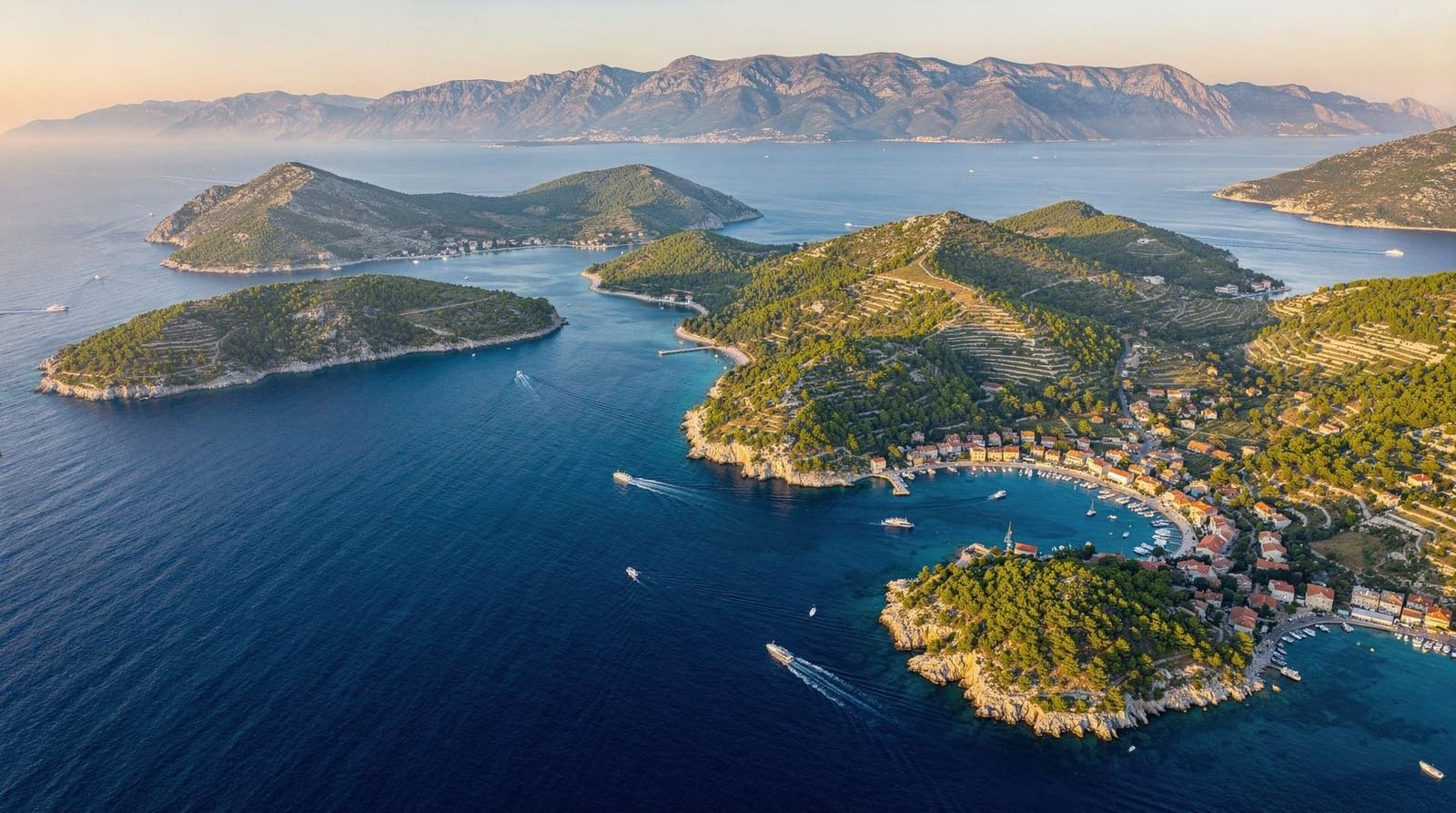
Vis was closed to foreign visitors until 1989 due to a Yugoslav military base, which meant it developed tourism far later and more slowly than Hvar or Brač. The result is a genuinely authentic island with real local life, outstanding beaches (Stiniva is one of Europe's most beautiful coves), excellent fish restaurants and a character that feels Croatian rather than arranged for export. It takes longer to reach but rewards the extra time.
Why Vis Is Different
Every Croatian island has advocates who will tell you it is the best. Vis has more of them, and a better argument. The island was a Yugoslav military base from the Second World War until 1989, when it was demilitarised and opened to foreign visitors. That 45-year closure compressed what might have been half a century of tourist development into 35 years — which means the island has been receiving tourists for less than half the time Hvar or Brač have.
The effect on the island is tangible. Vis has good fish restaurants without menus designed to appeal to photo-takers. The old town in Vis Town retains genuine residential streets alongside the tourist cafes. Komiža is still recognisably a working fishing village despite its summer visitors. The island has not been converted into a set dressing for package tourism.
This will change, gradually, as Vis becomes better known. The 2026 version of Vis is still the genuine article.
| Where | Vis Town (ferry port) and Komiža, reached from Split |
| Cost | Catamaran around €10-15 one way; Blue Cave transfer around €20-30 |
| Time needed | 2 full days minimum; 3 nights is more comfortable |
| Getting there | Jadrolinija catamaran from Split, about 2h20; car ferry about 2h45 |
| Best time | June and September for fewer crowds; July-August for full summer atmosphere |
Getting There
Catamaran (passengers only): Jadrolinija operates a fast catamaran from Split ferry terminal to Vis Town, journey time approximately 2 h 20 min. In peak summer, one to two sailings per day. Check jadrolinija.hr for the current schedule. Krilo catamarans also operate on this route.
Car ferry: The slower Jadrolinija car ferry runs Split–Vis (approximately 2 h 45 min) and allows vehicles. If you want to bring a car, book the vehicle space weeks ahead in July–August. Most visitors go as foot passengers.
Advance booking: Recommended for July and August. The catamaran is the only fast public transport to Vis and it can fill — especially the return sailings on Sunday evenings when holiday-makers head back to the mainland.
From Hvar: The Jadrolinija coastal catamaran connects Hvar Town to Vis Town in approximately 1 hour 20 min. This makes Hvar → Vis a natural progression on an island-hopping route.
Vis Town
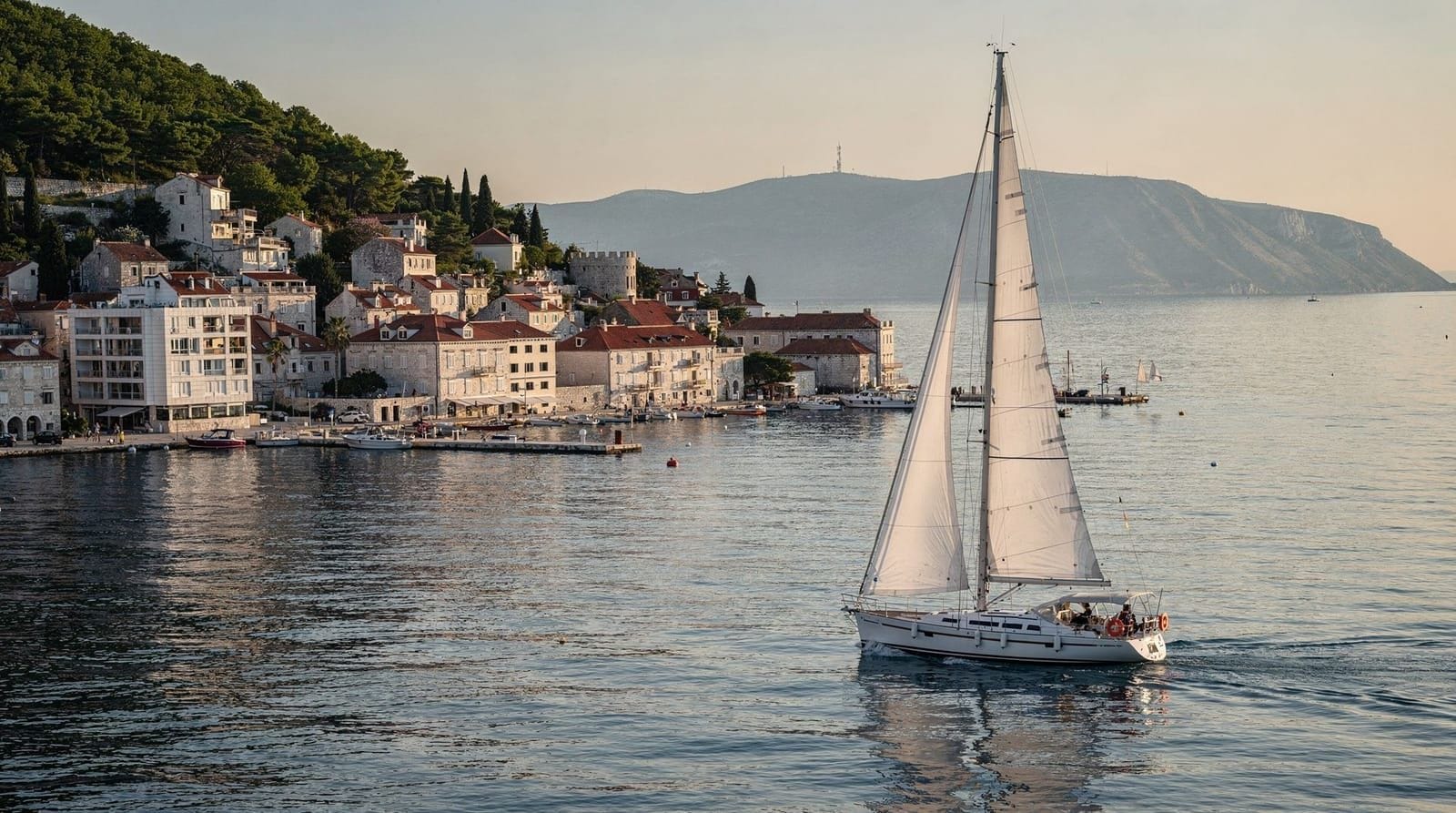
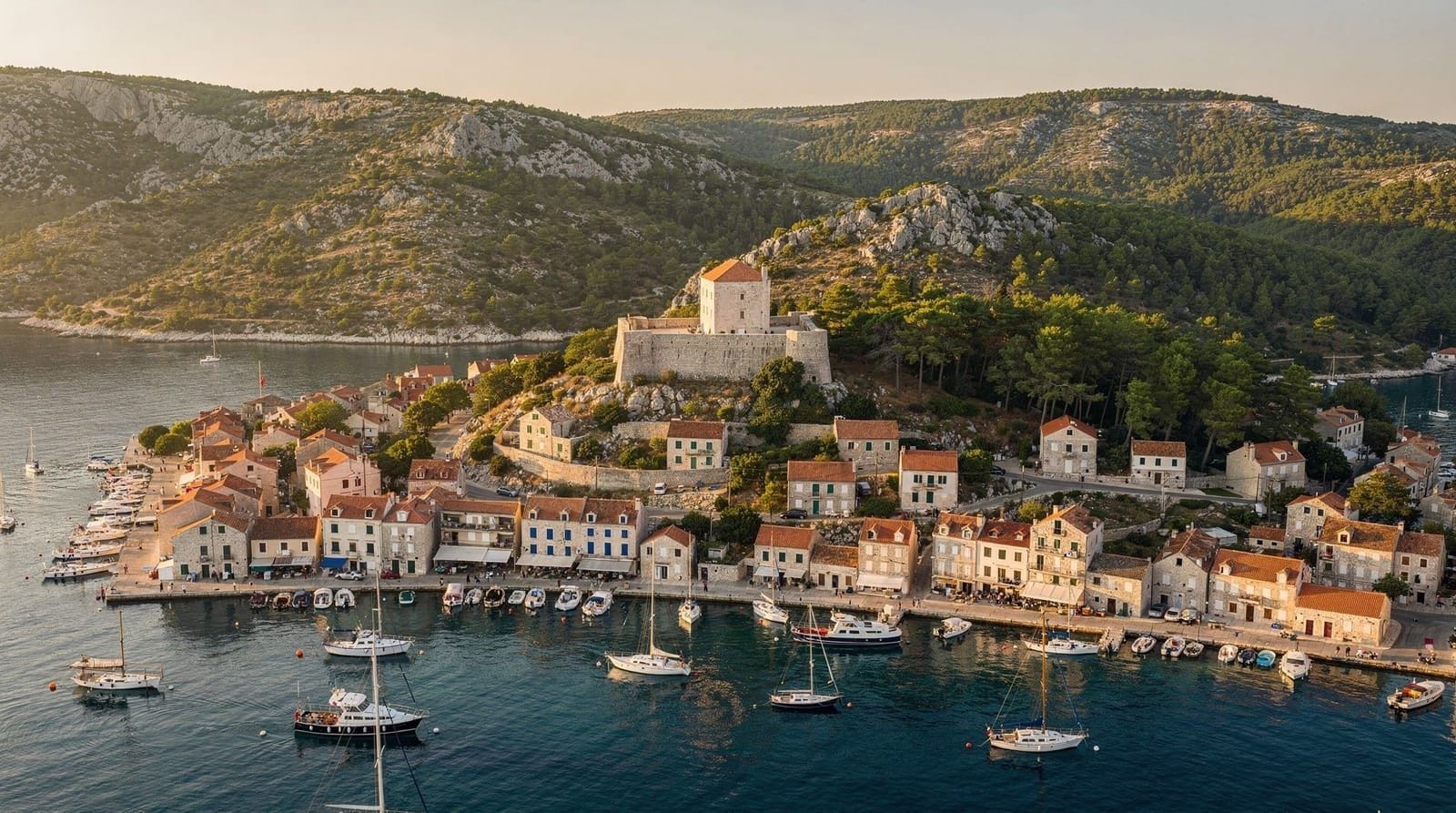
Vis Town occupies a sheltered bay on the northeast coast — the ferry arrives here. The town is a palimpsest of different periods: Hellenic foundations (a Greek colony called Issa was established here in the 4th century BC, making it one of the oldest urban settlements in Croatia), Roman baths, Venetian towers, Austrian and British fortifications from the 19th century, Yugoslav military structures and contemporary Croatian summer life.
The harbour front has cafes and restaurants on one side, the turquoise water on the other. Behind the harbour, the residential streets rise through an Austrian-era grid of stone houses. The Franciscan monastery on the small peninsula at the edge of the bay is worth the short walk.
Fort George: An Austrian coastal fortification above the town, now used for summer events and offering the best views over the bay. Accessible on foot in about 20 minutes from the harbour.
British cemetery: A small, beautifully maintained military cemetery containing the graves of British soldiers from the Second World War — a reminder that Vis was the Allied headquarters for Mediterranean operations in 1944 and where Marshal Tito met Churchill.
Komiža
Komiža is the more atmospheric of the two main towns — a west-facing fishing village at the foot of Mount Hum, with a 16th-century Venetian tower at the harbour entrance and a line of old fishing houses converted into restaurants and galleries. The setting, with the open sea and the island of Biševo visible on the horizon, is one of the most photogenic in Dalmatia.
Jastozera: The most famous restaurant in Komiža — a cave cistern beneath a 16th-century house, converted into a lobster restaurant where the lobsters are kept in the sea cistern below your feet. Genuinely extraordinary setting; genuinely excellent food; genuinely expensive. Book weeks ahead in peak season.
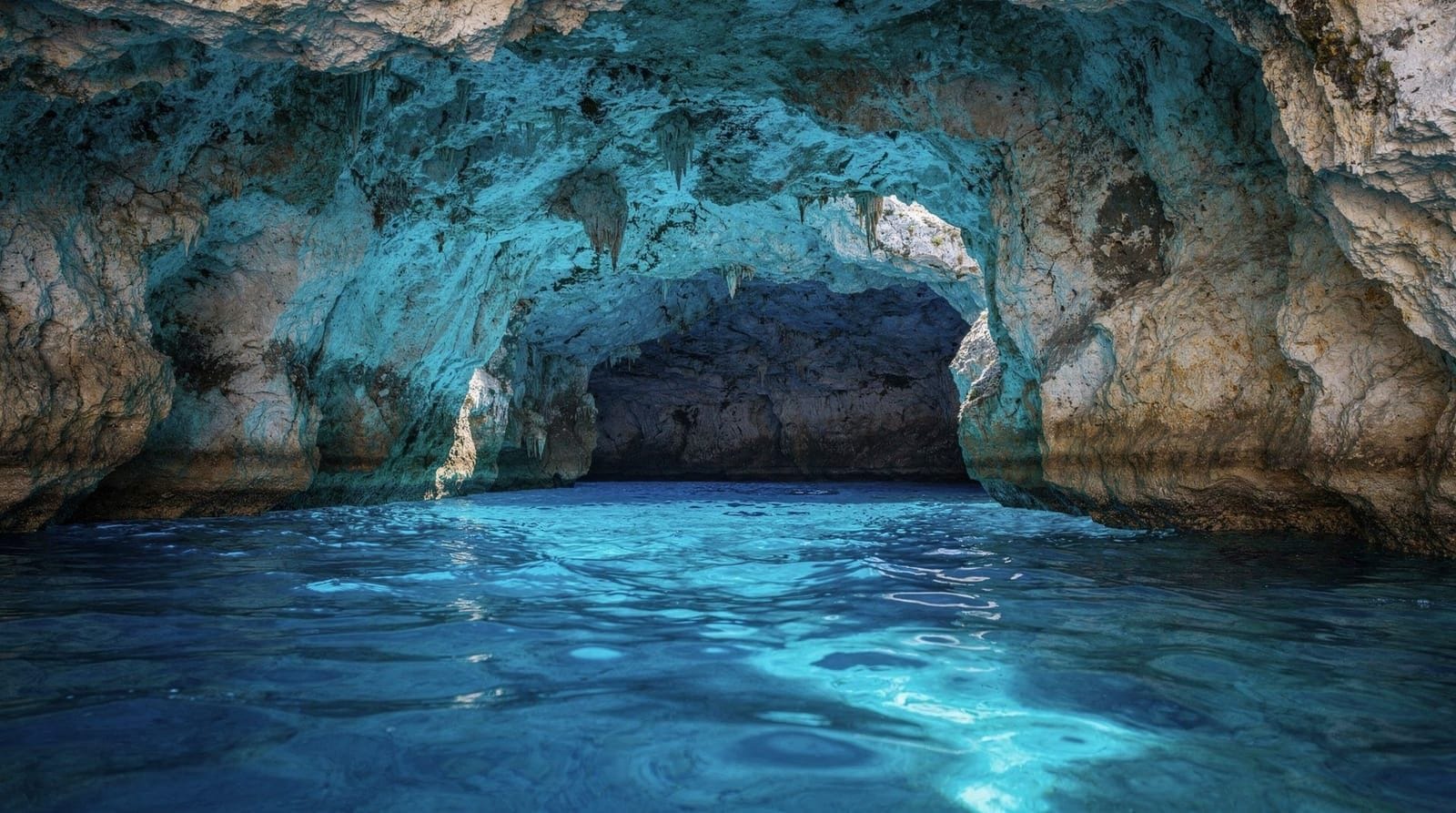
Blue Cave access: The morning boat transfers to Biševo depart from Komiža harbour. This is the best way to visit the Blue Cave — early arrival, shorter queues than the Split day-tour boats. Ask at the harbour for current operators and times.
The Beaches
Vis has the best beaches of any major Dalmatian island, and it is not particularly close.
Stiniva
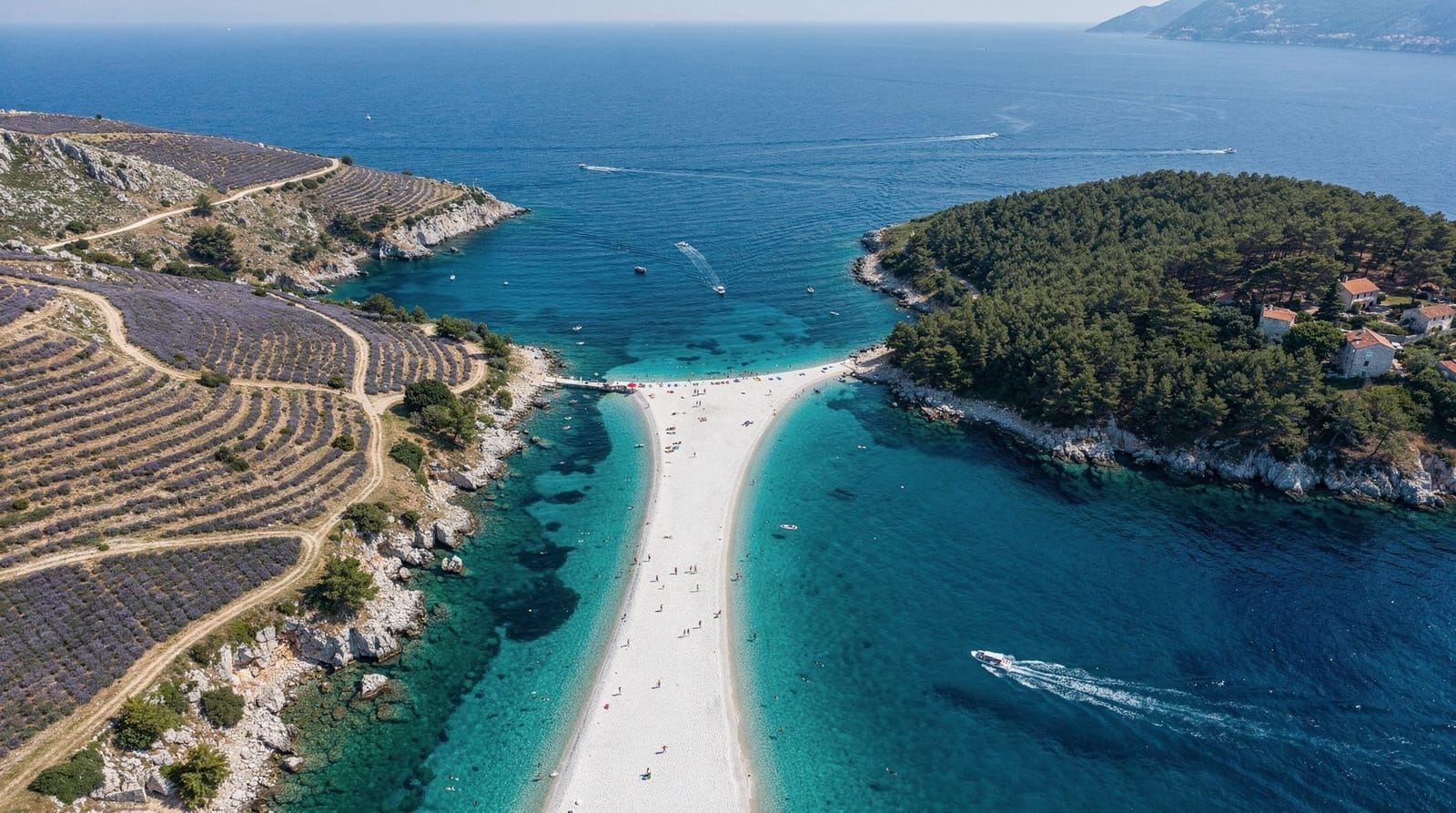
The most celebrated. A narrow pebble cove at the foot of 100-metre limestone cliffs, accessible only by boat or a steep 30-minute path from the road above. The cove is perhaps 40 metres wide at the water’s edge, enclosed on three sides by rock, open to a narrow channel of sea. The water is absurdly clear — you can see the bottom in 6 metres without difficulty.
In July and August, boat taxis ferry visitors from Vis Town, Komiža and other beaches. The cove gets busy by 11 am. Arrive early by boat or hike down before the boats start running. The walk back up is steep but takes only 30 minutes.
The beach itself is pebble — comfortable enough to sit on but bring a mat. No facilities (no toilets, no food or drink vendors). Bring water.
Srebrna (Silver Beach)
On the south coast between Vis Town and Komiža. A long open pebble beach with good swimming, less dramatic than Stiniva but more spacious and easier to reach. Popular with locals and far less discussed in travel media than the photogenic Stiniva.
Milna
On the south coast near Vis Town — a sheltered bay with a small settlement, calm and family-friendly. Accessible by road. The water is very clear. One of the easier beaches to reach independently.
Rukavac and Zaglav
East of Vis Town. Both require either a short boat trip or a walk. Rukavac is a favourite with locals in the know; Zaglav has good shade and a small waterfront bar. Neither appears in most travel guides, which is the point.
Food and Restaurants
Vis deserves its food reputation. The fishing heritage is visible on every menu — fresh octopus salad, grilled bream, sea bass, dentex, lobster. The konoba tradition (family-run traditional restaurant) survived the tourism pressure that has homogenised menus elsewhere.
In Vis Town: Vila Kaliopa is in a walled garden above the harbour — one of the most beautiful restaurant settings in Croatia for dinner. Tamaris at the harbourfront for more casual fish. Konoba Vatrica for genuine local atmosphere.
In Komiža: Jastozera for the occasion meal. Konoba Bako for excellent daily catch at more reasonable prices. Konoba Jastog (another lobster house) as an alternative to Jastozera.
Book ahead in July and August, especially for Jastozera and Vila Kaliopa. Walking in without a reservation in peak season is possible but risks disappointment.
Wine on Vis
Vis produces two wines worth knowing: Plavac Mali from the south-facing hillsides — the same grape as Hvar’s more famous production, here leaner and more mineral — and Vugava, a white grape grown almost exclusively on Vis. Vugava is dry, nutty and medium-bodied, excellent with the island’s seafood. It is difficult to find outside Croatia and practically impossible to find outside Dalmatia.
Look for it in the wine shops in Vis Town and Komiža, or ask restaurants if they stock a local producer. The bottles are worth bringing home if you can manage the weight.
Practical Information
Getting around: A local bus runs between Vis Town and Komiža (approximately 30 min, several times daily in season). Scooters and bicycles can be rented in both towns. Taxis are available. For beach access, boat taxis from Vis Town harbour are the practical solution for Stiniva and the south-coast beaches.
ATMs: Available in both Vis Town and Komiža. Bring cash as backup — some smaller restaurants and markets operate cash-only.
Accommodation: Private apartments dominate — book through Booking.com, Airbnb or local agencies. Hotels are limited in number. Book at least three to four weeks ahead for July–August. The village of Komiža tends to be slightly easier to find accommodation in than Vis Town.
Mobile data: Good 4G coverage in the towns; spotty on the beaches and hiking paths. Download offline maps before you arrive.
Vis Compared to Hvar and Korčula
If Vis is on a shortlist with Croatia’s other big-name islands, here is the honest comparison. See our fuller Hvar vs Brač vs Korčula guide for those three head-to-head.
| Vis | Hvar | Korčula | |
|---|---|---|---|
| Character | Authentic, low-key, working fishing island | Glamorous, lively nightlife | Historic old town, quieter than Hvar |
| Beaches | Croatia’s best (Stiniva, Srebrna) | Good but more crowded | Good, less dramatic than Vis |
| Getting there | Longest ferry (2h20 from Split) | Fast catamaran (about 1h) | Longer, often via Pelješac |
| Best for | Travellers wanting the “real” island | First-timers, nightlife | History and a slower pace |
Combining Vis with an Island-Hopping Route
Vis works well as one stop on a wider itinerary rather than an isolated visit. The Split to Vis leg pairs naturally with Hvar, about an hour’s catamaran ride further on, and both feature in most island-hopping itineraries. Sailors often add Vis to a route through the Pakleni Islands off Hvar, or continue to Mljet further south for a national park contrast. For ferry timetables and booking logistics across the whole coast, see the Croatia ferries guide, and for a wider view of which islands suit which travel style, the best Croatian islands guide and Croatia sailing guide are useful next reads.
Frequently asked questions about Vis Island Guide
How do you get to Vis from Split?
Jadrolinija operates a passenger catamaran from Split to Vis Town (approximately 2 h 20 min). There is also a car ferry (Split–Vis, approximately 2 h 45 min). Catamarans run once to twice daily in peak season. Book foot-passenger tickets at the Split ferry terminal or online — advance booking is wise in July and August when the service can fill.What are the best beaches on Vis?
Stiniva is the headline — a narrow pebble cove accessible by boat or a steep 30-minute path, flanked by cliffs, with extraordinarily clear water. Other excellent beaches: Srebrna (Silver Beach) on the south coast, Milna (very family-friendly, calmer water), Rukavac (reached by path or boat taxi), Zaglav and Stončica near Vis Town.Is Vis good for the Blue Cave visit?
Vis is the best base for the Blue Cave at Biševo island. Komiža, Vis's second town on the west coast, is the closest inhabited point to Biševo — about 5 km. Local boats run morning transfers to the cave. Visiting from Komiža means you arrive before the big Split tours do, with significantly shorter queues.What is the difference between Vis Town and Komiža?
Vis Town (the main ferry port on the northeast coast) is larger, with more restaurants, accommodation and a Venetian-era old town. Komiža is the smaller, slightly more atmospheric fishing village on the west coast, closer to the Blue Cave and facing the open sea. Most visitors base in one and visit the other by bus or taxi.Are there good restaurants on Vis?
Exceptionally good. Vis has some of the best konobas in Dalmatia — the fish quality reflects the island's fishing heritage and the restaurant culture has not been homogenised by mass tourism. In Komiža, Konoba Bako and Jastozera (lobster house in a cave cistern) are both outstanding. In Vis Town, several konobas along the harbour serve excellent octopus salad and grilled fish.Is Vis good for sailing??
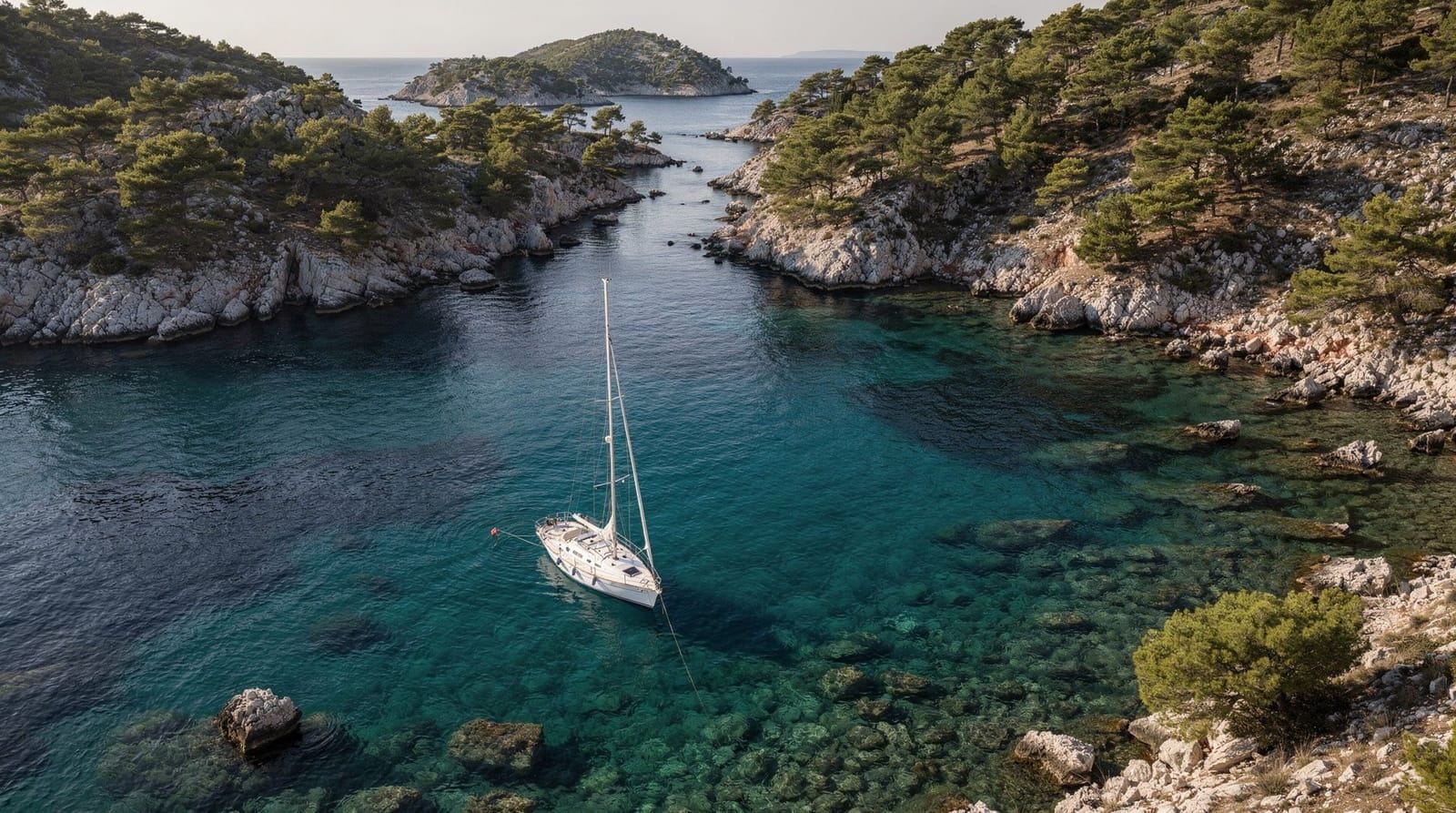
Vis is a favourite among sailors for both its anchorages and its character. Vis Town bay has a marina and mooring options. The south coast coves — Stiniva Bay, Sredi, Rukavac — are excellent sailing anchorages. The route from Hvar to Vis (about 25 nm) is a good afternoon passage with the maestral behind you.What is the MAMMA MIA! film connection to Vis?
Parts of the 2008 film Mamma Mia! and its 2018 sequel were filmed on Vis, including the fictional island of Kalokairi. Several boat tours from Split now market the 'Mamma Mia' connection and stop at filming locations. This has added a strand of pop-culture tourism to the island alongside its natural appeal.How many days should I spend on Vis?
Two full days is the practical minimum — one for Vis Town and Stiniva, one for Komiža and the Blue Cave. Three days lets you add Srebrna or Milna, a wine tasting, and a proper dinner at Jastozera without rushing. Vis rewards a slower pace more than most Dalmatian islands, so if your itinerary allows it, three nights beats a single overnight.Is Vis better than Hvar for a first-time visitor?
It depends what you want. Hvar has more nightlife, easier logistics and a livelier old town; Vis has better beaches, calmer atmosphere and more authentic food. First-time visitors who want convenience often prefer Hvar; those prioritising a genuine, less-touristed island usually prefer Vis. Many itineraries combine both rather than choosing.
Top experiences
Bookable activities with verified prices and instant confirmation on GetYourGuide.
Top experiences
Best-rated activities across GetYourGuide and Viator.

Blue cave, Mamma Mia and Hvar, 5 islands speedboat tour
- Viator

Blue Cave and Hvar Tour - 5 Islands Tour from Split and Trogir
- Viator

Blue cave, Mama Mia and Hvar, 5 Island Speedboat Tour from Trogir
- Viator

Medulin-Kamenjak 5h boat trip ALL-INCLUSIVE drinks on Sandra Boat
- Viator

Medulin: All-Inclusive Kraken Boat Tour to Kamenjak Cave & Levan
- Viator

3Hour ALL-INCLUSIVE Sunset Dolphin Watching from Medulin onSandra
- Viator