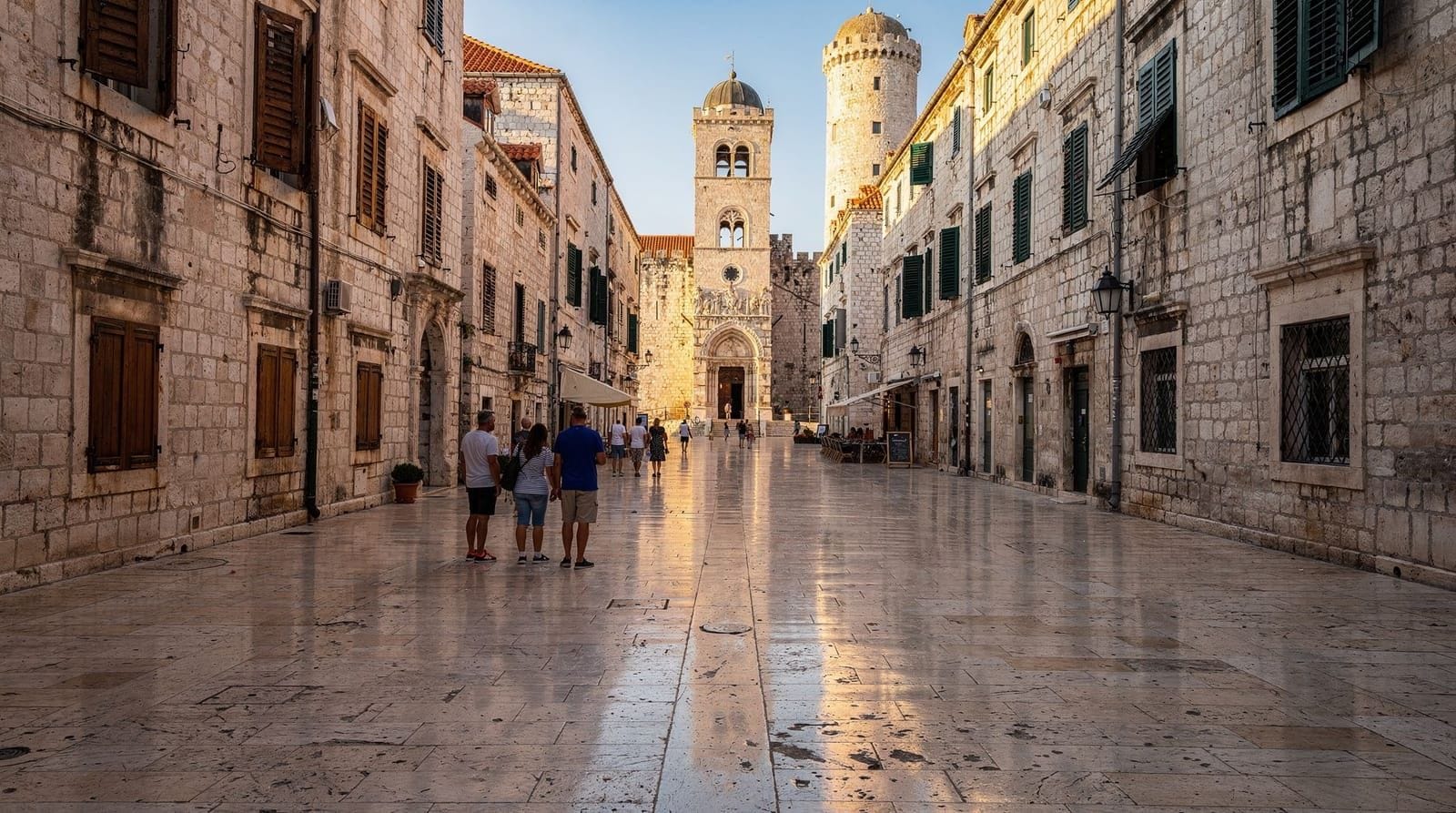
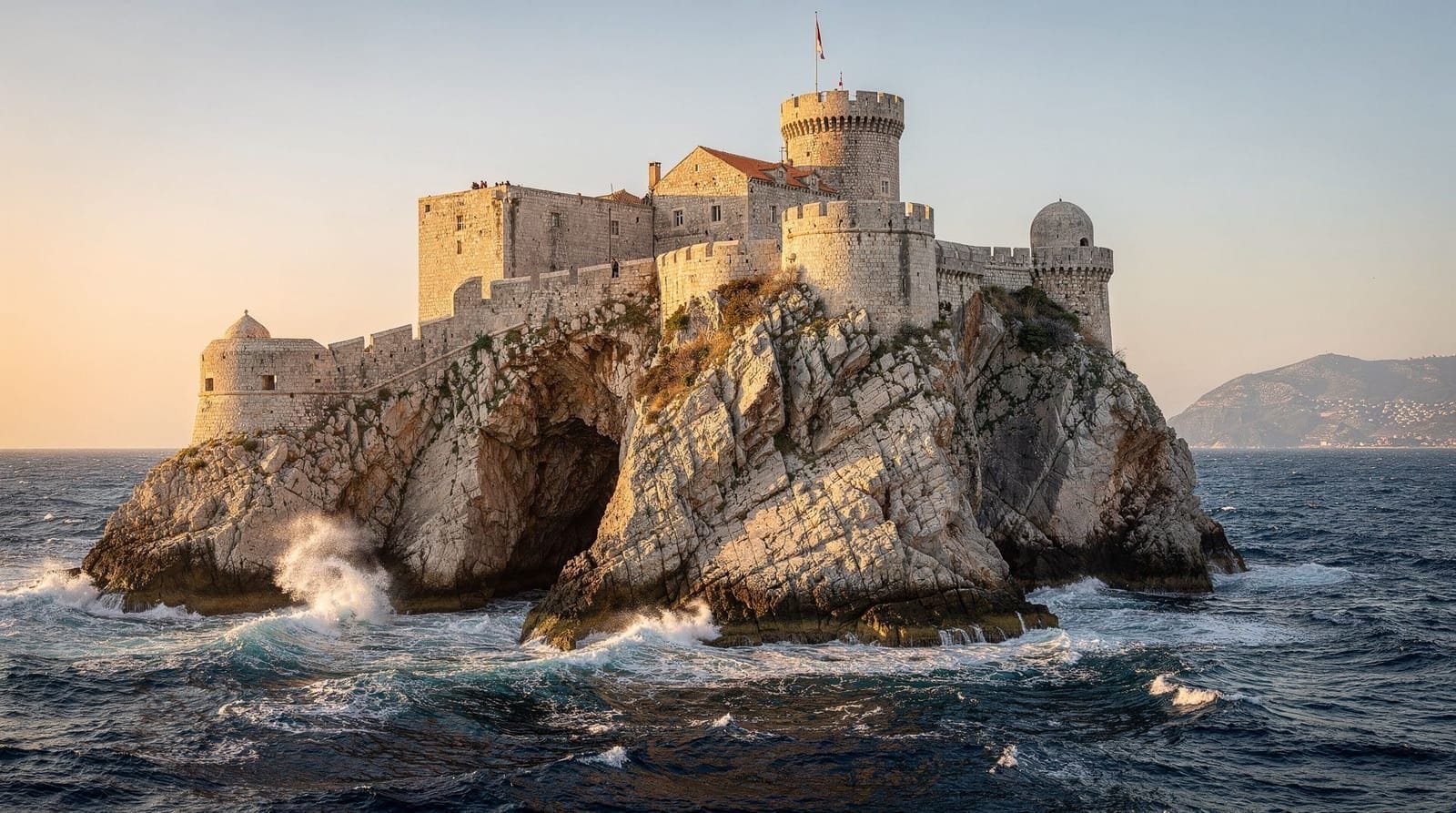
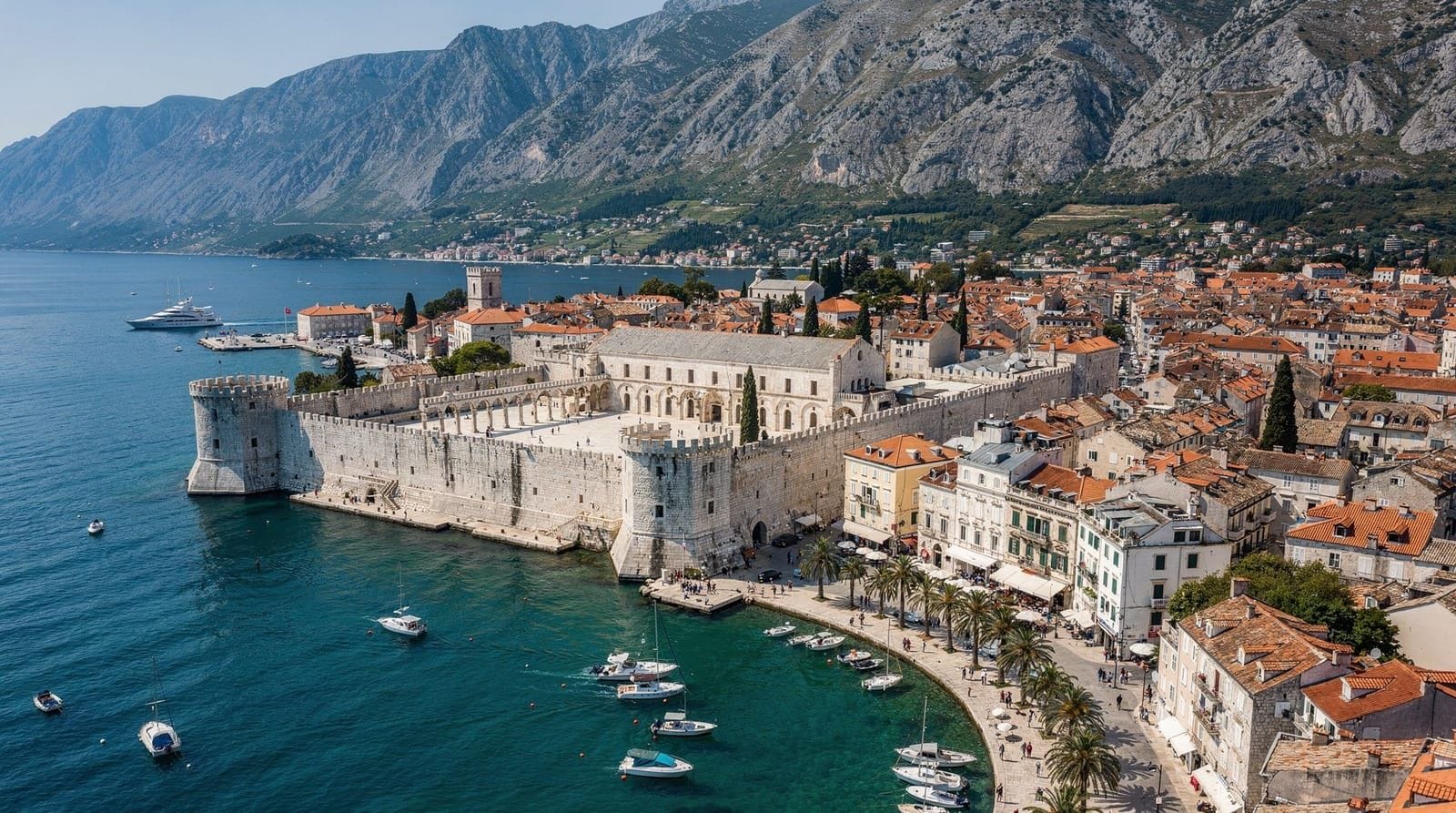
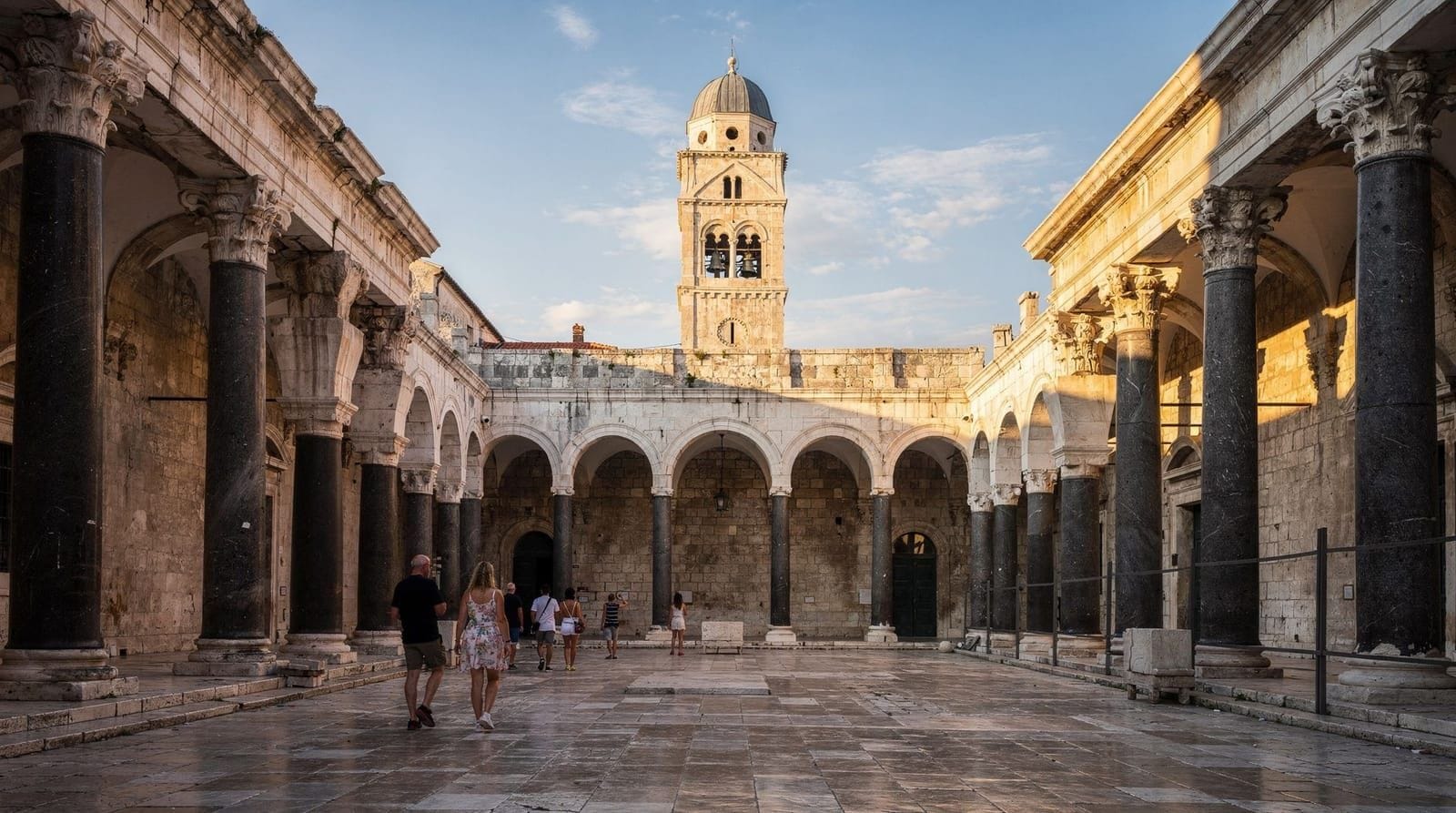
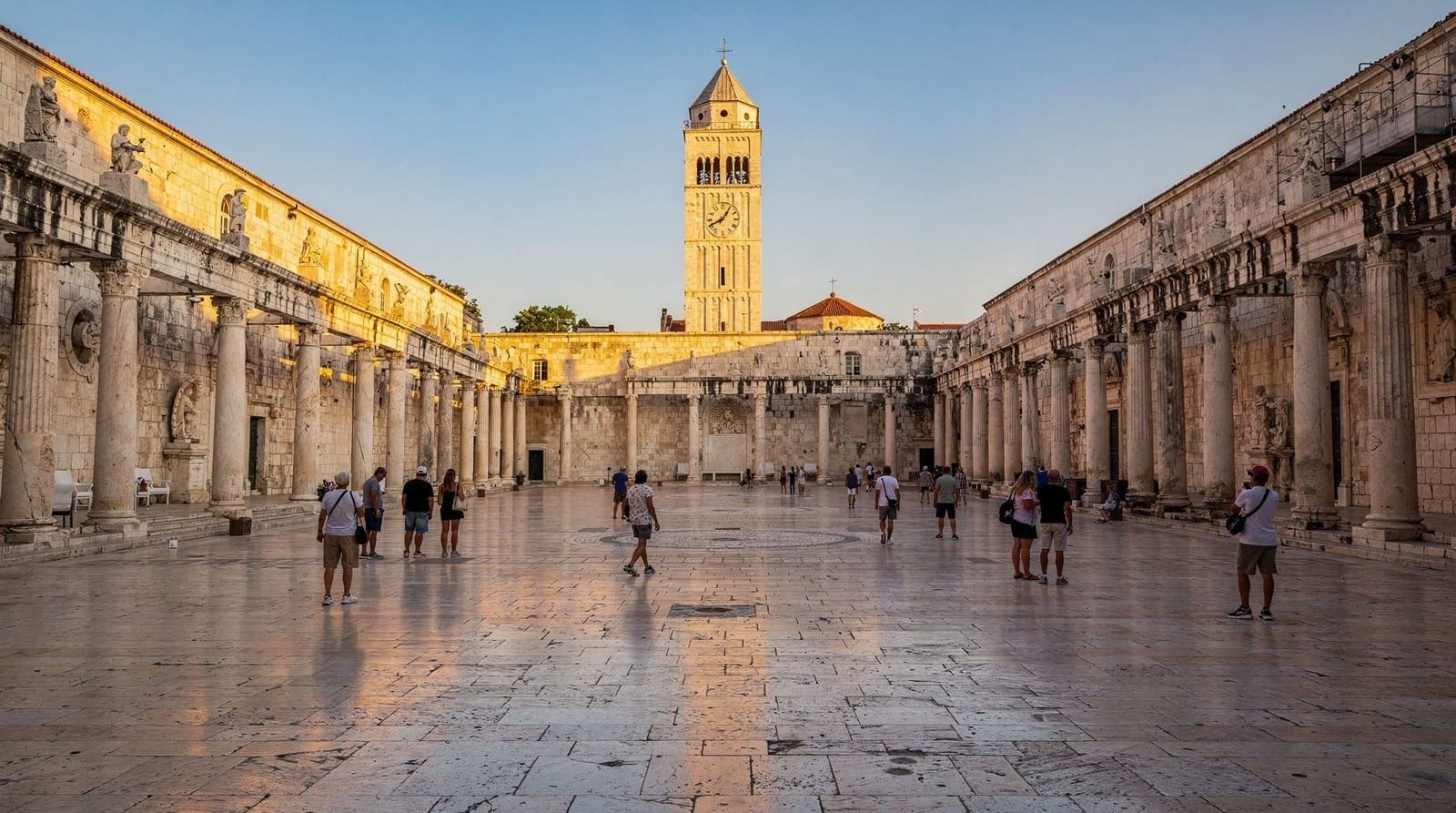
Game of Thrones locations in Split: Meereen and Klis Fortress
Split: Game of Thrones tour
Where was Game of Thrones filmed in Split, Croatia?
Split provided two distinct filming locations. The vaulted cellars beneath Diocletian's Palace served as the slave chambers beneath Daenerys's pyramid in Meereen (seasons 4–5). Klis Fortress, a medieval stronghold 12 km north of Split, appeared as the exterior of Meereen and the site of crucifixions in season 4.
While Dubrovnik played the star role in Game of Thrones as King’s Landing, Split had a quieter but equally compelling part. The city contributed two of the show’s most memorable Essos locations: the Roman-era cellars beneath Diocletian’s Palace became the slave chambers of Meereen, and the medieval Klis Fortress served as the imposing exterior of the slave city itself. Together they made Split the second most significant GoT filming city in Croatia — and unlike Dubrovnik, the Split sites are rarely overcrowded.
| Where | Diocletian’s Palace cellars (central Split) + Klis Fortress (12km north) |
| Cost | Cellar hall around €3–5; Klis entry around €5–7 |
| Time needed | Half a day for both, combined |
| Getting to Klis | Bus line 22 (30–40min) or car (20–25min) |
| Best time | Before 09:30 for the cellars, to beat the crowds |
Diocletian’s Palace cellars: the slave chambers of Meereen
The vaulted cellars beneath Diocletian’s Palace are one of the most unusual spaces in any European city. Built in the late third and early fourth century AD as the undercroft beneath the emperor’s residential quarters, they were progressively filled with debris, waste and built-over as the city above evolved over 1,700 years. Systematic excavation only began in the 20th century.
What emerged was a remarkably preserved series of vaulted stone chambers that mirror, room for room, the layout of the imperial apartments above. The main east-west passage — about 155 metres long — runs beneath the entire residential wing of the palace. Side chambers branch off in a pattern that corresponds to the rooms above. The atmosphere is exactly what you would expect from an unmodified fourth-century Roman cellar: low stone arches, uneven floors, minimal lighting, occasional drips.
The GoT connection
In seasons four and five, these cellars served as the space beneath Daenerys’s pyramid in Meereen where she imprisoned her two larger dragons (Rhaegal and Viserion) after locking them away. The filming used the main cellar hall and side passages — the arched stone perfectly matching the imagined architecture of an ancient Essosi city’s underbelly.
The decision to use real Roman cellars rather than a studio set was entirely sound. No set builder could replicate the patina, the irregular stonework or the specific quality of silence you get inside genuinely old stone vaulting. When Daenerys descends to visit the dragons in the darkness, she is walking through real Roman stonework from the 290s AD.
Visiting the cellars
The cellars are accessible from the south side of the palace, through openings that face the harbour promenade (Riva). The main passage is open as a public walkway — you will pass through it if you walk through the palace from the south gate to the Peristyle square. No ticket is needed for the passage itself.
The main cellar exhibition hall — the large vaulted space in the centre of the substructure — has a ticketed entry area, but the cost is minimal and the space is well worth the few euros. Local vendors and artisan stalls often set up along parts of the cellar passage, which adds life without detracting from the historical atmosphere.
Photography: the cellars are dimly lit and genuinely dark in places. A phone camera with a good low-light mode handles it adequately, but a wide lens (or the equivalent in portrait mode) is more useful than a zoom. The main hall’s barrel-vaulted ceiling photographs well when you can position yourself at the far end with light coming from the entry openings.
Crowds: the cellars are less crowded than the Peristyle or the Golden Gate above, partly because many visitors pass through without stopping to explore the side chambers. In high summer the main passage still gets busy midday; morning visits (before 09:30) are quieter.
Klis Fortress: the exterior of Meereen
Klis Fortress sits on a limestone ridge 12 km north of Split, at the natural bottleneck where the coastal plain meets the karst interior of the Dalmatian hinterland. The ridge is about 360 metres above sea level; the fortress is perched at the highest point, extending along the crest. From the ramparts, on a clear day, the view south reaches Split and the Adriatic, while to the north the Mosor mountain range rises immediately behind.
The history that preceded the show
Klis was strategically critical long before Game of Thrones. It was a prehistoric hill settlement, then a Roman stronghold, then the seat of Croatian kings in the early medieval period. In the 16th century it gained its greatest historical significance: for nearly a century, the fortress was the key point of Croatian resistance against Ottoman expansion along the Adriatic coast.
The commander Petar Kružić held the fortress against repeated Ottoman sieges for over 25 years. After his death in a relief attempt in 1537, the fortress fell to the Ottomans and remained under their control for nearly a century before being recaptured by Venetian and Croatian forces in 1648. The layers of this military history are physically readable in the fortress: different architectural periods from different conquerors are visible in the walls, towers and gate structures.
This is a genuinely important site in Croatian history, not simply a picturesque ruin repurposed for a TV show. The GoT connection brought international visitors who might otherwise have missed it entirely, which has arguably been good for its maintenance and profile.
The GoT connection
In Game of Thrones season four, Klis Fortress appeared as the exterior of Meereen — the slave city to which Daenerys’s army marches across Essos. The most striking scene set at Klis is the approach through the desert and the discovery of the crucified slave masters lining the road to the city gates (163 of them, according to the show). The fortress’s dramatic profile against the Croatian sky was enhanced with CGI to create the full scale of Meereen’s exterior.
Season five used Klis again for approach and exterior battle sequences. The combination of real medieval stone, the elevated ridge position and the natural drama of the landscape made it an ideal choice.
Visiting Klis Fortress
The fortress is open daily year-round, with longer hours in summer (typically 09:00–19:00 in season; shorter in winter). Entry costs around €5–7 for adults. The walk from the car park or bus stop to the fortress entrance takes 5–10 minutes uphill.
Inside, the fortress is more extensive than it appears from below. A circuit of the walls and towers, visiting the various exhibition spaces on Croatian and Ottoman history, takes about 45 minutes to an hour. The views from the highest ramparts are exceptional in any direction.
By bus: line 22 from Split’s main bus station runs to Klis village. Journey time is 30–40 minutes. The bus stop is at the base of the ridge; the fortress is a short uphill walk. Check the return schedule before you go — the service is not always frequent.
By car: the easiest approach. From Split centre take the road north toward Sinj (D1); Klis is signed from the main junction at the edge of the Kaštela plain. Parking is available below the fortress.
A private GoT tour to Klis from Split handles transport and adds a guide who covers both the fortress history and the filming context — the most efficient approach if you want both sites (cellars and Klis) in a single day.
Combining the Split GoT sites
The Diocletian’s Palace cellars and Klis Fortress are easily combined in a single day from Split. A logical itinerary:
Morning (08:30–11:00): Explore the palace cellars. Start from the south entrance facing the Riva and work your way through the main passage and side chambers before the day’s crowds arrive. Continue upstairs to the Peristyle and the rest of the palace.
Late morning to afternoon (11:30–15:00): Travel to Klis by bus or car (30–40 minutes). Visit the fortress, allowing an hour inside plus time for the views.
Return (15:00–17:00): Back to Split for the afternoon. The Riva waterfront and the rest of the Old Town are excellent in the late afternoon and evening.
The 3-hour GoT tour from Split covers both sites with a guide and transport included, which is the most convenient option if you prefer not to navigate independently.
The honest comparison with Dubrovnik
Split’s GoT sites are frequently overlooked in favour of Dubrovnik, and this is partly understandable — Dubrovnik has more locations, more episodes and the more famous filming history. But there are genuine reasons to prioritise Split:
Fewer crowds: At no point in the year do the Split GoT sites approach the congestion of Dubrovnik’s Jesuit Staircase or Stradun in July and August. You can have the cellar side chambers almost to yourself even in peak season.
Historical depth: The Diocletian’s Palace cellars are genuinely one of the most remarkable Roman survivals in the Mediterranean. Klis Fortress is a major site of Croatian national history. The GoT connection is an addition, not the main reason to visit.
Better value: Split is materially less expensive than Dubrovnik for accommodation, food and services. A day based in Split visiting both GoT sites leaves more in your budget for the rest of the trip.
For a detailed comparison of which GoT tours offer the best value in both cities, see the GoT tours compared guide.
Pairing GoT sites with the rest of Split
Both GoT locations sit close to other things worth doing in Split, so a themed day rarely feels like a detour. The palace cellars are literally beneath the rest of the Diocletian’s Palace guide sites — the Peristyle, the Cathedral of St Domnius and the Golden Gate are all a few minutes’ walk from the cellar exit. After Klis, many visitors continue to one of the day trips from Split rather than heading straight back, since the fortress sits on the way toward the interior. If you’re planning a broader loop through the Split old town guide, slotting the cellars into an early-morning walk before the Peristyle fills up is the most efficient sequencing.
For fans doing the full circuit, the Dubrovnik GoT locations and the King’s Landing walking route are the natural next stop — reachable by bus or the ferry vs catamaran options if you’re island-hopping between the two cities rather than driving directly.
Frequently asked questions about Game of Thrones locations in Split
Are the Diocletian's Palace cellars easy to find?
Yes. The main cellar hall (Vestibul) is accessible from the ground-level openings on the south side of the palace, facing the waterfront promenade. The vaulted passage running east-west beneath the palace is open to visitors and well-signposted.Do I need a guide to find the GoT locations in Split?
For the cellars, no — they are central and clearly accessible. For Klis Fortress, the fortress itself is easy to identify but a guide adds episode-specific context that is genuinely useful, particularly for the season 4 crucifixion scenes and the approach shots.How far is Klis Fortress from Split?
Klis is approximately 12 km from Split city centre. By car the journey takes 20–25 minutes via the D8 coastal road or D1 inland. By bus, line 22 from Split main bus station runs to Klis village, taking around 30–40 minutes. The fortress is a short uphill walk from the bus stop.What season of Game of Thrones filmed at Klis?
Klis Fortress appeared primarily in seasons 4 and 5. In season 4 it appeared as the exterior of Meereen including the scene in which Daenerys discovers the crucified slave masters. In season 5 it appeared in the approach scenes to Meereen.Can I visit Diocletian's Palace cellars for free?
Much of the cellar passageway running east-west beneath the palace is accessible without a ticket as it functions as a public thoroughfare through the Old Town. The main cellar hall with exhibition space charges a small entry fee, typically around €3–5.Is Klis Fortress worth visiting without GoT interest?
Yes. Klis was strategically important for centuries as the gateway between the Dalmatian coast and the Dinara mountains. It was a royal seat during the Croatian medieval kingdom and resisted Ottoman siege repeatedly in the 16th century. The views from the ramparts over Split and the Adriatic are among the best in Dalmatia.Are there other GoT locations near Split?
The Salona ruins near Solin (4 km northeast of Split) were briefly used for location scouting but not significantly featured in the series. The main GoT sites in the Split area are the palace cellars and Klis Fortress.
Top experiences
Bookable activities with verified prices and instant confirmation on GetYourGuide.
Top experiences
Best-rated activities across GetYourGuide and Viator.

From Zadar: Plitvice Lakes with Boat Ride & Zadar Old town tour
- Viator

Zadar Highlights: Old Town, Sea Organ & Local Tastings
- Viator

Dubrovnik Porter Service – Old Town No Stairs, Licensed Access
- Viator

Zagreb Unveiled: Private walking tour with a local guide
- Viator

Bits of History - Half day kayak Tour with Wine delight
- Viator

Experience Zagreb with a local - Private Walking Tour
- Viator