Ziplining in Croatia: the best lines, locations and what to expect
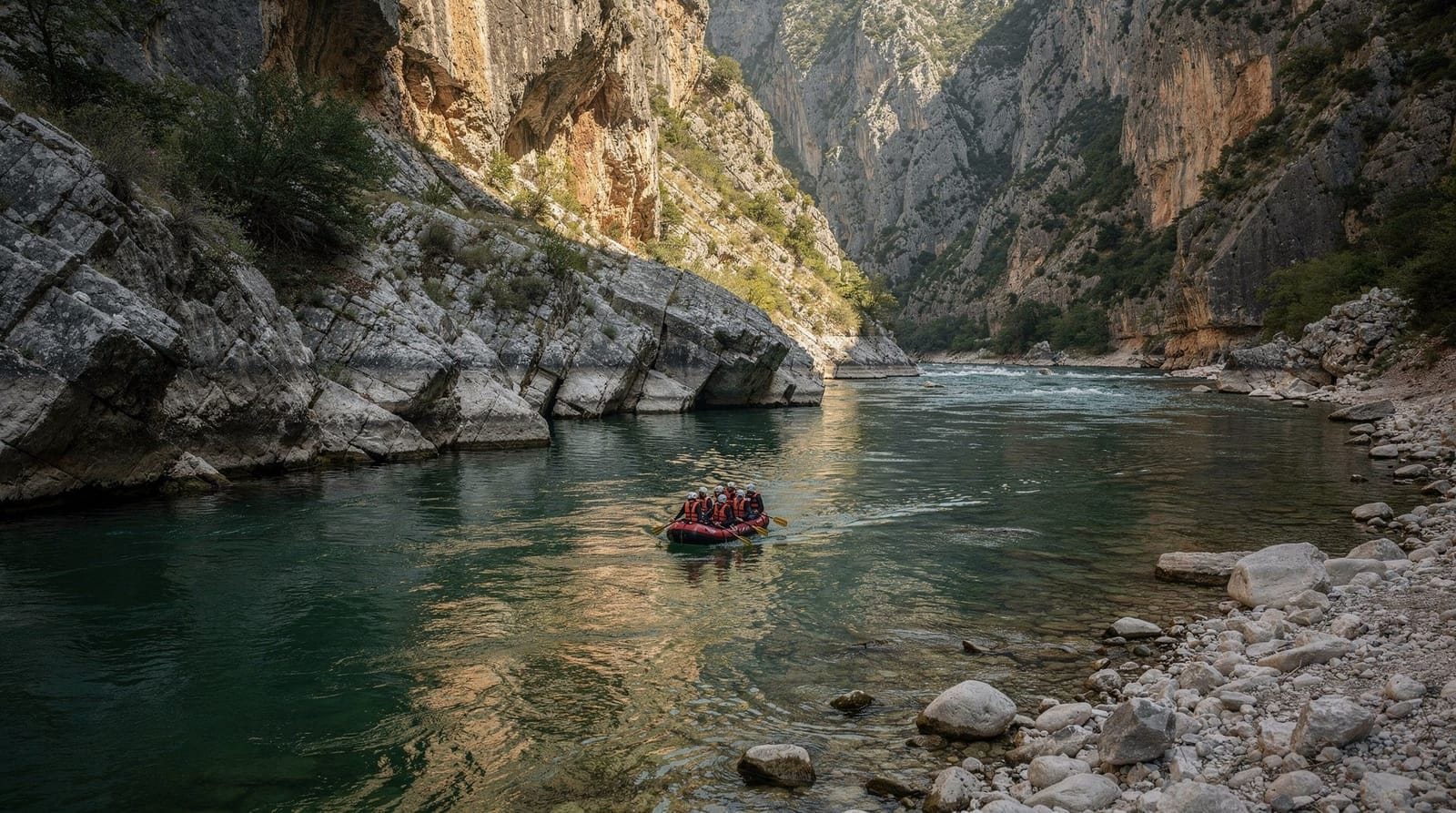
Omis: Half-day Cetina river rafting tour
Where is the best ziplining in Croatia?
Omiš, near Split, has Croatia's most famous zipline — a series of lines above the Cetina canyon with views across limestone gorge to the Adriatic. The Omiš zipline park is a multi-line course at altitude, taking around 2 hours to complete. Near Dubrovnik, a single-line zipline runs from Mount Srđ down toward the coast. Both are bookable as half-day activities.
Flying above the Cetina canyon
The Cetina river canyon south-east of Split is one of the most dramatic landscape features on the Dalmatian coast — a deep limestone gorge where cliffs rise 200–300 metres above an emerald river. From the raft on the river below, the walls feel enormous. From the zipline above, they feel like geography.
Croatia’s zipline scene is concentrated at Omiš, the pirate town where the Cetina empties into the Adriatic, and the surrounding canyon. Several operators have developed multi-line courses along the canyon rim that span the gorge at altitude, making for one of the most visually dramatic zipline experiences in Europe.
| Where | Omiš canyon, 25km south-east of Split; a shorter line above Dubrovnik |
| Cost | Around €50-70 per person for the full Omiš course; combo with rafting around €75-100 |
| Time needed | 2-2.5 hours on the course; 4-5 hours total from Split |
| Getting there | Car (40-50 min from Split), bus line 60, or operator transfer |
| Best time | Morning or late afternoon slots to avoid peak heat |
The Omiš zipline: what to expect
The headline Omiš zipline park consists of eight lines totalling several kilometres of cable. Lines range from gentle introductory stretches to the main canyon-crossing cables, where you hang suspended above the river 200–300 metres below with the Adriatic glinting in the distance on clear days.
Duration and format. The full course takes 2–2.5 hours, including the safety briefing at the base station, harness fitting and helmet check, and the guided progression through all eight lines. Groups move together, with guides managing the launch and landing at each station.
Speed. Peak speeds on the main lines reach 60–80 km/h. The sensation is more flight than fairground — you’re not just dropping (the lines are tensioned for horizontal travel), but genuinely crossing a canyon. The wind noise and the view below are the dominant experience.
Safety. Croatian zipline operators are subject to European adventure tourism safety regulations. All participants are fitted with a full harness (not just a belt clip), safety tethers, helmets and gloves. Guides check connections at every station. Tandem flights (two people on the same line) are available for children under the minimum weight threshold accompanied by adults.
What to wear. Closed-toe shoes or trainers (mandatory — flip-flops and sandals will not be permitted). Comfortable, snug-fitting clothing (anything loose can catch in the mechanism). Secure your glasses if you wear them. Leave bulky bags at the base station; most operators have a locker or storage area.
Getting there and booking
From Split. Omiš is 25 km south-east of Split on the coastal D8 road. By car: 40–50 minutes. By bus: line 60 from Split bus station, approximately every 30–60 minutes in season, journey 50–60 minutes, fare around €3–4. Most zipline operators also offer minibus transfers from Split hotels.
Booking. Book online at least 48 hours ahead in peak season (July–August). Some operators accept walk-ins but availability cannot be guaranteed. Bring your booking confirmation and arrive 15 minutes before your slot.
Price. The Omiš full-course zipline typically costs €50–70 per person, depending on the operator and included transfers. Combined packages with Cetina river rafting typically run €75–100 per person.
The Dubrovnik zipline
A smaller-scale zipline experience operates from the ridge above Dubrovnik — accessible via the famous cable car to Mount Srđ. The line descends from the ridge toward the coast, with panoramic views over the Old Town and the Adriatic during the ride. It is a single line, typically 300–400 metres long, and takes only a few minutes.
This is worth including in a Dubrovnik day if you’re already taking the cable car for the views — it adds an adventure element to what would otherwise be a sightseeing stop. For a dedicated zipline experience, however, Omiš is the far stronger option.
Omiš vs Dubrovnik: which zipline
| Omiš | Dubrovnik (Mount Srđ) | |
|---|---|---|
| Format | 8-line multi-line course | Single line, a few minutes |
| Duration | 2-2.5 hours | Minutes, add-on to the cable car |
| Views | Canyon and river, Adriatic in the distance | Old Town walls and coastline |
| Price | €50-70 | Set by the zipline operator, separate from the cable car fare |
| Best for | A dedicated adventure day | Adding a thrill to a sightseeing day |
Combining ziplining with other Split-area adventures
Omiš sits at the intersection of several of the best adventure sports on the Dalmatian coast. Its position — river to one side, canyon cliffs above, Adriatic coast below — makes it ideal for multi-activity days.
Morning rafting + afternoon ziplining. The most popular combination. Rafting tours from Split typically finish by 13:00–14:00; the zipline afternoon slot picks up from 14:30. Some operators offer this as a packaged deal.
Ziplining + canyoning. Canyoning in the Cetina’s tributaries (wading, swimming and jumping through narrow gorges) pairs well with a zipline for a full-day canyon immersion. This combination suits adventurous groups comfortable with getting cold and wet.
Whichever combination you choose, book the higher-adrenaline activity (rafting or canyoning) for the morning while energy and concentration are freshest, and save the zipline — which is more about the view than physical exertion — for the afternoon when the light on the canyon walls is often better for photos anyway.
Biokovo adventure extension. Add a day at Biokovo Nature Park, 15 km from Omiš along the coast — Skywalk, summit hike, canyon panoramas from a different angle.
If you would rather see the gorge from the water as well as from above, a rafting trip down the Cetina near Omiš is the easiest way to add a wetter second half to the day.
Who should and should not try ziplining
Well suited for:
- Thrill-seekers of any experience level (no prior training needed)
- Families with children 8+ who can manage the weight/height requirements
- Visitors wanting spectacular views of the Cetina canyon without the rafting commitment
- Those combining with a half-day on the river
Less suited for:
- Visitors with serious fear of heights or vertigo
- Those with heart conditions, recent surgery, or pregnancy
- Visitors under the weight minimum (typically 20–25 kg) or over the maximum (110–120 kg)
If you are genuinely unsure about your relationship with heights, the Biokovo Skywalk (a glass-floored walkway over the cliff edge) is a stationary alternative that delivers a similar vertigo-adjacent experience without the commitment of a two-hour course.
Zipline safety in Croatia: what the regulations say
Croatia’s adventure tourism operators are regulated under Croatian and EU standards. Reputable zipline parks undergo annual safety certification covering cable tension, harness condition, launch and landing mechanisms, and guide training. The major Omiš operators have been running for over a decade with strong safety records.
What to look for when booking:
- Operator uses full harness systems (not just waist belts)
- Safety tethers are used at every station (you are attached at all times)
- Guides are certified by Croatian or internationally recognised bodies
- Group size is limited (typically 8–12 per group for managed pacing)
If an operator does not clearly state their safety certification or cannot answer questions about their equipment standards, use a different provider.
Practical tips for a smooth visit
-
Book transfers from Split unless you have a car. Driving and parking in Omiš in peak season is manageable but fiddly.
-
Bring water and snacks. The briefing and course take 2–3 hours in often hot conditions. Hydrate well before you arrive.
-
Go first thing or late afternoon. Morning slots (08:30–09:00 start) are less hot. Late afternoon slots benefit from better light for photographs from the canyon rim.
-
Tell the operator about any physical conditions. Shoulder injuries in particular can be aggravated by the harness. Inform guides before suiting up.
-
Leave your phone with the guide or in the locker. Dropping a phone from the third cable across the Cetina canyon is not a recoverable situation.
How the day unfolds, from the briefing to the last landing
Knowing the rhythm of the course takes a lot of the nerves out of it. You arrive at the base station, sign in with your booking confirmation and are matched to a group. The guides then fit your harness, adjust the helmet and hand out gloves. Take this part seriously: a well-fitted harness is what makes the rest of the day feel secure rather than scary, and guides would much rather re-adjust a strap three times than have you guess.
The briefing covers how to hold your body on the line, how to brake when a guide signals you to, and what to do if you stop short of the landing platform. It sounds like a lot, but each station repeats the same routine, so by the third line it becomes second nature. The first lines are deliberately gentle and short. They let the group calibrate before the long canyon crossings, and they give anyone with a wobble of nerves a chance to settle.
By the middle of the course most people stop gripping and start looking around. That is the point of the whole experience: the line does the work, and you are free to take in the gorge, the river far below and the ridge lines fading toward the coast. If you travel with a nervous companion, let them go behind a confident member of the group on the early lines. Watching someone else launch and land safely does more than any reassurance.
Choosing between Omiš and Dubrovnik for your itinerary
Your base usually decides the question. If you are staying in or around Split, the Omiš canyon is an easy half-day, and it fits neatly into the kind of trips described in day trips from Split. If your trip is built around Dubrovnik, the Mount Srđ line is a short add-on rather than a reason to travel, and you will probably want to spend your hours on the walls, the old streets and the sea instead.
Travellers on a longer route down the coast can do both without any conflict, because the two are so different in scale. A common pattern is to treat Omiš as the proper adventure morning or afternoon on the Split leg, then enjoy the quick Srđ line as a bonus on a Dubrovnik sightseeing day. For help ordering the legs of a trip, the 7-day itinerary and the 10-day itinerary both show how Dalmatia fits together, and you can slot an adventure half-day into either.
Ziplining with children and mixed-age groups
The age and weight limits described above matter most for families, so check them before you promise anything to a child. Children who meet the minimums often love the course, because the lines are quick, the equipment looks like proper grown-up kit and the guides tend to be good at keeping young participants engaged. A child who is borderline on weight may still be able to fly in tandem with an adult, which is worth asking about when you book.
For families with a mix of ages, think about what the non-riders will do. Younger siblings below the minimum cannot take part, so plan a parallel activity with another adult, such as an easy stroll in Omiš town or time by the water. The Croatia with kids guide and the list of kid-friendly tours give plenty of ideas for the rest of the day, and the broader family guide to Croatia helps with pacing a trip so that adventure days do not exhaust everyone.
Timing the activity within a wider Dalmatia trip
Adventure days work best when they are spread out. A zipline half-day is physically light compared with rafting or a long hike, but the heat, the adrenaline and the travel still add up. Avoid stacking it the morning after a very late night or right before an early ferry. If you plan to island-hop afterwards, the island hopping guide explains how to line up crossings, and you can leave the canyon day for a spare slot before you set off.
Season shapes the experience too. In the hottest part of summer the canyon rim is exposed, so the earliest and latest slots are the most comfortable. In the cooler shoulder months the heat is gentler and the light is often softer on the rock, though weather can occasionally change the schedule, so allow flexibility. The best time to visit Croatia guide and the weather guide help you judge what to expect when you travel.
Photography and memories from the canyon
Because phones are left behind, the photographs you take on the course come from an action camera, if the operator allows one, or from the guides and the base station. Plan for this rather than being disappointed afterwards. Many visitors find the best images come from the viewpoints around the base and from the canyon rim before and after the ride, when you can stand still and frame the gorge properly.
If photography is a big part of your trip, the photo spots guide lists strong places along the coast, and pairing the canyon with an evening in Omiš gives you a different perspective on the same landscape. Light on the limestone changes quickly through the day, so even a short wait can transform a scene.
Making the most of the day around the zipline
Do not rush straight back to Split once you land. Omiš rewards a slow hour: the old town sits tightly against the cliffs, the river reaches the sea beside it, and a meal or coffee after the course is the natural way to end the activity. Moving at that pace also gives your legs and nerves time to settle after the adrenaline.
If you have a car and spare time, think about extending the day along the coast, or plan a separate outing to Biokovo Skywalk on another morning. For a broader menu of thrills across the country, from sea kayaking to hiking, the adventure sports guide puts the options side by side so you can build a trip that balances effort and rest.
Frequently asked questions about Ziplining in Croatia
How high is the Omiš zipline?
The Omiš zipline park operates at heights ranging from around 150 to over 300 metres above the Cetina canyon floor. The main lines cross the canyon itself, with views extending south to the Adriatic coast. The course consists of 8 lines of varying length and speed — the longest exceeds 700 metres.What is the minimum age for ziplining in Croatia?
Most Croatian zipline parks set the minimum age at 8–10 years and a minimum weight of 20–25 kg. Maximum weight is typically 110–120 kg. Participants must be able to follow guide instructions and handle the equipment independently. Children must be accompanied by an adult.Is the Omiš zipline suitable for people with a fear of heights?
This depends on the severity. The Omiš zipline crosses an open canyon at significant altitude — it is emphatically not suitable for serious acrophobia. Most people with a mild discomfort with heights report that the launch moment is the hardest part, and the sensation of zipping across the canyon is exhilarating rather than frightening. Very height-sensitive visitors should choose a ground-level adventure instead.How do you get to the Omiš zipline from Split?
Omiš is 25 km south-east of Split, reachable in 40–50 minutes by car or 50–60 minutes by local bus (line 60 from Split bus station). Most zipline operators offer transfers from Split hotels, which is the simplest option. The zipline base is a short drive or walk from Omiš town centre; some lines are accessible directly from the canyon rim above the town.How long does the Omiš zipline course take?
Expect approximately 2–2.5 hours on the course, including safety briefing, harness fitting and the 8 lines. Total time including travel from Split and back runs 4–5 hours, making it a comfortable half-day activity.Can you combine ziplining and rafting in the same day?
Yes, and this is a popular option from Split. Morning rafting on the Cetina (finishing by 13:00–14:00) followed by afternoon ziplining in Omiš (14:30–17:00) works logistically and is offered as a combined package by some operators. The two activities share the same canyon landscape from very different perspectives — water level and cliff top.Is there ziplining near Dubrovnik?
A zipline operates from Mount Srđ (the ridge above Dubrovnik, accessible by cable car) and descends toward the coast. It is a single line rather than a multi-line course, and significantly shorter than the Omiš experience. It pairs well with a cable car ascent and city views. For the most dramatic zipline experience in Croatia, Omiš remains the superior choice.What should I bring to the Omiš zipline that people forget?
Cash or card for the base station shop and water refills, a hair tie if you have long hair (it needs to be tucked under the helmet), and sunscreen — the exposed canyon rim gets full sun for most of the day. A GoPro or action camera mount is worth bringing if the operator allows personal cameras, since phones are not permitted on the lines.Is ziplining in Croatia good value compared to other adventure activities?
Yes, relative to similar multi-line canyon courses elsewhere in Europe. At roughly 50-70 EUR for a 2-2.5 hour, 8-line course with canyon views, Omiš compares favourably on both price and scenery to zipline parks in the Alps or Slovenia, which often charge more for fewer lines or less dramatic terrain.
Top experiences
Bookable activities with verified prices and instant confirmation on GetYourGuide.

Top experiences
Best-rated activities across GetYourGuide and Viator.

Rafting on Cetina River Departure from Split or Blato na Cetini village
- Viator

KAYAK ADVENTURE! Wild Coast Exploring - Snorkeling & Cliff Jumps
- Viator

Blue Bay Snorkeling & Cocktails 3 Islands Speedboat Tour
- Viator

Zadar: 3 Islands Luxury Boat Tour with Aperol Spritz & Snorkeling
- Viator

Zadar: Luxury Island Boat Tour, Snorkeling & Unlimited Wine
- Viator

Transparent Kayak Sunset to Dusk Glow Experience from Pula
- Viator