Adventure sports in Croatia: the complete guide to outdoor activities
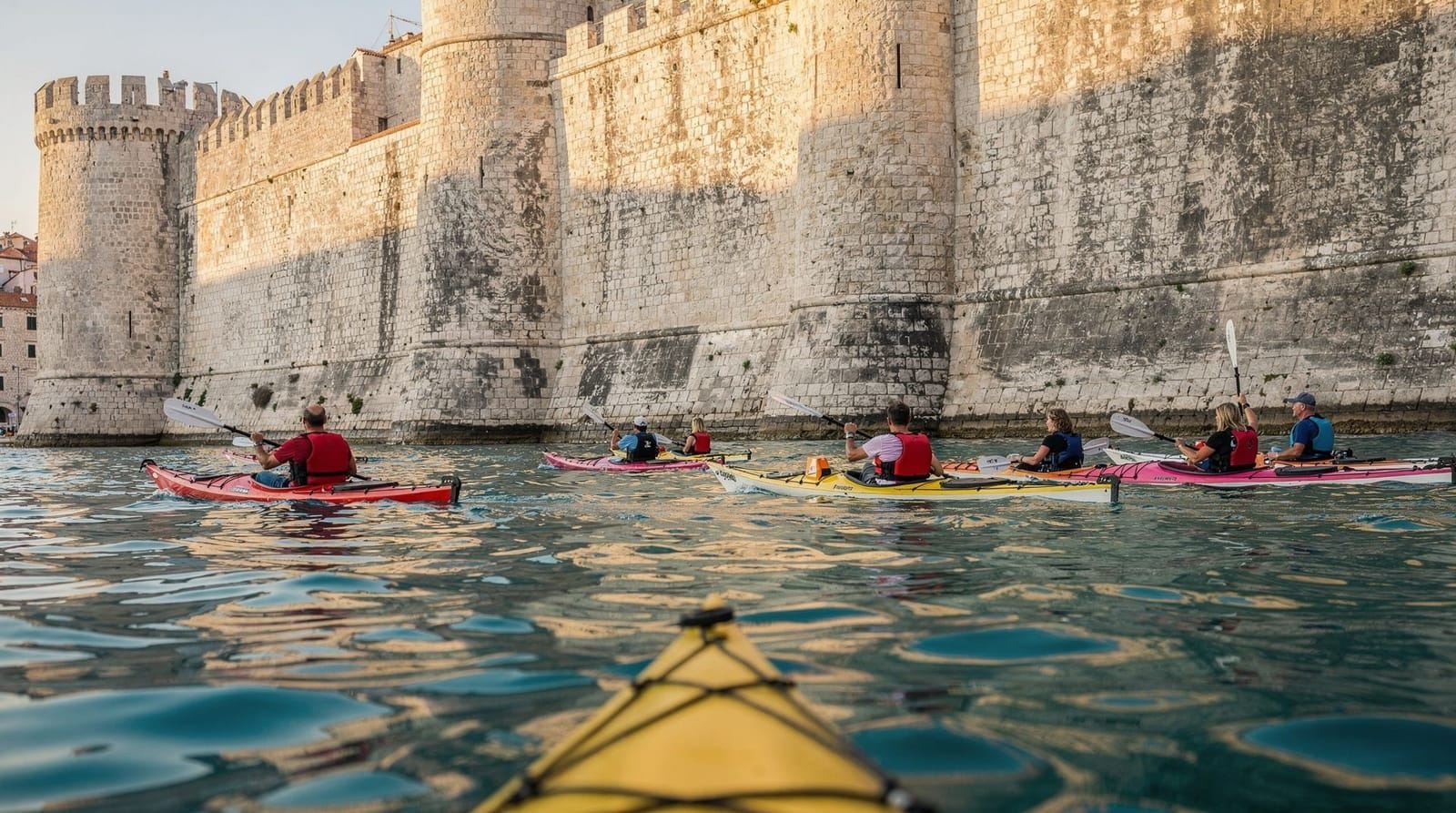
Dubrovnik: Sea kayaking half-day tour
What are the best adventure sports in Croatia?
Croatia's top adventure activities are: sea kayaking (Dubrovnik coast), white-water rafting (Cetina river near Omiš/Split), scuba diving (Adriatic coast and islands), ziplining (Omiš canyon), hiking (Paklenica National Park and Biokovo), cycling (Istria), and rock climbing (Paklenica). The country packs a remarkable variety of terrain — canyon, mountain, sea, karst — into a relatively compact geography.
Croatia’s adventure credentials
Croatia is not the first country that comes to mind for adventure travel. Its tourism image is dominated by walled cities, island beaches and sailing — the aspirational Mediterranean lifestyle rather than anything that raises a sweat.
This is an outdated picture. Croatia’s topography — limestone mountains crashing into the Adriatic, canyon systems cutting through the karst interior, 1,200 islands in water of extraordinary clarity — is adventure terrain. The Cetina canyon outside Split is one of the best white-water settings in the Balkans. Paklenica National Park is a world-class rock climbing and hiking destination. The Adriatic’s visibility makes it a top European diving venue. Istria’s rolling hills and the Parenzana trail are among the Mediterranean’s best cycling landscapes.
What makes Croatia particularly well-suited to adventure travellers is the combination of terrain variety and compact geography. A 10-day trip can cover canyon rafting, sea kayaking, mountain hiking, coastal cycling and diving without driving more than three hours in any direction.
| Best base | Split — most activities within 2.5 hours |
| Typical cost per activity | around €40–100 depending on sport |
| Season | April–October for most sports; year-round for experienced diving |
| Fitness needed | Ranges from none (kayaking, rafting) to high (Paklenica summit, climbing) |
| Booking | Advance booking recommended for July–August |
The six essential adventure activities
1. Sea kayaking: Dubrovnik coast
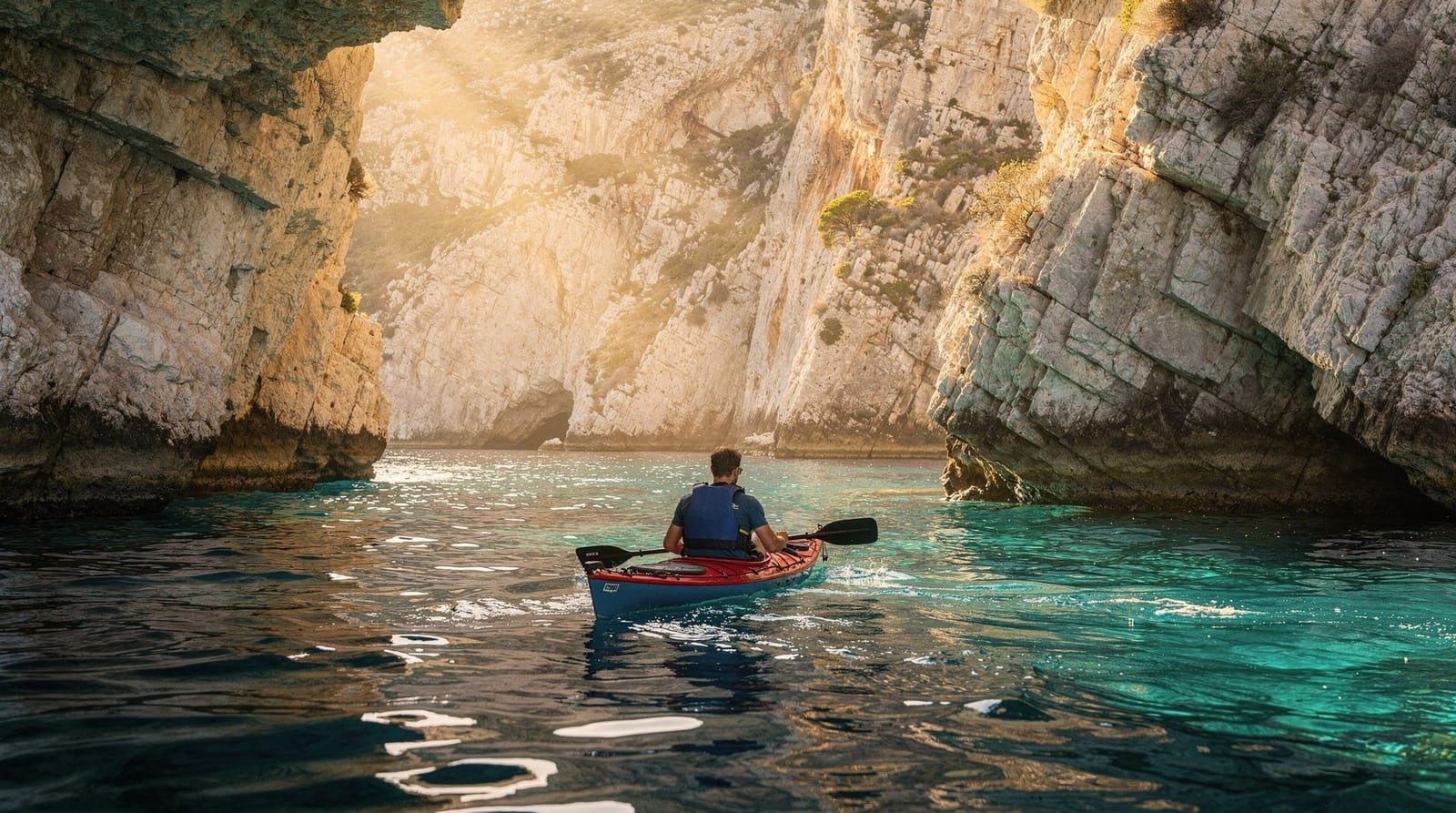
Paddling beneath the city walls of Dubrovnik is the most scenically spectacular adventure available in Croatia. Tours depart from Banje Beach, circumnavigate the Old Town walls by water, visit sea caves and offer a snorkeling stop. Three-hour morning and sunset tours run daily from May through October.
The experience is genuinely remarkable — the walls from sea level, the water clarity, the scale of the fortifications viewed from a kayak hull — and accessible to complete beginners. It is also one of the few ways to see the Old Town without crowds: at 07:30 on a summer morning, the water is glass and the walls are yours.
2. White-water rafting: the Cetina river
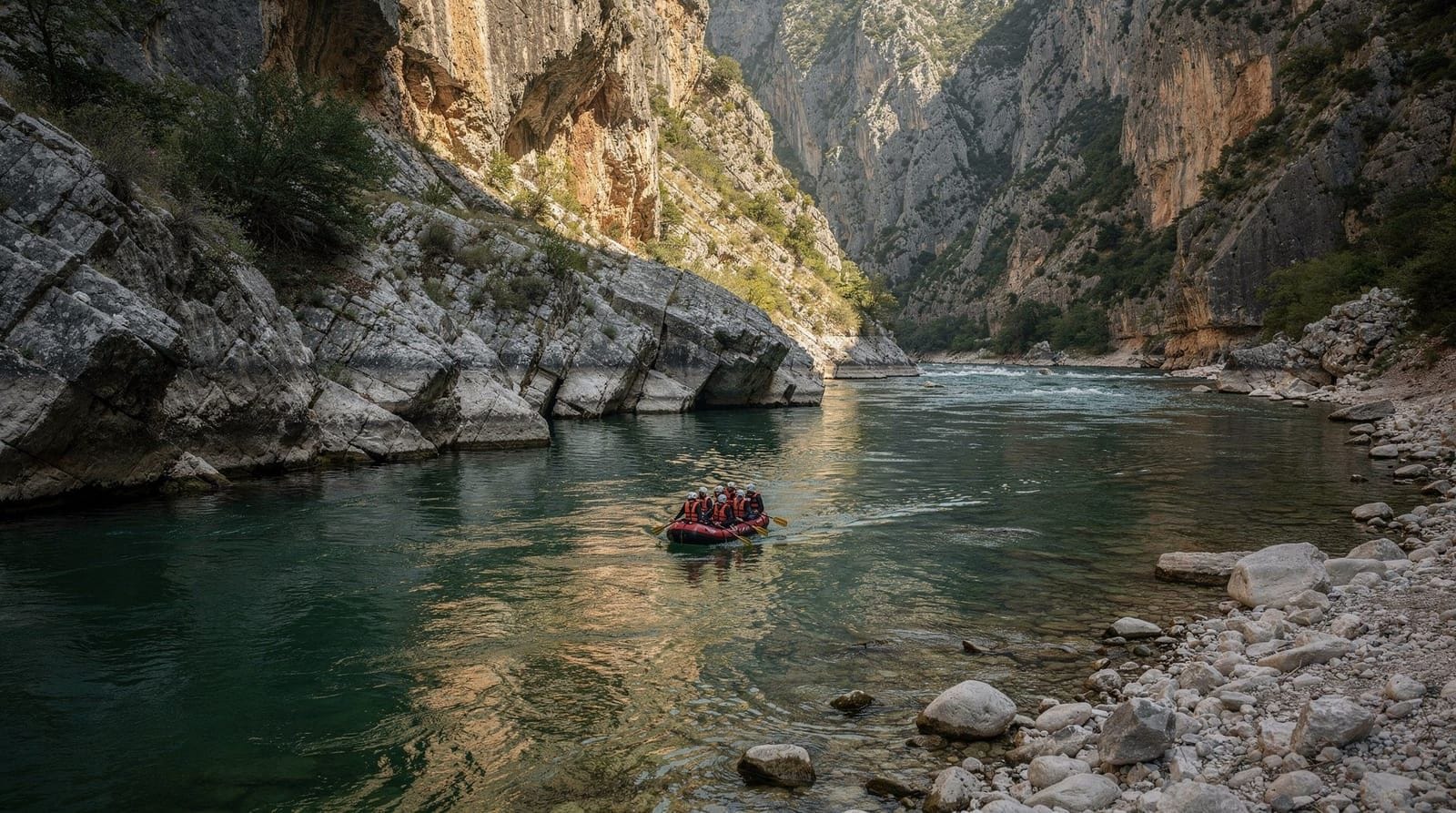
The Cetina canyon near Omiš is Croatia’s premier rafting destination. The river descends through a 200-metre-deep limestone gorge in a series of Grade II–III rapids, with the Zeleni Vir (Green Whirlpool) gorge section as the showpiece. Tours from Split include transfers, guides, equipment and approximately 2–3 hours on the water.
Optional cliff jumping adds an adrenaline component that most participants say is the highlight of their trip. The Cetina is suitable for beginners, families (from age 7–8) and anyone who wants dramatic scenery from river level rather than a viewpoint.
3. Scuba diving: the Adriatic
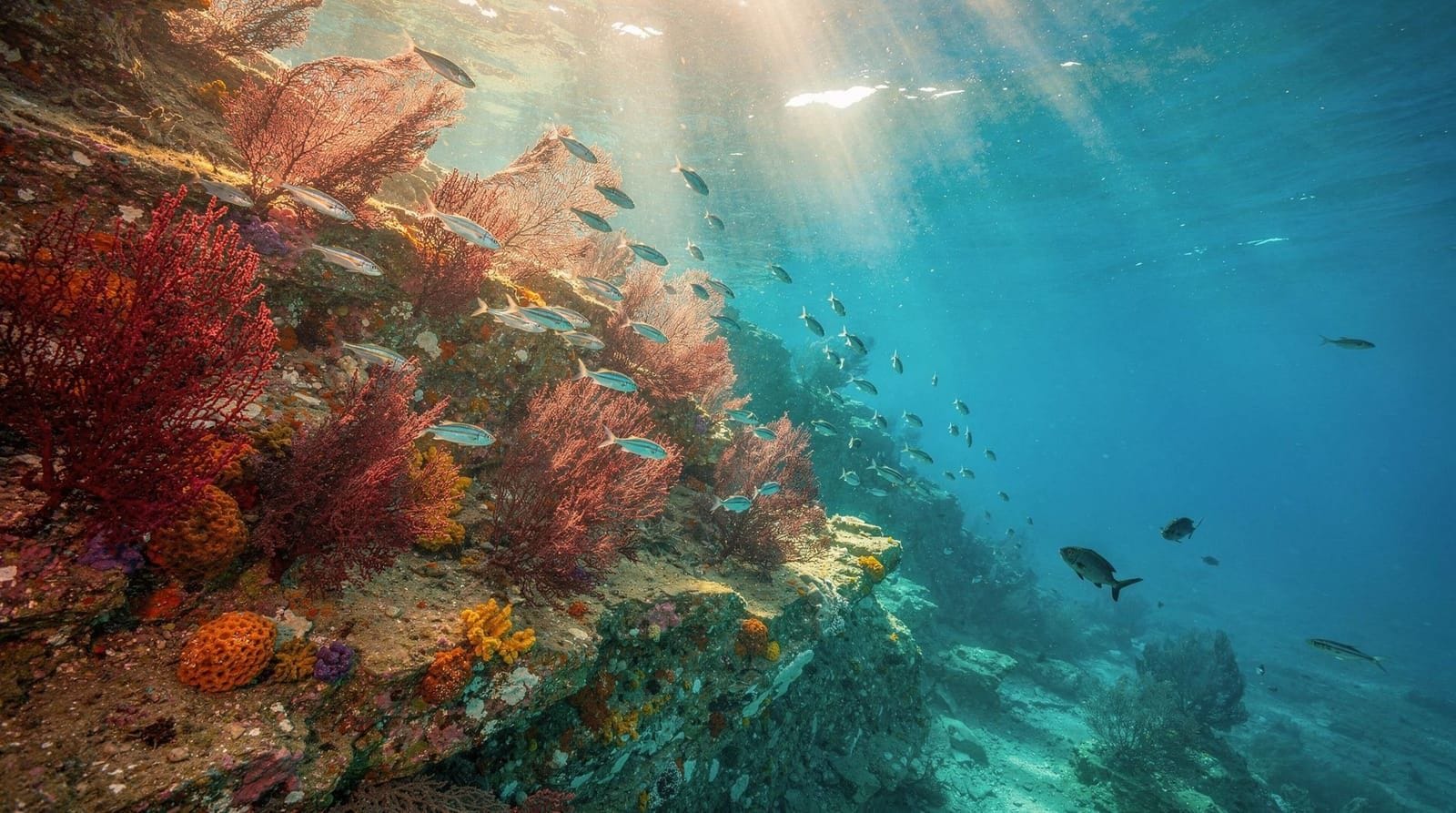
Croatian waters offer European-class diving with excellent visibility (15–30 metres standard), interesting wrecks, rocky reef habitat and a growing cave-diving scene. Dubrovnik, Split and Rovinj are the main hubs; Vis island is regarded as the finest diving destination in the country.
Key sites: the Baron Gautsch wreck off Rovinj (28–42 m, intact 1914 steamer), the Vis island reef network, the Kornati walls, and the sea caves around Lokrum near Dubrovnik. Discover Scuba sessions for non-certified divers are available at all major centres.
4. Ziplining: the Omiš canyon
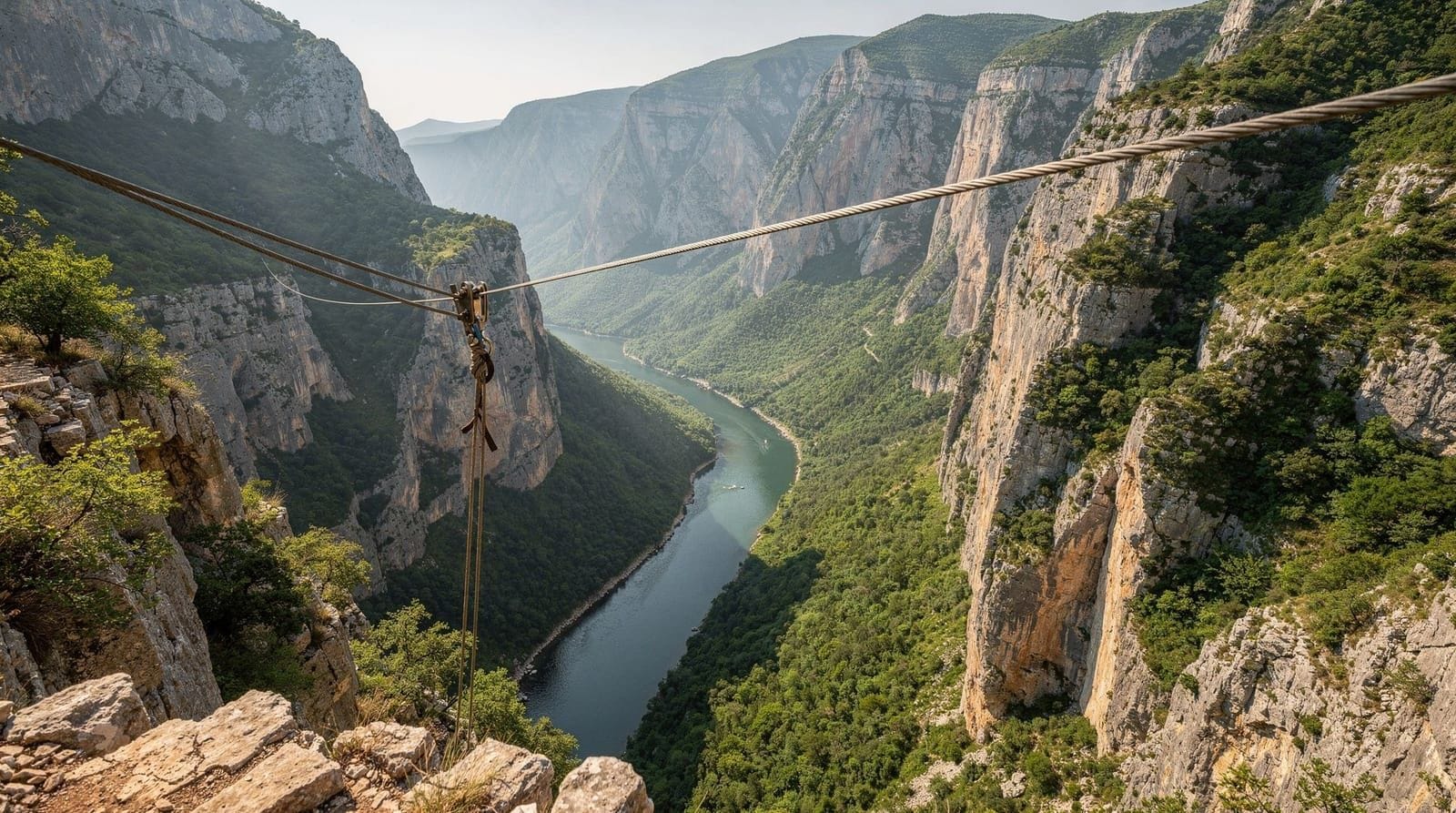
Ziplining in Croatia is concentrated at Omiš — a multi-line course that crosses the Cetina canyon at altitudes reaching 300 metres above the river, with views extending to the Adriatic coast. The 8-line course takes approximately 2 hours and suits beginners from age 8. A Dubrovnik single-line zipline from Mount Srđ is a shorter, more accessible option if you’re Dubrovnik-based.
The Omiš zipline is the natural companion to Cetina rafting — the two activities cover the same canyon from completely different perspectives (river level and cliff top). Many operators offer combined packages.
5. Hiking: Paklenica and Biokovo
Croatia has two outstanding mountain hiking landscapes accessible from the Dalmatian coast.
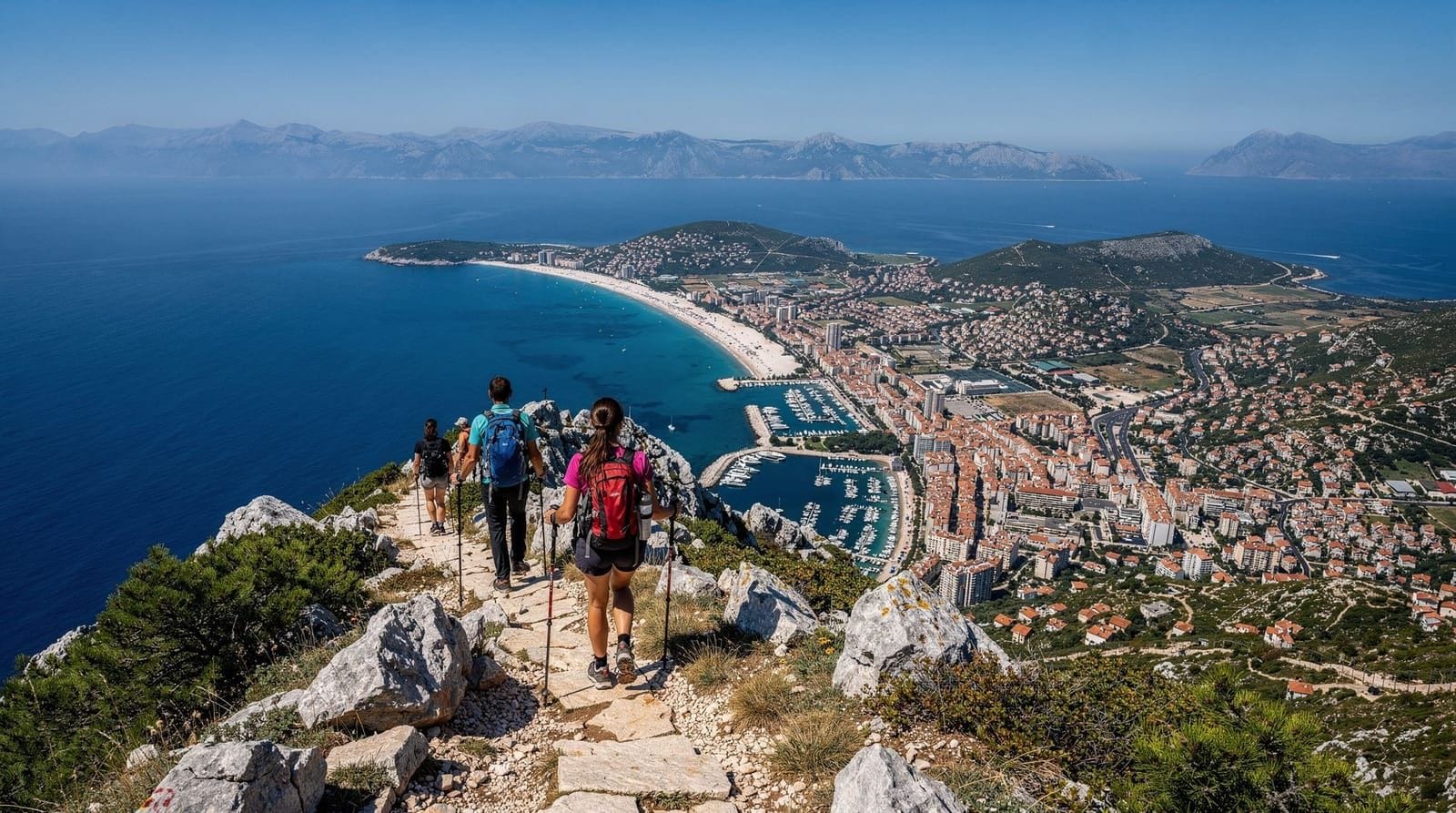
Paklenica National Park (40 km north of Zadar) offers the Velika Paklenica gorge — a dramatic canyon walk between 200-metre walls — plus summit routes to Vaganski vrh (1,757 m) and world-class rock climbing on the Anića Kuk. It is Croatia’s best mountain hiking experience.
Biokovo Nature Park (above Makarska) provides the Biokovo Skywalk (glass-floored platform at 1,228 m) and the summit of Sveti Jure (1,762 m, Croatia’s second-highest peak). The coastal panoramas from the ridge are arguably the finest in Croatia — the full Dalmatian coast visible on clear days. A full Biokovo guide covers the Skywalk in detail.
6. Cycling: Istria
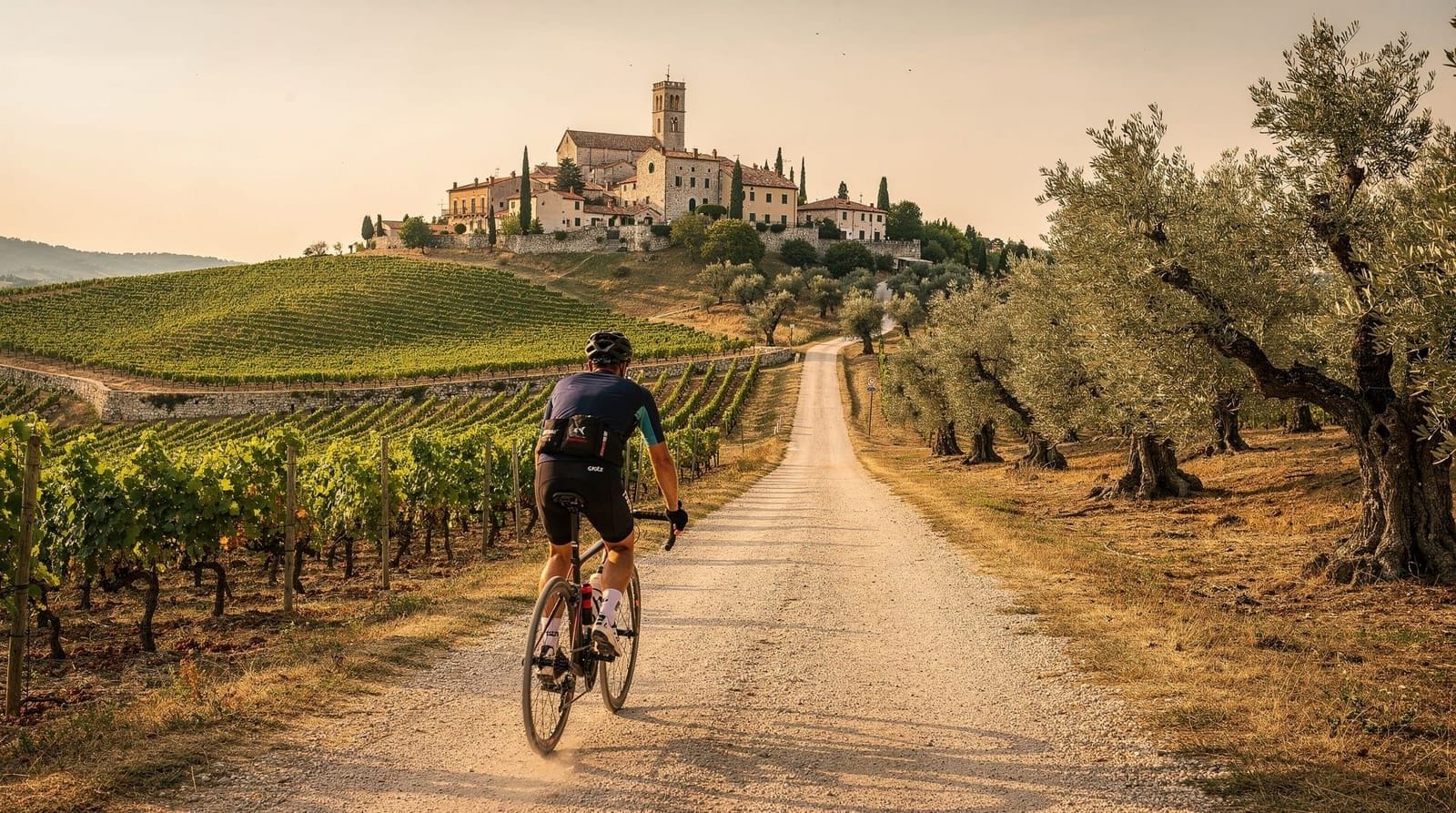
Cycling in Istria is the adventure activity best combined with Croatia’s food and wine culture. The Parenzana trail (123 km on a converted railway bed), the Rovinj coastal circuits and the Malvazija wine country interior provide routes for all fitness levels. E-bike rental makes the inland hills accessible; the food estates make stopping often a virtue rather than a weakness.
Beyond the big six: more adventure options
The six activities above cover the majority of bookings, but a handful of other options are worth knowing about if you want to build a longer or more varied trip.
Canyoning is offered as a step up from standard rafting on parts of the Cetina system near Omiš — abseiling, jumping and swimming through narrower gorge sections rather than simply floating them. It suits participants who found rafting too tame and want a full-body, adrenaline-heavy half-day.
Stand-up paddleboarding (SUP) is widely available on calm mornings along the Split and Dubrovnik waterfronts and around sheltered island bays such as the Elaphiti Islands. It is the gentlest adventure activity on this list — good for a rest day that still gets you on the water.
Horse riding and ATV/quad safaris are common in the Dalmatian hinterland behind Split, Omiš and Dubrovnik, often combined with a village lunch or wine tasting. These suit travellers who want an active half-day without technical skill or serious fitness.
Free diving and snorkelling are worth a mention alongside scuba: the same visibility that makes the Adriatic a strong scuba destination also makes casual snorkelling from a rented boat or day-trip catamaran rewarding, particularly around Vis and the Kornati islands.
Planning your adventure itinerary
The Split adventure base (recommended)
Split is the best single city for adventure travellers. Within 2.5 hours:
- Cetina rafting and Omiš ziplining (45 minutes)
- Biokovo Skywalk and hiking (1 hour to Makarska)
- Paklenica canyon (2.5 hours to Zadar)
- Diving charters to Vis (3 hours by ferry or 1 hour by speedboat)
- Sea kayaking around Split islands
A 7-day adventure itinerary from Split might look like:
| Day | Activity |
|---|---|
| 1 | Arrive Split, walk the old town |
| 2 | Cetina river rafting (half-day) + Omiš zipline (afternoon) |
| 3 | Drive to Biokovo: Skywalk + ridge walk |
| 4 | Island day: ferry to Hvar or Vis, snorkeling/diving |
| 5 | Drive to Paklenica (2.5h): full canyon hike |
| 6 | Rest/swim day, Split old town, dinner |
| 7 | Optional: Dubrovnik day trip for sea kayaking |
The Dubrovnik adventure base
Dubrovnik has fewer adventure activities in the immediate vicinity than Split, but what it does offer is concentrated and scenic, and it connects easily to Montenegro (Kotor day trip), Bosnia (Mostar) and the Elaphiti Islands. Sea kayaking beneath the city walls is the signature activity and worth building a morning around; pair it with a Mount Srđ cable car or zipline for elevation contrast in the same day. Key activities:
- Sea kayaking the city walls
- Diving in the Dubrovnik area
- Day trip to Kotor via Bosnia
- Mount Srđ zipline and ATV quad tours
The Istria adventure base
Rovinj or Poreč work well as a base for a slower, food-and-terrain-focused adventure trip rather than a high-adrenaline one. Mornings on a bike, afternoons on the water and evenings built around a wine estate or truffle restaurant is the natural rhythm here, and distances between activities are short. Base activities:
- Cycling the Parenzana trail and wine hills
- Sea kayaking and cave exploration (guided tours from Pula and Rovinj)
- Diving at the Baron Gautsch wreck
Adventure sports by difficulty level
| Activity | Physical demand | Technical skill needed | Beginner suitable |
|---|---|---|---|
| Sea kayaking (guided, Dubrovnik) | Low–moderate | None | Yes |
| Cetina rafting | Low–moderate | None | Yes |
| Ziplining (Omiš) | Low | None | Yes (8+) |
| Cycling (Istria coast) | Low | None | Yes |
| Biokovo Skywalk | Very low (drive) | None | All ages |
| Diving (intro/DSD) | Low–moderate | None (supervised) | Yes |
| Biokovo summit hike | High | None | Fit adults only |
| Paklenica canyon walk | Moderate | None | Fit adults |
| Paklenica summit hike | Very high | None–moderate | Experienced walkers |
| Cycling (inland Istria) | High | Cycling experience | With e-bike |
| Scuba (certified, Vis) | Moderate | Certification required | No |
| Climbing (Paklenica) | High | Technical skill needed | With instructor |
What to pack for adventure in Croatia
For a mixed adventure itinerary (rafting, kayaking, hiking, cycling):
Water sports days: Swimsuit, quick-dry shorts, old trainers or water shoes, sun cream, waterproof case for phone, towel.
Hiking days: Hiking boots (ankle support), trekking poles for longer routes, hat and sun protection, 2–3 litres water capacity, layers (microfibre or fleece) for altitude, high-energy snacks.
Cycling days: Padded shorts or cycling shorts, helmet (usually provided but bring your own if you prefer), gloves, lightweight rain jacket, small backpack or bar bag.
Year-round: Travel insurance covering adventure sports (standard travel insurance often excludes white-water activities, diving and climbing — check your policy and upgrade if needed).
Adventure sports by season
| Month | Rafting/canyoning | Sea kayaking | Diving | Hiking | Cycling |
|---|---|---|---|---|---|
| April | Good — high water | Cool, quieter | Cold-water only | Good | Good |
| May | Very good | Good | Good | Excellent | Excellent |
| June | Good | Excellent | Excellent | Good (heat rising) | Good |
| Jul–Aug | Runs, but low water some years | Excellent, busiest | Excellent, busiest | Hot — early starts | Hot — early starts |
| September | Very good | Excellent, quieter | Excellent | Excellent | Excellent |
| October | Good — water rising again | Cooling | Good (wetsuit) | Excellent (truffle season in Istria) | Excellent |
| Nov–Mar | Limited/closed at most operators | Rare | Experienced cold-water divers only | Limited (weather-dependent) | Limited |
For a broader seasonal comparison across the whole country rather than just adventure sports, see the Croatia month-by-month guide.
Frequently asked questions about Adventure sports in Croatia
What is the best adventure base in Croatia — Split, Dubrovnik or Istria?
Split is the best single base for adventure sports variety. Within 1–2 hours: Cetina rafting, Omiš ziplining, Biokovo hiking, Paklenica (2.5 hours), sea kayaking on the islands, diving charters to Vis. Dubrovnik excels for sea kayaking and day trips to Montenegro (Kotor). Istria is the specialist cycling destination. If you want maximum adventure per day, base in Split.Which adventure activity in Croatia is best for beginners?
Cetina river rafting and sea kayaking in Dubrovnik are the most beginner-friendly guided adventures. Both require no prior experience, involve expert guides, and are safe for active adults. Paklenica canyon hiking is also accessible to fit beginners. Diving and ziplining have slightly higher physical or comfort thresholds but still suit active first-timers.When is the best time for adventure sports in Croatia?
May and June are near-ideal: warm but not hot, rivers running well from snowmelt, crowds manageable, everything open. September is the best-kept secret — sea warm, crowds gone, light superb. July–August are the busiest and hottest months; most activities still run but book well ahead. Cycling and hiking in Istria peak in May and October (truffle season).Can you combine multiple adventure activities in one Croatia trip?
Easily. A 7–10 day adventure itinerary from Split might include: Cetina rafting (day 2), Biokovo Skywalk and hike (day 3), sea kayaking from Split area or boat to Hvar (day 4–5), drive to Zadar and Paklenica for a canyon day (day 6), and optional Dubrovnik sea kayaking at the end. All are within driving distance of each other. Read our 10-day itinerary for a fuller plan.Are adventure sports in Croatia expensive?
Competitive with European standards, and often cheaper than equivalent activities in France, Italy or Austria. Cetina rafting: €40–55 with Split transfers. Sea kayaking Dubrovnik: €45–65. Diving day package: €70–100. Ziplining Omiš: €50–70. Paklenica entry: €10–15. Cycling rentals: €20–50 per day. Significant savings are possible by combining activities on the same day with the same operator.Do adventure tour operators in Croatia speak English?
Yes — English is the standard language for all guided adventure tours in Croatia's main tourist areas. Guides at major operators (rafting, kayaking, diving, zipline) are invariably fluent. In smaller or more rural settings, the language may be more limited; booking through established operators rather than informal local contacts ensures good communication.Is Croatia suitable for adventure travel outside of summer?
Yes for many activities. Hiking (Paklenica, Biokovo) is excellent in May and September–October. Cycling in Istria peaks in May and October. Diving is year-round for experienced cold-water divers. Rafting runs from April through October. The main exceptions are sea kayaking (best June–September for temperature and stability) and ziplining (some operators close November–March).
Top experiences
Bookable activities with verified prices and instant confirmation on GetYourGuide.
Top experiences
Best-rated activities across GetYourGuide and Viator.

Rafting on Cetina River Departure from Split or Blato na Cetini village
- Viator

KAYAK ADVENTURE! Wild Coast Exploring - Snorkeling & Cliff Jumps
- Viator

Blue Bay Snorkeling & Cocktails 3 Islands Speedboat Tour
- Viator

Zadar: 3 Islands Luxury Boat Tour with Aperol Spritz & Snorkeling
- Viator

Zadar: Luxury Island Boat Tour, Snorkeling & Unlimited Wine
- Viator

Transparent Kayak Sunset to Dusk Glow Experience from Pula
- Viator