Poreč travel guide
Plan your Poreč trip: the UNESCO Euphrasian Basilica, Romanesque old town, sea kayaking at sunset, and resort beaches on Istria's west coast.
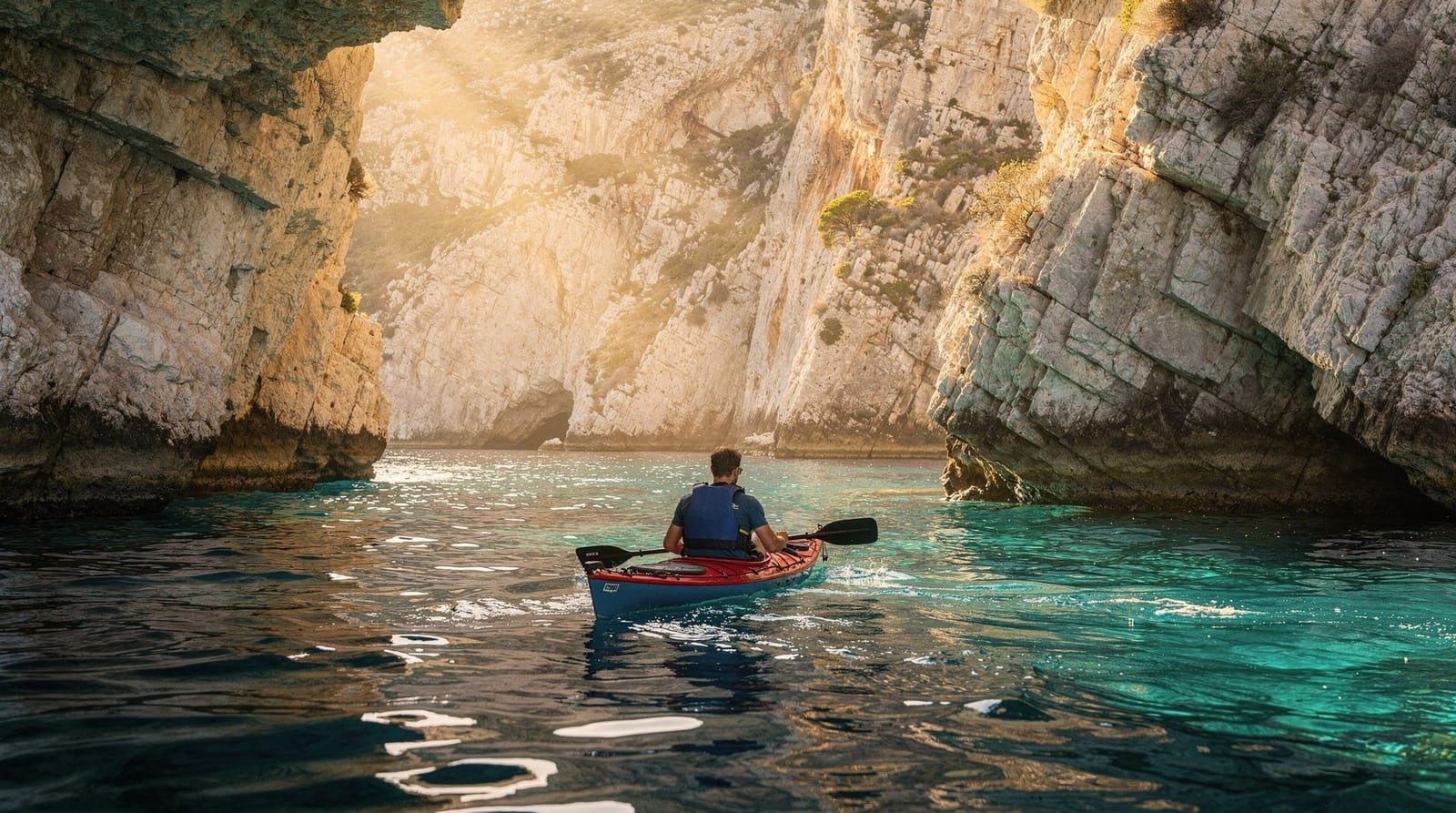
Porec: Sea kayaking sunset tour
Quick facts
- Best time
- May–June, September
- Days needed
- 2–3 days
- Getting there
- Car from Rovinj (40 km) or Pula (57 km); bus from Rijeka (2 h)
- Budget per day
- €60–€130
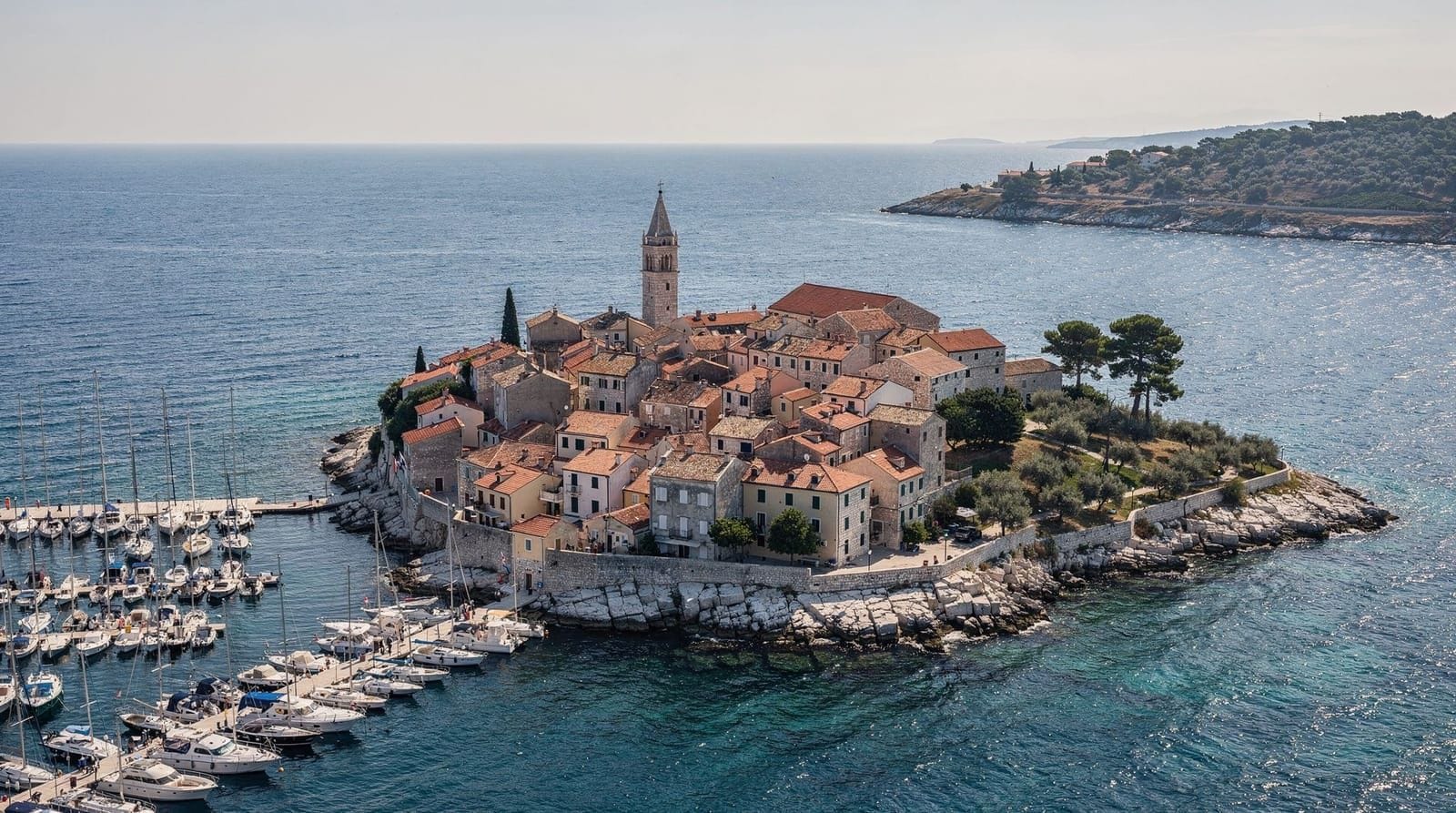
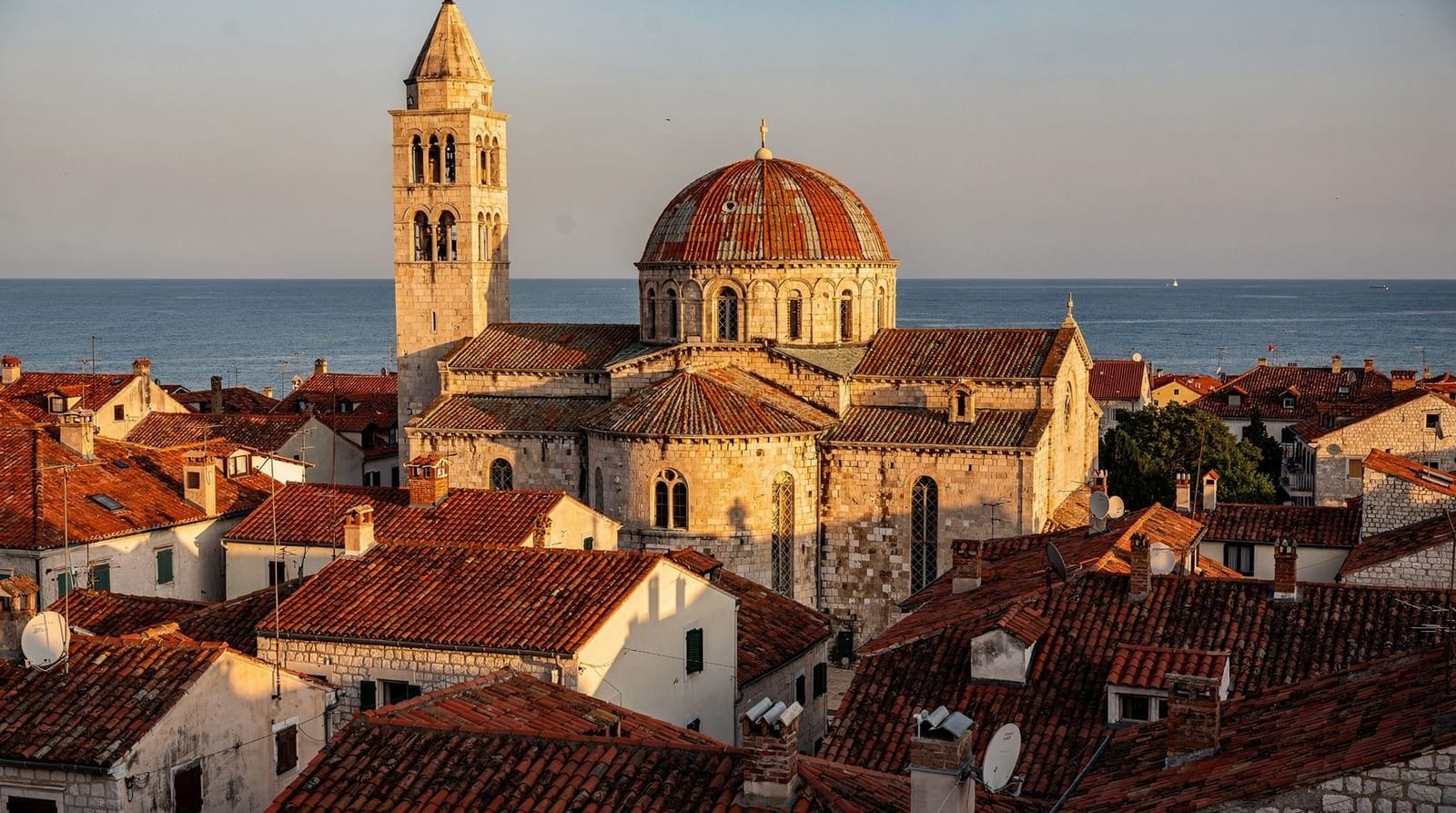
Poreč (pronounced roughly “Po-rech”) is one of Istria’s most visited towns — a Roman settlement turned medieval Venetian port turned major Adriatic resort destination. Its old town sits on a small peninsula with a perfectly preserved Roman street grid (the Decumanus Maximus, or Decumana street, runs straight through the middle) and is crowned by one of the finest examples of early Christian Byzantine art outside Istanbul: the Euphrasian Basilica, a UNESCO World Heritage Site since 1997.
Poreč is more commercially developed than Rovinj — the surrounding resort strip of Zelena Laguna and Plava Laguna has some of the largest hotel complexes in Croatia. But the old town retains its character, and the basilica alone is worth the journey.
Getting to Poreč
By car: From Rovinj (40 km north, about 45 minutes). From Pula (57 km south, about 55 minutes). From Rijeka (117 km, about 1.5 hours). From Zagreb (240 km, about 2.5 hours on the A6/A7 motorway).
By bus: Regular services from Rijeka (approximately 2 hours), Pula (1 hour), Rovinj (45 minutes), and Zagreb (3–4 hours).
Catamaran from Venice: Venezia Lines operates seasonal catamarans from Venice to Poreč (about 3 hours each way). A popular route for Italian visitors.
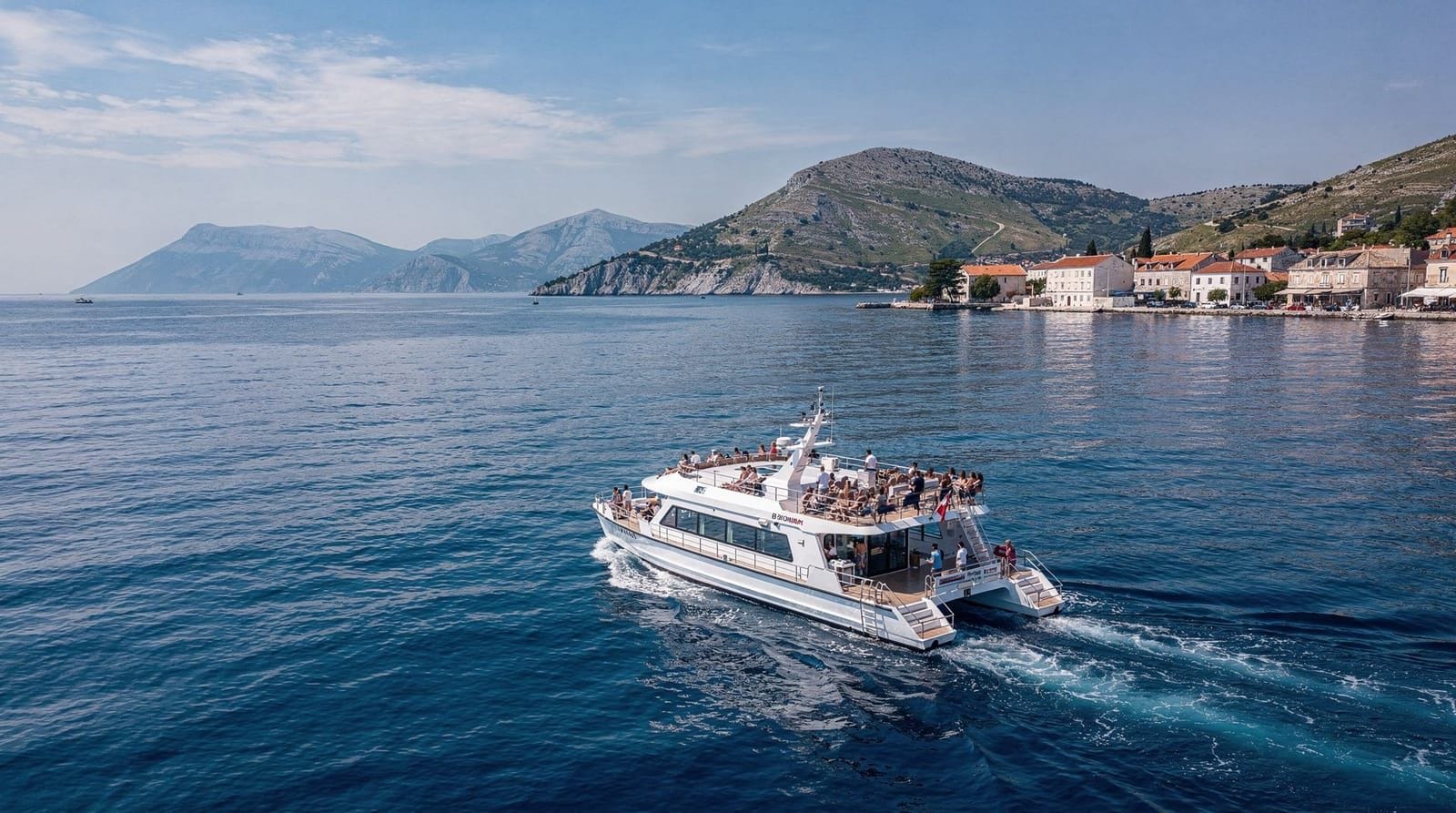
Local boats: In summer, a tourist boat runs along the coast between Rovinj, Vrsar, and Poreč, making a relaxed alternative to driving.
What to see and do in Poreč
The Euphrasian Basilica
Poreč’s great treasure and one of the finest examples of early Byzantine art in the world. The Euphrasian Basilica complex was built in the 6th century AD by Bishop Euphrasius on the site of earlier Christian structures — and a visit rewards those who look beyond the obvious.
Before you reach the main nave, the atrium draws you into a colonnaded courtyard that still feels genuinely ancient. A 6th-century well stands at its centre, and sarcophagi from the early Christian period line the walls — early bishops and prominent figures of the Parentium community, buried close to the sacred site. The atrium is rarely crowded and is one of the more quietly affecting spaces in the complex.
Step into the nave and look down. Glass panels set into the floor expose the mosaic pavement of an earlier church built here in the 4th century — a full two centuries before Bishop Euphrasius constructed what you now stand in. Geometric and floral patterns are still sharp and vivid, a reminder that this site was sacred and significant long before the surviving basilica was conceived.
Before entering the main apse, note the octagonal baptistery to the right of the atrium — a freestanding structure with its original immersion font still in situ. Baptism by full immersion was the norm in the early church, and the depth of the font makes this concrete. The octagonal form was standard for baptisteries across the early Christian world, symbolising the eighth day — the day of resurrection beyond the seven-day week.
The apse mosaics are the reason to make the journey. Gold-ground Byzantine compositions, created around 543 AD, cover the semidome above the altar in extraordinary detail and preservation. At the apex sits the Virgin and Child enthroned — a formal, hieratic image of the Theotokos (Mother of God) flanked by archangels whose faces show the transition from classical Roman portraiture toward the more stylised Byzantine ideal. Below them on the left, the figure of Bishop Euphrasius is depicted holding a model of his own basilica — a rare and personal act of commemorative inclusion, the bishop literally presenting his gift to heaven. Beside him stands Archdeacon Claudius and the bishop’s son.
Look closely at the borders framing the compositions: jewelled bands with alternating roundels, pearls, and gemstone imitations rendered in tesserae of gold, green, red, and blue glass. This decorative vocabulary is identical to what you see in Ravenna’s San Vitale and the Hagia Sophia in Istanbul — and it was created in the same era, by craftsmen working in the same tradition. The intimacy of the Poreč basilica, compared to the grander scale of Ravenna, makes the mosaics feel accessible in a different way.
Climbing the Romanesque bell tower is worth the effort: the views across the red-tiled old town peninsula, the harbour, and the Adriatic give the best orientation to the whole site. The tower is narrow and the steps are steep, but it takes only a few minutes and the perspective is genuinely rewarding.
Entry to the basilica complex (including the atrium, baptistery, and bishop’s palace remains) costs approximately €5–€7. A guided tour or audio guide adds substantial depth — the iconographic programme rewards close attention. See the dedicated Euphrasian Basilica guide for deeper coverage.
Poreč Old Town
The old town peninsula retains its Roman street structure. The Decumana (now the Marafor Square at its western end) was the forum of ancient Parentium — two Roman temple podiums still stand in the square, barely excavated. Walk the Roman road, look for the inscribed stones built into medieval walls, and trace the layers of history that compress two millennia into a small peninsula.
The medieval town is Venetian in character — the town loggia and octagonal tower (Romanesque, 12th century), the baroque and Gothic houses along Decumana street, and the harbour waterfront all contribute to a genuinely handsome historic centre.
Poreč’s Roman Street Plan
One of the pleasures of Poreč that most visitors miss entirely is the legibility of its Roman urban skeleton. The Decumana — the main east-west street of the ancient Roman town of Parentium — runs in an almost perfectly straight line from the main landward gate of the old town all the way to the Marafor (forum square) at the far western tip of the peninsula. Walk it end to end and you are following the route that Roman citizens walked in the 1st century AD.
Starting from the gate end, the street passes through layers of time: Venetian-era Gothic windows built into Roman ground floors, medieval arcades that reuse ancient column drums as threshold stones, inscriptions built sideways into later walls. The buildings on either side represent roughly fifteen centuries of continuous habitation on top of the original Roman plot boundaries.
At the western end, the Marafor opens up — a wider square that preserves the approximate footprint of the ancient forum. Two temple podiums still stand here, in varying states of preservation. The Neptune Temple is the more ruined of the two: its platform survives but the superstructure is largely gone. The Temple of Mars is better preserved, with column drums still visible above ground and enough masonry to suggest the original scale. Neither is formally excavated or presented with interpretive signage, which gives them an oddly raw quality — ancient architecture simply sitting in a public square, between parked bicycles and restaurant terraces.
This is one of the very few places in Croatia where the Roman urban structure is readable in a living town without going underground or entering a museum. The grid, the forum, the street width, the plot proportions — all of it is still there, woven into a town that never stopped being inhabited. Walking the Decumana slowly, with that awareness, is a more lasting experience than the old town first appears to offer.
Sea Kayaking at Sunset
The coastline north and south of Poreč is exceptional for sea kayaking — sea caves, rock arches, and calm bays reachable only by water. A sunset kayaking tour is one of the best ways to see this coast.
Boat Trip to Rovinj and Lim Bay
The sailing/boat connection between Poreč and Rovinj passes through the beautiful Lim Bay inlet (Limski Kanal), whose fjord-like limestone cliffs are one of the most dramatic landscapes in Istria. The bay is famous for its oysters and mussels. A day-long boat trip combining Lim Bay and Rovinj is a popular and worthwhile excursion from Poreč.
The Poreč Resort Area (Zelena and Plava Laguna)
South of Poreč, the resort zones of Zelena Laguna and Plava Laguna contain some of Croatia’s largest holiday complexes — thousands of beds in hotels, holiday villages, and campsites. These areas have their own beaches, water sports, restaurants, and entertainment, and represent a fundamentally different style of Croatian holiday from the boutique old-town experience. They’re particularly good for families with children (playgrounds, shallow pools, organised activities).
If you’re visiting primarily for culture and the basilica, stay in or near the old town. If you’re on a package resort holiday, the laguna complexes offer good value.
Day Trips from Poreč
Poreč sits in the middle of western Istria, making it an excellent base for day trips.
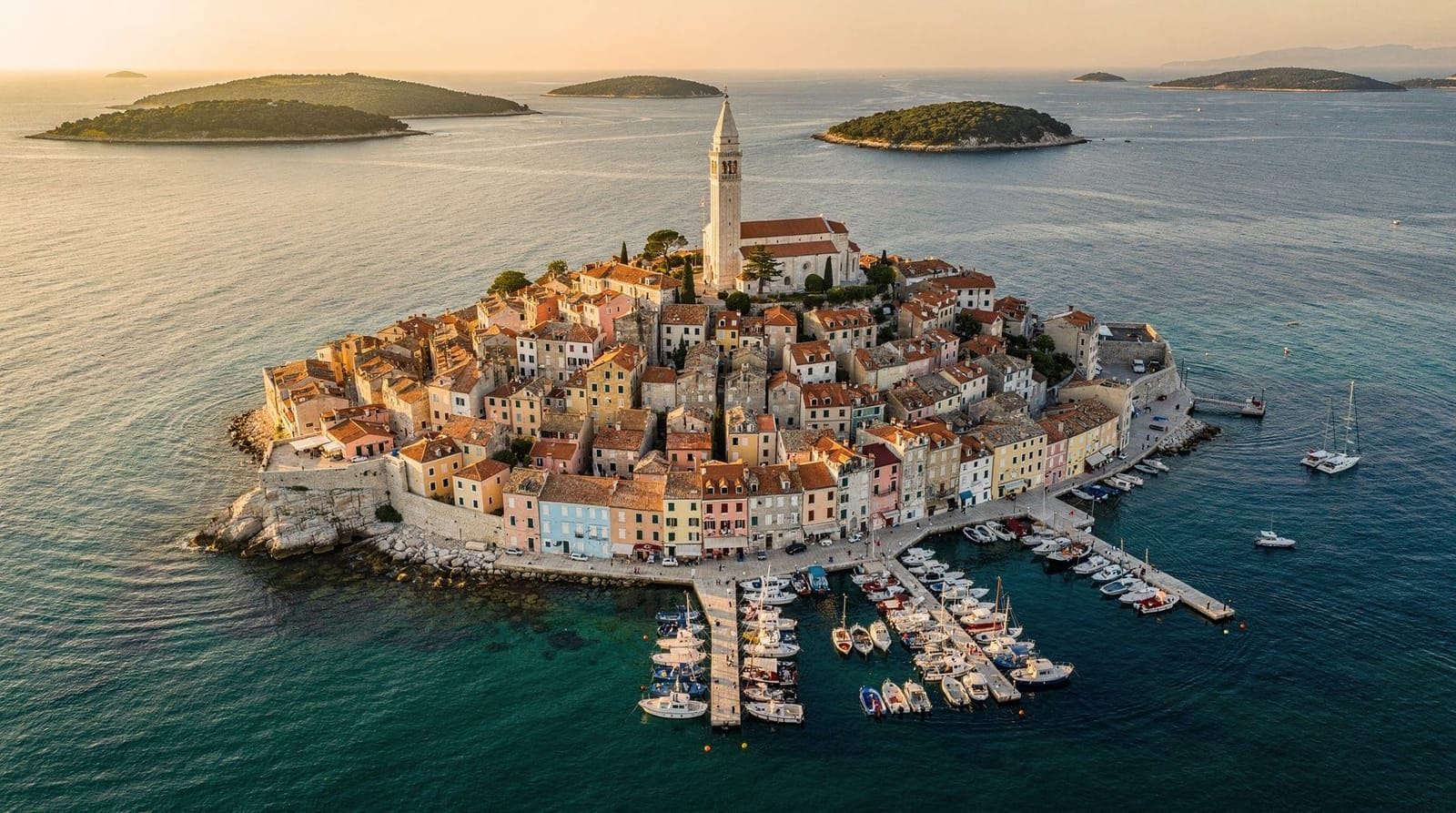
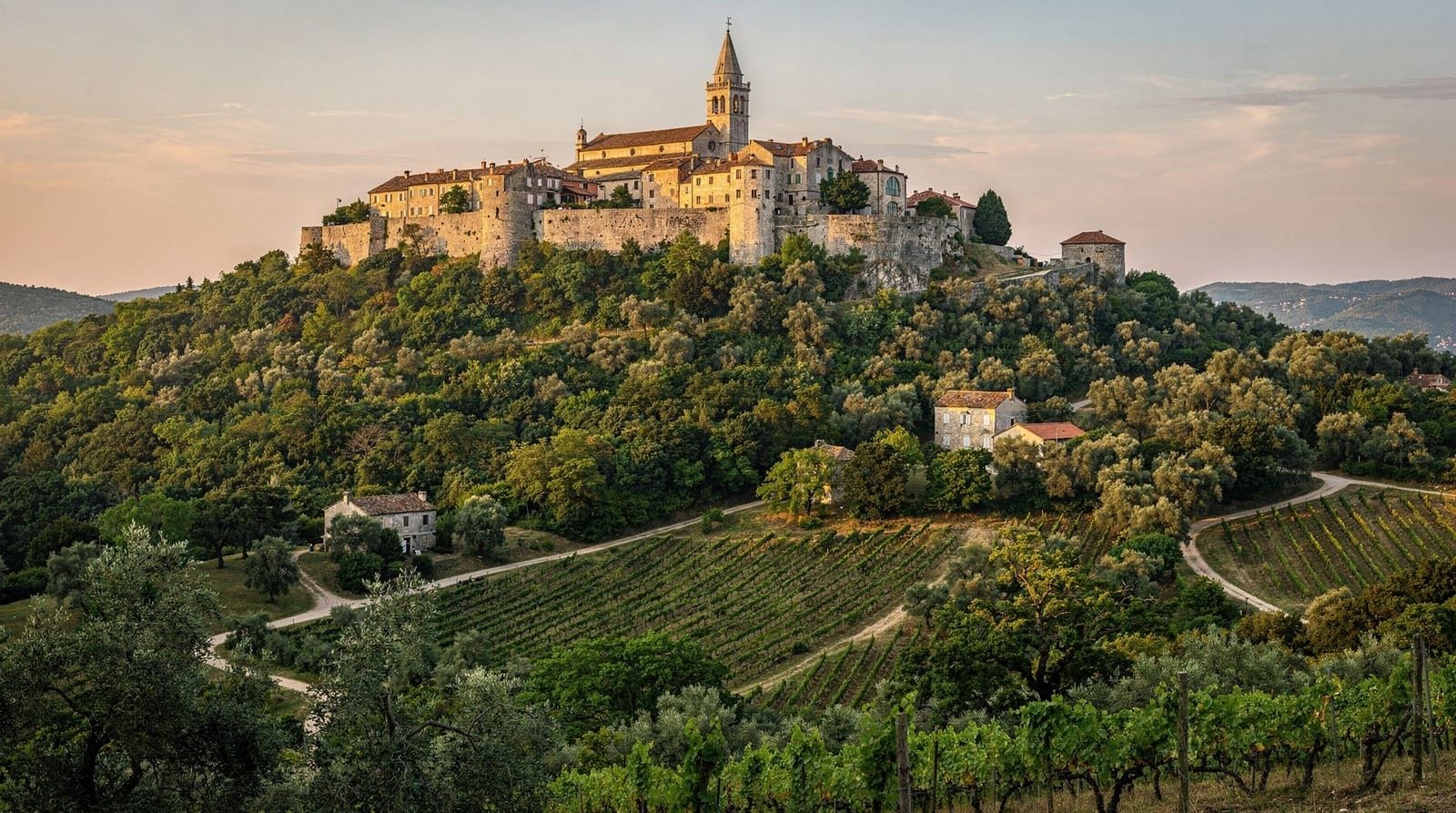
Motovun (48 km inland, about 50 minutes) — the hilltop truffle town. See the Motovun guide.
Rovinj (40 km south, 45 minutes) — Istria’s most beautiful harbour town. See the Rovinj guide.
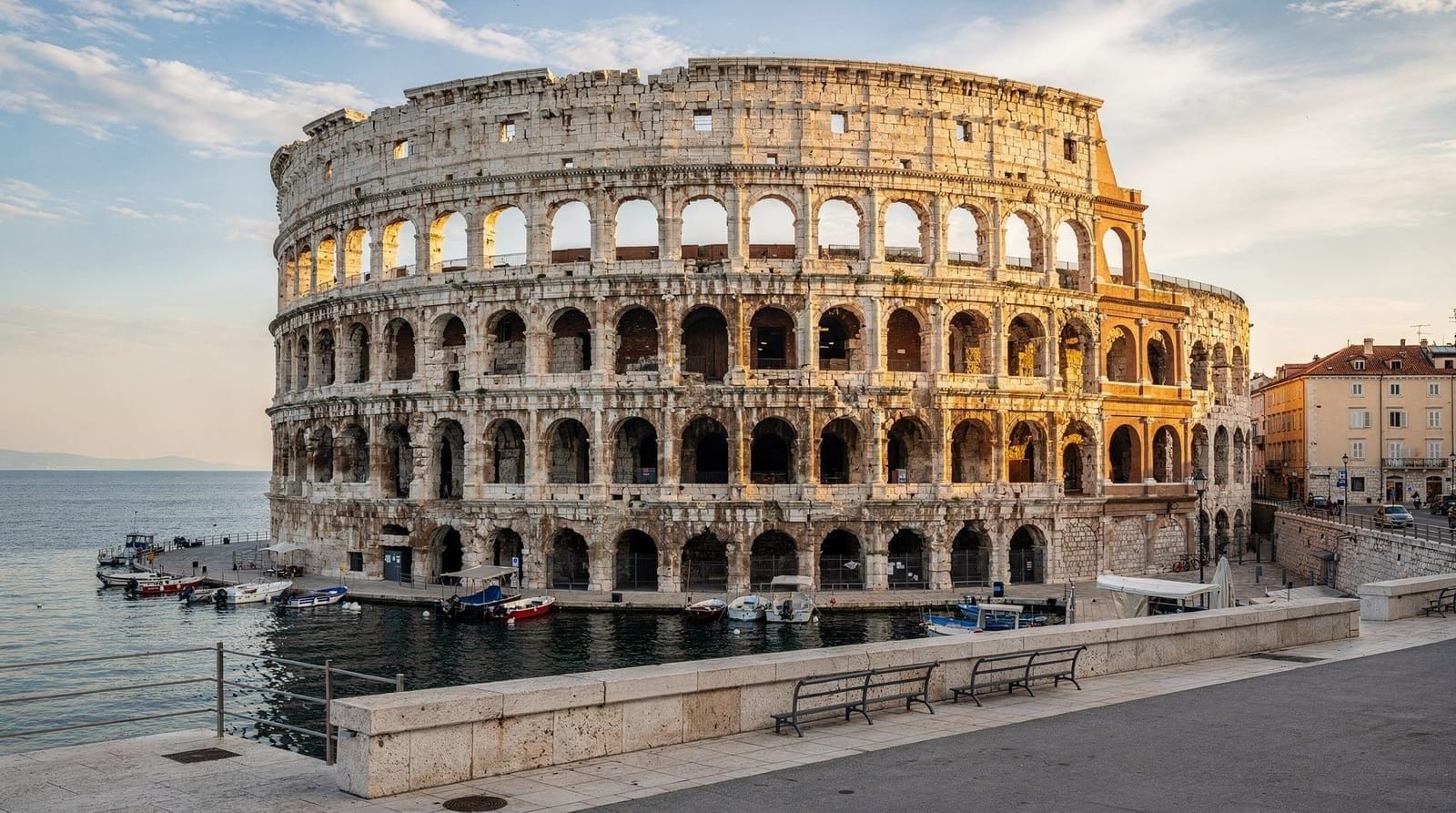
Pula (57 km south, 55 minutes) — Roman arena and Brijuni National Park. See the Pula guide.
Umag and the wine road (30 km north, 30 minutes) — Malvazija and Teran wine country. See the Umag guide.
Grožnjan: A tiny hilltown inland from Poreč, home to an artists’ colony and one of the most atmospheric medieval hill towns in Istria. Easy half-day trip.
Families in Poreč
Poreč is one of the most family-friendly destinations on the Istrian coast, largely because of the scale and organisation of the resort infrastructure surrounding the old town.
Zelena Laguna and Plava Laguna, the two main resort zones a few kilometres south of the historic centre, are specifically designed with families in mind. The beaches in these areas are significantly more accessible than the rocky ledges typical of Istria’s coastline — shallower entry points, sandy or fine-gravel patches, and calm water protected from open-sea swell. Several of the large hotels in the laguna zones operate dedicated kids’ clubs with structured activities, supervised play areas, and age-separated programming. Water slides, mini-golf courses, and indoor entertainment options mean that even poor-weather days don’t become a problem.
The old town is compact and entirely walkable with children — no main roads to cross once you’re on the peninsula, and the flat central streets are pushchair-friendly. The basilica visit works well for older children with some preparation about what they’re seeing; younger children may prefer the outdoor spaces of the atrium and the bell tower climb.
For a dedicated family day out, the Aquacolors water park near Poreč is one of the largest in Croatia: multiple slide towers, a wave pool, a lazy river, and dedicated toddler zones. It draws visitors from across Istria in July and August and can get busy, but the scale of the facility means it absorbs crowds better than smaller water parks. It’s a reliable full-day option, especially useful mid-holiday when the beach routine needs a break.
The cycling paths connecting Poreč with the resort zones and the surrounding coastline are another family asset — flat, mostly traffic-free, and rentable at numerous points along the route. Cycling from the old town down to Zelena Laguna and back takes under an hour at a comfortable pace and is suitable for children old enough to ride independently. For longer inland routes through the vineyards and hill towns, see the cycling Istria guide.
Beaches near Poreč
Poreč’s beaches are a mix of small rocky coves in the old town area and more organised beach facilities in the resort zones.
Parentino Beach (old town area): The closest swimmable area to the historic centre — rocky platforms and a small pebble beach north of the peninsula.
Laguna Zelena: Pebbly and rocky beaches within the Zelena Laguna resort zone, about 4 km south of the old town. Clean, well-facilitated.
Naturist camping (Laguna Naturist): Poreč is a centre of naturist tourism — several large naturist resorts operate in the area, including the Solaris naturist park. Croatia has a long and well-regulated naturist tradition.
Where to stay in Poreč
Old town and vicinity: Most boutique and smaller hotels. Hotel Poreč (budget, convenient), Hotel Parentino, and a range of private apartments. Old-town apartments run €60–€140/night in peak season.
Resort zones (Zelena/Plava Laguna): Large hotel complexes. Generally good value for families on a package, with extensive facilities. Prices vary widely by room category.
Campsites: Poreč and the surrounding area have some of the largest campsites in Europe (Lanterna, Bijela Uvala) — popular with camping travellers from Austria, Germany, and Slovenia.
Where to eat in Poreč
Restaurant Sveti Nikola (old town): One of the better restaurants in the historic centre — fresh seafood, good wine list, pleasant terrace. More reliable than many tourist-facing places in the old town.
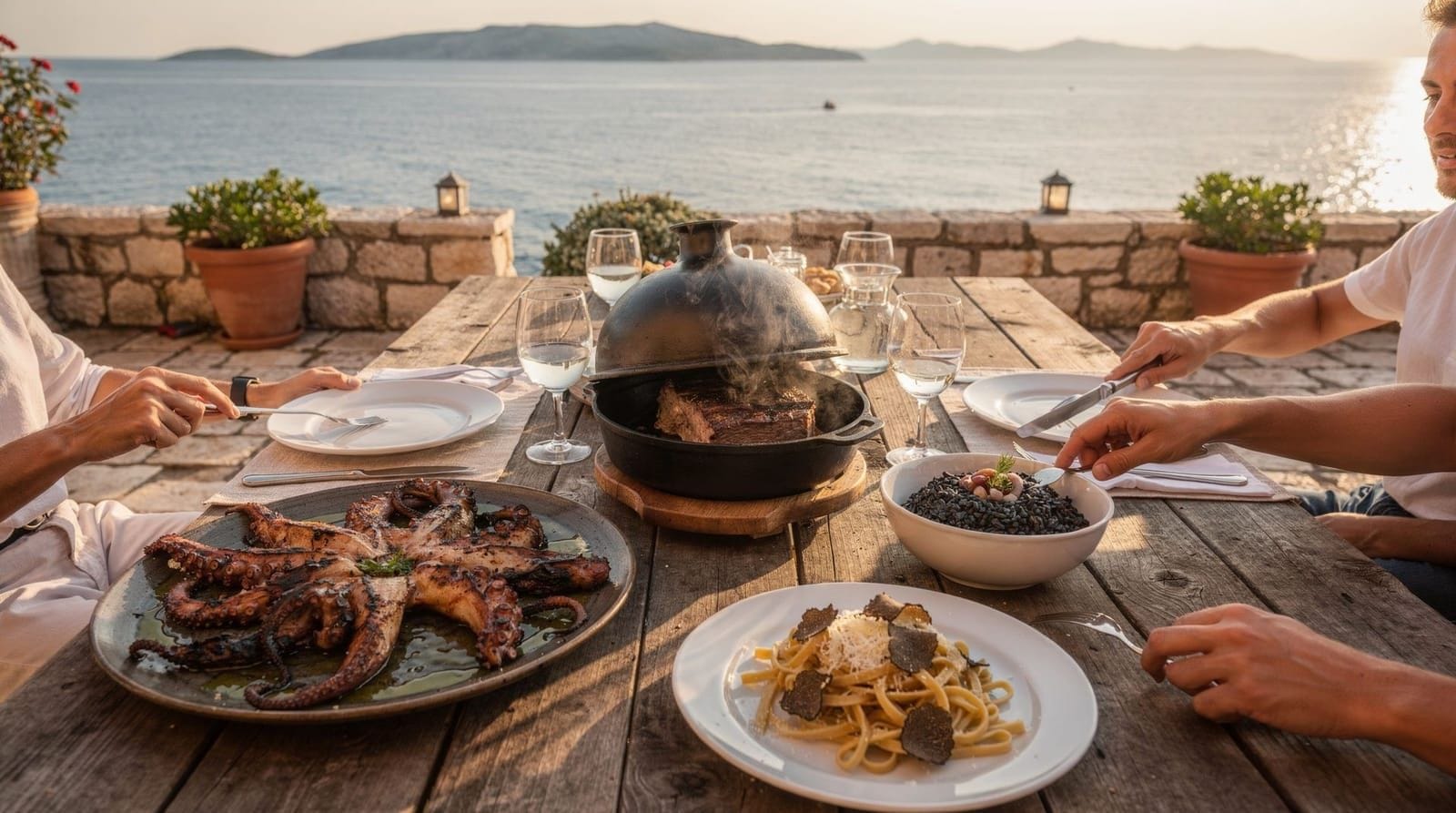
Konoba Ulika (old town): Small, rustic, serving Istrian specialities: truffle pasta, prosciutto, local cheese. A genuine effort in an area full of tourist traps.
Konoba Maurović (old town): Family-run, honest cooking, reasonable prices. The Istrian pasta (fuži with truffle) is excellent.
Restaurant Nono (just outside old town): Good-value pizzeria and grill — a reliable option for a casual dinner that won’t break the budget.
Vinoteka Nono (old town): A wine bar focused on local producers — a good place to try Malvazija and Teran without the pressure of a full restaurant setting. The list skews toward smaller Istrian estates rather than the big commercial labels, and the staff are happy to talk through the differences. Snacks and charcuterie boards make it a workable early-evening stop before dinner. Unpretentious, honest, and genuinely useful for getting to know Istrian wine. See the Istrian Malvazija guide for more context on the region’s wine culture.
A practical note on prices: The harbour-facing restaurants on Poreč’s waterfront typically charge 20–30% more than comparable places one block inland — you are paying for the view, which is pleasant, but rarely worth the premium if you’re watching your budget. The side streets running parallel to the waterfront, one block back from the water, consistently offer better value. The food is often from the same suppliers; the price difference is almost entirely a function of the table location.
Best time to visit Poreč
May–June: The basilica is much less crowded. Weather is warm and pleasant (22–26°C). Sea swimmable from mid-June.
July–August: Resort season in full swing. The beach facilities and organised entertainment are at maximum. The old town and basilica get crowded midday.
September: Excellent balance — warm sea, thinning crowds, all services operating.
October: Quiet, beautiful, ideal for cultural visits. The truffle season adds a gastronomic dimension to any day trip to Motovun.
FAQ
Is Poreč or Rovinj the better base for a first Istria trip? Rovinj has more charm and better photography; Poreč has the Euphrasian Basilica, a bigger resort infrastructure, and generally lower prices — it suits families and larger groups better, while Rovinj suits couples wanting atmosphere. Both work well as a base for Pula day trips.
How much time do I need at the Euphrasian Basilica? 30–45 minutes covers the essentials, including the bell tower climb; allow an hour if you want to take in the atrium, baptistery, and floor mosaics properly. The Euphrasian Basilica guide has a fuller breakdown of what to prioritise.
Top experiences
Bookable activities with verified prices and instant confirmation on GetYourGuide.
Top-rated experiences in Poreč travel guide
Best-rated activities across GetYourGuide and Viator.