Vis travel guide
Plan your visit to Vis: the Blue Cave on Biševo, Stiniva beach, Komiza, Mamma Mia filming locations, and catamaran times from Split.
Split: 5 islands full-day tour to blue cave, Vis and Hvar
Quick facts
- Best time
- May–June, September
- Days needed
- 3–4 days
- Getting there
- Catamaran Split–Vis (2 h 15 min) or car ferry (2 h 45 min)
- Budget per day
- €65–€150
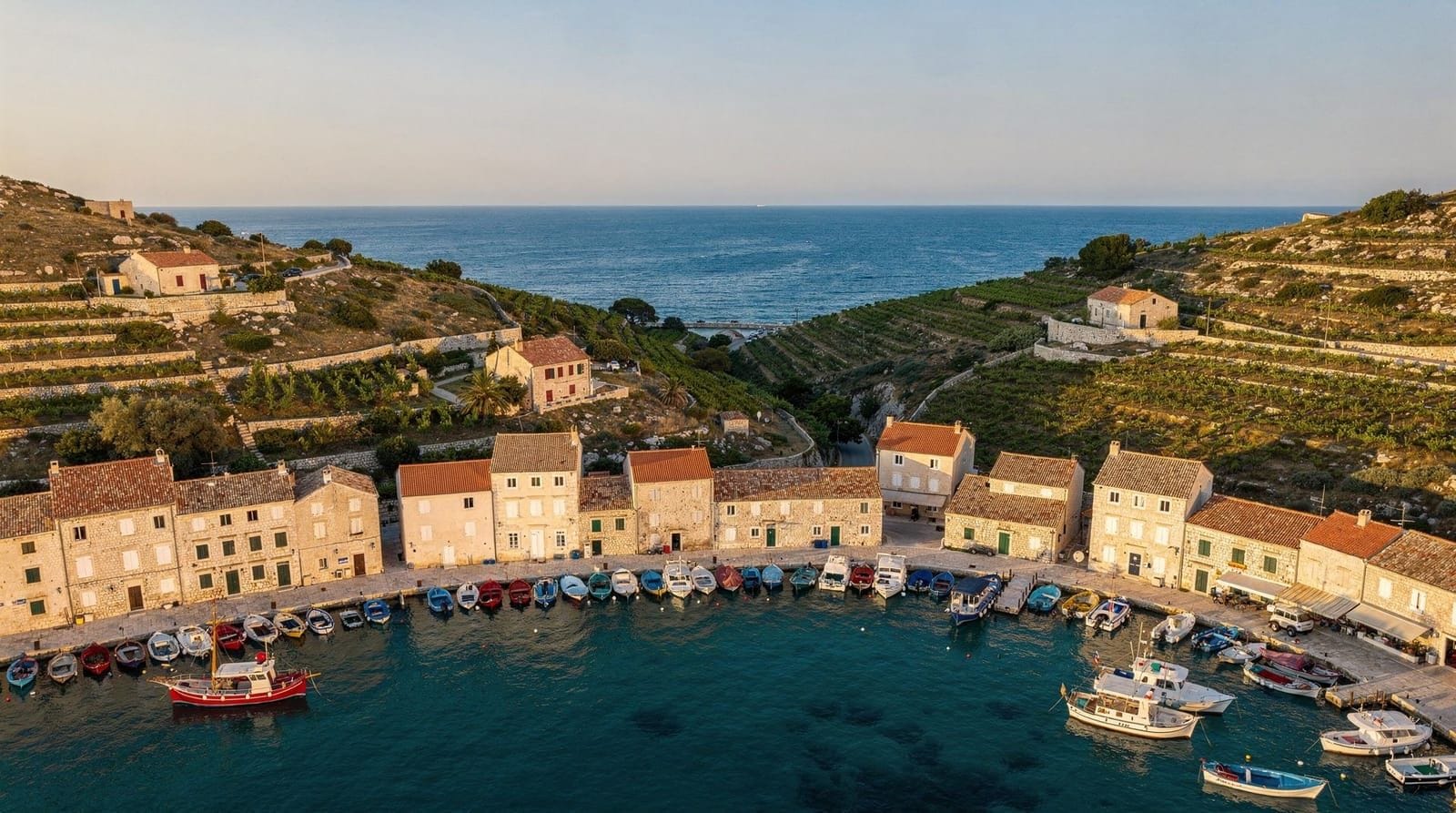
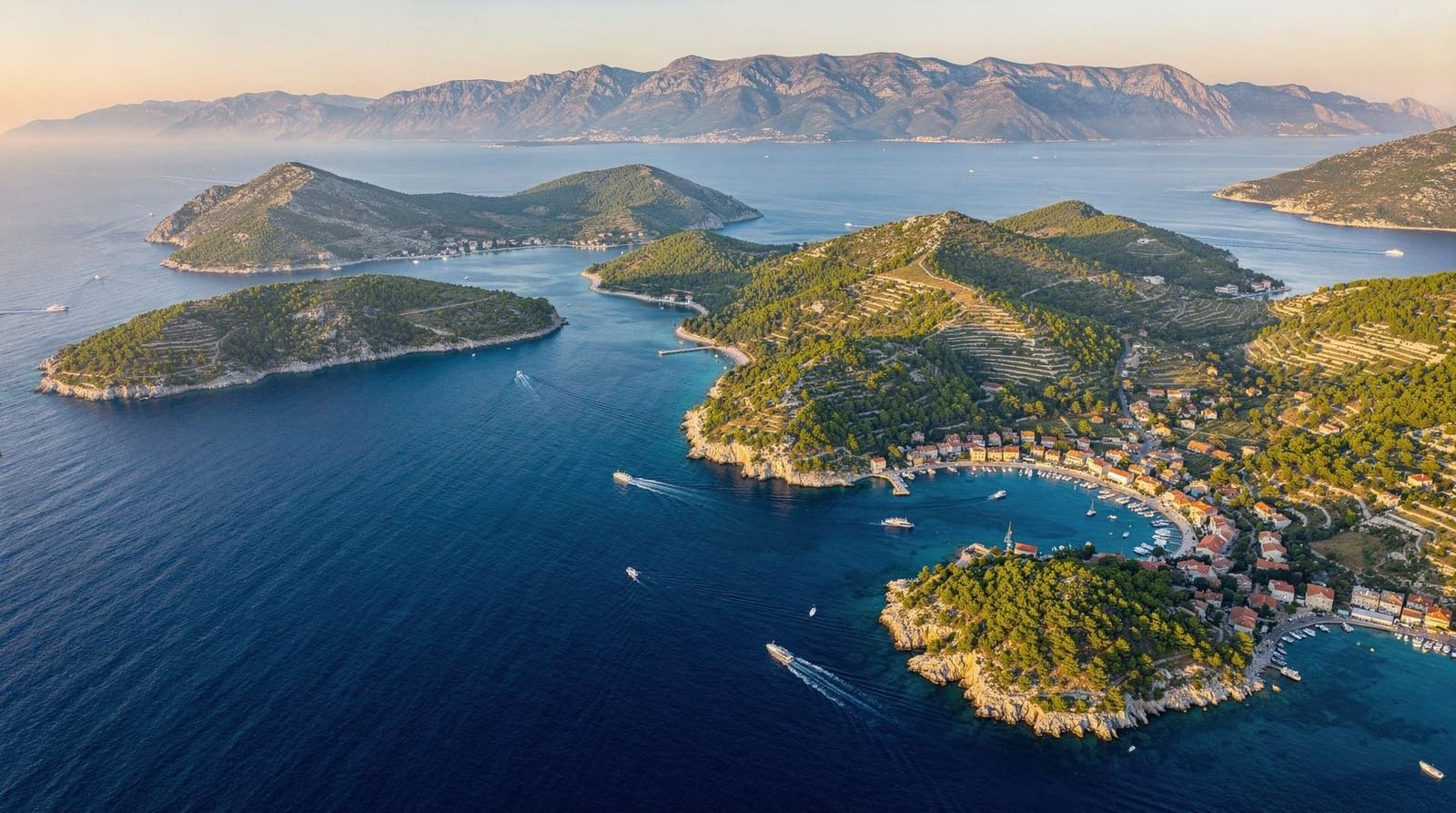
Vis is Croatia’s most remote inhabited island — the furthest from the mainland in the Dalmatia region. This geographical isolation, combined with its use as a closed Yugoslav military base until 1989, preserved Vis in a state of extraordinary authenticity. It has no large hotels, no theme-park attractions, and no attempt to be anything other than what it is: a rugged, wine-producing, spectacularly beautiful island that moves at its own pace. It is also the island used as the filming location for Mamma Mia! Here We Go Again (2018), which brought it an entirely new kind of fame.
Getting to Vis
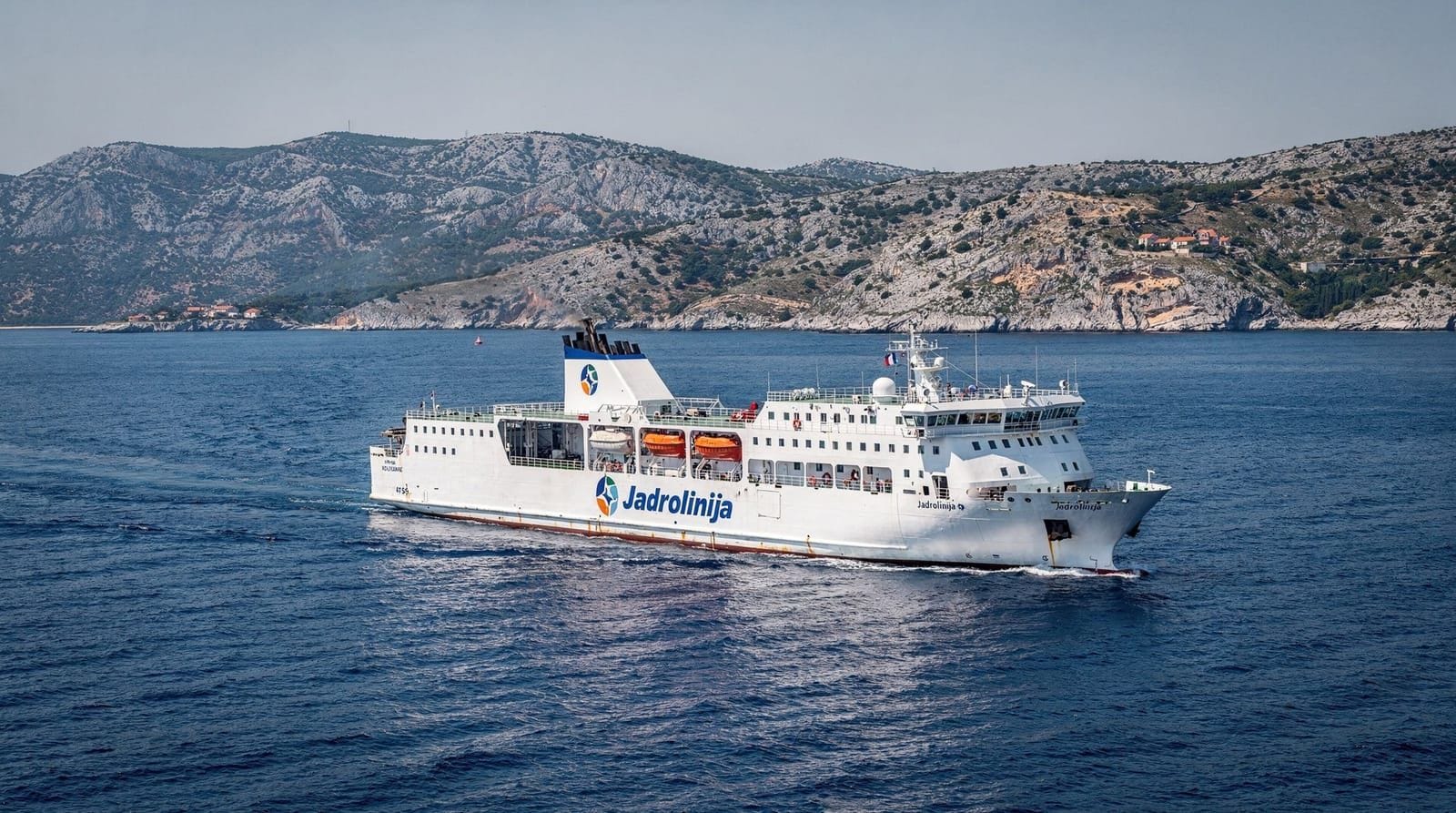
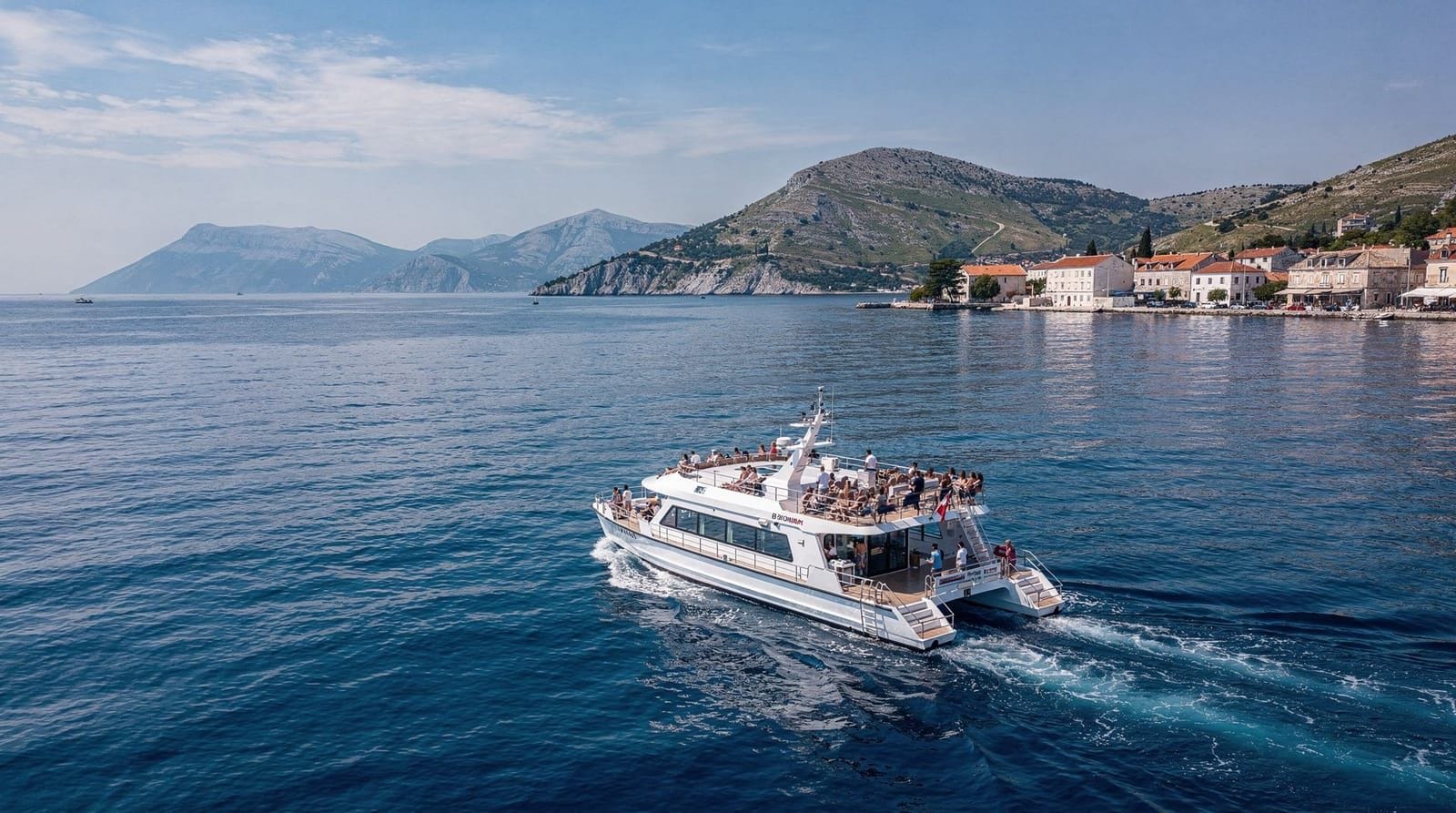
Catamaran Split–Vis: Jadrolinija and Krilo operate fast catamarans from Split harbour to Vis town, taking approximately 2 hours 15 minutes. In summer there are around 2–4 catamarans per day. Foot passengers only. Fares around €10–€14 one way.
Car ferry Split–Vis: The overnight or day car ferry takes about 2 hours 45 minutes. One or two sailings daily in summer depending on season. Essential if you’re bringing a car — though be aware that Vis is small enough to navigate easily by bicycle, scooter, or taxi. Car plus driver runs approximately €40–€55 one way in peak season.
Book ahead in summer — Vis has limited accommodation and limited ferry capacity, and the island can effectively fill up in July and August.
From Hvar: No regular scheduled ferry service connects Hvar directly to Vis. Day-trippers usually take a boat tour from Split or from Hvar (private speedboat). You can also take a ferry to Split and then the catamaran to Vis.
What to see and do on Vis
Vis Town
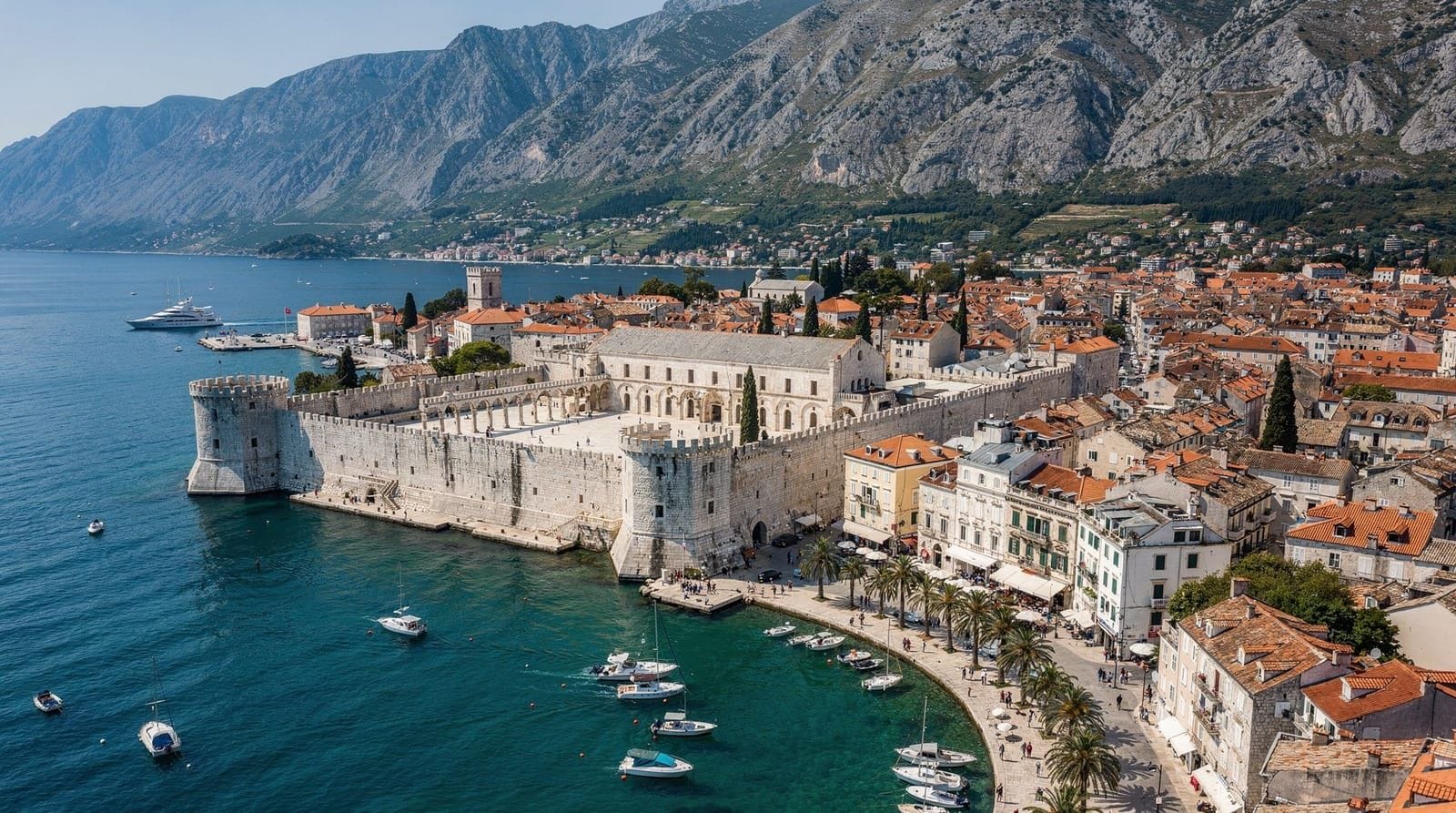
The island’s eastern main port is a beautiful, understated Dalmatian town — Roman remains and Renaissance architecture side by side, a waterfront promenade where boats bob and locals drink coffee, and a total absence of souvenir shops or tourist infrastructure beyond a few excellent restaurants.
The Archaeological Museum of Vis (housed in an Austrian-era fortification on the eastern side of town) holds one of the most significant collections of Greek and Hellenistic artefacts in Croatia. Vis — ancient Issa — was founded as a Greek colony around 397 BC and became an important trading hub in the central Adriatic. The museum displays pottery, jewellery, bronze figurines, and amphorae recovered from excavations across the island, giving rich context to a settlement history that predates Rome. Look out for the famous bronze head of a goddess — likely Artemis — found in the sea near Vis and considered one of the finest examples of Hellenistic bronze casting in the eastern Adriatic.
Scattered through the town are traces of a Roman theatre that served the provincial settlement of Issa during the imperial period. The remains are fragmentary — mostly sections of seating carved into the hillside and portions of the stage wall — but they are among the few visible Roman theatre remnants in the Croatian islands and worth seeking out with a town map from the tourist office. Adjacent to the theatre site are the foundations of a Byzantine church from the early medieval period, a reminder that the island continued as a functioning settlement long after Rome’s withdrawal from the region.
Walk west along the Prirovo peninsula for the early-Christian cemetery and Byzantine chapel, and further to the British military cemetery from World War II. This quietly tended graveyard holds the graves of Allied servicemen who died while Vis served as the main British and Yugoslav Partisan base in the Adriatic from 1943 to 1944. The island’s strategic position made it an invaluable operational hub — Royal Navy vessels, RAF aircraft, and Commando units all operated from here — and the cemetery, maintained by the Commonwealth War Graves Commission, is a moving and often overlooked corner of the island’s layered history. Tito spent time in the island’s cave command post during this period, and the island was genuinely pivotal in the liberation of Yugoslavia.
Komiža
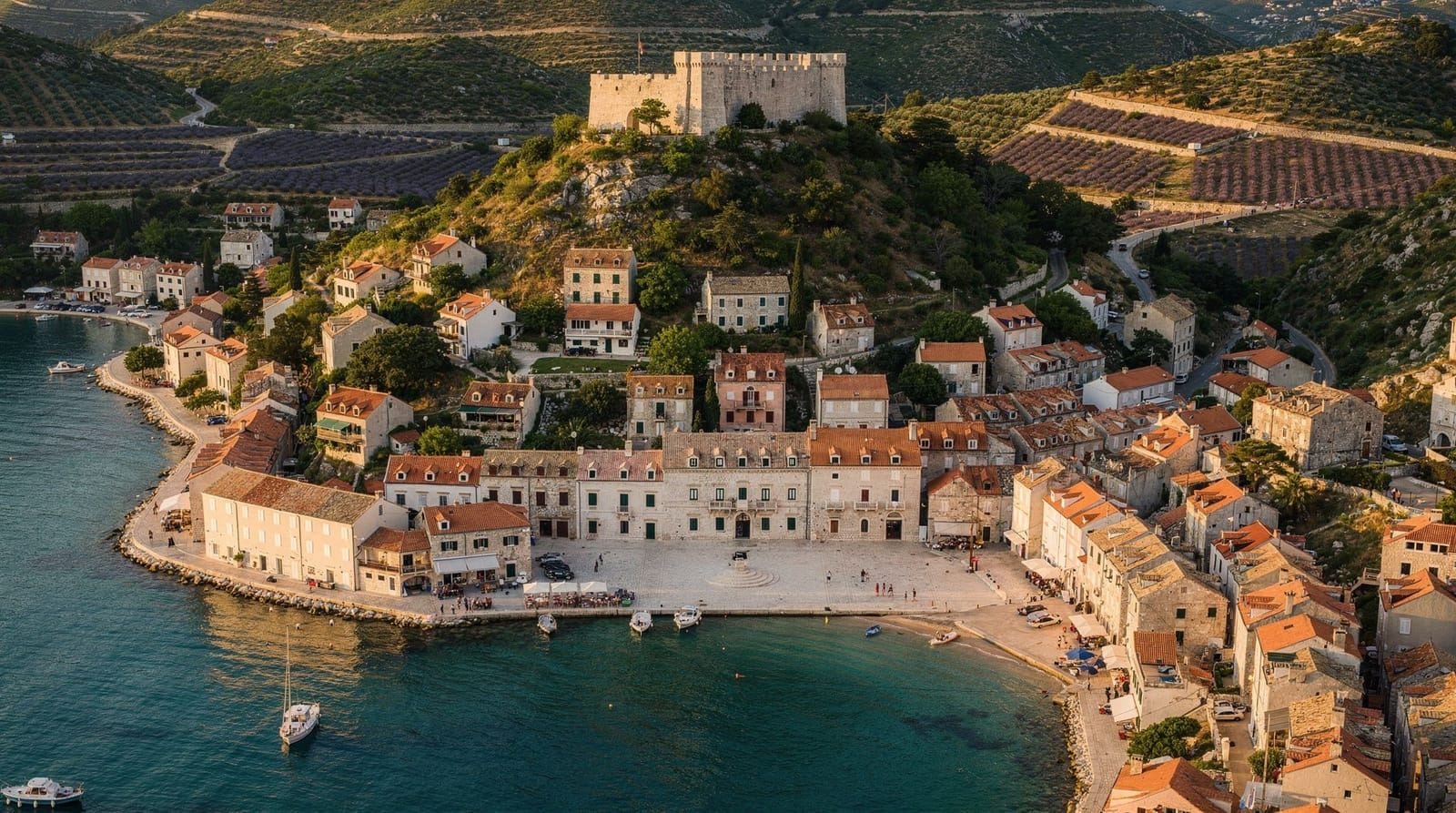
On Vis’s western coast, Komiža is the island’s fishing village — arguably one of the most genuinely photogenic harbour settlements in the Adriatic. Brightly painted fishing boats, a 16th-century Venetian fortress above the harbour, a Baroque church, and a handful of excellent restaurants and wine bars. Smaller and quieter than Vis town, Komiža feels like stepping back several decades. This is the base for Blue Cave day trips.
The Muzej Ribarstva — the Fishing Museum — is housed inside the 16th-century Venetian fortress (Kaštel) that dominates the harbour. The collection documents the island’s centuries-long tradition of sardine fishing, once the economic lifeblood of Komiža and the source of its distinctive maritime identity. Displays include traditional fishing nets, lamps, barrels, and the wooden falkuša — a distinctive type of lateen-rigged fishing boat unique to Vis that was once the primary vessel of the Komiža fleet. The museum explains how Komiža fishermen sailed as far as the Italian coast of the Adriatic during the sardine season, a range that made the falkuša a regional symbol of seamanship.
In August, Komiža hosts the Ribarska noć — Fishermen’s Night — a festival that celebrates this maritime heritage with a recreation of a traditional night fishing expedition. Fishing boats go out into the bay at dusk using oil lamps to attract sardines in the old manner, and the catch is prepared on the harbour for a communal meal. The festival draws locals and visitors alike and gives a genuine glimpse into the culture that shaped the village over centuries. If you are visiting Vis in the first or second week of August, try to time your stay to coincide with it.
Blue Cave (Modra Špilja), Biševo
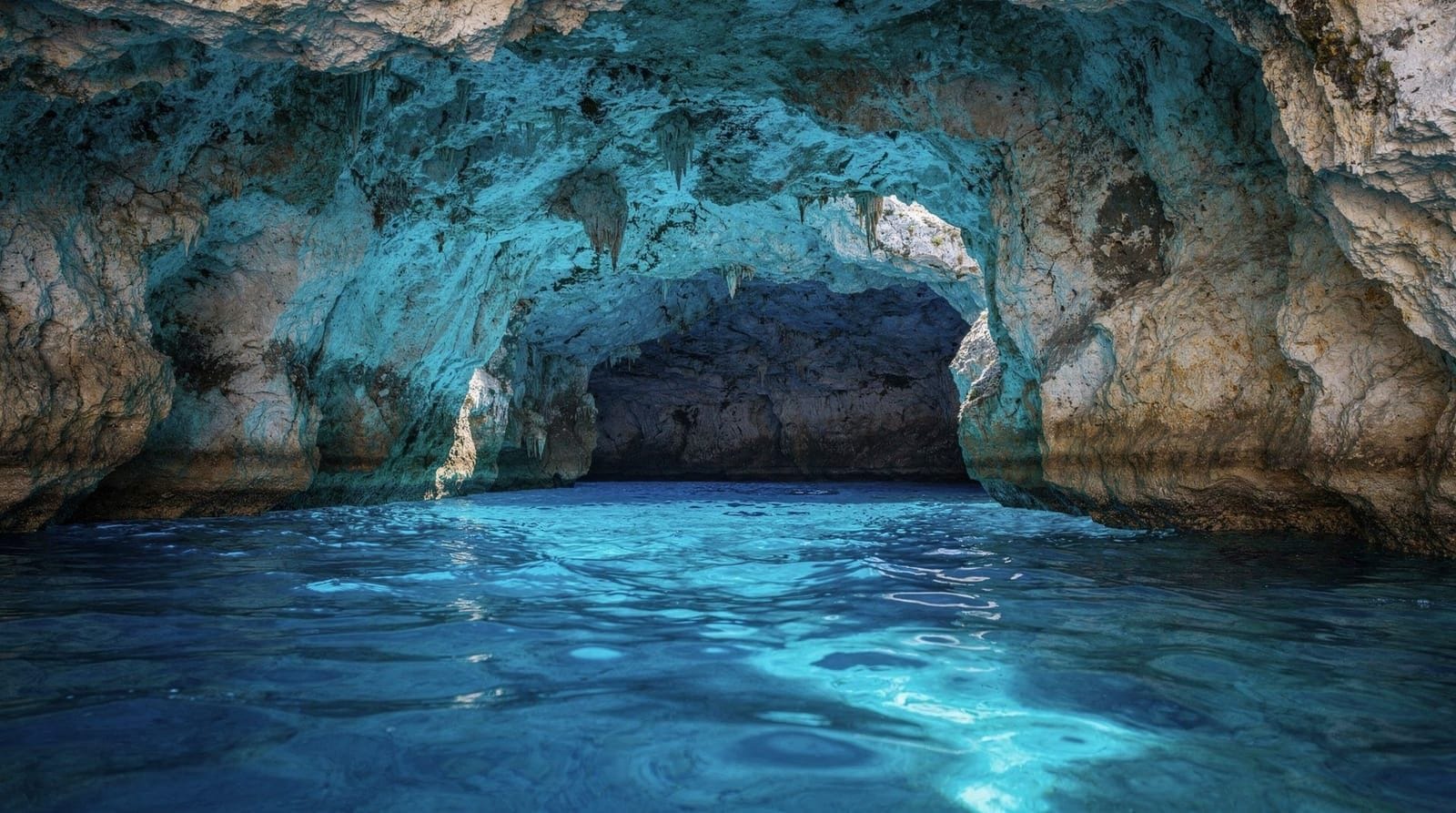
The Blue Cave on the small island of Biševo is the defining day trip from Vis — indeed, from much of the Dalmatian coast. At approximately 11am–noon each day, sunlight enters through an underwater opening below the cave and illuminates the interior with an otherworldly cobalt-blue glow. The effect is genuinely extraordinary.
You can only enter by small rowing boat (maximum six passengers at a time), so the experience involves queuing on a larger tour boat and waiting for your few minutes inside. Entry tickets cost around €15–€20 per person and are managed by local boat operators. Visits are only possible in calm weather and during daylight hours.
Boat tours from Komiža take 30–40 minutes each way. Tours from Split combine the Blue Cave with Vis, Hvar, and Pakleni Islands in a full day. Going directly from Vis (staying overnight) allows you to be first in the queue and get a calmer experience than day-trippers from Split.
Stiniva Beach
Stiniva has been voted one of the most beautiful beaches in Europe on multiple occasions, and the reality does not disappoint. The beach is a small pebble cove enclosed by dramatic cliffs — a near-circular natural amphitheatre with a narrow entrance gap just a few metres wide that makes it nearly invisible from the sea. The sense of arrival — either squeezing through the rocks on foot or sliding in by boat through the gap — is unlike any other beach approach in Croatia.
Getting there involves either a steep 20-minute walk down from the road (good path, manageable for fit adults carrying light bags), a water taxi from Komiža or from Vis town (around €15–€20 each way depending on the operator), or approaching directly by boat. Water taxis typically begin running from Komiža around 9am in peak season and make return trips through the afternoon, with the last pickup usually around 5–6pm — confirm return times with your operator before committing, as missing the last boat means a steep uphill walk with no shade.
The beach fills up between 11am and 3pm in July and August, so the strategy is to arrive before 10am or after 4pm. In shoulder season (May, June, September) the cove can be remarkably quiet even at midday. The water inside is utterly still — shielded from any swell by the surrounding cliffs — and the colour shifts from pale turquoise at the edges to deep blue at the centre. There are no facilities except a small summer bar that opens in July and August. Bring water, sunscreen, and something to sit on — the pebbles are smooth but there is no shade once the sun is high.
Mamma Mia Filming Locations
Vis doubled for the fictional Greek island of Kalokairi in Mamma Mia! Here We Go Again (2018). The town of Komiža appears in several scenes, most notably as the backdrop for the arrival of Donna’s friends. The distinctive limestone cliffs and turquoise coves feature throughout. Several local boat operators offer informal Mamma Mia tours identifying filming spots around the island.
Tito’s Cave (Titova Špilja)
During World War II, Marshal Tito used a cave in the hills above Vis as his command headquarters for operations in Yugoslavia from 1944. The cave is signposted from the road between Vis town and Komiža and can be visited for free. The interior shows the original furnishings and communications equipment from the wartime occupation.
Vis Wine and Vugava
Vis has a unique indigenous grape variety called Vugava — an ancient white grape that produces a dry, full-bodied wine with mineral character. The island’s wine production is small (limited vineyard area) and mostly consumed locally or sold to restaurants on the island. Winery Lipanović in Komiža is worth visiting for tastings if you’re interested. Several konobas in Komiža also serve excellent house wine.
Vis for Sailors and Yachters
Vis occupies a strategic position on the central Dalmatian sailing circuit and is one of the most popular overnight stops for yachts working their way between Split and the southern islands or crossing toward Italy. Its remoteness — which makes it less convenient for day-trippers — is precisely what makes it attractive to the sailing community: deep, protected anchorages, authentic provisioning, and the sense of being somewhere genuinely off the beaten track.
The ACI Marina in Vis town is the main facility, with around 160 berths and full services including electricity, water, fuel, showers, and a repair workshop. The marina sits directly in front of the town waterfront, so provisioning — supermarket, bakery, butcher, pharmacy — is a short walk away. The harbour master’s office handles clearance for non-EU flagged vessels. In July and August berths fill quickly, so calling ahead on VHF channel 17 or booking in advance is strongly advised.
Komiža has a smaller quay and limited mooring for yachts, typically stern-to on the town quay. It lacks the infrastructure of the ACI Marina but serves perfectly well for a one-night stop, particularly for those planning an early-morning Blue Cave excursion from Komiža harbour.
The anchorage at Stončica, on Vis’s northeast coast, is one of the most popular free anchorages on the island. It offers shelter from the prevailing summer northwesterly (maestral) and the holding on sand and weed is generally reliable in settled weather. The small beach at Stončica has a seasonal restaurant, making it a comfortable lunch stop or overnight anchorage. Note that it offers less shelter from southerly winds, so check the forecast before committing for the night.
For those following the broader Dalmatian sailing circuit, Vis sits naturally between Hvar and the outer islands (Lastovo, Korčula). The passage from Vis town to Lastovo runs roughly 25 nautical miles and takes four to six hours under sail depending on conditions. The channel between Vis and Hvar is exposed to the maestral, which builds through the afternoon in summer and can make for a spirited beat if heading north. Most sailors time this crossing for the morning when conditions are lighter.
Provisioning on Vis is adequate for a one- to two-week cruise: the supermarket in Vis town stocks the basics, fresh fish is available at the morning market on the quay, and bread and pastries come from the local bakery. Fuel is available at the ACI Marina. For more extensive provisioning — chandlery, spare parts, larger supermarkets — Split remains the practical base and can be reached in under three hours under sail from Vis.
Beaches on Vis
Beyond Stiniva, Vis has a wealth of beaches reachable primarily by boat or on foot.
Srebrna (Silver Beach, Stončica): A pebble beach on the northeast coast, accessible by road, calmer than Stiniva, and reasonably uncrowded. Good for swimming and snorkelling.
Milna: On Vis island’s north coast, a quiet pebble cove in a protected bay. Calm water, no crowds, and a very basic seasonal restaurant. Reachable by road.
Rukavac: On the southeast coast, a pebble beach with turquoise water in a sheltered bay. Road access and a small summer bar.
Barjaci: A cluster of rock-and-pebble swimming spots on the rocky coast south of Vis town, walkable in 20–30 minutes from town.
Where to stay on Vis
Vis town is the most convenient base for the ferry and the eastern half of the island. Private apartments run €60–€140/night in peak season. The island has no large hotels — Villa Vis is a good mid-range option.
Komiža is the best base for Blue Cave day trips and has a beautiful harbour setting. A smaller selection of apartments than Vis town but a more atmospheric village environment.
Book accommodation months ahead for July and August — Vis has genuinely limited capacity and fills up entirely during peak weeks.
Where to eat on Vis
Konoba Roki’s (Plisko Polje, interior): One of the most celebrated restaurants in Dalmatia — a farmhouse in the interior serving peka dishes (lamb, octopus, vegetables under the traditional bell) prepared over wood embers. Requires a reservation, ideally several days in advance. The experience of eating under a grape pergola with Vis wine is extraordinary.
Restaurant Pojoda (Vis town): Excellent fresh fish and seafood in a stone-walled courtyard. The grilled fish is perfectly prepared and the local Vugava wine selection is one of the best on the island.
Konoba Jastožera (Komiža): Set in an old lobster storage facility on the water — atmospheric beyond belief. Lobster is the speciality, naturally. The setting alone is worth the visit.
Vila Kaliopa (Vis town): Fine dining in a 16th-century nobleman’s garden — an unusual and beautiful space. Contemporary Mediterranean cooking with excellent wine pairings.
Best time to visit Vis
May–June is when Vis is at its most peaceful and beautiful. The sea warms to 18–21°C, all services operate, and the island population is a fraction of summer peak. The Blue Cave is accessible (weather-dependent) from April onward.
September is many travellers’ favourite month on Vis — the summer intensity has passed, the sea is at its warmest (~24°C), and the island returns to its authentic self. Accommodation becomes available and prices drop.
July–August: Vis is busy by its own standards, though “busy for Vis” is still quiet compared to Hvar or Dubrovnik. The main constraint is accommodation — if you haven’t booked months ahead, you simply won’t find a room.
October: Very peaceful. Some restaurants and businesses close from mid-month. The Blue Cave visits become less predictable with autumn weather.
Top experiences
Bookable activities with verified prices and instant confirmation on GetYourGuide.
Top-rated experiences in Vis travel guide
Best-rated activities across GetYourGuide and Viator.

Blue Cave & Vis Island speedboat tour from Hvar
- Viator

Rafting on Cetina River Departure from Split or Blato na Cetini village
- Viator

Blue Cave and Pakleni Islands group Tour from Hvar
- Viator

Boat Tour at Delfina Hvar
- Viator

Korcula Buggy (Official) Safari Tour - Local Food & Wine Tasting
- Viator

Blue cave group tour with swimming and snorkelling from Hvar
- Viator