Best Croatian Islands — Honest Rankings for Every Type of Traveller
Split: Blue cave and 5 islands tour
Which is the best Croatian island to visit?
It depends on what you want. Hvar is best for nightlife and glamour. Vis is best for authenticity and unspoiled beaches. Korčula is best for culture and wine. Mljet is best for nature and quiet. Brač is best for day-trippers after Zlatni Rat beach. There is no single answer — each island has a distinct personality.
The Dalmatian Archipelago at a Glance
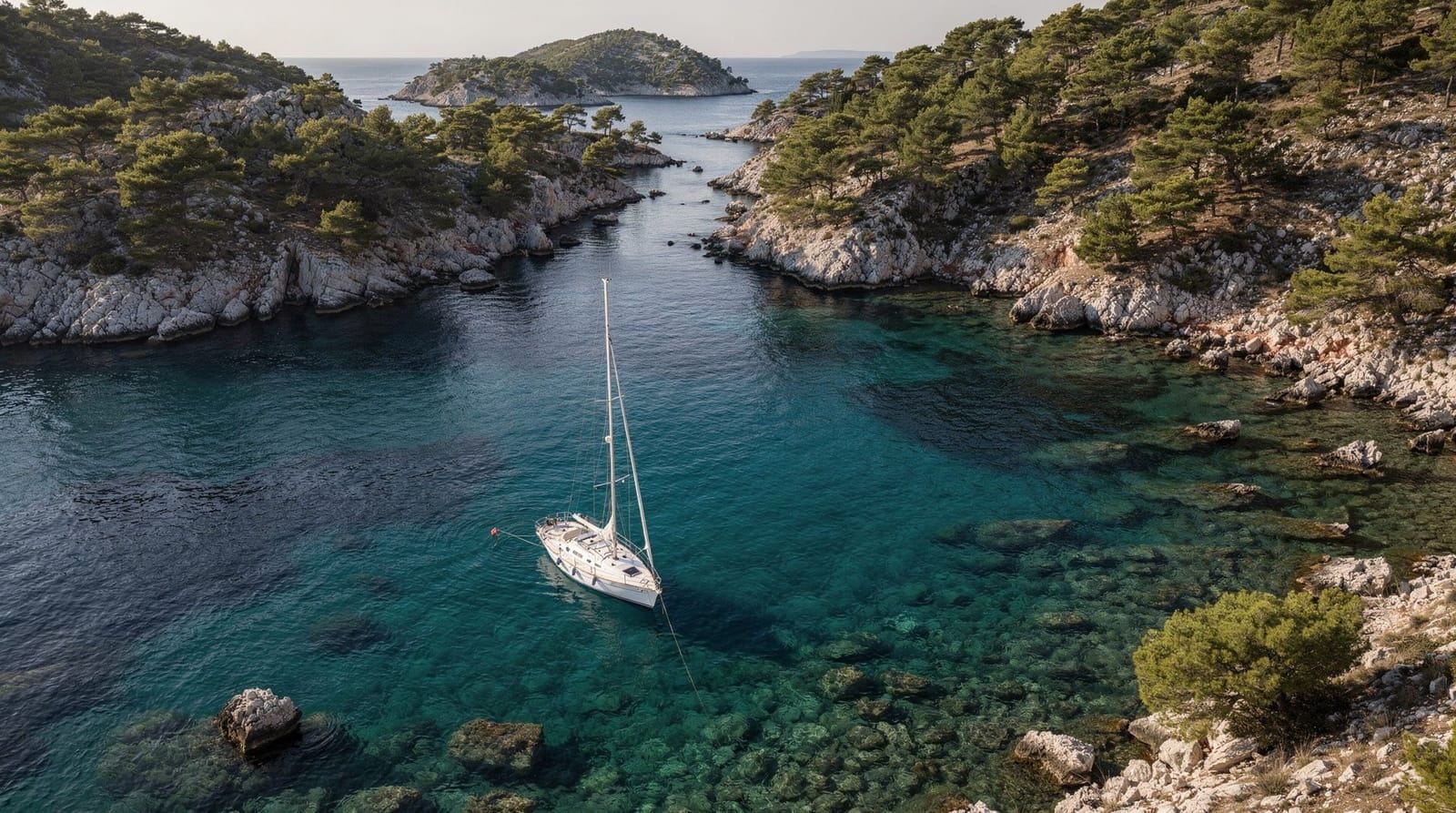
Croatia has over 1,000 islands strung along 1,800 kilometres of Adriatic coastline, but roughly a dozen are worth serious consideration for a holiday. The Dalmatian islands — the chain running south from Split — are where most visitors spend their time, and rightly so. The combination of clear turquoise water, medieval stone towns, lavender fields and fish restaurants puts this coastline among the finest in the Mediterranean.
The challenge is that “best” means different things to different travellers. Someone chasing Croatia’s legendary nightlife needs Hvar. Someone running from mass tourism needs Vis. A family wanting manageable logistics and calm swimming needs Brač or Korčula. A couple after national park walks and total quiet needs Mljet. This guide ranks each island honestly so you can match your expectations to reality — for a narrower comparison of the three most-asked-about islands, see Hvar vs Brač vs Korčula.
| Best for nightlife | Hvar |
| Best for authenticity | Vis |
| Easiest day trip | Brač, 50 min ferry from Split |
| Best for total quiet | Mljet |
| Sailing base | Hvar, or Split for departures |
Hvar — Glamour, Nightlife and the Pakleni Islands
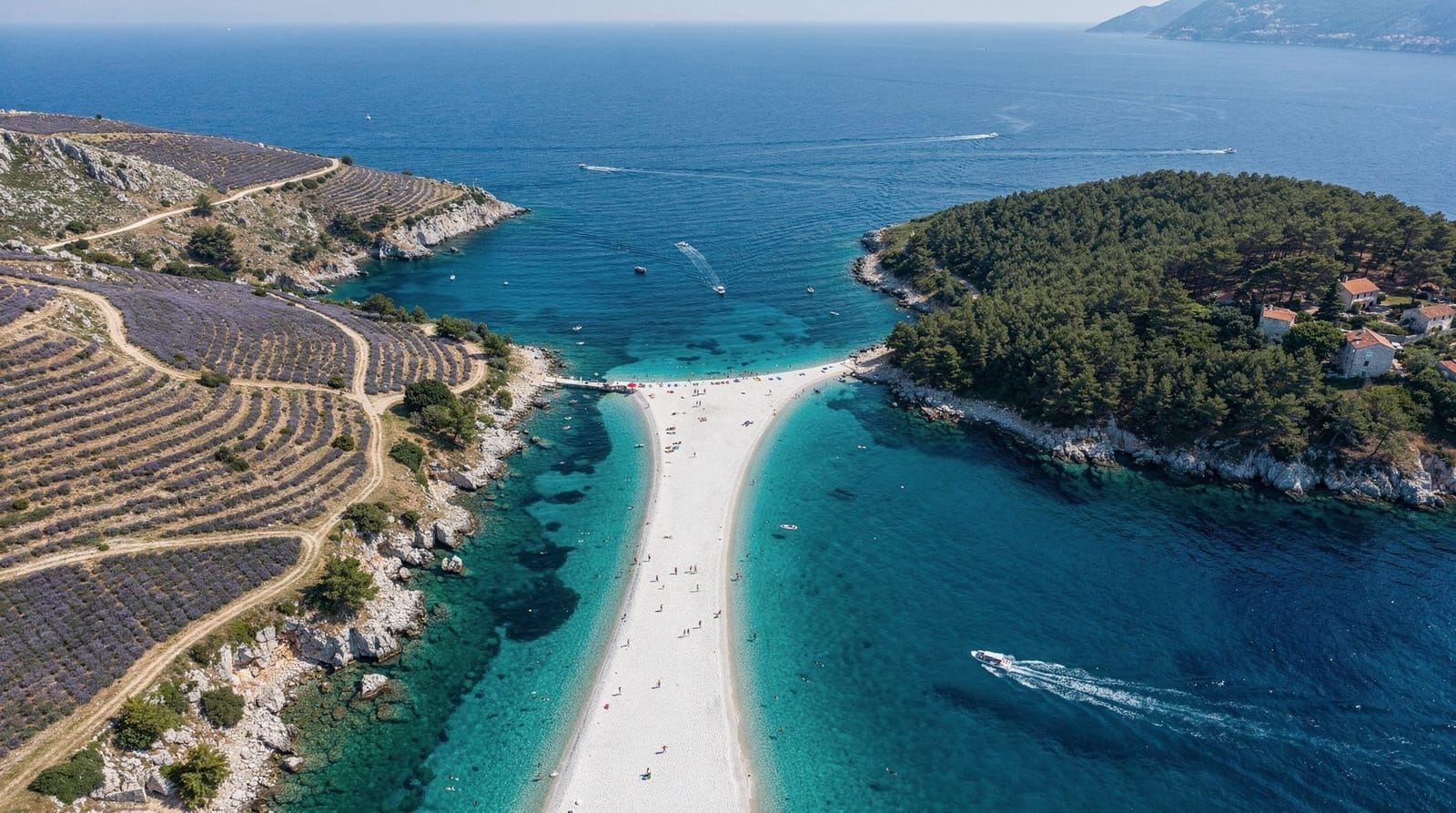
Hvar is Croatia’s most famous island and its most divisive. The old town, built in pale Dalmatian stone around a 13th-century loggia and fortress, is genuinely beautiful. The surrounding countryside — rolling lavender fields, ancient olive groves, hidden coves — is some of the most picturesque in the Adriatic.
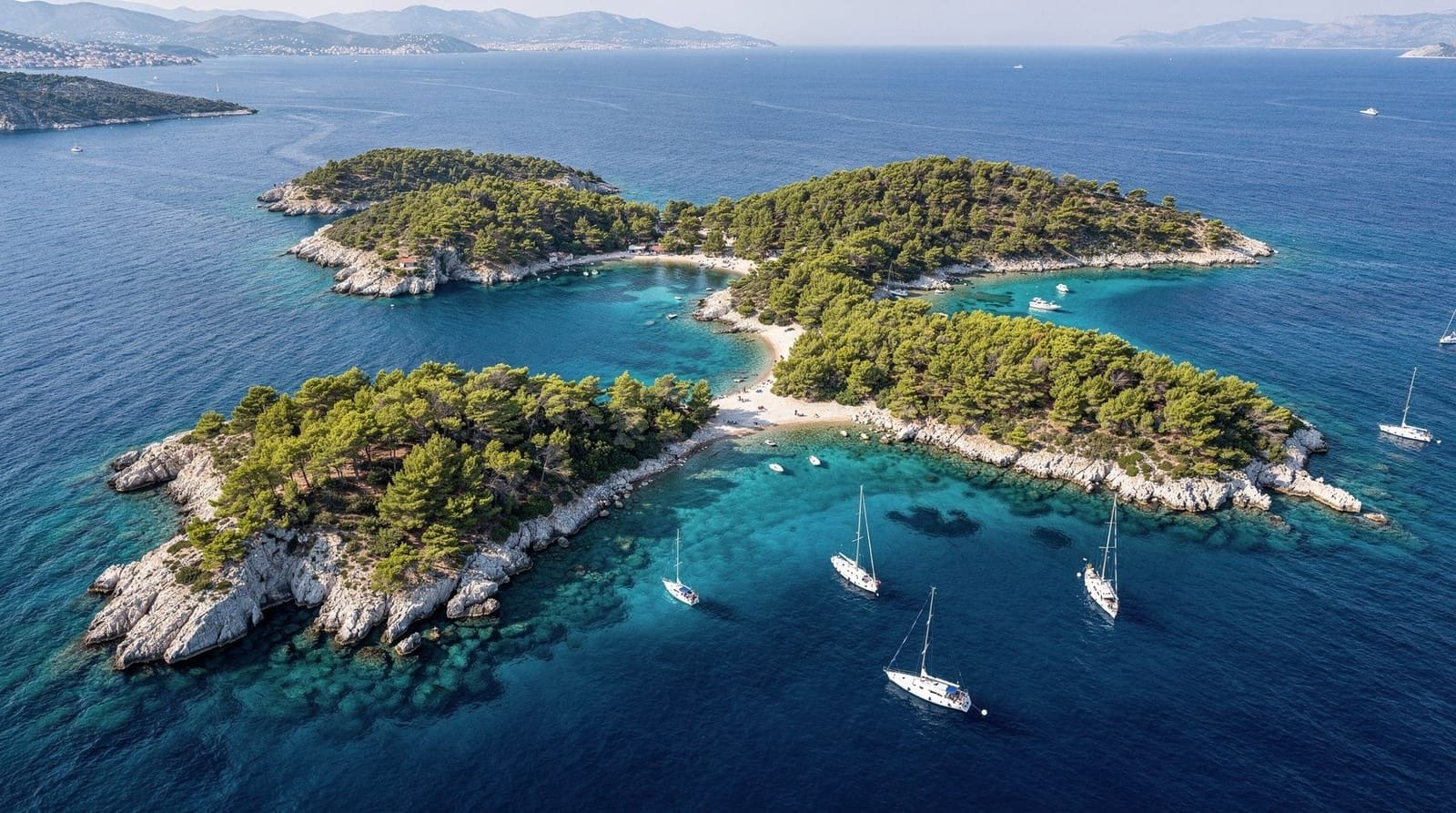
Then there is the nightlife. Hvar Town has restaurants, beach bars and clubs that draw an international crowd from June to September. The famous beach clubs on the Pakleni Islands (a ten-minute water taxi from town) operate until the early hours in peak season. If that sounds appealing, Hvar delivers. If it sounds exhausting, stay elsewhere.
Honest note: Hvar in late July and August is genuinely expensive and genuinely busy. A decent room costs double what you would pay in shoulder season. The tiny port fills with yachts and day-trippers by 11 am. Come in June or September and the island shifts into a different register — still beautiful, far more liveable. The Pakleni Islands just offshore are accessible by water taxi and offer the calm swimming and pine shade that Hvar Town itself lacks in peak summer.
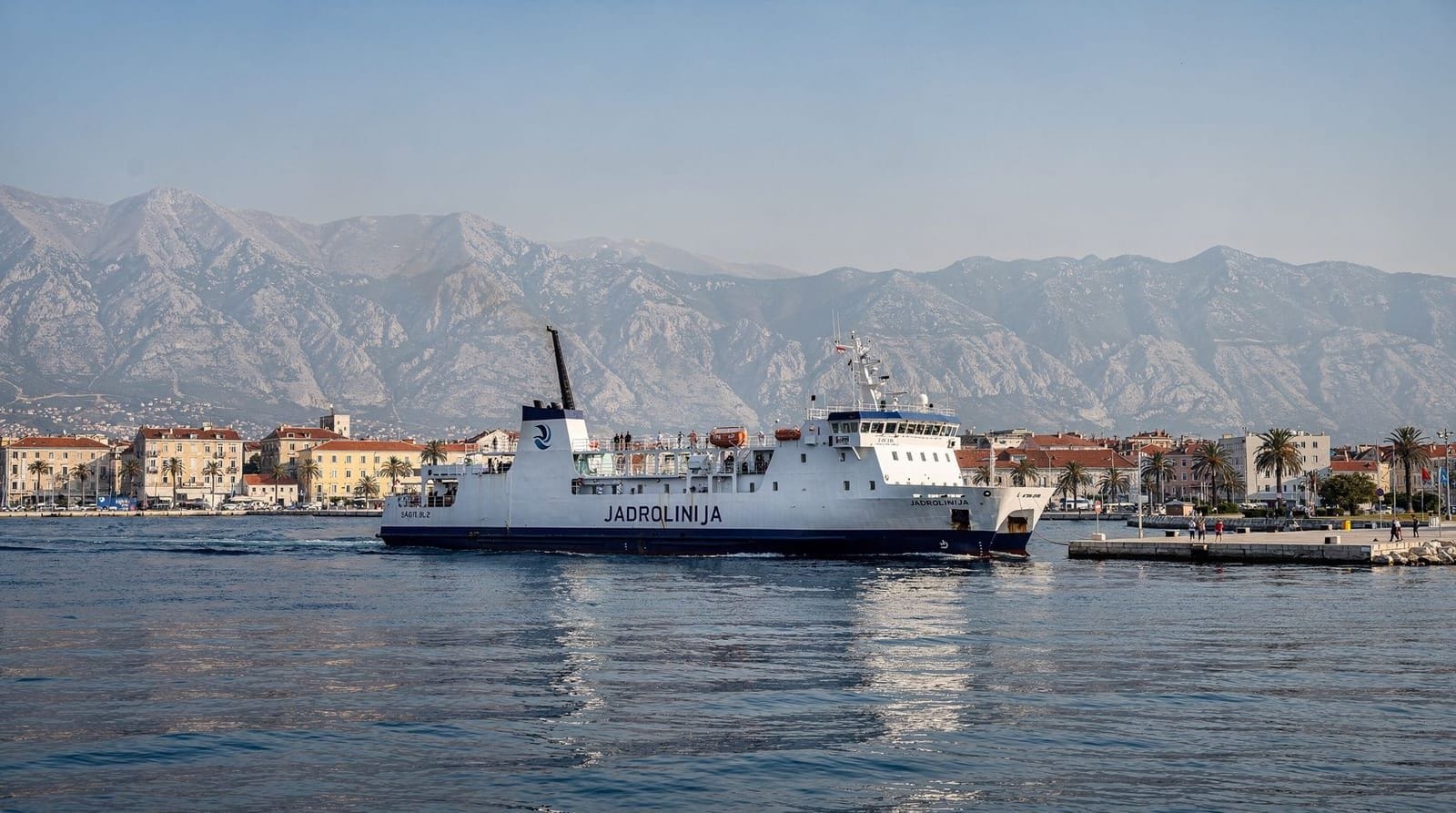
Ferry: Jadrolinija catamaran Split–Hvar Town, 1 hour; car ferry Split–Stari Grad, 1 hour 50 min (Stari Grad is on the opposite side of the island from Hvar Town). Krilo catamarans also operate.
Vis — Authenticity and Croatia’s Best Beaches
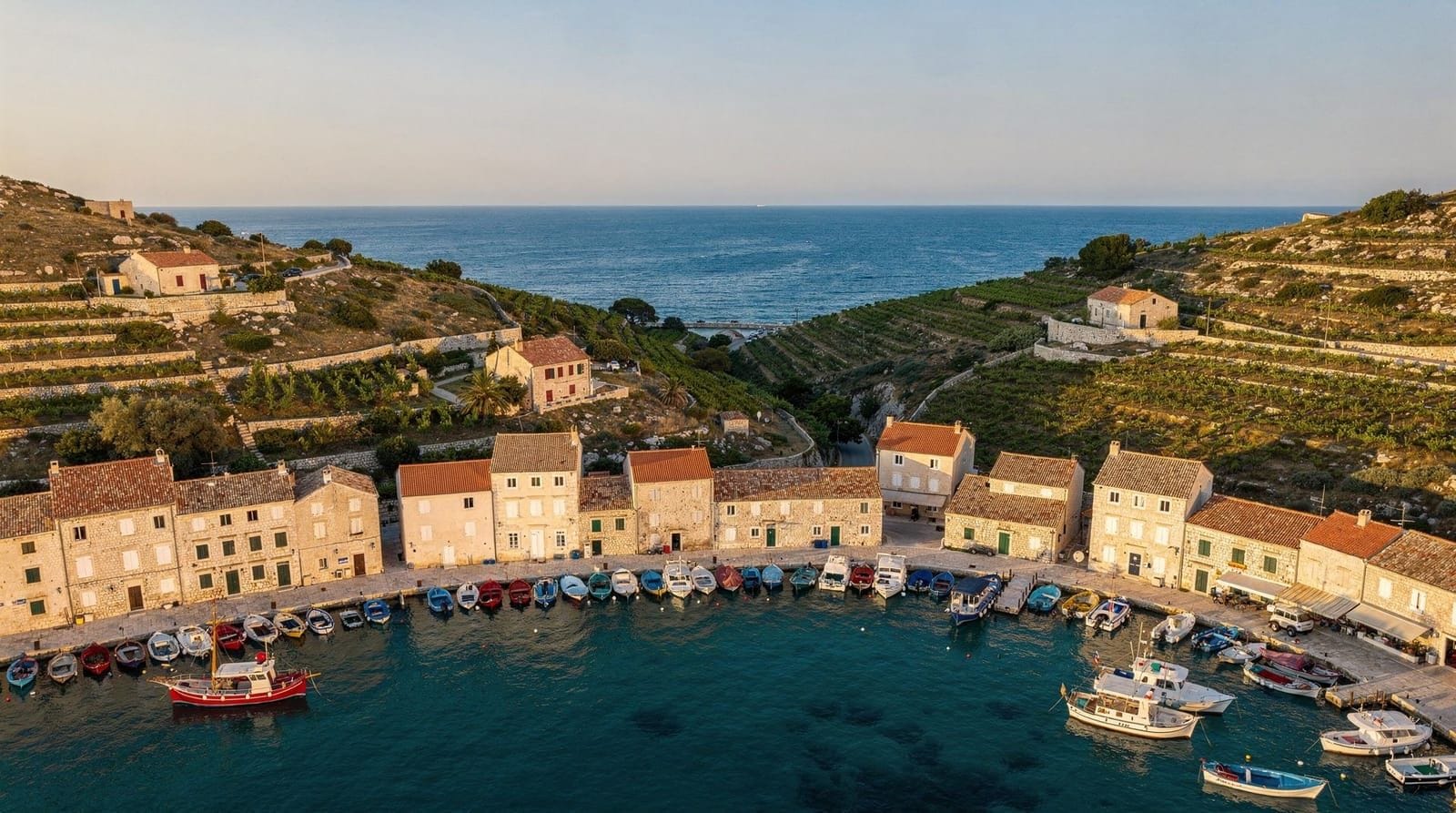
Vis is the furthest of the main Dalmatian islands from the mainland — about 2 h 20 min by catamaran from Split — and that distance has preserved something rare: an island that feels genuinely Croatian rather than arranged for tourists.
The military base that kept Vis off-limits to foreigners until 1989 is now a footnote, but its legacy is visible. Unlike Hvar, Vis developed its tourism ecosystem slowly and late. The result is a place where local families still run the restaurants, where you can find a table without a reservation in June and where the villages of Vis Town and Komiža have not been hollowed out by souvenir shops.
The beaches are exceptional. Stiniva — a narrow pebble cove flanked by towering cliffs, accessible only by boat or a steep footpath — appears on every European best-beaches list. Srebrna, Milna and Rukavac are far less visited than comparable coves on Hvar or Brač. The water clarity around Vis is outstanding.
For the Blue Cave at Biševo: Komiža on Vis is the main departure point for the Blue Cave excursion boats. If you base yourself on Vis, you can do this trip independently rather than on a large group tour from Split.
Ferry: Jadrolinija catamaran Split–Vis, approximately 2 h 20 min. One or two sailings per day in shoulder season, more in peak. Foot passengers only on the fast catamaran; car ferry also operates (slower).
Brač — Zlatni Rat and Easy Day Trips
Brač is the largest of the central Dalmatian islands and the easiest to reach from Split — the car ferry to Supetar takes 50 minutes and runs more than 10 times daily in summer. It is also the most popular day-trip island, primarily because of Zlatni Rat (Golden Cape), the distinctive shingle spit near Bol that changes shape with the current and appears in virtually every Croatia travel photograph.
Zlatni Rat is genuinely impressive in person — the turquoise water, the wind conditions that make it excellent for windsurfing, the pebble that shifts under your feet. It is also very busy in July and August. Arrive early or accept the crowds.
Beyond Zlatni Rat, Brač has a stone-quarry heritage (Diocletian’s Palace in Split was built with Brač limestone), a lovely drive through the interior village of Škrip and a relaxed atmosphere in Supetar that makes it a good base for families who want a quiet holiday with day-trip options to Split.
Compared to Hvar: Brač is cheaper, calmer and less scenically dramatic. It is the practical choice for families or travellers who want island life without Hvar’s prices or nightlife.
Korčula — Old Town, Wine and Culture
Korčula’s old town is often called “Little Dubrovnik” and the comparison holds — a walled medieval grid of narrow lanes on a small peninsula, with towers and gates built against Ottoman raids. It is genuinely one of the most beautiful old towns in Dalmatia, and it receives a fraction of Dubrovnik’s visitors.
The island also has strong wine credentials. Pošip and Grk, two indigenous white grape varieties, grow almost exclusively on Korčula and produce excellent dry whites. The village of Lumbarda, at the island’s eastern tip, is Grk territory and worth the drive. The Korčula wine region produces bottles you will not easily find outside Croatia.
Access: Jadrolinija catamaran from Split takes around 3 hours to Korčula Town. Alternatively, Dubrovnik is the southern base — catamarans connect Dubrovnik and Korčula in about 2 hours. The island is accessible from both ends of the Dalmatian coast.
Honest comparison: Korčula does not have Hvar’s nightlife, Vis’s beaches or Mljet’s nature. What it has is a complete, balanced island experience — culture, wine, good food, manageable crowds and real local life — that rewards travellers who want depth over glamour.
Mljet — National Park, Lakes and Total Quiet
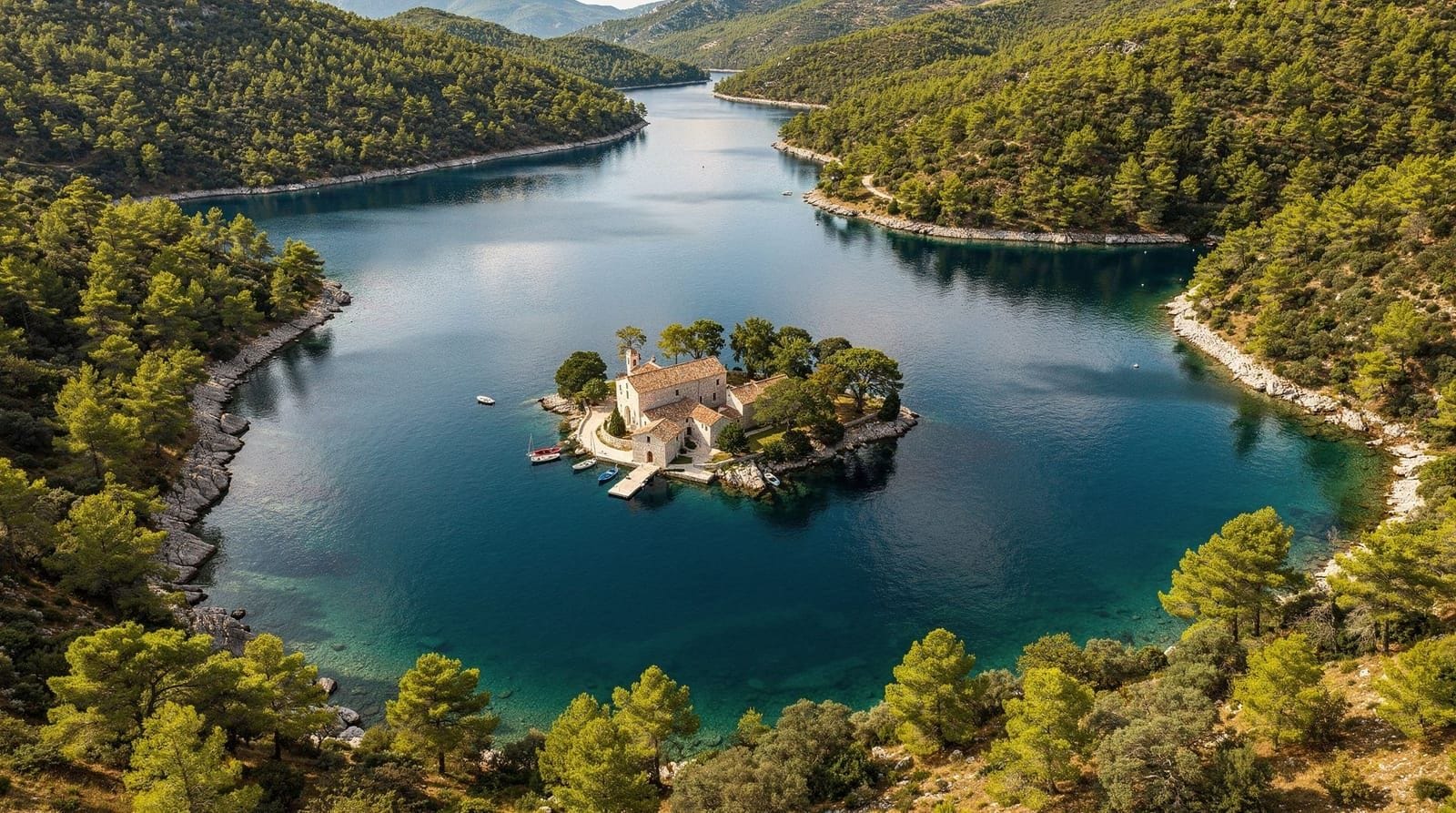
Mljet is where you go to disappear. The Mljet island guide has the fuller detail on park routes and where to stay. The western third of the island is a national park enclosing two saltwater lakes — Malo and Veliko Jezero — connected to the sea by a narrow channel. A small island in the middle of Veliko Jezero holds a 12th-century Benedictine monastery. You can swim in the lakes, rent a bicycle and cycle the park road, or simply sit by the water and read.
The park admission fee (approximately €15 in 2026) covers the shuttle boat to the island monastery and use of the park paths. Outside the park, the villages of Pomena and Polače are small, quiet and almost entirely oriented around tourism from May to October.
Honest note: Mljet is not for everyone. There is little nightlife, the restaurant choice is limited and the island has very few ATMs. It is excellent for couples wanting quiet and for walkers who will appreciate the well-marked paths through the park. It is not ideal if you want beach-bar socialising or a variety of restaurants.
Ferry: Jadrolinija catamaran from Dubrovnik to Polače (Mljet) takes about 1 hour 50 min. Alternatively, the Split–Dubrovnik coastal catamaran stops at Mljet in summer, making it possible to island-hop in one direction without backtracking.
The Supporting Cast — Elaphiti, Šolta and Pag
Three islands that deserve mention outside the main rankings:
Elaphiti Islands (Šipan, Lopud, Koločep) — a cluster of small islands accessible from Dubrovnik by ferry in 45 minutes to 1 hour 30 min. Lopud is the most visited, with a sandy beach (Šunj) rare enough in Croatia to warrant its own reputation. They are best done as a day trip from Dubrovnik rather than as an overnight destination.
Šolta — 20 km from Split, completely off the radar of most tourists. The village of Maslinica has a small castle and excellent fish restaurants. Šolta produces some of the best olive oil in Dalmatia. If you want to experience island life without anyone around, this is the place, and it works well as a half-day boat trip if you’re already based in Split and want a taste of the quiet-island experience without committing an overnight stay to it.
Pag — famous for two things that could not be more different: Pag cheese (a sharp, aged sheep’s milk cheese eaten across Croatia) and Zrce Beach, which hosts open-air club events in summer that rival Ibiza for volume and intensity. Decide which Pag you are going for before you book.
The Kvarner islands — a different itinerary entirely
Everything above is Dalmatia — the classic south-coast island run from Split or Dubrovnik. If your trip is built around Zagreb, Istria or Rijeka instead, the Kvarner Gulf islands are a completely separate and equally valid itinerary, with a cooler, greener character than the karst-and-lavender look of Hvar or Vis.
Krk is the largest Adriatic island and the only one connected to the mainland by bridge — no ferry required. It suits travellers who want island scenery without ferry logistics, and it has a genuinely good beach infrastructure (see the accessible Croatia guide for specifics).
Rab has a compact, elegant old town on a peninsula and one of Croatia’s few proper sandy beaches at Rajska Plaža. It is quieter than Krk and pairs naturally with a Kvarner-region itinerary rather than a Dalmatian one.
Neither island fits neatly into a Split-based island-hopping week — they belong to a northern Adriatic trip built around Rijeka, Opatija or Istria instead of Dalmatia. Ferries and connections between the two regions are limited and slow, so treat “Dalmatian islands” and “Kvarner islands” as two separate trip concepts rather than a single itinerary spanning both, unless you have two weeks or more and don’t mind a long transit day in between.
Which Island Should You Choose?
A quick-reference framework:
| If you want… | Go to… |
|---|---|
| Nightlife and glamour | Hvar |
| Authenticity and great beaches | Vis |
| Culture, wine and history | Korčula |
| Nature, lakes and silence | Mljet |
| Easy day trip from Split | Brač |
| Quiet islands near Dubrovnik | Elaphiti Islands |
For most first-time visitors combining islands with Split and Dubrovnik, the classic combination of Hvar plus one quieter island (Vis or Korčula) covers the range well. See the island hopping itinerary for a practical week-by-week breakdown, or the best islands near Split guide if you’re keeping your whole trip Split-based.
How many islands fit in your trip
| Trip length | Realistic islands | Notes |
|---|---|---|
| Day trip only | Brač, or Hvar/Pakleni as a long day | No overnight logistics needed |
| 3–4 days | One island (Hvar or Vis) plus Split | Enough time to actually settle in |
| 1 week | Two islands, e.g. Hvar + Vis or Hvar + Korčula | The comfortable standard combination |
| 10–14 days | Three islands, e.g. Brač + Hvar + Vis or Korčula + Mljet | Add a rest day between ferry transfers |
| Sailing charter (1 week) | 4–6 anchorages across several islands | See bareboat vs skippered for how a charter changes the logistics |
Practical Island Logistics
Ferries: Jadrolinija is the national operator and covers all main routes. Krilo and TP-Line run competing fast catamarans on some routes (Split–Hvar, Split–Vis). Check the Croatia ferries guide for current timetables.
Cars: You can bring a car on the Jadrolinija car ferries but it adds cost and planning. Most island towns are compact enough to manage on foot, with water taxis reaching beaches. For exploring island interiors (especially Brač and Korčula), a car or scooter rental on arrival is the better option.
Accommodation: Book well ahead for Hvar in July and August — this is not optional. Vis, Korčula and Mljet have more capacity relative to demand, but good apartments still fill by May for peak season dates.
Money: Most island restaurants accept cards, but have cash for smaller establishments, ferry kiosks and markets. ATMs exist in all main towns but may run out of cash on busy weekends.
Frequently asked questions about Best Croatian Islands
Which Croatian island is best for families?
Brač and Korčula are the top picks for families. Brač has Bol with calm, shallow waters near Zlatni Rat, plenty of restaurants and easy ferry access from Split. Korčula has a manageable old town, safe swimming bays and a calmer pace than Hvar.Which island is the least touristy in Croatia?
Vis is the most authentic of the main islands — it was closed to foreigners until 1989 due to a Yugoslav military base, giving it an unspoiled character. Mljet is quieter still, though much smaller and more nature-focused. Šolta, just 20 km from Split, sees very few package tourists.How do I get to the Croatian islands from Split?
Jadrolinija operates car ferries and fast catamarans from Split ferry terminal. Hvar is 50 min–1.5 h (catamaran to Hvar Town or car ferry to Stari Grad). Brač (Supetar) is 50 min by car ferry. Vis is around 2 h 20 min by catamaran. Krilo and TP-Line run competing catamarans on some routes.Is Hvar worth visiting despite the crowds?
Yes, but with caveats. The lavender-covered hillsides, the Renaissance loggia, the Pakleni Islands just offshore — Hvar genuinely earns its reputation. The crowds peak in late July and August when Hvar Town bars stay open until 4 am and accommodation prices double. Come in June or September for the same beauty at half the stress.Which Croatian island is best for beaches?
Vis wins for beaches — Stiniva cove is repeatedly named one of Europe's most beautiful beaches, and Srebrna, Milna and Rukavac are superb. Brač has iconic Zlatni Rat. Hvar has beautiful Dubovica cove. All Croatian island beaches are pebble or rock rather than sand, except a few small sandy patches.Can I do multiple islands in one week?
Two to three islands is comfortable in a week — enough to slow down and actually experience each place. A classic route: Split base, then Hvar (2 nights), Korčula or Vis (2 nights). Adding Brač as a day trip from Split before departing works well without feeling rushed.Which island is best for sailing as a base?
Hvar is the sailing capital of Dalmatia — its marinas at Hvar Town and Palmižana handle hundreds of yachts, provisioning is easy and the Pakleni Islands make ideal day anchorages. Vis is a favourite stopover for more serious sailors who want quiet coves and good fish restaurants.
Top experiences
Bookable activities with verified prices and instant confirmation on GetYourGuide.
Top experiences
Best-rated activities across GetYourGuide and Viator.

Blue cave, Mamma Mia and Hvar, 5 islands speedboat tour
- Viator

Blue Cave and Hvar Tour - 5 Islands Tour from Split and Trogir
- Viator

Blue cave, Mama Mia and Hvar, 5 Island Speedboat Tour from Trogir
- Viator

Medulin-Kamenjak 5h boat trip ALL-INCLUSIVE drinks on Sandra Boat
- Viator

Medulin: All-Inclusive Kraken Boat Tour to Kamenjak Cave & Levan
- Viator

3Hour ALL-INCLUSIVE Sunset Dolphin Watching from Medulin onSandra
- Viator