Zagorje and Trakošćan travel guide
The Zagorje hills north of Zagreb offer rolling vineyards, thermal spas, baroque pilgrimage churches, and Trakošćan — Croatia's most photogenic…
Quick facts
- Best time
- April–October; autumn for wine harvest
- Days needed
- 1–2 days
- Getting there
- Car from Zagreb (1 hour); buses to Varaždin and Krapina
- Budget per day
- €45–€90
The Zagorje region north of Zagreb is a world away from the Adriatic coast — an undulating landscape of forested hills, vineyard terraces, baroque churches on hilltops, small manor houses, and medieval castles that will surprise visitors expecting Croatia to be all sun and sea. The region contains some of the country’s richest historical and natural heritage, and sees almost no international tourists, which makes it a genuinely off-the-radar discovery.
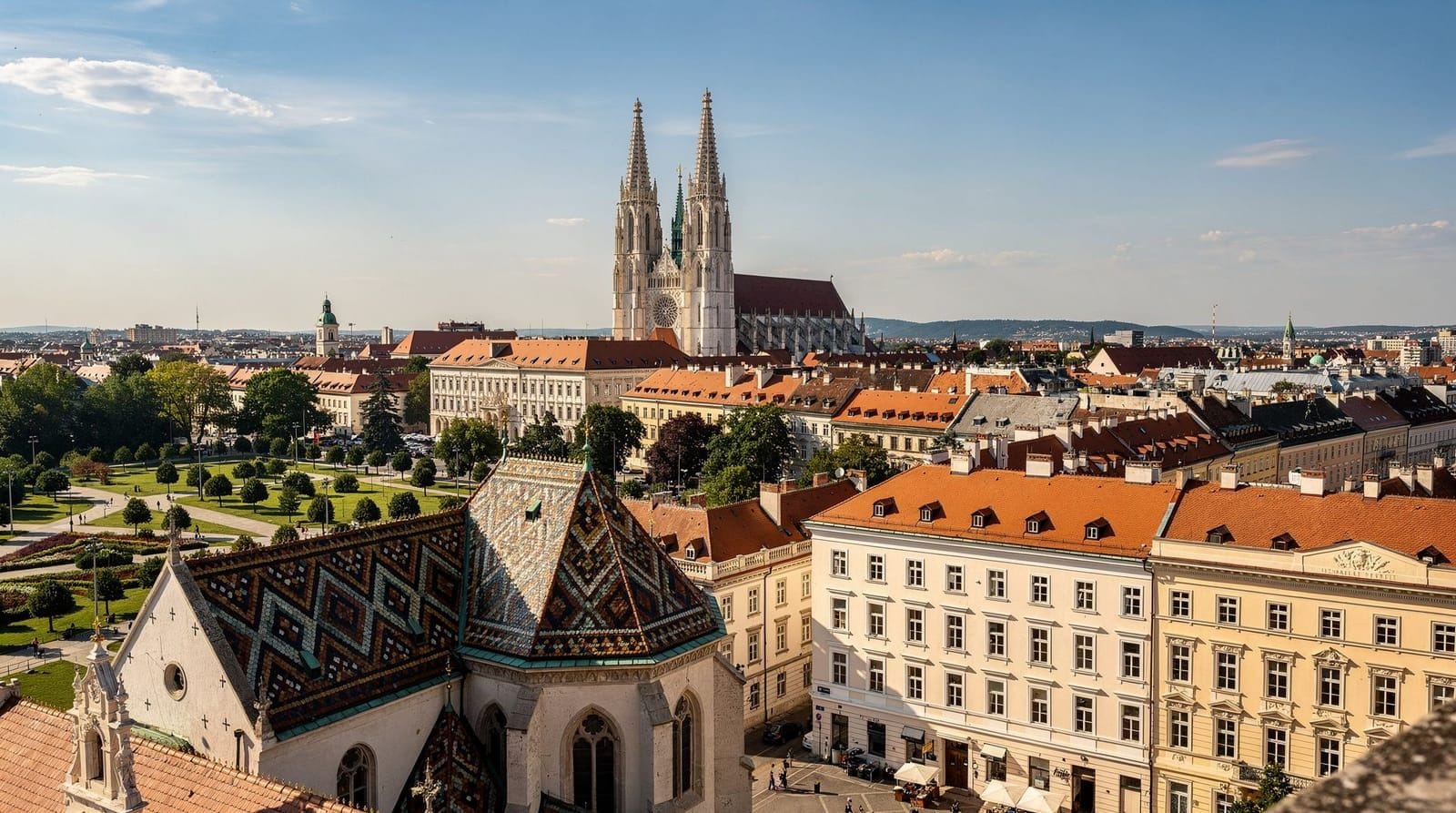
The focal point for most visitors is Trakošćan Castle, a Gothic-Renaissance fortress that sits above a mirror-still lake surrounded by parkland — one of the most photogenic historic sites in continental Croatia. But the wider Zagorje region rewards exploration: the Krapina Neanderthal Museum, the baroque pilgrimage church at Marija Bistrica, vineyards producing some of Croatia’s finest white wines, and the genteel 18th-century town of Varaždin.
Trakošćan Castle
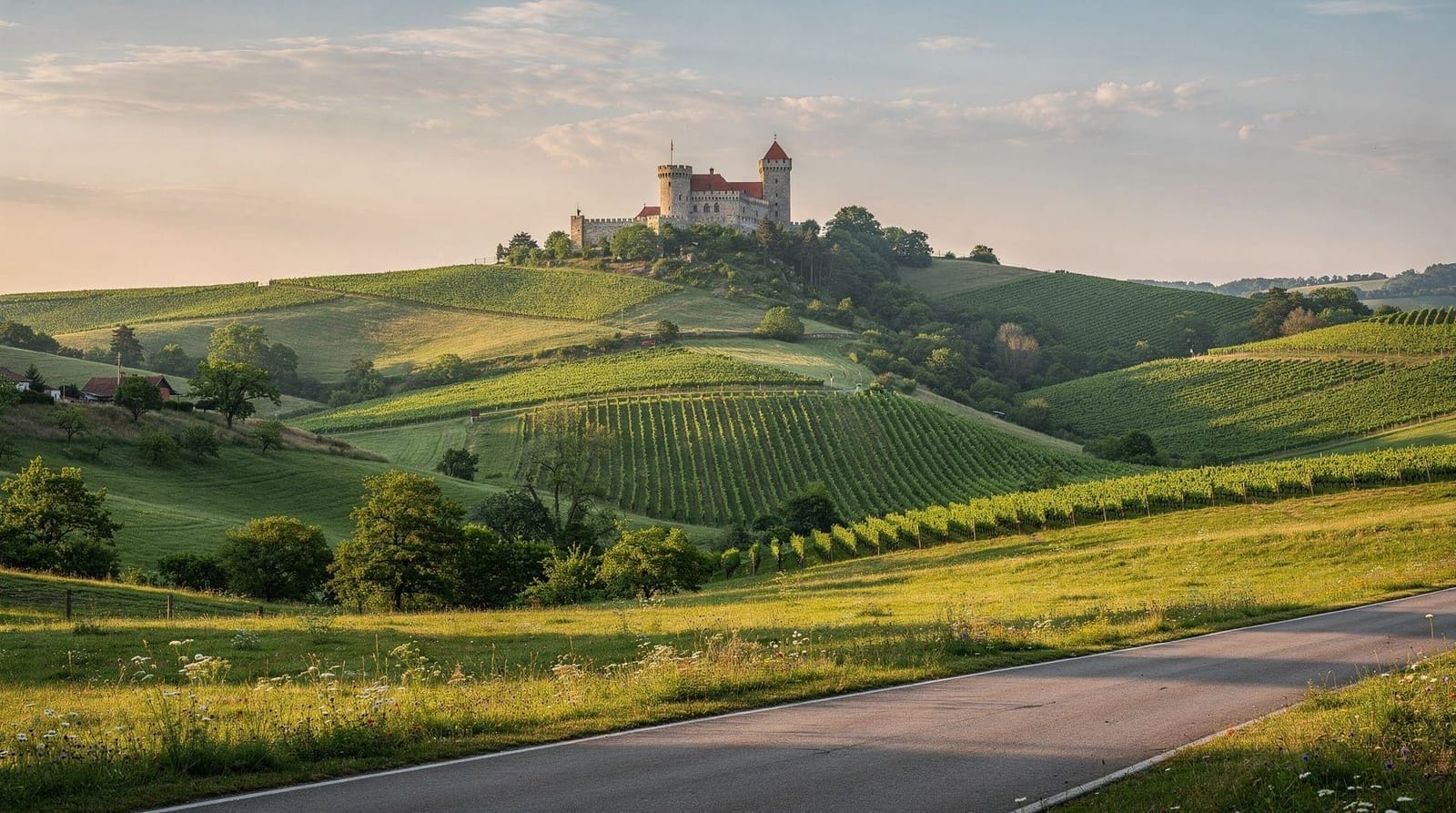
Trakošćan Castle (Dvorac Trakošćan) stands above a lake on a wooded hillside near Krapina, first mentioned in documents in 1334 and transformed into its current neo-Gothic form in the 19th century by the Drašković family. It is now a museum with 24 period rooms containing furniture, weaponry, portraits, and household objects spanning five centuries of aristocratic life.
The exterior view — white walls rising above the dark water of the artificial lake, with forested hills behind — is one of the classic images of continental Croatia. The 15-minute walk around the lake offers multiple photographic perspectives. In spring, wildflowers carpet the parkland; in autumn, the beeches and oaks turn gold.
The castle museum (entrance approximately €5–8, prices update seasonally) is interesting without being extraordinary — worth an hour inside, then another hour walking the lake circuit and having coffee at the small café by the water.
Practical notes: Trakošćan is 75 km north of Zagreb, best reached by car in about 1 hour. From Varaždin, it is a 40-minute drive. A small number of buses run from Krapina, but a car is strongly recommended for flexibility.
Krapina Neanderthal Museum
The Krapina Neanderthal Museum, opened in 2010, is one of the finest dedicated prehistoric museums in Europe and almost completely unknown outside Croatia. The site — Hušnjakovo hill above the town of Krapina — is where Dragutin Gorjanović-Kramberger excavated the remains of around 80 Neanderthal individuals between 1899 and 1905: one of the most significant Neanderthal fossil sites ever found.
The museum uses the original excavation site as its backdrop, with a dramatically designed building that leads visitors through the entire story of human evolution using high-quality exhibits, life-size reconstructions, and the actual fossil finds. Entry is around €10; allow 2 hours. It is entirely possible to combine Krapina and Trakošćan in a single day trip from Zagreb — they are only 20 km apart.
Varaždin
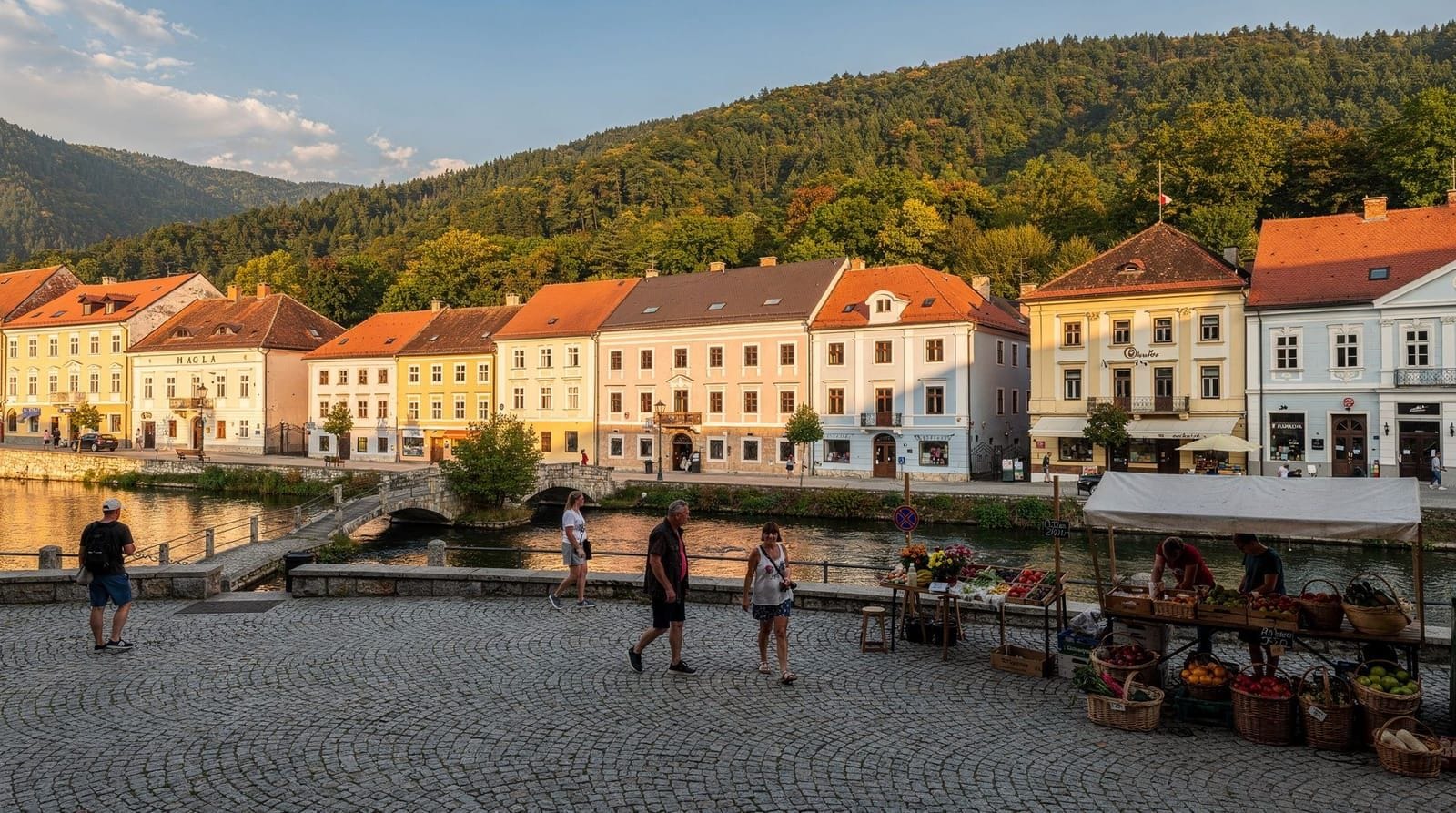
Varaždin, 80 km north of Zagreb, is a baroque jewel — a compact old town of immaculately preserved 17th–18th century architecture that served as Croatia’s capital from 1756 to 1776. The pedestrianised centre, with its pastel-coloured baroque mansions and the impressive Varaždin Castle (now a regional museum with a fine collection of period furniture), is one of the most attractive town centres in continental Croatia.
The Varaždin Cemetery, designed in 1905, is a quiet outdoor sculpture gallery of Art Nouveau and Historicist monuments worth a short visit. Varaždin Baroque Evenings (September) is a prestigious classical music festival held in the baroque churches and the castle courtyard.
From Varaždin, the drive south to Trakošćan (40 minutes) and then back to Zagreb makes a good full-day loop.
Zagorje wine
The Zagorje sub-region falls within Croatia’s Kontinentalna Hrvatska (Continental Croatia) wine zone. The main grape variety is Riesling (Italian Riesling / Graševina) along with Pinot Blanc and Traminer. Wines are crisp, aromatic, and medium-bodied — significantly different from the robust Plavac Mali reds of Dalmatia.
Roadside wine cellars (vinski podrumi) dot the hillsides; many offer tastings and direct sales. The village of Štatenberk near Klanjec is a small wine producer of note.
Marija Bistrica
Marija Bistrica, 35 km north of Zagreb, is Croatia’s national Marian shrine — a baroque pilgrimage church containing a carved wooden Black Madonna dating to the 15th century. Hundreds of thousands of pilgrims visit each year, particularly on major feast days. The church itself is architecturally interesting (the papal visit in 1998 left a large outdoor altar), and the road leading to it is lined with the Stations of the Cross on a hillside behind the church.
Thermal spas of Zagorje
The Zagorje region has several thermal spa resorts using geothermal water heated to 30–36°C. Terme Tuhelj (near Krapina) and Terme Sveti Martin (near Čakovec, slightly further north) are the main options. These are popular with Croatian domestic tourists — straightforward wellness experiences rather than luxury destinations, but good value.
Practical tips for visiting the region
Best combination for a full day from Zagreb: Leave Zagreb by 8:30am; drive north to Krapina (1 hour); visit the Neanderthal Museum (2 hours); drive to Trakošćan (30 minutes); lake walk and castle museum (1.5 hours); drive to Varaždin (40 minutes); old town walk (2 hours); dinner in Varaždin; drive back to Zagreb (1 hour). A satisfying 12-hour day covering the three main highlights of the region.
Driving tips: The A4 motorway (Zagreb–Varaždin) is the fastest route north. Exits for Krapina are well-signed. Between Krapina and Trakošćan, the regional road D307 passes through pleasant countryside; the last 5 km to the castle are on a narrower road with good signage.
For wine enthusiasts: A self-guided wine cellar visit is easiest near the town of Štatenberk (between Krapina and Klanjec) and in the Petrovsko area south of Krapina. Most small producers sell directly from their cellars (podrumi) on the property, usually with a simple tasting. No appointment necessary in most cases; a willingness to buy a bottle or two is expected.
Photography tip for Trakošćan: The classic castle-reflected-in-lake shot is taken from the eastern bank of the lake, approximately 200 metres south of the castle entrance. Best in morning light (before 10am) when the castle face is lit and the lake surface is calm. Autumn (October) adds golden beech foliage to the composition.
Getting to and around Zagorje
A car is strongly recommended for exploring the Zagorje region. The main sights (Trakošćan, Krapina, Varaždin) are on reasonable roads but not well-connected by public transport. Trains from Zagreb serve Varaždin (1.5 hours) and Krapina (1 hour) with reasonable frequency. Day tours from Zagreb operate to Trakošćan and Varaždin in summer.
History in brief
The Zagorje region has been inhabited since prehistoric times — the Krapina Neanderthal site is among the best evidence of this — but its cultural character was forged in the early modern period under Habsburg rule. After the Ottoman advance was checked at the Battle of Sisak in 1593, the Croatian interior became more secure, and the Croatian nobility began building the manor houses (dvorci) and small castles that dot the Zagorje hills today.
Trakošćan itself was first documented in 1334 but its current neo-Gothic form is largely a 19th-century creation. The Drašković family — one of the most powerful in the Croatian aristocracy — commissioned the transformation of a medieval tower into the romantic castle visible today, following the fashionable neo-Gothic aesthetic of the 1840s–1870s. The artificial lake was created at the same time, damming a small stream to provide the picturesque water feature that completes the visual composition.
Varaždin’s importance is also historical: the city served as the capital of Croatia from 1756 to 1776, when a fire destroyed much of the town and the administrative functions were transferred to Zagreb. The fire paradoxically preserved Varaždin’s baroque character — it was rebuilt in a unified baroque style and never underwent the later Historicist redevelopment that changed Zagreb’s appearance.
Day trips and a suggested circuit
A well-planned full day from Zagreb can cover the best of Zagorje without feeling rushed. The following route works well by car:
Morning: Leave Zagreb by 8am, drive north to Krapina (1 hour, A4 motorway). Visit the Krapina Neanderthal Museum (allow 2 hours — it genuinely rewards unhurried attention).
Late morning/lunch: Drive to Trakošćan (20 km from Krapina, 30 minutes). Walk the lake circuit and visit the castle museum (1.5–2 hours). Lunch at the castle café or a roadside konoba in the area.
Afternoon: Drive to Varaždin (40 km from Trakošćan, 40 minutes). Walk the baroque old town, visit the castle museum, and stop for coffee on the pedestrian zone. Allow 1.5–2 hours.
Evening return: Drive south to Zagreb via the A4 motorway (1 hour). Total driving for the day: around 2.5 hours. A comfortable, unhurried circuit.
Alternative (wine focus): Head north to Varaždin first, then turn west toward Trakošćan and loop back via Krapina. Add a stop at a roadside vineyard near Štatenberk or Klanjec for a cellar visit and tasting (most welcome visitors without appointment in daylight hours; purchase a bottle to confirm the welcome).
What to skip — honest notes
The Zagorje tourist road (Zagorska magistrala) can be misleadingly marked on maps as a scenic route, but sections pass through industrial areas near Zabok and Krapina that are far less attractive than the signage implies. Stick to the A4 motorway for transit and detour onto local roads only for specific destinations.
The souvenir shops at Trakošćan — the castle approach road has tourist shops selling the same generic Croatian handicrafts as everywhere else. If you want genuine Zagorje products, stop instead at a roadside wine cellar or a local market.
Marija Bistrica on peak pilgrimage days — the pilgrimage church is worth a visit, but on major Catholic feast days (15 August being the most crowded) the village is overrun with pilgrims and buses. A Tuesday morning visit gives the architecture and atmosphere without the crowd.
Getting around in detail
A car is strongly recommended — not just for convenience but because the best of Zagorje is scattered across a 60 km radius of rolling countryside. The distances between main sights are manageable but public transport connections are infrequent.
From Zagreb: trains serve Varaždin and Krapina with good frequency; both make workable bases for a car-free visit to their immediate surroundings. Taxis from Krapina to Trakošćan cost around €25–35 return.
Day tours from Zagreb that include Trakošćan and Varaždin depart in summer and handle all logistics; a good option for visitors who prefer guided structure over independent driving.
Where to stay in Zagorje
Most visitors to Zagorje base themselves in Zagreb (1 hour away) and treat the region as a day trip. However, an overnight adds a different dimension and allows for more relaxed exploration.
Varaždin is the best base for multi-day Zagorje exploration: a beautiful baroque city with a solid range of hotels, good restaurants, and direct access to Trakošćan (40 minutes) and Krapina (50 minutes). Hotel Varaždin and Hotel Turist in the old town area are reliable mid-range options.
Thermal spa hotels: Terme Tuhelj and Terme Sveti Martin offer resort-style accommodation with pool and spa access — good for a complete wellness break in the Zagorje countryside. These are popular with Croatian and Slovenian domestic tourists.
Rural guesthouses (seoska domaćinstva): The Zagorje countryside has a tradition of agrotourism — family farms that offer rooms, home-cooked meals, and a direct experience of rural Zagorje life. This is genuinely the best way to experience the region authentically. Booking requires research (Croatian tourism portals or direct contact rather than mainstream platforms) but rewards the effort.
Where to eat in Zagorje
Varaždin restaurants:
- Verglač in the old town — consistently recommended for traditional Croatian and Zagorje dishes in an atmospheric vaulted setting.
- Restaurant Zlatna Guska (Golden Goose) — a well-established city restaurant with solid regional cooking and a good wine list.
- Pekara Mlinarček — the town’s best bakery for morning pastries and burek.
Near Trakošćan:
- The café at the castle is adequate for coffee and a snack but unremarkable for food.
- The village of Krapina (20 km east) has several konobas with local Zagorje cooking; ask locally for current recommendations.
General Zagorje dining note: The local dish to seek out is zagorski štrukli — a baked or boiled pastry filled with cottage cheese and cream that is different from (and arguably better than) the Zagreb version. Every family has their preferred recipe; a good seoska domaćinstvo will serve a homemade version that commercial restaurants cannot match.
Top-rated experiences in Zagorje and Trakošćan travel guide
Best-rated activities across GetYourGuide and Viator.

Old Zagreb Private Tour
- Viator

Plitvice Lakes National Park Admission Ticket
- Viator

Kayaking Mreznica Waterfalls close to Plitvice Lakes
- Viator

Zagreb Unveiled: Private walking tour with a local guide
- Viator

Kayaking on Upper Mreznica River - Slunj, Croatia
- Viator

Experience Zagreb with a local - Private Walking Tour
- Viator