Renting a Car in Croatia — Complete Guide 2026
Is it worth renting a car in Croatia?
It depends on your itinerary. A car is excellent for Istria, the Dalmatian hinterland, national parks (Plitvice, Krka) and flexible coastal road trips. It is far less useful — and often a hindrance — in Dubrovnik and Hvar Town, where parking is scarce and expensive. Island hopping works well without a car.
Croatia’s coastline and islands are spectacular from a ferry, but much of what makes the country extraordinary — Istria’s truffle-hunting hills, the Plitvice canyon, the winemaking villages of the Pelješac peninsula — is best reached with your own wheels. This guide covers everything from choosing a pick-up location to navigating the insurance minefield.
| Best for | Istria, national parks, Dalmatian hinterland, road trips |
| Skip it for | Dubrovnik or Hvar Town city breaks — parking is scarce |
| Cost | Around €30–€60/day low season, €50–€90/day peak |
| Booking window | 4–6 weeks ahead for July–August |
| Best pick-up | Split Airport or Zagreb Airport |
Do you actually need a car?
Before booking, be honest about your itinerary. A rental car adds genuine value for:
- Istria: The region’s charm is its hilltop villages (Motovun, Grožnjan, Oprtalj) and rural konobas — impossible to reach well by public transport.
- National parks: Plitvice Lakes and Krka are reachable by organised tours or bus, but a car lets you arrive early (before the crowds), combine parks in one day, and explore the surrounding area.
- The Dalmatian hinterland: Imotski, the Cetina canyon, the wine villages of Dingač — none are on regular bus routes.
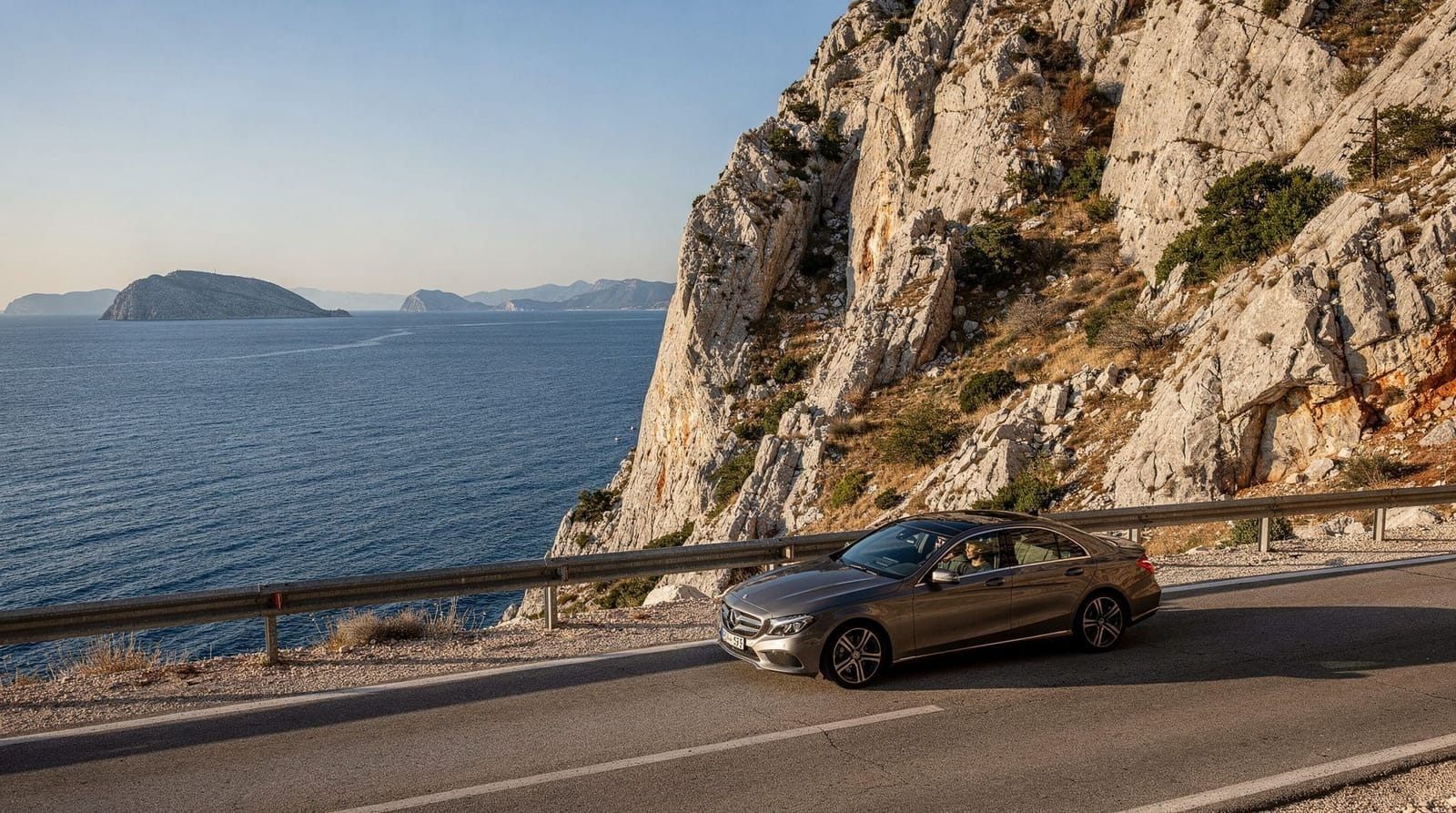
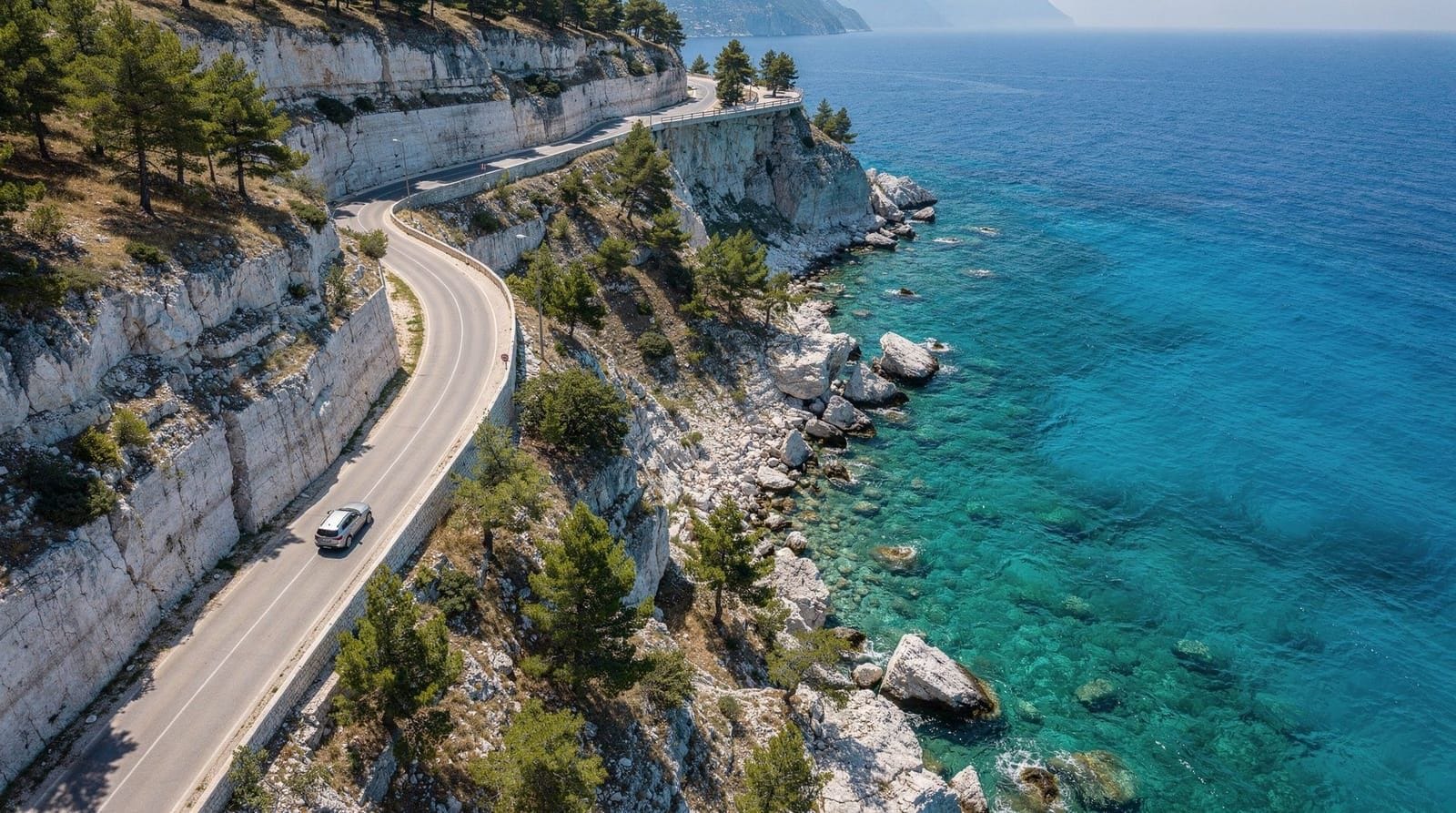
- Flexible coastal road-trips: The Adriatic Highway (D8) is one of Europe’s great scenic drives.
A car adds little value for:
- Dubrovnik city break: The old town is pedestrianised; parking costs €3–€5/hour; traffic jams in summer are extreme. Use transfers or buses.
- Hvar Town: Similarly, cars must park far from the centre. The car-ferry port (Stari Grad) is 20 km away by road.
- Zagreb city breaks: Public transport is excellent and parking in the centre is expensive.
Where to pick up a rental car
Split Airport (SPU)
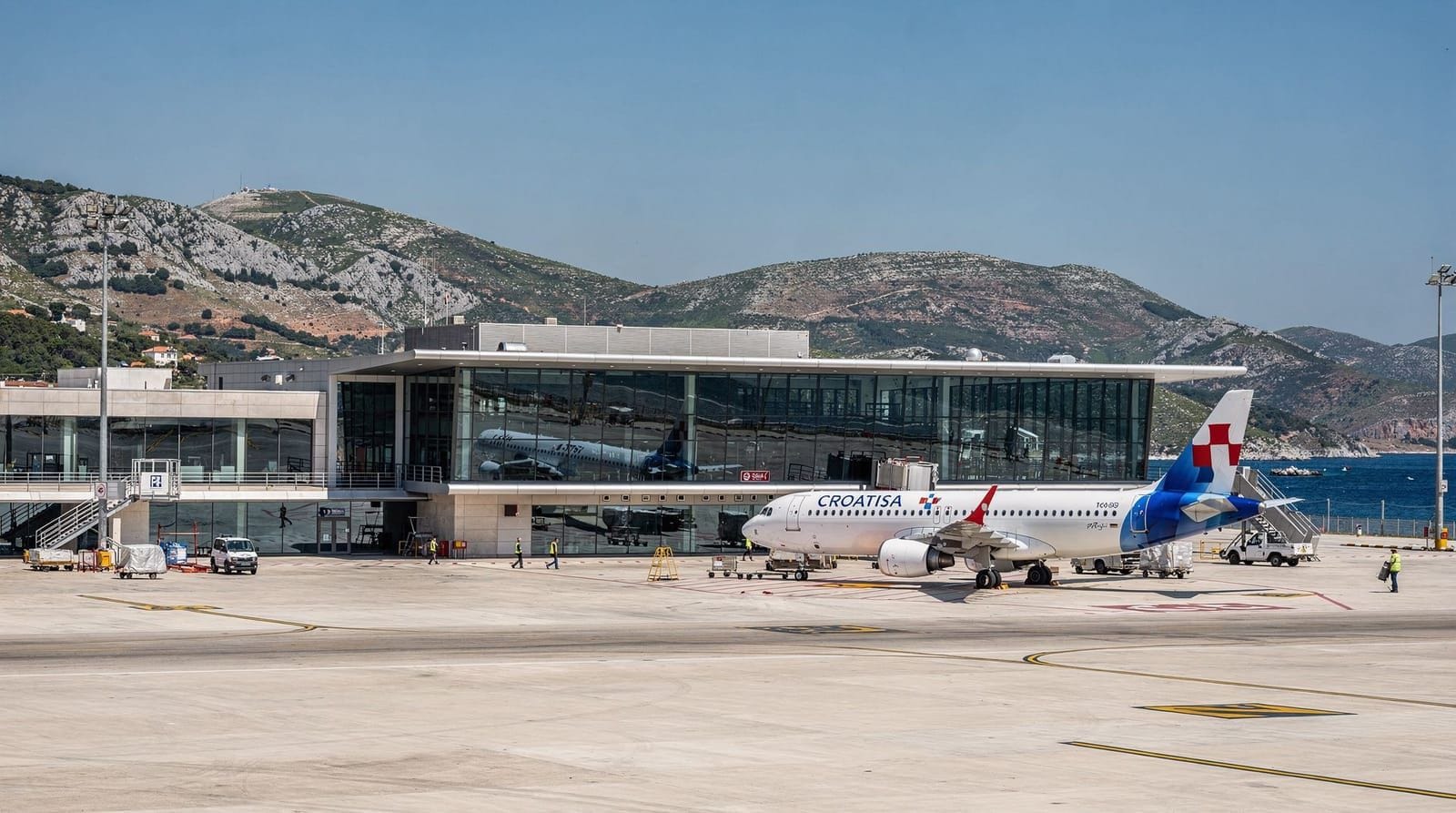
The best pick-up for Dalmatia. All major rental companies have desks at the airport. From here you can head south along the coast, north toward Plitvice, or west through the Dalmatian hinterland. One-way rentals to Dubrovnik or Zagreb are well-established.
Dubrovnik Airport (DBV)
Good if you’re starting a southern Dalmatia itinerary. Be aware that leaving Dubrovnik by car toward Bosnia (the Neum corridor) requires a border crossing — the Pelješac Bridge bypasses this and keeps you in Croatia. Many visitors pick up here and drive the Pelješac peninsula.
Zagreb Airport (ZAG)
Ideal if starting an inland-focused trip (Plitvice, Istria, Slavonia) or a north-to-south road trip. Zagreb is also the hub for one-way rentals that end in Split.
City offices
Split and Dubrovnik city centres have rental offices useful for drop-offs or if you’d rather not pay the airport surcharge. Arriving by bus? City pick-up avoids the taxi cost to the airport.
Rental companies operating in Croatia
All major international companies are present — Europcar, Hertz, Avis, Budget, Sixt — alongside local operators like Oryx, Dollar and E-Car. Local companies are often cheaper but have smaller fleets and less predictable quality control. For a one-way rental or if you need roadside assistance across borders, a major international brand offers better backup.
Comparison tip: Use Rentalcars.com or AutoEurope to compare prices across companies for the same dates. Then check the rental company’s own website — sometimes direct booking is cheaper and the T&Cs are clearer.
Understanding insurance in Croatia
Croatian rental cars come with Collision Damage Waiver (CDW) as a mandatory minimum — this is not optional. CDW limits your financial exposure if you damage the car, but usually leaves you liable for an excess (franchise) of €800–€2,000.
Super CDW (SCDW) or “zero excess” insurance reduces your liability to zero. It costs €10–€20 per day but is strongly recommended, especially for:
- Driving narrow coastal roads and hilltop villages
- Summer driving when traffic is dense and distractions (cyclists, pedestrians, tour buses) multiply
- Remote roads where a minor scrape against a stone wall could cost €400
Third-party liability (mandatory by law in Croatia) covers damage to other vehicles and people — this is included as standard.
Note: Some credit cards offer rental car insurance as a benefit, but European coverage and CDW waiver compatibility vary widely. Read your card’s T&Cs carefully and confirm with the issuer before relying on it.
Cross-border rules
If you’re driving into Bosnia and Herzegovina or Montenegro (common side trips from Dubrovnik or Korčula), declare this when booking. You’ll need:
- Permission from the rental company
- A cross-border fee (typically €15–€30, sometimes free with major operators)
- Confirmation that your insurance covers these countries (Green Card may be needed)
Driving into Slovenia from Istria is usually hassle-free — all EU/Schengen rules apply and no extra fee is typical, though declare it to be safe. Slovenia also charges a vignette (motorway toll sticker) — your rental car may already have one; if not, you buy it at the border or a petrol station (€15.50 for a week).
Practical driving tips in Croatia
- Fuel: Petrol stations are plentiful on main roads; sparser on islands (where they exist at all) and mountain routes. Fill up before heading to remote areas.
- Parking: Blue-zone pay parking in coastal towns; look for parking machines or attendants. Park-and-ride exists in Split (Kopilica) and Dubrovnik (Ilijina Glavica). Never park in a no-parking zone — towing is fast and expensive.
- GPS/maps: Download offline Maps.me or Google Maps before setting off. Mobile data can be spotty in mountains and on smaller islands.
- Return: Return with the same fuel level as on collection to avoid refuelling surcharges. Document any pre-existing damage at pick-up with photos sent by email.
For a deeper look at road rules, tolls and driving conditions, see our driving in Croatia guide and Croatia tolls explained.
Best road trips for rental car travellers
The Istrian Grand Tour
Base: Rovinj or Poreč. A loop taking in Pula’s Roman amphitheatre, the hilltop truffle villages of Motovun and Grožnjan, and the oyster-rich Lim Bay. This is the itinerary that needs a car most — the villages above the valley roads are simply unreachable by public transport, and the rural konobas that serve the best truffled pasta are at the end of unpaved lanes.
Distances are modest (the Istrian peninsula is compact), roads are generally good, and the summer traffic is far lighter than Dalmatia. An ideal choice for those who find the Dubrovnik and Hvar crowds overwhelming.
The Dalmatian Hinterland Loop
Starting in Split, this loop ventures inland through Sinj (a stronghold of equestrian tradition, Sinjska alka), the Cetina canyon (river rafting), the Imotski Lakes (the Blue and Red Lake — genuinely extraordinary karst phenomena), and along the Dalmati’s wine-growing ridge toward Ston and the Pelješac Peninsula. Return via the coast or the new Pelješac Bridge route.
This is entirely off the tourist trail. The roads are good; the scenery is dramatic; the restaurants are priced for local workers rather than visitors. One of the most rewarding rental car itineraries in the country.
National Parks Circuit
Zagreb base: Drive the A1 south toward Karlovac, then veer east on smaller roads toward Slunj (Rastoke waterfalls, a genuinely beautiful mill village), south to Plitvice Lakes, then west through the Lika plateau to Zadar for Krka National Park and Šibenik. Return to Zagreb via the A1 or coastal road. This 5–7 day loop can combine three outstanding national parks with almost no tourist crowds outside the parks themselves.
Driving on Croatian islands
Taking a rental car onto an island by ferry adds complexity:
Cost: Car + driver ferry crossings add €30–€50 per ferry per direction. For multiple island visits, this accumulates quickly.
Petrol: Islands have petrol stations (Hvar, Brač, Korčula, Vis, Krk all have stations) but queues can be long in summer and prices slightly higher than mainland. Fill the tank before boarding any island-bound ferry.
Road quality on islands: Main roads are paved and generally good. Smaller roads to remote beaches or inland villages range from single-track paved lanes to unpaved gravel tracks — often described in optimistic terms on maps. A standard compact car is fine for main roads; for accessing remote beaches you may need to park at the track entrance and walk.
Narrow roads and reversing: Croatian island roads require confidence at reversing — passing places exist but require one vehicle to back up. This is normal and expected; locals do it without drama. If you’re anxious about reversing on mountain switchbacks, stick to main island routes.
Book in advance vs walk-in
For July–August, book in advance — ideally 4–6 weeks ahead. Supply of rental vehicles in peak season is genuinely tight, particularly automatics and specific models. Prices spike dramatically for last-minute bookings at the airport.
For May, June, September and October, walk-in or same-week booking is usually possible. Prices are significantly lower and availability better. A compact car is almost always available; premium models less so.
Best booking strategy: Use a comparison aggregator (Rentalcars.com, AutoEurope) to identify the best price, then confirm directly on the rental company’s own site to check for direct-booking extras (sometimes a free upgrade or reduced excess).
Petrol: unleaded, diesel, or electric?
Croatian petrol stations offer:
- Eurosuper 95 (unleaded petrol, the standard) — most common, widely available
- Eurosuper 100+ (premium unleaded) — available at major stations, better performance, slightly higher octane
- Dizel (diesel) — widely available, slightly cheaper per litre than unleaded
- EV charging: Growing network at motorway service areas and in major cities. Dedicated EV chargers at most motorway rest stops on the A1. Still sparse on islands.
Check your rental car fuel type carefully before your first fill-up — misfuelling (putting diesel in a petrol car) is an expensive mistake that voids your CDW insurance.
What to do if you have an accident
- Stop immediately — legally required and practically essential.
- Call 112 (police) if there are injuries or significant damage.
- Document the scene: Photograph all damage, road markings, positions of vehicles.
- Exchange details: Name, address, insurance details, vehicle registration with the other party.
- Complete a European Accident Report form: Your rental car should have one in the glove compartment — fill it in and both parties sign.
- Call the rental company: Notify them within 24 hours; most require immediate notification for insurance to apply.
- Do not admit liability at the scene — let the insurance companies determine fault.
Minor scrapes against stone walls (very common on narrow Croatian roads) are covered by SCDW/zero-excess insurance; a basic CDW policy leaves you liable for the excess. This is the most compelling argument for paying for the full coverage.
Documents to have ready at pick-up
Rental desks in Croatia are efficient but strict about paperwork. Bring your driving licence (held long enough to meet the company’s minimum, usually one or two years), a passport or national ID, the credit card used for booking (a debit card is often refused for the security deposit), and your booking confirmation printed or on your phone. If you’re picking up at Split Airport or Zagreb Airport straight off a flight, allow 20–30 minutes for the paperwork and vehicle inspection before you can leave the lot — factor this into any tight ferry or hotel check-in connection.
Automatic, manual or electric?
Most rental fleets in Croatia default to manual transmission, and automatics carry a premium of roughly €5–€15 per day when available at all — book well ahead in peak summer if an automatic matters to you, as they sell out faster than manuals. Electric and hybrid rentals are a growing but still small share of the fleet; Tesla and hybrid SUVs are increasingly available at Split and Zagreb airports through major companies, but charging infrastructure away from the A1 motorway and major towns remains patchy, so an EV suits a coastal-and-motorway itinerary better than a deep dive into the Dalmatian hinterland or Istria’s back roads.
One-way rentals: what they actually cost
Picking up in one city and dropping off in another (Zagreb to Split, or Dubrovnik to Split) is well-established in Croatia and popular for travellers doing a linear itinerary rather than a loop. Expect a one-way fee on top of the standard rental cost — typically €50–€150 depending on the distance and the specific route, with Zagreb–Split or Split–Dubrovnik among the more common (and therefore better-priced) combinations. Less common routes, or drop-offs outside Croatia entirely, can carry steeper fees or simply be unavailable with smaller local operators. Confirm the one-way fee at the time of booking, not at pick-up — some comparison sites do not display it clearly until the final checkout step.
Costs summary (2026 estimates)
| Item | Cost |
|---|---|
| Compact car rental (low season) | €30–€50/day |
| Compact car rental (peak summer) | €55–€90/day |
| Airport surcharge | €5–€15/day |
| SCDW zero-excess insurance | €10–€20/day |
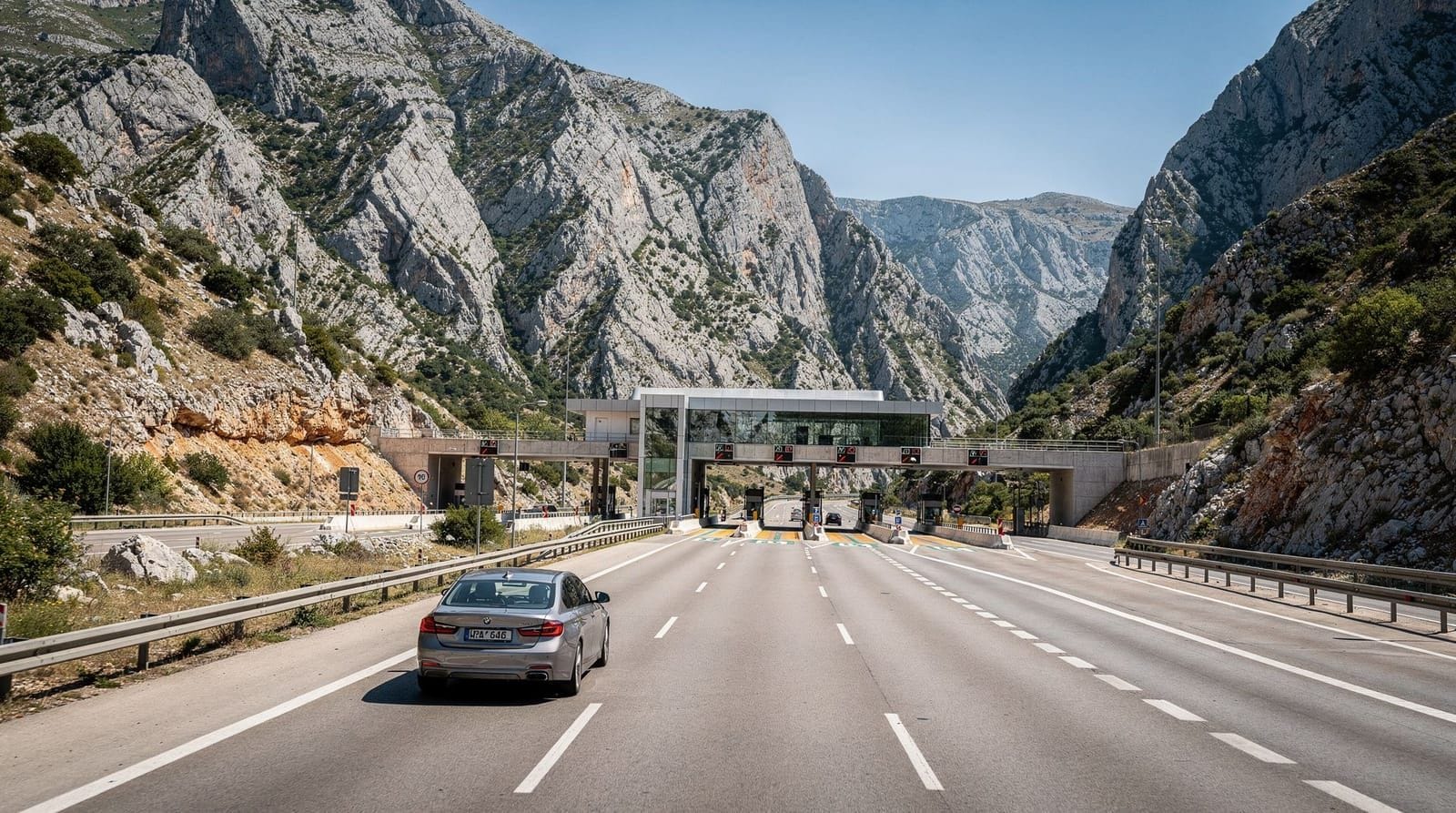
| Motorway tolls (Zagreb–Split one way) | ~€26 |
| Petrol (per litre, unleaded 95) | ~€1.50–€1.65 |
| Ferry (car + driver, Split–Hvar) | ~€35–€50 |
Frequently asked questions about Renting a Car in Croatia
What do I need to rent a car in Croatia?
A full driving licence held for at least one year (sometimes two years depending on the rental company), a valid passport or ID, and a credit card in the driver's name for the security deposit. An International Driving Permit is not required for most Western licences but some rental companies ask for it if the licence is not in Latin script.How much does a rental car cost in Croatia?
A compact car costs roughly €30–€60 per day in low season and €50–€90 per day in July–August. Prices vary significantly by pick-up location, rental company and how far ahead you book. Airport pick-ups carry a surcharge of €5–€15 per day. One-way rentals (pick up in Zagreb, drop off in Split) are available but add a fee.Can I take a rental car from Croatia to other countries?
Often yes, but you must declare it in advance and pay a cross-border fee. Driving into Bosnia and Montenegro is usually permitted with an additional fee (€10–€30) and often requires a 'Green Card' extension to your insurance. Some companies exclude Albania or restrict travel to Kosovo.Is full insurance (CDW + SCDW) worth it in Croatia?
Strongly recommended. Croatia's roads include narrow mountain passes, stone walls, and summer pedestrians; the excess on a basic CDW policy can be €800–€2,000. SCDW or 'zero excess' coverage gives peace of mind for around €10–€20 extra per day.Is there a minimum age to rent a car in Croatia?
Most companies require drivers to be at least 21; some require 23 or 25 for specific categories. Young driver surcharges apply below 25. Maximum age restrictions (typically 70–75) also apply at some companies.Where is the best place to pick up a rental car in Croatia?
Split Airport or Zagreb Airport for the best supply and competitive prices. If arriving in Dubrovnik, pick up at the airport or downtown rather than in the old town, where traffic restrictions apply.Do Croatian rental cars have winter tyres?
In summer months, standard tyres are fitted. If you're visiting in winter (November–March) and plan mountain driving, ask specifically for winter-tyre fitment. Chains are required on some roads when signs indicate.
Top experiences
Best-rated activities across GetYourGuide and Viator.

Mostar and Herzegovina Tour with Kravica Waterfall from Split & Trogir
- Viator

Mostar & Kravice waterfalls full-day guided tour from Split
- Viator

Split airport to Split Private transfer to 8 pax (Door to Door any location)
- Viator

Zagreb to Split Group Transfer with Plitvice Lakes guided Tour
- Viator

Zadar: Zrmanja River Kayaking, with optional transfer from Zadar
- Viator

Mostar and Kravica Waterfall Discovery Day Trip from Split or Trogir
- Viator