Samobor travel guide
Samobor, 30 min from Zagreb, is famous for kremšnita cream cakes, February Carnival, and hiking in the Žumberak highlands — a classic half-day escape.
Quick facts
- Best time
- Year-round; February for Carnival; spring and autumn for hiking
- Days needed
- Half day to 1 day
- Getting there
- Bus from Zagreb (30–40 min, €3–4)
- Budget per day
- €40–€80
Samobor is the perfect half-day answer to the question “what do I do on my last morning in Zagreb?” — a small, well-preserved Habsburg-era town of around 15,000 inhabitants nestled against the forested Samobor Highlands (Samoborska gora), accessible by frequent bus in 30–40 minutes from the capital.
It has two claims to fame that Croatians take extremely seriously: the kremšnita (a thick vanilla cream cake eaten in every café on the main square, and passionately debated as to who makes it best) and the Samoborski Fašnik — one of Croatia’s oldest and most colourful carnival traditions, running since 1827, held every February and drawing visitors from across the region.
Beyond the cream cakes and the carnival, Samobor is simply a very pleasant small town — a cobblestoned main square, a river running through it, a ruined castle on the hill above, and a nature park with good walking trails at the doorstep.
The main square and old town
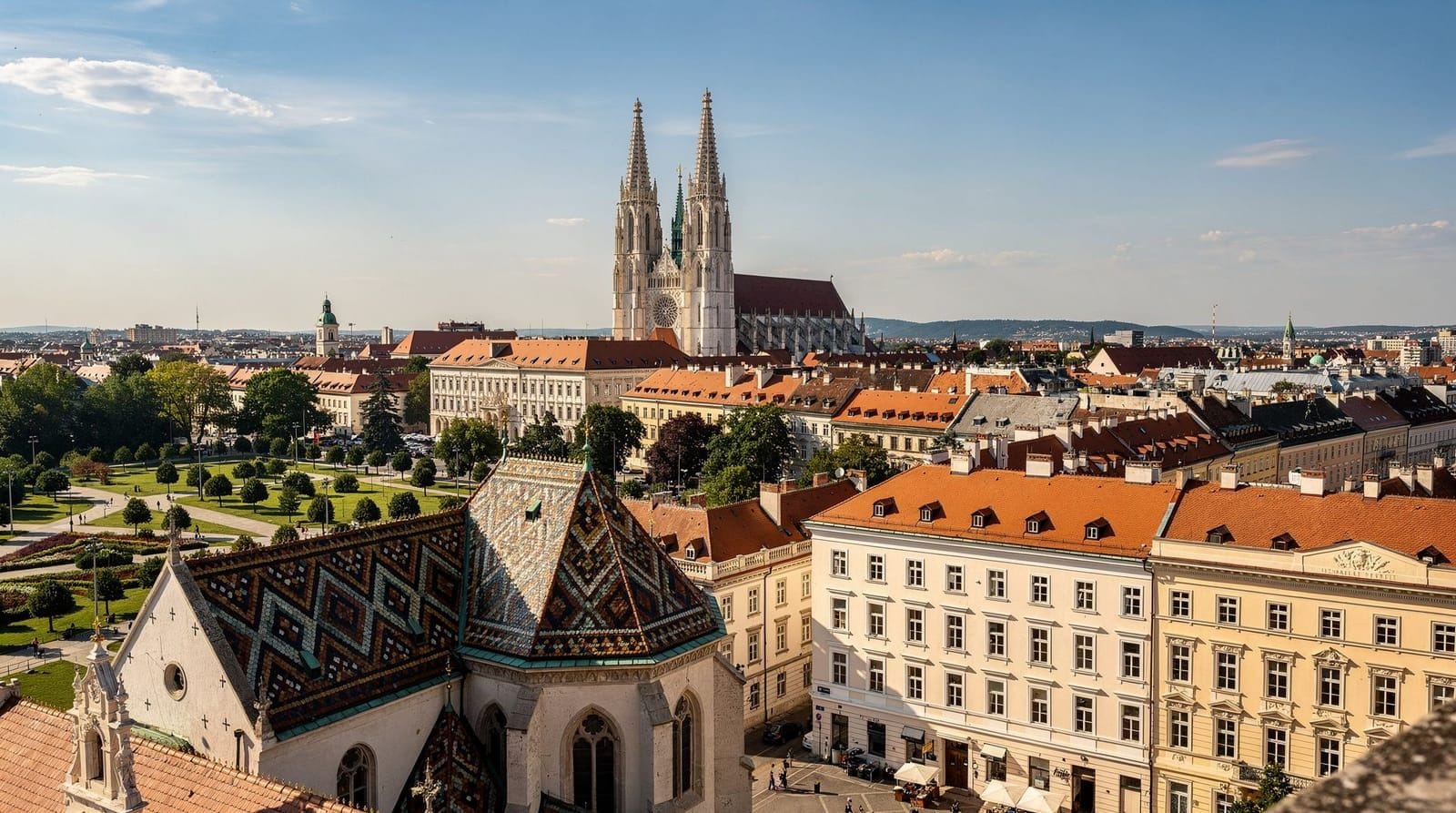
Samobor’s central square, Trg kralja Tomislava, is the classic small-Croatian-town piazza: a long rectangular space with baroque and neo-baroque facades, a church at one end, and a stream (Gradna) running alongside. The café terraces here are the main social space of the town, and on weekend mornings the square has a pleasantly unhurried, pre-tourist energy.
St Anastasia’s Church (Crkva sv. Anastazije) dates to the 14th century with 17th-century baroque additions. The interior has modest but charming details. Beside it, the small Samobor Museum covers local history, ethnography, and crafts in a 19th-century manor.
The Town Hall (Vijećnica) and the small streets around the main square are worth a 20-minute wander.
The kremšnita
The Samobor kremšnita is a variation on the wider Central European Cremeschnitte tradition, but locals will tell you firmly that Samobor’s version is the original — a thick slab of vanilla custard cream between sheets of light puff pastry, dusted with icing sugar. The competition between town cafés for the best kremšnita is a permanent local argument.
Kavana Livadić on the main square is the historic benchmark — it has been serving kremšnita since the 1800s and is the place most Croatians would name as the “original.” Samoborska pivnica and Restoran Lijepa Naša are the other main contenders. Buy one from each and form your own opinion.
The ruined castle (Stari Grad)
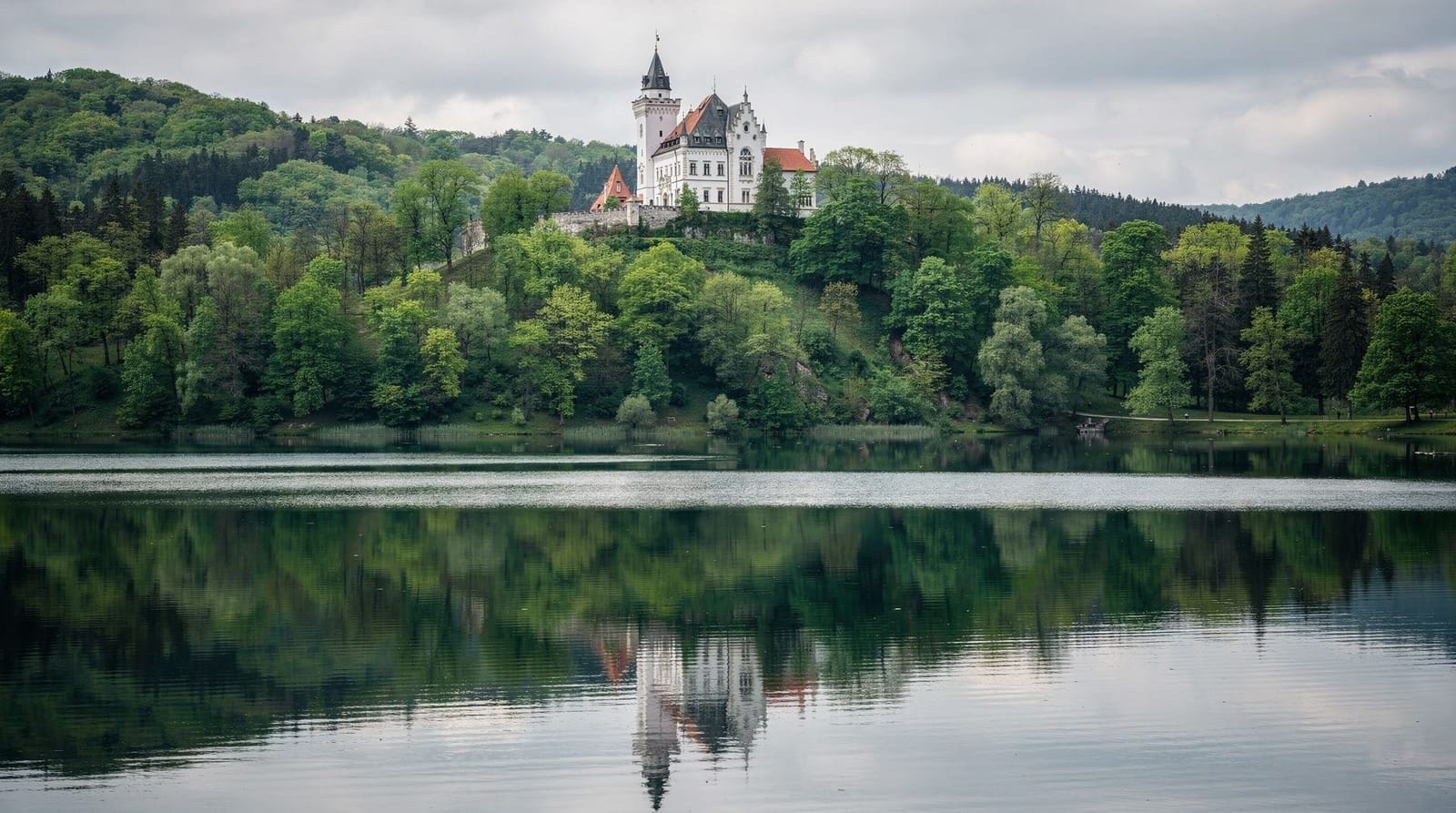
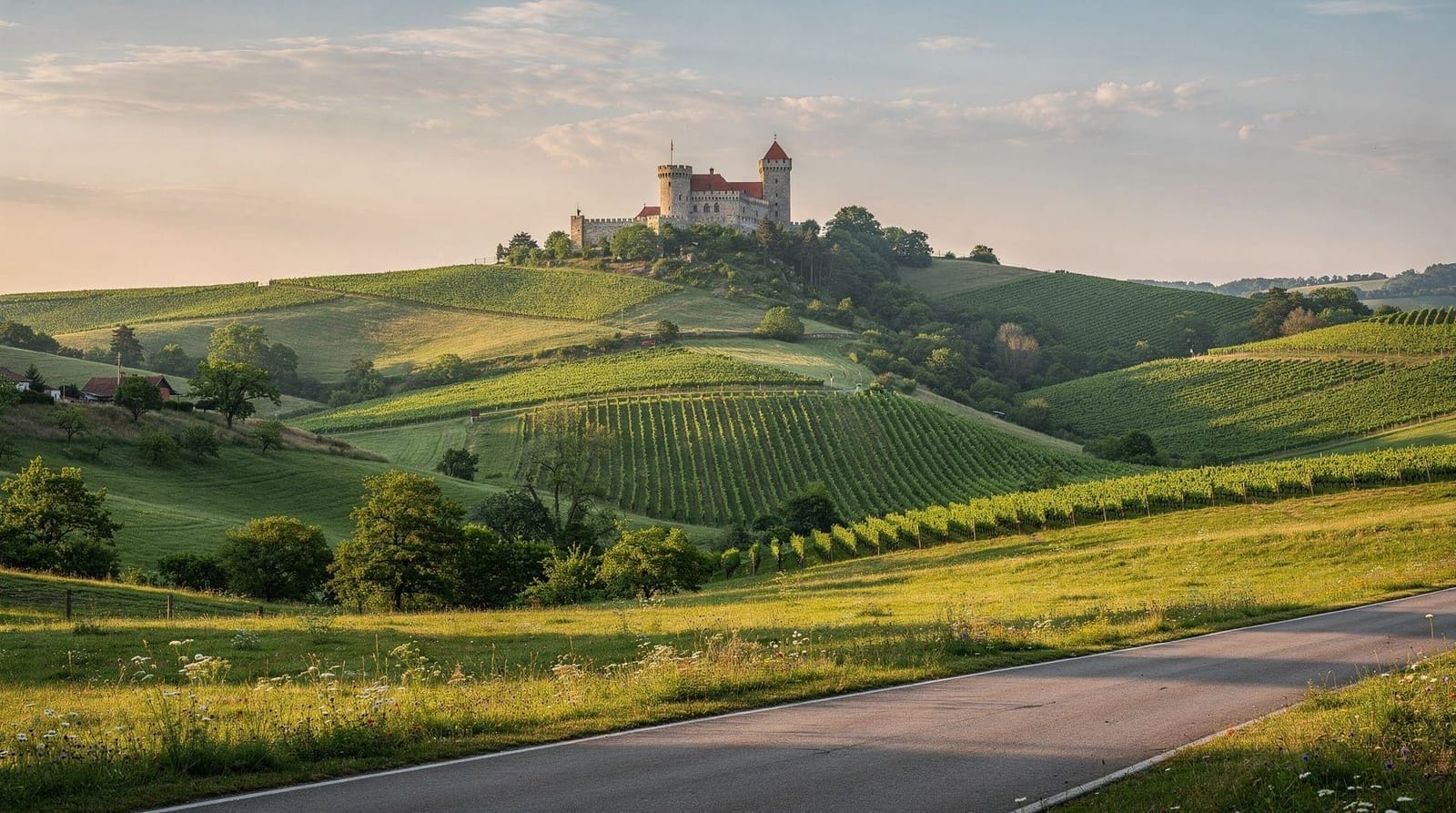
Above the town on a forested hill, the ruins of Stari Grad Samobor (Old Town Castle) date to the 13th century. A well-marked trail from the edge of the town leads up in about 30–40 minutes through woodland. The ruins themselves are modest — mostly overgrown walls — but the view over the town and the Samobor basin toward Zagreb makes the climb worthwhile. The trail continues into the Žumberak-Samoborska Gora Nature Park.
Samoborski Fašnik (Carnival)
Samobor’s carnival is Croatia’s most famous folk celebration — held in the weeks before Shrove Tuesday (dates vary with Easter), with a main masked parade drawing crowds of 50,000–80,000 to a town of 15,000 people. Participants in traditional and fantastical costumes, local brass bands, and general merriment spread through the town. The celebration has Venetian-influenced roots — Samobor was a Habsburg trading town with Italian commercial connections.
Even outside the main Carnival days, the February weekend atmosphere in Samobor is festive. Plan accommodation well in advance for the peak Carnival weekend.
Žumberak-Samoborska Gora Nature Park
The nature park that borders Samobor to the west covers 333 square kilometres of forested hills, valleys, and streams rising to 1,178 metres (Sveta Gera peak). It is one of the least-visited nature parks in Croatia, which makes it ideal for anyone looking for authentic walking without tour-group company.
Several well-marked trails begin from the edges of Samobor town. The circuit via Japetić hill (879 m) is a popular half-day walk with good views. The park also has traditional wooden mills on the Rudarska Žitnica stream — a lovely afternoon walk combining easy terrain with genuine rural character.
Samobor mustard
Samobor also has a mustard tradition — Samobor mustard (samoborska muštarda) has been produced here since the 18th century using a local recipe with wine vinegar and a distinctive sharpness. It is sold in the local shops and makes a good, unusual gift to take back to Zagreb.
Samoborska Pivnica (beer)
The town also has a small brewing tradition. Samoborska Pivnica produces a light, pale lager that can be found in town. Pairing a glass with a kremšnita is, apparently, acceptable.
History in brief
Samobor’s market-town status dates to 1242, but the settlement is older — the castle on the hill above the town was built in the 13th century as a fortification on the medieval trade route between the Adriatic coast and the Hungarian heartland.
The town’s Habsburg-era character developed through the 18th and 19th centuries, when Samobor became associated with Zagreb’s merchant and intellectual class as a preferred day-excursion destination. The Carnival tradition, running since 1827 (Samoborski Fašnik) and the kremšnita pastry tradition are both products of this period — Viennese-influenced cultural imports that Samobor absorbed and made its own.
The Croatian Romantic poet Ivan Trnski, the composer Ferdo Livadić (whose family owned the Kavana Livadić café), and several other 19th-century Croatian cultural figures had strong connections to Samobor. The town has a cultural weight disproportionate to its size — it was, in the 19th century, a place where Zagreb intellectuals came to think and write, away from the city.
The kremšnita itself: the word derives from the German Cremeschnitte (cream slice), and the recipe came to Croatia via Vienna and Budapest in the Austro-Hungarian period. Samobor’s version — with its notably thick custard layer and particularly light pastry — developed its own character through the 19th century and is now regarded as the regional standard.
Getting to Samobor
Frequent buses depart from Zagreb’s main bus station (Autobusni Kolodvor) and take 30–40 minutes depending on traffic. Bus tickets cost €3–4. The last bus back to Zagreb from Samobor runs in the late evening, making it entirely feasible as an evening excursion. By car, Samobor is 25 km west of Zagreb via the A3 motorway — about 25–30 minutes without traffic.
History in brief
Samobor was granted market-town status by King Béla IV of Hungary in 1242 — the same royal charter that established Zagreb as a free city after the Mongol invasion. The two grants, issued in the same year, suggest the region’s strategic importance as a settled zone following the devastation of the invasion.
Throughout the medieval period, Samobor was a significant trading stop on the route between the Hungarian kingdom and the Adriatic coast, with a productive mine in the Žumberak hills and a charter that granted it fair rights and market privileges. The castle (Stari Grad) that still overlooks the town was part of this medieval fortification system.
In the Habsburg period, Samobor became a pleasant residential and trading town associated with the Zagreb commercial class — close enough to the capital for weekly visits, far enough for a different atmosphere. The carnival tradition that developed in the 19th century reflects the Venetian-influenced Habsburg cultural sphere: masked balls and street celebrations were common in the cities of the empire, and Samobor adopted and maintained the tradition when larger cities moved on.
The town’s association with the kremšnita dates to the mid-19th century, when a local pastry cook adapted the Cremeschnitte recipe popular in Vienna and Budapest into a thicker, cream-heavier local variant. Today it is as much a part of Samobor’s identity as the carnival.
Expanded where to eat and drink
The kremšnita competition dominates the Samobor food conversation, but there is more to eat here than cream cake.
For kremšnita:
- Kavana Livadić — the historic address, open since the 1800s, with a refined interior and the widest variety of pastries alongside the famous cream cake. The gold standard for the experience, if not always the most generous portion.
- Samoborska pivnica — across the square, with a more informal atmosphere and a kremšnita version that many locals prefer for its fluffier custard ratio.
- Restoran Lijepa Naša — the third main contender, with a restaurant menu alongside the pastry selection.
For a proper meal:
- Pri Staroj Uri (“At the Old Clock”) — a converted old house behind the main square with reliable traditional cooking: Samobor version of štrukli, roast meats, and local sausages. Reasonably priced.
- Restoran Samoborček — near the bus station, very popular with local workers; unremarkable decor but excellent-value lunch specials.
- The market stalls on Saturday morning — the Samobor market (on and around the main square, 7am–1pm on Saturdays) sells local cheese, honey, cured meats, and seasonal vegetables from surrounding villages. A very pleasant accompaniment to a morning kremšnita.
Beer and wine: Samobor’s own light lager (from the Samoborska pivnica brewery) is genuinely drinkable and the local pride. For wine, ask for Plavac Mali by the glass in the evening konobas — or, more regionally appropriate, a white Graševina from the continental production area.
Žumberak-Samoborska Gora hiking — more detail
The nature park begins within walking distance of the town centre and offers significantly more than a quick castle climb.
Japetić hill (879 m): The most popular full-day hike — a 4–5 hour circuit from the town via forested trails. The summit is open with views east toward Zagreb and west into the Žumberak hills of Slovenia. Trail is well-marked; start from the park edge at Samobor Gradna stream.
The mill walk (Rudarska Žitnica stream): A flat, easy 2–3 hour walk following the stream past a series of working and ruined watermills through the river valley. Family-friendly, beautiful in spring when the valley floor is green. Start from Samobor town and follow the stream west.
Sveta Gera (1,178 m): The park’s highest point, on the Slovenian border. A challenging full-day hike from Samobor (8 hours return) or shorter from the Slovenian side. Views from the summit extend over both countries on a clear day.
Cycling: The park has marked cycling routes including the long-distance EuroVelo 8 Mediterranean Route which passes nearby. Bikes can be hired in Samobor.
Getting there — practical detail
From Zagreb by bus: Buses leave approximately every 30 minutes from Zagreb’s main bus station (Autobusni Kolodvor, platform area) throughout the day. The ride takes 30–40 minutes depending on traffic; the ticket costs €3–4 one-way. The last bus back to Zagreb runs around 10pm — check the current schedule at autobusni-kolodvor.hr.
By car: 25 km west of Zagreb via the A3 motorway (exit Samobor/Bregana). Parking on the edge of the main square is paid (€1–1.50/hour) but easy to find outside weekends. Weekends in the pre-carnival February period can be very busy — arrive early.
Where to eat beyond the kremšnita
Samobor’s culinary identity is larger than the cream cake, though the kremšnita will always dominate.
Full meal options:
- Pri Staroj Uri (At the Old Clock) — behind the main square in a renovated old house; traditional Zagorje and Samobor cooking with good-value lunch menus.
- Samoborček — near the bus terminal, very popular with local workers; the daily lunch special (ručak) is generous and excellent value (around €8–10 for two courses).
- Konoba Sokol — slightly north of the main square; reliable grilled meats and freshwater fish from the Samobor highlands area.
For drinks: The terrace bars on the main square are the social centre of Samobor from morning to evening. On summer weekends the square is genuinely lively — locals from Zagreb drive out for the atmosphere as much as the food. Order Samoborska Pivnica beer with your kremšnita if you want to be a local.
The Saturday market: The outdoor market on the main square Saturday morning (approximately 7am–1pm) is one of the most pleasant small-town markets near Zagreb — local honey, cheese, preserves, flower seedlings, and occasional handicrafts. A very pleasant counterpoint to the tourist-facing café scene.
Day trips from Samobor
Into Žumberak: The nature park immediately west of Samobor is itself a destination for a day’s hiking. The Lapovac waterfall on the Slapnica stream is a good target (3 hours return from the park edge near Samobor). The Žumberak Eco-Centre in Sv. Gera village (if open) provides orientation and wildlife information for the park.
Samobor to Karlovac: Continuing west from Samobor on the D3 road leads to Karlovac (30 km, 40 minutes) — a baroque star-shaped fortress town at the junction of four rivers, with a pleasant old town, river beaches, and its own craft beer tradition (Karlovačko Pivo brewery). A possible extension for visitors with a car and a full day.
Samobor to Ljubljana via Bregana: The Slovenia border crossing at Bregana is 10 km from Samobor. A Ljubljana day trip from Zagreb via Samobor is feasible (Samobor for morning kremšnita, Ljubljana for the afternoon) if you have a car — Ljubljana is around 1.5 hours from Samobor.
Top-rated experiences in Samobor travel guide
Best-rated activities across GetYourGuide and Viator.

Old Zagreb Private Tour
- Viator

Plitvice Lakes National Park Admission Ticket
- Viator

Kayaking Mreznica Waterfalls close to Plitvice Lakes
- Viator

Zagreb Unveiled: Private walking tour with a local guide
- Viator

Kayaking on Upper Mreznica River - Slunj, Croatia
- Viator

Experience Zagreb with a local - Private Walking Tour
- Viator