Best time to visit Croatia
When is the best time to visit Croatia?
Late May–June and September are the sweet spots: the sea is warm, ferries run full schedules, crowds are manageable and prices are 20–40% lower than peak. July–August is the warmest but the most crowded and expensive window.
Croatia’s seasons in plain language
Croatia is a coastal country driven by summer sun, and that shapes everything — prices, crowds, transport and what is actually open. Understanding the rhythm of the Adriatic calendar will save you money, frustration and a lot of queuing.
| Best overall | June or September |
| Warmest sea | August, around 25–26°C |
| Cheapest | November–March, coast largely closed |
| Best for national parks | May–June or September–October |
| Book ahead by | March for July–August accommodation |
The short version: Croatia has three meaningful travel windows.
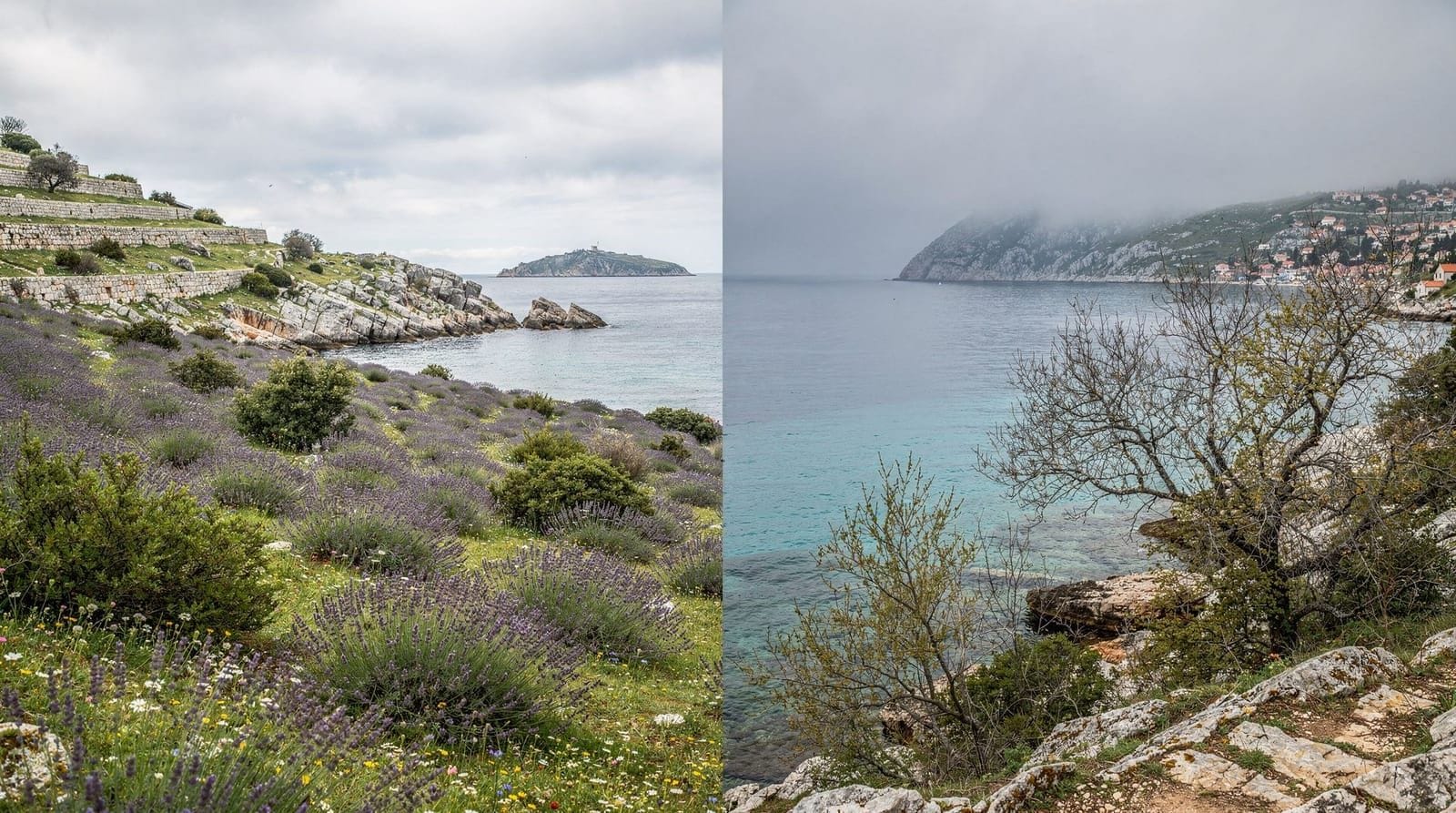
Shoulder season (May–June and September–early October) delivers warm weather, warm enough sea, full ferry schedules and manageable crowds at 20–40% lower prices than peak. These months are consistently rated best by experienced travellers.
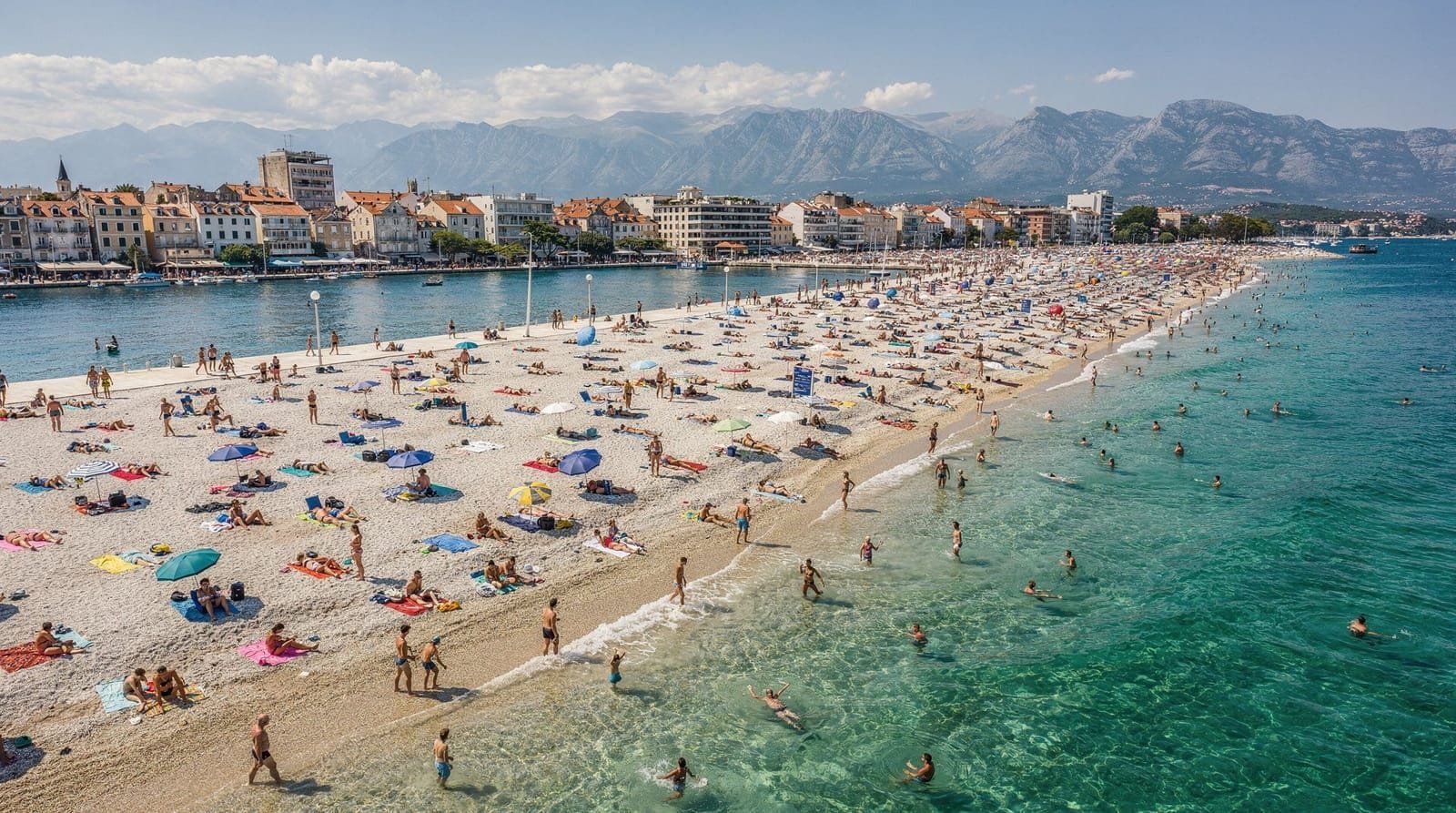
Peak season (mid-July–late August) is hot, busy and expensive. The beaches are at their most beautiful and the sea at its warmest, but Dubrovnik’s Old Town and Hvar town can feel genuinely overwhelming at midday.
Low season (November–March) sees the coast go dormant. Interior Croatia — Zagreb above all — remains viable year-round.
Month-by-month at a glance
| Month | Coast temp | Sea temp | Crowds | Notes |
|---|---|---|---|---|
| January | 8–12°C | 12°C | Very low | Zagreb Advent ends early Jan |
| February | 9–13°C | 12°C | Very low | Cheapest accommodation |
| March | 13–17°C | 13°C | Low | Easter period lifts late March |
| April | 16–20°C | 14–16°C | Low–mid | Plitvice excellent; some island businesses reopening |
| May | 20–24°C | 18–19°C | Mid | Golden month — best mix of conditions |
| June | 25–28°C | 21–22°C | Mid–high | Full schedules; long days; pre-peak prices |
| July | 28–32°C | 24–25°C | Very high | Peak prices; book everything early |
| August | 28–33°C | 25–26°C | Highest | Most expensive; arrive early to sights |
| September | 24–27°C | 23–24°C | Mid–high | Best sea for swimming; thinning crowds |
| October | 18–22°C | 19–21°C | Mid | Truffle season in Istria; gorgeous light |
| November | 13–17°C | 16°C | Low | Coast quiets rapidly; Zagreb city break |
| December | 8–12°C | 13°C | Low | Zagreb Advent — voted best in Europe |
The case for May and June
May is Croatia’s golden month and the answer most honest travel veterans give when asked for the best time to visit. Air temperatures on the coast climb to 20–24°C — warm enough for hiking, cycling and long lunches on a terrace, but not so hot that sightseeing becomes an endurance test. The sea is 18–19°C: cold by Mediterranean standards, but swimmers in wetsuits or anyone acclimatised to northern European water will be perfectly comfortable.
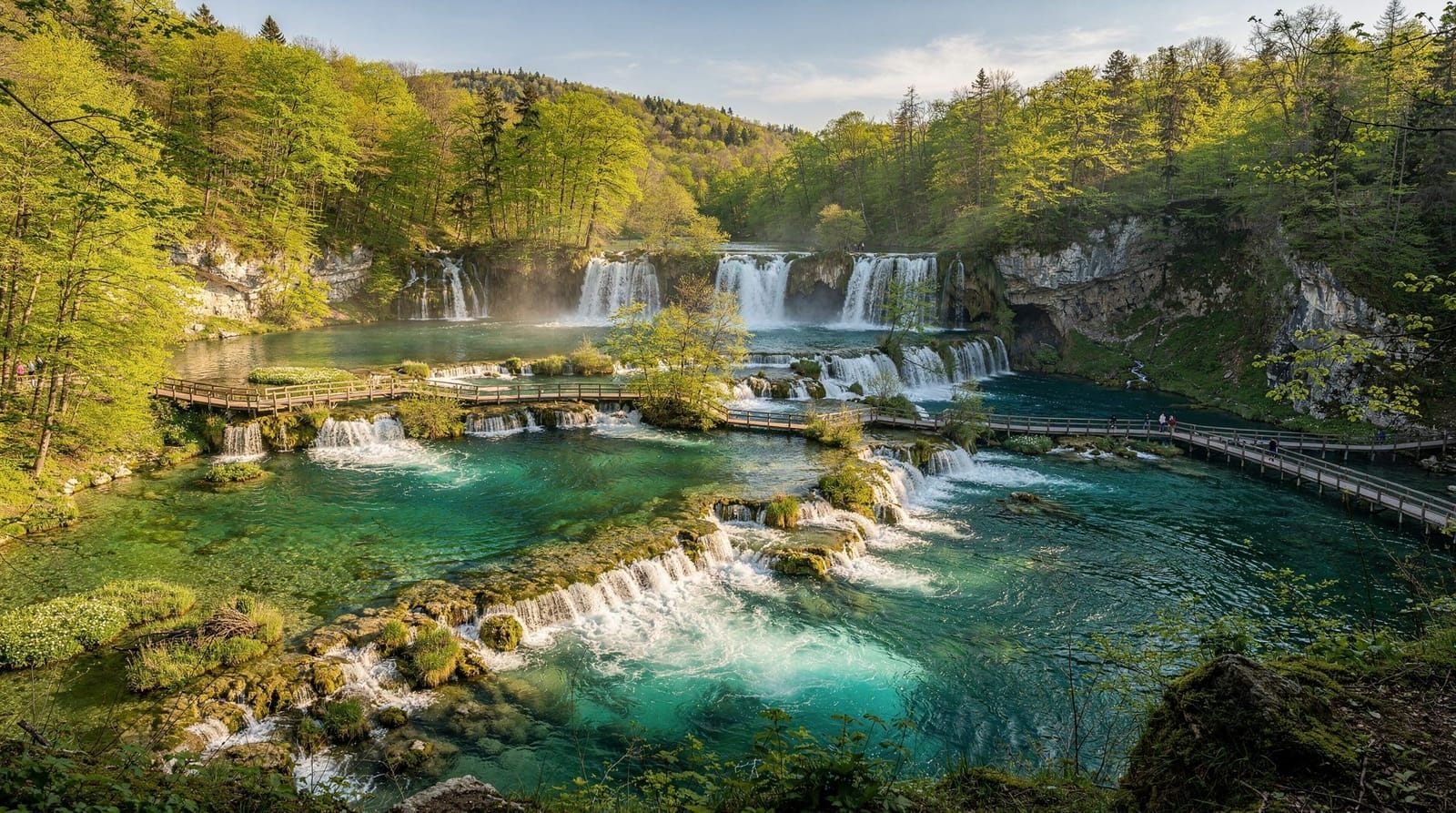
The practical advantages compound quickly. Ferry companies run close to full summer schedules from early May, meaning island hopping in Croatia is fully viable. Plitvice Lakes National Park — Croatia’s most-visited attraction — is at its spectacular best, the waterfalls swollen by snowmelt. Accommodation prices have not yet hit their July–August premium. You can walk Dubrovnik’s city walls without feeling like a sardine.
June adds more warmth and the sea is genuinely inviting at 21–22°C. Book accommodation around the school holiday windows — British half-term in late May and the Italian school-exit weekend in mid-June can cause short spikes — but in general, June remains meaningfully less congested than July.
The main trade-off: a few smaller island businesses and some boat routes are still warming up in early May. Check specific ferry schedules before booking.
For more detail on what to expect month by month, see our Croatia month-by-month guide.
July and August: peak season realities
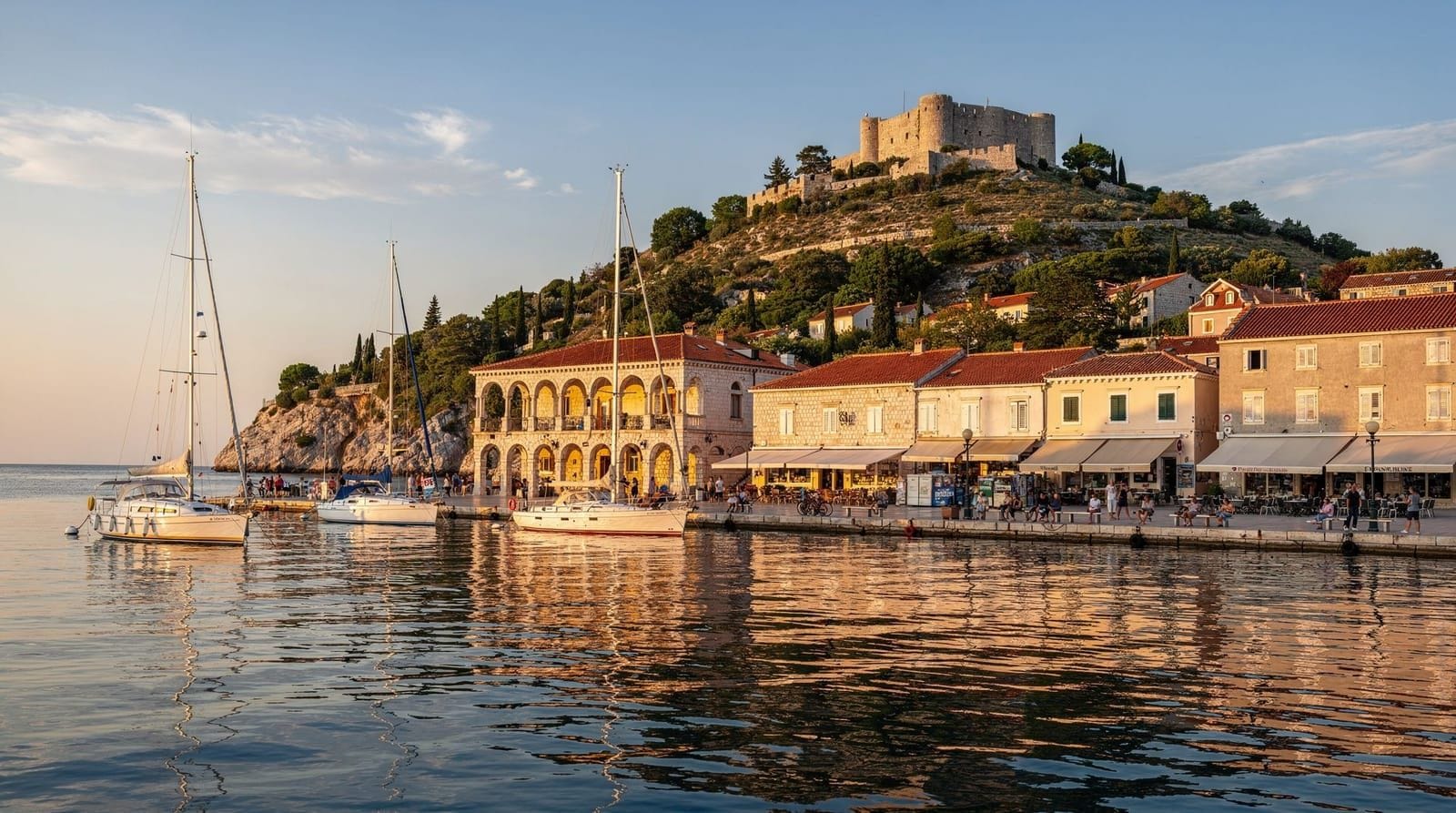
Dalmatia in July is the Mediterranean fantasy rendered real: Adriatic water at 24–26°C, hazy golden light, long evenings at konoba tables, the smell of salt and pine. It is genuinely wonderful — if you can tolerate what comes with it.
Dubrovnik in August receives roughly 10,000 cruise-ship passengers on top of its hotel guests on any given day. The Old Town walls, Diocletian’s Palace in Split and the ferry dock at Hvar become genuinely packed by 10am. The Krka National Park and Plitvice Lakes enforce entry caps; arriving without a pre-booked ticket means turning around.
Prices reflect demand. Hotels and apartments in Dubrovnik and Hvar run 40–70% higher than May. Car ferry bookings on competitive routes (Split–Hvar, Split–Korčula) sell out days in advance. Rental cars are expensive and scarce if you have not reserved ahead.
If July–August is your only window — school holidays, for instance — it remains a superb trip. The keys are: book everything early, sight-see before 9am and after 6pm, base yourself in slightly less-visited spots like Korčula, Vis or Zadar, and plan beach time in the morning.
Our Croatia in summer guide has full tactical detail.
September: the best-kept secret
September is arguably the ideal month for adult travellers without school-age children. The Adriatic is still 23–24°C — actually the warmest-feeling swimming of the year, since the surface layer has had all summer to heat up. Air temperatures sit at a comfortable 24–27°C. Crowds thin noticeably from 1 September onwards.
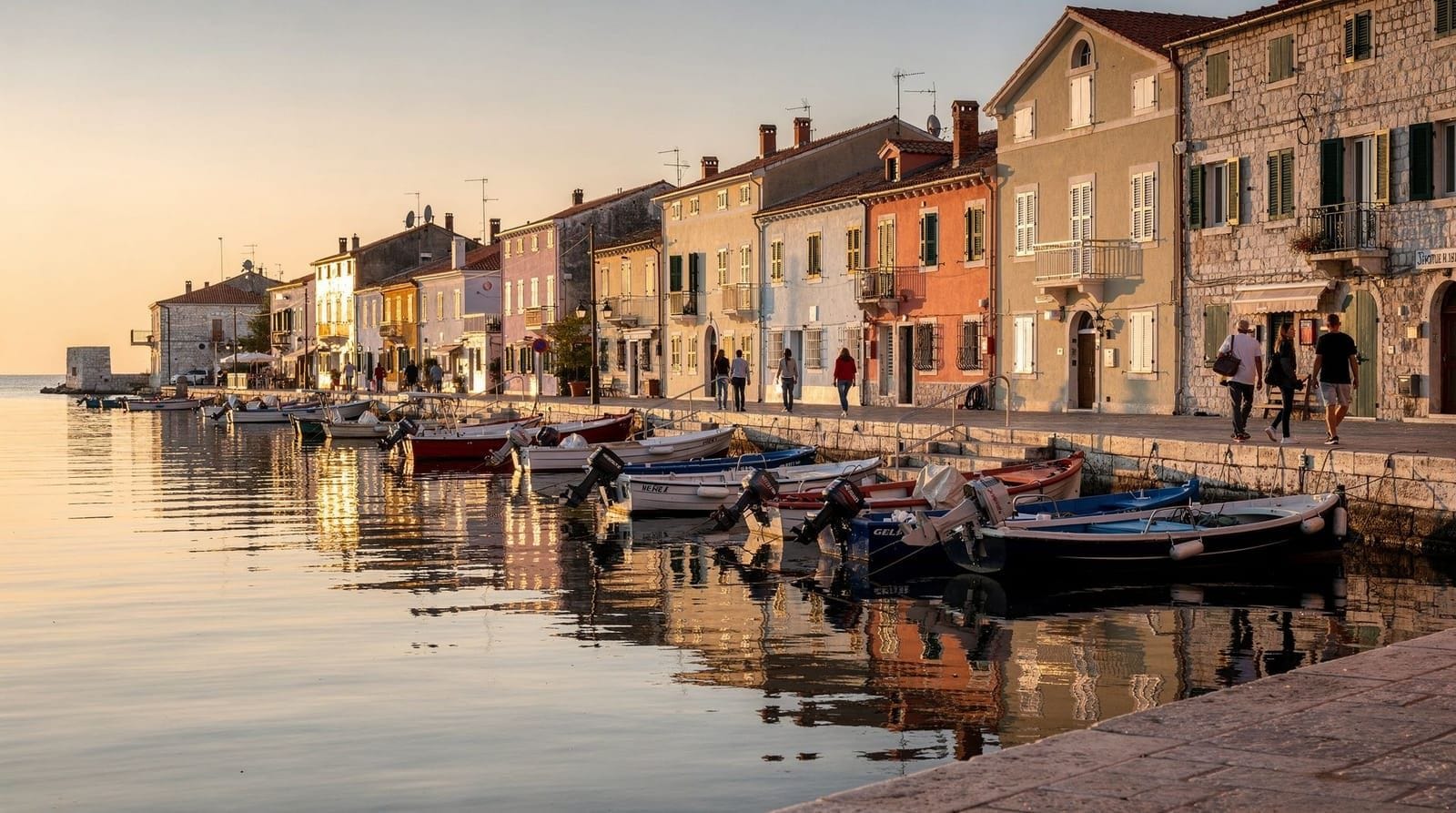
In Istria, the white truffle season opens in late September, making Rovinj, Motovun and the surrounding forests a particularly rewarding destination. Early October extends these conditions further, with cooler evenings and extraordinary autumn light on the stone towns.
The practical caveat: ferry timetables begin thinning from mid-September, with some catamaran routes reducing to a once-daily service by early October. Plan transport carefully if you are island-hopping late in the month. See the full picture in our Croatia in September guide.
Winter: Zagreb shines, coast sleeps
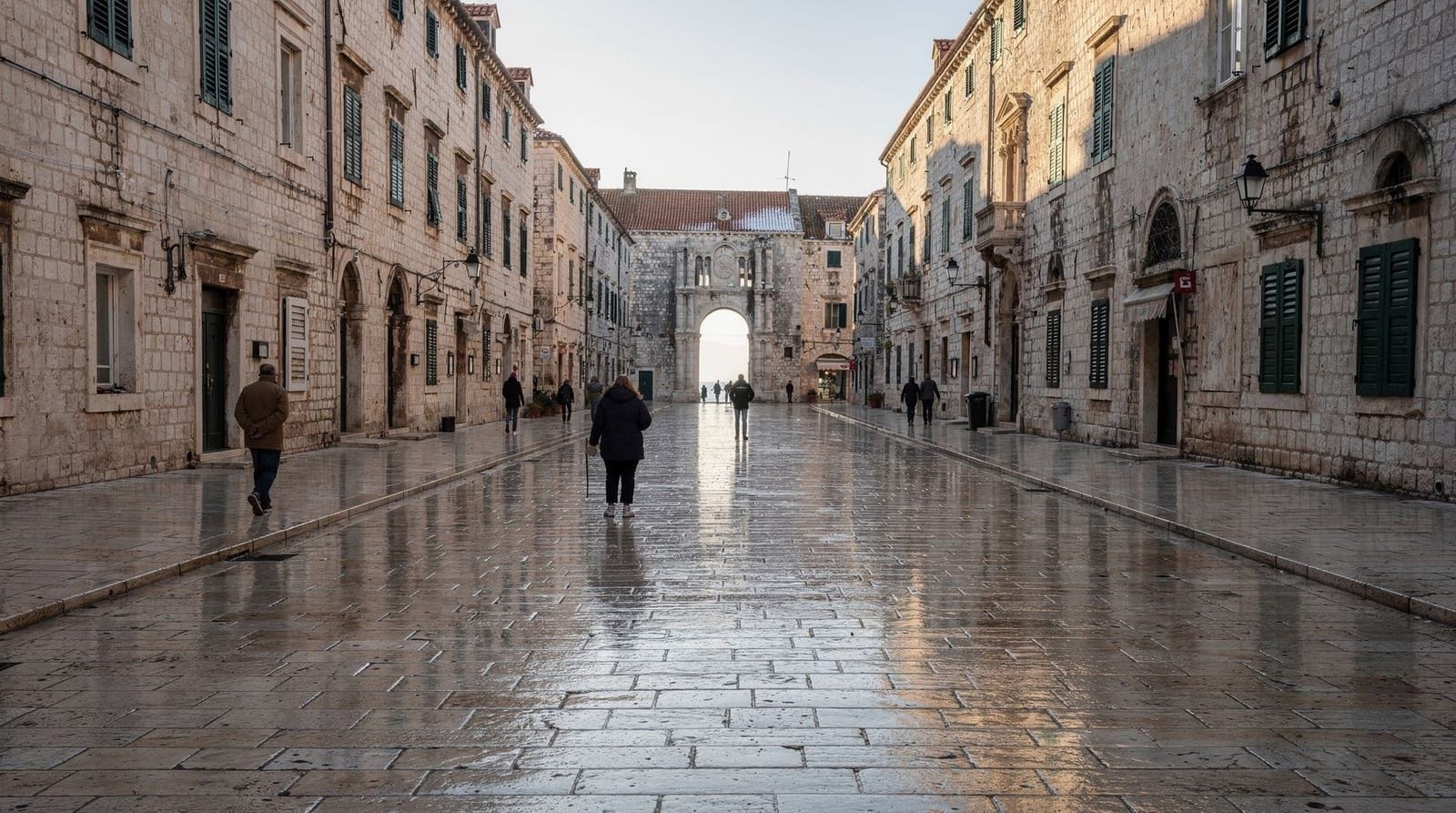
From November to March, the Dalmatian coast and islands enter a quiet that verges on ghostly. Many restaurants, hotels and bars on smaller islands close entirely. Ferry services run skeleton timetables. The sea drops to 12–13°C. This is not the time for a beach holiday.
The interior tells a different story. Zagreb is a serious European city break year-round, and in December it becomes one of Europe’s most celebrated Christmas destinations. The Advent market on Ban Jelačić Square has been voted the best in Europe by Shortlist readers multiple years running — a genuine event, not a tourist gimmick.
Plitvice Lakes in winter, when the wooden boardwalks are dusted with snow and the crowds have evaporated, is hauntingly beautiful. Entry is easier to obtain and cheaper than in summer. The full picture is in our Croatia in winter guide.
Festivals and events that shape timing
Beyond weather, Croatia’s calendar of festivals can make or break the timing of a trip depending on whether you want to join the crowd or avoid it.
| Event | When | Where | Effect on planning |
|---|---|---|---|
| Rijeka Carnival | February | Rijeka | Busy weekends in an otherwise quiet month |
| Sinjska Alka | early August | Sinj (inland Dalmatia) | Regional draw, minimal coastal impact |
| Ultra Europe | mid-July | Split | Split accommodation spikes; book months ahead |
| Dubrovnik Summer Festival | July–August | Dubrovnik | Adds cultural events on top of already-peak crowds |
| Rovinj Fireworks Festival | August | Rovinj | Istrian coast accommodation fills for the weekend |
| Truffle season | late Sept–Oct | Istria (Motovun, Buzet) | Best restaurant experience of the year in the region |
| Zagreb Advent | late Nov–early Jan | Zagreb | Zagreb hotel prices rise; the coast stays quiet |
Ultra Europe in particular is worth flagging: if electronic music festivals are not your goal, avoid Split in mid-July, as the city’s accommodation and restaurant scene shifts noticeably for festival week. Conversely, if that is exactly your goal, book Split accommodation as early as any peak-August date elsewhere on the coast.
Rain and cloud, month by month
Rainfall in coastal Croatia is concentrated outside the summer months — the reverse pattern from much of northern Europe. June through August see the least rain of the year on the Dalmatian coast, which is part of why the season is so reliable for beach planning. Spring (April–May) and especially autumn (October–November) bring more frequent, sometimes heavy, showers, though days are rarely washed out entirely — a rain shower followed by clear skies is the typical autumn pattern rather than an all-day downpour. Zagreb and the interior see a more even spread of rainfall across the year, with slightly wetter conditions in late spring and early winter. If you’re planning an October or November trip and want to minimise rain risk, Istria and Kvarner tend to be marginally drier than central Dalmatia in the shoulder months, though none of the coast is a safe bet against the odd wet day once you’re past September.
Regional timing differences
The advice above applies primarily to the Dalmatian coast. Regional nuances matter:
Istria (Rovinj, Pula, Poreč) tends to be 1–2°C cooler than Dalmatia, and its summer season is slightly shorter. September–October is particularly rewarding here because of the truffle harvest.
Kvarner (Opatija, Rijeka, Krk) has a belle-époque riviera character and is worth visiting from April through October. Opatija has a mild enough climate that it functions as an off-season resort city even in winter.
Zagreb and interior are viable year-round. Spring (April–June) brings outdoor café culture at its most pleasant; autumn (September–October) is excellent for day trips to Plitvice and the Zagorje castles.
Choosing based on what you want to do
Beaches and swimming: July–August for warmest water; September for warmth without the peak crowds; avoid before June.
Hiking and national parks: May–June and September–October — temperatures are forgiving and the scenery is at its most dramatic.
Island hopping: June and September are the sweet spots. Ferries run full schedules, accommodation is easier to find, and you can actually explore the towns without fighting crowds.
Sailing: May–June is prime — steady Maestral winds on the central Dalmatian coast, manageable marina congestion, good weather predictability.
Food and wine: October in Istria (white truffle season), September–October on Pelješac (Plavac Mali harvest). Zagreb’s food scene is year-round.
Budget travel: April–May and October offer the lowest accommodation prices on the coast; February–March if you are strictly on the Dalmatian coast (though much will be closed).
City breaks: Zagreb any time; April–June and September–October are the most comfortable. Split functions as a city break November through March when the summer crowds have gone.
Practical planning points
Book early for peak season. Accommodation in Dubrovnik, Hvar and Split sells out for July–August by March. Car ferry slots go almost as fast.
Plitvice entry tickets. Purchase online well in advance June–August. The park enforces daily caps and long queues form from 8am without a ticket.
Croatia ferries guide has full information on booking Jadrolinija and catamaran services by season.
Shoulder-season prices. A sea-view apartment that costs €180 a night in August may be available for €90 in June and €70 in October. The saving on a two-week trip can easily fund the flights.
Dress in layers for evenings. Even in July, the coast can feel cool after midnight; September evenings genuinely require a light jacket.
For a complete breakdown of what to expect in each calendar month, read our Croatia month-by-month guide. For weather data and temperature curves, see our Croatia weather guide.
Frequently asked questions about Best time to visit Croatia
What are the shoulder seasons in Croatia?
May–June and September–early October. Temperatures on the Dalmatian coast reach 22–28°C, sea temperatures are 18–24°C, and tourist numbers are well below peak. These months consistently deliver the best value-to-experience ratio.Is July and August worth it despite the crowds?
For swimming and beach energy, yes — the Adriatic peaks at 24–26°C and the islands are at their liveliest. Book accommodation and car ferries well in advance, budget for higher prices, and arrive at major sights early morning to beat crowds.Can you visit Croatia in winter?
The coast goes quiet from November to March — many island businesses close. Zagreb, however, is excellent in December thanks to its award-winning Advent market. Plitvice Lakes offer dramatic, crowd-free scenery in winter.When is the sea warm enough to swim?
The Adriatic is comfortable for swimming roughly from mid-June to early October. Sea temperatures rise from around 18°C in May to a peak of 25–26°C in August, then cool gradually through September (still 24°C) and October (around 20°C).What is the best month to visit Croatia overall?
June edges out September for sheer balance: long days, full transport schedules, warm sea (~22°C), and prices that have not yet hit the August peak. For families with school-age children, September is often the better fit.When should I avoid Croatia?
Mid-July to late August in Dubrovnik, Hvar and Split sees extreme congestion and the highest prices of the year. If crowds bother you, these months need early booking and early-morning sightseeing discipline.Is Plitvice Lakes better in spring or autumn?
Both are excellent. Spring (May–June) brings snowmelt-fed waterfalls at their fullest and lush greenery. Autumn (September–October) means golden foliage and far fewer visitors. Summer entry can be capped and queues long.
Top experiences
Bookable activities with verified prices and instant confirmation on GetYourGuide.
Top experiences
Best-rated activities across GetYourGuide and Viator.

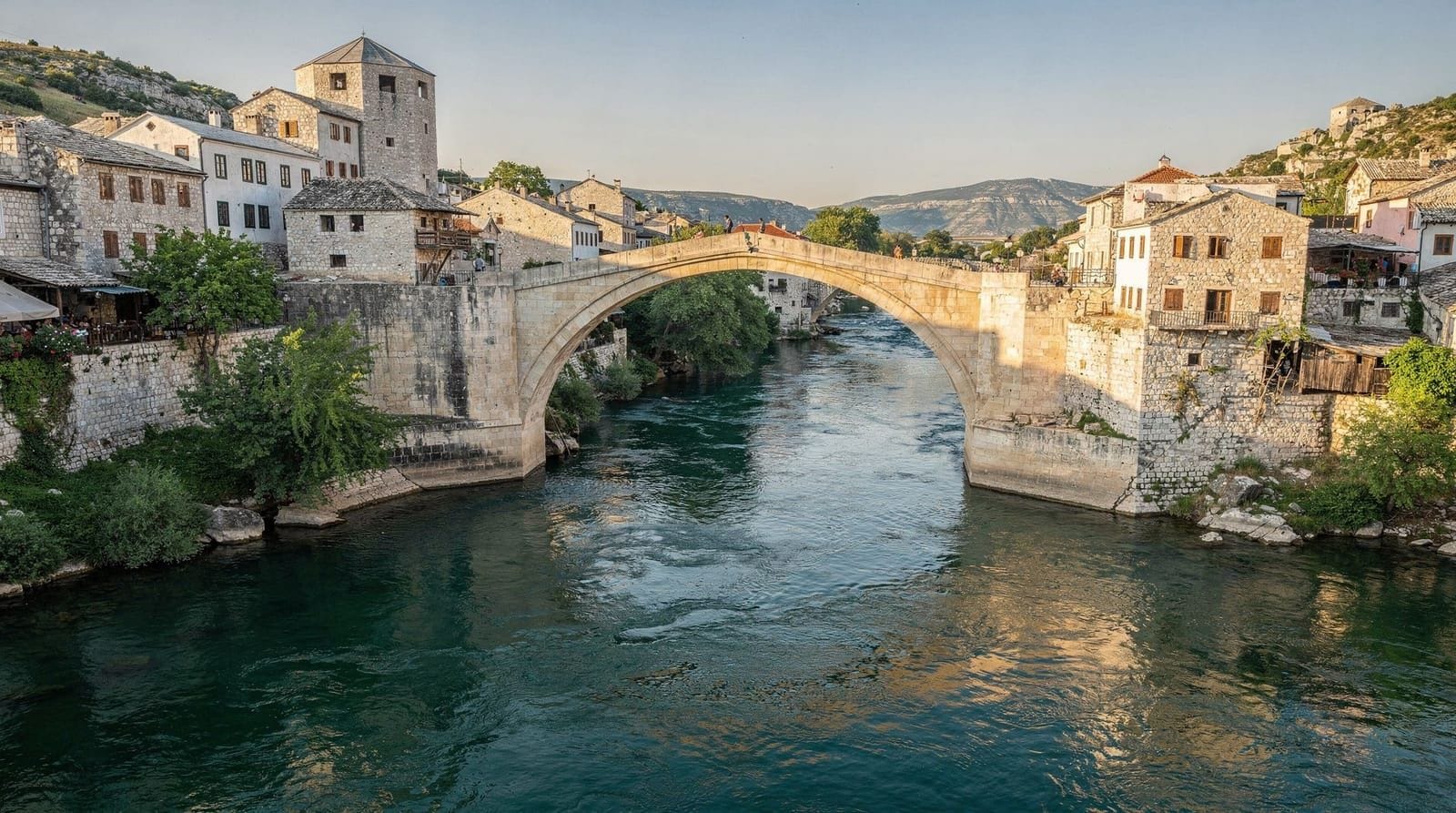
Mostar and Herzegovina Tour with Kravica Waterfall from Split & Trogir
- Viator

3Hour ALL-INCLUSIVE Sunset Dolphin Watching from Medulin onSandra
- Viator

Dolphin Watching & Sunset Boat Tour With Drinks & optional Dinner
- Viator

Fantastic DOLPHIN & SUNSET TOUR with dinner ( Pula-NP BRIJUNI )
- Viator

Medulin :All-Inclusive Pirate Boat Dolphin Watching Sunset Cruise
- Viator

Mostar & Kravice waterfalls full-day guided tour from Split
- Viator