Day Trips from Zagreb: Plitvice, Ljubljana, Istria and Beyond
Zagreb: Plitvice Lakes full-day guided tour
What are the best day trips from Zagreb?
Plitvice Lakes is the standout — 2–2.5 hours south, a full day in Croatia's most iconic national park. Ljubljana and Lake Bled (Slovenia) are genuinely doable in 1.5–2 hours and make for a memorable cross-border day. The Zagorje castles and Samobor are easy half-day escapes from the capital.
Zagreb as a day-trip hub
Zagreb is often treated as a transit point — a night before flying, or a staging post before the coast. That misses something. The capital is a genuinely good city for a day or two, and its central position makes it an excellent base for day trips north, south and west.
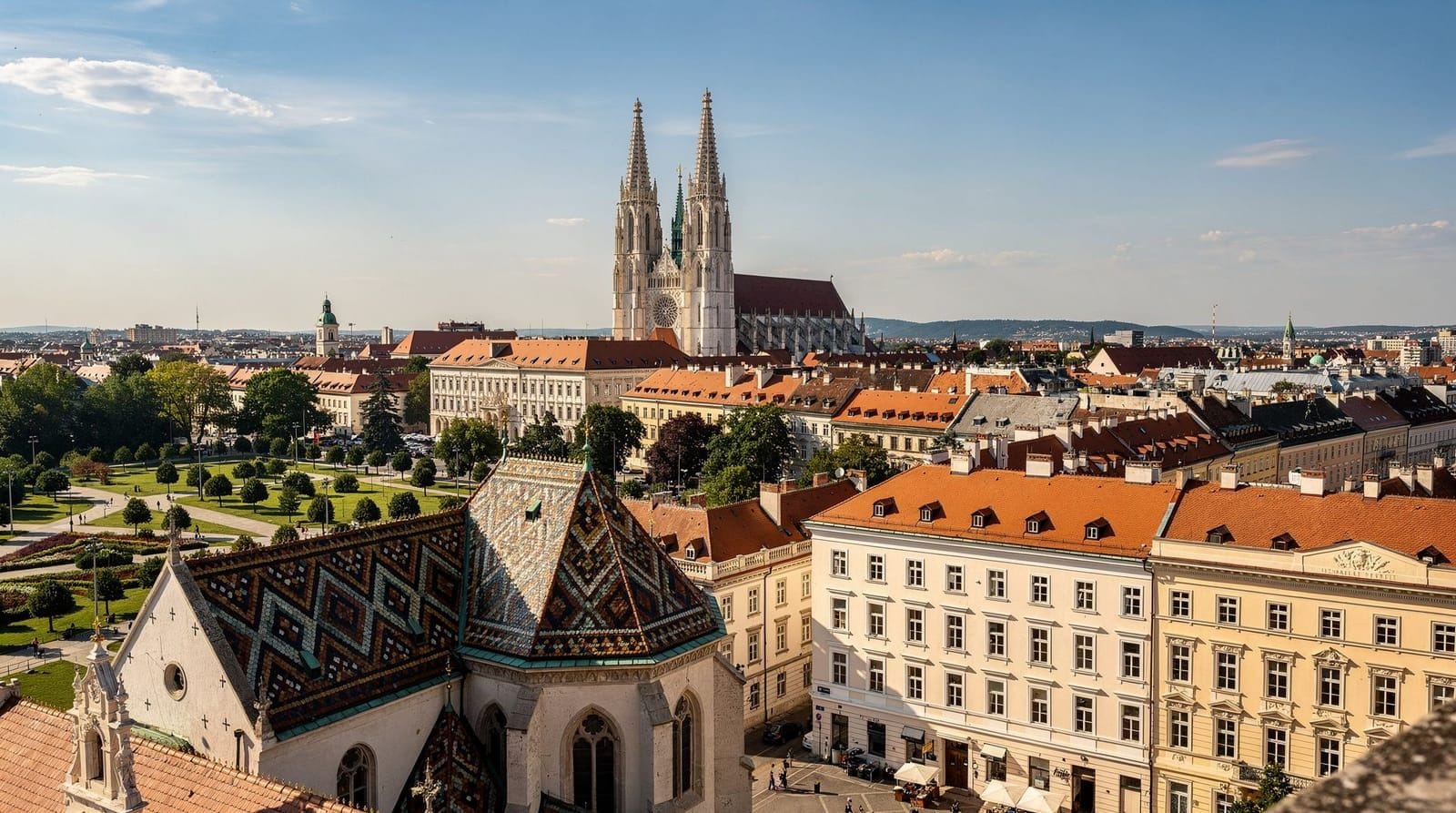
Explore Zagreb properly: the Upper Town (Gornji Grad) with its cathedral, the Dolac market, the Museum of Broken Relationships and the Lotrščak Tower with its daily cannon shot. The city’s café culture — all strong espresso and long conversations — is worth sitting in before heading out.
Then, where to go.
| Where | Plitvice Lakes, Ljubljana & Lake Bled, Zagorje, Samobor |
| Cost | Around EUR 5 (Samobor bus) up to EUR 20–35 (Plitvice entry) |
| Time needed | Half-day (Samobor) to a full day (Plitvice, Ljubljana & Bled) |
| Getting there | Bus for Samobor and Ljubljana; car needed for Zagorje |
| Best time | May–June and September for lighter crowds and easier booking |
Comparing the day trips
| Trip | Travel time | Needs a car | Best for |
|---|---|---|---|
| Samobor | 30–40 min by bus | No | Relaxed half-day, kremšnita |
| Zagorje castles | 30–75 min | Yes | Rural Croatia, hilltop castles |
| Ljubljana & Bled | 1.5–2 h | No — bus or tour | City culture plus alpine lake |
| Plitvice Lakes | 2–2.5 h | No — tours run daily | Croatia’s most iconic park |
Plitvice Lakes — Zagreb’s showcase day trip
Distance from Zagreb: 150–160 km / 2–2.5 h south
Best for: UNESCO national park, boardwalks, waterfalls, all-day immersion
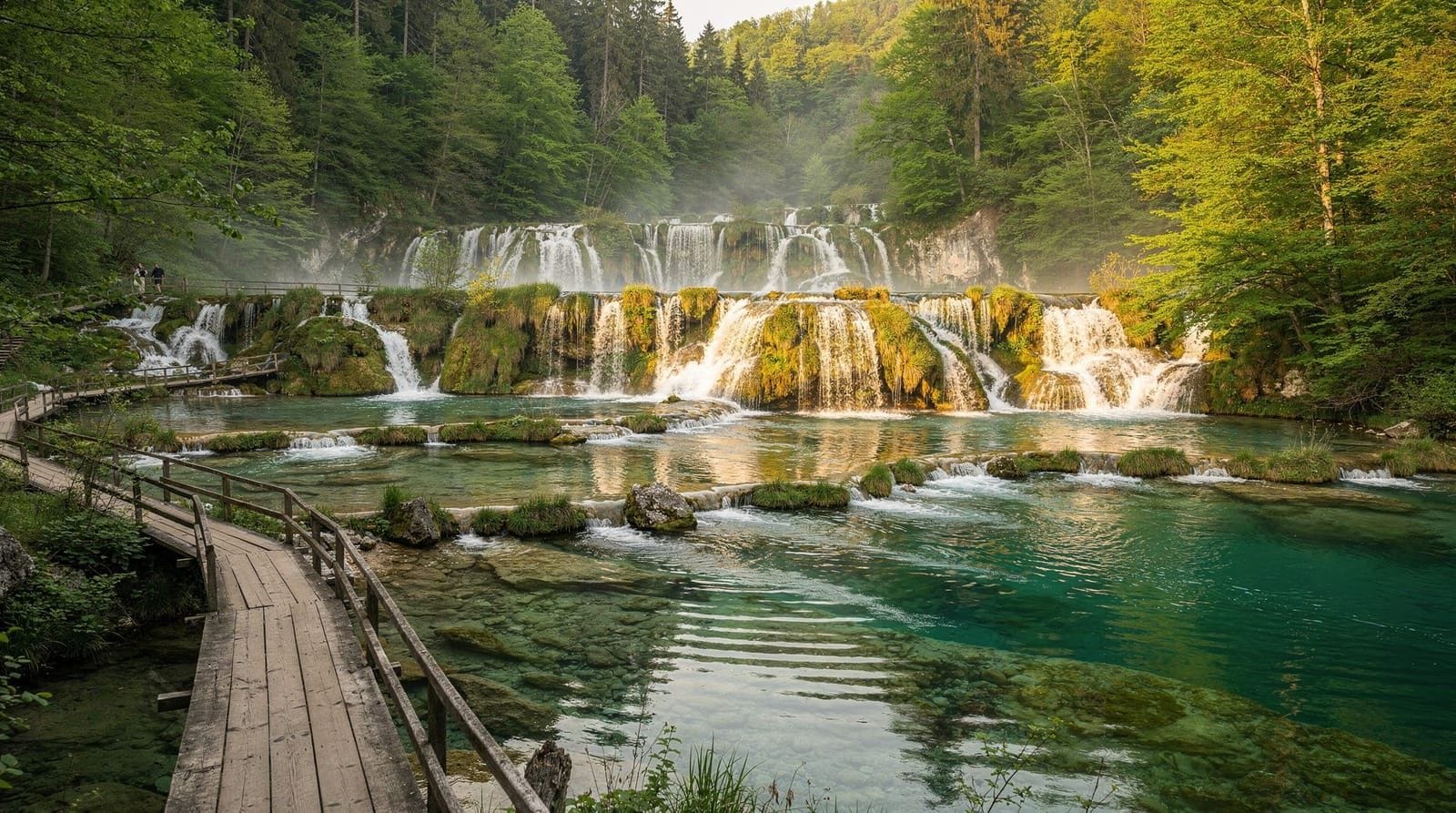
Plitvice Lakes is the undisputed headline act — a UNESCO World Heritage Site since 1979 and one of Europe’s most-photographed natural sights. Sixteen terraced lakes in multiple shades of aquamarine and emerald, connected by waterfalls, threaded with wooden boardwalks, surrounded by beech forest. The colours are real and not digitally enhanced. The boardwalk at water level through the middle of it is genuinely extraordinary.
From Zagreb, the drive south on the A1 motorway is smooth until the Slunj exit, then 25 minutes on winding regional road to the park. Total journey: 2–2.5 hours. A 7:30–8:00 am departure gets you into the park by 10 am, before the midday heat and crowds peak.
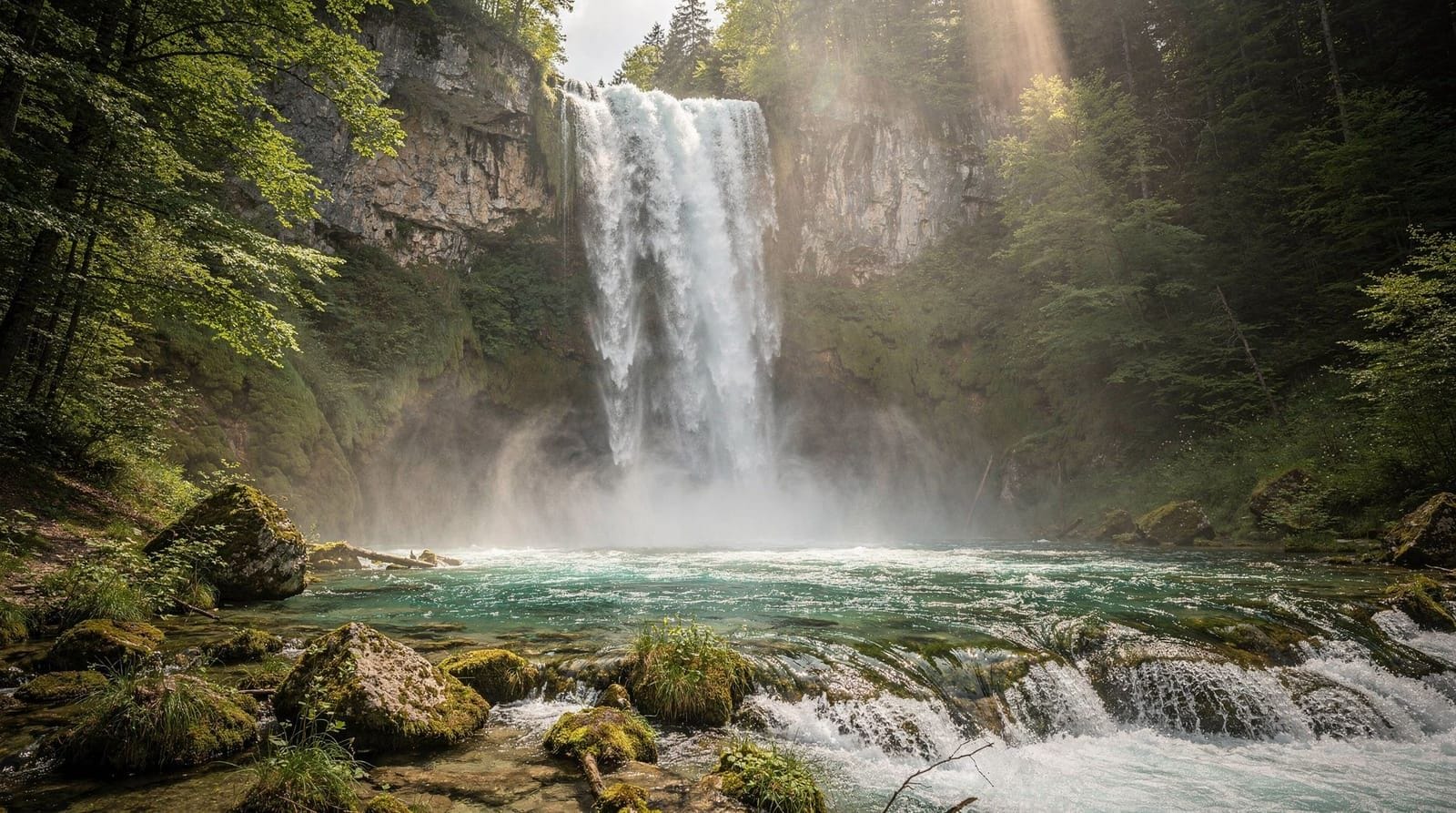
Upper lakes vs lower lakes: Entrance 1 (lower lakes) accesses the more dramatic waterfalls, including Veliki Slap (78 m, Croatia’s tallest). Entrance 2 (upper lakes) accesses the broad plateau of terraced lakes with the park boat ride included. A full circuit combining both takes 4–5 hours. If time is short, prioritise the lower lakes.
Park entry: Timed entry tickets, mandatory online booking in peak season (May–September). The park caps daily visitor numbers. Book tickets at np-plitvicka-jezera.hr before your trip — in July–August, book 1–2 weeks in advance. Entry fee approximately €20–35 depending on season.
Some tours combine Plitvice with Rastoke — a village at Slunj where the Slunjčica river flows over mills and falls in a photogenic cascade. It adds 30–45 minutes and is worth it if the tour schedule allows.
See the Plitvice Lakes complete guide for trail routes, best times and what to eat. Also: Plitvice day trip from Zagreb or Split.
Ljubljana and Lake Bled, Slovenia — the cross-border day
Distance from Zagreb: Ljubljana 140 km / 1.5 h; Lake Bled 180 km / 2 h
Border: Slovenia (Schengen — no border checks for most nationalities)
Best for: city culture + alpine lake scenery in one day
This is the day trip that surprises people most. Slovenia’s capital is 1.5 hours from Zagreb and very different in character: a compact, walkable city with a dragon-bridged river, a castle on a hill above it all, and a café culture that sits somewhere between Vienna and Zagreb. The old town is genuinely beautiful and covers only about 1 km on foot.
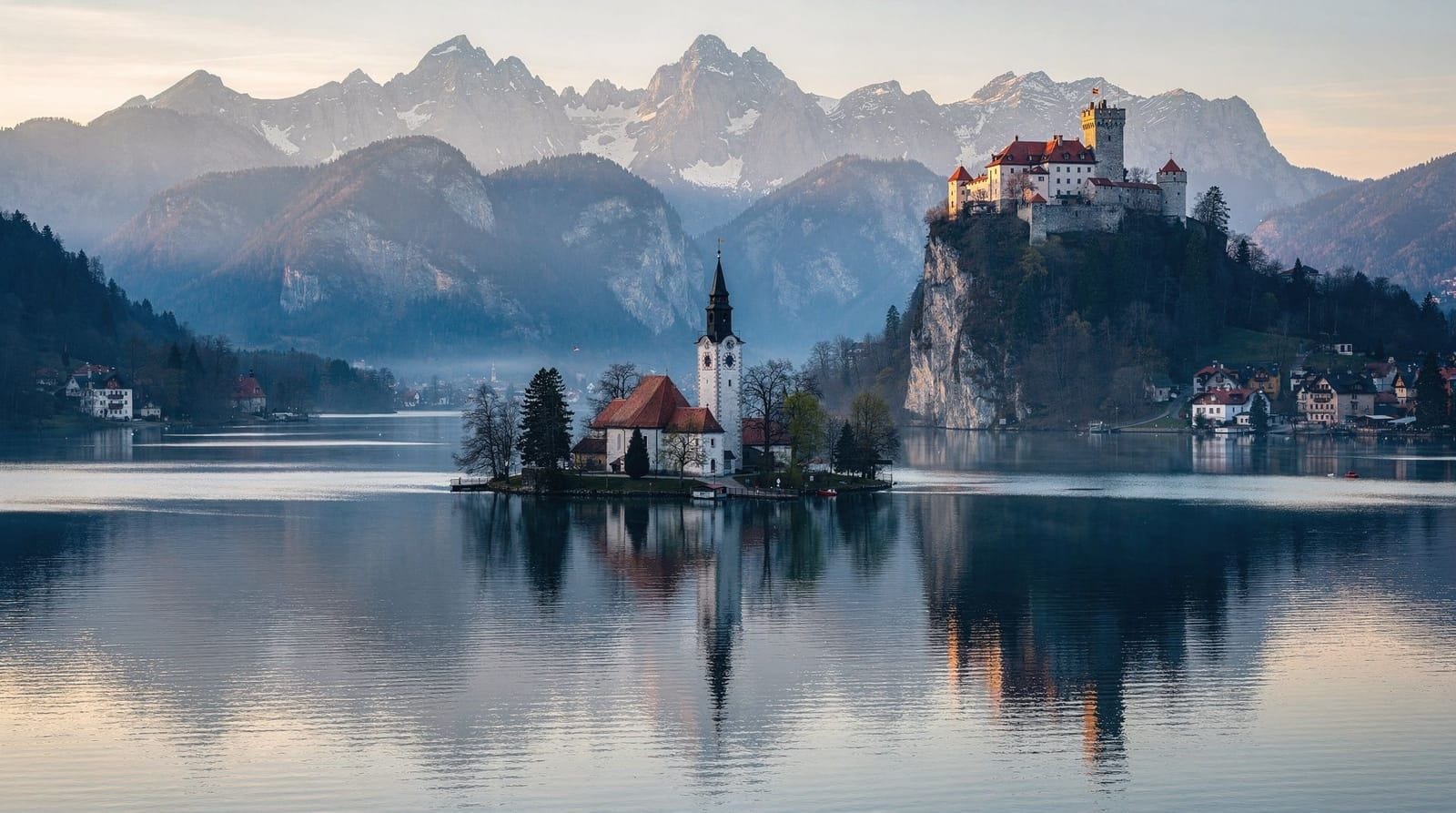
Lake Bled, 55 km northwest of Ljubljana, adds an almost absurdly picturesque alpine lake with a tiny island church and a cliff-top castle. A day covering both — a morning in Ljubljana, an afternoon at Bled — works well if you are moving at pace.
Honest caveat: Lake Bled in July–August is extremely crowded. The most photographed view (castle above lake above island) involves sharing the viewpoint with hundreds of people. Go in May, June or September for something closer to the serene alpine experience. The lake itself is swimmable (17–20°C in summer) and the rowing boat to the island is worth it.
Documents: Both Croatia and Slovenia are Schengen countries. EU citizens can cross on an ID card; UK, US, Australian and Canadian nationals should carry their passport. No visa required for short stays. The border is typically not checked at all.
By bus: FlixBus and ArrivaTrains run Zagreb–Ljubljana regularly (2.5–3 h). For a Bled add-on, you would need a car in Slovenia or a separate local bus from Ljubljana (1.5 h). Organised tours from Zagreb are convenient if you want both cities in one loop.
Zagorje — castles and hillsides north of Zagreb
Distance from Zagreb: 30–70 km / 30–75 min
Best for: castles, rural Croatia, half-day or full-day driving loop
No border crossing
The Zagorje-Trakošćan region north of Zagreb is the other Croatia — no sea, no tourism crowds, just rolling forested hills, vineyard slopes and a string of fortified castles.
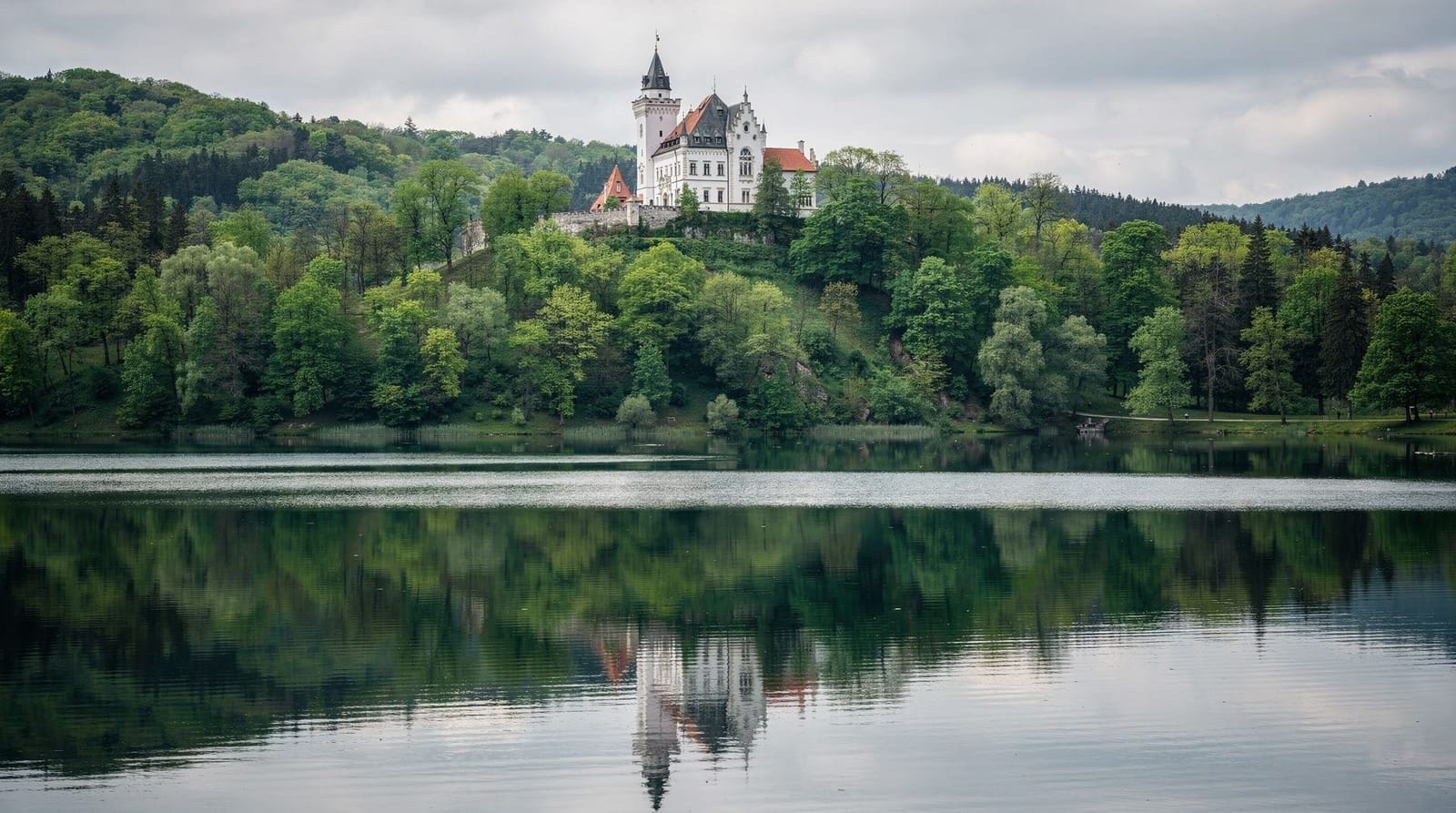
Trakošćan Castle: A 13th-century castle rebuilt in Romantic style in the 19th century, set above a reflective lake in a forested valley. The interior has period furniture and armour; the grounds make a pleasant walk. About 75 km north of Zagreb — 1 hour by car.
Veliki Tabor: A Renaissance hilltop fortress in exceptional condition, with round towers and a dramatic hilltop position above the Zagorje valley. 65 km from Zagreb.
Kumrovec: An open-air ethnographic museum (skansen) reconstructing 19th-century Zagorje village life. It is also the birthplace of Josip Broz Tito — a curious cultural artifact for those interested in 20th-century Yugoslav history. 55 km from Zagreb.
A self-drive loop covering Trakošćan, Veliki Tabor and Kumrovec makes a satisfying full day. No organised tours run regularly from Zagreb to the region — you need a rental car.
Samobor — the gentle weekend escape
Distance from Zagreb: 25 km / 30 min by bus
Best for: a relaxed morning out of the city, architecture, kremšnita
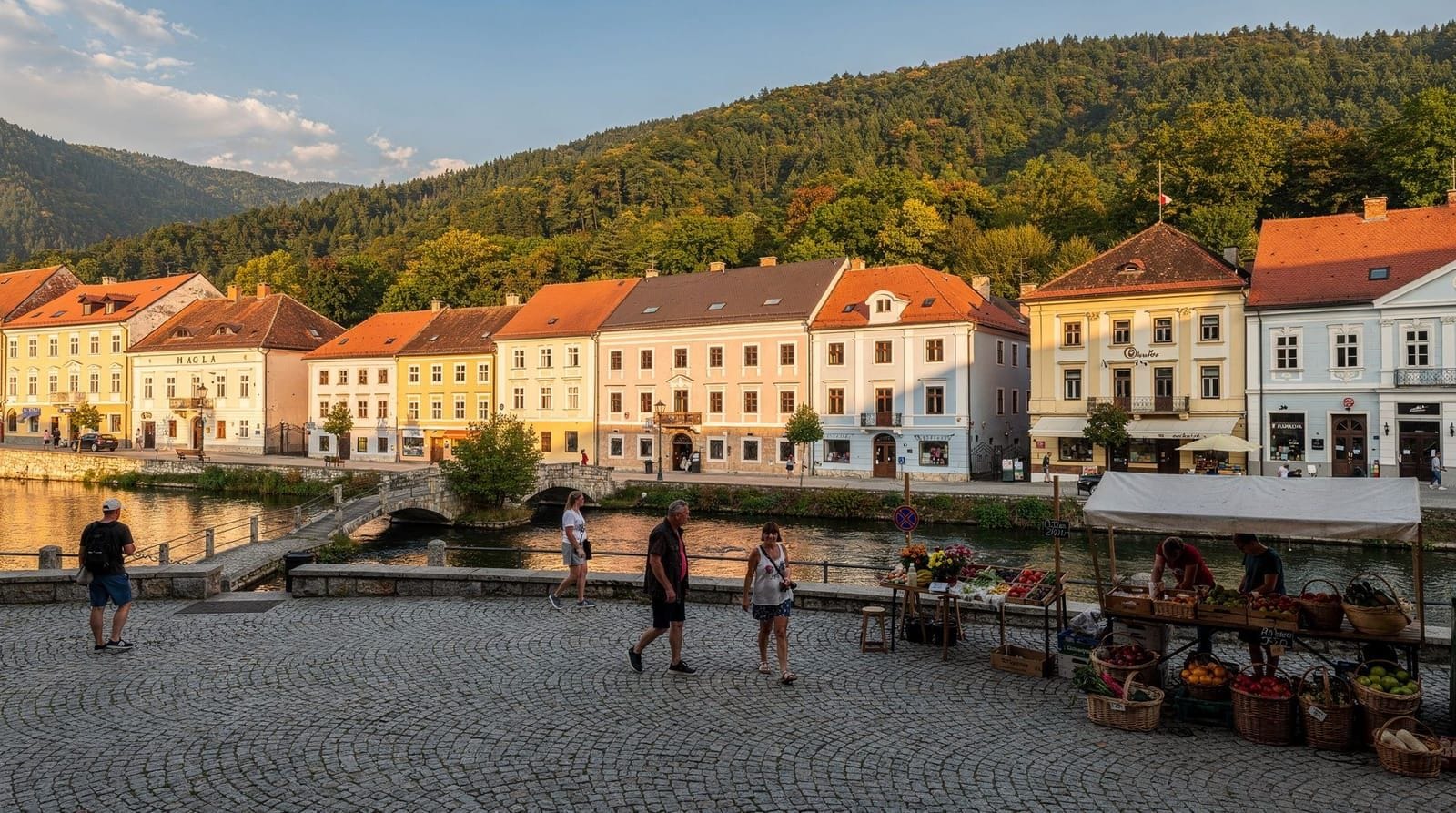
Samobor is a Baroque market town at the foot of the Samobor Hills — reachable in 30–40 minutes by bus from Zagreb’s main bus station. The town square is pleasant, the ruined castle above requires a short hike through forest, and the local kremšnita (vanilla cream cake) is aggressively marketed as a tradition that you are obliged to try. You are. It is good.
Not a major excursion, but a pleasant half-day if you want to get out of Zagreb without committing to a long drive. Works especially well in spring (flowering) or autumn (forest colours).
Practical tips from Zagreb
What to prioritise: If you have one day free from Zagreb, Plitvice is the clear first choice. If you have two days and the coast is not your focus, combine Plitvice with either Ljubljana/Bled or the Zagorje castles.
Plitvice vs direct to the coast: Many travellers use Plitvice as a Plitvice day trip or as a transit point on the way down to Split — a smart approach. See Zagreb to Split route for the transit logic.
Car vs tour: For Plitvice, a tour guarantees entry tickets and handles parking (which can be competitive). For the Zagorje and Samobor, a car is essential — no regular tours run. Ljubljana is equally accessible by bus or car.
Zagreb Advent (December): If you are visiting in December, Zagreb itself becomes a destination — Zagreb Advent is one of Europe’s most awarded Christmas markets. Day trips in December are less practical (short days, colder, Plitvice lovely but cold), and Zagreb itself keeps you busy.
Sequencing Zagreb into a longer Croatia trip
Most visitors treat Zagreb as a start or end point rather than a standalone stay, and the day trips here work well either way. If you are heading south afterwards, our Zagreb to Split guide explains how to fold a Plitvice stop directly into that drive rather than doing it as a separate round trip from the capital. Travellers building a longer loop through Istria, Zagreb and Slovenia should see the Istria-Zagreb-Slovenia circuit itinerary, which sequences Ljubljana and Bled as a through-route rather than a there-and-back day. For a full national itinerary that includes Zagreb as one stop among several, the 14-day Croatia itinerary shows how much time is realistic to give the capital versus the coast.
Frequently asked questions about Day Trips from Zagreb
How far is Plitvice Lakes from Zagreb?
About 150–160 km by road, roughly 2–2.5 hours drive south on the A1 motorway and then regional roads. The journey is straightforward and well signposted. Organised tours from Zagreb depart around 8 am, arrive at the park by 10–10:30 am, spend 3–4 hours inside, and return by evening. Plitvice is the most popular day trip from Zagreb for good reason.Is Ljubljana doable as a day trip from Zagreb?
Yes. Ljubljana, the Slovenian capital, is just 140 km from Zagreb — about 1.5 hours by road or 2.5 hours by direct bus. Day trips combining Ljubljana (morning city walk, castle, riverside cafés) with Lake Bled (afternoon — the island church, the castle view, the lake) are one of the most popular options from Zagreb. You need a valid Schengen-area document (for EU citizens) or passport, but no visa for most nationalities.Can I visit Lake Bled as a day trip from Zagreb?
Yes, but it is 180–200 km from Zagreb — about 2–2.5 hours by car, or you need to go via Ljubljana by bus or train. Lake Bled on its own as a day trip is tight. Most people combine Ljubljana and Bled together, spending a few hours in each. If you are pressed for time, Ljubljana alone is more manageable and very satisfying as a city day trip.What is Samobor and is it worth a day trip from Zagreb?
Samobor is a small Baroque town 25 km west of Zagreb, set in a forested valley with a ruined castle and a tradition of kremšnita (vanilla cream cake that locals will explain to you in great detail). It is reachable by bus from Zagreb's main bus station in 30–40 minutes. A gentle, pleasant half-day — not a major attraction but a relaxed change of pace from the city.What is the Zagorje region and what can I see there in a day?
Zagorje is the hilly, green region north of Zagreb, characterised by vineyard slopes, hilltop castles, thermal spas and rural Croatian culture. Key stops: Trakošćan Castle (a 13th-century hilltop fortress above a reflective lake), Veliki Tabor (a well-preserved Renaissance castle), and the Kumrovec ethnographic village (birthplace of Josip Broz Tito). A car day covering two or three of these makes for an excellent cultural loop north of Zagreb.Is Istria a realistic day trip from Zagreb?
Just. The nearest Istrian town, Rijeka, is 160 km from Zagreb (1.5 h). Rovinj or Pula are 250–280 km (2.5–3 h). A day trip to Pula or Rovinj from Zagreb is a long drive day — not impossible, but tiring if you want time to actually explore. If you are specifically drawn to Istria, consider an overnight or make it part of a Istria-Zagreb-Slovenia circuit rather than a single long day.Do I need a visa or special document to visit Slovenia from Zagreb?
No visa required for US, UK, Australian, Canadian and EU/Schengen nationals. Slovenia is a Schengen country — the same zone as Croatia since January 2023. EU citizens can cross with an ID card. Non-EU nationals (UK, US, etc.) should carry their passport. The border crossing is typically fast; there are no routine passport controls between Croatia and Slovenia since both are Schengen.Which day trip from Zagreb should I choose if I only have one day?
Plitvice Lakes, without much debate — it is the single most rewarding day trip within range of the capital and the reason most visitors build a Zagreb stop into their route at all. If you have already seen Plitvice or nature isn't the priority, Ljubljana and Lake Bled make the more memorable alternative, offering a completely different country and landscape in the same day.Can I do Plitvice and Ljubljana/Bled on the same trip from Zagreb without rushing?
Not in a single day — they run in different directions and each deserves a full day of its own. With three or four nights in Zagreb, however, both fit comfortably: one day for Plitvice, one for Ljubljana and Bled, and a day either side for Zagreb itself and a shorter escape like Samobor or Zagorje.
Top experiences
Bookable activities with verified prices and instant confirmation on GetYourGuide.
Top experiences
Best-rated activities across GetYourGuide and Viator.

Mostar and Herzegovina Tour with Kravica Waterfall from Split & Trogir
- Viator

Mostar & Kravice waterfalls full-day guided tour from Split
- Viator

Mostar and Kravica Waterfall Discovery Day Trip from Split or Trogir
- Viator

Taste of Bosnia: Private Trebinje Gastro & Wine Tour
- Viator

From Split/Trogir: Mostar and Medjugorje Tour with Wine Tasting
- Viator

Split to Dubrovnik Private Transfer with Mostar Town
- Viator