Kotor Day Trip from Dubrovnik — Bay of Kotor, Perast and the Fortress Hike
Dubrovnik: Group full-day tour to Kotor and Perast
Is a Kotor day trip from Dubrovnik worth it?
Yes. The drive into the Bay of Kotor is one of the most dramatic coastal approaches in Europe, and Kotor's medieval walled city is genuinely beautiful. From Dubrovnik it is about 2 hours each way. Passport required. The combination of bay scenery, old town walk and optional fortress hike fills a satisfying day without being exhausting.
| Where | Bay of Kotor, Montenegro — about 2hrs from Dubrovnik |
| Cost | Around EUR 60-90/person for a guided day tour |
| Documents | Valid passport required (Montenegro is outside the EU/Schengen) |
| Time needed | Full day (12-13hrs door to door) |
| Best time | May-June or September-October |
The drive in is part of the day
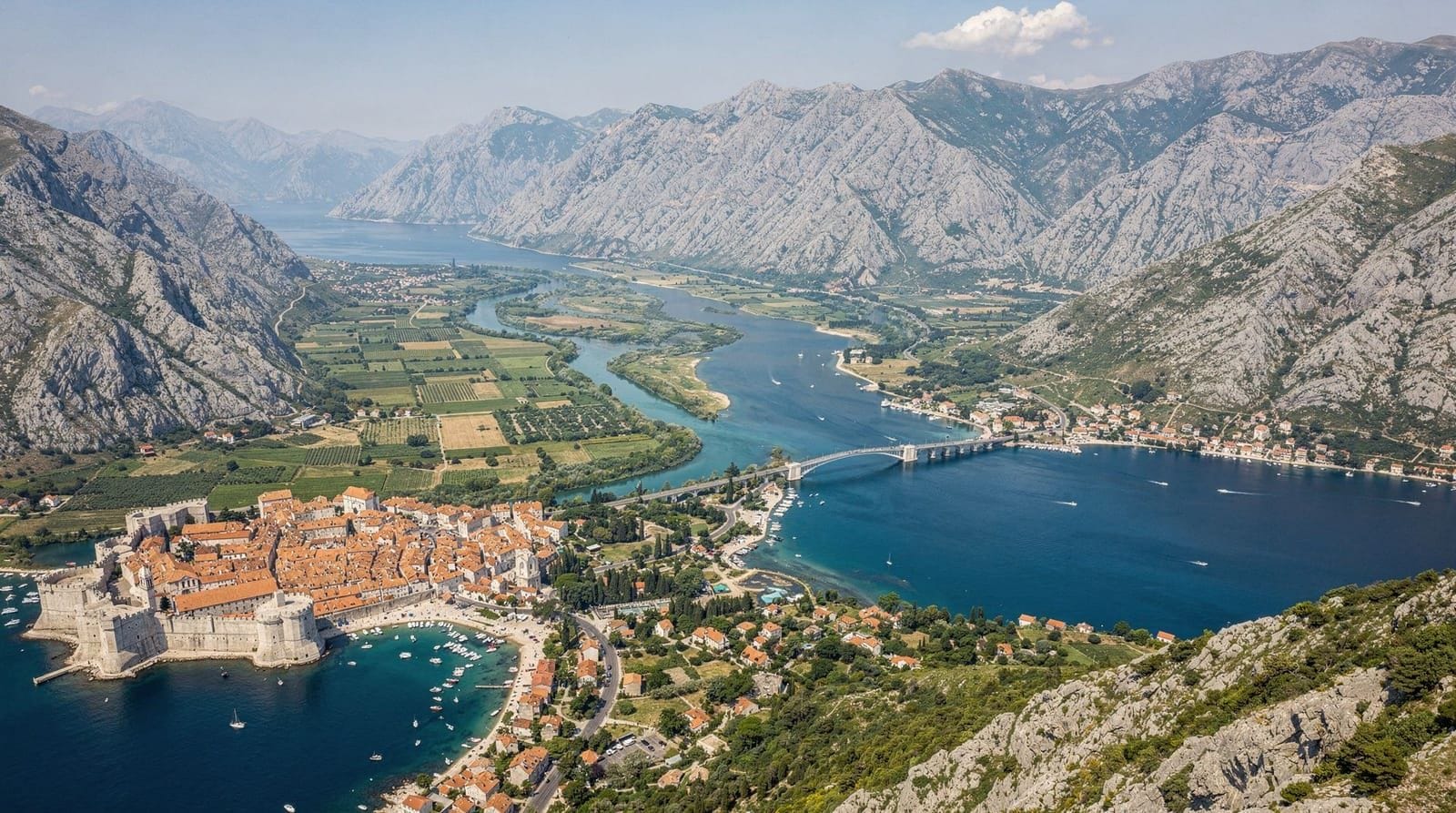
The Bay of Kotor is not just a destination. The approach — driving south from Dubrovnik along the coastal highway, dropping into Montenegro at Herceg Novi, then following the northern shore of the bay as the water opens up to your left and mountains rise to your right — is one of the most dramatic coastal drives in the Mediterranean.
The bay is not technically a fjord (it was not carved by glaciers) but it functions like one: a narrow channel opening into a wide enclosed sea, surrounded by limestone mountains that rise almost vertically from the water. As you drive deeper into it, the scale keeps revealing itself. The bay is 28 km long and up to 9 km wide at its widest point, yet remains almost entirely enclosed — from Kotor’s old town at the far end, you cannot see the Adriatic at all. It feels like a mountain lake with ships.
Getting from Dubrovnik to Kotor
By organised tour: The simplest option. Tours depart Dubrovnik around 7–8 am, spend 3–4 hours in Kotor (and often 1 hour at Perast), and return by 8–9 pm. The guide handles border logistics and provides historical context. Most tours cost €60–90 per person.
By car: The most flexible option. From Dubrovnik, take the coastal road south (or the motorway to Čilipi/airport junction, then rejoin the coast road). You cross into Montenegro at Debeli Brijeg — usually quick. Follow the E65 highway south along the coast to Herceg Novi, then around the bay to Kotor. Park outside the city walls (paid parking available; the old town itself is pedestrian).
Border and rental car: Confirm cross-border permission with your car hire company before leaving. Most companies allow Montenegro; some charge a daily cross-border fee and require advance notification. Driving to Montenegro without written permission may void your insurance.
Journey time: 1.5–2 hours from Dubrovnik in normal conditions. Add 30–60 minutes in peak summer for the border and the winding bay road.
What to do in Kotor
The old town
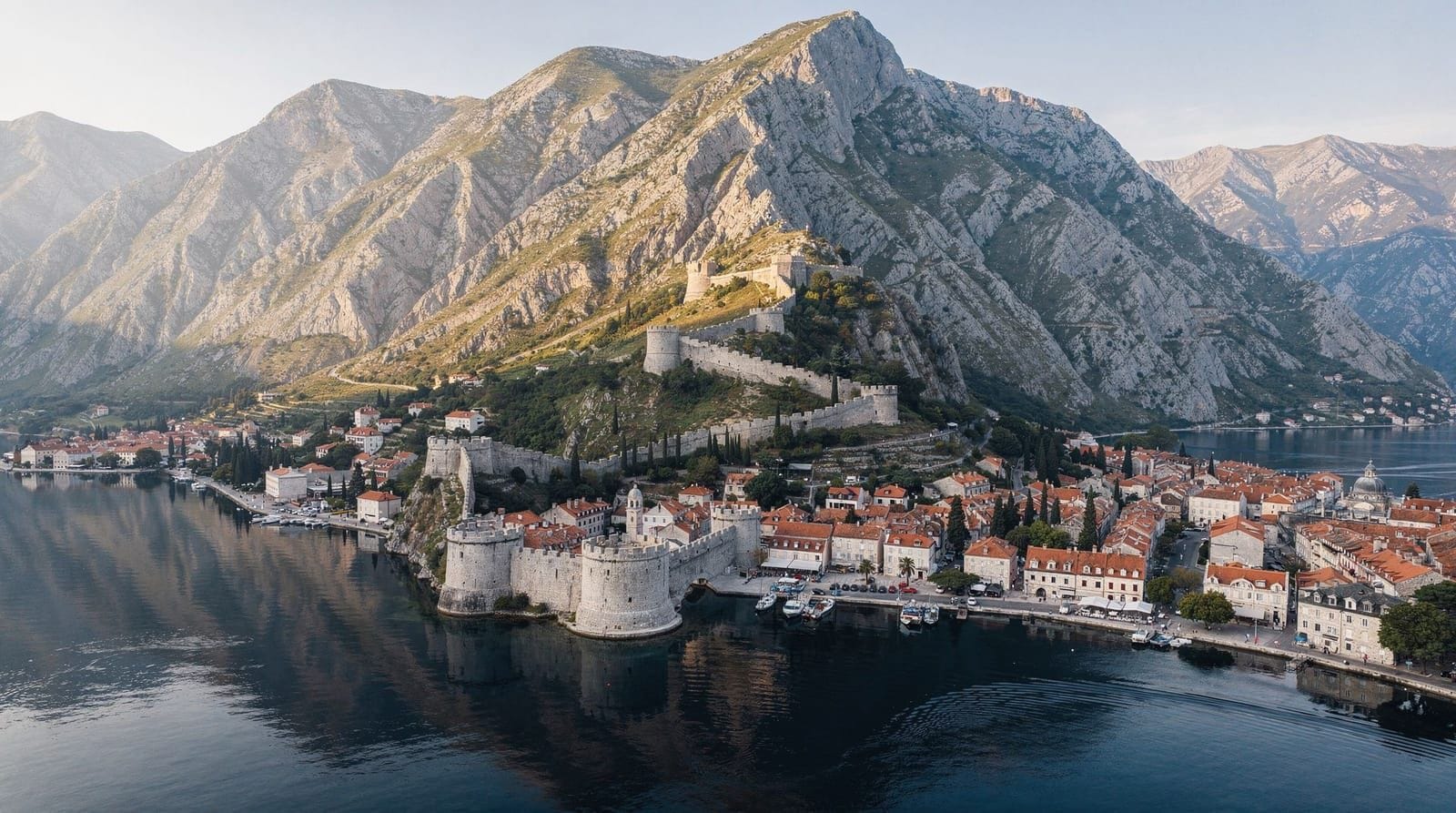
Kotor’s old town is small enough to explore without a map but rich enough to keep you busy for 2–3 hours. Enter through the Sea Gate (Morska vrata) — the main entrance — and follow the Stradun-equivalent main street to the Cathedral of St Tryphon (12th century, rebuilt after the 1667 earthquake that devastated the Adriatic coast; the relics of the patron saint are kept inside).
Beyond the cathedral: the Church of St Luke (12th century, functioning as both Catholic and Orthodox simultaneously for a time), St Mary Collegiate Church, and the city’s main square. The labyrinth of back lanes between these monuments is where you find the residential Kotor that most tourists miss.
The cats of Kotor: Kotor is genuinely known for its cats. The legend — disputed but charming — holds that Venetian sailors brought cats from the east to control rats on ships, and the feline population became part of the city’s identity. There is a small cat museum in the old town. The cats themselves are well-fed, somewhat indifferent to visitors, and photogenic. They are not a tourist gimmick — they are residents.
The fortress hike
The San Giovanni Castle (St John’s Fortress) sits 260 metres above the old town, connected by approximately 1,350 steps built into the cliff face. The stone stairway begins inside the old town walls — look for the gate near the north of the fortifications.
Hike time: 30–45 minutes upward at a steady pace. The steps are steep and irregular. In July–August, start before 9 am to avoid peak heat. Wear shoes with grip — the stone is slippery when wet.
What you get: Views over the entire bay system. From the top, Kotor’s old town is visible as a perfect medieval grid below, the bay stretches both directions, and the mountains rise on all sides. On a clear day, you can see all the way to the Adriatic entrance. This is the view Kotor is famous for photographically — if you want it, the hike is essential.
Entry fee: Around €8 to access the stairway and fortress. Buy at the gate near the start of the steps.
Perast — the quiet village with the island church
Perast is 12 km back along the bay from Kotor — a 20-minute drive. Stop here on the way in or out of Kotor and allow 1–2 hours.
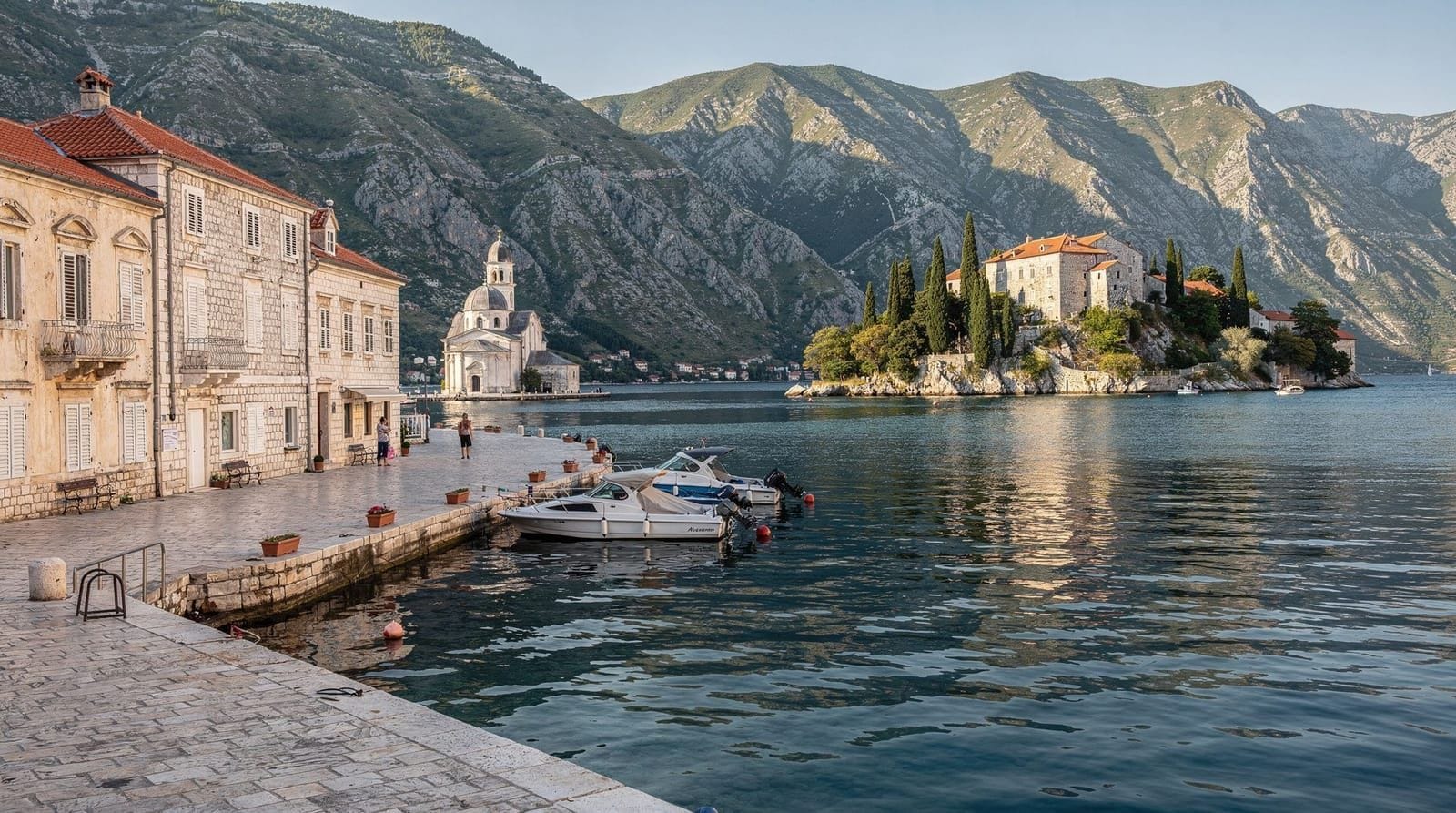
The village is small — a single waterfront street of Baroque palaces built by Venetian sea captains in the 17th and 18th centuries. Most are ruinous or converted to small hotels and restaurants. The main attraction is offshore.
Gospa od Škrpjela (Our Lady of the Rocks): An artificial island created over centuries by local sailors who, by legend, sank old ships laden with rocks to build a platform for a chapel. The current church dates to 1630 and contains a celebrated collection of votive paintings — silver and gold objects donated by sailors as thanks for safe return, and 68 panels painted by local artist Tripo Kokolja. The tradition of ‘fašinada’ — adding new rocks to the island on the evening of 22 July — continues to this day.
Rowing boats to the island depart from Perast waterfront (€5 return, frequent service). The chapel interior is genuinely moving — the accumulation of gratitude and devotion made physical over 400 years.
Adding a boat cruise
Several tours combine the drive to Kotor with a boat cruise on the bay — departing Dubrovnik by road, visiting Perast and Kotor, then crossing the bay by boat at some point. The combination is scenic and worth it if your tour includes it.
What to eat and drink in Kotor
Montenegro’s food sits between the Adriatic seafood tradition and a heavier Balkan interior cuisine. In Kotor’s old town:
Seafood: Fresh fish and shellfish from the bay — grilled whole fish, mussels, squid. Less polished than Dubrovnik’s tourist restaurants but often fresher.
Njeguški pršut: Montenegro’s cured ham, from the village of Njeguši in the mountains above Kotor. Harder and more intensely flavoured than Dalmatian pršut; served with local cheese.
Vranac wine: Montenegro’s main red grape — dark, full, earthy. Plantaže is the main producer; you will see their Vranac on every wine list.
Coffee: Like Croatia, Montenegro has a culture of long coffees and slow café mornings. There is nothing fast about ordering and drinking coffee here. Budget the time.
Currency note: Montenegro uses the euro despite not being an EU member, which makes prices easy to compare directly with Croatia without any mental conversion. Card payments are widely accepted in Kotor’s old town restaurants, though smaller Perast cafés and the rowing boat operators to Our Lady of the Rocks often prefer cash.
Practical tips
When to visit Kotor: May, June and September–October are ideal. July–August is extremely hot (Kotor’s enclosed valley position traps heat) and the old town fills with cruise ship passengers from mid-morning. Arriving before 9 am or staying until the cruise crowd leaves (typically 5–6 pm) dramatically improves the experience.
Tour timing tip: Tours departing Dubrovnik at 7–7:30 am get you into Kotor before the worst of the cruise ship influx. This is worth prioritising when choosing a tour.
Buying local: The old town’s souvenir shops sell the usual range of lavender, olive oil and maritime memorabilia. The cats of Kotor merchandise is inescapable and ranges from charming to terrible.
See the Montenegro day trip guide for the wider Montenegro context and if you are considering Budva or Cetinje. Also worth reading: the Dubrovnik-Mostar-Kotor circuit itinerary for a multi-day version of this region.
Kotor versus Mostar: which day trip to pick
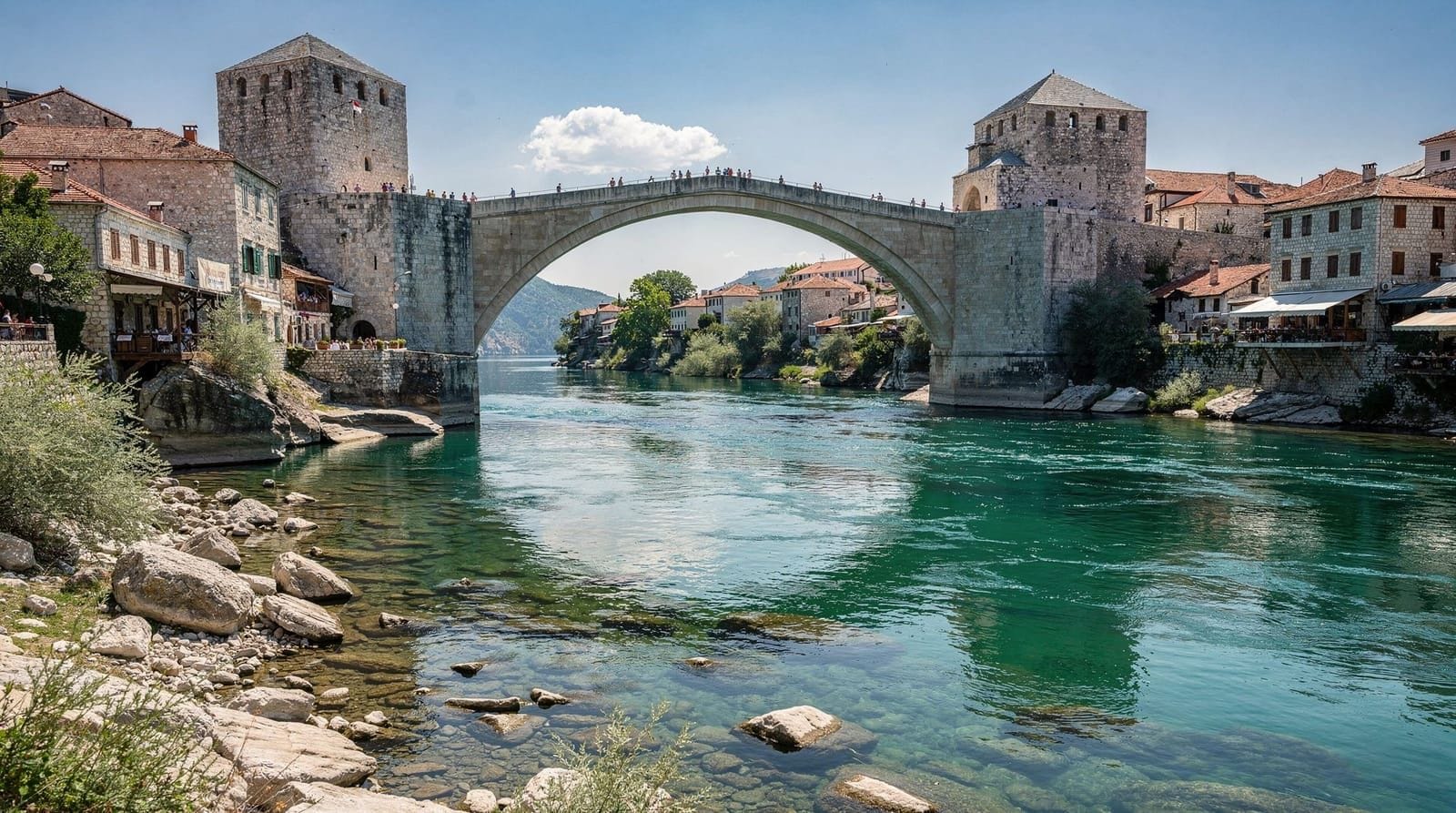
Dubrovnik sits within reach of two very different border-crossing day trips — Kotor in Montenegro and Mostar in Bosnia and Herzegovina — and many visitors with limited time have to choose. Kotor offers dramatic bay scenery, a compact medieval old town and a genuine hike with a payoff view; Mostar offers the Old Bridge, an Ottoman-era old town and a starker, more recent history connected to the 1990s war. Both require a passport and both run 1.5-2 hours each way from Dubrovnik. If you can only do one, Kotor edges it for scenery and a lighter, more relaxed day; Mostar edges it for history and cultural depth. The Dubrovnik vs Kotor comparison is also worth a read if you are deciding how to split your time across the two cities rather than just the day trip.
Should you self-drive or take a tour
Self-driving gives you control over timing — arriving before the cruise crowds and leaving Perast for last, for instance — but it also means navigating an unfamiliar border crossing, confirming cross-border rental permission in advance, and driving the winding bay road around Kotor’s edge, which can be slow in summer traffic. A guided tour removes all of that friction: the border crossing is handled for you, the guide provides context you would otherwise miss (the fašinada tradition at Perast, the history behind the fortress steps), and you can simply look at the scenery instead of the road. For a first visit, especially without a rental car already in hand, the guided option is the easier and often cheaper choice once cross-border fees are factored in.
Frequently asked questions about Kotor Day Trip from Dubrovnik
Do I need a passport to visit Kotor from Dubrovnik?
Yes. Montenegro is not in the EU and not in Schengen — it is an independent country with its own border. You must present a valid passport when crossing from Croatia. EU national ID cards are accepted for EU citizens. US, UK, Australian and Canadian nationals do not need a visa. The border crossing is usually quick (10–20 minutes) but can slow in July–August.How far is Kotor from Dubrovnik?
About 90 km by road — roughly 1.5–2 hours drive each way. The route follows the Adriatic coast south through Herceg Novi, then along the northern shore of the Bay of Kotor. The road is narrow and winding in sections near the bay, but the scenery is spectacular.Can I drive a rental car from Croatia to Montenegro?
Most rental companies permit it, but many charge a cross-border fee (typically €5–20 per day) and require advance notice. Check your rental agreement before departure — driving to Montenegro without permission can void your insurance. Some budget companies prohibit it entirely.How long is the fortress hike above Kotor?
The hike from the town gate to the fortress (San Giovanni Castle) takes 30–45 minutes each way on a stepped stone path — approximately 1,350 steps. The fortress itself is at 260 metres above sea level; the views over the Bay of Kotor are extraordinary. The hike is strenuous in summer heat but entirely doable for anyone in reasonable fitness. Entry fee around €8. Start early in the day to beat the heat.What is the village of Perast and is it worth visiting?
Perast is a small Baroque village on the shore of the Bay of Kotor, about 12 km northwest of Kotor town. It is peaceful, beautifully preserved and relatively uncrowded compared to Kotor. The main attraction is two small islands just offshore: Gospa od Škrpjela (Our Lady of the Rocks, an artificial island with a celebrated 17th-century church) and St George island (a Benedictine monastery, not open to visitors). Rowing boats ferry visitors to Our Lady of the Rocks from Perast waterfront. Worth 1–2 hours if your schedule allows.What is there to see in Kotor itself?
Kotor's old town is a UNESCO World Heritage Site: a compact medieval city enclosed by Venetian walls that follow the cliffs above. Inside: the Cathedral of Saint Tryphon (12th century), the Romanesque Church of St Luke, the Maritime Museum of Montenegro, a maze of cobbled squares and stone lanes, and the famous 'cats of Kotor' — a local legend and genuine urban population of cats treated almost as civic mascots.Is Budva worth adding to a Kotor day trip from Dubrovnik?
Budva is Montenegro's main beach resort, 25 km south of Kotor. The old town has a similar Venetian walled-city character to Kotor. Adding Budva to a Kotor day from Dubrovnik makes for a very long day — both worth doing, but rushed together. If forced to choose, Kotor's old town and the Bay scenery are more distinctive. Budva is better as a separate outing or if you are staying in Montenegro longer.
Top experiences
Bookable activities with verified prices and instant confirmation on GetYourGuide.
Top experiences
Best-rated activities across GetYourGuide and Viator.

Mostar and Herzegovina Tour with Kravica Waterfall from Split & Trogir
- Viator

Mostar & Kravice waterfalls full-day guided tour from Split
- Viator

Mostar and Kravica Waterfall Discovery Day Trip from Split or Trogir
- Viator

Taste of Bosnia: Private Trebinje Gastro & Wine Tour
- Viator

From Split/Trogir: Mostar and Medjugorje Tour with Wine Tasting
- Viator

Split to Dubrovnik Private Transfer with Mostar Town
- Viator