Mostar Day Trip from Dubrovnik or Split — Stari Most, the Old City and What to Expect
Dubrovnik: Mostar and Pocitelj day trip
Is a day trip to Mostar from Croatia worth it?
Yes, unreservedly. Mostar is culturally unlike anything else in the western Balkans — the Stari Most bridge, the Ottoman bazaar, the call to prayer, the mix of mosque and church — and it is entirely different from coastal Croatia. The drive from Dubrovnik (3 h each way) is long but the experience justifies it. From Split the drive is 3–3.5 h. Passport is essential.
| Where | Mostar, Bosnia and Herzegovina |
| Cost | Around EUR 60-100/person for a guided day tour |
| Documents | Valid passport required (outside EU/Schengen) |
| Time needed | Full day (12-14hrs from Dubrovnik; similar from Split) |
| Best time | May-June or September-October |
Why Mostar is worth the long drive
Croatia’s coast is extraordinary, but after a few days of Adriatic blue and Venetian Gothic, Mostar arrives like a completely different world. The Ottoman market quarter, the sound of the muezzin, the Arabic script alongside Cyrillic and Latin on the street signs — this is the point at which the Balkans reveal that they contain multiple civilisations compressed into a small space.
The Stari Most bridge is the image people travel for. But the context around it matters: the market streets leading to the bridge, the mosque whose minaret rises above the old town, the cafés built into old stone by the river’s edge, and the genuine coexistence (fractured but still present) of Bosniak, Croat and Serb communities in this divided city. Mostar is not a polished heritage site. It is a living city that has had one of the harder 20th centuries of any European town.
Getting to Mostar
From Dubrovnik
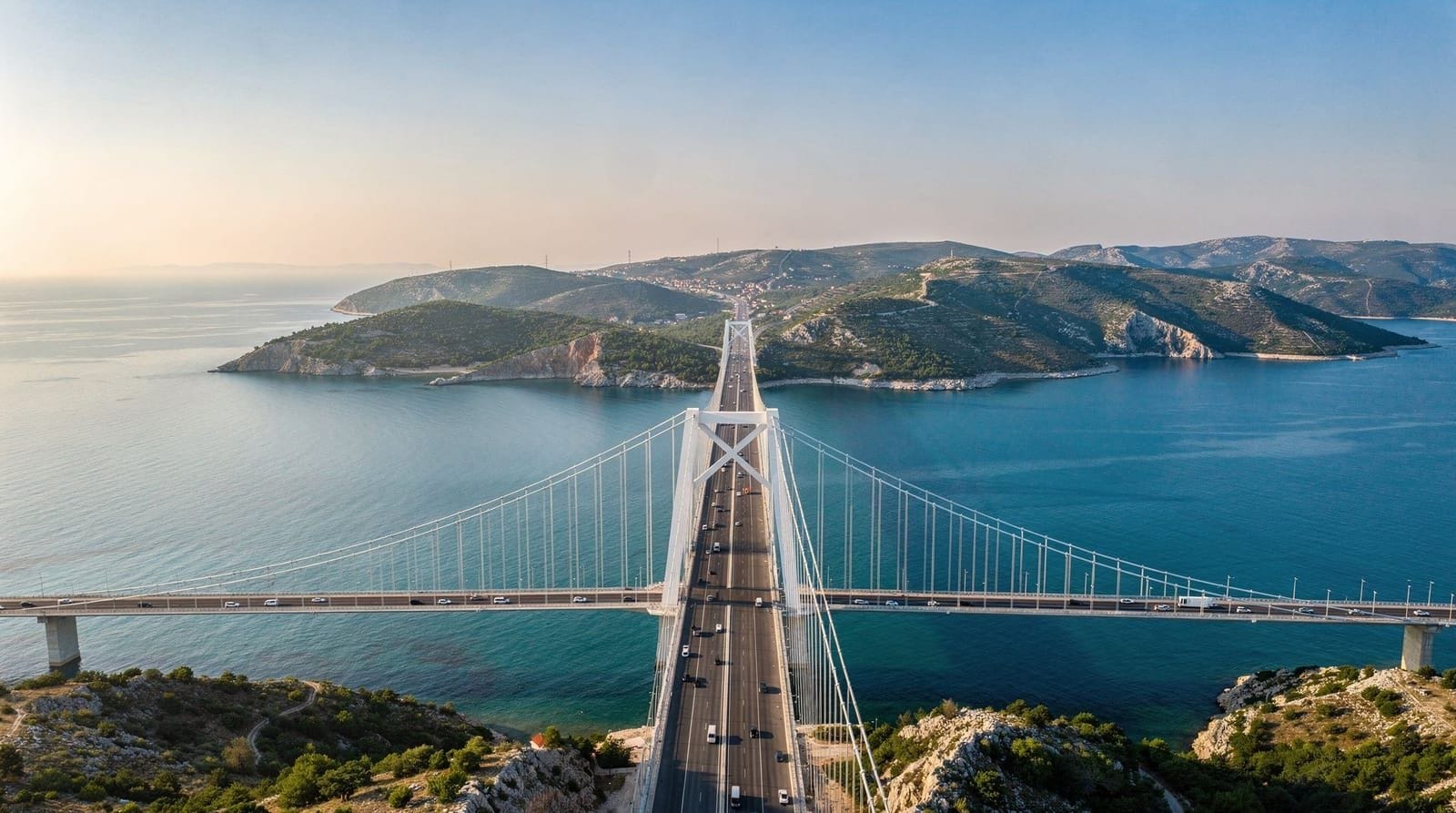
The standard route: take the Pelješac Bridge (opened 2022) to bypass the Neum corridor, then north on the D8 coast road or directly via the A1 motorway spur to Metković, cross into Bosnia at the Metković–Čapljina border, and follow the road north to Mostar.
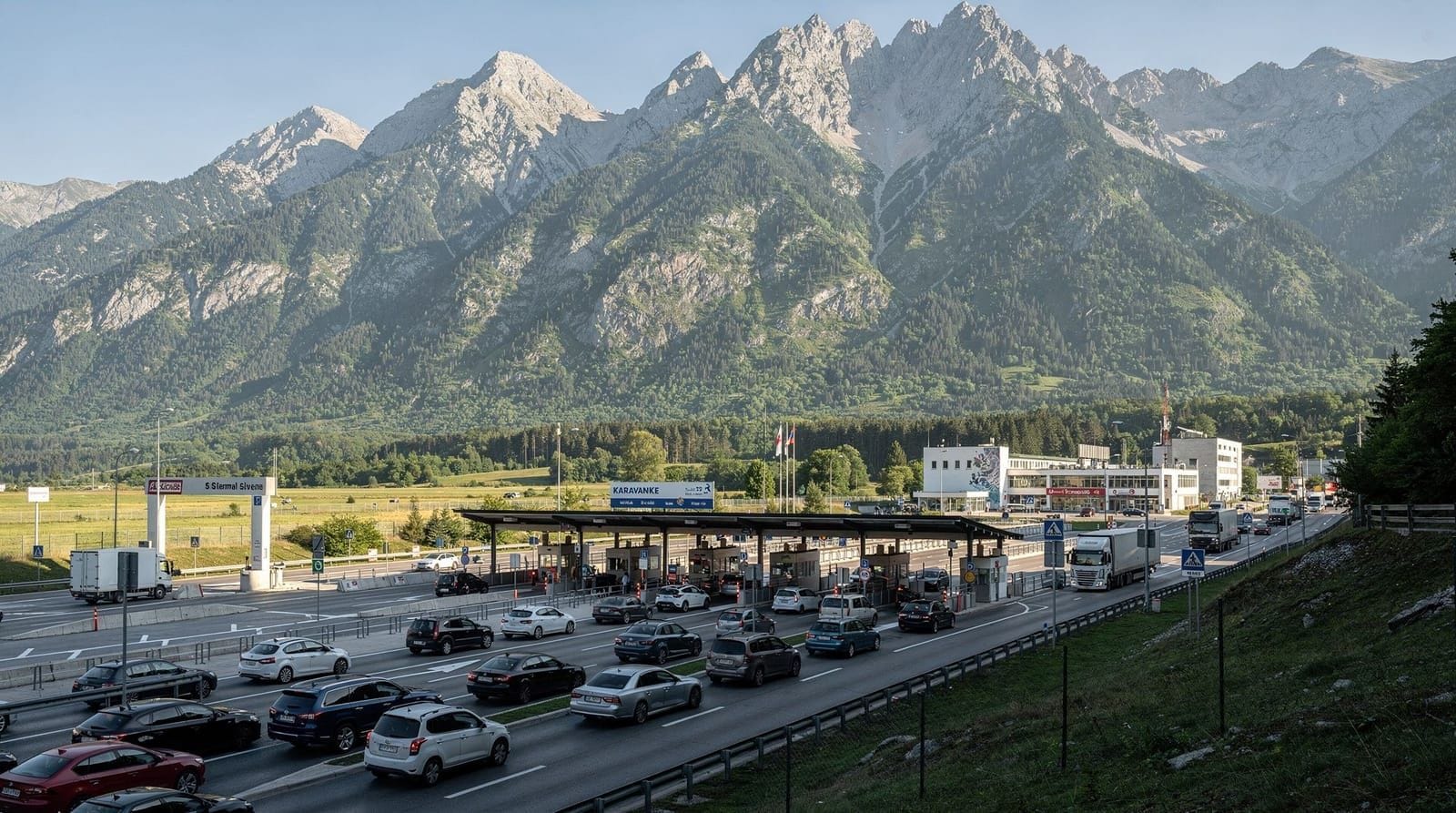
Journey time: 2.5–3 hours in light traffic. Add 30–60 minutes for border queues in July–August.
By tour: Organised tours depart Dubrovnik at 7–8 am and return by 8–9 pm, giving 4–5 hours in Mostar. This is the easiest option — no parking stress, no passport processing anxiety, local guide context included.
By bus: Approximately 1–2 buses daily from Dubrovnik bus station to Mostar (journey ~3 hours, €10–15 one way). The bus handles the border crossing. Less frequent return buses — check times before you go.
By car: Drive yourself and benefit from flexibility — stop at Počitelj or Blagaj as you choose, linger longer in Mostar. Book the return border crossing time in your mental schedule. Rental car companies generally permit entry into Bosnia; some charge a cross-border fee (€5–15/day) and some require advance notice.
From Split
Journey time: 2.5–3 hours via the inland Tomislavgrad route through Bosnia, entering Bosnia near Posušje. Or 3–3.5 hours via the coastal road through Ploče and Metković. The inland route is faster if you are comfortable with mountain road driving.
Most organised tours from Split to Mostar are long days — 7 am departure, 10 pm return — with 4 hours in Mostar. The shorter distance relative to the border location makes the coastal route slightly more common for coach tours. See day trips from Split for the full Split context.
What to see in Mostar
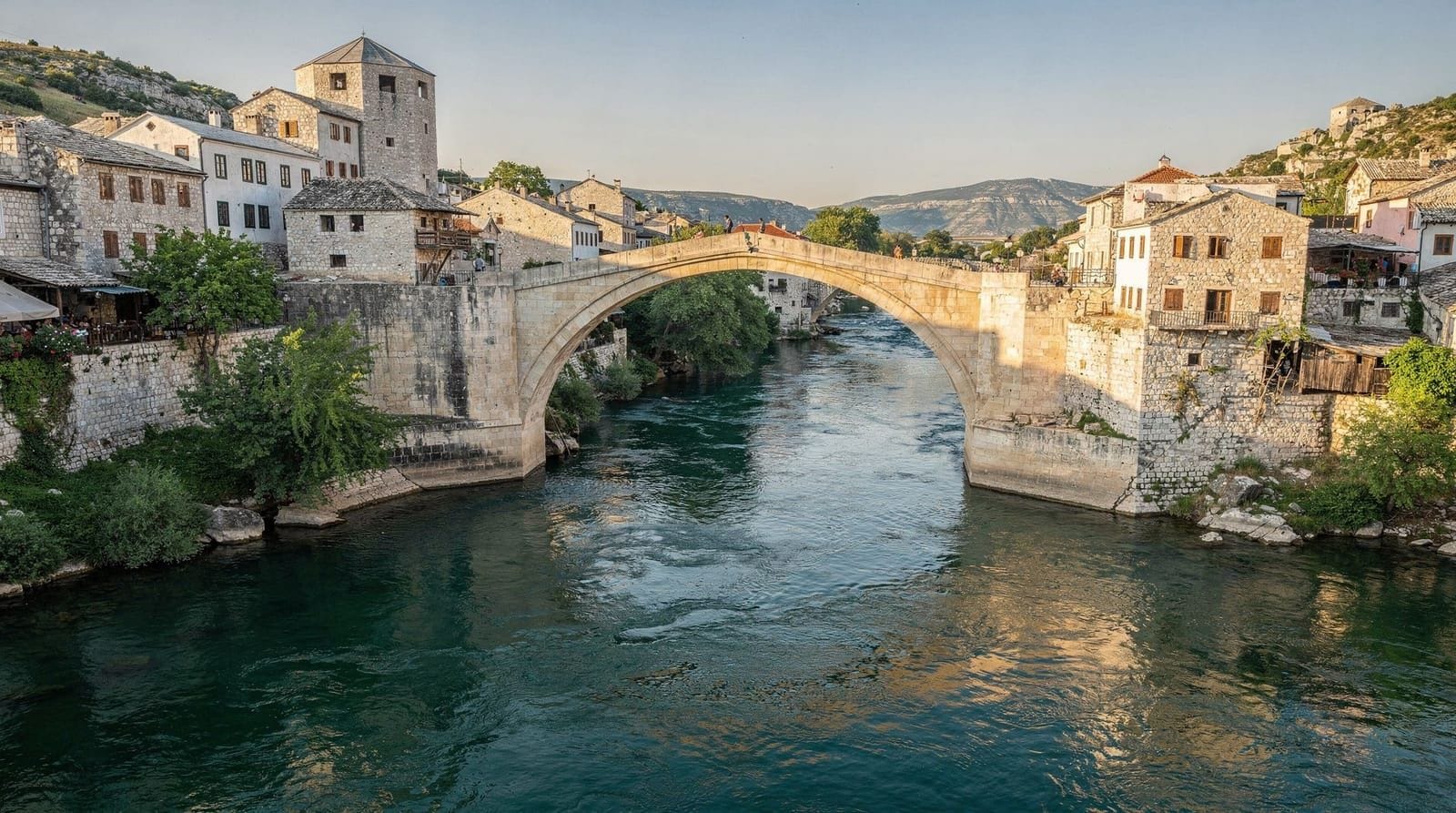
Stari Most (Old Bridge): The emotional centrepiece of the city. Cross it, stand on its cobbled arch (slippery, especially in wet weather), look down at the emerald Neretva 21 metres below, and look up at the minarets framing the hillside. The view from the bank of the river — bridge reflected in the water, Ottoman houses rising above — is the image that has defined Mostar for centuries.
The dive: A tradition of bridge-diving has existed in Mostar for 450 years. Local divers jump from the 21-metre arch as a test of bravery. Today organised dives happen most afternoons in summer — you can watch from the riverbank. The divers will pass a hat afterward; tipping is entirely voluntary, but a euro or two is appropriate if you watched.
The Old Bazaar (Kujundžiluk): The cobbled market street leading to the bridge from the mosque side, lined with copper workshops, handwoven textiles, hand-painted ceramics, and small cafés. It is genuinely commercial and aimed at tourists, but also genuinely traditional in craft — the copper working you see in these shops is not decorative reproduction. Buy something.
Koski Mehmed Pasha Mosque: A 17th-century mosque whose minaret offers one of the best views over the old bridge and surrounding rooftops. Entry fee around €5. The prayer hall is open to non-Muslim visitors outside prayer times.
Croat West Mostar: Cross the main boulevard (the line that was front line during the war) and the city changes — Catholic crosses, Croatian flags, different coffee shops. Mostar is still physically divided between the mainly-Bosniak eastern side and the mainly-Croat western side. This is not hostility toward tourists — both sides are safe to visit — but it is one of the more visible reminders in Europe of how recently the 1990s wars ended.
War remnants: Several buildings in the city centre remain as they were after the siege — bullet-scarred, empty, with vegetation growing through windows. These are not tourist sites; they are a deliberate part of the city’s memory. Photograph respectfully.
Počitelj and Blagaj — worth adding?
Počitelj is a fortified medieval village 20 km south of Mostar, sitting on a limestone cliff above the Neretva gorge. The 15th-century clock tower, mosque and huddled stone houses make a striking half-hour stop. Many organised tours include it — worth doing if your tour allows time.
Blagaj is a village 12 km southeast of Mostar where the Buna river emerges fully formed from a cave at the base of a vertical cliff. A 16th-century Dervish monastery (tekija) sits at the cave entrance above the water — one of the most atmospheric and unusual sites in Bosnia. Worth the detour if you are self-driving. Usually not included in standard tour itineraries.
Kravice Waterfalls — add or not?
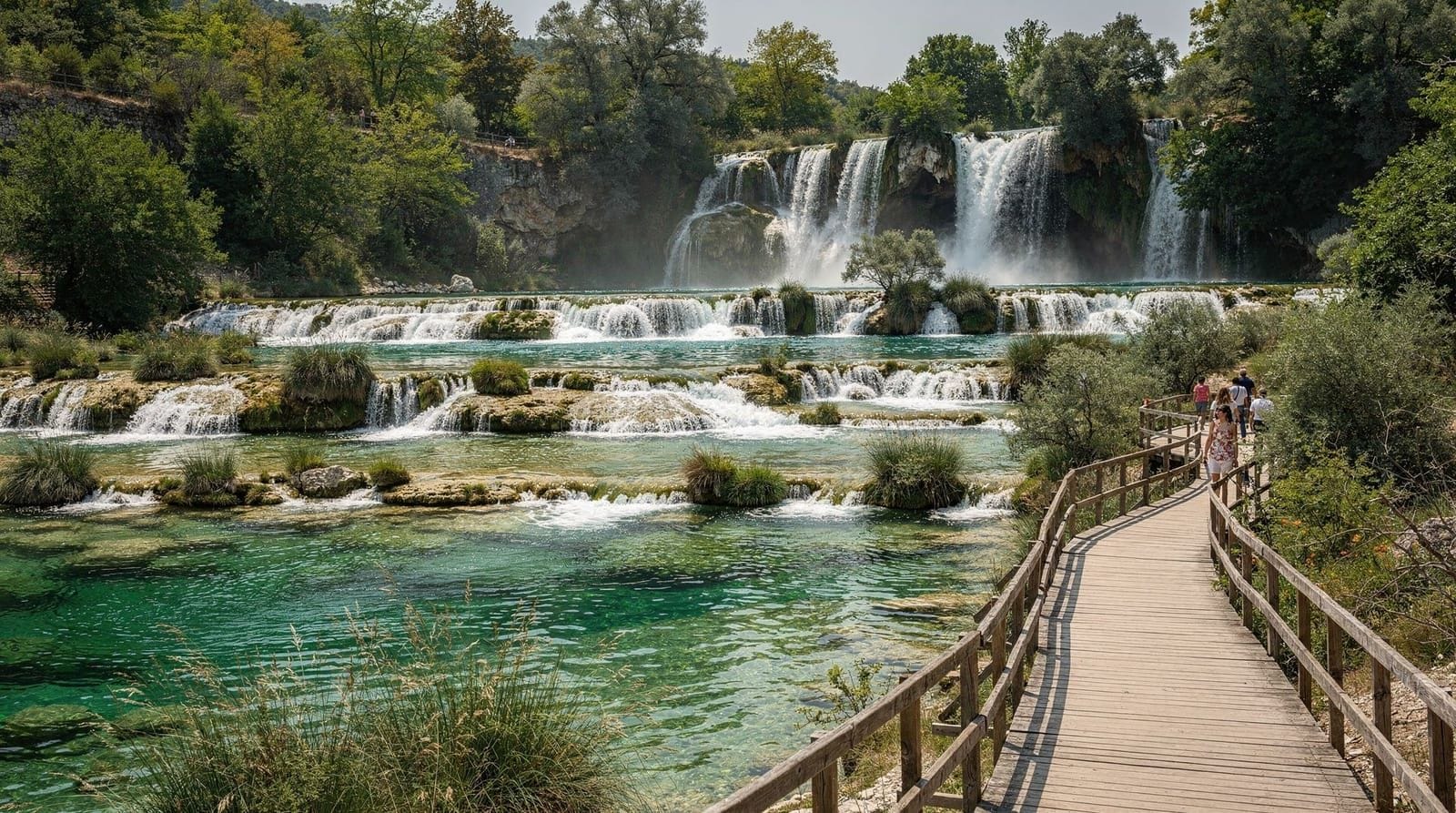
Kravice (or Kravica) Waterfalls are a semi-circular waterfall cascade on the Trebižat river, about 40 km south of Mostar. In summer they are beautiful and popular for swimming. In peak season they can be extremely crowded.
From Dubrovnik with Mostar: Very full day — 14+ hours, multiple stops. Possible and worth it if waterfalls are a priority; tiring if you are already doing a full Mostar walk.
From Split with Mostar: Too much for one day from Split — the distances don’t stack up comfortably. Better to choose Mostar alone.
Practical details
When to visit: Shoulder season (May–June, September–October) is ideal. July–August means peak heat (Mostar sits in a hot bowl — temperatures of 35–40°C are not unusual in August) and longer border queues. Spring and autumn are significantly more pleasant for walking the cobblestones.
What to wear: Mostar is a Muslim-majority city in Bosnia. Women are not required to cover up, but modest dress is appreciated near mosques (shoulders and knees covered). The old town gets very hot in summer — light clothing and good shoes (cobblestones are uneven) are practical.
Food and drink: Bosnian coffee (bosanska kafa) is prepared and served differently from Turkish or Italian coffee — grounds settle in the džezva, you pour slowly and let them settle in your cup. Try ćevapi (small grilled minced meat sausages in flatbread) and burek (flaky pastry filled with meat or cheese). Rakija (fruit brandy) is the Bosnian spirit.
Tour vs independent: Tours save time and handle logistics but give you less flexibility. Independent travel (bus or car) lets you stay longer, visit Počitelj and Blagaj at your own pace, and choose your own restaurants. Both are valid — choose based on your travel style.
Phone and data: Bosnia and Herzegovina is not in the EU, so EU roaming plans typically do not cover it — check your provider’s terms before relying on data for maps or translation, and consider downloading offline maps of Mostar in advance.
For the full multi-country circuit framing: see Dubrovnik-Mostar-Kotor circuit itinerary.
Mostar or Kotor: which border crossing first
Travellers based in Dubrovnik with time for only one cross-border day trip often weigh Mostar against Kotor in Montenegro. Mostar is the longer drive (2.5-3 hours each way versus roughly 2 hours to Kotor) and leans more heavily on history and cultural contrast — the Ottoman bazaar, the war remnants, the divided city — rather than pure scenery. Kotor offers a shorter drive, dramatic bay landscape and a lighter, more relaxed day. Neither trip disappoints, but if your energy for a long day is limited, Kotor is the gentler choice; if you want the more distinctive, less “Adriatic coastal” experience, Mostar delivers it. Both require the same passport rules — see Croatia entry requirements for the wider document picture if you are combining several border crossings on your trip.
Building a realistic Mostar day, hour by hour
A typical guided day from Dubrovnik departs around 7am, reaches the Bosnian border by 8:30-9am depending on queues, and arrives in Mostar by mid-morning. That leaves roughly 4-5 hours in the city — enough for the Old Bridge, the bazaar, the mosque minaret viewpoint and a proper lunch, with a short stop at Počitelj on the way back if your tour includes it. Trying to add both Počitelj and Kravice Waterfalls to the same day is where itineraries start to feel rushed; pick one extra stop rather than both unless you are self-driving and setting your own pace. Day trips from Dubrovnik has the wider context for how a Mostar day compares to the other cross-border options.
Frequently asked questions about Mostar Day Trip from Dubrovnik or Split
Do I need a passport to visit Mostar from Croatia?
Yes. Bosnia and Herzegovina is not in the EU and not in Schengen. You cross an international border and must present a valid passport (or EU national ID card for EU citizens). US, UK, Australian and Canadian nationals do not need a visa for stays under 90 days. The border crossing can be slow in summer — allow extra time.How far is Mostar from Dubrovnik?
About 140 km by road. The drive takes approximately 2.5–3 hours depending on the border queue at the Croatian-Bosnian border crossing and the route taken. Via the Pelješac Bridge (avoiding the Neum corridor), the most common route goes: Dubrovnik → Pelješac Bridge → Metković → Čapljina border crossing → Mostar. Allow 3 full hours each way in peak summer.How far is Mostar from Split?
About 180–200 km by road — roughly 2.5–3 hours via the Tomislavgrad (Duvno) route through Bosnia, or 3–3.5 hours via the coastal route through Ploče and Metković. Both routes cross into Bosnia and Herzegovina. The faster inland route (through Tomislavgrad) is recommended for self-driving from Split.What currency do I need in Mostar?
The Bosnian Convertible Mark (BAM, also written KM), pegged to the euro at exactly 1.95583 BAM = €1. Euros are widely accepted in tourist areas in Mostar, but you will receive change in BAM and some smaller stalls only take KM. It is worth withdrawing a small amount at a Mostar ATM. Cards are accepted in hotels and many restaurants.Is Mostar safe to visit?
Yes. Mostar is safe for tourists. The city has visible war damage from the siege of 1992–1995 — some buildings remain deliberately unrestored as memorials — but the city is peaceful and tourism is well-established. Normal city precautions apply (watch your belongings in the busy bazaar). The bridge divers who leap from Stari Most are professionals; do not be pressured to donate before the jump.What is the Stari Most bridge?
Stari Most (Old Bridge) is a single-arch stone bridge built by Ottoman master builder Mimar Hayruddin in 1566. It spanned the Neretva river for 427 years until it was deliberately destroyed by artillery in November 1993 during the Bosnian War. The bridge was rebuilt using original stone from the riverbed and reopened in 2004. It is now a UNESCO World Heritage Site along with the surrounding historic quarter.Can I combine Mostar with Kravice Waterfalls in one day?
Yes, and many tours do exactly this. Kravice (sometimes Kravica) Waterfalls are a horseshoe waterfall system about 40 km south of Mostar — a 45-minute drive. In summer the pools below the falls are popular for swimming. Adding Kravice to a Mostar day from Dubrovnik makes for a very full but rewarding 14-hour day. From Split the distances are longer and the combination is more rushed.
Top experiences
Bookable activities with verified prices and instant confirmation on GetYourGuide.
Top experiences
Best-rated activities across GetYourGuide and Viator.

Mostar and Herzegovina Tour with Kravica Waterfall from Split & Trogir
- Viator

Mostar & Kravice waterfalls full-day guided tour from Split
- Viator

Mostar and Kravica Waterfall Discovery Day Trip from Split or Trogir
- Viator

Taste of Bosnia: Private Trebinje Gastro & Wine Tour
- Viator

From Split/Trogir: Mostar and Medjugorje Tour with Wine Tasting
- Viator

Split to Dubrovnik Private Transfer with Mostar Town
- Viator