Dubrovnik, Mostar and Kotor: 7-Day South Multi-Country Circuit
Dubrovnik: Mostar and Pocitelj day trip
The southern circuit: three countries, one week
The area around southern Croatia is one of Europe’s most compelling pockets of diversity: medieval Dubrovnik on the Adriatic, Ottoman-era Mostar spanning a Herzegovinian gorge, and Baroque Kotor tucked inside a bay that looks more like a Norwegian fjord than the Mediterranean. Covering all three in seven days is entirely realistic from Dubrovnik as a base — though there are important logistics to get right.
A key reality check: both Mostar and Kotor are day trips from Dubrovnik, not separate bases. Staying overnight in Mostar or Kotor is possible and rewarding, but requires more days. This itinerary uses Dubrovnik as the home base (4 nights) with one night added in Mostar and one in Kotor to give you proper time in each place, plus 1 bonus night in the Pelješac peninsula for wine country.
Border practicalities: Bosnia-Herzegovina and Montenegro are not in the EU or Schengen. EU, US, UK, Australian and most Western passports enter visa-free. Have your passport ready (not just a driving licence) at all border crossings. When renting a car, confirm with the rental company that cross-border driving is permitted — many require an additional fee and specific paperwork for Montenegro (green card) and Bosnia. This itinerary assumes a rental car; it is also fully doable via organised day tours from Dubrovnik if you prefer not to drive.
| Where | Dubrovnik base, with nights in Mostar and Kotor |
| Cost | Around €100–170 per person per day (Croatia sections); Bosnia cheaper |
| Time needed | 7 days for the full circuit; 5 days if you skip the overnight legs |
| Getting there | Dubrovnik Airport (DBV), 20 km south of the city |
| Best time | May, June or September — comfortable driving weather, lighter crowds |
Day-by-day at a glance
| Day | Focus | Base |
|---|---|---|
| 1 | Arrive, settle into Dubrovnik | Dubrovnik |
| 2 | City Walls and Old Town | Dubrovnik |
| 3 | Pelješac peninsula and Ston oysters | Dubrovnik |
| 4 | Cross into Bosnia, Mostar overnight | Mostar |
| 5 | Blagaj Tekke, Kravice Waterfalls, return | Dubrovnik |
| 6 | Kotor and Perast, Montenegro | Dubrovnik or Kotor |
| 7 | Elaphiti Islands cruise, depart | Dubrovnik |
Day 1: Arrive Dubrovnik — settle in
Arrive Dubrovnik Airport (DBV), 20 km south of the city. Transfer to accommodation — the Lapad peninsula is the best value, 20 minutes by bus. The Old Town is the most dramatic place to stay but costs significantly more.
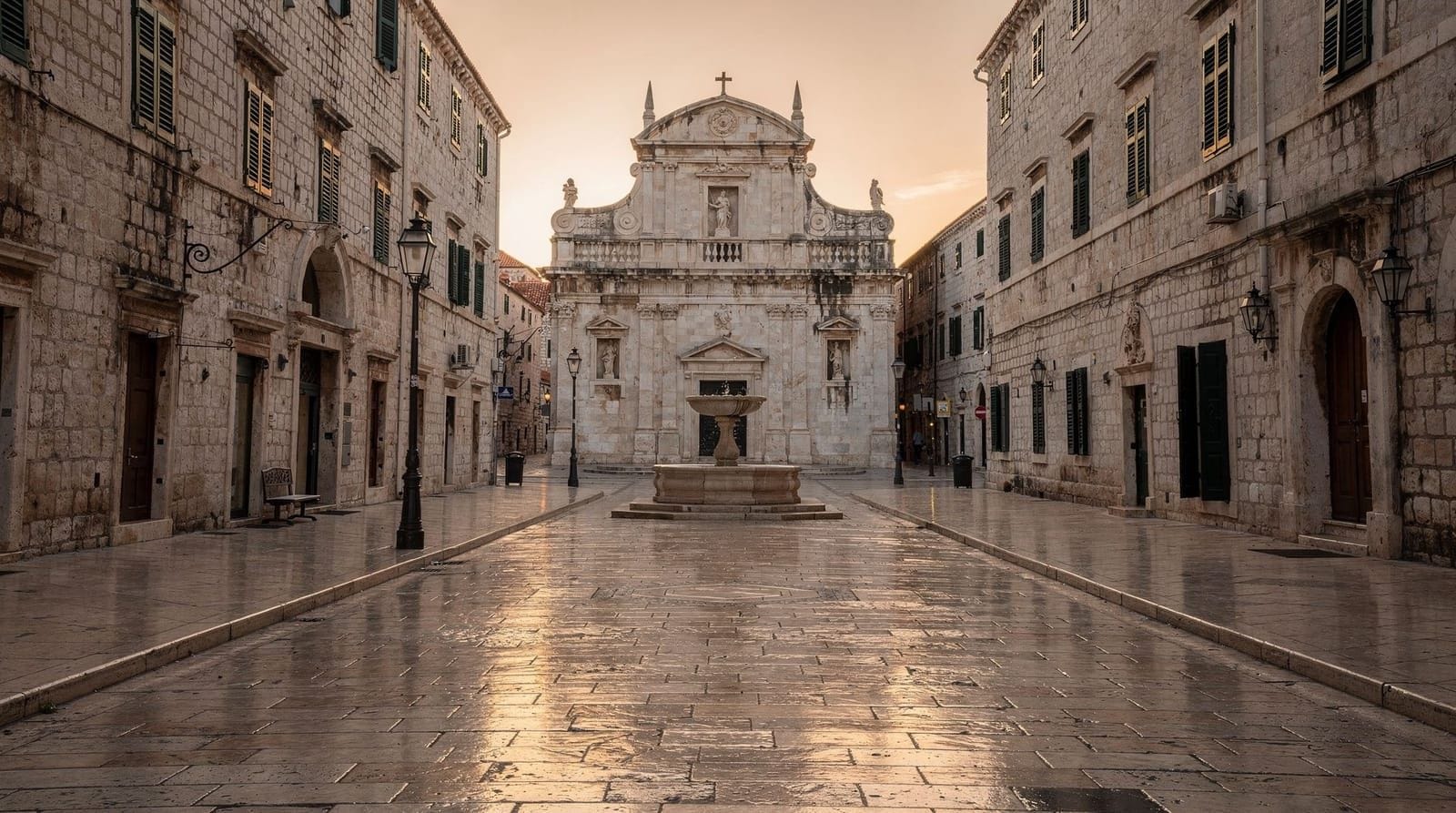
This evening: an easy walk along the Stradun and dinner in the Old Town. Don’t rush — you have four nights here.
Where to sleep (Dubrovnik, 4 nights total): Hotel Stari Grad for a character-filled Old Town experience; Apartments Amoret for self-catering inside the walls; Lapad area for better value and a local neighbourhood feel.
Day 2: Dubrovnik — City Walls, Old Town in depth
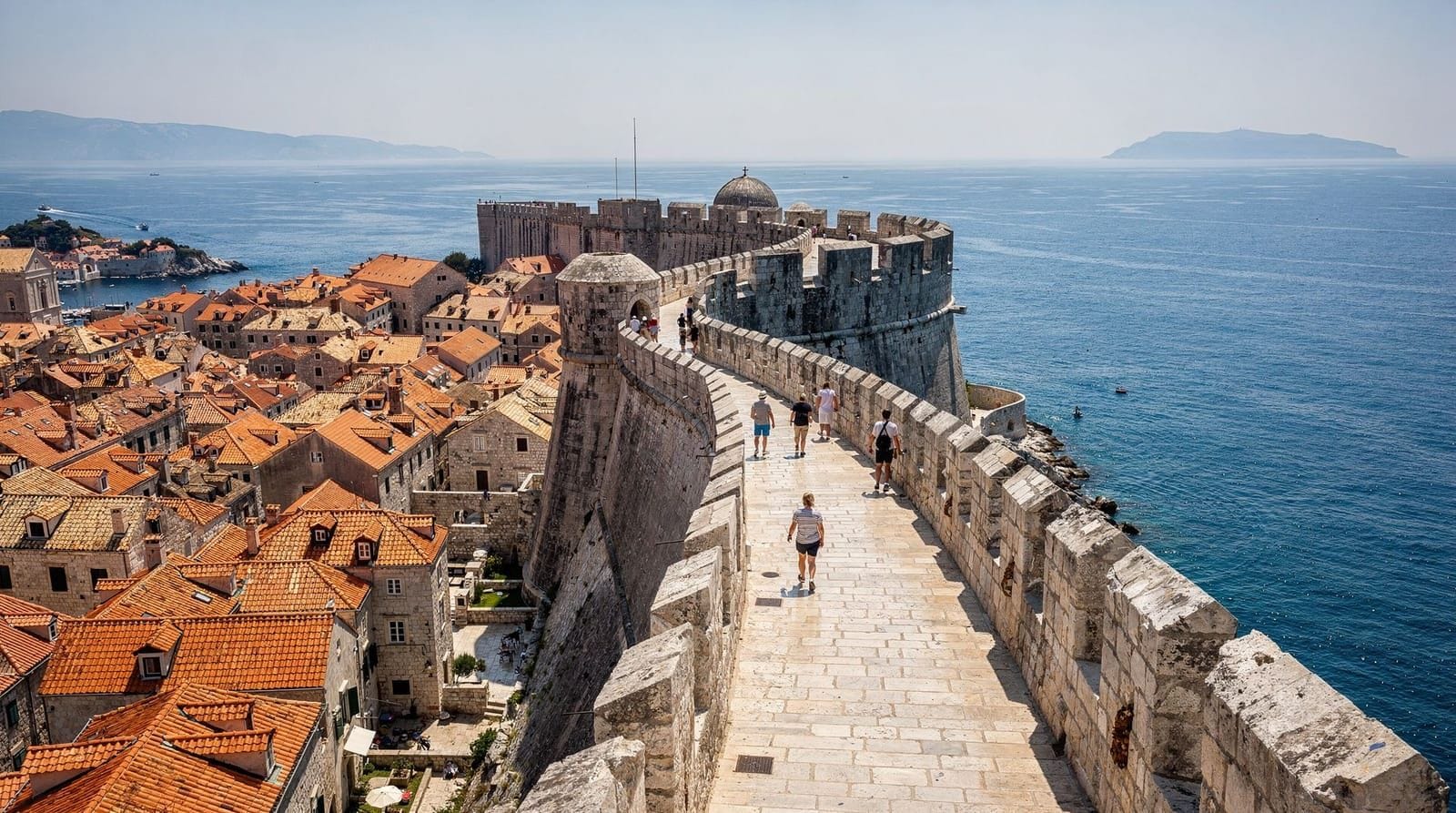
Full day in Dubrovnik. The City Walls are the non-negotiable first stop — 2 km of battlements with extraordinary views over the Adriatic and the city’s rooftops. Go at opening (08:00) or late afternoon to avoid the peak midday crowd.
The afternoon: Fort Lovrijenac (the isolated castle west of the walls), the Dominican Monastery’s Gothic cloister, and the cable car up to Mount Srđ for sunset. The Stradun transforms at golden hour when the day-trippers leave and the light hits the limestone.
Day 3: Day trip to Pelješac peninsula and Ston
Drive 50 km north (50 minutes) to Ston on the Pelješac peninsula. Ston is famous for two things: its extraordinary medieval defensive walls — the longest surviving walls in Europe after the Great Wall of China — and its oysters. The Mali Ston bay produces some of the finest shellfish in the Mediterranean. A dozen costs €12–18 at the waterfront restaurants; eat them standing at the market if you want the authentic experience.
Spend the afternoon on Pelješac exploring the Plavac Mali wine country — Dingač and Postup are two of Croatia’s premier red wine appellations. The plavac-mali-peljesac guide has detail on producers.
Return to Dubrovnik for dinner.
Day 4: Mostar overnight — Bosnia and Herzegovina
Drive from Dubrovnik to Mostar (roughly 140 km via the inland route or 130 km via Neum; about 2.5–3 hours). Cross the Bosnia border — have your passport ready. The border usually takes 5–15 minutes with a rental car; confirm your rental agreement permits entry.
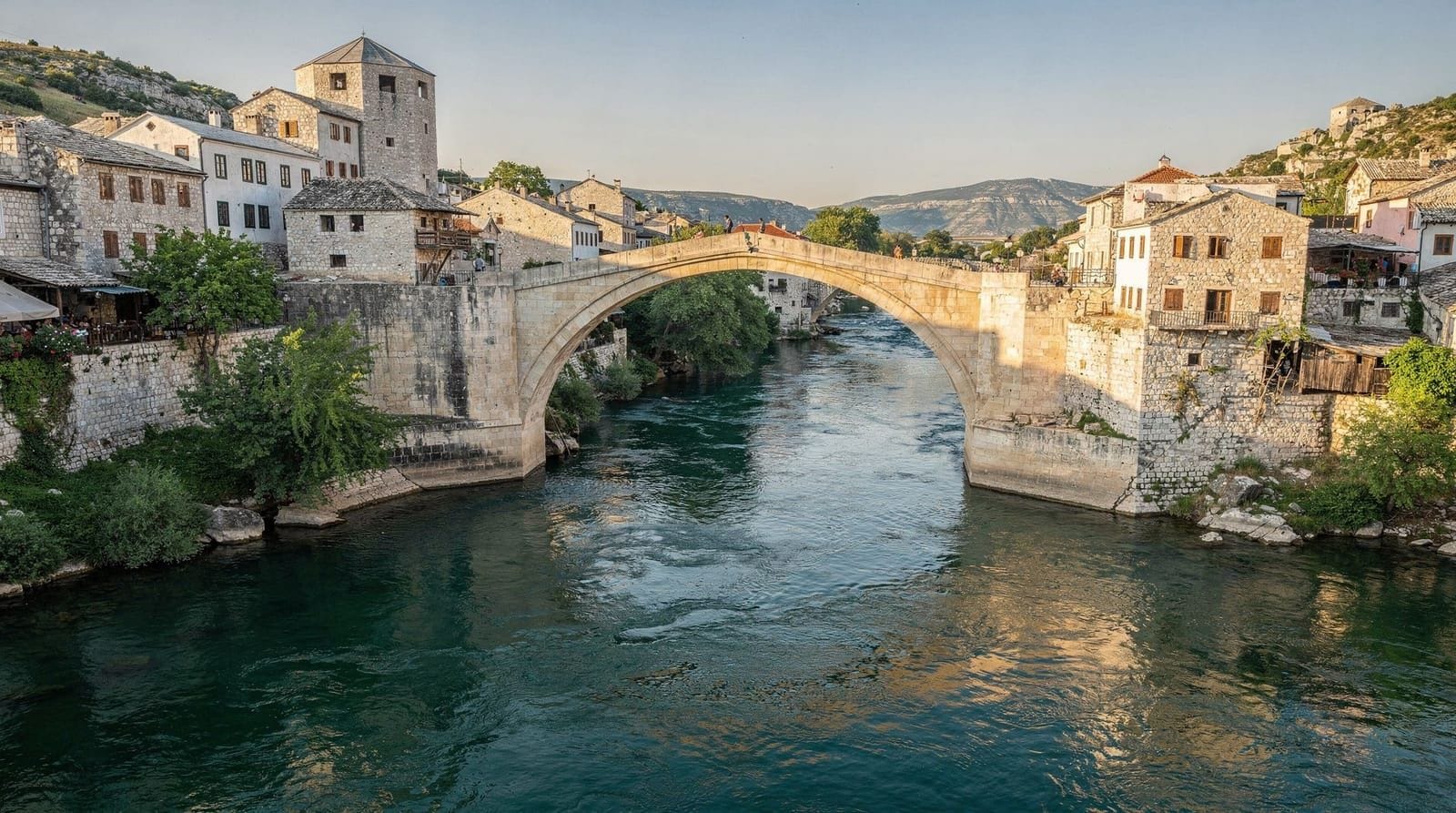
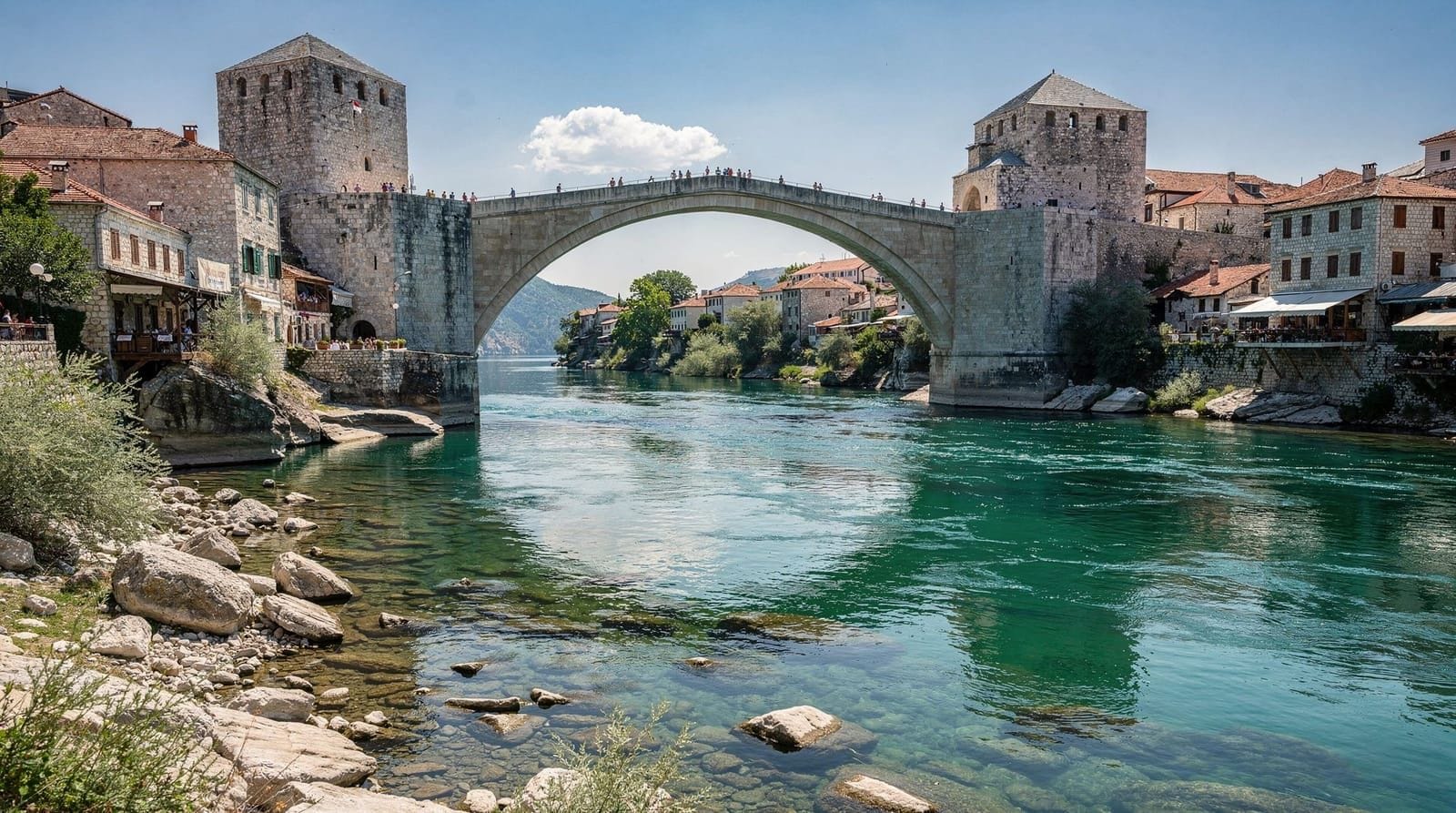
Mostar is one of the most striking towns in the Balkans. The rebuilt Stari Most (Old Bridge), a 16th-century Ottoman stone arch bridge over the Neretva River, was destroyed in 1993 and reconstructed in 2004; it now carries UNESCO World Heritage status. The bridge is the symbolic heart of a city still working through a complex post-war identity.
Check in to a Mostar hotel or guesthouse — there are several good options on both sides of the river. Afternoon and evening: explore the Old Bazaar (Kujundžiluk), the Koski Mehmed Pasha Mosque (rooftop view of the bridge), and the cobbled lanes rising above the Neretva. You can watch bridge divers jump from the top if conditions are right — it is touristy but genuinely dramatic.
Note on accommodation: Staying overnight lets you see Mostar after the day-trippers leave, which transforms the experience. The old town after 19:00 is quieter, and dinner at a riverside restaurant without the crush is a pleasure.
Where to sleep (Mostar, 1 night): Hotel Kriva Ćuprija (right by the bridge), Pansion Nur, or any of the family guesthouses in the old bazaar area.
Day 5: Mostar to Dubrovnik via Kravice Waterfalls
Morning in Mostar: the Blagaj Tekke, a 16th-century Dervish monastery built into a cliff at the source of the Buna River (16 km southeast of Mostar, 20 minutes by car), is one of the most beautiful spots in Herzegovina and almost entirely overlooked. Go before 10:00 to have it largely to yourself.
Drive back toward Dubrovnik, stopping at Kravice Waterfalls (around 40 km from Mostar) — a horseshoe of travertine falls in a river canyon, with swimming in summer. This is worth an hour or two. Not as grand as Plitvice but genuinely beautiful and much less crowded.
Re-enter Croatia, back to Dubrovnik by early evening.
Day 6: Kotor, Montenegro — day trip or overnight
Drive from Dubrovnik to Kotor (Montenegro): about 90 km, 1.5–2 hours including the border crossing. The border at Debeli Brijeg is usually quick; have passports and rental documentation ready.
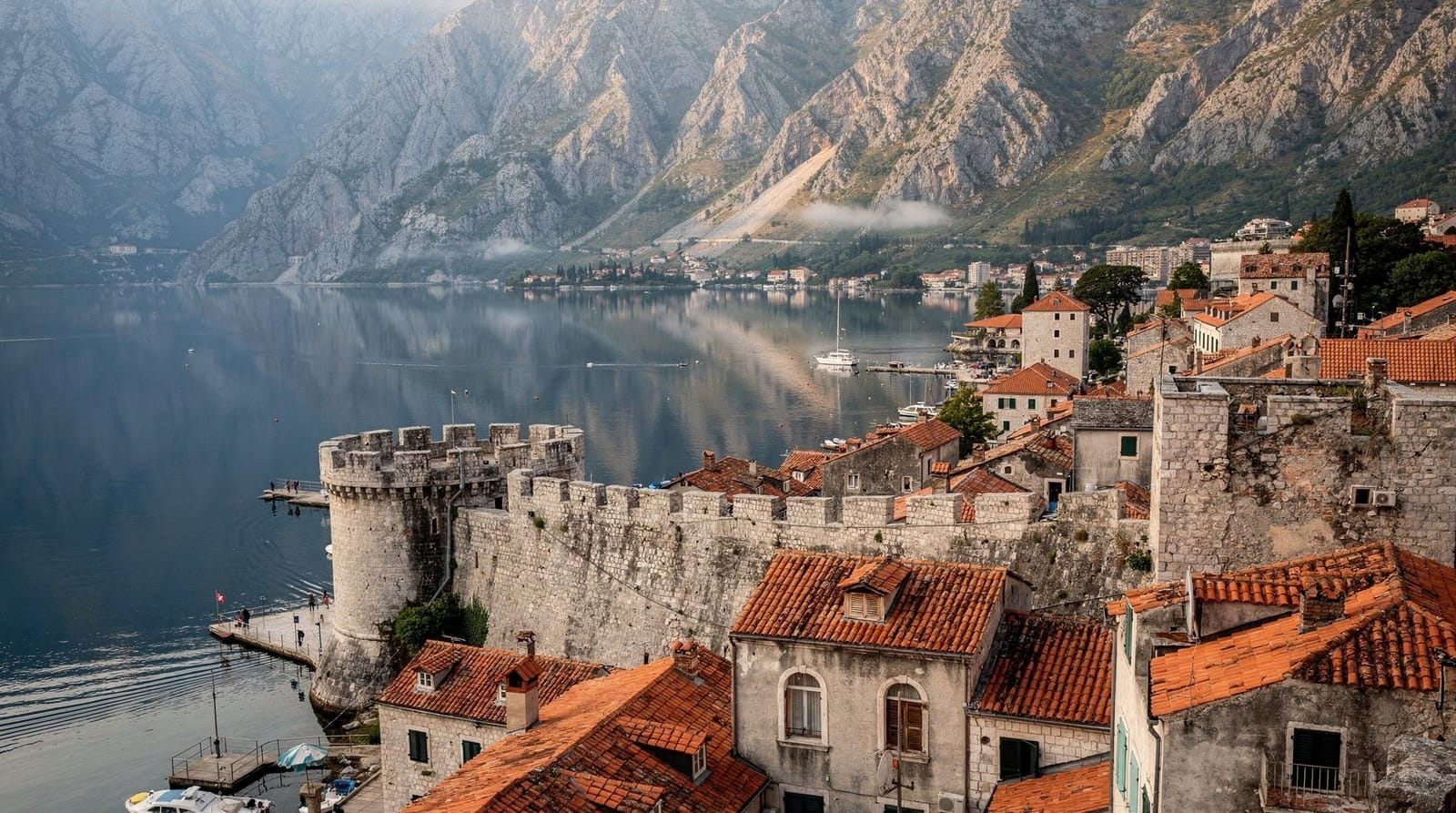
Kotor sits at the end of the Bay of Kotor (Boka Kotorska) — a long, deep inlet that resembles a fjord. The walled old town — another UNESCO site — is compact, well-preserved Venetian-Baroque, climbing the hillside behind it to the fortifications of San Giovanni. Walk up to the fortress for views over the bay; it takes 20–30 minutes and around 1,400 steps.
The village of Perast, 12 km north of Kotor on the bay, has two tiny islets with Baroque churches reachable by water taxi. Our Lady of the Rocks is the more famous and is a pilgrimage destination; the setting on still water with the mountains behind is exceptional.
If returning to Dubrovnik the same day: depart Kotor by 16:00 to be back by early evening. If staying overnight in Kotor (strongly recommended to experience it without day crowds): budget hotels and guesthouses are plentiful outside the Old Town walls.
Return to Dubrovnik if this is a day trip.
Day 7: Elaphiti Islands cruise and depart
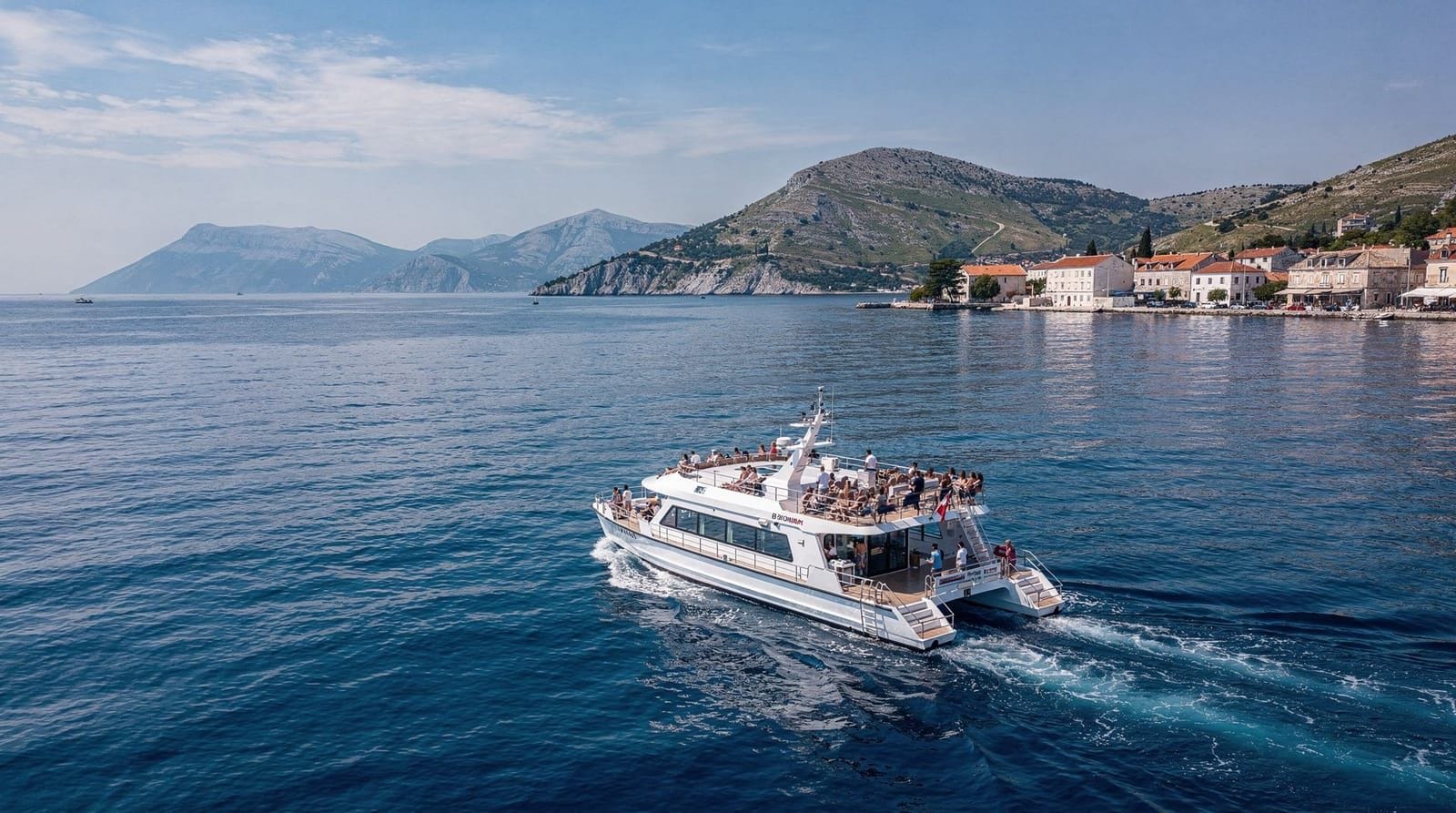
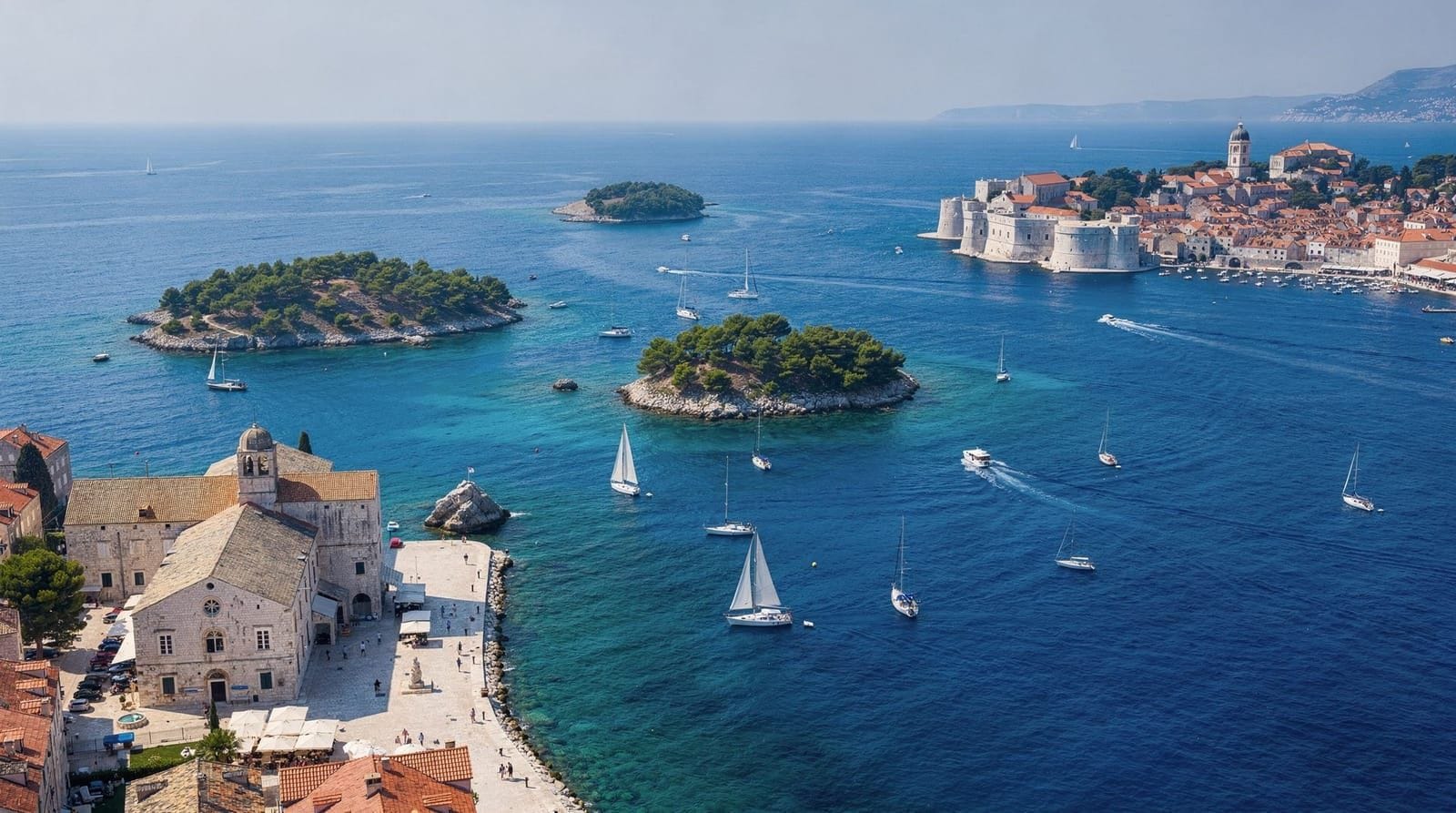
Final morning: the Elaphiti Islands — Koločep, Lopud, Šipan — are car-free islands accessible by boat from Dubrovnik’s Old Harbour. A half-day cruise is enough to visit the main islands, swim in clear water and have lunch.
Return in time for your airport transfer. Dubrovnik Airport is 20 km south (30–40 minutes). The Atlas airport bus runs from Pile Gate; taxi costs €30–40.
Practical information for this 7-day circuit
Car rental note: Book with a company that explicitly allows Bosnia and Montenegro cross-border driving. Expect an additional fee of €10–25/day and a specific Green Card insurance document. Budget, Sixt, Hertz and Europcar generally allow this with advance notice.
Currency: Croatia uses EUR; Bosnia uses Bosnian Convertible Mark (BAM, pegged at ~€0.51); Montenegro also uses the euro unofficially (they are not in the eurozone but use it as their currency). Cards work in most places; carry some cash for border areas and smaller cafés.
Budget: EUR 100–170 per person per day at mid-range for the Croatian sections; Bosnia is noticeably cheaper (meals for €5–10, accommodation for €30–50).
Without a car: Both Mostar and Kotor are reachable on organised day tours from Dubrovnik. Several tour operators run these daily; see the options below.
Doing it without an overnight in Mostar or Kotor
Seven days with two overnight legs suits travellers who want unhurried time in Bosnia and Montenegro, but a 5-day version works well if your schedule is tighter: base entirely in Dubrovnik and take organised or self-driven day trips to both Mostar and Kotor, dropping the Pelješac peninsula day and the Elaphiti cruise. This trades depth for simplicity — you see the Stari Most and the Bay of Kotor without packing bags twice, at the cost of experiencing both towns only during the busiest daytime hours. For travellers who want the wider Croatian coast instead of the multi-country focus, the standard 7-day Croatia itinerary covers Dubrovnik, Split and the islands without crossing any borders.
What to skip if you’re short on time
If a full week isn’t realistic, the Pelješac/Ston day (Day 3) is the easiest to cut — Ston’s walls and oysters are excellent but not essential the way Mostar and Kotor are. The Blagaj Tekke stop on Day 5 is similarly optional, though it is one of Herzegovina’s most photogenic and least-visited sights; skipping it just means driving straight from Mostar back toward Kravice Waterfalls. Do not cut the overnight in Mostar if you can help it — seeing the Old Bridge after the day-tripper coaches leave is the single biggest upgrade this itinerary offers over a standard day-trip version. For entry requirements crossing into Bosnia and Montenegro, check the Croatia entry requirements guide before you travel, since passport rules differ from the Schengen area.
Driving notes for the border crossings
Both borders are generally straightforward with a rental car carrying the right paperwork, but delays happen in July and August when queues can stretch 30–60 minutes at peak times (late morning, early afternoon). Cross early if possible. The Pelješac Bridge — completed in 2022 — now lets Croatia-to-Croatia traffic bypass the short strip of Bosnian coastline at Neum entirely, which is relevant if you are driving from Dubrovnik toward Split rather than into Bosnia itself; it does not affect this circuit’s Mostar or Kotor legs, which still cross the borders directly.
Frequently asked questions about Dubrovnik, Mostar and Kotor
Do I need a visa for Bosnia and Montenegro on this circuit? Most Western passport holders (EU, US, UK, Australian and others) enter both Bosnia-Herzegovina and Montenegro visa-free for short stays, but always check current requirements for your specific nationality before travelling, since neither country is in the EU or Schengen area. See the Croatia entry requirements guide for the Croatian side of the trip.
Is it safer or easier to do Mostar and Kotor as organised tours instead of self-driving? Organised day tours remove the cross-border paperwork and driving stress entirely, and are a good choice if you’d rather not deal with rental logistics — but they generally return the same day, so you lose the overnight-in-Mostar or overnight-in-Kotor advantage this itinerary is built around. A hybrid approach (self-drive with an overnight, tours for the rest) is also common.
Top experiences
Bookable activities with verified prices and instant confirmation on GetYourGuide.