Krka National Park guide: waterfalls, swimming and honest access tips
Split: Krka waterfalls tour
Can you swim at Krka National Park?
Swimming at Krka has been significantly restricted since 2021. Swimming directly at Skradinski Buk (the main waterfall) is no longer permitted. Swimming is allowed at designated areas on the Krka river away from the main falls. Check current park regulations before visiting as rules continue to evolve.
| Where | Central Dalmatia, near Šibenik |
| Cost | Around EUR 30-35/person high season; EUR 60 for all-sites ticket |
| Time needed | Half day for Skradinski Buk; full day with Roski Slap and Visovac |
| Getting there | About 1hr from Split or Zadar, 15km from Šibenik |
| Best time | May-early June or September; arrive before 9am |
Krka National Park sits in the middle of Dalmatia, about an hour’s drive from Split and even less from Šibenik. Unlike Plitvice Lakes, which involves a long inland drive from the coast, Krka is accessible enough to day-trip from multiple coastal bases, and its setting — a river canyon cutting through white limestone — produces some of the most distinctive waterfall scenery in the Adriatic region. The park protects 73 kilometres of the Krka river, seven cascades, two watermills, wetlands and the island monastery of Visovac.
What Krka actually looks like
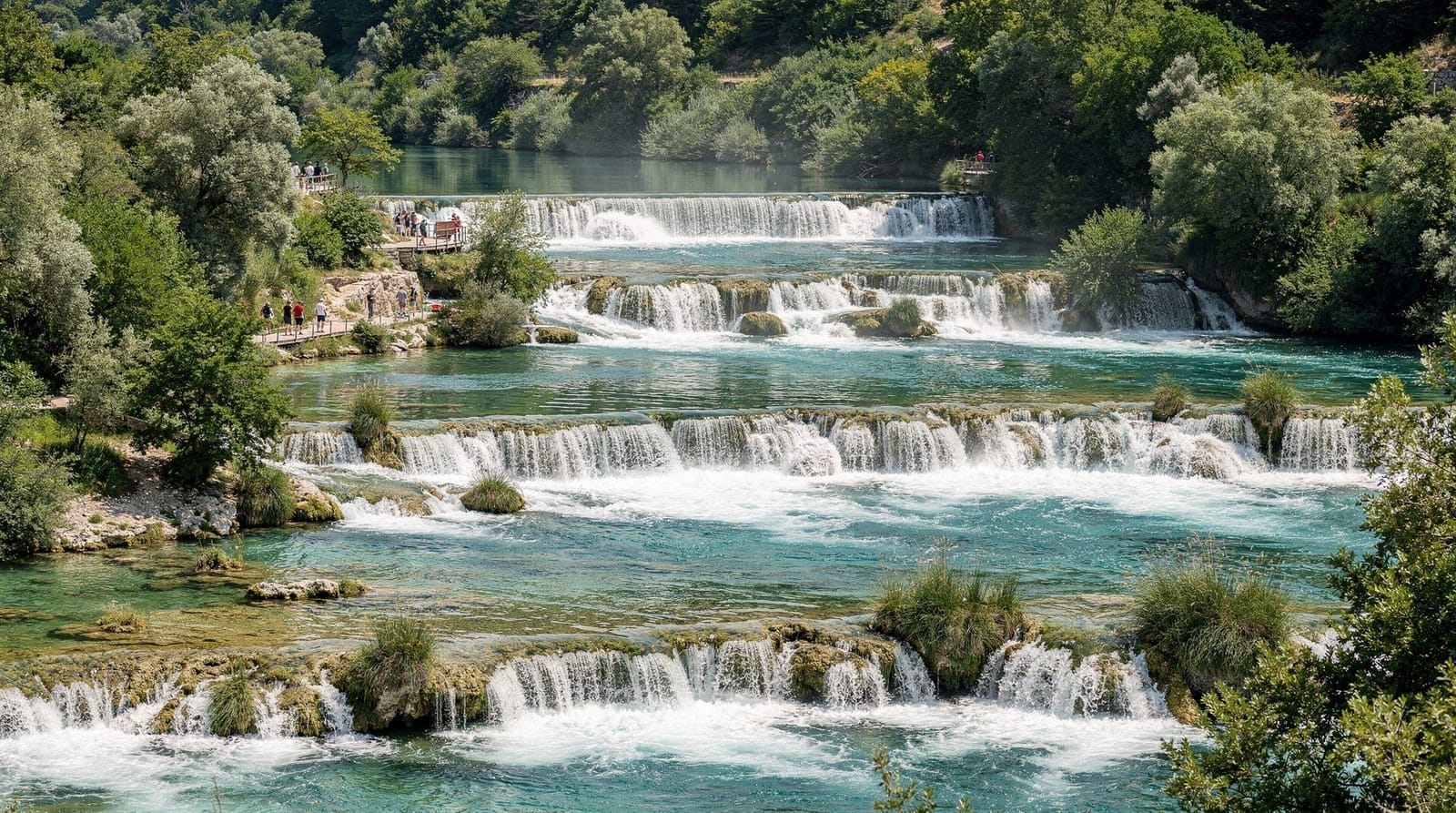
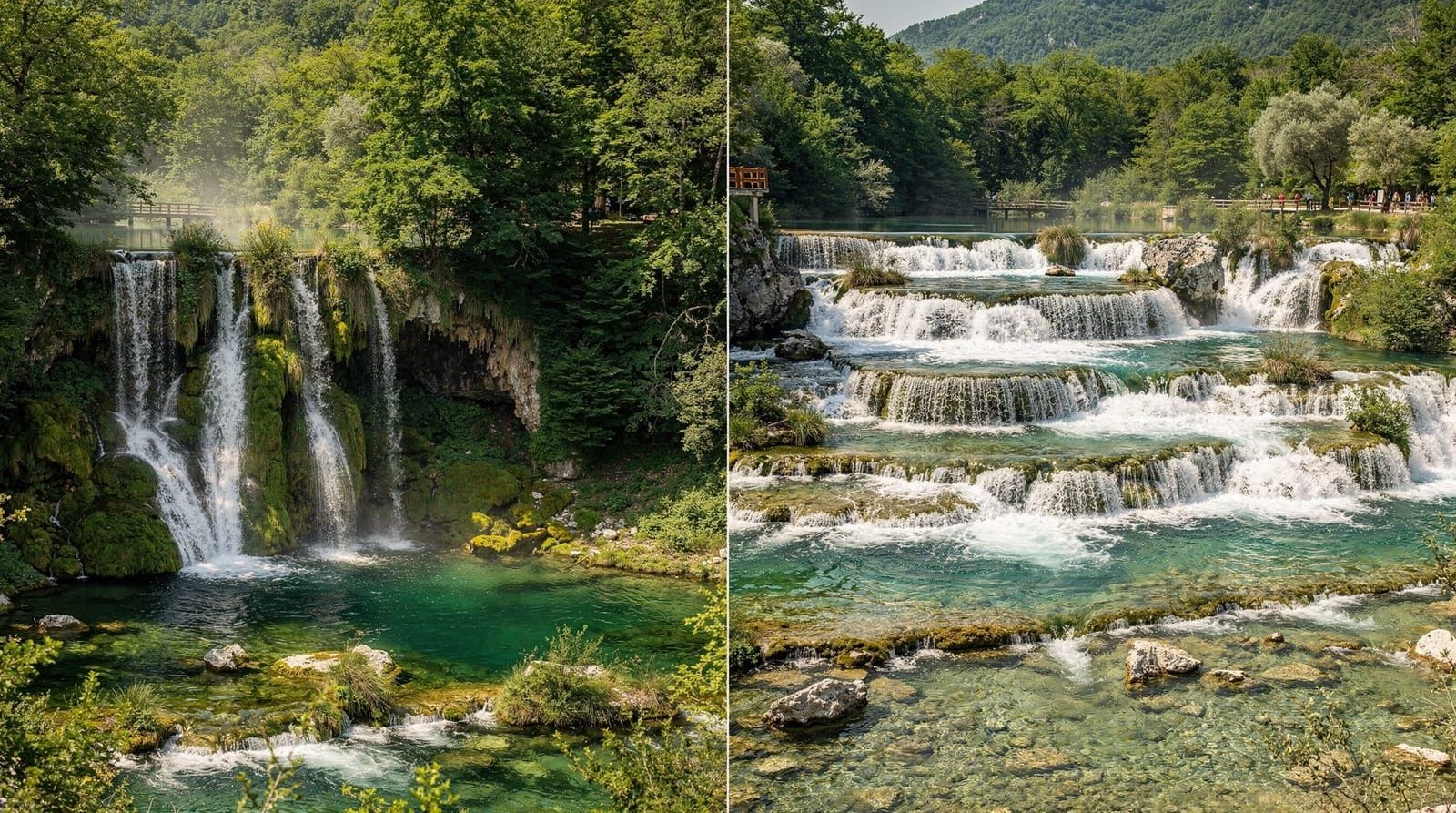
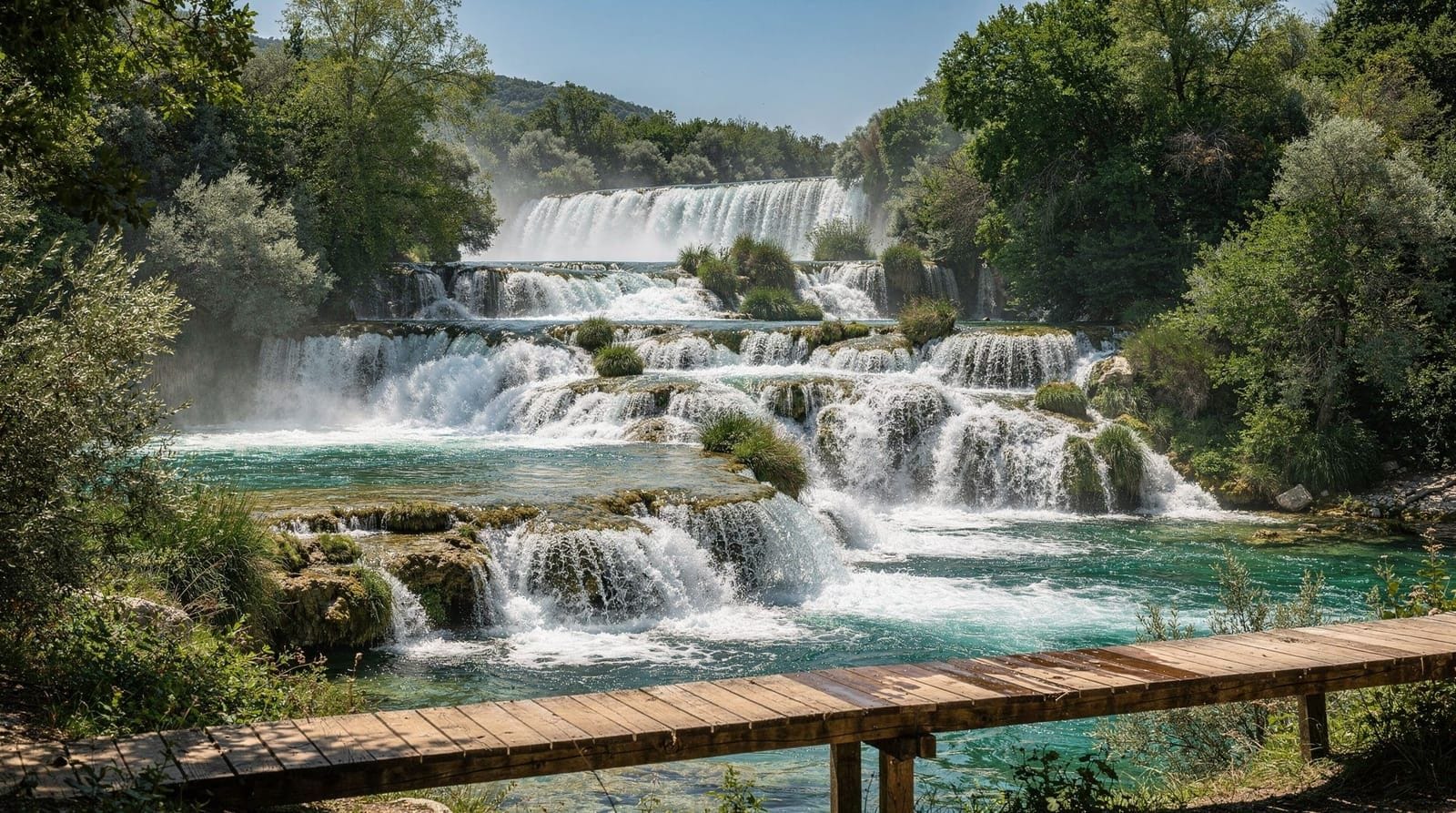
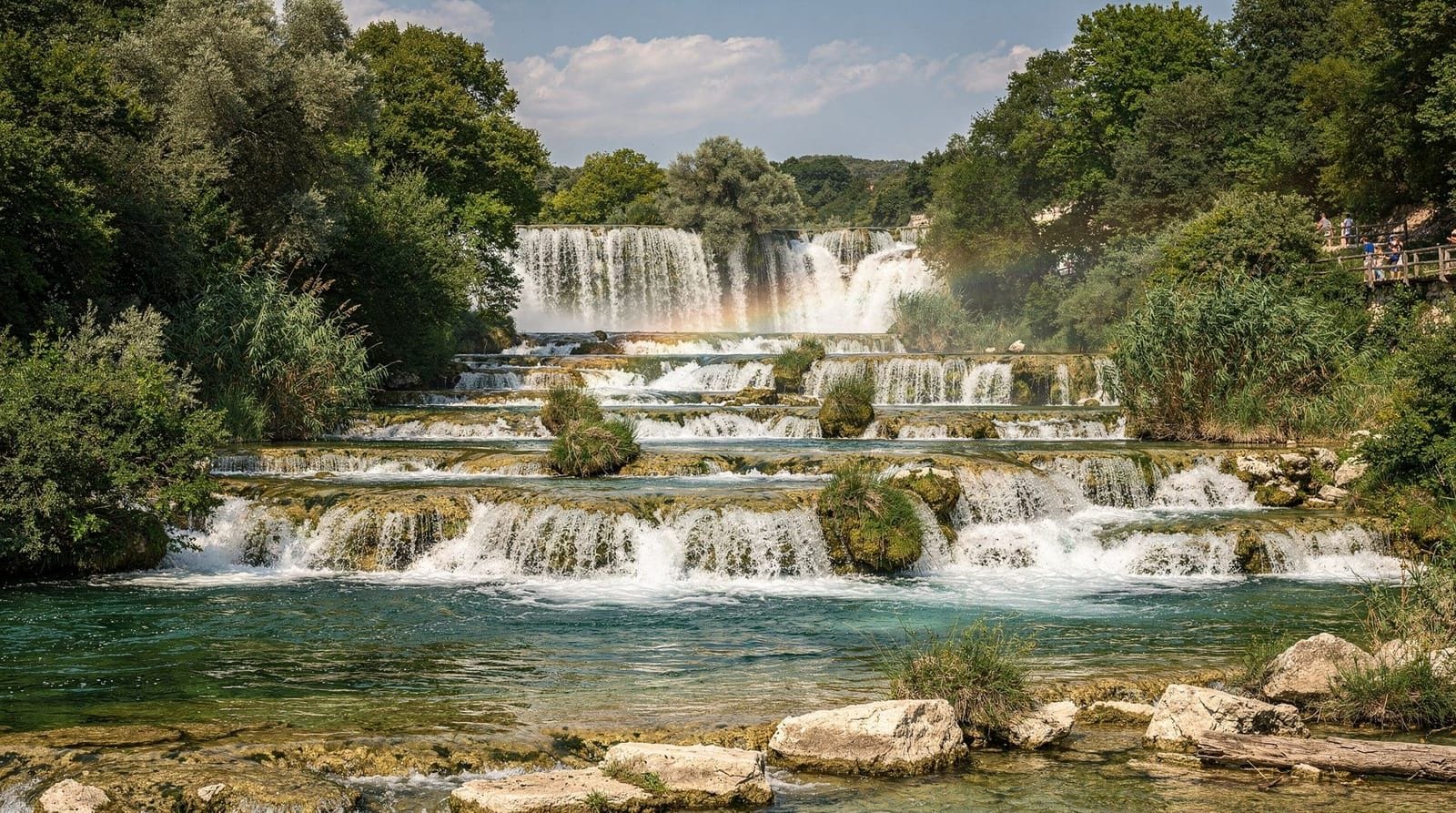
Most visitors arrive at Skradinski Buk, the showpiece falls near the historic town of Skradin. These are not a single dramatic drop like Niagara — they are a wide, baroque arrangement of seventeen travertine steps, each cascade feeding into pools below, over a distance of roughly 800 metres. The combined vertical drop is about 45 metres. In high water conditions (late spring), the falls are broad, powerful and genuinely impressive. By late August, flow is lower but the turquoise colour of the pools is often at its most vivid.
The second major site, Roski Slap, sits upstream and is reached by boat from Skradinski Buk. It is smaller, less visited and surrounded by old watermills. The atmosphere is quieter and the approach by river adds to the experience. Most all-inclusive park tickets include a boat connection between the two sites.
Visovac is a tiny island in the middle of Visovacko jezero (lake) bearing a Franciscan monastery that has been continually occupied since the 15th century. Boat trips to the island are short, the monastery has a small museum and the lake setting — framed by limestone cliffs on both sides — is memorable.
The swimming question
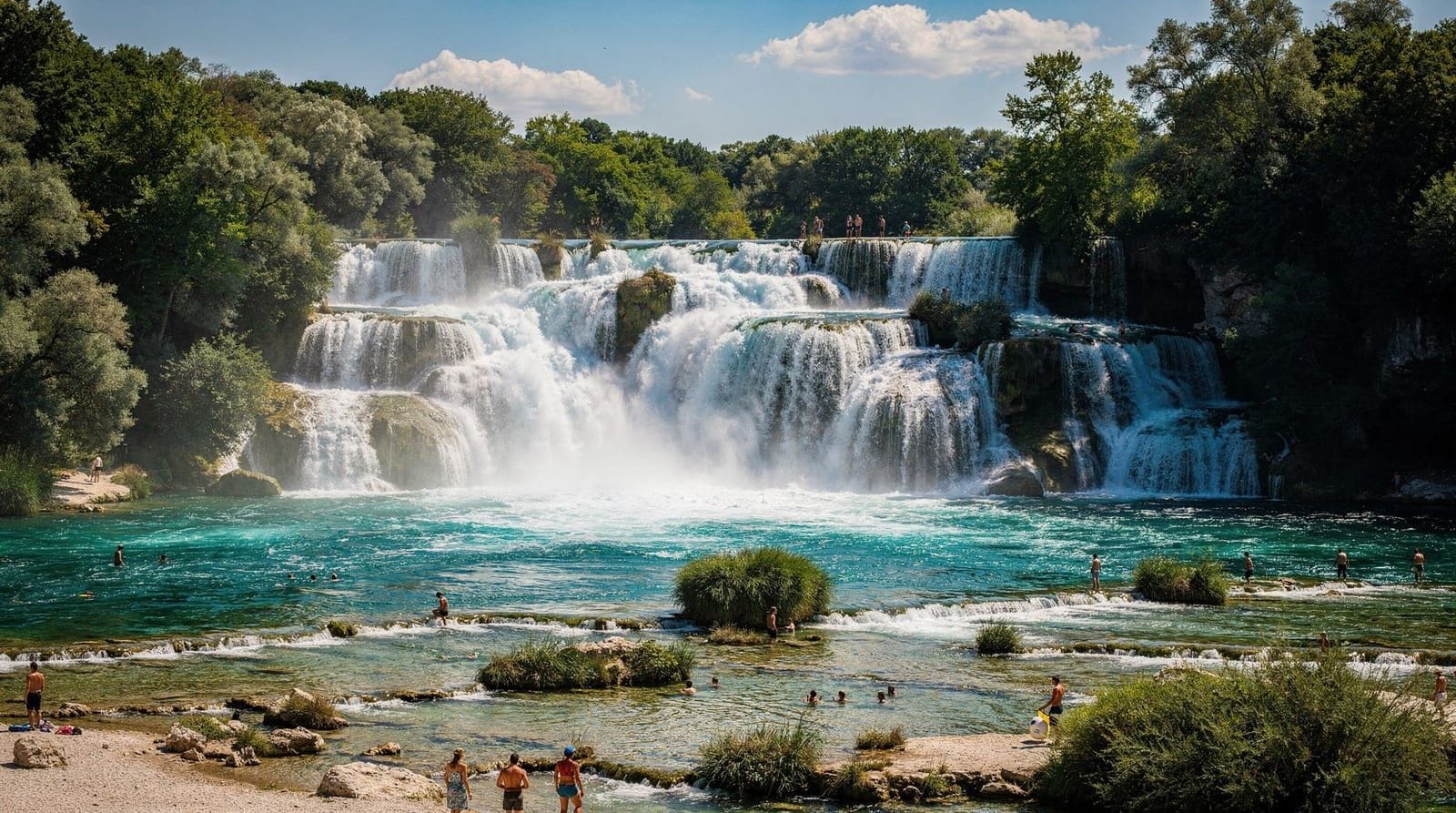
Krka’s old reputation was built partly on photos of visitors swimming directly under Skradinski Buk’s cascades. That is no longer possible. The park authority restricted and then progressively tightened swimming rules from 2020 onwards, citing damage to the fragile travertine ecosystem. As of 2026:
- Swimming is not permitted at Skradinski Buk or in the pools directly below the main falls
- Designated swimming zones exist downstream on the Krka river, away from the park’s sensitive areas
- Snorkelling and diving are prohibited throughout the park
If swimming near waterfalls is your primary aim, Krka’s restrictions make it a different proposition from five years ago. However, the visual experience remains full — you can walk the boardwalks right at the water’s edge and the falls are no less impressive for the restrictions.
Ticket prices and what they include
Entry prices for 2026 vary by season and ticket type:
- Standard adult (high season, June–September): €30–35 covering Skradinski Buk
- All-sites adult ticket: approximately €60, covering Skradinski Buk, the boat to Roski Slap and Visovac island — worth it if you want the full experience
- Low season (October–May): €10–20 depending on the month
- Children under 7: free
The all-sites ticket includes the boat transfers between park sections, which is the only way to reach Visovac by water. Tickets are available at the park entrances and at the park’s official website (npkrka.hr). Online booking is not as critical as at Plitvice but is still advisable in July and August.
How to reach Krka National Park
From Split
The most common gateway. Options:
- Organised day trip: The simplest choice — transport from Split, park entry and often a local guide is included. Round trip takes most of the day (departure around 8–9 am, return around 6–7 pm). Several operators also combine Krka with a stop in Šibenik.
- Public bus: Regular buses run from Split bus station to Skradin (approximately 1.5 hours). From Skradin, a short boat takes you directly into Skradinski Buk — this is actually a very pleasant way to arrive, approaching the falls from the water.
- Car: Drive the A1 motorway toward Šibenik, exit for Skradin. Roughly 1 hour. Park in Skradin and take the boat (included in park ticket) rather than driving to the upper entrances, which are more awkward.
From Zadar
About 1 hour by car or bus. Day trips from Zadar to Krka are plentiful and often combined with a Šibenik stop.
From Šibenik
Šibenik is the closest major town — only 15 km from Skradin. This makes it an excellent base for visiting Krka without the crowds of Split. The town’s old core, dominated by the UNESCO-listed Šibenik Cathedral, is well worth an afternoon.
The best time to visit Krka
May–early June is the prime window: snowmelt keeps water levels high, the park is green and lush, temperatures are warm without being oppressive and crowds are manageable. The waterfalls at this time of year are at full flow.
September is the best shoulder-season option: warm enough for comfortable walking, the summer surge has subsided and the low-angle light makes photography easier. Water levels are lower but far from disappointing.
July–August: The park gets very busy. Arrive before 9 am, accept that the boardwalks will be crowded by mid-morning and consider combining with a Šibenik visit in the afternoon when some day-trippers return to the coast.
Winter (November–March): The park stays open year-round but boat schedules are reduced. The falls are still running and you may have the place almost to yourself.
Skradinski Buk: the route
The Skradinski Buk boardwalk circuit takes about 1.5–2 hours at a leisurely pace. It begins at the lower entrance from the Skradin boat dock, winds up alongside the cascades to the top of the falls, loops through a shaded forest section and returns along the opposite bank. There are good viewpoint platforms at several stages. The best light for photography is morning — by midday the sun is directly overhead in the canyon and shadows are harsh.
Watermill demonstrations run in season, showing how the river’s power was used for grinding grain and processing textiles. The historical infrastructure alongside the natural features makes Krka slightly more layered than a pure nature walk.
Combining Krka with other stops
Many day trips pair Krka with Šibenik — entirely logical since the drive passes through the town. The combination of Croatia’s finest Gothic cathedral and the waterfalls makes a very solid full day from Split or Zadar.
Some tours combine Krka with wine tasting at local Dalmatian wineries, or with the old stone town of Primošten. If you are self-driving, Trogir — 30 minutes from Split — makes a natural morning stop on the way.
All-sites ticket versus standard entry
The extra cost of the all-sites ticket (roughly double the standard Skradinski Buk-only price) buys the boat transfer to Roski Slap and the short boat trip out to Visovac island — neither of which is reachable on foot. If your day is genuinely short, or you have already decided Skradinski Buk is the main draw, the standard ticket is entirely sufficient and lets you spend more relaxed time on the main boardwalk. If you have a full day and want to see the quieter upper valley and the monastery island, the all-sites option is worth the difference — Roski Slap in particular gets a fraction of the visitors that crowd Skradinski Buk by mid-morning.
A realistic day-trip schedule from Split
Departing Split by 8am puts you at the Skradin boat dock by around 9am, ahead of the bulk of the day-trip crowds. Budget 1.5-2 hours for the Skradinski Buk boardwalk loop, then either head straight back toward the coast for a Šibenik afternoon, or — if you bought the all-sites ticket — take the connecting boat up to Roski Slap and Visovac, which adds another 2-3 hours including transfers. Returning to Split by early evening is realistic either way. This pacing keeps the day manageable without feeling rushed, which is one of Krka’s genuine advantages over the longer, more demanding Plitvice itinerary.
Frequently asked questions about Krka National Park guide
How much does Krka National Park cost to enter?
Adult tickets for 2026 cost €30–35 in high season (June–September) and €10–20 in low season. An all-sites ticket covering Skradinski Buk, Roski Slap and the Visovac island boat trip is available for around €60. Children under 7 enter free. Buy tickets at the gate or online at npkrka.hr.How do you get to Krka National Park from Split?
By organised day trip (most comfortable — transport, entry and guide included, roughly 3.5–4.5 hours in the park), by public bus from Split to Skradin (about 1.5 hours), or by driving (about 1 hour to Skradin, then a boat into the park). Most visitors from Split use day tours.What is the best section of Krka National Park?
Skradinski Buk is the headline — a series of seventeen travertine cascades spanning 800 metres, with the main drop of 45 metres. Roski Slap in the upper valley is quieter and has its own character. Visovac, a Franciscan monastery island in the middle of the lake, is reached by boat and is genuinely beautiful.Is Krka National Park better than Plitvice Lakes?
They are different experiences. Plitvice is larger, more dramatic and a UNESCO site; Krka is easier to reach from the coast, has a boat component and the river setting feels different from Plitvice's landlocked lakes. Many visitors see both. See our Plitvice vs Krka comparison for a detailed breakdown.When is the best time to visit Krka National Park?
May and early June for good water flow and manageable crowds; September for warm weather with noticeably fewer visitors. Peak July–August is very busy at Skradinski Buk — arrive early (before 9 am) for the best experience.Is Krka National Park family-friendly?
Yes — the main boardwalk at Skradinski Buk is mostly flat and manageable with children. The boat trips to Visovac add variety. The absence of full swimming at the main falls is a disappointment for older children who have seen historical photos, but designated swimming areas still exist along the river.
Top experiences
Bookable activities with verified prices and instant confirmation on GetYourGuide.
Top experiences
Best-rated activities across GetYourGuide and Viator.

From Split: Plitvice Lakes National Park Guided Tour
- Viator

Krka Waterfalls Day Tour with Boat Ride from Split and Trogir
- Viator

Plitvice Lakes National Park Guided Day Tour from Split
- Viator

Krka National Park Tour with tour Guide & Wine tasting from Split & Trogir
- Viator

From Zadar: Plitvice Lakes with Boat Ride & Zadar Old town tour
- Viator

Mostar and Herzegovina Tour with Kravica Waterfall from Split & Trogir
- Viator