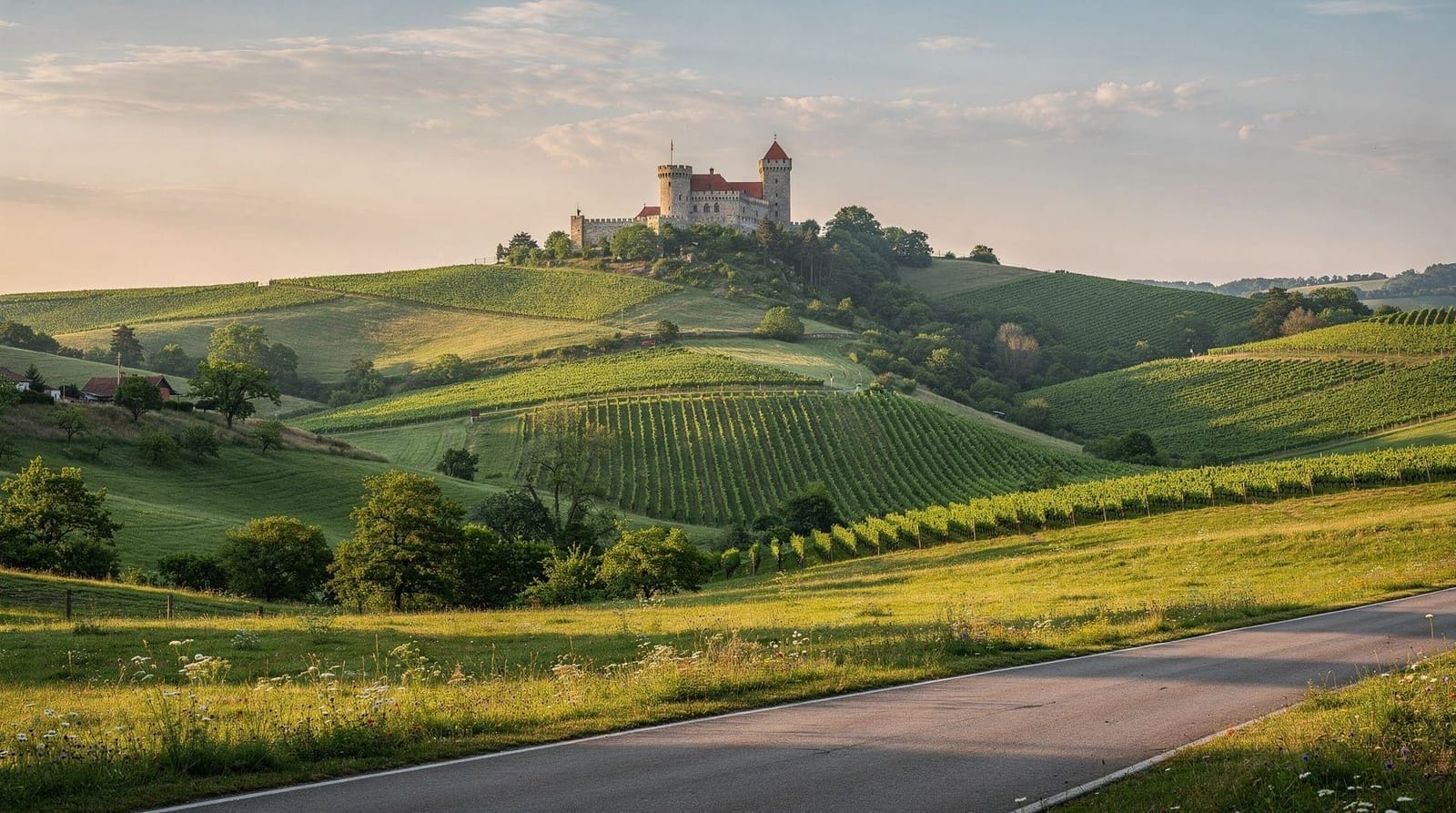
Plitvice Lakes vs Krka: which Croatian waterfall park should you visit?
Split: Krka waterfalls day trip with wine tasting
Should I visit Plitvice Lakes or Krka National Park?
Plitvice Lakes if you want Croatia's single most extraordinary landscape — 16 terraced lakes, waterfalls and turquoise water on UNESCO-listed boardwalks. Krka if you want easier access from Split, shorter walking, and the option of a boat cruise. Both are worth visiting on a longer Croatia trip; they are fundamentally different experiences rather than substitutes.
Croatia’s two waterfall landscapes
Every visitor to Croatia eventually faces the question: Plitvice Lakes or Krka? Both are national parks. Both involve water, limestone and significant natural beauty. Both are day-trip magnets from the coast. And yet they deliver entirely different experiences — different landscape scales, different logistics, different amounts of walking, different swimming possibilities.
This comparison covers both parks honestly, helping you decide which to prioritise (or how to fit both into a longer Croatia trip).
| Plitvice Lakes | Krka | |
|---|---|---|
| Best for | Landscape grandeur, Zagreb-based trips | Convenience from Split, boat cruise |
| Cost | ~€25–40/adult | ~€15–25/adult |
| Time needed | 4–6 hrs (full day for both zones) | 3–4 hrs |
| From Split | 2.5–3 hrs | 1–1.5 hrs |
| Swimming | Not permitted | Restricted since 2021 |
Plitvice Lakes: UNESCO wonder
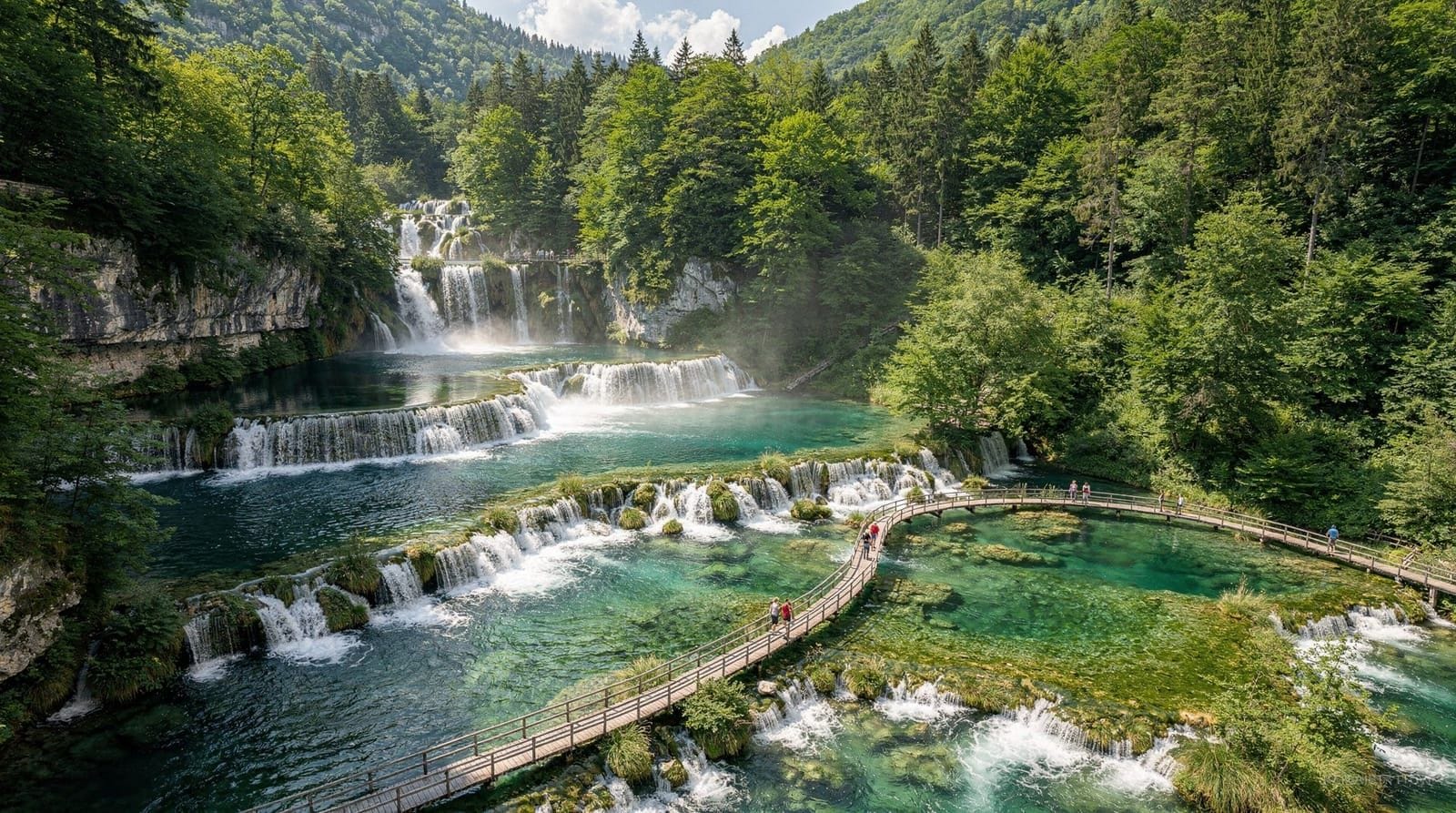
Plitvice Lakes National Park is Croatia’s oldest and most-visited national park — a UNESCO World Heritage Site since 1979. The park contains 16 terraced lakes arranged in a descending staircase, connected by waterfalls and boardwalks. The water colour — a vivid, improbable turquoise — results from dissolved calcium carbonate reacting with algae and sunlight. No filter needed; no photograph does it full justice.
The landscape. The Upper Lakes sit in a canyon surrounded by forest; the Lower Lakes descend through a broader valley toward the main entrance. The travertine barriers (natural dams of mineral-deposited rock) create the stepped lake effect. The largest waterfall, Veliki Slap, drops 78 metres — Croatia’s highest.
The boardwalks. Wooden walkways traverse the lake system at water level — you walk directly over and between the lakes, with turquoise water visible through the slats below your feet. At several points, the water is only centimetres below the boards. It is an extraordinarily intimate engagement with a landscape.
Routes. Several marked routes connect the Upper and Lower Lakes, ranging from a 2–3 hour loop of the Lower Lakes only (suitable for less mobile visitors — a boat crosses the lowest lake) to full-day circuits covering both sections (8–10 km, 4–6 hours). The electric boat and a tourist train provide connections for those who cannot walk the full circuit.
Crowds. Plitvice receives around 1.5 million visitors per year. In July and August, the park implements strict timed-entry caps — tickets often sell out days in advance. The boardwalks become genuinely crowded in peak hours. The solution: book the first entry slot (07:00) and reach the Lower Lakes before the tour groups arrive. By 08:30, it is already considerably busier.
Krka National Park: the canyon river
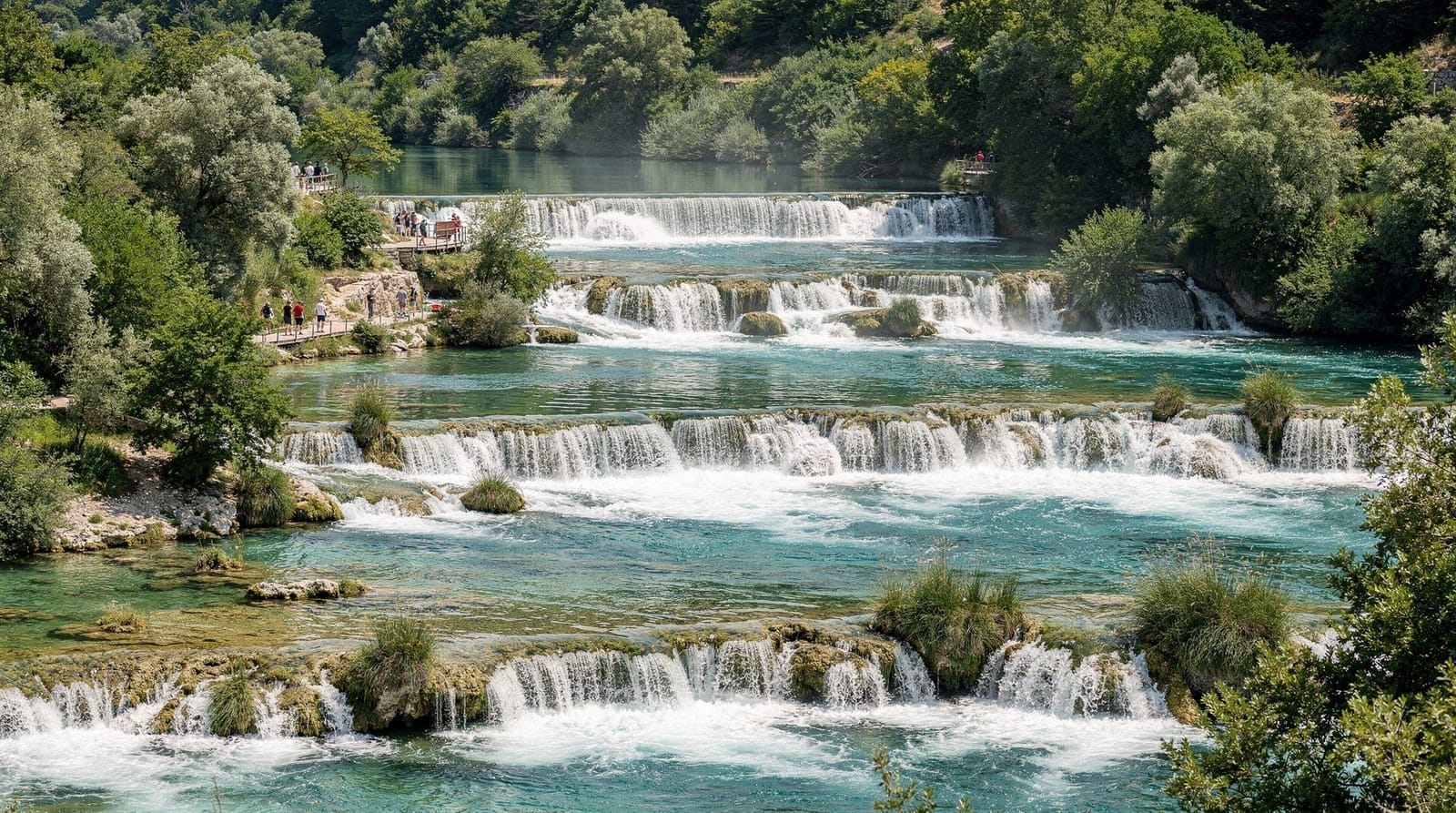
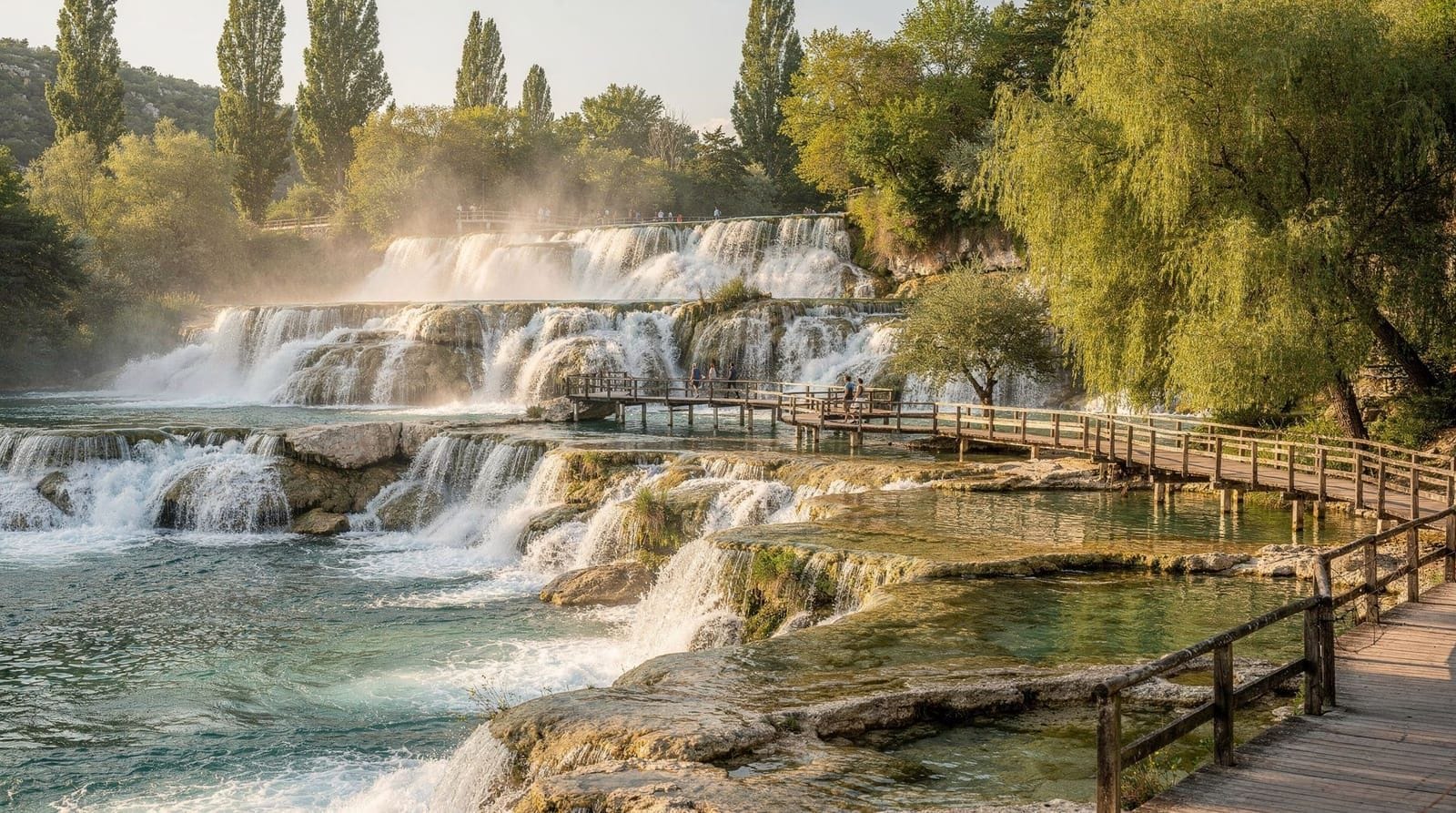
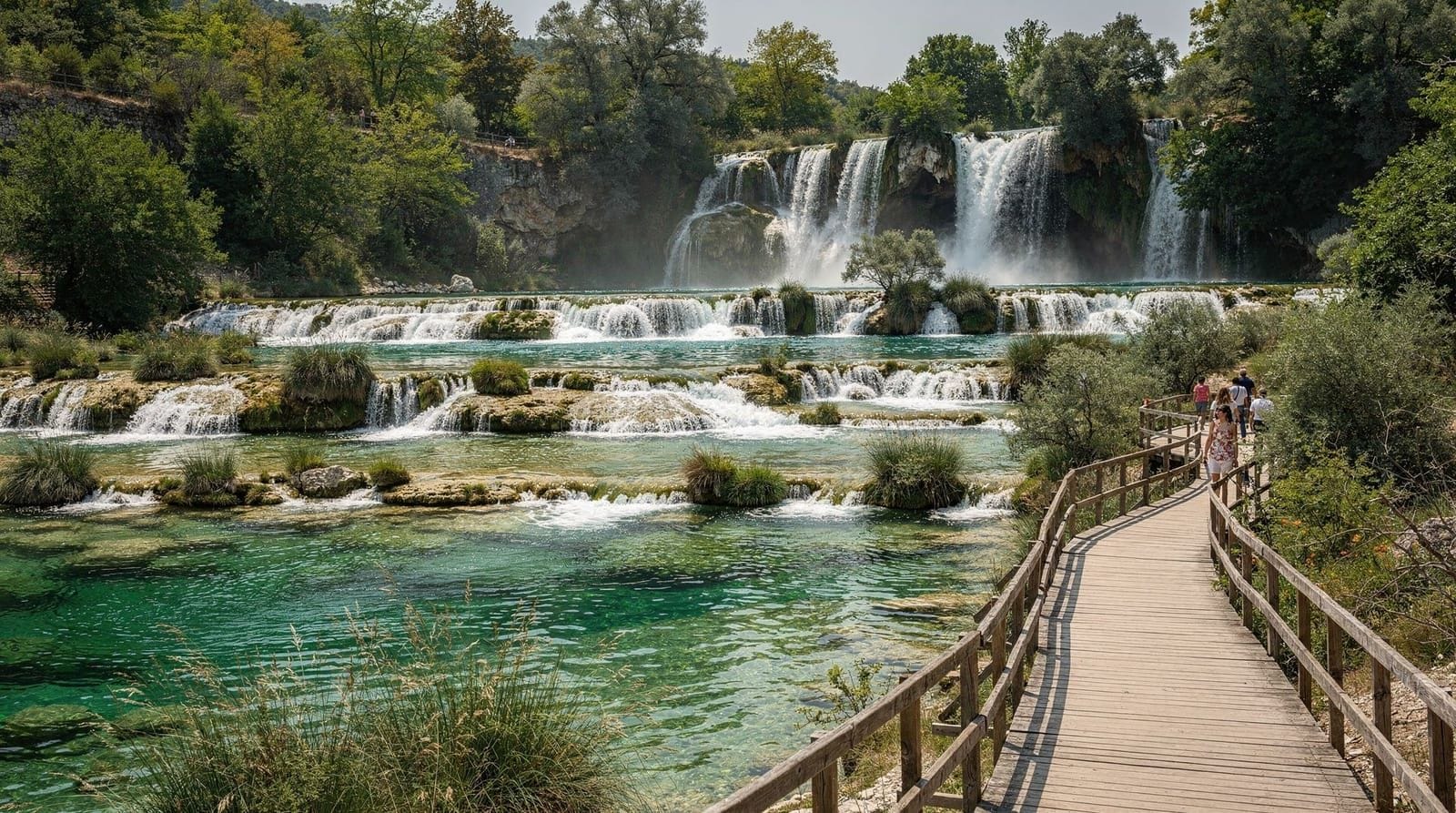
Krka National Park covers 72 km of the Krka river canyon between Knin and the coast near Šibenik. The park’s signature features are its travertine waterfalls — most famously Skradinski Buk, a broad cascade 17 metres high and 800 metres wide, divided into channels by islets and vegetation.
The boat cruise. A highlight that Plitvice lacks: a boat cruise from the town of Skradin takes you upstream through the canyon to the main waterfall area. The 30-minute cruise through the gradually narrowing canyon — willows trailing in the water, kingfishers, the sound of the river — is a great introduction to the park.
Skradinski Buk. The main waterfall is impressive rather than sublime. The travertine channels, the mill houses, the vegetation growing from the rock — all are photogenic and genuinely beautiful. The area around the waterfall is also flat and accessible, making Krka more suitable for visitors with mobility limitations than the steep hillsides of Plitvice. The boardwalk loop around Skradinski Buk itself is short enough to cover comfortably in under an hour, leaving time for the boat trips onward to Roški Slap or Visovac if you want a fuller day.
Swimming. This deserves honest treatment. For many years, swimming at Skradinski Buk was Krka’s most celebrated offer — one of the most memorable swimming experiences in Europe, in a natural waterfall pool. Swimming was banned at Skradinski Buk from 2021 due to ecological concerns about the impact on the travertine formations. Some swimming may still be possible at other sections of the park. Check current rules at park.krka.hr before visiting.
Other sections. Roški Slap (a waterfall further upstream) and Visovac Island (a Franciscan monastery on a lake) are accessible by additional boat trips from the main park and add significant interest to a full-day visit. Full logistics for a Krka-focused day are in the Krka day trip guide.
Side-by-side comparison
| Factor | Plitvice Lakes | Krka |
|---|---|---|
| UNESCO status | Yes (since 1979) | No |
| Landscape scale | More dramatic — 16 lakes, canyon | River canyon, waterfalls |
| Walking required | Significant (4–10 km depending on route) | Less — boat cruise covers main distance |
| Swimming | Not permitted | Restricted (Skradinski Buk closed 2021) |
| Distance from Split | 2.5–3 hours | 1–1.5 hours |
| Distance from Zagreb | 2–2.5 hours | 3.5–4 hours |
| Crowds | Very high in summer | High in summer |
| Entry cost | ~€25–40 per adult | ~€15–25 per adult |
| Boat cruise | Electric boat connection (lake crossing) | River cruise from Skradin |
| Mobility access | Limited (stairs and boardwalks) | Better (boat cruise, flat areas) |
| Best from | Zagreb or as Split–Zagreb stop | Split |
Which park for which visitor?
Choose Plitvice if:
- Landscape grandeur is the priority — you want Croatia’s most spectacular natural scenery
- You’re based in Zagreb or travelling between Zagreb and the coast
- You have a full day to allocate and can handle significant walking
- Swimming is not a requirement (the ban has been in place for decades)
- You can pre-book tickets to secure entry (essential in peak season)
Choose Krka if:
- You’re based in Split and want a convenient day trip (1–1.5 hours)
- The boat cruise appeals as a way to experience the canyon
- You have mobility limitations that make extensive walking difficult
- You’re combining with the walled town of Šibenik on the same day
- You’re visiting later in the day (Krka is more manageable than Plitvice for afternoon arrivals)
Visit both if:
- You have 10+ days in Croatia
- You’re driving between Zagreb and Split (Plitvice is a logical stop on this route)
- You want to see the full range of Croatian waterfall landscapes
For a fuller treatment of the logistics from each base, the Plitvice day trip guide breaks down timing from Zagreb, Split and Zadar in detail, while day trips from Split and day trips from Zagreb place both parks alongside the other options available from each city.
Photography and timing differences
The two parks reward different photography approaches. Plitvice’s turquoise lakes look their most vivid in overcast or soft light — direct midday sun tends to wash out the colour contrast that makes the lakes distinctive, so early morning or late afternoon under thin cloud is genuinely the best combination. Krka’s Skradinski Buk, with its wide, sunlit cascade and mill houses, photographs well across a broader range of conditions, and the boat approach up the canyon gives you a moving series of compositions that Plitvice’s boardwalks can’t replicate. If photography specifically is a priority, factor the light into which park you visit on which day of your trip, not just the crowd levels.
Getting there
Plitvice from Split. By tour: 5–6 hours of total travel; a full-day commitment. By car: 2.5–3 hours each way, passing through Sinj and the Dinaric interior. Several operators run Split–Plitvice day tours; the convenience versus the long drive hours.
Plitvice from Zagreb. The most practical approach. By car: 2–2.5 hours (E65 motorway south). By bus: regular services from Zagreb main bus station, journey ~2 hours 15 minutes. Day tours from Zagreb leave at 07:30–08:00 for first-entry slots.
Krka from Split. Drive 1–1.5 hours to Skradin (park entry point) via the A1 motorway. Tours from Split include return transport. The local bus connects Split–Šibenik–Skradin with some effort; guided tours are more practical.
From Dubrovnik. Both parks are a long way from Dubrovnik — Krka is roughly 3.5–4 hours by road, Plitvice closer to 4.5–5 hours. Neither makes a realistic single-day trip from southern Dalmatia; if you’re based in Dubrovnik and want to see either park, plan it as part of a longer route north toward Split or Zagreb rather than a there-and-back day trip.
Practical booking information
Plitvice. Online booking mandatory in peak season (May–September); tickets sell out. Book at np-plitvicka-jezera.hr. First-entry slots (07:00) are the most pleasant and sell out fastest. August tickets for the first slot sometimes sell out a week or more in advance.
Krka. Online booking available at np-krka.hr. Less critical than Plitvice but advisable for peak season boat cruises. The Skradin boat is popular; early arrival helps.
For the wider picture of how these two parks fit among Croatia’s protected areas, see the Croatia national parks overview, and for a broader waterfall-focused itinerary beyond just these two, the Croatia waterfalls guide is worth a look.
Frequently asked questions about Plitvice Lakes vs Krka
What is the main difference between Plitvice Lakes and Krka?
Plitvice is a UNESCO World Heritage Site with 16 interconnected terraced lakes, extraordinary turquoise colour and extensive boardwalk routes through the lakes themselves. It is more scenically dramatic but further from the coast and requires more walking. Krka is a river canyon with a series of waterfalls, accessible by boat cruise, easier from Split and historically allowed swimming (now restricted at most sites). Plitvice is the superior landscape; Krka is the more practical day trip from Dalmatia.Can you swim at Plitvice Lakes?
No. Swimming has been banned at Plitvice Lakes since 1979, when it became a national park. The turquoise water is a result of minerals in the karst geology and the algae and bacteria that form the travertine barriers — swimming would damage this ecosystem. All visits are on designated boardwalks and paths. This is a sightseeing destination, not a swimming one.Can you swim at Krka National Park?
Swimming at Krka is now significantly restricted. The main Skradinski Buk waterfall area (the most famous swimming spot) has been closed to swimming since 2021 due to environmental concerns. Some swimming is still possible at less-visited sections of the park (Roški Slap, Visovac area) depending on current park rules. Check the current status at park.krka.hr before visiting — rules change seasonally. The boat cruise on the river remains available.Which park is closer to Split?
Krka is closer — approximately 1–1.5 hours by car or tour from Split (the Skradin entry point). Plitvice is significantly further: approximately 2.5–3 hours from Split and 2–2.5 hours from Zagreb. Krka is the natural day trip from Split; Plitvice is better based from Zagreb or as a stop between Zagreb and the Dalmatian coast.How crowded are Plitvice and Krka in summer?
Both are very crowded in July and August — Plitvice in particular implements timed-entry caps and sells out days in advance. Krka's Skradin entry and the boat cruise are also heavily visited. For both parks: pre-book online (mandatory for Plitvice in peak season), arrive at opening time, and consider a May, June or September visit for significantly better crowd levels.Which national park is more expensive to visit?
Plitvice is more expensive: entry fees are higher (around €25–40 per adult depending on season; in peak season €40+) and the park is further from the coast, adding transport costs. Krka entry is lower (approximately €15–20 per adult off-peak, higher in peak season). For both parks, book tickets online in advance — walk-up availability is limited in peak season and online booking may offer slight discounts.How long should I spend at each park?
Plitvice: allow 4–6 hours minimum for the main routes (Upper and Lower Lakes). A full day (7–8 hours) allows you to cover both sections comprehensively. Krka: 3–4 hours covers the main areas including the boat cruise. Full day if you want to see Roški Slap and Visovac island as well.
Top experiences
Bookable activities with verified prices and instant confirmation on GetYourGuide.
Top experiences
Best-rated activities across GetYourGuide and Viator.

Blue cave, Mamma Mia and Hvar, 5 islands speedboat tour
- Viator

Blue Cave and Hvar Tour - 5 Islands Tour from Split and Trogir
- Viator

Blue cave, Mama Mia and Hvar, 5 Island Speedboat Tour from Trogir
- Viator

From Zadar: Plitvice Lakes with Boat Ride & Zadar Old town tour
- Viator

Hvar, Brač & Pakleni islands cruise with lunch & drinks from Split & Trogir
- Viator

Blue Cave & Vis Island speedboat tour from Hvar
- Viator