Croatia with kids: family travel tips and best destinations
Omis: Cetina river rafting
Is Croatia good for families with children?
Croatia is excellent for families. The sea is clean and calm, children eat well (pizza, pasta, grilled fish everywhere), and destinations like Split, Zadar and Brač are genuinely family-friendly. Go in June or September to avoid the worst of the summer heat and cruise-ship crowds. Pack water shoes — sea urchins are common on rocky shores.
Families travelling to Croatia for the first time are often surprised by how well it works as a destination for children. The sea is calm and extraordinarily clear; children can wade out to waist depth on visibility down to 10 metres. Restaurants are relaxed about families at most hours. Old towns are small enough to navigate without losing anyone. And Croatia has a particular willingness to accommodate children that does not always feel forced — it is simply expected that families travel together.
That said, Croatia in high summer requires more planning when children are involved. The heat is serious, cobblestones are everywhere, and a crowded Dubrovnik city wall in August is not the place to be managing a pushchair. The following guide covers where to go, when to go, what to prepare and what activities actually work for different ages.
| Best base | Split (ferries, beaches, flat old town) |
| Best months | June and September |
| Watch out for | Sea urchins on rocky beaches — pack water shoes |
| Ferries | Comfortable; car ferries easier than catamarans with kids |
| Ages best suited | All ages, with more planning needed for under-4s |
Best family destinations in Croatia
Split — the most practical family base
Split consistently tops family itineraries for several reasons. Diocletian’s Palace is large enough to keep older children engaged (the underground cellars are inherently dramatic, which helps). The Riva promenade along the waterfront is flat, café-lined and endlessly watchable. Bačvice beach — a short walk from the old town — is a rare sandy-floored beach in the city and sheltered enough for younger children. Shallow, clear water and picigin (a traditional Dalmatian ball game played in knee-deep water) make it an easy afternoon.
From Split, the ferry network opens up island options in under two hours. The city itself has a full range of practical infrastructure: supermarkets, pharmacies, good healthcare, and accommodation from apartments (ideal for families) to hotels.
Zadar — underrated for families
Zadar gets less attention than Split or Dubrovnik but is arguably more family-friendly than either. The old town sits on a flat peninsula with a long waterfront promenade. The Sea Organ — bronze pipes set into the steps that produce music from wave action — delights children of all ages (and adults). The adjacent Greeting to the Sun installation lights up after dark in patterned colour cycles, which is genuinely impressive. The old town is small enough to cover without tired legs becoming a crisis.
The Zadar area also has some of the best accessible beaches in Dalmatia, including the sandy beaches north of town and the Nin Lagoon — a shallow, warm saltwater lagoon that is ideal for toddlers and small children who prefer to walk rather than swim.
Krka — the family-friendly national park
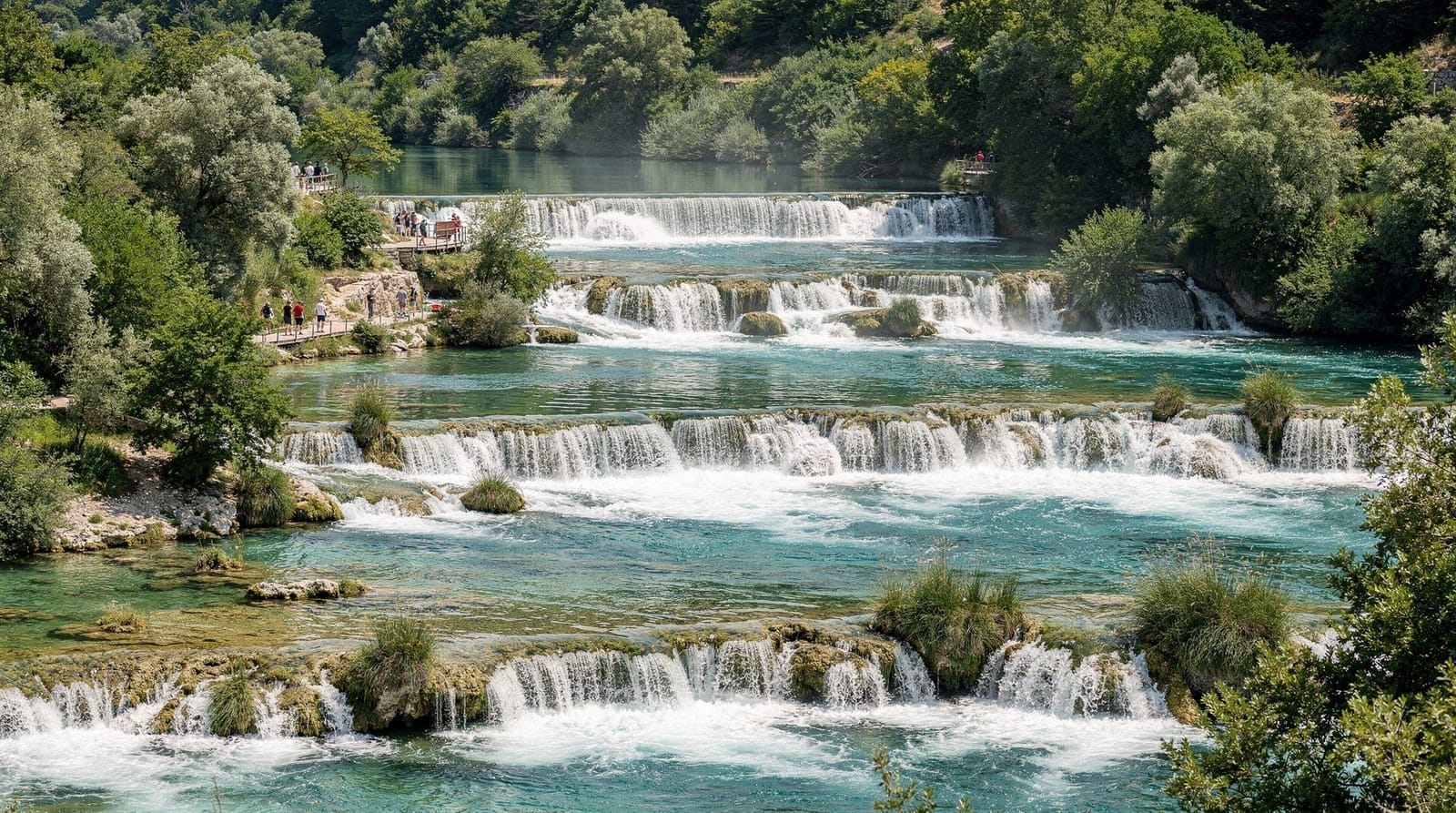
Krka National Park is consistently easier for families than Plitvice Lakes. The main draw at Krka is the Skradinski Buk waterfall, a broad cascade that feeds into a swimmable pool area — swimming is allowed at designated spots, which makes it instantly more appealing to children than Plitvice, where swimming is prohibited. The routes are shorter and flatter than Plitvice, and the park is closer to Split (around 1.5 hours).
Plitvice is beautiful and worth visiting with older children (ideally 8+), but in July and August the narrow boardwalks become genuinely crowded and the full route (Route H, 18 km) is too long for younger legs. If you do go with small children, take the Upper Lakes route (Route A or B) and go very early in the morning.
Brač — sandy beach, island life
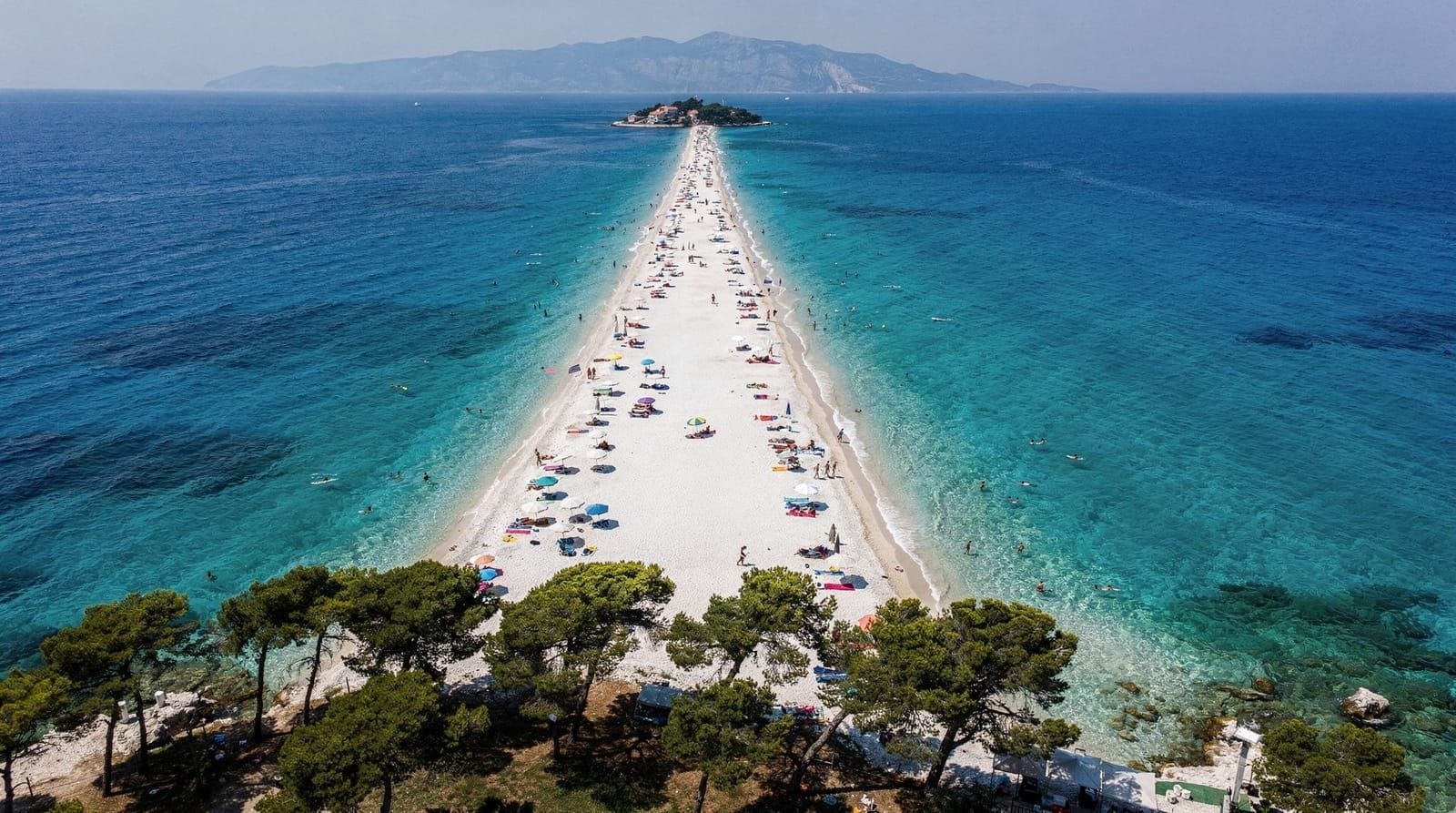
Brač is the island most families with younger children prefer. The draw is Zlatni Rat — the distinctive triangular gravel-and-pebble spit near Bol that shifts shape with the current — and the town of Bol, which has a good range of family accommodation, calm water on one side of the spit and slightly more wave action on the other. Ferry from Split takes 50 minutes and runs multiple times daily.
The island is large enough to warrant a rental car or scooter for exploring, but Bol itself is walkable and manageable with children.
Omiš and the Cetina River — for active families
The town of Omiš sits where the Cetina River meets the Adriatic, between Split and Makarska. It is the adventure sports hub of Dalmatia: rafting on the Cetina, zip-lining, rope bridges and climbing. For families with children aged 8 and older, this is a genuinely exciting base.
A half-day rafting trip on the Cetina River from Omiš is the headline activity — suitable for children from around age 8 with adult supervision, covering river gorges, rope crossings and calm stretches perfect for paddling.
For families where some adults prefer adventure while others stay with younger children, Omiš has beaches and a pleasantly sized old town with a Mirabella fortress to climb.
Zagreb — for a city stopover, not a beach trip
Zagreb rarely anchors a family Croatia trip, but it works well as a 1–2 day stopover on arrival or departure, particularly for families flying into the capital rather than a coastal airport. The funicular up to the Upper Town is a genuine novelty for young children, Dolac market is colourful and tactile, and Zrinjevac park has a playground within walking distance of the centre. In December, Zagreb’s Advent market — widely regarded as one of Europe’s best Christmas markets — is a worthwhile family detour even outside the main coastal season.
Zagreb lacks the sea, obviously, and the summer heat in the continental interior can be more humid and less breezy than the coast. Use it as bookends to a trip rather than the main event: two nights on arrival, then head to Split or Zadar for the beach portion.
Sea urchins and water shoes — essential advice
This bears repeating loudly: pack water shoes for every member of the family, including adults. Sea urchins (ježinac) are common on rocky shores throughout Dalmatia. They are not aggressive, but stepping on one is painful and extracting the spines requires care. Children who instinctively run into the sea across rocks need water shoes.
If a spine does embed, do not break it by pushing — sea urchin spines are brittle and the tip remaining in skin can cause infection. The standard approach is to use tweezers carefully, or see a local pharmacy; pharmacists along the coast deal with this routinely and can advise.
Sandy beaches reduce the risk substantially: Zlatni Rat on Brač, the beaches around Nin and Nin Lagoon, and Bačvice in Split are all lower-risk entry points. On most Dalmatian beaches the entry is pebble or rock — water shoes make a direct difference to whether children enjoy the sea or approach it nervously.
Ferry travel with children
Ferries are generally fine with children. Large Jadrolinija car ferries have indoor seating, snack bars, deck areas and toilets. The crossing from Split to Supetar (Brač) is 50 minutes and calm in most conditions. Split to Stari Grad (Hvar) is about 2 hours — bring snacks and something to do on deck.
Fast catamarans (Krilo, KSC) are smaller and can be uncomfortable in rougher conditions. The crossing from Split to Hvar on a catamaran is 1 hour; from Split to Vis is about 2.5 hours. If children are prone to motion sickness, the car ferry is the calmer option; catamarans in choppier conditions can be unpleasant.
Practical ferry tips for families:
- Book car spots ahead in July–August; walk-on passenger spots are usually fine without booking.
- Arrive at the ferry port at least 30 minutes before departure with children — boarding takes time.
- Most car ferries have outdoor deck space. Children usually prefer being outside; bring a layer for the breeze.
- Bring water and snacks. Ferry cafés exist but queues can be long in peak season.
See the Croatia ferries guide for full route information.
Food with children in Croatia
Croatian food is broadly friendly to children. Pizza and pasta are universally available and reliably good along the coast — this is partly due to Italian culinary influence, particularly in Istria and Dalmatia. Grilled chicken (roštilj) is on virtually every menu, and fresh fish (simply grilled with olive oil and lemon) tends to appeal to children who are comfortable with fish. Local bread is excellent.
Specific child-friendly foods to look for:
- Burek: flaky pastry filled with meat or cheese, sold at bakeries throughout Croatia. Inexpensive, filling and easy to eat while walking.
- Sladoled (ice cream): Croatia has excellent local ice cream shops (slastičarnica), which function as daily infrastructure in coastal towns.
- Fritule: small Croatian doughnuts, often sold at markets. Immediately popular with children.
Avoid restaurants directly on the tourist waterfront — they are typically overpriced and generic. Walk one or two streets back and look for konoba signs; these family-run restaurants typically offer better food, lower prices and a more relaxed atmosphere where children are genuinely welcome.
Sun, heat and shade
Croatian summer heat along the coast reaches 32–36°C in July and August with high UV index. Children dehydrate and burn faster than adults in these conditions.
Practical rules:
- Apply high-SPF sun cream (50+) before going out and reapply after swimming.
- Plan sightseeing for mornings and early evenings — 11:00–15:00 should be beach or shade time.
- Carry reusable water bottles; tap water is safe throughout Croatia and refilling is free.
- Choose beach spots with some natural shade or bring a beach umbrella — these are available to rent at most organised beaches.
- Ferry decks in full sun with no breeze can overheat young children quickly. Have shade or a cabin option available.
Ideal months for family travel
June is the top recommendation for families: sea is warm (around 20–22°C by mid-June), crowds have not yet peaked, prices are 20–30% below August levels, and the heat is manageable rather than intense.
September is the second-best option. Sea temperatures stay high (often 24–26°C through September), summer crowds clear after the first week, and many family-focused activities remain open. The atmosphere is calmer and the light is beautiful.
July and August work but require more planning: book everything ahead, start days early to beat the heat, and choose beaches with shade. The sea is magnificent but the towns are crowded.
The 10-day Croatia with kids itinerary is structured specifically for families and accounts for travel pace, ferry logistics and activity balance.
Activity ideas by age
Ages 4–7: Sea swimming at sandy beaches (Brač, Nin Lagoon, Bačvice), Sea Organ in Zadar, boat rides, ice cream stops, Diocletian’s Palace underground cellars (brief but dramatic), ferry crossings (novelty factor is high for this age group).
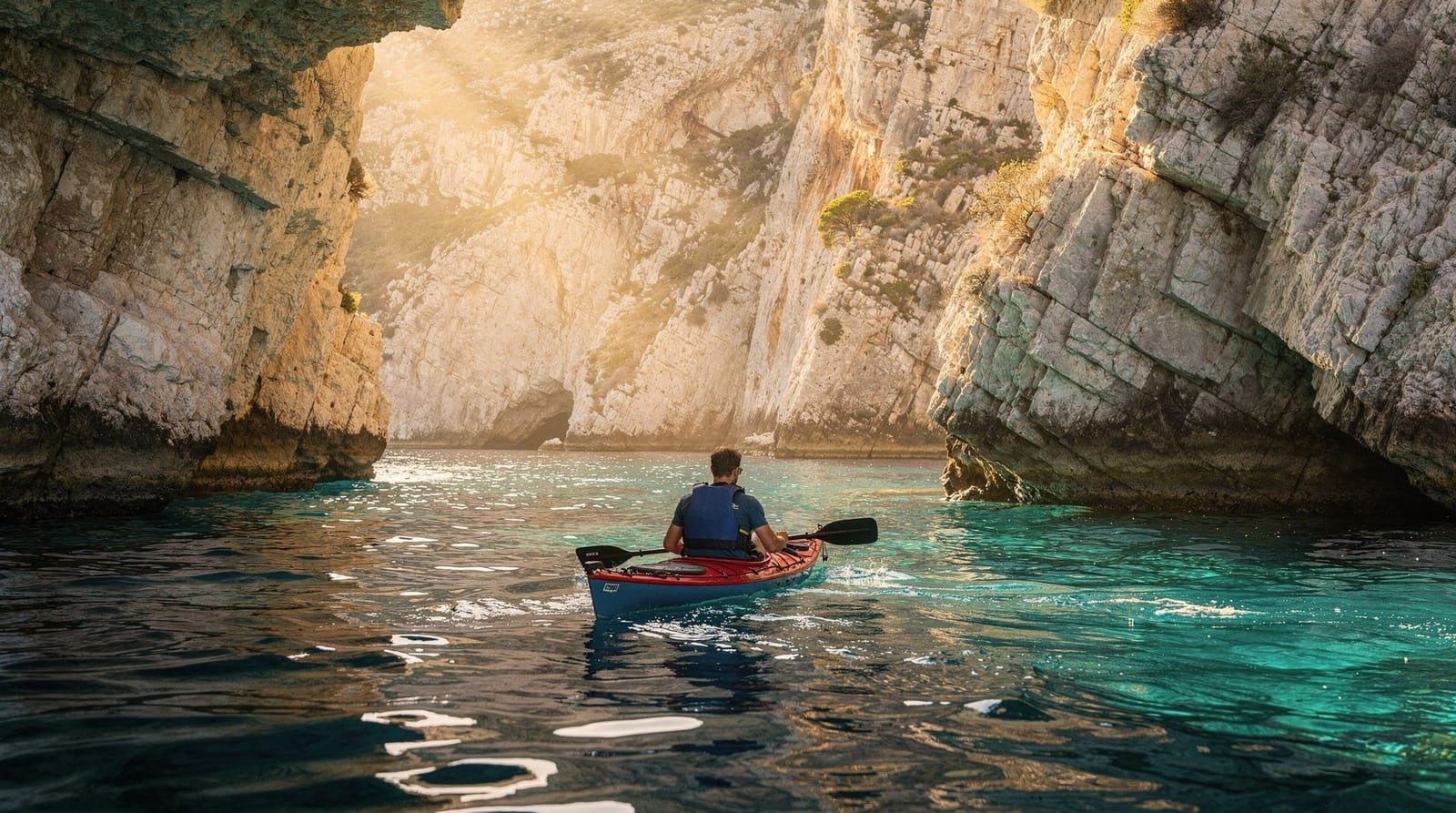
Ages 8–12: Cetina River rafting (minimum age typically 8), kayaking excursions, Krka waterfalls (with swimming), fortress climbing in Omiš and Hvar, Plitvice Lakes shorter routes, cycling on flatter island roads, Blue Cave boat excursion.
Teenagers: All of the above plus the more intensive options — sea kayaking around Dubrovnik, wine-free versions of Pelješac tours, Game of Thrones locations in Dubrovnik, cliff jumping at designated spots, night swimming.
The Cetina River rafting experience combines gorge scenery, gentle rapids and rope crossings in a half-day format that works well for families with children old enough for mild adventure activities.
Practical logistics
Pushchairs: Old town cobblestones are hard work with a pushchair. Dubrovnik, Šibenik and Trogir in particular have steep, uneven surfaces. Consider a baby carrier for very young children in old towns, and use the pushchair for flatter areas (waterfronts, parks).
Car seats: Available for hire through most car rental companies — book ahead. Croatia’s car seat rules follow EU standards.
Nappies and formula: Widely available in pharmacies (ljekarna) and larger supermarkets. Konzum, Spar and Tommy are the main supermarket chains. Stock up in cities rather than relying on island shops, which may have limited range.
Healthcare: Croatia’s public hospitals are accessible. EU nationals with an EHIC card are treated at public facilities. Travel insurance (with medical cover) is strongly recommended for non-EU families. Pharmacists speak good English and are useful for minor issues like sea urchin spines, sunburn and gastric problems.
Which islands work well with children
Not every Croatian island suits a family trip equally well. Brač is the easiest — short ferry, sandy-adjacent Zlatni Rat, a manageable town in Bol. Hvar Town itself leans toward a party atmosphere in peak summer and has limited swimmable beach right in town, so it’s better as a day trip than a family base unless you’re staying outside the centre. Krk, connected to the mainland by bridge (no ferry needed), is underrated for families who want island scenery without ferry logistics at all.
For families building a longer island-hopping trip around children’s needs rather than adult sightseeing priorities, family-friendly islands goes deeper on this than the destination-by-destination summary here, and the 10-day Croatia with kids itinerary sequences island time with mainland recovery days built in.
Toddlers and babies: a different set of rules
Everything above assumes children old enough to walk, swim with some independence and follow instructions. Parents travelling with toddlers or babies face a distinct set of decisions — which beaches are actually shallow enough, which bases minimise stroller struggle, and how to structure the day around naps rather than sightseeing. The Croatia with toddlers guide covers this age range specifically, including the single best toddler beach in the country (Nin Lagoon, near Zadar) and a rest schedule that mirrors how Croatian families themselves manage the summer heat.
Frequently asked questions about Croatia with kids
What is the best month to visit Croatia with kids?
June and September are ideal. The sea is warm, prices are lower than July–August, the heat is more manageable, and attractions are less crowded. July and August work but require earlier starts, more sun protection and advance booking of everything.Is Plitvice Lakes suitable for young children?
Plitvice is walkable for older children (7+) on the shorter routes, but the boardwalks are narrow, the crowds in summer are intense, and pushchairs are not practical. Krka National Park near Split is an easier alternative — flatter, shorter routes and, in some areas, you can swim. Consider a guided tour so you don't have to manage logistics with children in tow.Are Croatian ferries safe and manageable with children?
Yes, ferries are comfortable for families. The main car ferries (Jadrolinija) have indoor seating, decks, snack bars and toilets. Fast catamarans are smaller and can feel choppy in rough conditions — not ideal for children prone to motion sickness. Book ahead in summer, especially car spots.Is the food in Croatia good for picky eaters?
Broadly yes. Pizza, pasta and grilled chicken are universally available. Fish and seafood are fresh and excellent. Most restaurants are accustomed to children and will adapt dishes. Fresh local bread, prosciutto and local cheeses make good easy snacks.Are there beaches in Croatia suitable for young children?
Yes, particularly sandy beaches like Zlatni Rat on Brač, Zrće on Pag (avoid in peak season — it is a party beach), and the beaches around Zadar. Most Dalmatian beaches are pebble or rock, which is less practical for toddlers but fine for older children. Water shoes are essential on rocky shores due to sea urchins.What should I pack for Croatia with kids?
High-SPF sun cream, water shoes (not optional), a reusable water bottle, light cotton clothing, a portable fan for ferries, motion sickness medication if relevant, a small first aid kit including antiseptic (for sea urchin spines), and children's insect repellent for evenings.Is Croatia safe for families?
Croatia is a very safe destination for families. Crime is low, healthcare is accessible and water quality in the sea is excellent. The main practical hazards are sun and heat in summer, sea urchins on rocky shores, and the logistical challenge of getting pushchairs around cobblestoned old towns.
Top experiences
Bookable activities with verified prices and instant confirmation on GetYourGuide.
Top experiences
Best-rated activities across GetYourGuide and Viator.

From Zadar: Plitvice Lakes with Boat Ride & Zadar Old town tour
- Viator

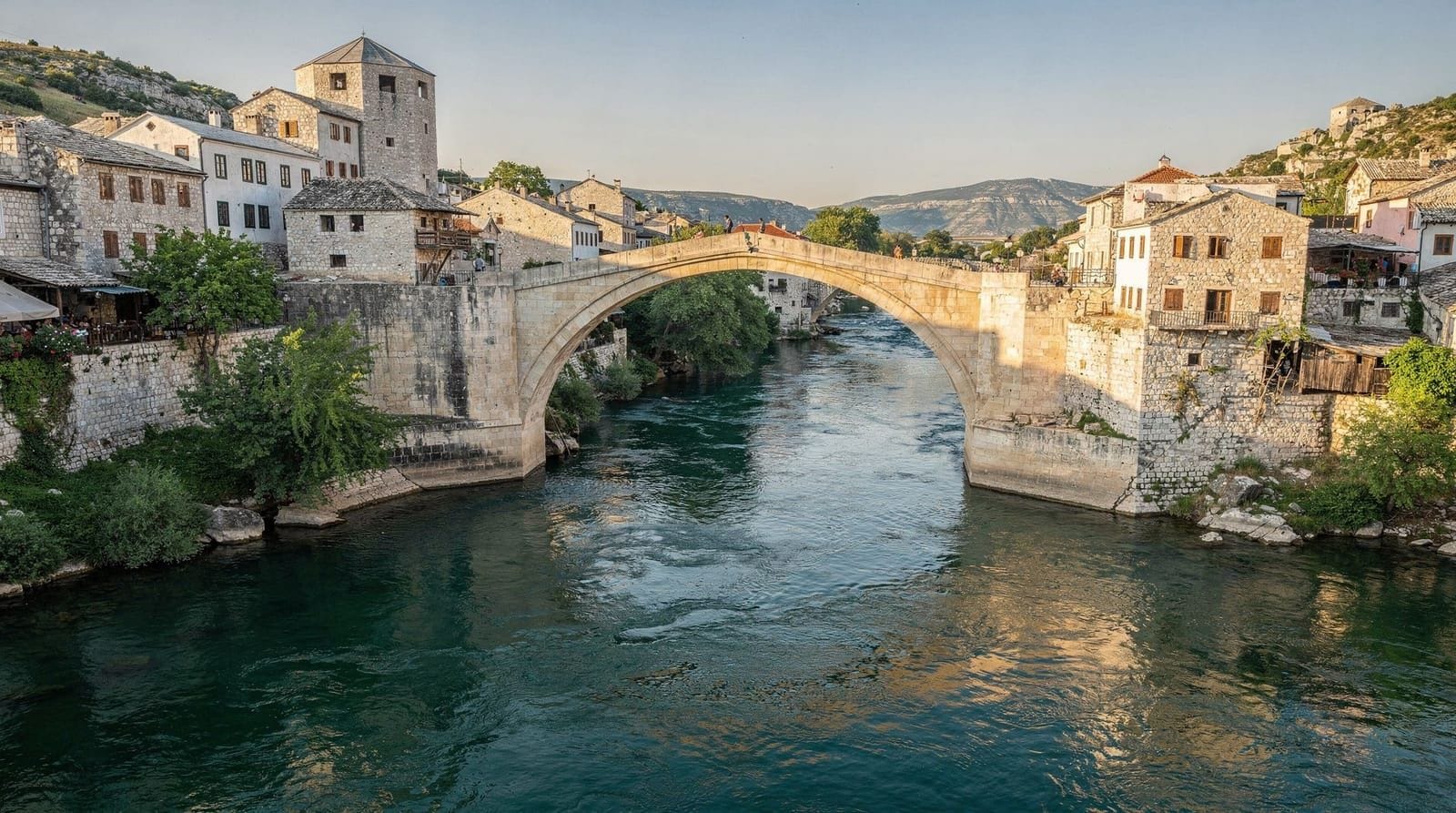
Mostar and Herzegovina Tour with Kravica Waterfall from Split & Trogir
- Viator

3Hour ALL-INCLUSIVE Sunset Dolphin Watching from Medulin onSandra
- Viator

Dolphin Watching & Sunset Boat Tour With Drinks & optional Dinner
- Viator

Fantastic DOLPHIN & SUNSET TOUR with dinner ( Pula-NP BRIJUNI )
- Viator

Medulin :All-Inclusive Pirate Boat Dolphin Watching Sunset Cruise
- Viator