Family-Friendly Islands in Croatia — Best Islands for Kids
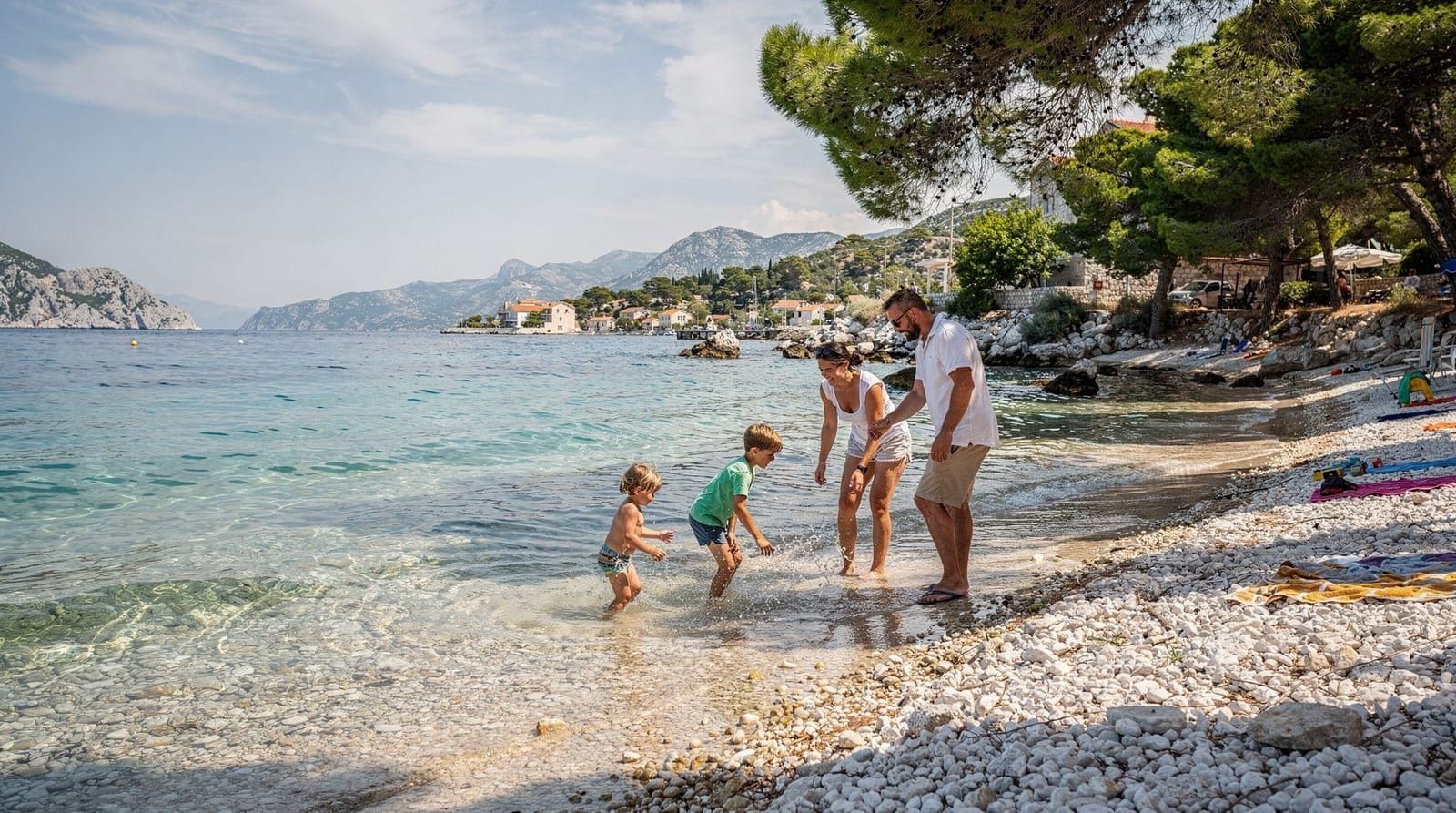
Split: Day trip to Hvar and Brac islands with Zlatni Rat beach
Which Croatian island is best for families?
Brač is the top choice for most families — easy ferry from Split (50 min), Zlatni Rat beach, northern bays with calm water, and good island facilities. Korčula is excellent for a calmer pace and cultural interest. Krk in Kvarner has road access (bridge from mainland) and good family resort infrastructure. Rab has sandy beaches at Lopar. All four are significantly better family choices than Hvar, which is too party-oriented in peak season.
Choosing the Right Island for Your Family
Croatia has over 1,000 islands — but for families, the choice quickly narrows to a manageable handful based on practical criteria: how hard is it to get there, are there family-appropriate beaches, is there enough for children to do for 2–3 nights, and does the island’s vibe suit families rather than party crowds?
This guide ranks Croatia’s family-friendly islands honestly, from the most practical to the most adventurous.
| Island | Ferry from | Best age range | Standout beach |
|---|---|---|---|
| Brač | Split, 50 min | All ages | Zlatni Rat, Bol |
| Korčula | Split/Dubrovnik, 2.5–4h | 6+ | Bays near town |
| Krk | No ferry — road bridge | All ages | Baška |
| Rab | Jablanac, 15 min | All ages | Rajska Plaža |
| Mljet | Dubrovnik, 2.5–3h | 7+ | National park lakes |
Brač — Top Pick for Most Families
Brač is Croatia’s second-largest island and the first choice for families based in Split. The reasons are straightforward: the ferry crossing from Split is 50 minutes (car ferry to Supetar, or catamaran to Bol), the island is large enough to spend several days without running out of things to do, it has Croatia’s most famous beach, and the overall infrastructure (restaurants, supermarkets, accommodation) is well developed.
Beaches on Brač
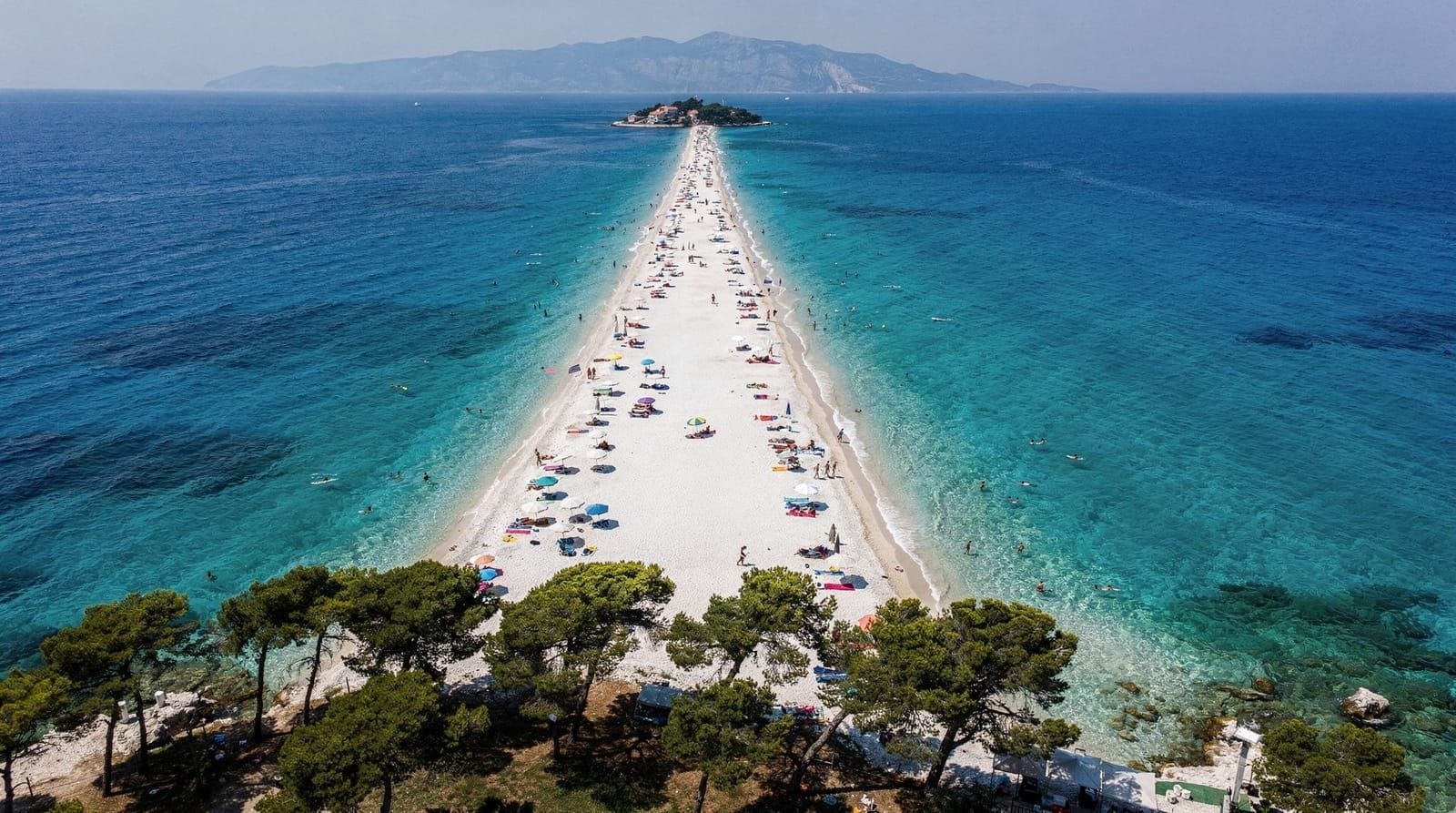
Zlatni Rat, Bol: Croatia’s most photographed beach — a pebble spit extending into the Hvar channel. Good swimming on both sides; fine gravel rather than coarse pebble; pine shade nearby. Best for families in June and September (much less crowded than July–August). See zlatni-rat-beach for the full guide.
Northern coast bays: The north coast of Brač facing Split is calmer and sheltered from the open sea. Uvala Vira, Lovrečina (a long, relatively shallow bay popular with families) and several unnamed coves offer quieter swimming without the day-tripper crowds. Lovrečina has an old church ruin and the bay is protected and gentle — excellent for children who aren’t strong swimmers.
Milna harbour: On the western tip of Brač, Milna is a beautiful fishing village with a calm harbour. Small pebble beaches in the bay are sheltered. The town has an unpretentious, local feel with a few good restaurants.
Beyond the Beach on Brač
The island interior rewards exploration: Škrip (oldest continuously inhabited settlement in Dalmatia, museum in a Roman tower), Pučišća (marble quarry that supplied stone for Diocletian’s Palace), and Vidova Gora summit (780m, magnificent view over Zlatni Rat and Hvar — driveable or a 2h hike from Bol). Brač’s olive oil is excellent; the local sheep’s cheese (brački sir) is worth buying.
Brač Logistics
Ferry Split–Supetar: Jadrolinija car ferry, 50 min, up to 12 sailings daily in peak season. €3–4 foot passenger, around €30–40 for a car.
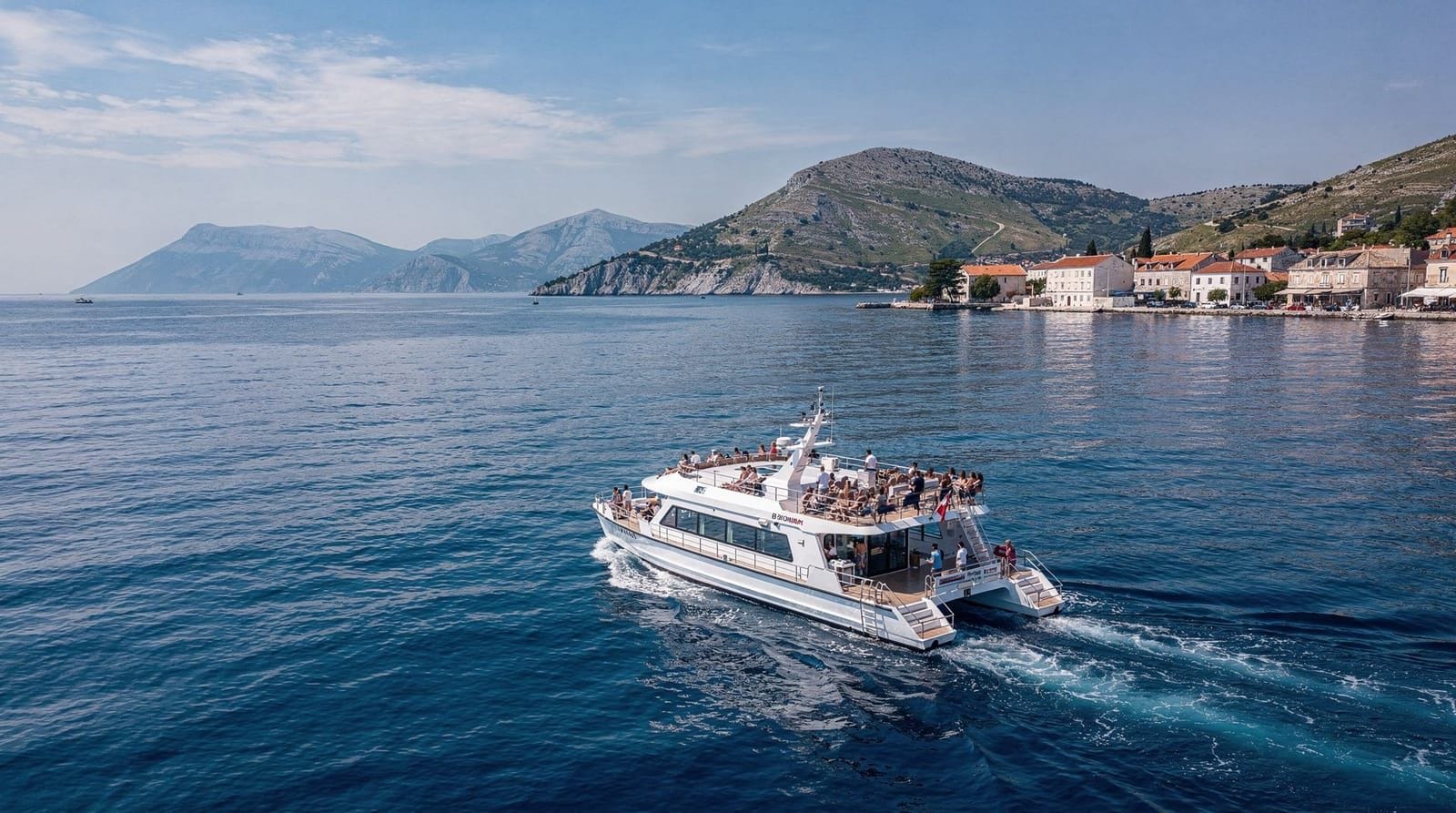
Catamaran Split–Bol: Seasonal, ~1h, foot passengers only. Ideal for day trips or stays in Bol.
On-island transport: Local buses connect Supetar–Bol (35 min) and Supetar–Milna. Taxi or rental car gives more flexibility.
Accommodation: Full range from camping to hotels and apartments. Bol has most tourist infrastructure. Supetar is quieter. Book well ahead for July–August.
Korčula — Culture and Calm for Families
Korčula is often described as a “mini-Dubrovnik” — a walled medieval town on a forested peninsula, connected to the island of the same name. For families, it offers a different experience from Brač: more cultural (Marco Polo was supposedly born here), calmer pace, and a range of swimming spots in the sheltered bays around town.
What Korčula Offers Families
The old town is compact and easily explored with children — the cathedral, towers and town walls are interesting without being overwhelming. The island has several quiet beaches in the bays immediately east and west of town. Vela Spila cave (a prehistoric cave above Vela Luka town) is excellent for children aged 6+ who like archaeology and underground adventures.
The south coast of Korčula toward Prižba and Smokvica is genuinely quiet — small pebble bays with almost no tourists, reached by car or bicycle.
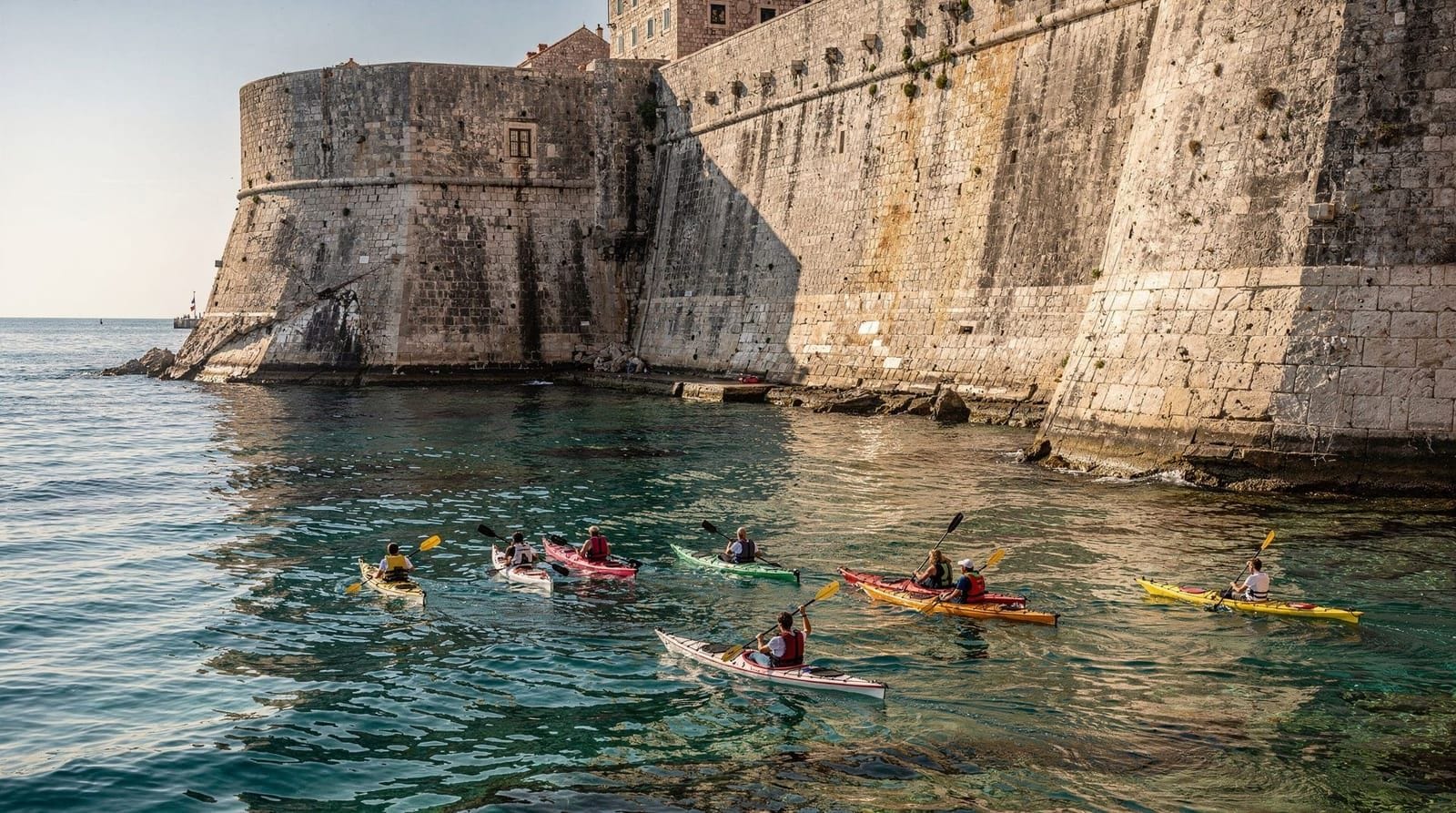
Korčula for older children: Good cycling (the island is relatively flat along the coast), snorkelling, sea kayaking from town, and the nearby Badija island (5 min by water taxi — Franciscan monastery, deer, calm swimming) are all excellent activities.
Getting to Korčula
Multiple ferry connections: from Split (catamaran or slow ferry to Vela Luka, or via Hvar), from Dubrovnik by catamaran (slower in season). Car ferries run Drvenik–Dominče (near Korčula town) and Split/Hvar–Vela Luka (western end of island). Journey time from Split: 3–4h by slow ferry or 2.5–3h by combination of catamaran.
Krk — Most Accessible Island for Families with Cars
Krk is connected to the mainland by a bridge (the Krk Bridge, just south of Rijeka), making it uniquely accessible: you can drive from Zagreb to Krk island without a ferry. This makes Krk the most practical choice for families travelling by car from Central Europe.
Krk Family Highlights
Baška town beach: Baška at the island’s southern tip has Croatia’s longest “pebbly” beach — a 2km stretch of fine shingle in a sheltered bay. The beach has excellent facilities, lifeguards, the water shallows gradually, and the Velebit mountain backdrop is spectacular. In peak season it’s busy; in June or September it’s excellent.
Krk town: The island’s main town has a small Roman mosaic floor, Cathedral of the Assumption, and walkable old town — manageable for children with a short attention span.
Vrbnik: A hilltop village above the island’s east coast, famous for Žlahtina wine (for adults) and views over the Kvarner bay. Very picturesque.
Biserujka Cave: A stalactite cave near Šilo — good for children who like caves and underground weirdness.
Krk Logistics
Drive from Zagreb: approximately 2h via motorway to Krk Bridge. No ferry needed. On the island, car is the most practical transport.
Rab — Sandy Beaches and Medieval Old Town
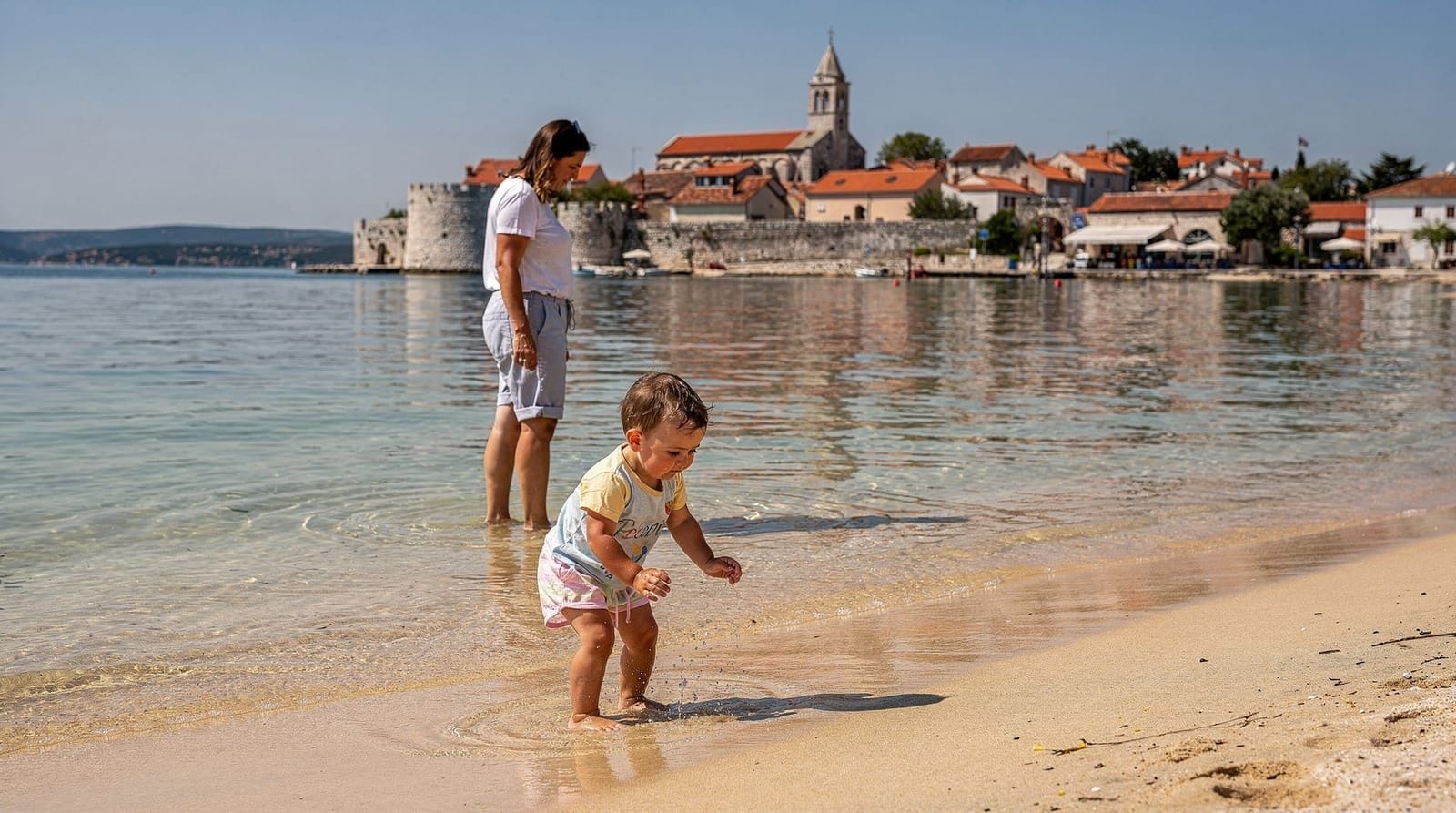
Rab island in Kvarner has a beautiful medieval old town (four bell towers visible from the sea, one of Croatia’s loveliest skylines) and the finest sandy beaches in northern Croatia. The Lopar peninsula at the north end of the island has several beaches, including Rajska plaža (Paradise Beach) — long, relatively sandy, shallow-entry and very popular with families.
Rab was also where the FKK (naturist) tradition in Croatia was born in 1936 — Kandarola beach south of Rab town is the historic naturist site. Non-naturists are not affected — the old town and main beaches are completely separate.
Getting to Rab
Car ferry from Jablanac (mainland) to Mišnjak (southern Rab) — 15 min crossing, one of Croatia’s shortest ferry routes. From Rijeka by Jadrolinija ferry: approximately 3h.
Mljet — National Park Island for Active Families
Mljet is Croatia’s greenest island — entirely forested, with a national park in the western third. The park has two salt lakes (connected to the sea) where swimming is permitted; a small island in the larger lake (Veliko Jezero) has a 12th-century Benedictine monastery. Cycling around the park is excellent. The atmosphere is peaceful and genuinely remote.
For families: Best for children aged 7+ who can cycle or walk moderate distances. The environment is beautiful but activities are limited to swimming, cycling and boat exploration. Not suitable as a primary beach destination for toddlers.
Getting there: Catamaran from Dubrovnik or slow ferry from Split along the coastal route (calling at Split, Hvar, Korčula, Mljet). Journey from Dubrovnik: approximately 2.5–3h by catamaran.
Why Hvar Doesn’t Top This List
Hvar is beautiful and has the Pakleni Islands for excellent swimming — but for family island stays, the combination of Croatia’s most expensive island accommodation, a nightlife-oriented town atmosphere in peak season, limited calm-water beaches within the town itself, and ferry chaos in August all count against it as a family base.
Visit Hvar for a day trip from Split or Brač — morning on the Pakleni Islands, afternoon in Hvar Town, return by evening. This captures Hvar’s best qualities without the logistical and cost pain of staying there in peak season with children.
Šolta — The Quiet Alternative Near Split
Šolta, 20 km from Split, is the anti-Hvar. No famous beach, no party scene, very little package tourism, and regular ferries from Split (50 min). The island produces olive oil, honey and lavender. Several bays — Maslinica, Nečujam, Rogač — have clear, calm water in sheltered inlets. The island feels genuinely local.
For families who want an island experience without the crowds or expense of the famous islands, Šolta is an underrated option. Restaurant options are limited (bring some food supplies) but what’s there is genuine konoba cooking.
Practical Notes on Island Stays with Children
Book accommodation early: July–August on Brač and Korčula books out 3–6 months ahead. June and September: 4–6 weeks ahead usually fine.
Ferries with children: Car ferries have cafés, toilets and outdoor decks. Fast catamarans are foot-passenger only with aircraft-style seating — less comfortable for children needing to move around. For toddlers, the car ferry (slower, more stable, more space to move) is significantly preferable.
Luggage: Cobblestones in island old towns and uneven harbour ramps make rolling suitcases difficult. Backpacks or soft-sided bags work better for island hopping.
Rental cars on islands: Available on Brač (Supetar, Bol) and Korčula (Korčula town). Scooter rental from 16 years old (check licence requirements). Bicycles available most island towns.
Day trips vs staying on an island
Not every family needs to relocate to an island at all — a day trip from Split covers Brač’s highlights (including Zlatni Rat) without the logistics of moving accommodation. If your base is already Dubrovnik rather than Split, the closer equivalent is the Elaphiti Islands, which work well as a single day rather than an overnight stay.
Which beaches actually suit young children
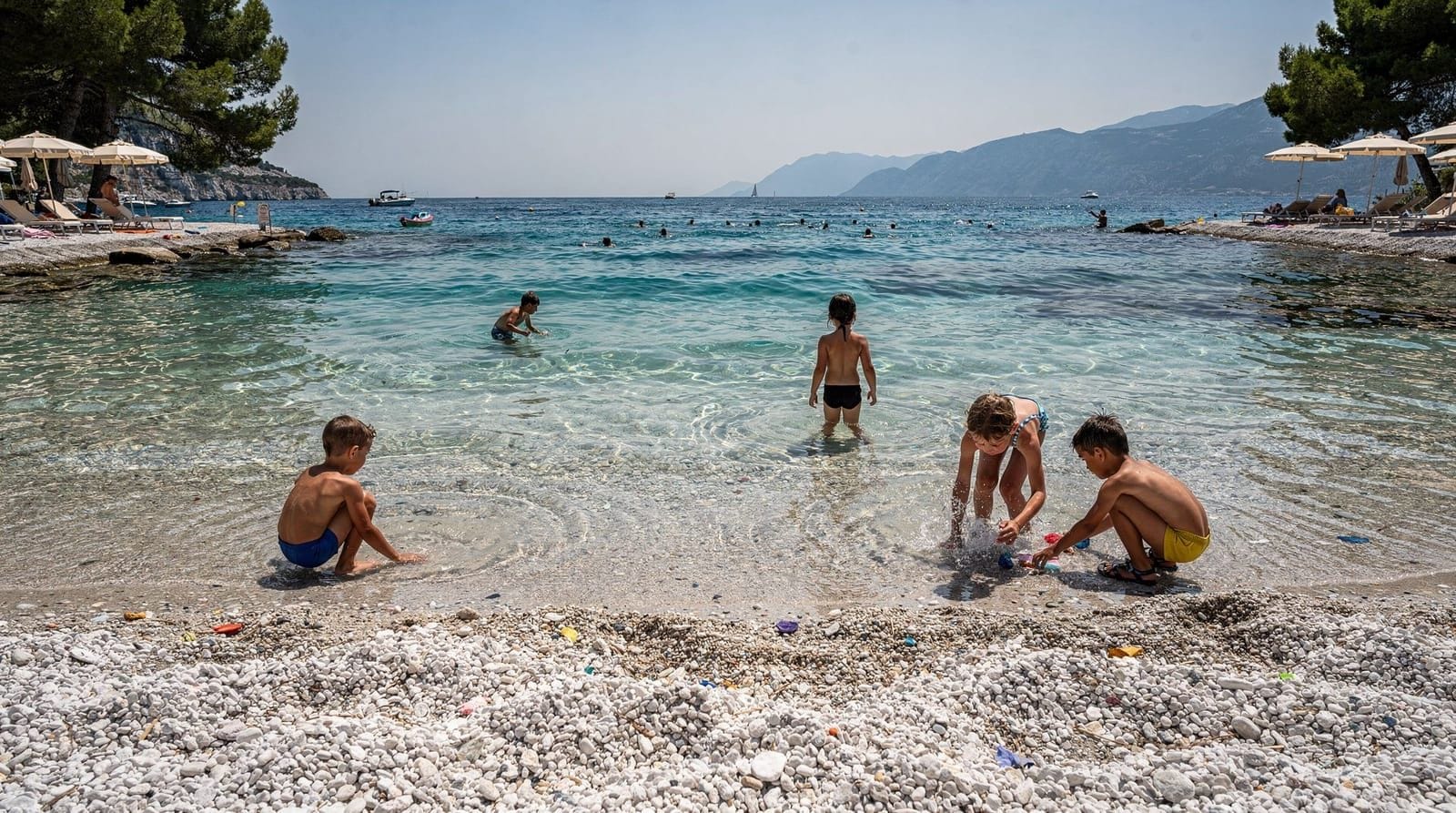
Island choice matters less than beach choice within the island for families with toddlers. Not every beach on this list has a genuinely gradual, shallow entry — see the family beaches Croatia guide for a beach-by-beach breakdown of entry type and water depth, which is often the deciding factor over the island’s general reputation.
Building islands into a full family trip
None of these islands work well as a rushed one-night stop — the ferry logistics eat too much of the day for that to be worthwhile. See the family itinerary Croatia guide for a realistic 10-day structure that includes a proper 2-night stay on Brač, and the wider Croatia family guide for planning principles that apply across all of these islands. If you’re weighing an island stay against staying entirely on the mainland, that broader guide also covers the trade-offs.
Frequently asked questions about Family-Friendly Islands in Croatia
Should families avoid Hvar?
Not avoid entirely — Hvar Town has a beautiful old town and the Pakleni Islands for swimming — but Hvar's reputation as Croatia's party island is accurate in July–August. The combination of crowded nightlife bars, high prices and limited calm beaches makes it less suitable as a family base during peak season. Visit Hvar for a day trip from Split or Brač instead.Is Vis island suitable for families?
Yes, but it's better suited to families with children 8+ who are confident swimmers and happy with active exploration. Vis has no sandy beaches, no shallow-entry family beaches, and requires a 2h20 catamaran. The reward is an authentic, unspoiled island with exceptional clear water. For families with young children, Brač is more practical.Which Kvarner island is best for families?
Krk is the most practical — road bridge from the mainland makes it the easiest island to reach with a car and luggage, it has Baška town with a well-developed family beach, and good camping infrastructure. Rab has the best sandy beach (Rajska plaža at Lopar) but requires a ferry. Lošinj has good facilities and a pleasant main town.Can you take a car to Croatian islands?
To most islands yes, by car ferry. Brač (Supetar), Hvar (Stari Grad), Korčula (Vela Luka or Dominče), Vis, Krk (via bridge — no ferry needed), Rab, Cres and Lošinj are all accessible with a car by ferry. In peak season, car ferry priority queues can be long — arrive 1–2 hours early. Foot passenger + rental car on the island is usually more practical.Are Croatian islands safe for children?
Very safe. Croatia is a low-crime country. Islands are even quieter than the mainland. The main safety considerations are the same as any pebble/rocky coast: sea urchins (water shoes essential), rocky entries and exits from the sea, strong midday sun, and deep-water drop-offs near rock platforms.What is the best island for a family first-time visit to Croatia?
Brač, without question. 50-minute ferry from Split, Croatia's most famous beach (Zlatni Rat), calm northern bays, good restaurants and facilities, car-free enough to feel like an island but developed enough for comfortable family logistics.
Top experiences
Bookable activities with verified prices and instant confirmation on GetYourGuide.
Top experiences
Best-rated activities across GetYourGuide and Viator.

Blue cave, Mamma Mia and Hvar, 5 islands speedboat tour
- Viator

Blue Cave and Hvar Tour - 5 Islands Tour from Split and Trogir
- Viator

Blue cave, Mama Mia and Hvar, 5 Island Speedboat Tour from Trogir
- Viator

From Split: Plitvice Lakes National Park Guided Tour
- Viator

Krka Waterfalls Day Tour with Boat Ride from Split and Trogir
- Viator

Plitvice Lakes National Park Guided Day Tour from Split
- Viator