Croatia Family Guide — Everything You Need to Plan a Family Holiday
Split: Self-guided Plitvice Lakes day trip with boat ride
Is Croatia good for a family holiday?
Yes — Croatia is excellent for families. The sea is calm and clear, the country is safe, the food is good and child-friendly, and the range of activities covers all ages. The main challenges are pebble beaches (water shoes essential), heat in peak July–August, and logistical planning for island transport with young children. With a bit of preparation, it's one of Europe's best family destinations.
| Best base | Split (ferries + short day trips) |
| Best for toddlers | Nin Lagoon, Sakarun (Dugi Otok) |
| Sweet-spot age | 5–12 (snorkelling, ferries, boardwalks manageable) |
| Family meal budget | €40–70 (non-Dubrovnik), €80–120+ Dubrovnik/Hvar |
| Essential gear | Water shoes, SPF 50, collapsible stroller |
Why Croatia Works for Families
Croatia repeatedly appears near the top of European family holiday rankings, and the reasons are structural rather than just marketing. The Adriatic is calm in summer with no dangerous currents or tides. The country is genuinely safe — violent crime is extremely rare, even in tourist areas. The food is honest Mediterranean cooking rather than tourist junk. National parks with boardwalks and boat rides give non-beach days extraordinary content. And the sheer density of good beaches, clear water and interesting historic towns means a family holiday can be differently paced for each member.
The practical challenges are real but manageable: pebble beaches require water shoes (not optional); peak July–August heat requires early-morning beach starts and midday shade; island ferry logistics with young children require planning. None of these are dealbreakers — they’re just considerations that, addressed in advance, disappear.
Where to Base Yourselves
Split — Best All-Round Family Base
Split combines easy ferry access to islands (Brač, Hvar, Vis), a compact old town that children find fascinating (Diocletian’s Palace is a living Roman ruin — you can walk into 4th-century cellars and then straight into cafés), good supermarkets and restaurants, family apartments widely available, and manageable logistics.
Day trips from Split hit Croatia’s highlights: Plitvice Lakes (2.5h by bus or tour), Krka waterfalls (1.5h), Blue Lagoon beach (30 min by boat), Zlatni Rat on Brač (1.5h). No other base gives this range of options.
The city itself has Bačvice beach for a local swim (10 min walk, very shallow water), the Marjan park and forest for morning walks, and the Riva promenade for evening gelato.
Zadar — Family-Friendly Alternative
Zadar is smaller and less hectic than Split, with a beautiful old town (the Sea Organ and Greeting to the Sun are child-friendly curiosities), good beaches north of the city, and the best access to both Plitvice Lakes (1.5h by bus or tour) and Krka waterfalls (1h). The Nin Lagoon — Croatia’s best beach for toddlers — is 15 km north.
Zadar is often overlooked by families who rush south to Split and Dubrovnik. It’s worth reconsidering.
Istria — Organised Family Resort Culture
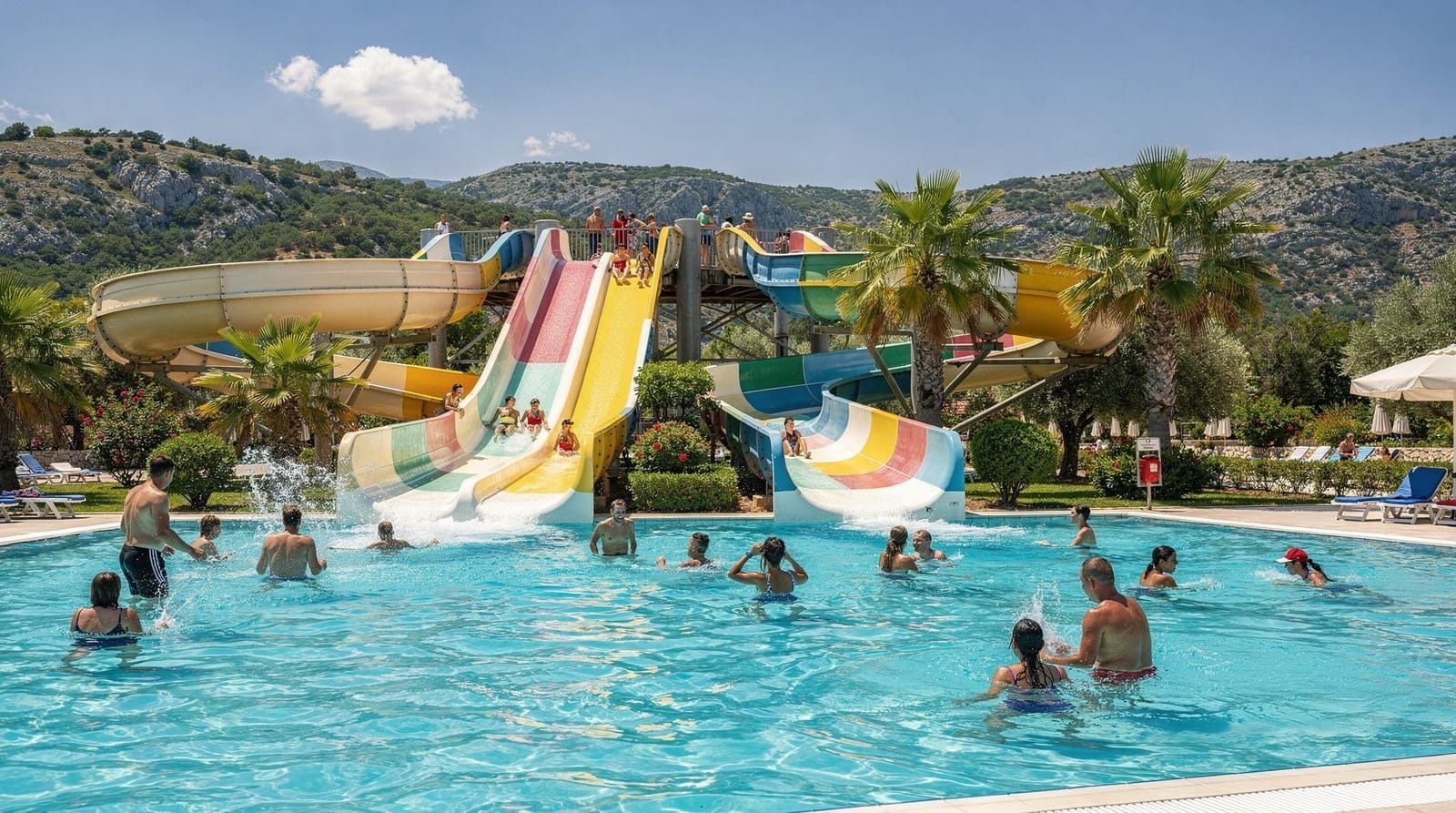
Poreč, Rovinj and the Istrian coast have a strong tradition of all-inclusive and half-board family resort hotels — a product of decades of Central European family tourism. Aquapark Istralandia near Novigrad, the Aquacolors water park near Poreč, organised beach facilities with lifeguards, children’s clubs at larger hotels, and short drive access to Pula’s Roman amphitheatre make Istria the most organised family option.
If you want the infrastructure of a dedicated family resort rather than a more independent approach, Istria delivers this reliably.
Dubrovnik — Spectacular but Challenging for Families
Dubrovnik is undeniably extraordinary, but it’s the most challenging base for families: very expensive, extremely crowded in peak season, no easy beach access from the city, and logistics involving more bus changes and boat trips to reach good beaches. Best experienced as part of a wider trip (2–3 nights) rather than as a full family base.
Essential Family Pre-Trip Planning
Book accommodation early
For July and August, book self-catering apartments 3–6 months ahead. A kitchen (or at least a kitchenette) is invaluable for families: supermarket breakfasts, packed beach lunches, and avoiding the expense of three restaurant meals per day with children. Booking.com and local agencies have good apartment inventories.
Water shoes for everyone
Buy these before you go or in Croatia’s coastal towns immediately on arrival. Children especially need proper protection. Sea urchins on rocks cause painful injuries; pebble beaches are hard going in bare feet. Budget €5–10 per pair for children, €10–20 for adults.
Sun protection strategy
Croatian summer sun is strong. SPF 50 for children, reapply every 90 minutes and after swimming. UPF rash vests for children who burn easily. Hats mandatory for toddlers. Plan beach days to start at 8–9am and retreat to shade or accommodation between 11am–4pm, returning for the late afternoon swim when the sun is lower.
Travel insurance and EHIC/GHIC
European nationals: carry your EHIC or GHIC card (EU health card) for free emergency treatment. Non-Europeans: travel insurance with health cover is essential. Croatia has good hospitals in major cities and private clinics in resort areas.
Age-by-Age Guide
Babies and toddlers (0–3)
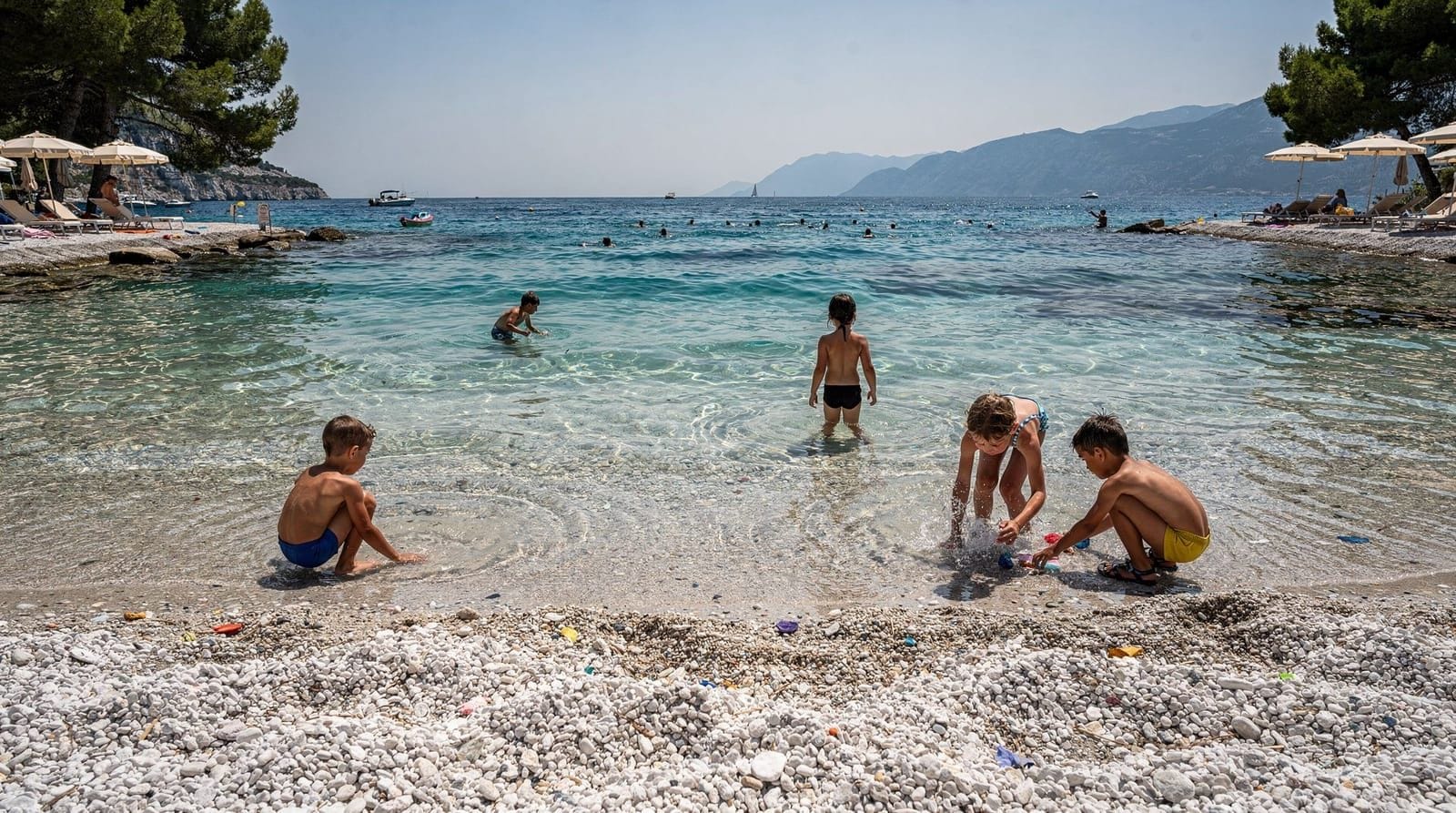
Possible but requires planning. Best beaches: Nin Lagoon (extremely shallow and sandy), Sakarun on Dugi Otok (sandy, very gradual). Avoid: rocky coves, steep-entry pebble beaches, fast catamarans (motion sickness risk). Bring: collapsible stroller (cobblestones in old towns), baby sunscreen, a UV shelter for beach, portable snacks and a water bottle.
Midday heat in August is the main concern — Croatia’s cities and towns offer afternoon shade, but beach days with babies must start early and end by 11am.
Young children (4–8)
Croatia’s sweet spot for children. Old enough to snorkel in the clear water (a genuine wonder for children this age). The Plitvice Lakes boardwalks are exciting — turquoise lakes, waterfalls, boat rides. Diocletian’s cellars in Split are atmospheric (low lights, stone vaults). Simple foods at konobas work well. Water shoes on, masks on, let them swim.
Bačvice’s shallow water and picigin culture is engaging for this age group. Ferry rides are adventures.
Older children (9–13)
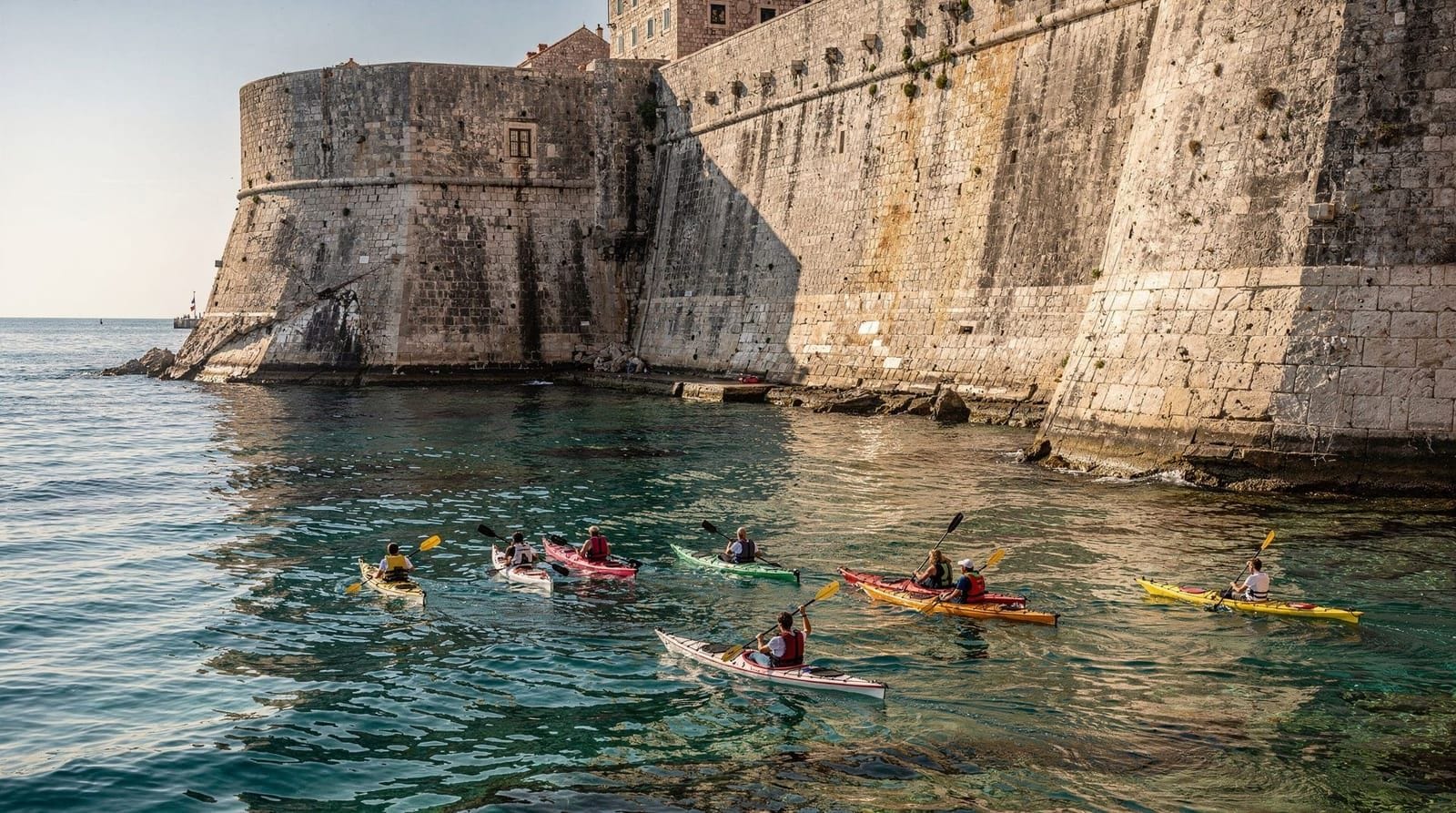
Croatia broadens considerably: kayaking, snorkelling, island cycling, hiking to Zlatni Rat’s viewpoint at Vidova Gora, climbing the Dubrovnik walls, Game of Thrones locations (most know the show). National parks deliver: Plitvice’s 16 connected lakes and waterfalls genuinely impress, and Krka’s boat ride is easy and enjoyable.
Teenagers (14+)
Croatia is excellent for teenagers: watersports (windsurfing, paddleboarding, kayaking), diving courses, island independence, Hvar Town for older teenagers, and the possibility of their own adventure while parents relax. Bol is specifically good for teenage windsurfers — one of Croatia’s top spots.
Day Activities Beyond the Beach
Plitvice Lakes National Park
Croatia’s most visited attraction and genuinely deserving of that status. Sixteen connected turquoise lakes linked by waterfalls, explored via wooden boardwalks and a boat crossing. Children of all ages can do the easier routes; the longer routes are achievable for fit 7+. The vivid colours of the water are genuinely extraordinary and not an Instagram exaggeration.
Book entry tickets well in advance in peak season — capacity is restricted and walk-up tickets are often unavailable in July–August.
Krka National Park
More accessible from the coast than Plitvice, Krka has a beautiful waterfall (Skradinski Buk) and a boat ride from Skradin through the canyon. Note: swimming in the park itself has been restricted in recent years — check current policy before visiting. The scenery and boat ride remain excellent for families regardless.
Blue Lagoon Boat Trip
A 30-minute speedboat ride from Split to the vivid turquoise Blue Lagoon (near Drvenik). Very popular family activity — children love the speed of the boat and the swimming stop. Bring snorkels.
Diocletian’s Palace, Split
More engaging for children than most ancient sites — it’s a living space where people actually live inside the palace walls. The underground cellars (used as Daenerys’s dragon cells in Game of Thrones) are atmospheric and interesting for older children. The warren of streets within the palace is good for exploration.
Food and Eating Out with Children
Croatian restaurants (konobas) are family-oriented — children are expected and welcomed. High chairs are available at most places. Menus typically include:
Child-friendly options: Grilled fish or calamari (mild), pasta dishes (pašta), pizza, chicken (piletina), rice dishes. Fresh bread comes to the table. The food is genuinely fresh and simply prepared.
Supermarkets: Spar, Konzum and Tommy are the main chains — well-stocked with familiar international products alongside Croatian food. Buying breakfast and lunch items here dramatically reduces daily costs. Croatian yoghurt (Vindija), fresh bread from bakeries (pekarna), and local cheeses are excellent.
Ice cream (sladoled): Croatia has a strong gelato culture from its Italian influences. Ice cream parlours are everywhere in coastal towns. Budget €2–3 per cone.
Prices: In non-Dubrovnik coastal restaurants, a family of four can eat a full meal with drinks for €40–70. Dubrovnik and Hvar premium locations run €80–120+.
Family itinerary length: how many days makes sense
A single-base family trip (Split or Zadar, with day trips to a national park and one island) works comfortably in 7 days. Combining a coastal base with 2–3 nights in Dubrovnik or Istria stretches naturally to 10–14 days without feeling rushed for children, who generally cope better with fewer transitions than adults expect. See the family itinerary Croatia guide for a full day-by-day plan, and kid-friendly tours in Croatia for vetted activity options by age.
Frequently asked questions about Croatia Family Guide
What age is Croatia best suited for?
Croatia works well from about age 3 upward. Toddlers (1–3) can have great holidays if you choose the right beaches (Nin Lagoon, Sakarun), stay in comfortable accommodation and plan for midday rest breaks. Ages 5–12 are the sweet spot — old enough to snorkel, hike and explore but still manageable on ferries and day trips. Teenagers love Croatia for watersports, islands and independence.Which part of Croatia is best for families?
Split and the central Dalmatian coast is the most practical base for families — good ferry connections to islands, well-developed infrastructure, plenty of activities and restaurants, and manageable logistics. Istria (Poreč, Rovinj) has excellent family-oriented resorts with organised facilities. Zadar is excellent for families who want national parks (Plitvice, Krka) combined with coast.Is Croatia expensive for families?
Mid-range. A family of four in a decent apartment in a smaller coastal town (not Dubrovnik or Hvar) can eat out and live well for €150–200/day including accommodation. Dubrovnik and Hvar are significantly pricier (€250–400/day for a family). Groceries and supermarkets are affordable. The biggest family cost is accommodation — book early, especially for July–August.What documents do children need to visit Croatia?
Croatia is in the Schengen Area. EU/EEA children need a valid national ID card or passport. Non-EU children (UK, US, Australia etc.) need a valid passport (issued within last 10 years, valid 3 months beyond return date). Children under 18 travelling with one parent may need a notarised letter of consent from the absent parent — check your national guidance, as enforcement varies.Is the food good for children in Croatia?
Yes — Croatian food is naturally child-friendly. Fresh grilled fish, pasta, pizza, grilled chicken, rice dishes and pizza are available everywhere. The konoba (traditional restaurant) format usually has simpler dishes children like. Fussy eaters can always find pasta, bread and grilled meat. Seafood may be new to some children — it's worth encouraging, but alternatives are always available.Are Croatian ferries safe and manageable with children?
Yes. Jadrolinija car ferries are large, stable vessels with cafés, toilets, outdoor decks and seating. Journey times of 50 min (Split–Brač) to 2h20 (Split–Vis) are very manageable. Fast catamarans are foot-passenger only and can be bumpier in rough weather — less ideal for toddlers prone to seasickness. Take the car ferry if you can in peak season.How many days do families need in Croatia?
A single-base trip (Split or Zadar, with a national park and one island day trip) works well in 7 days. Adding Dubrovnik or Istria stretches naturally to 10–14 days. Fewer transitions generally suit children better than adults might expect, so resist packing too many bases into a short trip.
Top experiences
Bookable activities with verified prices and instant confirmation on GetYourGuide.
Top experiences
Best-rated activities across GetYourGuide and Viator.

Blue cave, Mamma Mia and Hvar, 5 islands speedboat tour
- Viator

Blue Cave and Hvar Tour - 5 Islands Tour from Split and Trogir
- Viator

Blue cave, Mama Mia and Hvar, 5 Island Speedboat Tour from Trogir
- Viator

From Split: Plitvice Lakes National Park Guided Tour
- Viator

Krka Waterfalls Day Tour with Boat Ride from Split and Trogir
- Viator

Plitvice Lakes National Park Guided Day Tour from Split
- Viator