Brač travel guide
Everything you need for Brač island: Zlatni Rat beach, Bol town, inland villages, stone-quarry history, and ferries from Split in under 2 hours.
Split: Discover Brac with history, food and Zlatni Rat
Quick facts
- Best time
- May–June, September
- Days needed
- 2–4 days
- Getting there
- Car ferry Split–Supetar (50 min) or catamaran Split–Bol (1 h)
- Budget per day
- €60–€140
Brač is the largest island in Dalmatia and the third largest in the Adriatic, yet it remains considerably calmer and more affordable than its famous neighbour Hvar. Its headline attraction — Zlatni Rat, the golden horn of shingle that juts into turquoise water south of Bol — is one of the most photographed beaches in the entire Mediterranean. But Brač is much more than one beach: it has a compelling interior of stone villages, olive groves, lavender fields, and centuries of quarrying tradition that supplied the stone for Diocletian’s Palace in Split and, reportedly, the White House in Washington DC. For a side-by-side comparison with its island neighbours, see Hvar vs Brač vs Korčula.
| Where | Central Dalmatia, ferry from Split |
| Cost | Around €60–€140/day |
| Time needed | 2–4 days |
| Getting there | Car ferry Split–Supetar (~50 min) or catamaran Split–Bol (~1 h) |
| Best time | May–June and September |
Getting to Brač
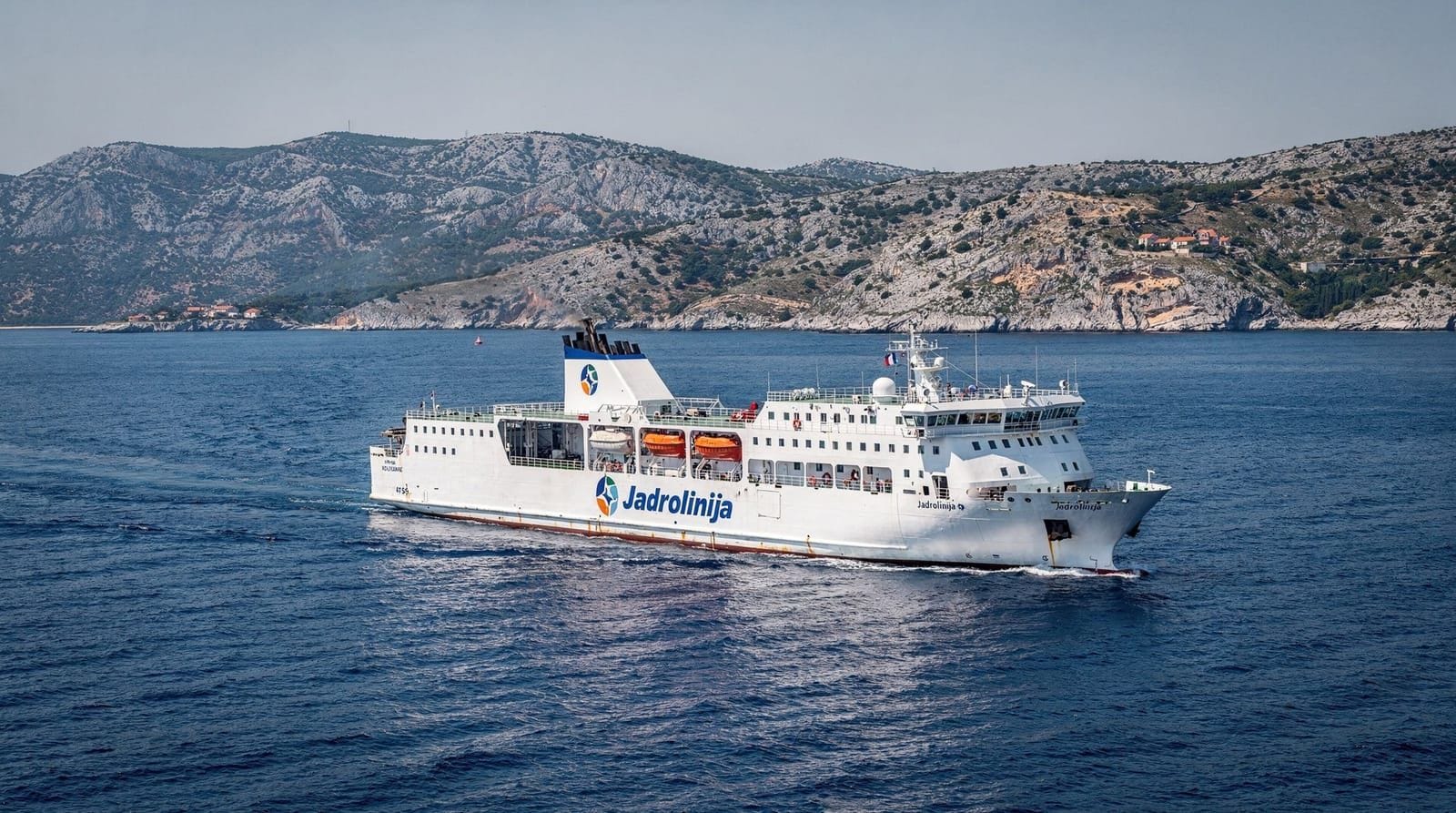
Car ferry Split–Supetar: The main route. Jadrolinija ferries cross the 14-kilometre channel to Supetar on Brač’s north coast in around 50 minutes. There are up to 14 sailings per day in summer. A car plus driver costs around €35–€50 return depending on season; foot passengers pay around €4–€5 each way. Supetar is a pleasant small town with its own beaches and restaurants.
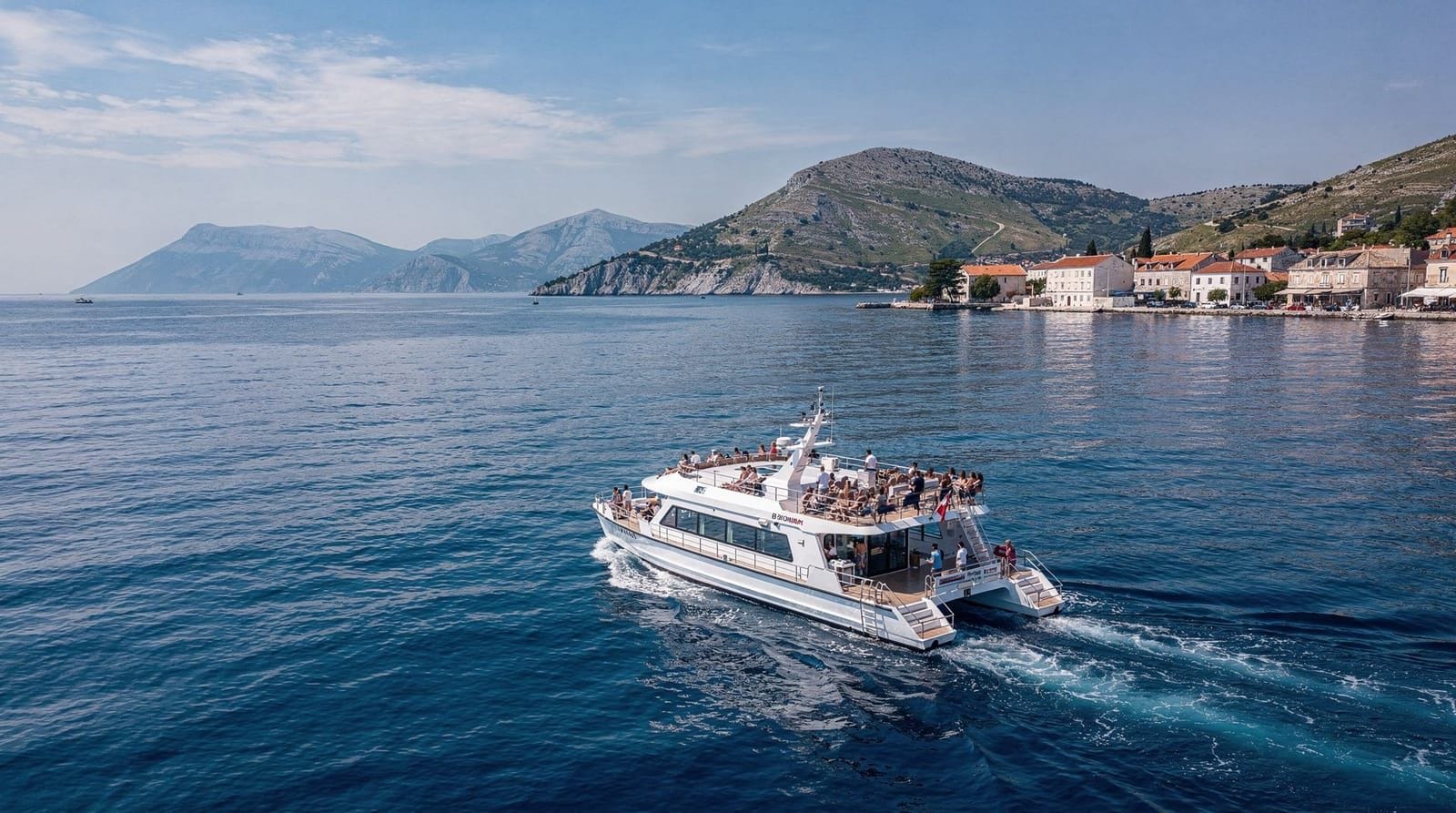
Catamaran Split–Bol: Jadrolinija operates a fast catamaran (foot passengers only) from Split directly to Bol on the south coast, where Zlatni Rat is located. The crossing takes about 1 hour. This is the most convenient option if your main goal is Zlatni Rat without a car. Around 3–5 sailings per day in summer.
From Hvar: A seasonal catamaran connects Hvar town with Bol. Check Jadrolinija’s summer timetable as this service varies by year. Alternatively, private speedboat tours combine Hvar and Brač in one day.
Timing and booking advice: In July and August the Supetar car ferry fills up fast, particularly on Friday afternoons (outbound from Split) and Sunday evenings (return). Book your car spot at least a week ahead online via the Jadrolinija website — turning up at the dock without a reservation in peak season means a real risk of waiting for the next sailing. Foot passengers can almost always board last-minute, even in high season, but buying your ticket at the Split ferry terminal in advance saves time at the quay.
Car vs catamaran — which is right for you? If your itinerary centres on Bol and Zlatni Rat, the catamaran wins: it drops you right in Bol, the crossing is shorter at around one hour, and you avoid the cost and stress of bringing a vehicle. However, if you want to explore Pučišća, Škrip, Pustinja Blaca, the inland villages, or the quieter eastern beaches around Sumartin, a car transforms what you can see. Scooter and car hire in Bol and Supetar fills up by late morning in peak season, so book in advance or budget extra time to search. A practical compromise for many travellers: take the catamaran to Bol for 2–3 nights, then pick up a hired scooter for a full-day inland loop before returning.
What to see and do on Brač
Zlatni Rat Beach, Bol
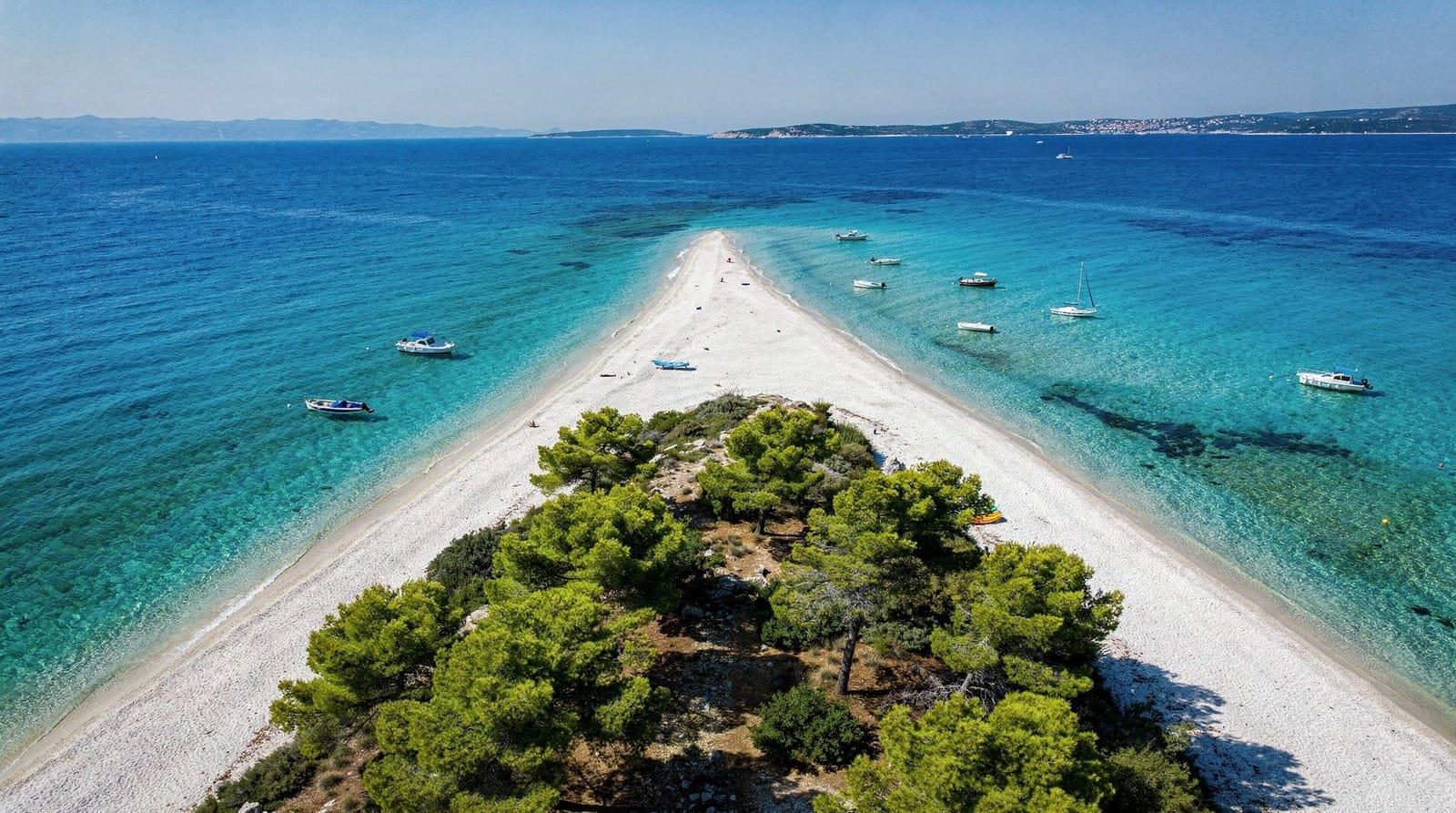
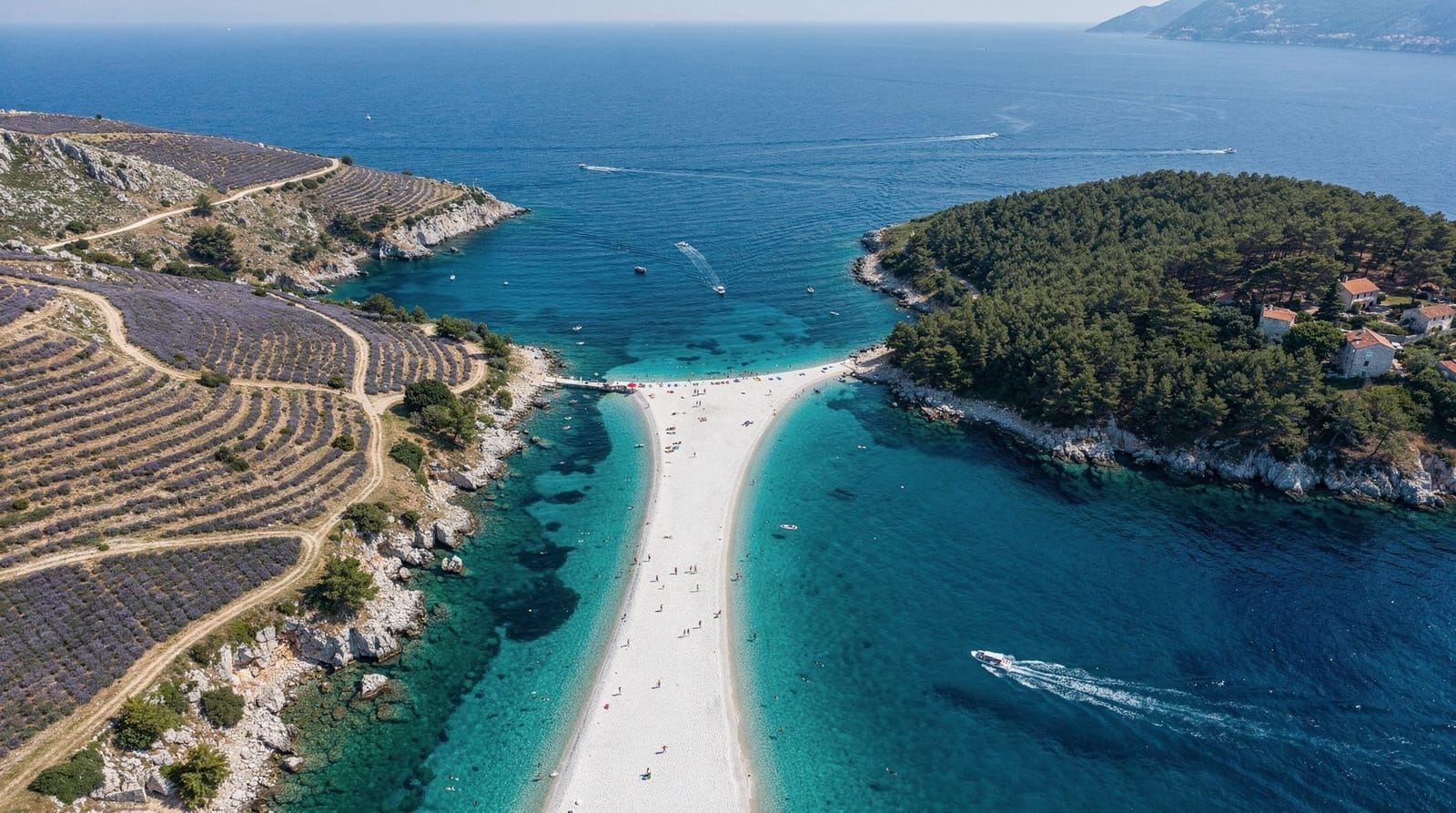
Zlatni Rat (literally “Golden Horn”) is the definitive Croatian beach image. A 634-metre spit of smooth white-grey pebble juts into the Adriatic, shifting its tip slightly with the current and wind — no two photographs of it look quite the same. The water on both sides is shallow and brilliantly clear, making it ideal for children and snorkellers. The pinewood behind the beach provides shade during midday.
The beach is free and open to all, though sunlounger sets (around €15–€20/day for two loungers and an umbrella) are available. It gets extremely busy July–August; arrive before 9am or after 4pm for elbow room. The 30-minute walk from Bol town is pleasant; taxis and bikes are also available.
Bol itself is a charming town with a Dominican monastery (15th century, with an important painting of the Madonna), a handful of good restaurants on the harbourfront, and a strong windsurfing culture — the maestral wind that blows reliably each afternoon makes this one of the best spots in the Adriatic for the sport.
Inland Brač: Škrip, Pustinja Blaca, and Stone Villages
Most visitors never venture inland, which is a genuine mistake on Brač. The island’s interior is full of interest.
Škrip is the oldest village on Brač, its origins dating to Illyrian times. The Museum of Brač (housed in a 16th-century tower) traces the island’s quarrying history and shows samples of the distinctive white Brač limestone (vapnenac). A Roman mausoleum and 15th-century fortified church add to the archaeological texture.
Pustinja Blaca (Blaca Hermitage) is one of Croatia’s most unusual sights — a 16th-century monastery-hermitage built into a cliff cave in a remote ravine on the south coast. Inhabited continuously until 1963, it is now a museum. Getting there involves either a 90-minute hike from the coast road or a boat approach from the sea. The last monks left fascinating personal objects and an extraordinary collection of astronomical instruments.
Dol, Nerežišća, Selca: These inland villages preserve an authentic Brač that the coast has largely lost. Stone houses built of the local white limestone, dry-stone walls dividing olive groves, elderly residents playing cards in village squares. The island’s traditional priganice (fried dough) and local Plavac Mali wine are best experienced here.
Vidova Gora
At 778 metres, Vidova Gora is the highest point on any Croatian Adriatic island, and the views from the summit are extraordinary: Zlatni Rat directly below, Hvar stretched across the middle distance, Vis on the horizon, and on clear days the mountains of the Italian coast. The road to the summit is paved and accessible by car from Bol (about 30 minutes). There is also a marked hiking trail from Bol taking 2.5–3 hours each way.
The summit has a small konoba (mountain restaurant) that serves simple grilled food and local wine — a civilised reward after the hike up. Start any ascent on foot before 9am in summer to avoid the worst of the midday heat; the upper sections are exposed and shade-free. On weekday mornings in late May or September you can have the summit almost to yourself, with unobstructed views in every direction. Sunsets from Vidova Gora, when the light turns the sea to copper and Zlatni Rat glows from above, are among the most memorable in the whole of Dalmatia.
Pučišća
On the north coast, Pučišća is famous as the site of a stone-carving school (Klesarska škola) that has trained masons since 1909 — the craft of working Brač limestone is kept alive here. The village itself is lovely: a deep, sheltered cove ringed by old stone houses. Worth the drive if you have a car.
The school occasionally opens to visitors during summer and you can watch students working raw blocks of the pale local stone into decorative architectural elements, much as craftsmen have done on this island for centuries. The harbour at Pučišća is one of the most photogenic on Brač, particularly in the early morning before the tourist coaches arrive. If you plan a north-coast day trip, pair Pučišća with Škrip (about 20 minutes drive inland and southwest) to get the full picture of the island’s stone-working heritage.
Sailing and boat tours around Brač
Brač sits at the heart of one of the best sailing areas in the Adriatic, sheltered by the Brač Channel to the north and open to the wider Dalmatian archipelago to the south and west. The island is a natural stop on any sailing itinerary out of Split, and the waters between Brač, Šolta, and Hvar are consistently rated among the most enjoyable cruising grounds on the Croatian coast.
Full-day sailing tours departing Split routinely cover Brač and Šolta together, following the coast to secluded coves, anchoring for swimming in crystal-clear water, and returning in the late afternoon. These combined itineraries are an excellent way to see Brač from the sea — particularly the dramatic south coast, where cliffs and caves are inaccessible by road — without committing to a multi-day sailing charter.
Private speedboat tours offer a faster alternative and can reach Zlatni Rat from Split in around 45 minutes, allowing you to combine Brač with a stop at a Šolta cove or a brief visit to Hvar in a single day. For island-hopping travellers following the Dalmatian island-hopping itinerary, a boat day between Split, Šolta, and Brač makes a logical and scenic opening or closing leg.
The waters immediately off Bol are also popular for sea-kayaking. Several operators in Bol rent kayaks by the hour or run guided half-day paddle tours along the coastline east and west of Zlatni Rat, including stops at secluded coves you can’t reach any other way.
Brač’s underwater terrain is less famous than the Kornati or Vis, but the south coast cliffs near Murvica and the wrecks off Bol attract a steady stream of divers, with visibility regularly exceeding 20 metres in summer. A handful of dive centres in Bol run daily boat trips for certified divers and introductory try-dives for beginners; the broader picture of where the Adriatic’s best diving is found, including how Brač compares to Vis and Kornati, is covered in the diving in Croatia guide.
Beaches on Brač
Beyond Zlatni Rat, Brač has a wealth of swimming spots.
Lovreč Cove (near Bol): A quieter pebble beach a short walk from Zlatni Rat, accessible by boat or a rocky coastal path. Far fewer visitors.
Murvica: A tiny village 8 km west of Bol with a dramatic beach below a cliff, and a cave monastery (Dragon Cave) reached by a 45-minute hike. The cave’s carvings — a dragon, a baptismal font, and grotesque figures — were carved by hermit monks in the 15th century.
Sumartin: On the eastern tip of Brač, a calm and uncrowded cove with crystal water. Better reached by car than on foot.
Bobovišća Cove: A deep, sheltered bay popular with sailors on the northwest coast — calm and beautiful even in breeze.
Stipanska (near Supetar): A naturist beach a short walk or taxi-boat ride west of Supetar town.
Where to stay on Brač
Bol is the most popular base — best for Zlatni Rat access, windsurfing, and the catamaran from Split. Private apartments run €60–€150/night in peak season; hotels from €90 upward. Hotel Elaphusa is the main resort on the west end of town, with a beach and pool. Bol suits travellers who want to be as close as possible to Zlatni Rat, those who plan to windsurf, and anyone arriving on the catamaran from Split without a car.
Supetar is larger, busier (the car ferry arrives here), and has a broader range of accommodation — from hostels to boutique hotels. A better choice if you want more restaurant options or plan to explore the island by car. Nightly rates in Supetar are typically 10–20% lower than equivalent places in Bol, and the wider harbour area has a relaxed, local feel that Bol’s tourism strip lacks. Budget travellers and families will often get better value here.
Bol’s old town has a handful of small, characterful guesthouses within the historic stone lanes — more interesting than staying at a beach resort and often only marginally more expensive than the impersonal apartment blocks on the outskirts. Rooms here book up early; reserve at least 4–6 weeks in advance for July and August.
For families or those wanting total peace, a private villa or apartment in an inland village can cost €60–€120/night and gives a wonderful base for exploring at your own pace. Villages like Nerežišća and Dol sit roughly in the centre of the island, putting all the main sights within a 20-minute drive, and nighttime temperatures are noticeably cooler than on the coast in high summer — a genuine comfort when Bol’s streets are still warm at midnight.
Where to eat on Brač
Konoba Mlin (Bol): One of the best restaurants on the island — an old olive mill converted into a warm, candlelit dining room. The octopus peka (prepared under a bell-shaped lid in wood embers) is a highlight. Book ahead.
Konoba Kopačina (Donji Humac, inland): Drive inland for this farmhouse restaurant, highly regarded for its peka dishes, homemade wine, and total absence of tourist-trap atmosphere. A genuine local institution.
Vinoteka Bolski Dvori (Bol): Excellent wine selection, local charcuterie, and a terrace with views. A great first-night stop.
Konoba Jure (Supetar): A reliable, unpretentious harbourfront konoba with fresh fish at fair prices — significantly cheaper than similar places in Hvar town.
Restaurant Don Cvitan (Bol): Casual, busy, with good-value pizzas and pasta alongside grilled fish. One of the few places in Bol that doesn’t feel like it’s charging a premium for proximity to Zlatni Rat.
Best time to visit Brač
May–June gives you warm temperatures (22–26°C), a swimmable sea (18–21°C), no serious crowds, and full services operating. Zlatni Rat in May or early June is a different experience from July — actually tranquil.
September remains excellent: sea temperature at its warmest (~24°C), the maestral wind still blows for windsurfers, prices drop 20–30%, and Bol transforms from a crowded resort back into a pleasant Dalmatian small town.
July–August: Zlatni Rat becomes a wall-to-wall beach experience. Still enjoyable if that’s what you want, but come early and expect to share the experience with thousands of others.
October: Peaceful, mild, beautifully autumnal in the interior. Some restaurants and hotels start closing by mid-month.
Money, connectivity, and practical logistics
Brač runs almost entirely on card payments in Bol and Supetar hotels and larger restaurants, but many inland konobas and small shops in villages like Nerežišća and Pučišća are cash-only — carry euros for these. ATMs are plentiful in Bol and Supetar but scarce inland, so withdraw before heading to the interior. See the money in Croatia guide for a fuller breakdown of costs and cards across the country.
Mobile coverage is reliable along the coast and in Bol and Supetar, but drops in patches on the road up to Vidova Gora and around Pustinja Blaca. If you’re travelling on a foreign SIM, an eSIM set up before arrival avoids the hassle of finding a local shop — see the Croatia eSIM guide for the practical options. For the wider island-hopping picture, including which islands pair naturally with Brač on a single trip, the best Croatian islands guide is a useful companion read.
Cycling on Brač
Brač’s mix of coastal roads and gentler inland stretches makes it one of the better islands in Dalmatia for cycling, provided you’re prepared for some real climbs. The road from Supetar or Bol up to Vidova Gora is the classic challenge ride — steep, exposed, but rewarded with the best panoramic views on the island. Easier, flatter routes run between the inland villages of Donji Humac, Gornji Humac, and Nerežišća, threading through olive groves and dry-stone-walled fields with almost no traffic.
Bike hire is available in both Bol and Supetar, typically €15–€25/day for a standard mountain or hybrid bike, with e-bikes increasingly available for those who want to tackle Vidova Gora without exhausting themselves before the view. Early morning (before 9am) is the best window for the climb in summer — the road has little shade and the heat builds quickly. For a broader picture of cycling routes across the coast, the cycling in Istria guide covers Croatia’s other major cycling region, while the hiking in Croatia guide is useful if you’d rather tackle Vidova Gora on foot.
Top experiences
Bookable activities with verified prices and instant confirmation on GetYourGuide.
Top-rated experiences in Brač travel guide
Best-rated activities across GetYourGuide and Viator.

Blue Cave & Vis Island speedboat tour from Hvar
- Viator

Rafting on Cetina River Departure from Split or Blato na Cetini village
- Viator

Blue Cave and Pakleni Islands group Tour from Hvar
- Viator

Boat Tour at Delfina Hvar
- Viator

Korcula Buggy (Official) Safari Tour - Local Food & Wine Tasting
- Viator

Blue cave group tour with swimming and snorkelling from Hvar
- Viator