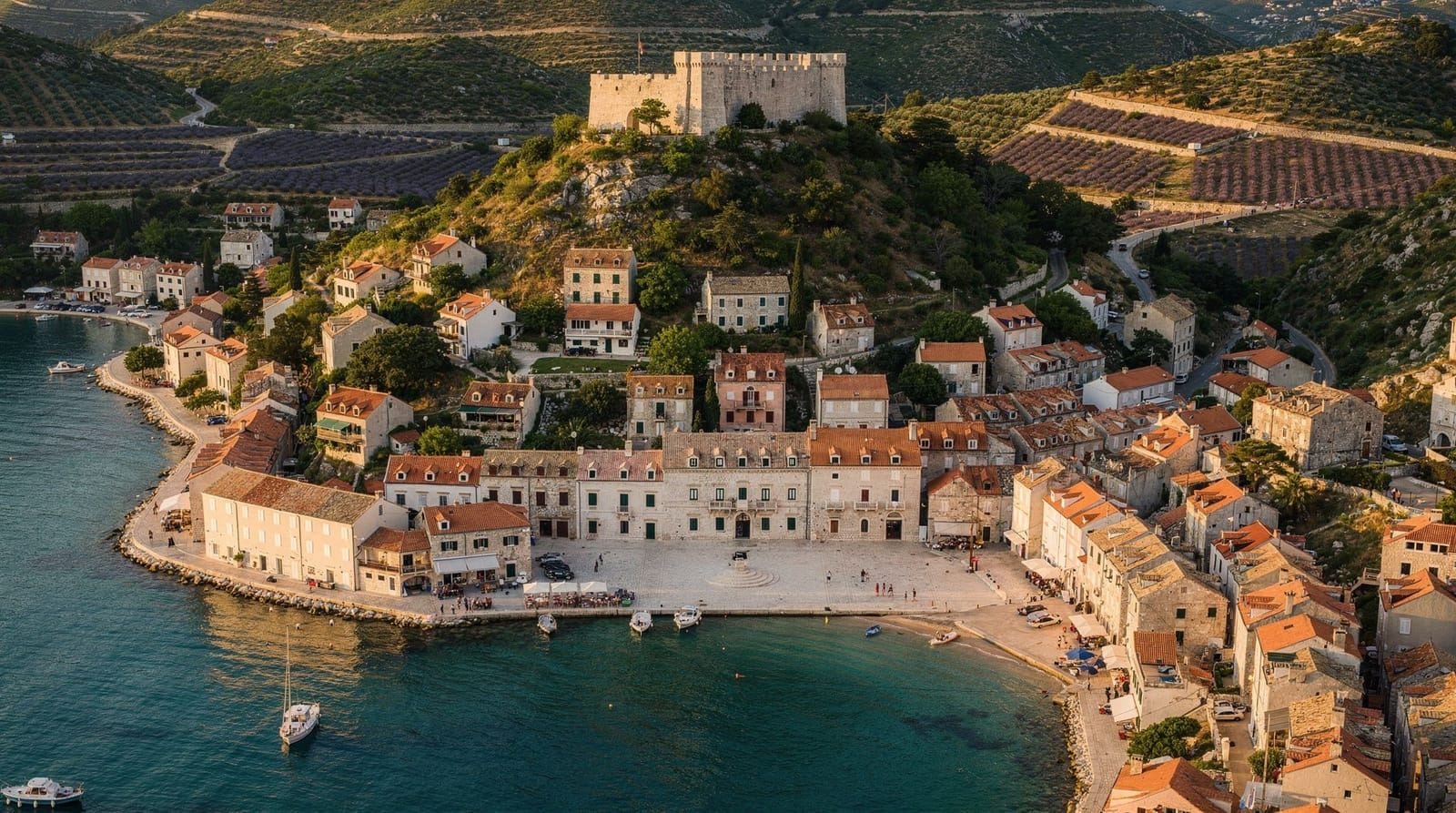
Zlatni Rat Beach — Complete Guide to Bol's Golden Horn
Split: Day trip to Hvar and Brac islands with Zlatni Rat beach
Is Zlatni Rat worth visiting?
Yes, genuinely — but time it right. In late June or September, Zlatni Rat is spectacular and manageable. In peak July–August, the beach is overrun by day-tripper boats arriving mid-morning. Arrive before 9am or after 5pm, and the famous pebble spit is as beautiful as the photos suggest.
What Makes Zlatni Rat Actually Special
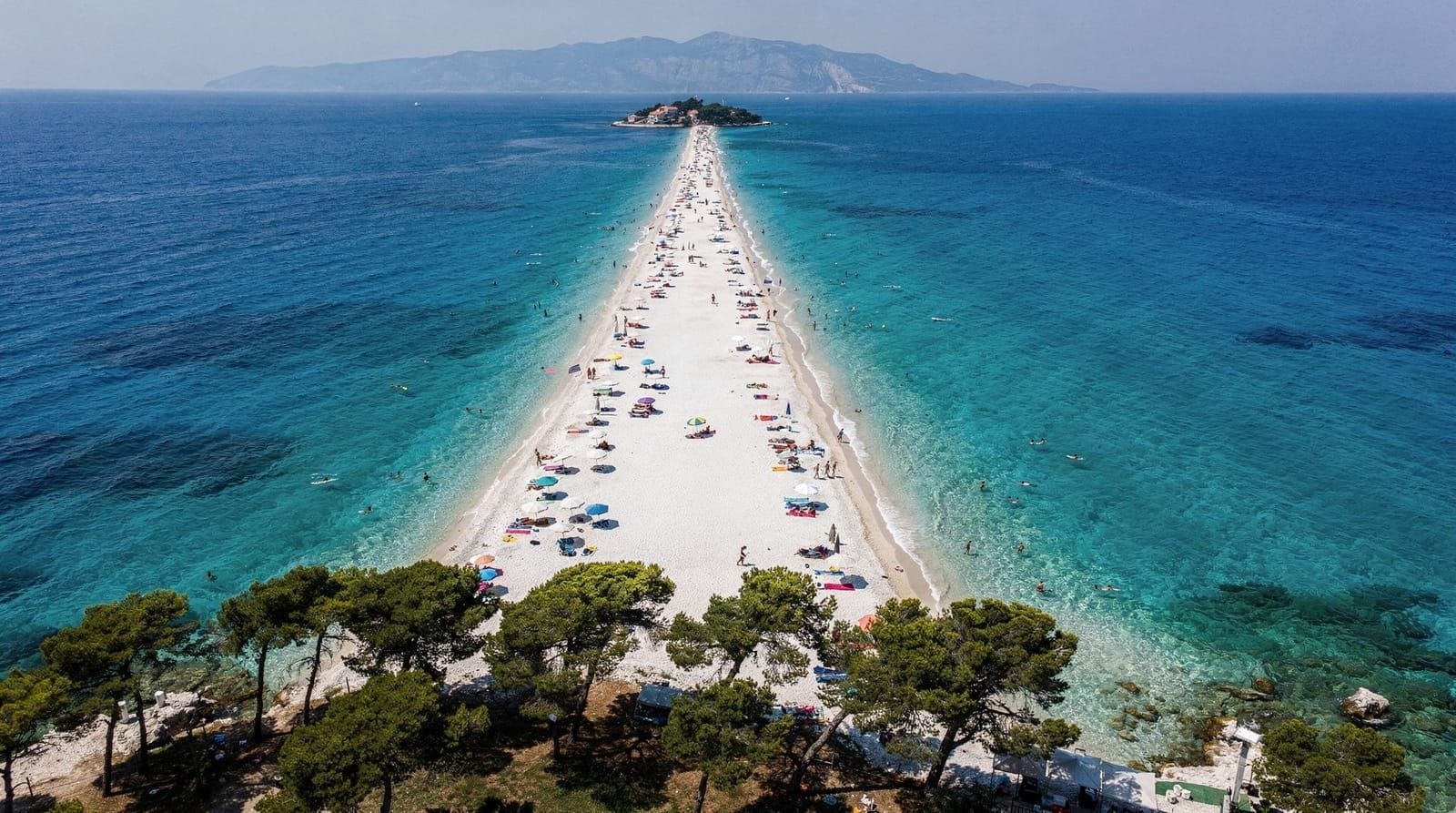
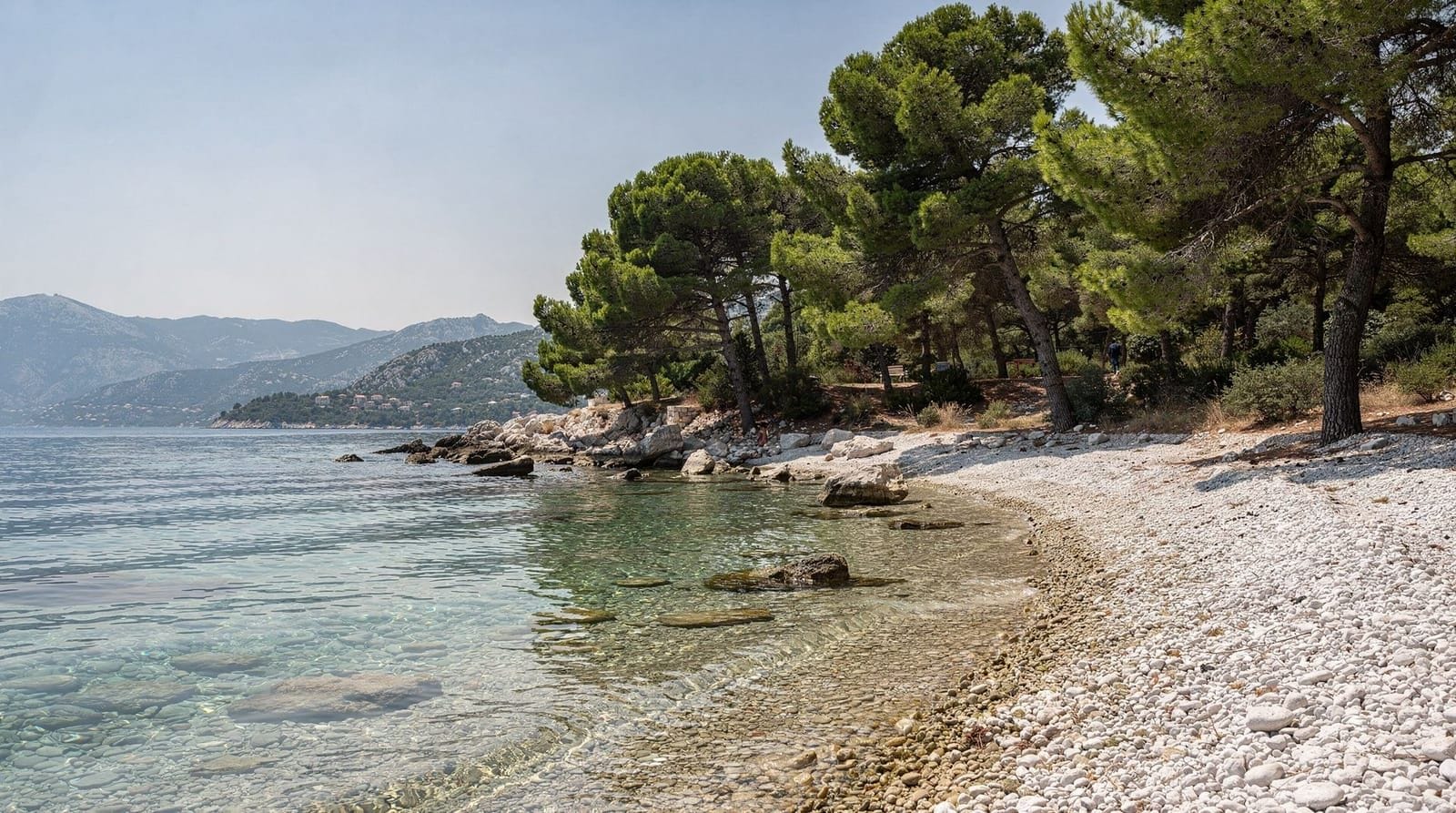
Zlatni Rat — Croatian for Golden Horn or Golden Cape — sits at the edge of Bol, on the southern shore of Brač island. From above, the beach is unmistakeable: a slender triangular spit of pale pebble extending 500 metres into the dark blue of the Hvar channel. Backed by a pine wood that provides rare Mediterranean shade, it juts into the sea on a course that slowly changes throughout the season.
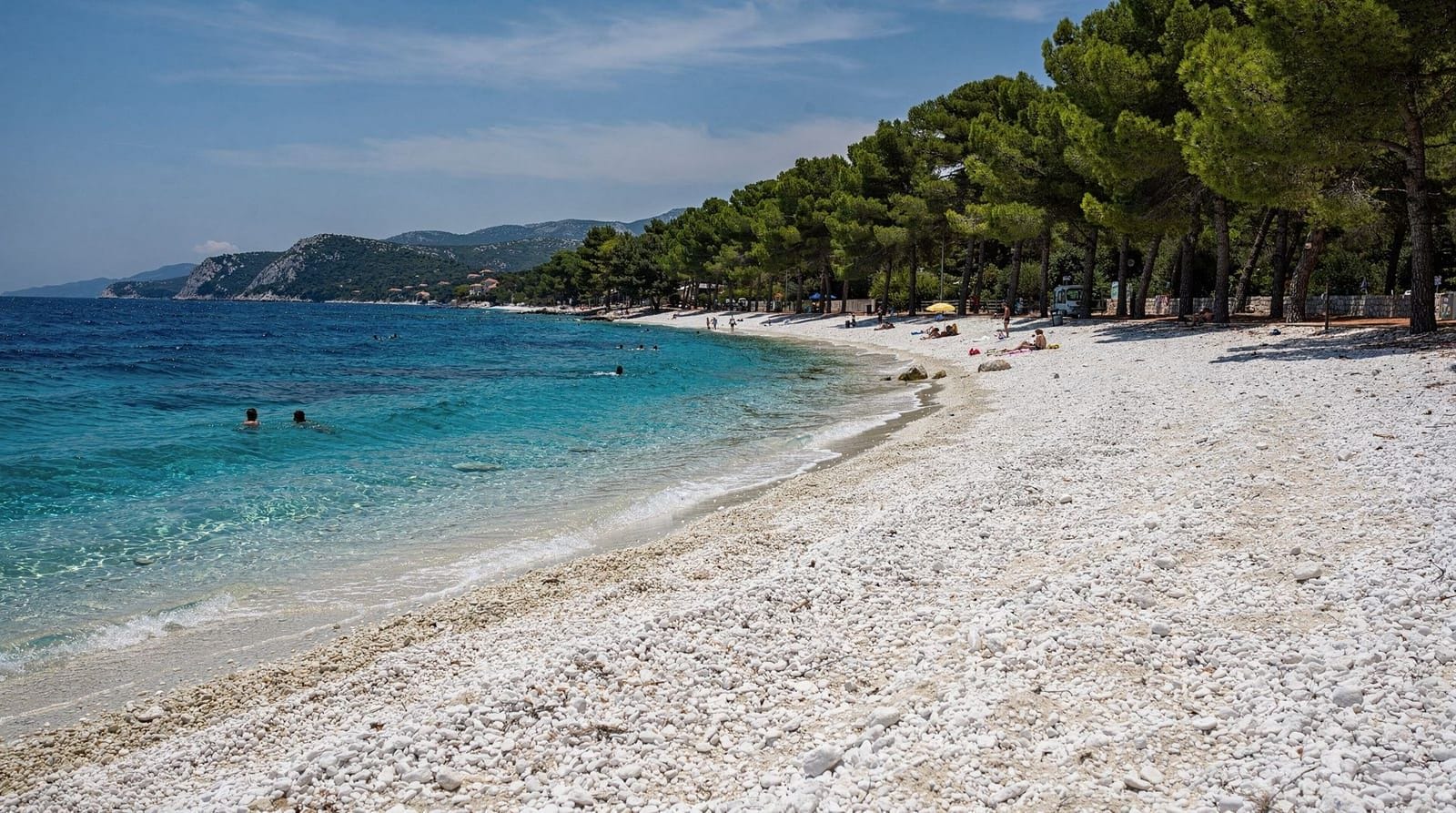
Most famous beaches disappoint in person. Zlatni Rat doesn’t, or at least not for the right reasons. The pebble is genuinely fine — close to coarse white sand in texture — the water is exceptionally clear, and the views across the channel to Hvar with its mountains are properly dramatic. The pine trees mean you can retreat to real shade rather than paying for a parasol. On a quiet morning in late June, it’s one of the most satisfying beaches in the Mediterranean.
The disappointment, if there is one, is purely a matter of timing. Come in peak season without a plan and you’ll share the spit with several thousand people, boats anchored offshore blasting music, and sunbed operators who’ve filled every square metre of formal space.
| Where | Bol, southern shore of Brač island |
| Cost | Free beach access; sunbeds around €10-15, water shoes from €5 |
| Time needed | Half day minimum; a full day with Bol town and Vidova Gora |
| Getting there | Ferry + bus from Split, or direct catamaran/tour boat to Bol |
| Best time | Before 9am or after 5pm; June or September overall |
Getting to Zlatni Rat — All Routes Explained
From Split (recommended base)
By ferry + local bus (cheapest): Jadrolinija runs car ferries from Split ferry terminal to Supetar, the main port on Brač’s north coast. The crossing takes 50 minutes and runs up to six times a day; prices are around €3–4 per person. From Supetar, a local bus connects to Bol (about 35 minutes, €3–4). The journey is straightforward.
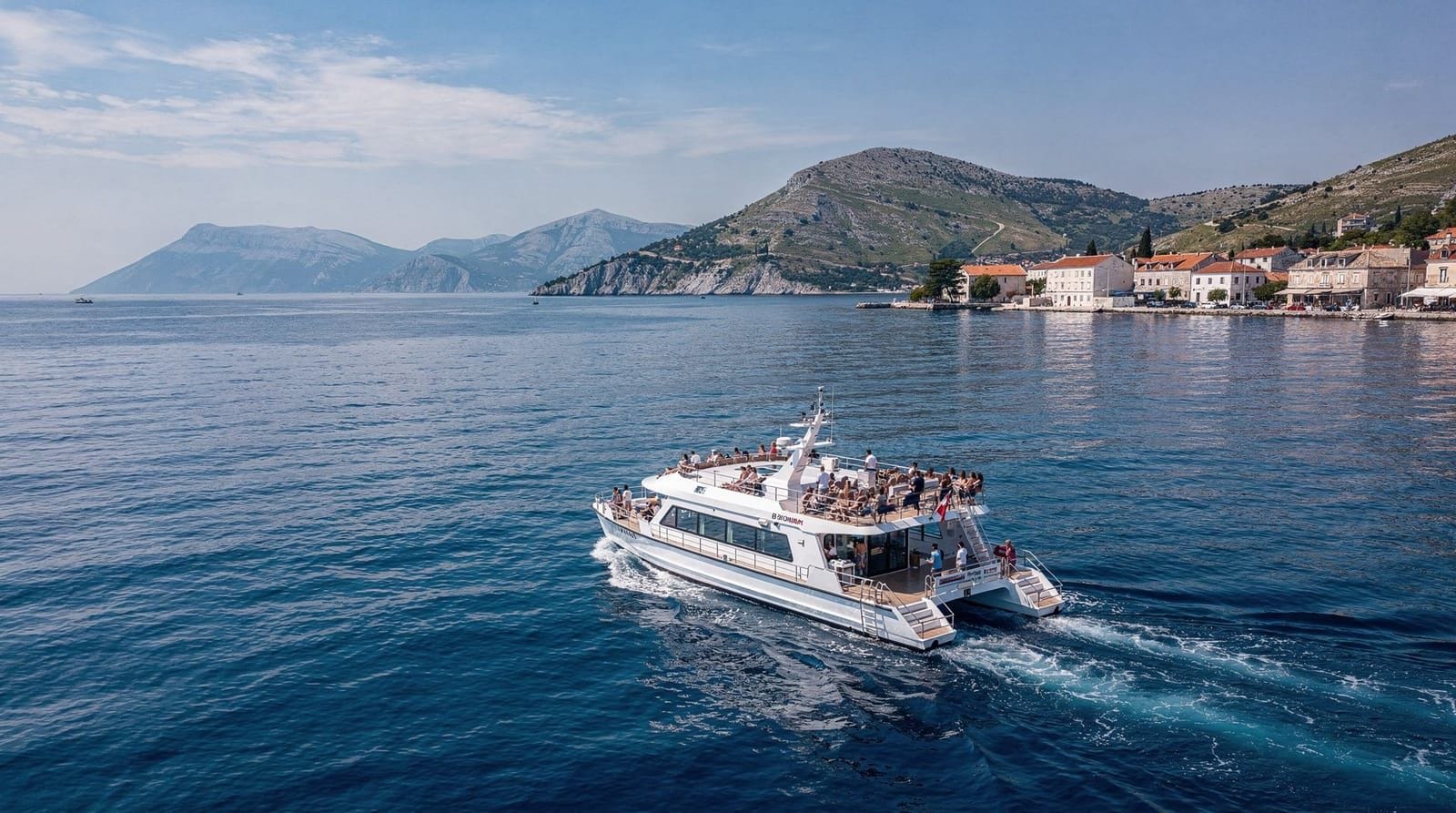
By catamaran to Bol (faster, seasonal): In season (roughly May–October), a fast catamaran runs directly from Split to Bol. Journey time is around 1 hour. This is the most convenient option and eliminates the bus connection. Check current Jadrolinija or Krilo schedules.
By organised tour: Multiple operators in Split run day tours to Zlatni Rat, either by speedboat directly to Bol’s bay or as part of a broader island tour (Hvar + Brač combination). These cost €50–90 per person and save the logistics of ferry connections.
From Hvar Town
Water taxis (brodice) run between Hvar Town and Bol/Zlatni Rat in season — journey time 40–50 minutes by regular boat, less by speedboat. Several tour operators also run excursions. This is an excellent combination: Hvar Town’s old town in the morning, Zlatni Rat for afternoon swimming, back for dinner.
From Trogir
Speedboat transfers from Trogir to Brač (Bol or Supetar) are available through local operators, typically 30–40 minutes and often bookable at the harbourside.
The Beach in Detail
Layout
Zlatni Rat extends about 500 metres from the mainland. The first 200 metres are wide, with beach bars, sunbed rows and most of the facilities. The last 200–300 metres narrow to the shifting tip — this is the photogenic part and where the most adventurous swimmers go. The tip is deep enough to dive (3–5 metres at the end), and the water on both sides is clear enough to see the bottom.
Pebble or sand?
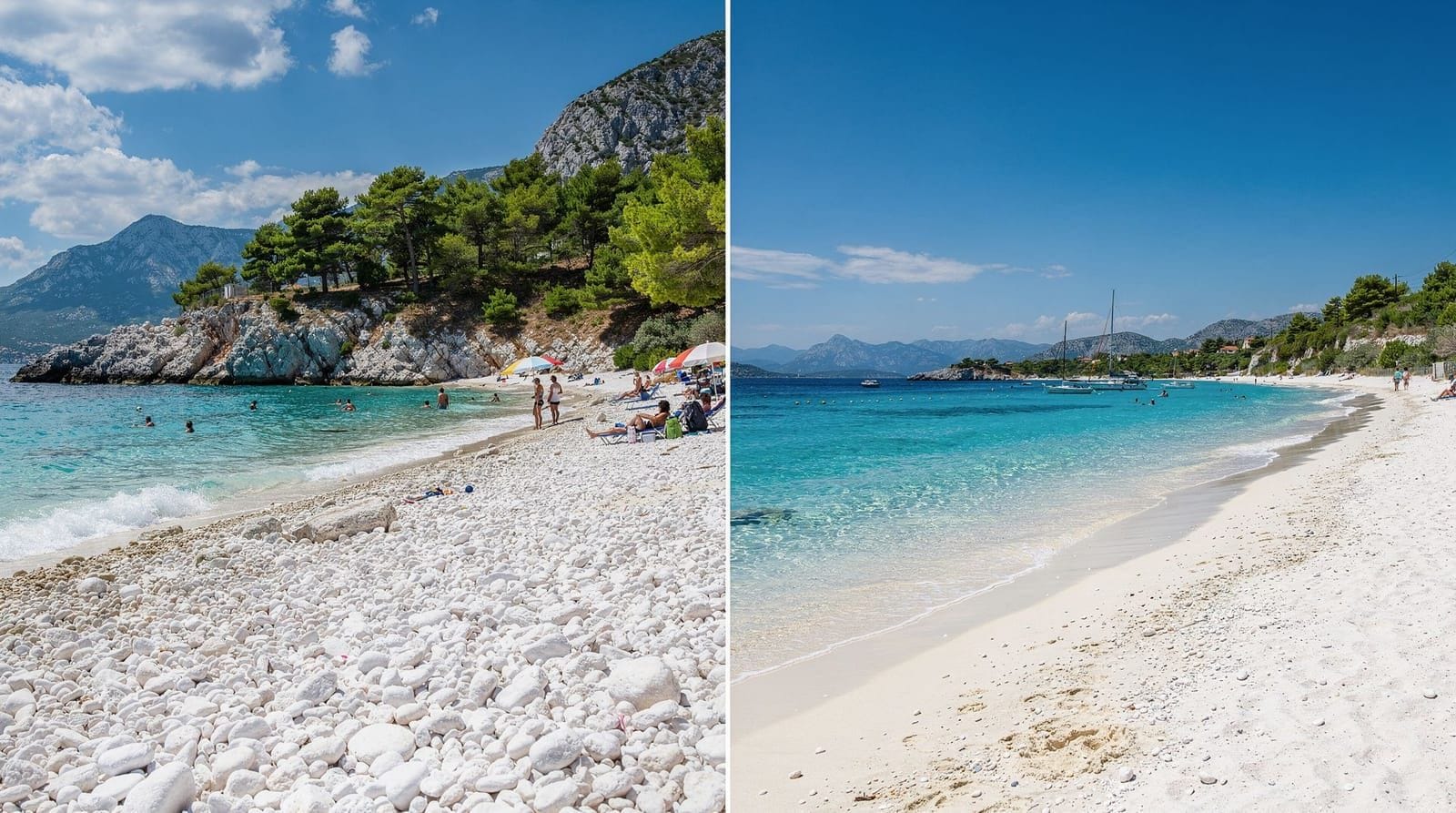
The beach is all pebble and fine gravel, with no sand. The pebbles at Zlatni Rat are unusually uniform and fine — closer to coarse pebble than typical Croatian rocky shore — but still requires water shoes for comfort. The pale grey-white colour gives the beach its characteristic luminosity and explains why the water over it appears so vivid.
Swimming
Excellent. The northern side of the spit (facing Bol and the mountains of Brač) is calmer and shallower near the beach. The southern side faces the Hvar channel and has more breeze — windsurfers and kitesurfers operate here. Both sides have clear water and good visibility. The tip is the deepest and most exposed.
The pine wood
The pine and cypress wood behind the beach is a genuine advantage. A 20–25 minute walk through the shade connects Zlatni Rat with Bol town. The path is flat, clearly marked and busy in season. Pine trees at the beach edge provide real shade — unusual for a Croatian beach.
When to Visit: Month by Month
May: Quiet, water around 17–19°C. Beach almost empty. Perfect for those who tolerate cooler water.
June: The sweet spot. Water reaches 21–22°C, days are long and sunny, crowds manageable. Arrive 9am, leave when the boats come. Come back at 5pm.
July: Hot (28–33°C air temperature), sea around 24°C. At Zlatni Rat, peak season means genuine crowds by mid-morning. Still beautiful if you arrive early. Prices in Bol are at maximum.
August: Peak of peaks. The beach is visited by thousands daily. Arrive before 8:30am or plan an evening swim. Still worth it for the experience, but go in knowing it’ll be busy.
September: Excellent. Sea still 23–24°C from summer heat, crowds thinning visibly after the first week, prices dropping. Many local Croatians say September is the best month to swim at Zlatni Rat.
October: Quiet. Water around 20°C, perfectly swimmable. Bol’s restaurants and accommodation start closing. Very quiet beach.
| Month | Sea temperature | Crowd level | Verdict |
|---|---|---|---|
| May | 17-19°C | Very low | Cool but peaceful |
| June | 21-22°C | Moderate | The sweet spot |
| July | 24°C | High | Beautiful early, crowded midday |
| August | 24-25°C | Very high | Arrive before 8:30am |
| September | 23-24°C | Low-moderate | Often called the best month |
| October | 20°C | Very low | Quiet, some closures in Bol |
For how Zlatni Rat’s pebble surface compares to Croatia’s sandier options, see the pebble vs sand beaches guide, and for the wider ranking, the best beaches in Croatia guide.
What to Bring
- Water shoes — essential. Bol town has shops selling them from €5.
- Snorkel and mask — the water clarity makes it worthwhile.
- Sun protection — no natural shade on the pebble itself; pine trees are a 5-minute walk back.
- Water and snacks — beach bar prices are high (expect €4–5 for a beer, €6–8 for a snack). The supermarket in Bol is far cheaper.
- Cash — beach bar terminals sometimes fail; €20 in cash covers basics.
- Sarong or towel — better than renting a sunbed (€10–15).
Bol Town — What to Do Beyond the Beach
Bol is an attractive small town with a seafront promenade, a Dominican monastery founded in 1475 (worth a look), and a handful of good fish restaurants. The town is compact and walkable. There’s a farmers’ market in the mornings.
If you’re staying overnight on Brač (recommended — lets you beat the day-tripper rush), the island deserves more than the beach. Škrip is the oldest continuously inhabited settlement on Brač and has a small museum in a Roman tower. Pučišća has the island’s famous marble quarry — the white stone from Brač was used in Diocletian’s Palace in Split and reportedly in parts of the White House in Washington DC. Vidova Gora (780 m) above Bol gives a bird’s-eye view of Zlatni Rat with Hvar stretched behind it — one of the best viewpoints in Dalmatia.
For island-hopping context, see our island hopping itinerary and best beaches near Split guides.
Practical Information
Getting there from Split: Ferry to Supetar (50 min) + bus to Bol (35 min), or catamaran to Bol directly (1h).
Getting there from Hvar: Water taxi (40–50 min) or speedboat tours.
Walk from Bol to beach: 20–25 minutes through pine wood.
Facilities: Beach bars, showers, toilets, sunbed hire (€10–15 per sunbed), restaurants, parking (€3–5/hour near the beach).
Nearest accommodation: Bol town, 20 minutes’ walk. Book well ahead for July–August.
Windsurfers: Zlatni Rat is one of Croatia’s top windsurfing spots due to the reliable maestral (north-westerly) wind that builds each afternoon on the south side of the spit. Several windsurfing schools operate in Bol.
Zlatni Rat vs other Brač and Hvar beaches
If you’re deciding whether to base on Brač or Hvar for your beach time, our Hvar vs Brač guide covers the wider trade-offs. For families specifically, the family beaches Croatia guide rounds up gentler alternatives if Zlatni Rat’s pebble and crowds don’t suit young children, and the Croatia ferries guide covers booking the Split-Supetar or Split-Bol crossing in more detail.
Frequently asked questions about Zlatni Rat Beach
How do I get to Zlatni Rat from Split?
Two main options: ferry from Split to Supetar on Brač (50 min, frequent), then bus or taxi to Bol (30–35 min, ~€12–15 by taxi). Or catamaran from Split directly to Bol (1h in season). From Hvar Town, water taxis and tour boats run directly in summer. Ferry prices from Split are around €3–5 per person.What time should I arrive at Zlatni Rat?
Before 9am to have the beach almost to yourself. Day-tripper boats start arriving around 10–11am and peak between 12pm and 4pm. The beach empties significantly after 5pm as boats return to Split and Hvar. Sunset at Zlatni Rat is often overlooked but beautiful.Does Zlatni Rat shift direction? Is that real?
Yes, genuinely. The tip of the beach spit changes orientation — sometimes pointing southeast, sometimes southwest — depending on the current and wind. The shift can be up to 30 metres. It's caused by longshore drift and sea currents in the Hvar channel. Over days or weeks you may notice a visible change.Is Zlatni Rat good for swimming?
Excellent — on both sides of the spit. The northern side (facing Bol) is more sheltered and calmer; the southern side (facing Hvar) catches more breeze and is popular with windsurfers. The water is clear, with good depth at the tip for diving. The pebble is fine and relatively comfortable.Do I need water shoes at Zlatni Rat?
Yes. The beach is all pebble and gravel, and the underwater entry is rocky. Sea urchins are present on rocks near the water's edge. Water shoes (€5–15 from shops in Bol) protect your feet and make the pebble walk much more comfortable.Are there facilities at Zlatni Rat?
Yes — beach bars, sunbed rental (€10–15 per sunbed), showers, toilets and a restaurant at the back. Bol town itself has restaurants, supermarkets and accommodation 20–25 minutes' walk away through the pine wood path.What else is worth seeing near Zlatni Rat?
Bol town has a charming waterfront and the Dominican Monastery (1475). The island of Brač has Škrip (oldest inland village in Dalmatia), the famous limestone quarries at Pučišća, and the Vidova Gora summit (780m, views over Zlatni Rat and Hvar). A full day on Brač combines the beach with island exploration.Is Zlatni Rat a good beach for families with young children?
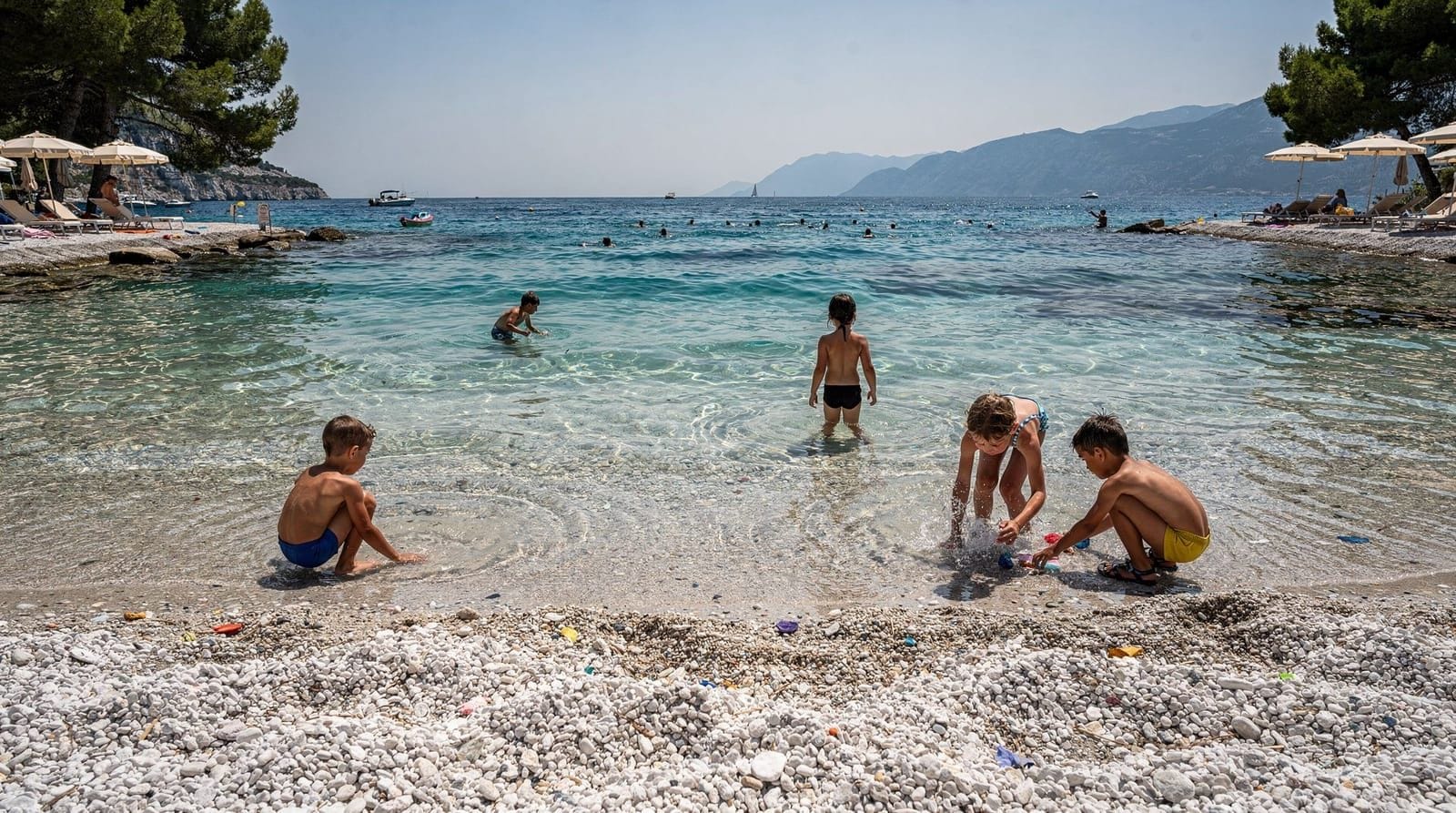
Reasonably, but with caveats. The pebble surface and rocky underwater entry mean water shoes are close to essential for small feet, and the northern side facing Bol is calmer and shallower than the windsurfing-heavy southern side. There is no natural sand to dig in, so families used to sandy beaches should set expectations accordingly. The pine wood shade nearby is a genuine advantage for a hot afternoon with kids.Can I visit Zlatni Rat as a day trip from Hvar instead of Split?
Yes, and it works well. Water taxis and tour boats connect Hvar Town to Bol in around 40-50 minutes in season, making it an easy half-day addition to a Hvar stay. Many travellers combine a Hvar Town morning with a Zlatni Rat afternoon swim before returning for dinner.
Top experiences
Bookable activities with verified prices and instant confirmation on GetYourGuide.
Top experiences
Best-rated activities across GetYourGuide and Viator.

Blue cave, Mamma Mia and Hvar, 5 islands speedboat tour
- Viator

Blue Cave and Hvar Tour - 5 Islands Tour from Split and Trogir
- Viator

Blue cave, Mama Mia and Hvar, 5 Island Speedboat Tour from Trogir
- Viator

Hvar, Brač & Pakleni islands cruise with lunch & drinks from Split & Trogir
- Viator

Blue Cave & Vis Island speedboat tour from Hvar
- Viator

KAYAK ADVENTURE! Wild Coast Exploring - Snorkeling & Cliff Jumps
- Viator