The Pelješac Bridge and the Neum Corridor — What Travellers Need to Know
Dubrovnik: Day trip to 3 Peljesac wineries with tastings
What is the Pelješac Bridge and why does it matter?
The Pelješac Bridge (Pelješki most) opened in July 2022. It connects the Croatian mainland north of Ston directly to the Pelješac Peninsula, allowing drivers and buses to travel between Split and Dubrovnik without passing through Bosnia and Herzegovina (the Neum corridor). It is currently toll-free.
For decades, every land journey between Split and Dubrovnik involved an involuntary detour into Bosnia and Herzegovina. A 9 km coastal strip called Neum — the only patch of Adriatic coastline belonging to Bosnia — cut the Croatian coastal road in two, forcing drivers and bus passengers through two sets of international border controls. In 2022, the Pelješac Bridge changed all of that.
| What | 2.4 km cable-stayed bridge linking the mainland to Pelješac Peninsula |
| Cost | Toll-free |
| Saves | The Neum border crossing (up to 60 min in peak summer) |
| Affects | Drivers, buses; not ferries; cyclists still cross Neum |
| Bonus | Direct access to Ston, Dingač/Postup wine country, Orebić |
The Neum corridor — a brief history
Croatia’s coastline is not continuous. In the 18th century, the Republic of Ragusa (Dubrovnik) ceded the Neum strip to the Ottoman Empire as a diplomatic buffer against Venice — keeping the Republic independent between two powers. That strategic concession became a geopolitical anomaly when Yugoslavia broke apart: modern Bosnia and Herzegovina inherited the Neum corridor, leaving Croatia with an interrupted coastal road.
For tourists, this meant every drive or bus journey between Split and Dubrovnik involved passing through Bosnia. Technically it required:
- A valid passport (not just an EU ID card in all cases)
- Two border crossings (entering Bosnia at Klek, leaving at Neum)
- Customs declaration (brief, but a formality)
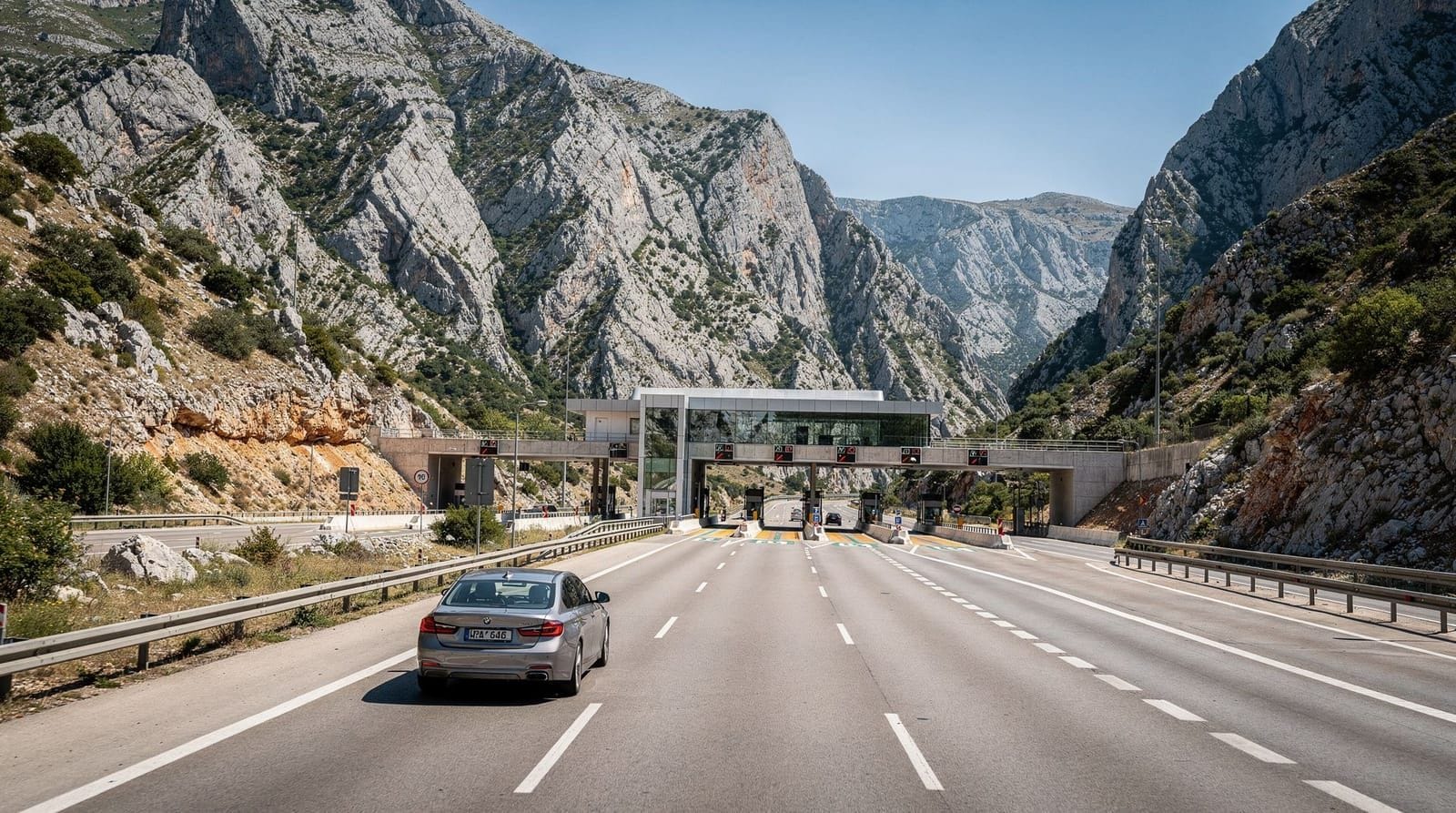
- Waiting in queue — sometimes 5 minutes in winter, up to 60 minutes in peak summer
For Croatian citizens and those with EU Schengen documents, this was a minor bureaucratic inconvenience. For non-Schengen passengers (UK post-Brexit, US, Australia, etc.) it was a reminder of how borders work. For bus companies, the Neum crossing required all passengers to disembark with documents — a significant operational friction.
The Pelješac Bridge (Pelješki most)
Construction
The bridge project had been discussed since Croatian independence in 1991 — always complicated by EU funding rules (the EU could not fund infrastructure in a third country, i.e., Bosnia) and by Bosnia’s concerns that the bridge would block its only sea access. After decades of diplomatic negotiation, the EU approved €357 million in EU cohesion funds for the project in 2017, the Bosnian navigation rights issue was resolved, and construction began in 2018.
A Chinese construction consortium (China Road and Bridge Corporation, CRBC) won the tender — a notable choice that attracted EU parliamentary scrutiny and a separate EU audit — but the bridge was built to EU technical standards and monitored by the European Court of Auditors throughout.
Opening
The bridge opened on 26 July 2022, with a ceremony attended by the Croatian president and representatives from EU institutions. It was completed on time and on budget — unusual for infrastructure of this scale.
Technical specifications
- Length: 2,404 metres (the longest bridge in Croatia and one of the longest in this part of the Mediterranean)
- Height above water: 55 metres at the main span (allowing large ships to pass beneath, including Bosnia’s vessels accessing Neum port)
- Design: Six-span cable-stayed bridge
- Wind tolerance: Engineered for the bura (violent northeastern wind) conditions of the southern Adriatic
- Seismic rating: Designed to withstand significant earthquake activity consistent with the region’s geological record
The connecting roads
The bridge alone doesn’t tell the whole story. Two connecting approach roads were also built:
- North side: A new road from the A1 motorway junction at Ploče across the bay and onto the bridge
- South side: A road from the bridge landing through the Pelješac Peninsula to rejoin the main D8 coastal highway south of Ston
These approach roads added some distance compared to the old Neum route, but the elimination of the border crossing easily compensates in time saved, especially in peak summer.
What the bridge means for travellers
Drivers
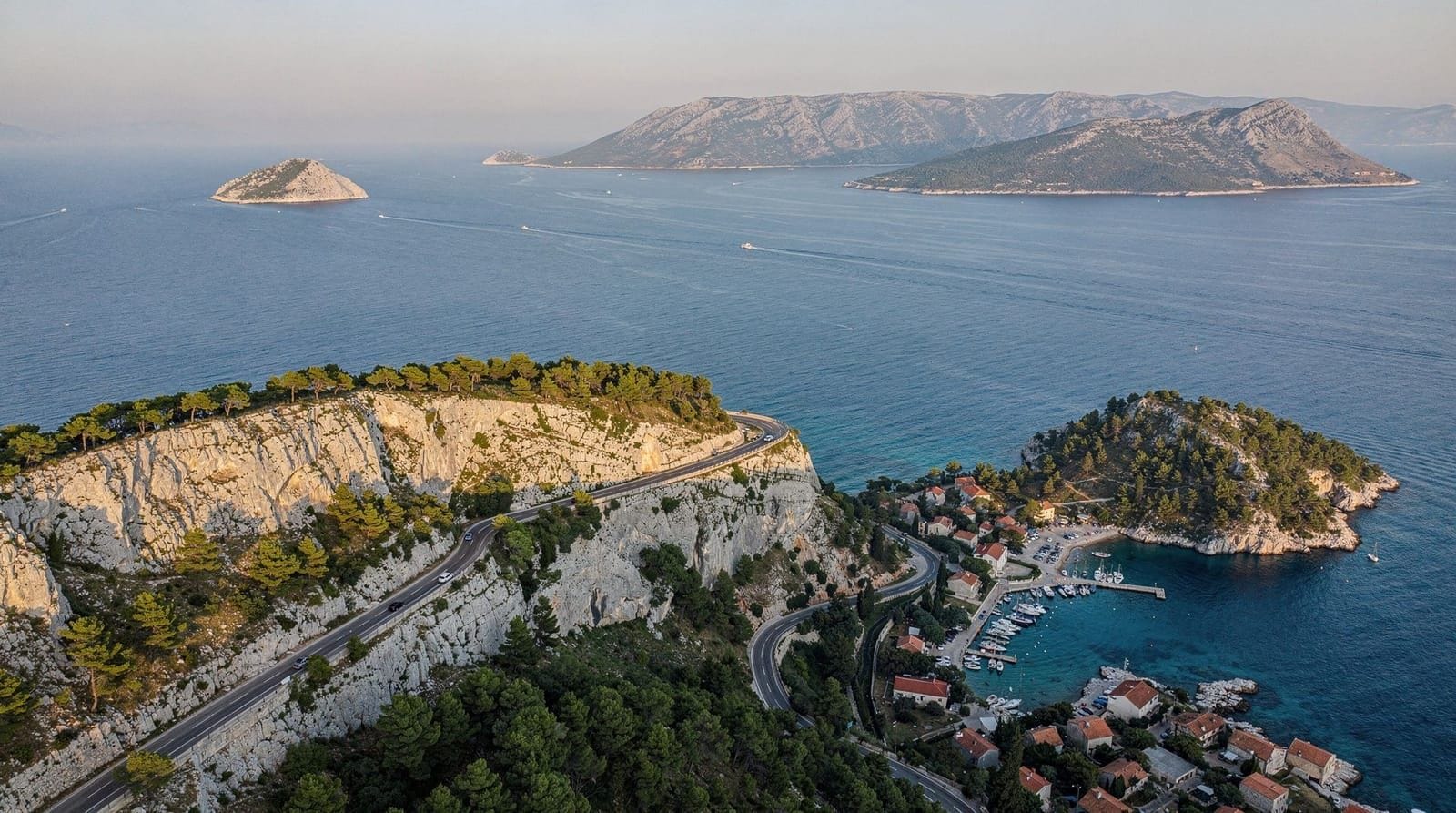
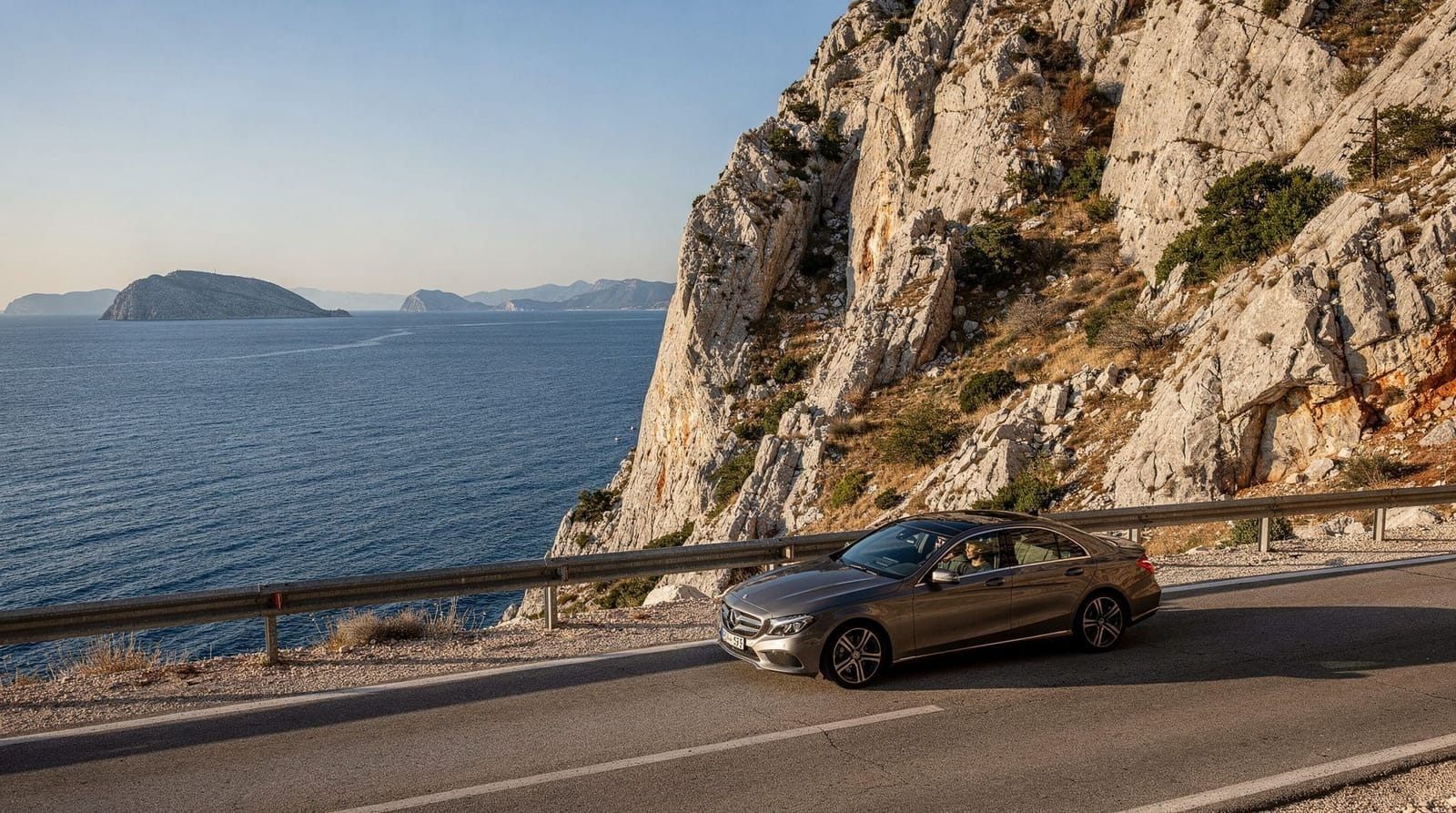
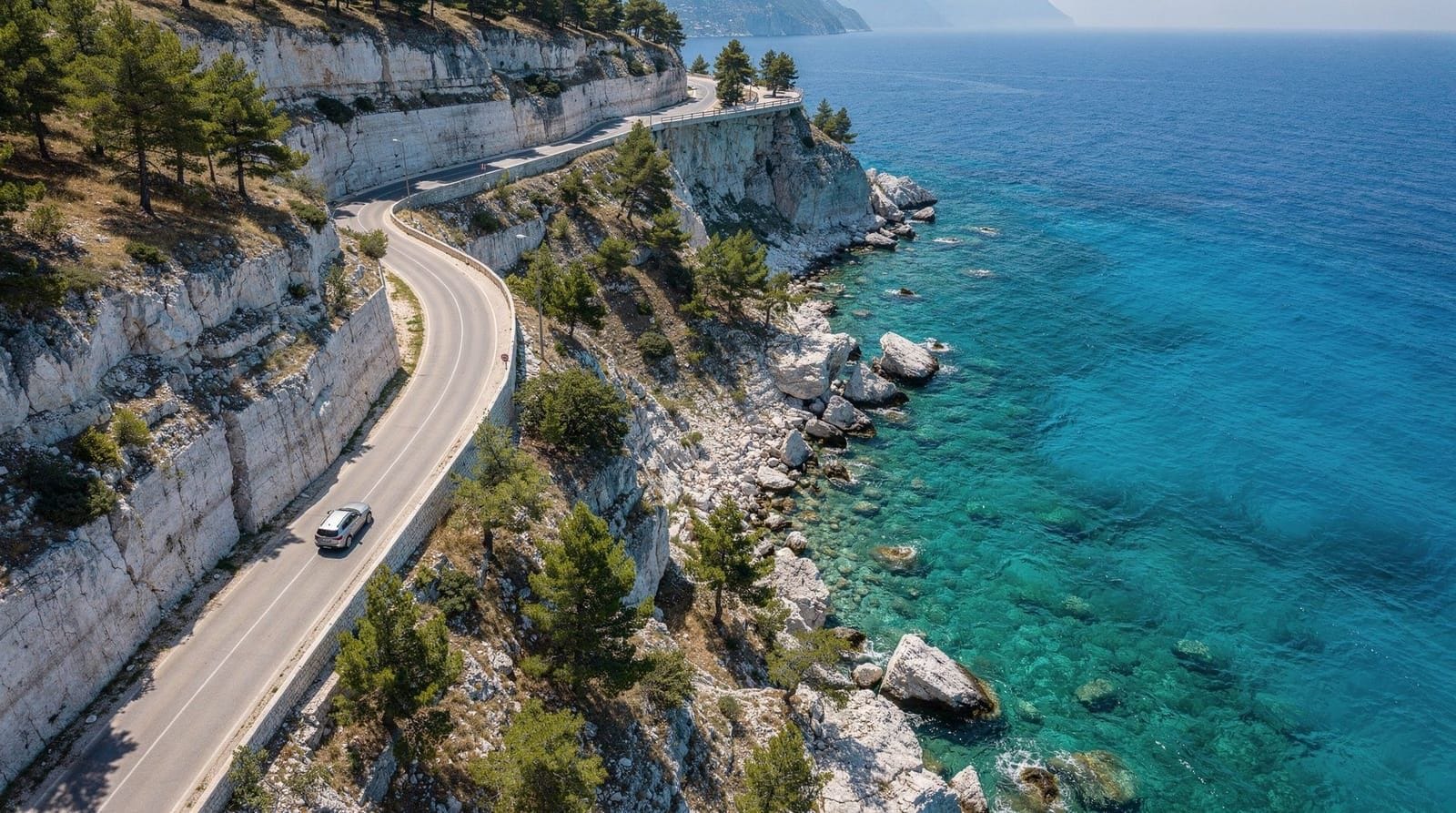
The most immediate benefit. All-Croatian route, no passport check, no border queue. The drive from Split to Dubrovnik via the Pelješac Bridge now runs entirely within Croatia. You take the A1 south, exit toward Ploče, cross the bridge (free), traverse the Pelješac Peninsula (with spectacular views of the sea on both sides), and rejoin the D8 south of Ston.
Added scenic bonus: The Pelješac Peninsula approach road passes through Croatia’s finest wine country — Dingač and Postup, where the Plavac Mali grape makes the country’s most powerful red wines. The wine villages of Mali Ston and Trstenik are a short detour from the new road. Where the old Neum route funnelled everyone past duty-free shops and petrol stations, the bridge route turns what used to be a transit inconvenience into a scenic stretch worth slowing down for in its own right.
Bus passengers
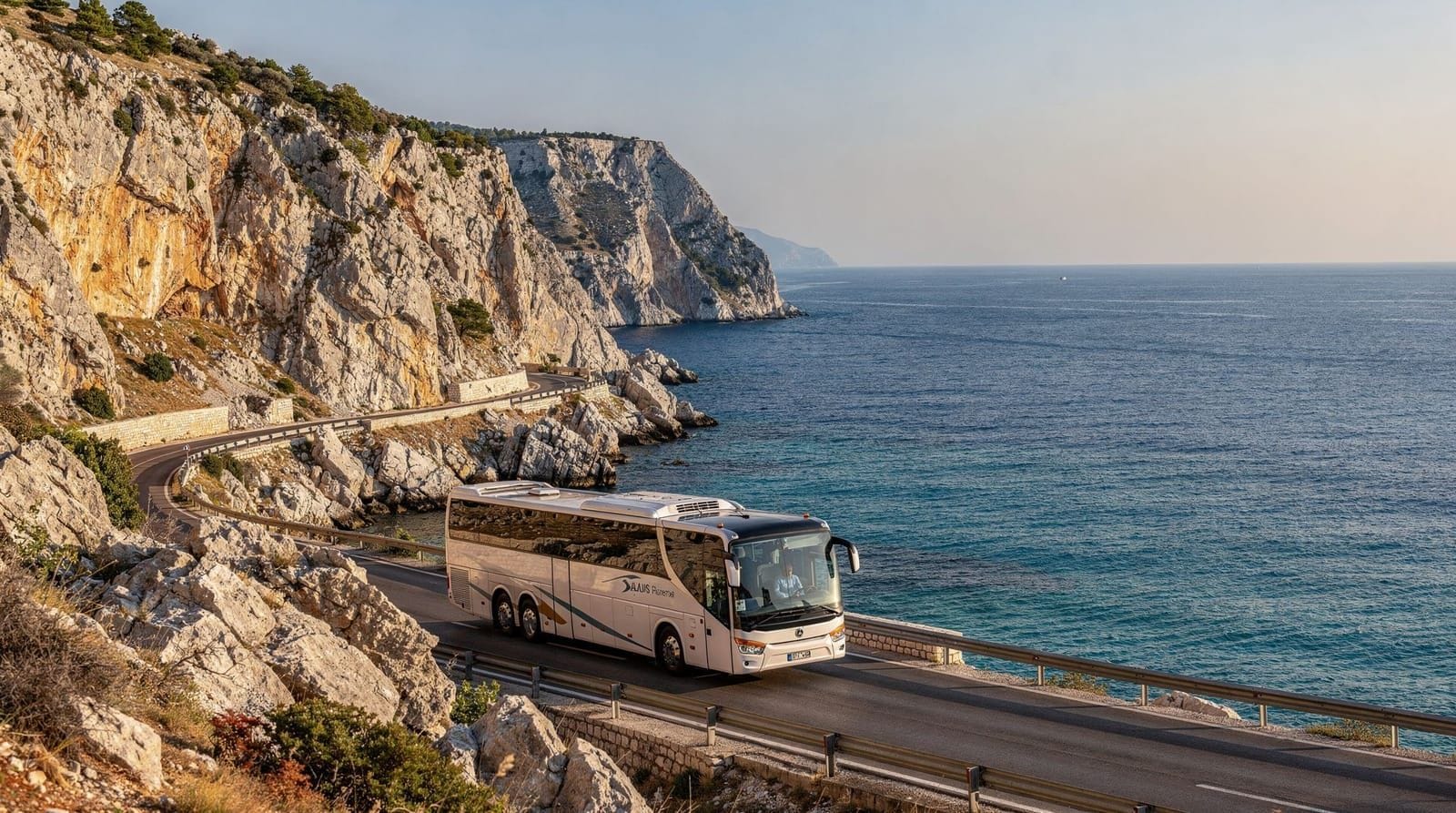
Many bus operators have updated their routes to use the bridge. When booking a Split–Dubrovnik bus, look for the route designation “via most Pelješac” or check with the operator. This matters if you hold a non-EU passport — the Neum crossing requires document checks; the bridge does not.
Cyclists
The bridge does not have a cycle lane and cyclists are not permitted to cross it independently. If cycling the Croatian coast, you will still need to cross Neum (or take a taxi/bus across the strip). This is a known gap in the cycling infrastructure.
Ferry passengers
The bridge has no impact on sea travel. The Jadrolinija coastal catamaran (Split → Hvar → Korčula → Mljet → Dubrovnik) continues exactly as before — it travels around the Pelješac Peninsula by sea and does not interact with the bridge.
For the full range of ways to make the journey — car, bus, ferry, or a combination — see the dedicated Split to Dubrovnik guide, and for broader context on Croatia’s road network and charges, driving in Croatia and Croatia tolls explained cover what to expect beyond this specific crossing.
Visiting Neum now
Neum itself — now bypassed by through traffic — is a relaxed beach resort with a handful of hotels, restaurants, and a duty-free shop (Bosnia is not in the EU, making alcohol and tobacco cheaper than in Croatia). Some travellers specifically stop in Neum for petrol or duty-free; others stop for a quick swim at the pebble beach. The beach and seafront promenade at Neum are pleasant and rarely crowded.
Bosnia’s brief Adriatic coast should not be dismissed. Neum is 12 km from the Pelješac Bridge approach and easy to include as a short detour. It’s also close to Počitelj (a dramatic Ottoman hill village) and the Blagaj source of the Buna river — beautiful sites that make a Neum stop worthwhile for those with time. A short deliberate detour into Neum now feels genuinely optional in a way it never used to — you’re choosing to visit Bosnia rather than being funnelled through it, which for many travellers makes the stop more appealing, not less.
Neum and the Mostar day trip
Mostar — Bosnia’s most visited city, with its restored Ottoman bridge (Stari Most) and mixed Bosnian–Herzegovinian character — is a popular day trip from Dubrovnik. Mostar is roughly 3 hours from Dubrovnik by bus or private tour.
The Pelješac Bridge has not changed Mostar day trips; those tours still go through Neum (or over the bridge and back through the Bosnia border further north). See our Mostar day trip guide for full details.
The Pelješac Peninsula: what the bridge unlocks
The bridge does more than eliminate the Neum crossing. It makes the Pelješac Peninsula directly accessible from the north as part of the main coastal route — and the peninsula is one of Croatia’s most rewarding destinations for those who venture onto it.
Ston: At the peninsula’s base, where the bridge road joins the peninsula, Ston is famous for:
- The Stonski zidovi — medieval walls built from 1333, stretching 5.5 km across the peninsular isthmus and up to a hilltop fort. Standing on these walls looking toward the sea and the salt pans is one of Croatia’s finest views.
- The Ston oysters — among the best in Europe, harvested from the sheltered Mali Ston Bay. Restaurants on the waterfront serve them simply — lemon, a squeeze of prošek, and nothing else needed.
- Salt production: the Ston salt pans have operated since the 14th century, still producing sea salt today.
Mali Ston: Immediately adjacent to Ston, this tiny harbour village has some of the most decorated seafood restaurants in Dalmatia — the Kapetanova Kuća has served fresh shellfish here for decades and represents the best of Croatian slow food.
The wine villages: The spine of the Pelješac Peninsula — the ridge road running from Ston toward Korčula — passes through the vine-covered slopes of Dingač and Postup. These are the premier growing zones for Plavac Mali, Croatia’s most powerful indigenous red wine. The views from the road are extraordinary; the wines even more so.
- Dingač: The steepest vineyard in Croatia — vines cling to south-facing slopes above a cove so sheer that grapes were historically lowered by rope to boats below. The Dingač appellation (Croatia’s first protected appellation, designated 1961) produces dense, tannic reds.
- Postup: Slightly more accessible, similar style. Both village names appear on labels throughout Croatia; the best bottles come directly from the small producers on the peninsula.
- Miloš Winery and Matuško Winery in the village of Potomje are among the most visited; both offer tastings.
Orebić: At the far end of the peninsula, facing Korčula across a 3 km channel. A small car ferry (15 minutes) connects Orebić to Korčula Town — making the peninsula a logical bridge between the mainland coastal road and the island. Orebić itself has a pleasant waterfront, a small maritime museum, and the Franciscan Monastery of Our Lady of the Angels perched on the hillside above town.
For the full detail on the Dingač and Postup wines and how they’re made, see the Plavac Mali on Pelješac guide.
If you’d rather not drive the peninsula yourself, several organised day tours from Dubrovnik now use the bridge to combine wine tasting with the Ston walls and oysters in a single day:
Pelješac wine tasting day trip from DubrovnikThe bridge as a gateway to southern Dalmatia
For travellers, the Pelješac Bridge completes a routing that was previously fragmented:
The optimal south Dalmatia road circuit (from Split or Zagreb):
- Drive the A1 south to the Ploče junction
- Cross the Pelješac Bridge (free)
- Drive the peninsula ridge road — Ston → Dingač → Orebić (85 km, 1.5 hours)
- Optional: Orebić → Korčula by short ferry (15 min)
- Return to mainland at the southern end of the peninsula, rejoin D8 toward Dubrovnik
This loop was previously interrupted by the need to cross Neum twice. Now it flows continuously within Croatia, making the peninsula and Korčula genuinely accessible as a one-day drive from Split, and a realistic stop-off for anyone driving from Split all the way to Dubrovnik rather than flying or taking the coastal catamaran.
International ferry access at Ploče
The town of Ploče, just north of the Pelješac Bridge approach, is a significant port for a route most tourists overlook: the Jadrolinija car ferry Ploče–Trpanj (Pelješac Peninsula northern shore). This is an alternative way onto the peninsula by sea — useful for those approaching from the north (Zadar, Šibenik) who want to enter the peninsula from the Neretva delta side rather than via Ston.
Journey: Ploče to Trpanj by car ferry is 1 hour. From Trpanj, the ridge road runs south through the wine villages to Orebić. This combined sea/road approach sees very few foreign tourists.
It’s a genuinely useful option for travellers coming from Zadar, Šibenik or Plitvice who want to reach the Pelješac Peninsula without first driving all the way down to the Ploče bridge junction and doubling back. Check the current Jadrolinija timetable before relying on this route in shoulder season, since sailing frequency drops outside July–August.
Environmental and economic impact
The bridge’s impact on local communities around Neum has been a subject of ongoing discussion. Since the bridge opened:
- Neum tourism: The town initially feared losing transit traffic — and in terms of drivers stopping for fuel or duty-free, some trade has shifted. However, Neum still attracts beach tourists independently, and Bosnian Herzegovinian summer visitors still use it as their primary sea resort.
- Ston and Pelješac tourism: Visitor numbers to the peninsula have noticeably increased since the bridge made access easier. Ston’s oyster restaurants report stronger year-round trade, and several new konobas and wine-tasting rooms have opened along the ridge road since 2022.
- Dubrovnik: The elimination of the Neum border queue has reduced the “approach dread” that some visitors felt — the final approach to Dubrovnik is now uninterrupted Croatian territory throughout.
Time and money saved: an honest estimate
Distance-wise the bridge route is roughly comparable to the old Neum road — a few kilometres longer by some measurements, shorter by others depending on the exact origin and destination. The real saving is in predictability. The old Neum crossing took anywhere from 5 minutes (off-season, no queue) to over an hour (August, both borders backed up), and that variability made timing a Dubrovnik arrival genuinely hard to plan around. The bridge removes that variable almost entirely: 3–5 minutes to cross, no queue, no document check for most travellers. For a family driving from Split to Dubrovnik on a tight schedule — an airport transfer, a ferry connection, a dinner reservation — that predictability matters more than the modest headline time saving suggests.
Frequently asked questions about The Pelješac Bridge and the Neum Corridor
What was the Neum corridor?
Neum is a 9 km strip of coastline belonging to Bosnia and Herzegovina that interrupts Croatia's coastal road between Split and Dubrovnik. For decades, every driver and bus passenger had to cross two international border crossings (entering and exiting Bosnia) on this route. In summer, queues at Neum could add 30–60 minutes to the journey.Is the Pelješac Bridge toll-free?
Yes — as of 2026, the Pelješac Bridge charges no toll in either direction. This may change in future but the Croatian government has indicated the bridge will remain free for the foreseeable future.Does the bus from Split to Dubrovnik still go through Neum?
Some bus operators have updated their routes to use the Pelješac Bridge, while others still route through Neum. When booking, check whether the route says 'via most Pelješac' (bridge) or 'via Neum.' For bus passengers with non-EU/Schengen passports, the Neum crossing requires a border check.How long does it take to cross the Pelješac Bridge?
The bridge itself is 2.4 km long and takes around 3–5 minutes to cross by car. Including the connecting roads at each end, the bridge bypass adds about 5 km and no time compared to the old Neum route (which required a full border crossing, sometimes with queues).Is the Pelješac Bridge safe to cross?
Yes. The bridge was designed by Consorzio Pelješac (international engineering consortium) to withstand the seismic and wind conditions of the southern Adriatic. It opened in 2022 after rigorous testing and has operated without incident.Can I still go through Neum to visit Bosnia?
Absolutely. Neum itself is a small beach resort worth a brief stop, and Bosnia and Herzegovina is a fascinating country. The bridge simply removes the obligation to cross Bosnia on the way to Dubrovnik. Those who want to visit Mostar or Bosnia can do so via organised tours or by planning their route through Neum deliberately.Does the Pelješac Bridge affect ferry travel?
No — the bridge is for road vehicles only. Ferry and catamaran routes between Split and Dubrovnik (via Hvar, Korčula, Mljet) are unchanged.
Top experiences
Best-rated activities across GetYourGuide and Viator.

Mostar and Herzegovina Tour with Kravica Waterfall from Split & Trogir
- Viator

Mostar & Kravice waterfalls full-day guided tour from Split
- Viator

Split airport to Split Private transfer to 8 pax (Door to Door any location)
- Viator

Zagreb to Split Group Transfer with Plitvice Lakes guided Tour
- Viator

Zadar: Zrmanja River Kayaking, with optional transfer from Zadar
- Viator

Mostar and Kravica Waterfall Discovery Day Trip from Split or Trogir
- Viator