Kotor Day Trip from Dubrovnik: Group Tour, Boat Cruise or Private?
Dubrovnik: Group full-day tour to Kotor and Perast
| Where | Kotor and Perast, Montenegro, from Dubrovnik |
| Cost | around €60-95 per person for group formats, €150-250 private |
| Time needed | full day, 10-12 hours door to door |
| Getting there | coach or private transfer, international border crossing, passport required |
| Best time | early morning departure year-round; avoid midday heat in Kotor’s old town in July-August |
Montenegro in a Day: What You’re Actually Signing Up For
Crossing from Croatia into Montenegro to reach Kotor is one of the most popular day trips on the entire Adriatic coast — and one of the most frequently misunderstood. Travellers browse tour listings expecting a straightforward coastal excursion and arrive at the border holding an ID card, having left their passport at the hotel safe. That detail alone is enough to derail the whole day.
Montenegro is an independent country. It is not part of the European Union, not part of the Schengen Area, and it operates its own border checkpoints. If you are travelling on an EU national ID card, you may still cross — but many non-EU nationalities require a full passport, and even EU citizens can face complications depending on their carrier’s policy and border mood. The safest advice: treat this like any international crossing and bring your passport without exception. Check Croatia entry requirements before you travel if you’re unsure about your own documentation.
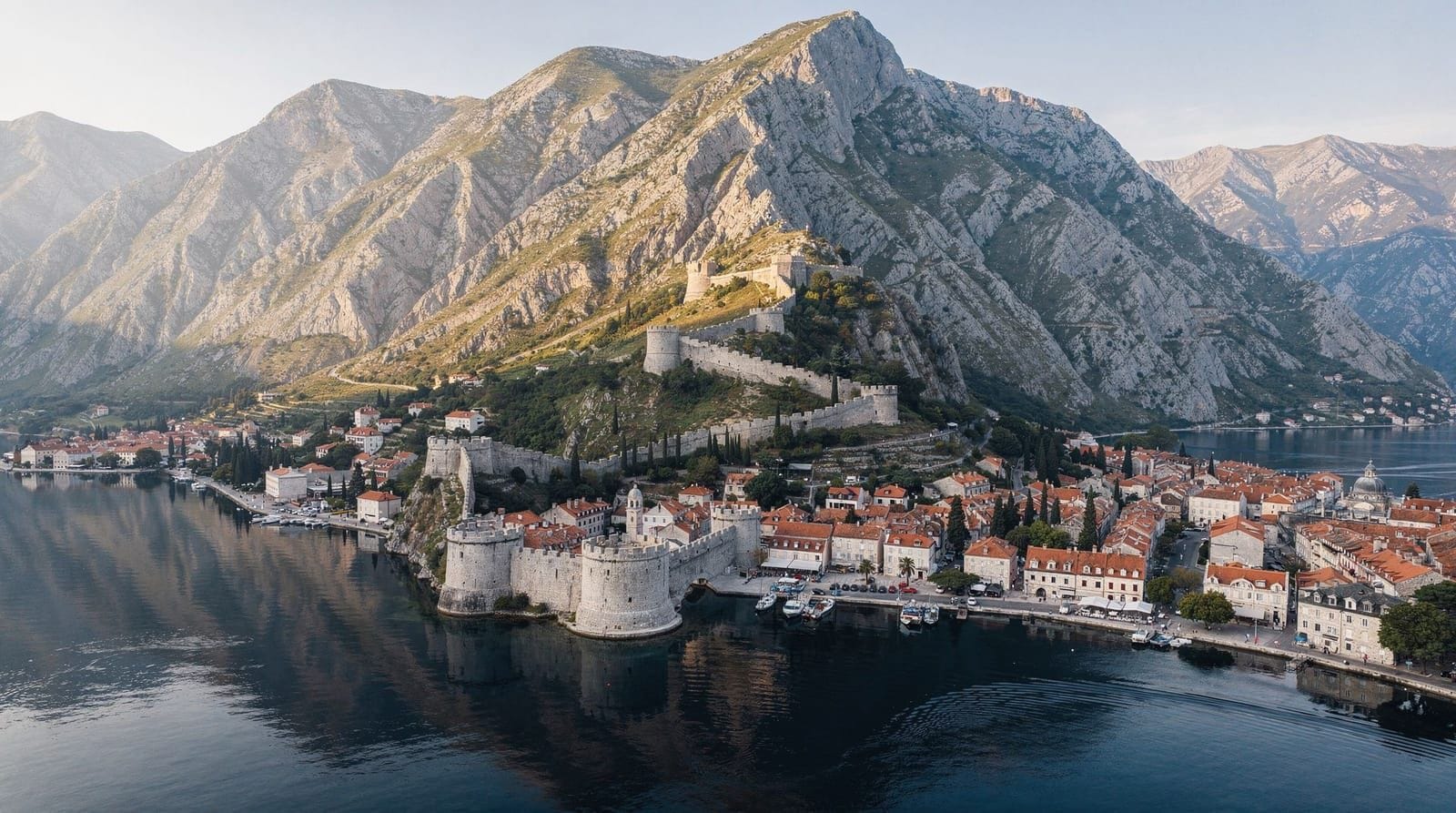
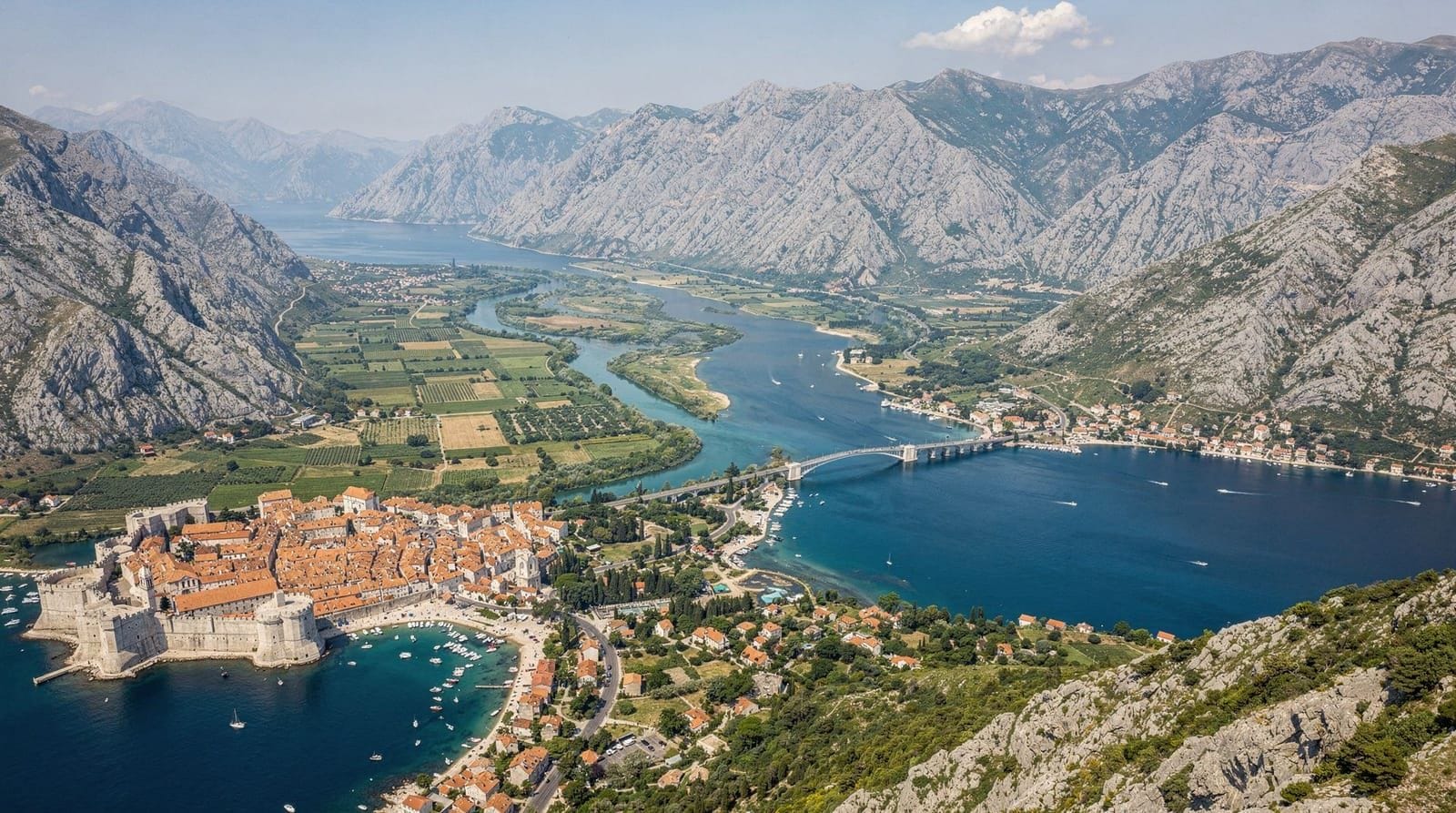
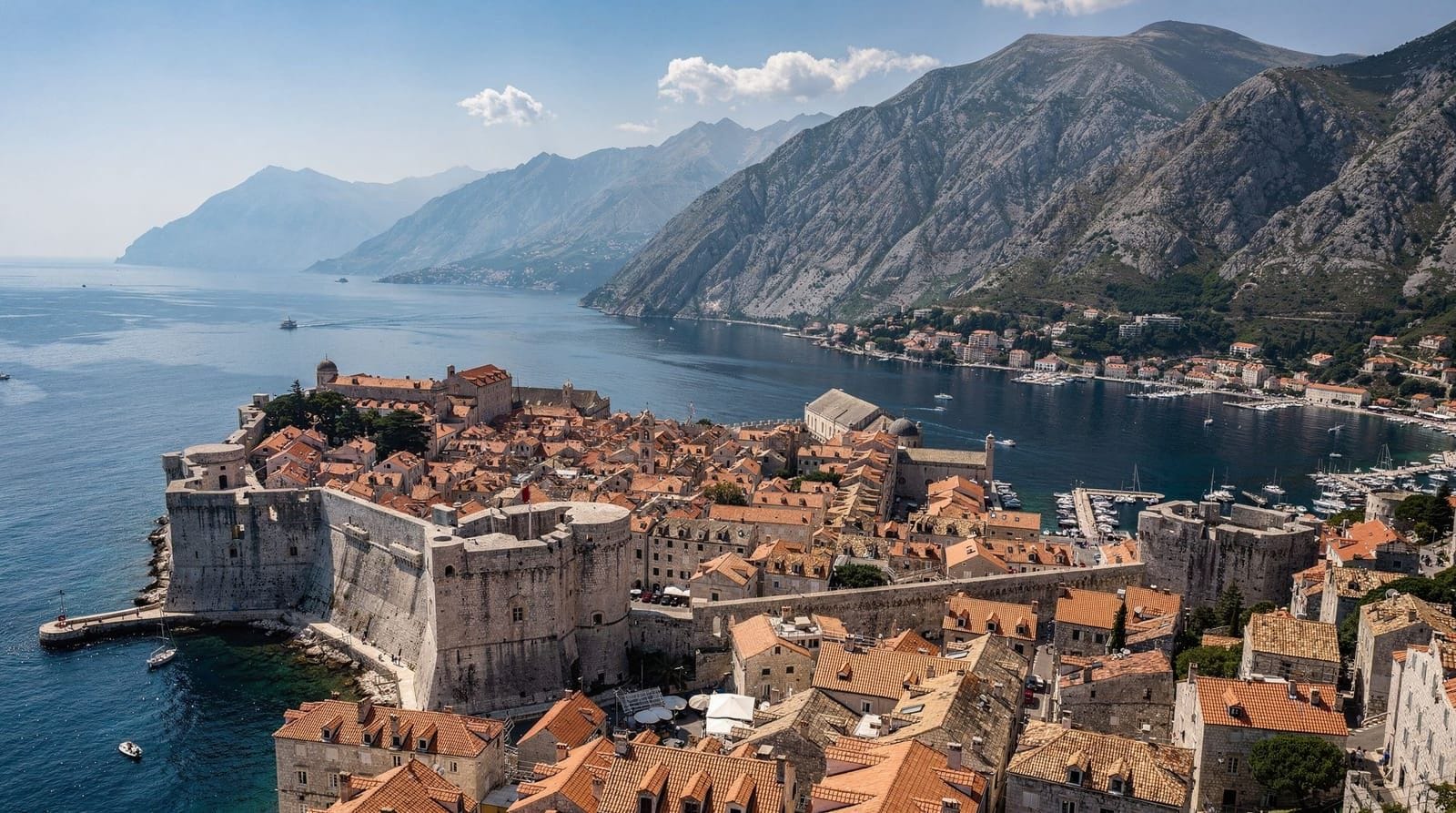
With that established, the trip itself is genuinely worth the effort. The Bay of Kotor is a flooded river canyon that gets called a fjord by every travel writer who visits — technically incorrect, but you understand the impulse when you see it. The water is extraordinarily still, the mountains drop sheer into the sea, and the old walled city of Kotor sits at the innermost point of the bay like something from a medieval manuscript. It holds UNESCO World Heritage status alongside Dubrovnik, but draws a fraction of the cruise ship traffic. The vibe is different: darker stone, narrower lanes, cats sleeping in doorways, fewer souvenir shops pretending to be local.
The round trip from Dubrovnik involves roughly 2 hours of driving each way, a border crossing in both directions, time in Kotor old town, typically a stop in the village of Perast, and — on some tours — a boat cruise in the bay. That is a full day. Tours depart early (usually between 07:30 and 08:30) and return in the evening. Budget 10 to 12 hours door to door.
What a Standard Group Tour Includes
The majority of Kotor day trips from Dubrovnik follow the same structure. A coach picks up passengers at agreed points in Dubrovnik (and sometimes Cavtat, which sits closer to the border), crosses into Montenegro, and drives the coastal road along the bay before arriving in Kotor. A licensed guide leads a walk through the UNESCO old town — the city walls, the Cathedral of Saint Tryphon, the main square — for around 90 minutes to 2 hours. There is then free time for lunch, independent exploration, or, if you have the stamina, the walls climb.
After Kotor, most standard tours stop in Perast. This is a village of around 350 residents that peaked in the 17th and 18th centuries as a wealthy maritime republic under Venetian influence. The baroque palaces are still standing; a handful have been converted into hotels or restaurants. Perast is genuinely lovely and genuinely tiny — you can walk the length of the main waterfront in five minutes. Tours typically allow 30 to 60 minutes here, which is enough.
Just offshore sit two small islands. Saint George is a private Benedictine monastery and cannot be visited. Our Lady of the Rocks is the famous one: an artificial island constructed over centuries by sailors who deposited stones on a submerged reef each year on the anniversary of a votive apparition. The church on top contains votive paintings covering almost every surface. Local boatmen run trips from Perast’s waterfront for around €5 per person — a detail that matters because standard group tours do not include this as part of the tour price. You pay on arrival if you want to go.
Book the standard full-day group tour to Kotor and PerastPrices for standard group tours typically land between €60 and €75 per adult. This covers transport and a guided walk; lunch is always extra. Group sizes vary but most operators run coach tours of 30 to 50 people, which means the walking sections feel crowded at busy stops. Departure points and included stops differ between operators — always read the itinerary detail before booking, particularly how long you have in Kotor proper versus time in transit.
Tours with a Boat Cruise in the Bay
A step up from the standard format are tours that include a boat cruise on the Bay of Kotor itself. These come in two variants worth distinguishing.
The first type incorporates a guided boat excursion as part of the Kotor visit — you board a small boat from Kotor’s waterfront and cruise sections of the inner bay, often with views of Perast and the island before or after visiting them by road. This adds a completely different perspective. The bay from water level, with the Vrmac and Lovćen mountains looming above, is striking in a way that no road-level view quite captures.
The second type builds the cruise more centrally into the itinerary — the boat journey becomes a major component rather than an optional add-on, and the road segments are shorter. These tours suit travellers who want more time on the water and less time walking in Kotor’s narrow lanes.
Compare day trips with bay boat cruise includedPrices for cruise-inclusive tours run from around €75 to €95. The premium is reasonable given what you get, but check carefully whether the boat portion is a shared group vessel or a smaller private boat — the experience differs significantly. Also verify whether the Our Lady of the Rocks island visit is included or still an independent local cost.
For those weighing all the options available from Dubrovnik, our day trips from Dubrovnik guide covers Kotor alongside Mostar, the Elaphiti Islands, and Cetina canyon rafting — useful if you’re deciding how to allocate limited days.
The Private Day Trip Option
Private tours to Kotor from Dubrovnik cost significantly more — typically €150 to €250 for a vehicle carrying two to four people, sometimes more depending on the operator — but they solve several real problems with the group format.
The border crossing is the most obvious one. In peak summer, July and August especially, the Debeli Brijeg border post between Croatia and Montenegro can back up considerably. A private driver knows alternative crossings, can time the approach, and can make the call to take a detour if conditions warrant. On a group coach, you wait with everyone else.
Private tours also give you control over time allocation. If you find Perast enchanting and want to linger over a coffee watching the bay, you can. If the walls climb energises rather than exhausts you and you want to push further up toward the fortress of San Giovanni, there is no group schedule pulling you back. Conversely, if the heat at noon inside Kotor’s stone walls proves more than anticipated — and it can reach 38°C in the canyon microclimate — you can retreat to the waterfront without dragging thirty other people with you.
The honest arithmetic: for a couple, a private tour costs roughly twice the per-person price of a good group tour. For a family of four, the premium narrows substantially. Solo travellers and pairs who prioritise flexibility over economy should take the private option seriously.
The Walls Climb: Should You Do It?
The city walls of Kotor are among the most dramatic in the Mediterranean. They climb from sea level up the bare rock face of Mount Saint John to the fortress of San Giovanni at around 260 metres, following a route of approximately 1,300 steps. The views from the top — Kotor old town below, the full inner bay spread out, mountains on every side — are exceptional. The entry fee is around €8.
The complicating factors: the climb is steep and unshaded. In summer, the rock and stone absorb heat to an extent that the walls become genuinely uncomfortable by mid-morning. Anyone with mobility issues should not attempt the full ascent. Anyone on a group tour should check how much time is allocated before committing — if your free time in Kotor is 90 minutes, you will not make it to the top and back and have any time left for the town. Plan for at least 2 hours to ascend, enjoy the view, and descend at a sensible pace.
Worth noting: most travellers find the lower and middle sections already worth the entry fee. You don’t have to reach San Giovanni to enjoy the experience. Even climbing 30 minutes gives you walls, towers, views of the cathedral rooftops, and a perspective on the city that the lanes below don’t offer.
Perast and the Island: How Much Time Do You Need?
Perast rewards a slower pace than most group tours allow. The village itself takes 15 minutes to explore at a quick walk; it takes an hour if you pause at the baroque palazzos, sit by the water, and actually register what you’re looking at. The Church of Saint Nicholas at the northern end is worth the small entry fee. The palaces are best appreciated from the waterfront rather than inside.
If you want to visit Our Lady of the Rocks, add at least 30 minutes to whatever time your tour allocates for Perast. The local boatmen charge around €5 per person and run frequently; the crossing takes 10 minutes each way and you want at least 15 to 20 minutes inside the church itself. The collection of votive paintings — over 2,500 according to the island’s own count — covering the walls and ceiling is one of the more quietly remarkable things in this part of the Adriatic.
Standard group tours that give you 45 minutes in Perast including the island visit are being optimistic. An hour is the minimum that feels unhurried. If the island matters to you, choose a tour that specifically includes it or explicitly allocates sufficient time.
Book a tour that includes a Kotor Bay cruise and PerastPractical Logistics Worth Knowing
The drive from Dubrovnik to Kotor follows the coastal road through Cavtat and then south along the bay. It is a genuinely scenic route — the approach to the border, the descent toward the bay, the drive along the water with Perast visible ahead — but it is still two hours of coach travel each way. Factor this into your expectations, particularly if you’re travelling with young children.
Montenegro uses the euro despite not being an EU member, which eliminates currency exchange complications. Card payment is widely accepted in Kotor’s tourist areas and most restaurants; smaller places and market vendors may prefer cash.
Mobile data can be a genuine consideration too — check whether your phone plan covers Montenegro before relying on maps or translation apps for the day, since it is outside the EU roaming zone even for European carriers. Downloading an offline map of Kotor and Perast in advance is a small precaution that avoids a frustrating gap in coverage right when you need directions most.
Dress code matters at several stops. The Cathedral of Saint Tryphon in Kotor requires covered shoulders and knees. Our Lady of the Rocks island enforces the same. This is easy to manage with a scarf or a layer in your bag.
Summer temperatures inside Kotor’s old town reach extremes. The stone walls and narrow lanes trap heat efficiently. If you are visiting in July or August, prioritise morning time in the old town and retreat to shaded waterfront areas or restaurants during early afternoon. This is another argument for tours that allocate more rather than less time in Kotor — you can manage your own rhythm.
For travellers considering a multi-day perspective on this region, the Dubrovnik–Mostar–Kotor circuit is a three-destination itinerary that gives each place proper time rather than the compressed day-trip format. Kotor specifically benefits from an overnight: the old town in the evening, after the day-trippers have gone, feels genuinely different.
What to Pack and How to Time Your Visit
Bring more than you think you need for a day that swings between air-conditioned coach and exposed stone. A hat and sunscreen matter from May through September; the old town’s narrow lanes offer patches of shade but the walls climb and the Perast waterfront are fully exposed. Comfortable, closed shoes are worth it over sandals if you plan any part of the walls climb — the steps are uneven stone, worn smooth in places. A light scarf or shawl covers the dress-code requirement at the Cathedral of Saint Tryphon and Our Lady of the Rocks without needing a full outfit change.
Timing within the day matters as much as timing within the year. Tours that reach Kotor by mid-morning, before the cruise-ship crowds peak and before the heat builds, give you a noticeably better old town experience than tours arriving at midday. If you have any choice between operators with different schedules, an earlier arrival in Kotor is worth prioritising over an earlier departure from Dubrovnik — you are effectively trading your own morning for a quieter, cooler old town.
Choosing Between the Tour Formats
The Montenegro day trip market from Dubrovnik is competitive enough that quality varies considerably between operators even within the same format. A few practical filters:
Read the full itinerary, not just the headline. Check how long the tour spends at each stop, not just which stops it includes. Forty-five minutes in Kotor is not the same as two hours.
Check departure and return times. Some tours claim “full day” and return you by 17:30. Others run until 20:00. Knowing which you’re booking prevents misaligned expectations.
Group size matters for the walking portions. Larger coaches mean more crowding at choke points — Kotor’s old town gates, the Perast waterfront — which affects how relaxed the experience feels.
The Dubrovnik vs Kotor comparison is worth reading if you’re deciding whether to make Kotor an overnight base instead. The two cities have genuinely different characters and serve different travel moods.
| Format | Price (per person) | Best for |
|---|---|---|
| Standard group tour | €60-75 | budget-conscious travellers who want a hassle-free, guided introduction |
| Boat cruise-inclusive | €75-95 | travellers who want time on the water and a different view of the bay |
| Private | €150-250 (per vehicle, 2-4 people) | couples or small groups who value flexibility over per-person cost |
For the majority of travellers who want an organised, guided, hassle-free experience: the standard group tour with a reputable operator is a solid choice at a fair price. For anyone who wants more time on the water and a different vantage on the bay: a cruise-inclusive tour is worth the extra cost. For couples or small groups who value flexibility and can absorb a higher per-person cost: private is the clear answer.
All three formats work. The one to avoid is the cheapest listing you can find with an underspecified itinerary and no reviews from the past twelve months.
Kotor Versus the Rest of Your Dubrovnik Days
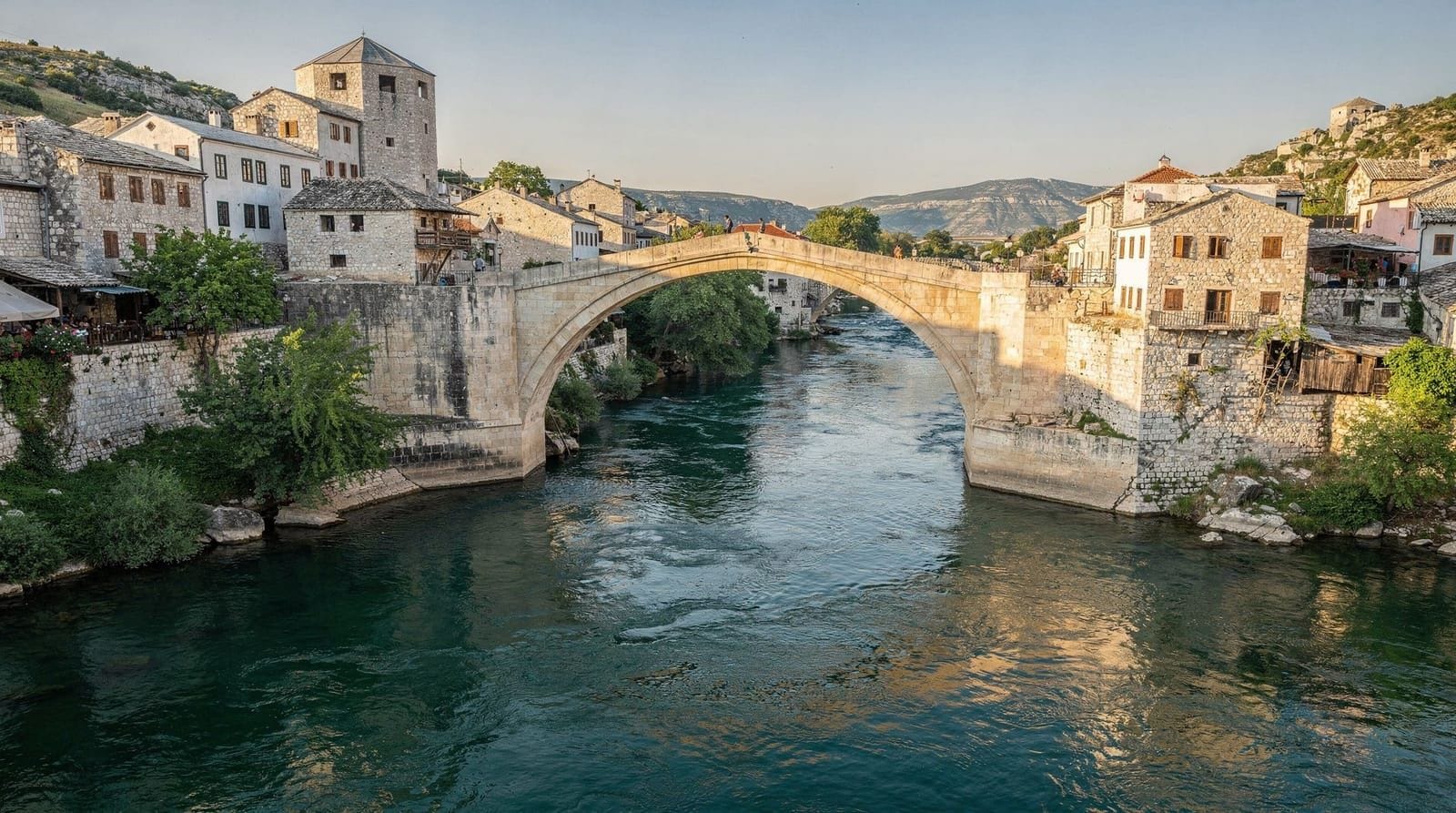
Montenegro is one of several worthwhile full-day excursions from Dubrovnik, and it is worth weighing against the alternatives before committing a full day and a border crossing to it. Mostar and the Herzegovina countryside offer a completely different atmosphere — Ottoman-era architecture, the famous bridge, a shorter drive with no international border complication if you are travelling on most passports (Bosnia and Herzegovina does still require your passport, but the crossing is typically quieter than the Montenegrin one in peak season). The day trips from Dubrovnik guide lays out the full set, including boat trips to the Elaphiti Islands for travellers who would rather spend the day on the water than in a coach.
If your itinerary allows more than a single day-trip day, splitting Kotor and Mostar across two separate excursions rather than trying to combine them is the better approach — each destination deserves the time, and combined tours that try to fit both into one day tend to compress each stop uncomfortably. For travellers building a longer itinerary around this part of the Adriatic, the Dubrovnik–Mostar–Kotor circuit covers exactly this multi-day approach, with overnight stays that let each place breathe.
FAQ
Do I need a passport to visit Kotor from Dubrovnik?
Yes. Montenegro is not part of the European Union or the Schengen Area. You will cross an international border, so a valid passport is mandatory. An ID card is not accepted by most nationalities.
How long is the drive from Dubrovnik to Kotor?
The drive takes approximately 1 hour 45 minutes to 2 hours each way, depending on border wait times and traffic. In peak summer the border can add 30 to 45 minutes.
Is climbing the Kotor walls worth it?
If you have the energy and the weather is not extreme, yes. The views over the bay from the top are genuinely spectacular. There are over 1,300 steps — in summer heat, start early and bring water. Many visitors are satisfied with the lower sections.
What is Our Lady of the Rocks island in Perast?
Our Lady of the Rocks is an artificial island built by sailors over centuries, with a small Baroque church containing a notable collection of votive paintings. Boat trips from Perast’s waterfront cost around €5 and take about 10 minutes each way.
Can I book the Kotor day trip from Cavtat instead of Dubrovnik?
Yes. Some operators offer pickup in Cavtat, which is closer to the Montenegrin border and can save time. Worth checking if you’re based south of Dubrovnik.
Is Kotor comparable to Dubrovnik?
Different rather than comparable. Kotor’s old town is smaller, darker and more labyrinthine — less polished, more authentically medieval. It receives far fewer cruise ships than Dubrovnik. Many travellers prefer the atmosphere. See the full comparison in our Dubrovnik vs Kotor guide.
What currency is used in Montenegro?
Montenegro uses the euro, despite not being an EU member. No currency exchange needed. Cards are widely accepted in tourist areas, though smaller places may be cash-only.
Compare alternative tours
Frequently asked questions about Kotor Day Trip from Dubrovnik
Do I need a passport to visit Kotor from Dubrovnik?
Yes. Montenegro is not part of the European Union or the Schengen Area. You will cross an international border, so a valid passport is mandatory. An ID card is not accepted by most nationalities.How long is the drive from Dubrovnik to Kotor?
The drive takes approximately 1 hour 45 minutes to 2 hours each way, depending on border wait times and traffic. In peak summer the border can add 30-45 minutes.Is climbing the Kotor walls worth it?
If you have the energy and the weather is not extreme, yes. The views over the bay from the top are genuinely spectacular. There are over 1,300 steps — in summer heat, start early and bring water. Many visitors are satisfied with the lower sections.What is Our Lady of the Rocks island in Perast?
Our Lady of the Rocks is an artificial island built by sailors over centuries, with a small Baroque church containing a notable collection of votive paintings. Boat trips from Perast's waterfront cost around €5 and take about 10 minutes each way.Can I book the Kotor day trip from Cavtat instead of Dubrovnik?
Yes. Some operators offer pickup in Cavtat, which is closer to the Montenegrin border and can save time. Worth checking if you're based south of Dubrovnik.Is Kotor comparable to Dubrovnik?
Different rather than comparable. Kotor's old town is smaller, darker and more labyrinthine — less polished, more authentically medieval. It receives far fewer cruise ships than Dubrovnik. Many travellers prefer the atmosphere. See the comparison in our Dubrovnik vs Kotor guide.What currency is used in Montenegro?
Montenegro uses the euro, despite not being an EU member. No currency exchange needed. Cards are widely accepted in tourist areas, though smaller places may be cash-only.