Mostar Day Trip from Dubrovnik: Which Tour is Actually Worth Booking
Dubrovnik: Full-day trip to Mostar
| Where | Mostar, Bosnia and Herzegovina, around 130 km from Dubrovnik |
| Cost | around €50-80 per person for group tours, €200-400 private |
| Time needed | full day, 10-12 hours |
| Getting there | organised coach or private transfer, international border, passport required |
| Best time | spring or early autumn for comfortable heat; early-departure tours in summer |
Crossing a Border for One of the Balkans’ Most Striking Cities
The drive from Dubrovnik to Mostar is roughly 130 kilometres. In that distance, you leave Croatia, enter Bosnia and Herzegovina, pass through a landscape that shifts from Dalmatian coast to limestone karst to river valley, and arrive in a city that was almost entirely destroyed in the early 1990s and has since rebuilt itself into one of the most visited places in the western Balkans. It is not a casual excursion. It is a full day — typically ten to twelve hours — that crosses an international border, involves a long bus ride through mountain terrain, and deposits you in a place that operates by different rules, uses a different currency, and carries a history that is still, for many local residents, painfully recent.
That is also what makes it worth doing. The tours that sell this trip do a reasonable job of getting you there and back; what they vary considerably on is what happens in between. This comparison is here to help you decide which version of the day actually suits you.
What the Trip Actually Looks Like
Most Mostar day tours depart Dubrovnik between 7am and 8am. The first leg — getting to the border — takes around an hour depending on traffic and route. There are two possible roads: one goes via the Pelješac Bridge and through Neum, the other crosses the Neum corridor directly. The distinction matters more than most booking pages let on, which is covered in detail below.
The border crossing itself is the first wild card. In peak summer, queues at Bosnian border crossings can add thirty minutes or more to the journey. This is not within any operator’s control, and it is not something a private tour can fully avoid either — you still need to present documents and wait your turn.
Arrival in Mostar typically falls around 10:30am to 11:30am. This is already the hot part of the day in summer, which is relevant because Mostar sits in a deep river valley that traps heat. The city regularly exceeds 38°C in July and August. Arriving mid-morning means the worst of the heat coincides with the time you are most actively walking around. There is no good solution to this — it is simply a condition of the excursion during high season — but tours that include a waterfalls stop tend to schedule it either before or after Mostar, which gives you a natural break.
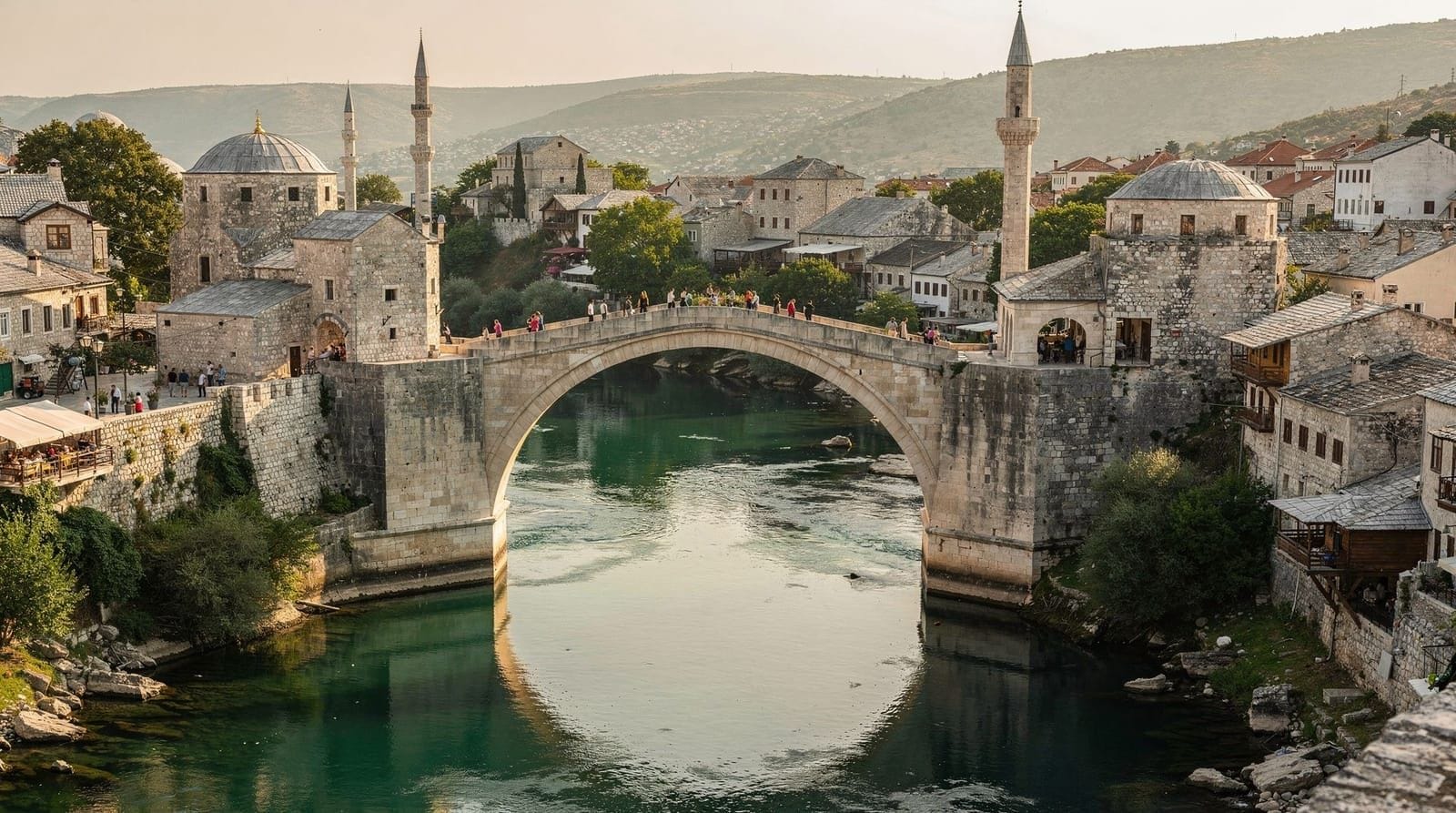
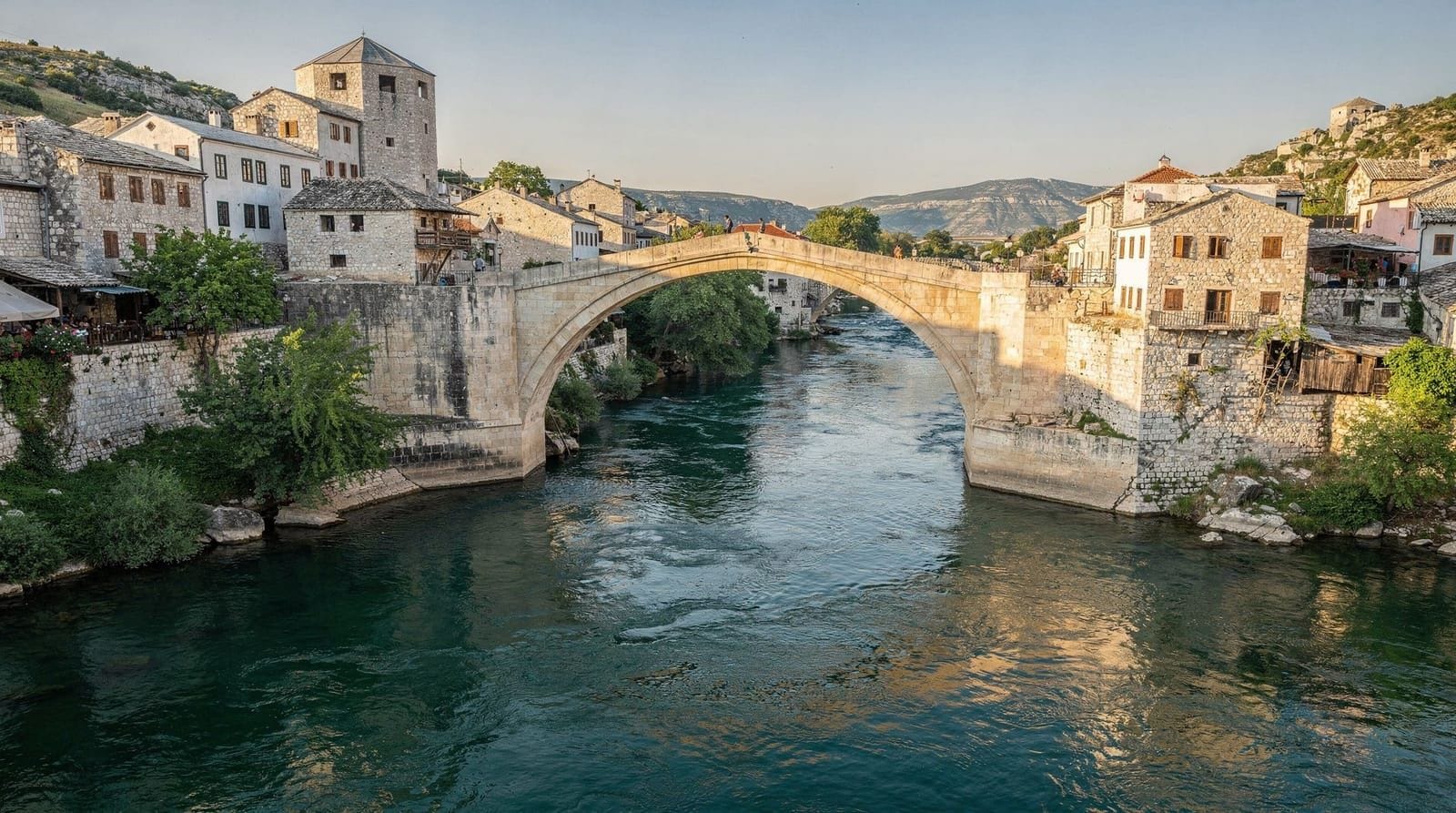
The guided portion in the old town generally runs two to two and a half hours. A good guide will walk you through the context — the war, the destruction of Stari Most in 1993, the painstaking reconstruction completed in 2004 using stone quarried from the same source as the original 16th-century Ottoman bridge. A mediocre guide will point at things and move on. Free time follows, typically ninety minutes to two hours, which is enough to eat, cross the bridge on foot, explore the bazaar (Kujundžiluk), and have a coffee looking at the Neretva river.
Return to Dubrovnik is usually between 7pm and 8pm.
The Border Crossing Question: Neum or Pelješac
Before getting to the tour options, this point deserves its own section because it genuinely affects your day.
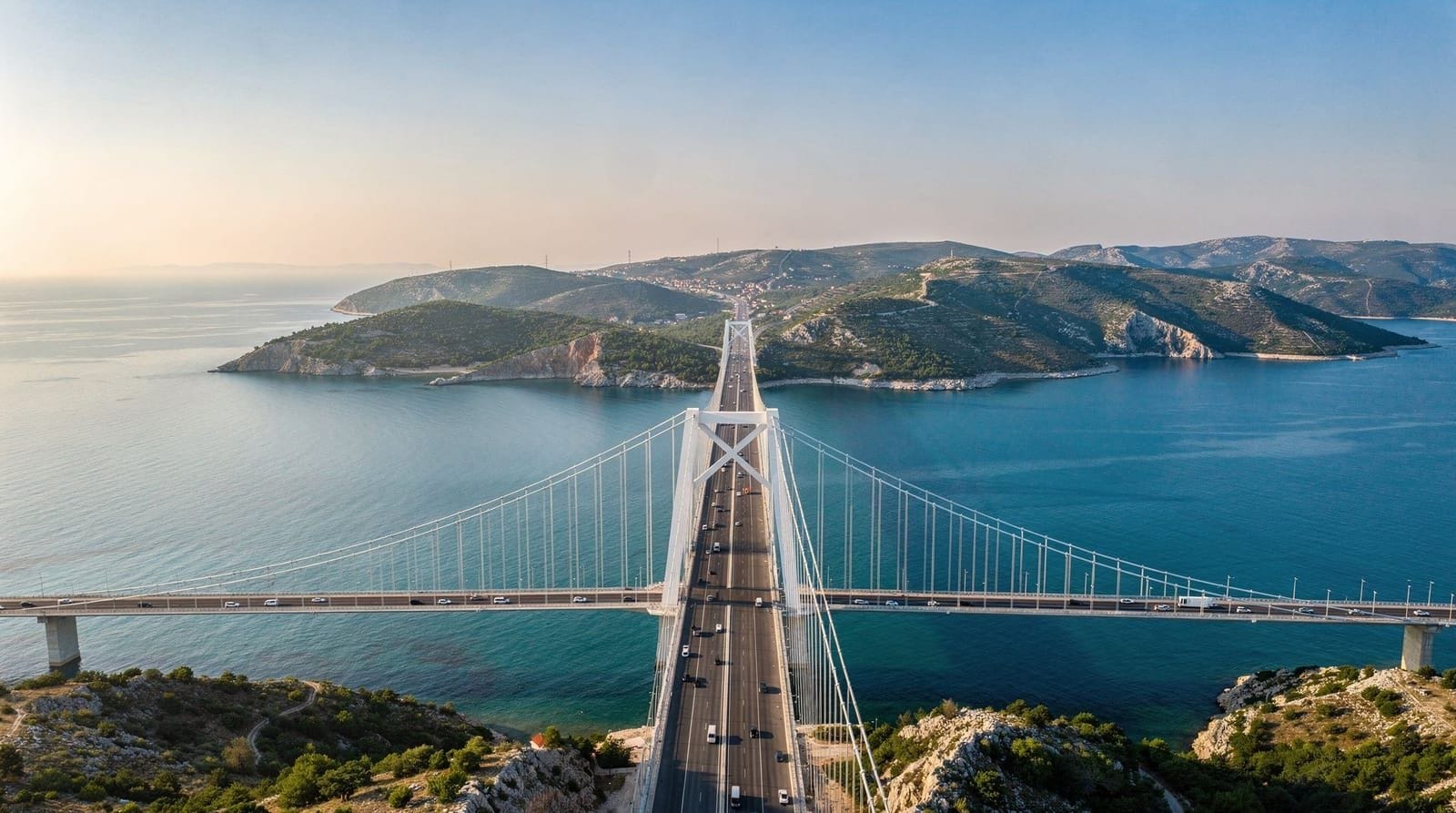
Before the Pelješac Bridge opened in 2022, every road from Dubrovnik heading north had to pass through the Neum corridor — a 9-kilometre stretch of Bosnian coastline that interrupts the Croatian coast. That meant two international border crossings just to stay in Croatia, before even heading to Mostar. The bridge changed this, creating a continuous Croatian road link that bypasses Neum entirely.
However, some Mostar day tour operators still route through Neum rather than the bridge. The reasons are a mix of habit, existing pickup arrangements, and the fact that the Neum crossing sometimes moves faster than the dedicated Mostar border crossing, depending on the day and season. If you book a tour and border crossings are a concern — either because you have a passport that takes longer to process, because you have children who will struggle with waiting, or simply because you want the most efficient route — it is worth asking the operator directly which crossing they use. The guide on the Pelješac Bridge and Neum corridor has more background on the logistics.
Regardless of route, the bottom line remains: you need a valid passport. Bosnia and Herzegovina is not a member of the EU, Schengen, or any arrangement that allows Croatian-style document-free travel. Every person on the bus presents their passport individually at the crossing. See the Croatia entry requirements guide for context on document rules across the region.
Comparing the Tour Options
| Format | Price | Duration | Best for |
|---|---|---|---|
| Standard Mostar only | €50-60 | 10-12 hrs | first-timers who want the essential old-town experience |
| Mostar + Počitelj | €55-70 | 10-12 hrs | travellers interested in Ottoman-era architecture and history |
| Mostar + Kravica waterfalls | €65-80 | 10-12 hrs | anyone who wants to swim and cool off; strong with kids |
| Private | €200-400 (vehicle) | flexible | families, small groups, anyone who dislikes coach-tour pacing |
Standard Mostar Day Tour from Dubrovnik
The straightforward version: bus from Dubrovnik, guided walk of the old town, free time, bus back. This is the most common format and the lowest price point — typically €50 to €60 per person.
Book the standard Mostar full-day tour from DubrovnikIt covers the essential experience well. Stari Most is genuinely worth the journey; the Kujundžiluk bazaar is a legitimate Ottoman-era commercial street, not a reconstruction; the Koski Mehmed Paša Mosque offers views of the bridge from its minaret for a small additional fee. If your goal is simply to see Mostar, this format delivers.
The honest critique: the free time allocation on some standard tours is tight. If the group takes longer at the border or traffic runs slow, the guided walk can feel rushed and the free time shrinks. Groups can also be large — thirty or more people — which makes the old town cobblestones feel crowded at the wrong times of day. If either of these concerns you, look at the private option or the extended combos below.
Mostar and Počitelj Day Trip from Dubrovnik
Počitelj is a fortified Ottoman village perched on a hillside above the Neretva river, about 30 kilometres south of Mostar. It is on the way — most buses pass through the general area — and adding a stop requires only thirty to forty-five minutes. The village is small but atmospheric: a citadel tower, the Šišman Ibrahim-paša Mosque, terraced stone houses descending toward the river. It was also heavily damaged in the 1990s war and similarly reconstructed.
Compare Mostar and Počitelj combined day toursThe Počitelj addition is most appealing to travellers who are interested in the historical and architectural layers of the region rather than primarily in the outdoor/swimming experience. It does not cool you down; it adds more walking in the heat. But the view from the citadel over the Neretva valley is genuinely striking, and Počitelj itself is far less crowded than Mostar’s bridge zone.
Pricing for Mostar plus Počitelj tours typically sits in the €55 to €70 range.
Počitelj is easy to underestimate from a photo — it looks like a single citadel tower, but the walk up through the terraced houses, past the mosque, and onto the fortifications takes a genuine twenty to thirty minutes if you want to reach the top. Wear proper shoes; the cobbled paths are uneven and steep in sections. The reward is one of the better panoramic views in Herzegovina, with the Neretva winding below and the karst hills stretching in every direction.
Mostar and Kravica Waterfalls — The Best Combination
Kravica (sometimes spelled Kravice) is a horseshoe-shaped travertine waterfall on the Trebižat river, about 40 kilometres from Mostar and roughly 30 kilometres from the Croatian border. The falls drop around 25 metres into a natural pool. In summer, swimming is allowed, and the temperature of the water — fed by karst springs — is a cold, immediate relief from the Herzegovinian heat.
This is the stop that genuinely elevates the day. Mostar is culturally important and visually impressive, but it is also a town that can feel relentlessly commercial near the bridge on a hot day in August. Kravica is a natural spectacle that most visitors report as the emotional highlight. If you are travelling with children who can swim, the calculus is simple: book a tour that includes the waterfalls.
These tours run ten to twelve hours and cost €65 to €80. The trade-off is time: adding Kravica typically means slightly less free time in Mostar — sometimes ninety minutes rather than two hours. For most visitors, that is still sufficient.
See the Mostar and Kravica waterfalls tour optionsThere is also a four-stop variant that combines Dubrovnik departure, Kravice waterfalls, Mostar, and Počitelj in a single day. It is ambitious — border crossings, heat, and four locations across twelve hours — but operators that run it well report high satisfaction. It works best in spring or early autumn when the heat is manageable and the waterfalls are at good flow. In July and August, it can feel like being herded from one sweaty queue to another.
From Cavtat: A Quieter Start
Travellers staying in Cavtat, south of Dubrovnik, have a separate option worth knowing about. Some operators run the Kravica and Mostar excursion departing directly from Cavtat, which means a shorter initial drive and a pickup that does not require going into central Dubrovnik. The experience in Bosnia is identical, but for those staying at Cavtat hotels or using Cavtat as a quieter base, it removes the logistical overhead of getting to a Dubrovnik pickup point.
Prices are broadly equivalent to the Dubrovnik-departing equivalent. If you are based in Cavtat, it is simply the more convenient option.
Private Tour from Dubrovnik to Bosnia and Herzegovina
Private tours operate with a vehicle and driver-guide for your group only — typically a car for up to four, or a minivan for larger groups. The price per booking is substantially higher (often €200 to €400 for the vehicle), but per-person for a group of four or more, the difference narrows.
The practical advantages are real: no waiting for a large group to assemble, flexible timing at each stop, the ability to linger at Počitelj or leave Mostar early if the heat is oppressive, and a guide who is focused entirely on your party. Border crossings are not faster — you still queue with every other vehicle — but there is no group-coordination overhead on either side.
For families with children, couples on a tighter itinerary, or anyone who finds large-group coach tours frustrating, private is worth the premium. See the broader day trips from Dubrovnik guide for context on when private versus group makes sense across different excursions from the city.
Things No One Puts in the Tour Description
The dive from Stari Most is not for tourists. The famous image of divers leaping from the top of the Old Bridge is real, and you may see it happen. The divers are members of the Mostar Divers Club, a local institution with a tradition going back to at least the 1960s. The jump is from roughly 21 metres above the water into a fast-moving river — it requires training and preparation. Tourists are not permitted to attempt it, regardless of what you may have seen online. A small payment is sometimes requested by divers if you want to watch a demonstration, and there is no fixed schedule.
The tourist zone near the bridge is genuinely pushy. The bazaar area immediately approaching Stari Most from both sides has a high density of souvenir sellers and restaurant touts who will actively try to redirect your attention. This is not dangerous or aggressive in any threatening sense, but it is persistent, and it catches people off-guard if they are expecting a more relaxed browsing experience. Move confidently, make eye contact only when you intend to stop, and you will be fine.
Currency matters. The Bosnian Convertible Mark (BAM) is pegged to the euro at roughly 1.96 BAM per euro. Restaurants and shops near Stari Most widely accept euros, but the exchange rate applied varies and is rarely in your favour. ATMs are available in the city centre and give BAM at the official rate. Withdrawing a small amount on arrival is worth doing if you plan to eat and shop.
Heat management is not optional in summer. A hat, sunscreen, and a refillable water bottle are not optional extras in July and August — they are basic equipment. Tours do not typically include shaded transport between stops within Mostar; you are walking on exposed stone cobblestones in direct sun. The Kravica waterfalls stop mitigates this if included, but the Mostar portion will be hot regardless.
Photographing the bridge takes patience. Stari Most is one of the most photographed structures in the Balkans, and the classic viewpoints — from the riverbank restaurants either side, and from the bridge itself looking down at the Neretva — get crowded fast once tour buses arrive mid-morning. If photography matters to you, the free-time block is the moment to prioritise the shot, not the guided walk, since the guide keeps the group moving. Early or late light on the pale stone is considerably more flattering than the flat midday sun most day-trippers get.
What to wear at the mosque. The Koski Mehmed Paša Mosque, whose minaret gives the best elevated view of the bridge, expects modest dress — covered shoulders and knees for all visitors, and a headscarf for women, usually available to borrow on site. Shoes come off before entering the prayer hall. Budget a few extra minutes for this if you plan to climb the minaret, as the stairs are narrow and single-file traffic in both directions slows things down in peak season.
How This Fits into a Wider Itinerary
If you are spending several days based in Dubrovnik, the Mostar excursion pairs naturally with the rest of the Dubrovnik programme. It is best treated as its own day — the length and intensity mean stacking it with an evening activity in Dubrovnik is technically possible but rarely enjoyable.
For travellers considering a multi-day loop that extends the Balkan circuit, the Dubrovnik–Mostar–Kotor itinerary offers a different model: instead of returning to Dubrovnik after Mostar, you continue south into Montenegro. This works particularly well for travellers with a week or more who want to cover ground rather than use a city as a fixed base. The honest Croatia advice guide covers the broader trade-offs between base-and-radiate and moving itineraries in this part of the Adriatic.
How to Book
All the tours listed above are available for online booking with instant confirmation. Mostar day tours sell out in peak season — particularly July and August — often a week or more in advance. Booking three to five days ahead at minimum is advisable; booking earlier does not cost more and guarantees your spot.
Compare all Mostar day trip variants including Počitelj and KravicaGroup tours include hotel pickup from the main Dubrovnik hotel zones in most cases — confirm your pickup point when booking, particularly if you are staying outside the old town or in Lapad. Private tours pick up at your accommodation by arrangement.
Bring your passport, wear light clothing, and go in with realistic expectations about heat and border waits. The day is long and occasionally unglamorous in logistics. What you get on the other side of those logistics is a city and a landscape that most people who make the trip are very glad they saw.
Mostar Compared to Kotor: Two Different Balkan Border Crossings
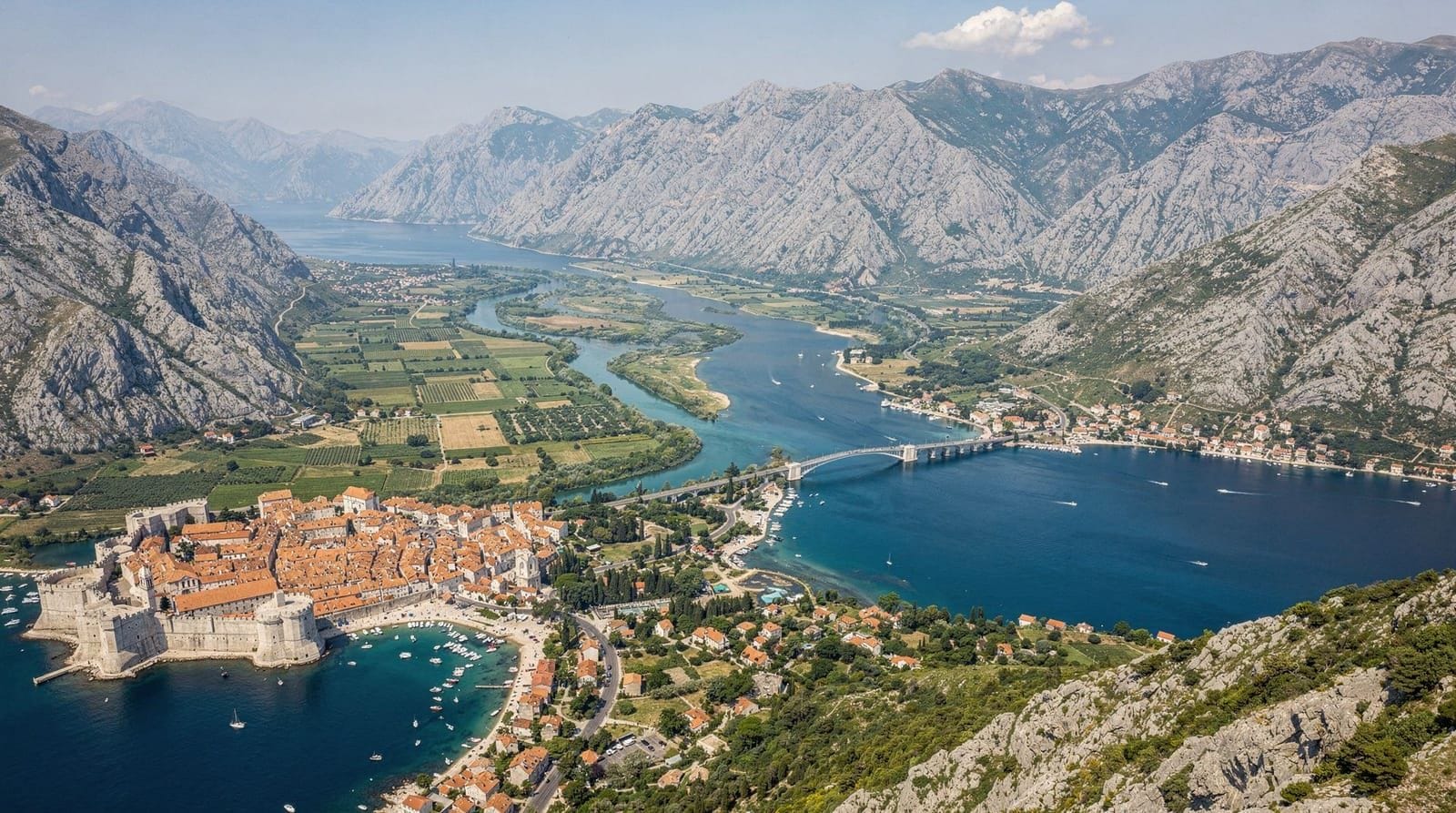
Mostar and Kotor are the two most popular cross-border day trips from Dubrovnik, and travellers with limited time often have to choose between them rather than doing both. They are genuinely different experiences: Mostar is a river-valley town rebuilt from war damage, with an Ottoman bridge and bazaar as its centrepiece; Kotor is a walled coastal town on a dramatic bay, with a mountain-backed old town and a Venetian character. Neither is objectively better — Mostar has the stronger emotional and historical weight, while Kotor has the more immediately spectacular setting. Our Montenegro day trip guide covers the Kotor side of this comparison in the same depth as this page covers Mostar. If you have more than a few days in the region, the Dubrovnik–Mostar–Kotor circuit lets you do both without compressing either into an exhausted single day.
Compare alternative tours
| Tour | Duration | Rating | Price | Highlights | |
|---|---|---|---|---|---|
| Dubrovnik: Mostar and Pocitelj day trip | — | — | — | — | Check |
| Dubrovnik: Mostar and Kravica waterfalls one-day tour | — | — | — | — | Check |
| Dubrovnik: Kravice, Mostar and Pocitelj day trip | — | — | — | — | Check |
| Cavtat: Kravice waterfalls and Mostar day trip | — | — | — | — | Check |
| Dubrovnik: Private day trip to Bosnia and Herzegovina | — | — | — | — | Check |
Frequently asked questions about Mostar Day Trip from Dubrovnik
Do I need a passport for the Mostar day trip?
Yes, without exception. Bosnia and Herzegovina is not part of the EU, the Schengen Area, or Croatia. You will cross an international border. Bring your passport — an ID card is not sufficient for all nationalities.Does the tour go through Neum?
Some tours still route through the Neum corridor in Bosnia, which adds a border crossing each way. Others use the Pelješac Bridge to bypass Neum entirely. Check with your operator before booking — the bridge route is generally faster.Is Kravica waterfalls worth adding to the Mostar day trip?
Absolutely, if swimming is on the table. Kravica is a genuinely spectacular waterfall with a pool at the base — one of the most refreshing stops in the region during summer. Tours that include it tend to run longer but offer better value.Can you watch the famous bridge dive in Mostar?
The dive from Stari Most is performed by members of the Mostar Divers Club — a tradition going back decades. Tourists cannot attempt it. If you want to watch, you may need to pay a small contribution; performances are not scheduled on demand.How hot does Mostar get in summer?
Very. Mostar sits inland in a river valley and regularly exceeds 38°C in July and August. Plan to be in the shade during midday and bring water. Early-morning arrival is preferable — most tours reach Mostar around 11am.Is the Mostar day trip suitable for children?
Yes, with caveats. The old town is pedestrianised and manageable, but the heat, the long bus ride, and the border wait can be tiring for young children. The Kravica waterfalls stop is a big hit with kids who can swim.What currency is used in Bosnia?
The Bosnian Convertible Mark (BAM) is the local currency, pegged to the euro. Most tourist shops and restaurants near Stari Most accept euros, but you'll get better rates paying in BAM. ATMs are available in Mostar city centre.