Mljet travel guide
Discover Mljet: Croatia's greenest island with a national park, saltwater lakes, Odysseus cave, and the quietest corner of the Dalmatian islands.
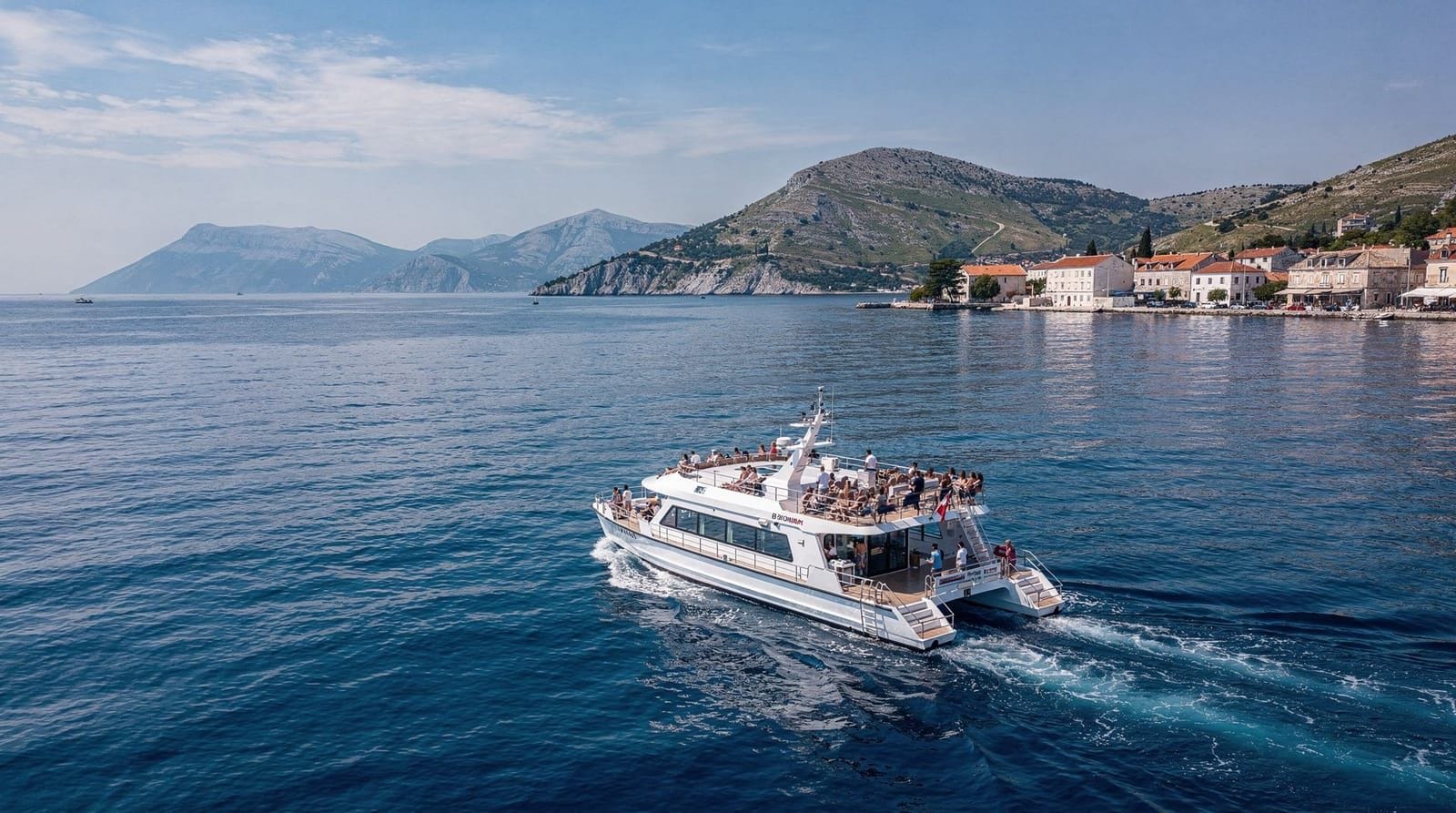
Dubrovnik: Korcula island tour with wine tasting
Quick facts
- Best time
- May–June, September
- Days needed
- 2–3 days
- Getting there
- Catamaran from Dubrovnik (2 h) or Split (4.5 h via Hvar/Korčula)
- Budget per day
- €55–€120
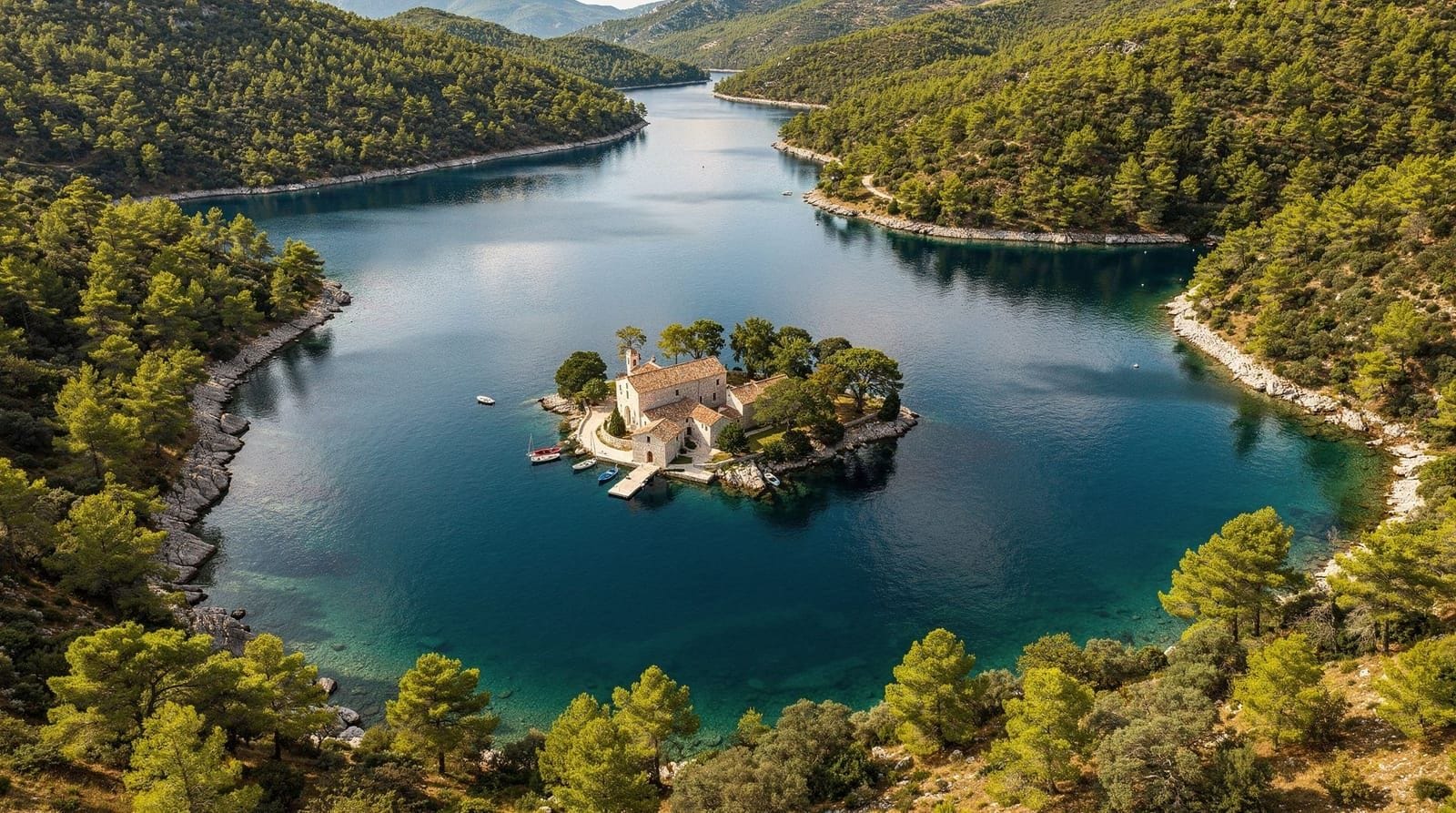
Mljet is often described as Croatia’s most beautiful island, and the claim has genuine weight. Covered in dense Mediterranean forest of Aleppo pine and holm oak, it is the greenest island in the Adriatic. Its western third is protected as Mljet National Park — the saltwater lakes of Veliko Jezero and Malo Jezero, connected by a narrow channel, form one of the most tranquil and photogenic natural environments in the entire country. The island has almost no commercial development, virtually no nightlife, and one of the lowest tourist densities of any major Dalmatian island. It is a place for genuine decompression.
| Where | Southern Dalmatian islands, west of Dubrovnik |
| Cost | around €55–120/day; national park entry €14–20 |
| Time needed | 2–3 days, or a rushed day trip from Dubrovnik |
| Getting there | Catamaran from Dubrovnik (2 hrs) or Split (4.5 hrs via Hvar/Korčula) |
| Best time | May–June and September |
Getting to Mljet
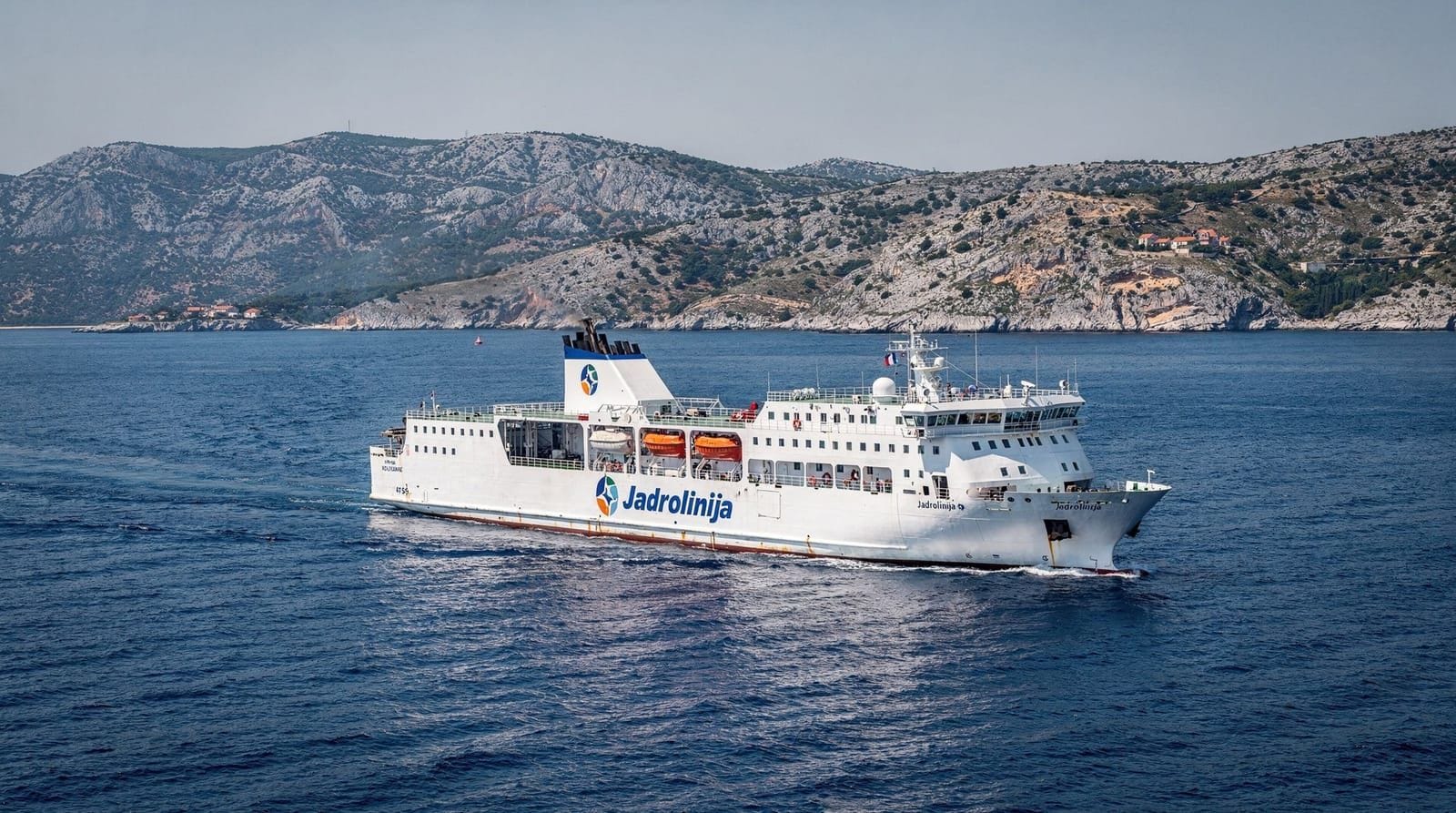
From Dubrovnik: Jadrolinija’s coastal catamaran runs Dubrovnik to Polače (the national park end of the island) and/or Sobra (the main port) in approximately 2 hours. In summer there are 1–2 sailings per day. This is the most convenient access point.
From Split (coastal catamaran): The coastal catamaran route Split–Hvar–Korčula–Mljet–Dubrovnik serves Mljet, stopping at Polače or Sobra. Journey time from Split to Mljet is approximately 4–5 hours. This is a scenic all-day journey and one of the best ways to see several Dalmatian islands in sequence.
Car ferry Ploče–Sobra: A car ferry from Ploče on the mainland (north of Dubrovnik, easily reached from the A1 motorway) crosses to Sobra in around 2 hours. Useful if you’re driving down the coast and want to incorporate Mljet without going via Dubrovnik. Approximately 1–2 sailings daily.
Day trip from Dubrovnik: Mljet is feasible as a day trip from Dubrovnik — the 2-hour catamaran allows 4–5 hours on the island before returning. However, overnight stays are strongly recommended to properly experience the island’s tranquillity.
What to see and do on Mljet
Mljet National Park
The western third of the island was designated a national park in 1960. The centrepiece is two interconnected saltwater lakes — Malo Jezero (Small Lake) and Veliko Jezero (Great Lake) — which are connected to the sea by a narrow channel. The water in the lakes is clean, calm, and several degrees warmer than the open sea in late summer because of their sheltered position.
National park entry costs approximately €14–€20 per adult (summer), which includes use of the electric boat that crosses Veliko Jezero to the island of Sveta Marija. Entry is cheaper in the shoulder season.
Cycling around the lakes: The most popular way to explore the park. Bicycle hire (around €5–€10/hour or €25–€35/day) is available at the national park entrance at Polače and at Pomena. The lakeside trail around both lakes takes roughly 2.5–3 hours at a relaxed pace. Flat and easy, suitable for families.
Swimming in the lakes: You can swim in both lakes. Malo Jezero tends to be calmer and less visited. The water is excellent in July–September.
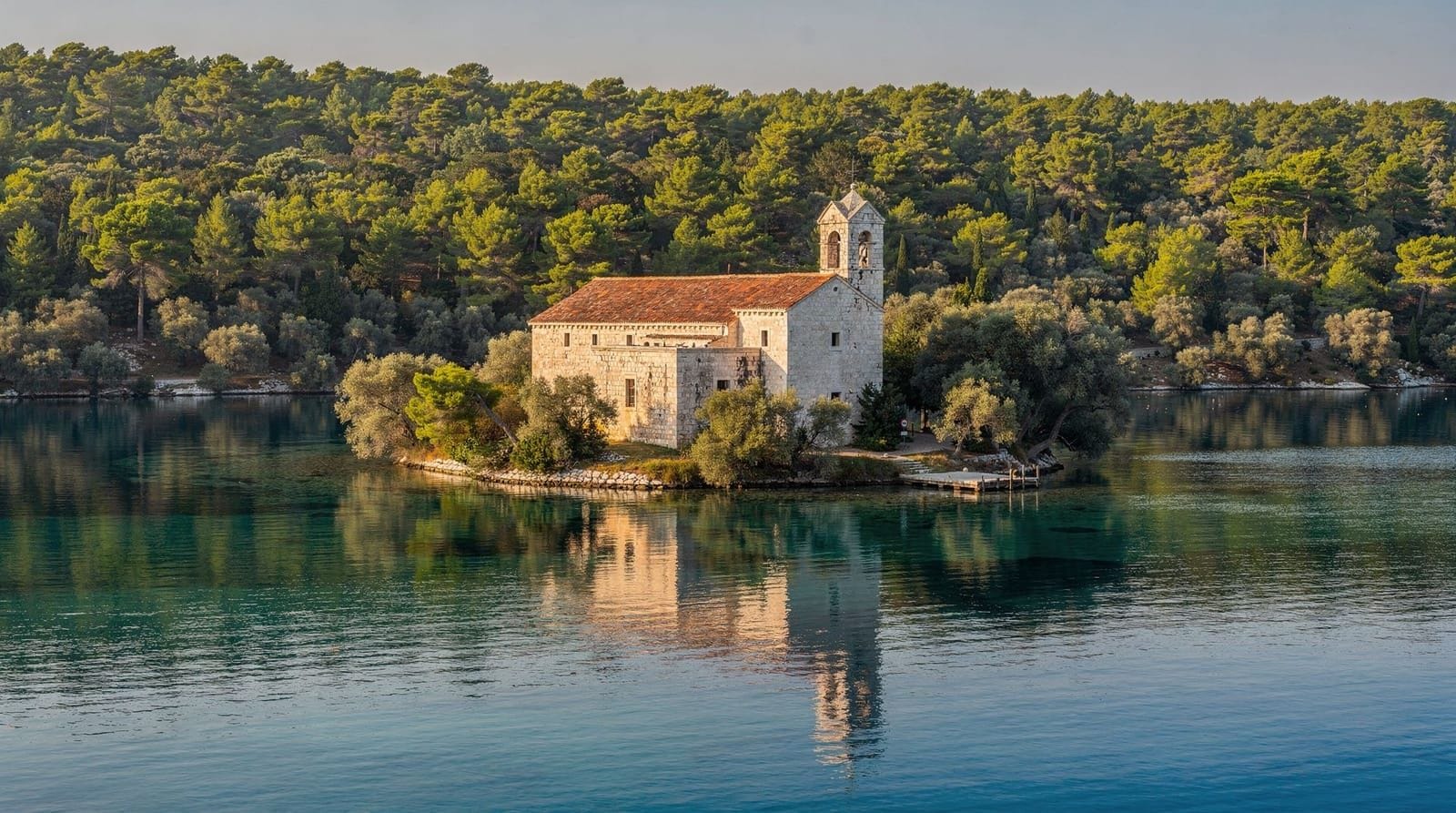
Sveta Marija Island (Benedictine Monastery): In the centre of Veliko Jezero sits a small island with a 12th-century Benedictine monastery, now a restaurant (with variable quality and reviews — mostly for the setting). The electric boat from the park’s shore connects to the island every 30–45 minutes.
Boardwalks and marked trails: The park maintains a network of well-signed trails and wooden boardwalks that hug the lake edges, crossing over channels and threading through sections of dense pine woodland. The boardwalk sections are especially valuable near the narrow channel connecting the two lakes, where the terrain is marshy and the views across the water surface are at their most atmospheric. In total the park offers around 12 kilometres of marked walking paths at various levels of difficulty, most of them flat and entirely accessible to anyone in reasonable health. Trail maps are handed out at the park entrance, and the waymarking is consistent enough that you are unlikely to lose your way.
Ecology of the park: Mljet’s forest is dominated by Aleppo pine and holm oak — both well-adapted to the thin limestone soils and dry Adriatic summers. The understorey is classic Mediterranean maquis: rosemary, myrtle, and arbutus, all in flower through spring. Birdlife is varied; kingfishers are regularly spotted along the lake margins, and several species of heron hunt the shallows at dawn.
The most talked-about wildlife story on the island, however, involves the small Indian mongoose. In 1910, mongooses were deliberately introduced to Mljet from India, via Egypt, to control the island’s population of nose-horned vipers, which were a genuine hazard to farmers and livestock. The programme worked, up to a point — viper numbers declined significantly in accessible areas. But the mongoose proved an efficient and indiscriminate predator. Ground-nesting birds, reptiles, small mammals, and seabird colonies all suffered. Today the mongoose is itself considered a conservation problem, and the national park authorities have been trialling trapping programmes to try to bring numbers under control. Visitors will almost certainly see mongooses scurrying across the lakeside paths, particularly in the early morning and at dusk. They are charming to watch but represent one of the more instructive cautionary tales in European ecological management.
Seasonal variation: May and early June offer the most peaceful experience of the park. School groups and day-trippers from Dubrovnik are present but not overwhelming, the forest is at its freshest, and the lake water is already warm enough for a determined swimmer. July and August see visitor numbers at their peak — the lakeside circuits can become busy around midday, particularly on weekends, and the electric boat queue for Sveta Marija can stretch to 30–40 minutes during the busiest weeks. September is by many measures the finest month: the lakes reach their highest temperature, the light is golden, and the crowds diminish rapidly after the last week of August. From October onwards the park becomes deeply quiet; the trails are yours alone, though some facilities close.
Cycling and Kayaking on Mljet
Mljet rewards active exploration, and two activities stand out above all others: cycling around the national park and kayaking along the coast.
Cycling in the national park is quite simply one of the finest easy bike rides in Croatia. The lakeside circuit — hugging the shores of Malo Jezero and Veliko Jezero — is essentially flat, with the surface varying between smooth asphalt and compacted gravel. The total loop around both lakes measures roughly 8–9 kilometres and takes 1.5 to 2.5 hours depending on how often you stop, which will be frequently. The scenery is consistently beautiful: pine-filtered light on the lake surface, glimpses of the monastery island, and the sound of almost nothing except birdsong and water. Families with children old enough to cycle independently can complete the circuit without difficulty.
If you want a longer or slightly more challenging ride, the outer perimeter of the national park follows the island’s western coast and climbs gently over low limestone ridges, giving elevated views out over the Adriatic. This route is hillier than the lakeside circuit and suits anyone who wants a proper half-day on the bike. Bicycle hire is available at two points: the national park entrance near Polače, and the harbour at Pomena. Standard bikes rent for around €5–€10 per hour or €25–€35 per day; electric bikes are available at some rental points for a modest premium.
Kayaking from Pomena and Polače is an excellent alternative for those who want to see the coast from sea level. Both Pomena and Polače have kayak hire operators active throughout the summer season — expect to pay roughly €15–€25 for a half-day single kayak. The sheltered waters between the island and the Pelješac peninsula are generally calm in the morning, making them ideal for less experienced paddlers. Guided kayak tours departing from Pomena typically run 3–4 hours and take in sections of the north coast and the entrance to the lake channel.
Sea kayaking along the south coast is in a different category entirely. Mljet’s south-facing coast — the side that faces the open sea rather than the Pelješac peninsula — is wild, largely inaccessible by road, and dramatically beautiful. The coastline is broken by sea caves, narrow inlets, and small deserted coves where the water runs translucent green over white limestone. Some of these coves can only be reached by boat or kayak; there are no paths, no access roads, and no other visitors. Guided sea kayaking expeditions along the south coast are available from Pomena and represent one of the most rewarding half-days you can spend on any Dalmatian island. The paddle itself is not technically demanding in calm conditions, but the distance and exposure to open water mean that independent paddlers should check conditions carefully and stay close to shore.
Polače
The village of Polače on the northwestern tip of the island is where the main catamaran from Dubrovnik docks. It sits within the remains of a substantial Roman palace (3rd–4th century AD) — walls and towers of the ancient fortified villa are clearly visible from the harbour. It’s an extraordinary juxtaposition: Roman ruins in a tiny Dalmatian fishing hamlet.
The palace was a large late-Roman fortified complex, probably built under the emperor Valentinian I or his successors, and served as an administrative and residential centre for the island’s Roman population. What survives today is fragmentary but genuinely impressive at close range. The northwest tower still stands to near its original height — several courses of Roman brick above the stone base — giving a clear sense of the structure’s original ambition. Portions of the perimeter wall are traceable along the village edge, and the characteristic Roman brickwork, with its distinctive courses of narrow fired brick set in thick lime mortar, is visible in several sections. A large cistern that once supplied the complex with fresh water can also be inspected; it is one of the better-preserved Roman cisterns in Dalmatia, testament to the engineering priorities of a settlement without a reliable natural spring.
Immediately adjacent to the palace remains stands the Byzantine church of St Mary, a small early Christian building datable to the 5th or 6th century on the basis of its architectural form and masonry technique. The church is modest in scale but historically significant — it represents the continuity of settlement on the site from the late Roman period through the early Byzantine era. The small semicircular apse at the east end is the most visually distinctive feature and is clearly visible from the waterfront path that skirts the ruins. The church is not always open to visitors, but its exterior and setting alone repay a short detour from the harbour.
Pomena
Pomena, on the island’s western tip, is the main tourist settlement — home to the island’s largest hotel (Hotel Odisej) and the most restaurant options. From Pomena you can rent bicycles, kayaks, and small boats to explore the coast.
Odysseus Cave (Špilja Odysseja)
On Mljet’s south coast, about 5 km from Pomena, is a sea cave traditionally associated with the Homeric legend that Odysseus was marooned here for seven years with the nymph Calypso. The cave is accessible by small boat (hire from Pomena) or on foot with a short swim at the end. The interior is atmospheric and partially flooded — a tunnel leads into a chamber with a natural skylight. Not as spectacular as the Blue Cave on Biševo but worth visiting if you have a boat.
Saplunara Beach
On the eastern end of Mljet, outside the national park boundary, Saplunara is one of the few genuinely sandy beaches on the entire Dalmatian coast. It is a wide, sheltered bay set within a protected botanical reserve, backed by old Aleppo pines whose shade extends down almost to the waterline. The combination of soft pale sand, shallow entry into warm water, and pine-scented shade is rare enough in Croatia that Saplunara would be famous if it were easier to reach — its relative remoteness is precisely what keeps it from being overrun.
Getting there requires commitment. From the main road, turn off at Babino Polje and follow signs southeast toward Saplunara. The final 3 kilometres of road are unpaved — a mix of compressed gravel and bare limestone — but entirely manageable in a standard hire car if you drive slowly and pick your line on the rougher sections. A low-clearance sports car would struggle; everything else is fine. The drive itself passes through quiet inland scenery very different from the national park end of the island.
The beach’s protected status as a botanical reserve means that development is strictly limited. There is no promenade, no beach bar serving cocktails, and no rows of sun loungers for hire. What you get instead is a basic campsite in the pine forest immediately behind the beach — simple facilities, no frills, and an atmosphere closer to wild camping than resort accommodation. Day visitors park at the edge of the pine forest and carry their belongings to the shore on foot. The water is exceptionally shallow for the first 20–30 metres, making Saplunara particularly well-suited to families with young children who want safe, warm swimming without the anxiety of steep drop-offs. By late July and August the sea temperature here regularly exceeds 27°C.
Where to stay on Mljet
Mljet has very limited accommodation compared to most Dalmatian islands — this is intentional, given the island’s protected status.
Pomena: Hotel Odisej is the island’s main hotel (3-star, good position), though it books out months ahead in summer. Private apartments in Pomena village from €50–€110/night.
Polače: Several private apartments and guesthouses, well-positioned for the national park and catamaran connections to Dubrovnik. Book ahead.
Babino Polje (central village): Less convenient for tourists but gives a much more local experience. Good base if you have a car.
Saplunara (eastern end): A handful of apartments and a campsite near the sandy beach. Very peaceful.
Where to eat on Mljet
Dining options on Mljet are limited compared to the more touristed Dalmatian islands. This is not the island for a food-focused trip — it’s the island for peace and nature. The upside of this simplicity is that what does appear on the plate is almost invariably caught that morning by someone who lives within walking distance of the kitchen. Fish on Mljet is reliably fresh in a way that cannot always be guaranteed at larger resort restaurants that depend on supply chains from Split or Dubrovnik. One practical note that applies across all the island’s restaurants: in July and August, book evening meals in advance whenever possible. Capacity is genuinely limited — a busy konoba on Mljet may have only eight or ten tables — and turning up unannounced at 8 pm in peak season risks a long wait or an outright refusal.
Restaurant Melita (Sveta Marija Island): The Benedictine island monastery restaurant serves simple Dalmatian food. More notable for the extraordinary setting than for culinary ambition, but the fish is fresh.
Stermasi (Pomena): A reliable family-run restaurant with grilled fish and local wine. The fish is sourced locally and the kitchen is consistent even on busy evenings. Portions are generous and the wine list, while short, includes decent Plavac Mali from the nearby Pelješac peninsula. It fills up quickly in peak season, so either arrive early or reserve ahead.
Konoba Ankora (Polače): Waterfront, fresh fish, honest portions, and good value for a national-park-adjacent location. Ankora benefits from its position at the catamaran dock — many visitors eat here on arrival or before the evening boat — and the kitchen keeps pace with the demand better than you might expect. The grilled whole fish, priced by weight, is the dish to order; the seafood pasta is also well-regarded by regulars. Tables on the terrace overlooking the harbour are the ones to request.
Konoba Gušti (Babino Polje): An inland village konoba serving lamb peka and local wine. Authentic and worth seeking out if you have transport.
Best time to visit Mljet
May–June is outstanding. The national park is brilliant green, the lakes are warm enough for swimming from mid-June, and almost no one else is there. Polače and Pomena have functioning restaurants and bicycle hire. Accommodation is available and reasonably priced.
September is the finest swimming month — the lakes reach their maximum warmth (24–25°C) and the island is quieter than July–August while remaining fully open.
July–August: Busier than shoulder season but still remarkably quiet compared to Hvar or Dubrovnik. The main issue is accommodation — book 3–4 months ahead for peak weeks.
October–April: The national park entrance is still technically open but most tourism infrastructure closes. The island is hauntingly quiet. Ferry connections thin significantly after October.
Mljet vs Korčula and Hvar
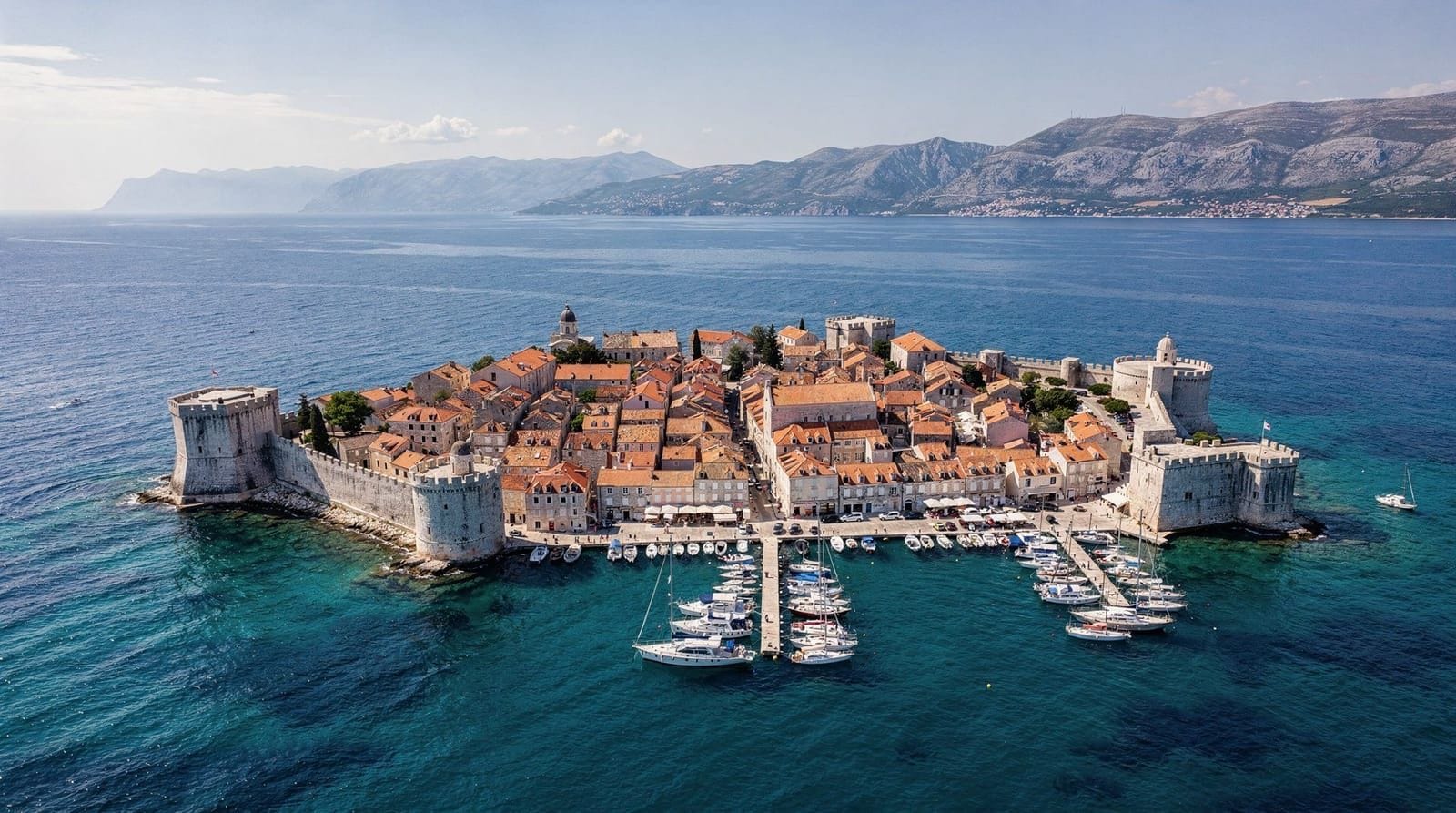
Travellers choosing among the southern Dalmatian islands are usually weighing Mljet against Korčula and Hvar, and the three could hardly be more different. Hvar has the nightlife, the boutique hotels, and the busiest summer scene of any Croatian island. Korčula offers a genuine walled old town, wine country, and a more balanced mix of culture and beach. Mljet has neither nightlife nor a significant old town — what it offers instead is the national park lakes, forest, and a level of quiet the other two can no longer provide in peak season. Combining all three on a single catamaran route (Split–Hvar–Korčula–Mljet–Dubrovnik) is a genuinely excellent way to see the range of what the Dalmatian islands offer; the island hopping guide covers how to sequence a route like this, and the best Croatian islands guide ranks Mljet against the full list.
Frequently asked questions
Is Mljet worth visiting as a day trip from Dubrovnik, or does it need an overnight stay? A day trip works — the 2-hour catamaran leaves 4–5 hours on the island, enough for the lakeside cycling circuit and a swim — but it is a rushed way to experience what is fundamentally a slow-down destination. An overnight stay lets you see the park at dawn or dusk without the day-trip crowds, which is when Mljet is at its best. Check current sailings on the Croatia ferries guide before deciding.
Does Mljet have sandy beaches like the rest of the Dalmatian coast? Mostly no — the coastline is largely rock and pebble, like most of Dalmatia. The exception is Saplunara at the island’s eastern end, a genuinely sandy, shallow-entry bay backed by pine forest, though it requires a long drive from the national park end of the island and the final stretch is unpaved.
Top experiences
Bookable activities with verified prices and instant confirmation on GetYourGuide.
Top-rated experiences in Mljet travel guide
Best-rated activities across GetYourGuide and Viator.

Blue Cave & Vis Island speedboat tour from Hvar
- Viator

Rafting on Cetina River Departure from Split or Blato na Cetini village
- Viator

Blue Cave and Pakleni Islands group Tour from Hvar
- Viator

Boat Tour at Delfina Hvar
- Viator

Korcula Buggy (Official) Safari Tour - Local Food & Wine Tasting
- Viator

Blue cave group tour with swimming and snorkelling from Hvar
- Viator