Island Hopping in Croatia — The Complete Guide
Split: Blue cave and 5 islands tour
How do you island-hop in Croatia?
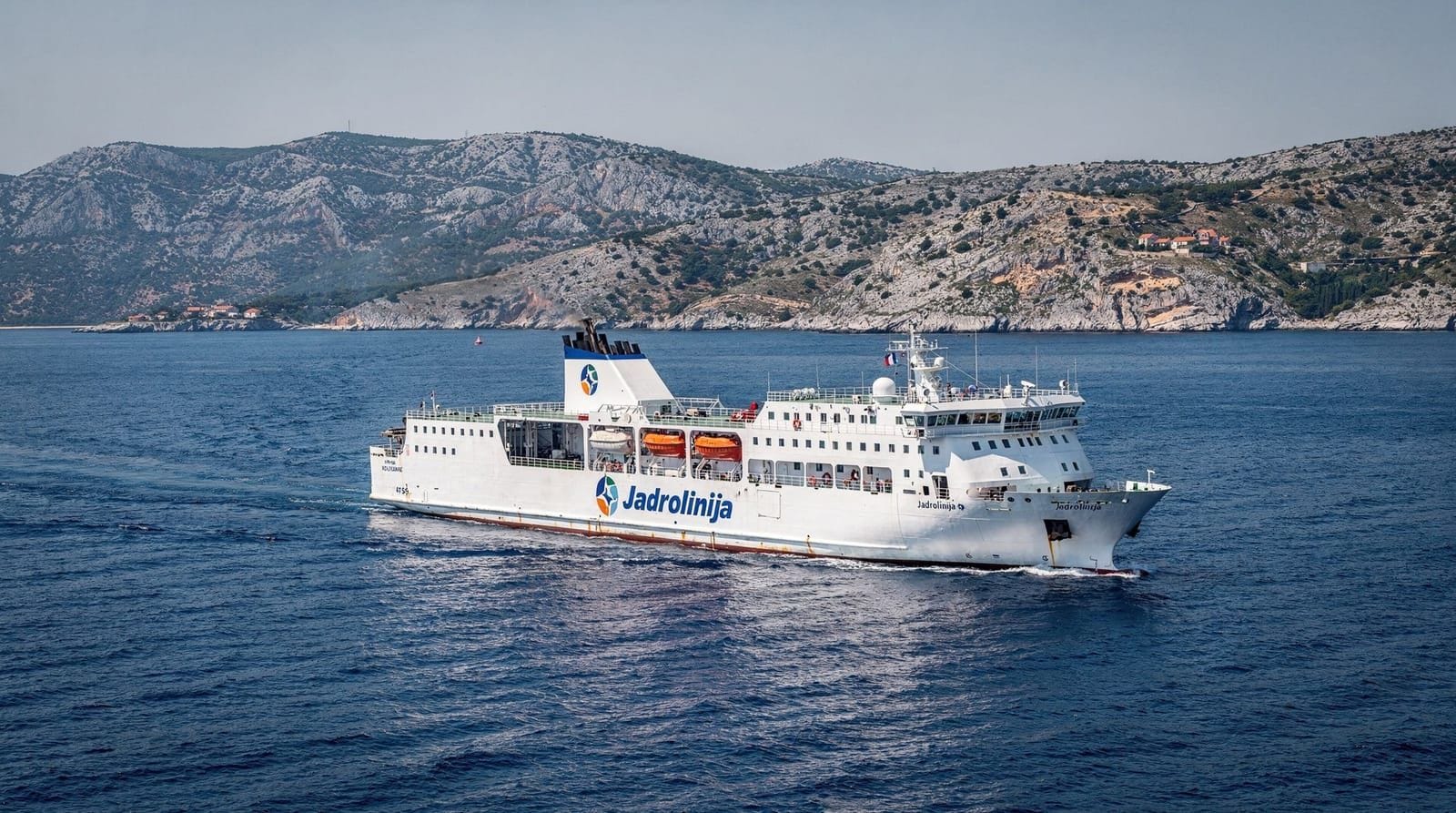
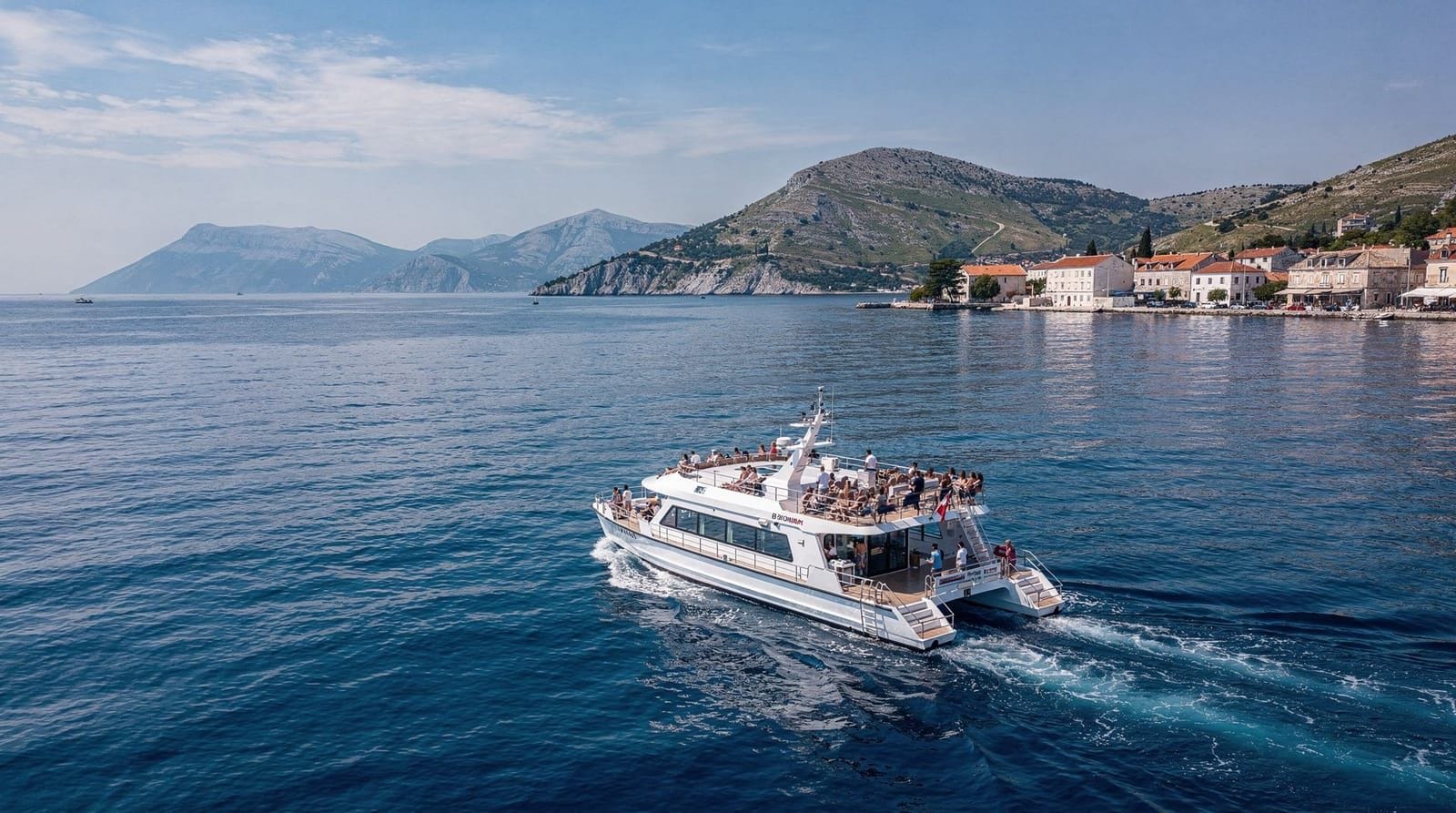
Most island hopping uses Jadrolinija ferries and catamarans from Split or Dubrovnik. The classic loop from Split covers Brač, Hvar, Korčula and Vis. The southern route from Dubrovnik reaches Korčula, Mljet and the Elaphiti Islands. Foot passengers can move freely; those with cars book car-ferry spaces ahead in summer.
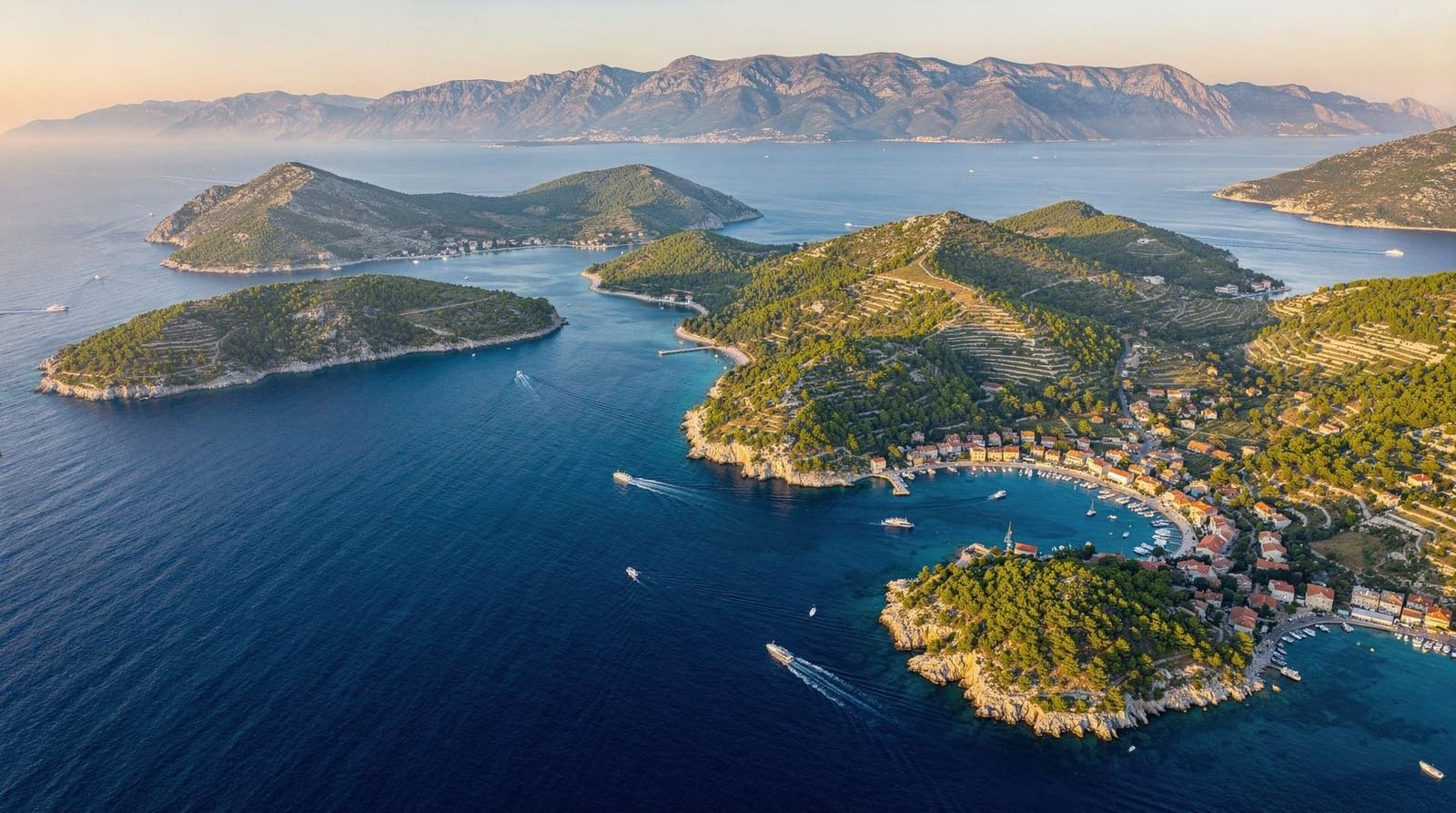
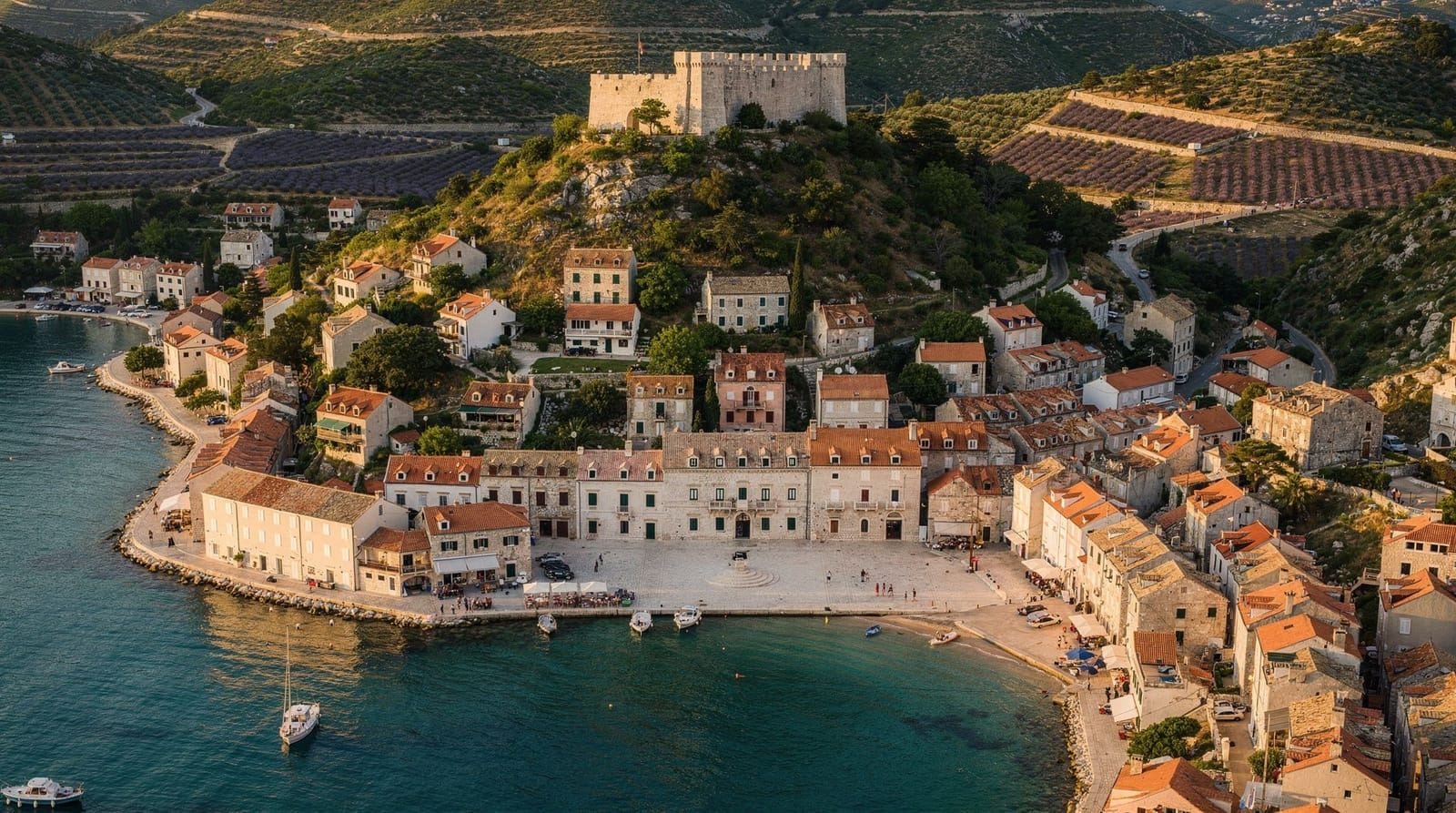
Croatia’s 1,000-plus islands are the country’s defining attraction — and the ferry network that connects them is one of the most enjoyable in Europe. Island hopping here means swapping one walled town for another, trading the nightlife of Hvar Town for the fig trees and Roman mosaics of Mljet, moving at the speed of the sea rather than the motorway. This guide shows you how to do it properly.
| Best base | Split (central islands) or Dubrovnik (southern islands) |
| Time needed | 7 days for 2–3 islands properly |
| Getting there | Jadrolinija/Krilo ferries and catamarans |
| Cost | around €60–€100/day budget, €140–€220/day mid-range |
| Best time | Late May–June or September |
Where to base your island-hopping journey
From Split (the best starting point)
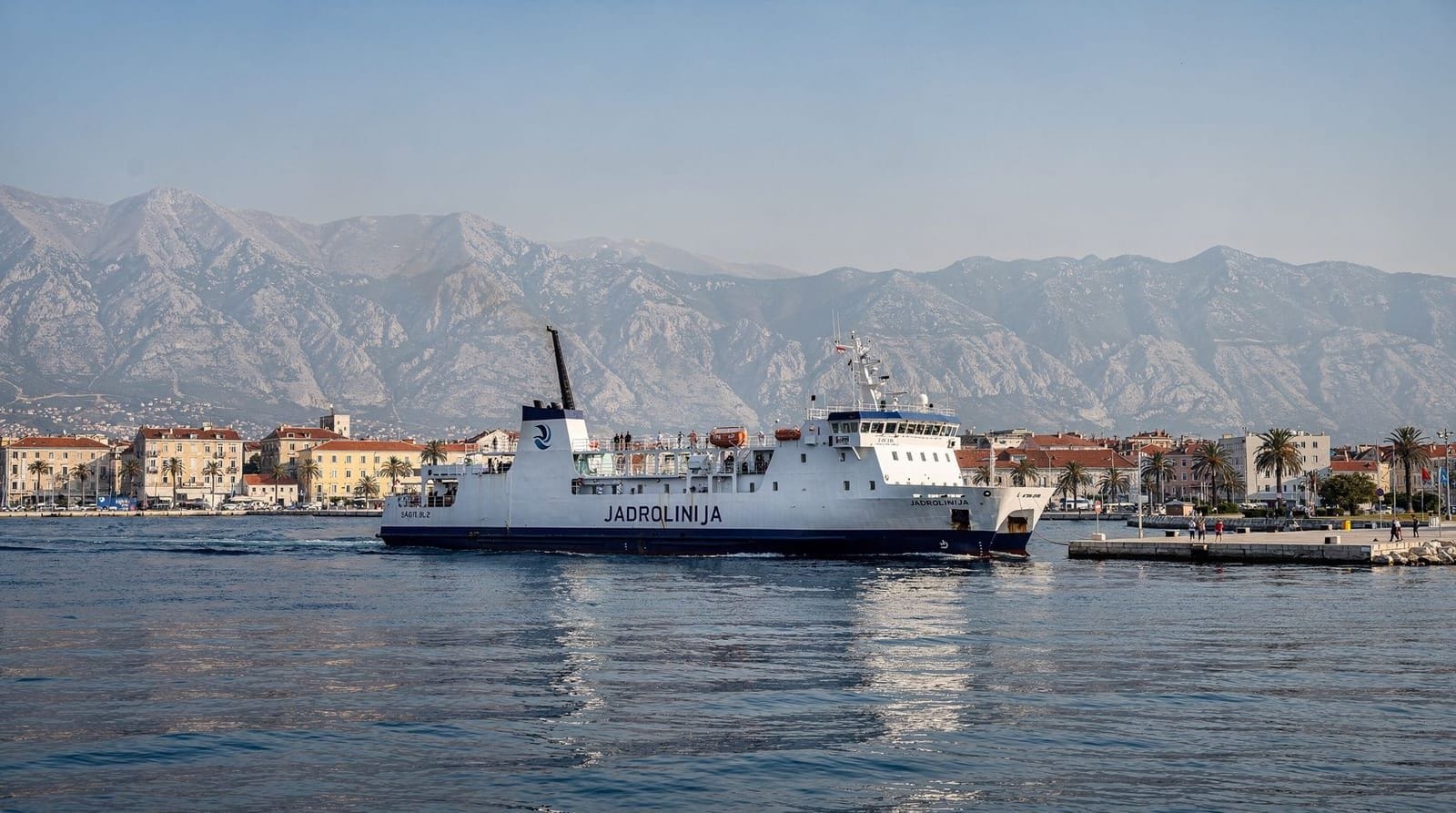
Split is Croatia’s ferry hub — more routes leave from here than anywhere else. The central Dalmatian islands (Hvar, Brač, Vis, Korčula, Šolta) all have direct connections. The ferry terminal is a 5-minute walk from the old town, making Split the most convenient jumping-off point for island hopping.
From Split you can also begin the daytime coastal catamaran south toward Dubrovnik via Hvar and Korčula — one of the most scenic journeys in the Mediterranean.
From Dubrovnik
Dubrovnik opens the southern islands: the Elaphiti Islands (Koločep, Lopud, Šipan), Mljet, and Korčula. The Elaphiti Islands are just 30–60 minutes by ferry and make perfect day trips or overnight escapes from the crowds of the old town.
One-way journeys
A very popular approach: fly into Split, island-hop south — Hvar → Korčula → Mljet → Dubrovnik — and fly home from Dubrovnik. Or the reverse. This lets you cover more ground without retracing your steps. The daytime catamaran from Split to Dubrovnik (via Hvar, Korčula, Mljet) takes around 5–6 hours and is dramatically scenic.
Recommended island-hopping itineraries
The Classic Dalmatian Week (from Split)
Days 1–2: Split — Diocletian’s Palace, market, Riva waterfront. Days 3–4: Hvar — Take the car ferry to Stari Grad or the catamaran to Hvar Town. Explore the Venetian harbour, fortress views, Pakleni Islands beaches. Days 5–6: Vis or Korčula — Vis for untouched charm and snorkelling; Korčula for the walled old town and wine routes. Day 7: Return Split — or continue south to Dubrovnik.
For a detailed breakdown, see the Dalmatian island-hopping 7-day itinerary.
The Brač Detour
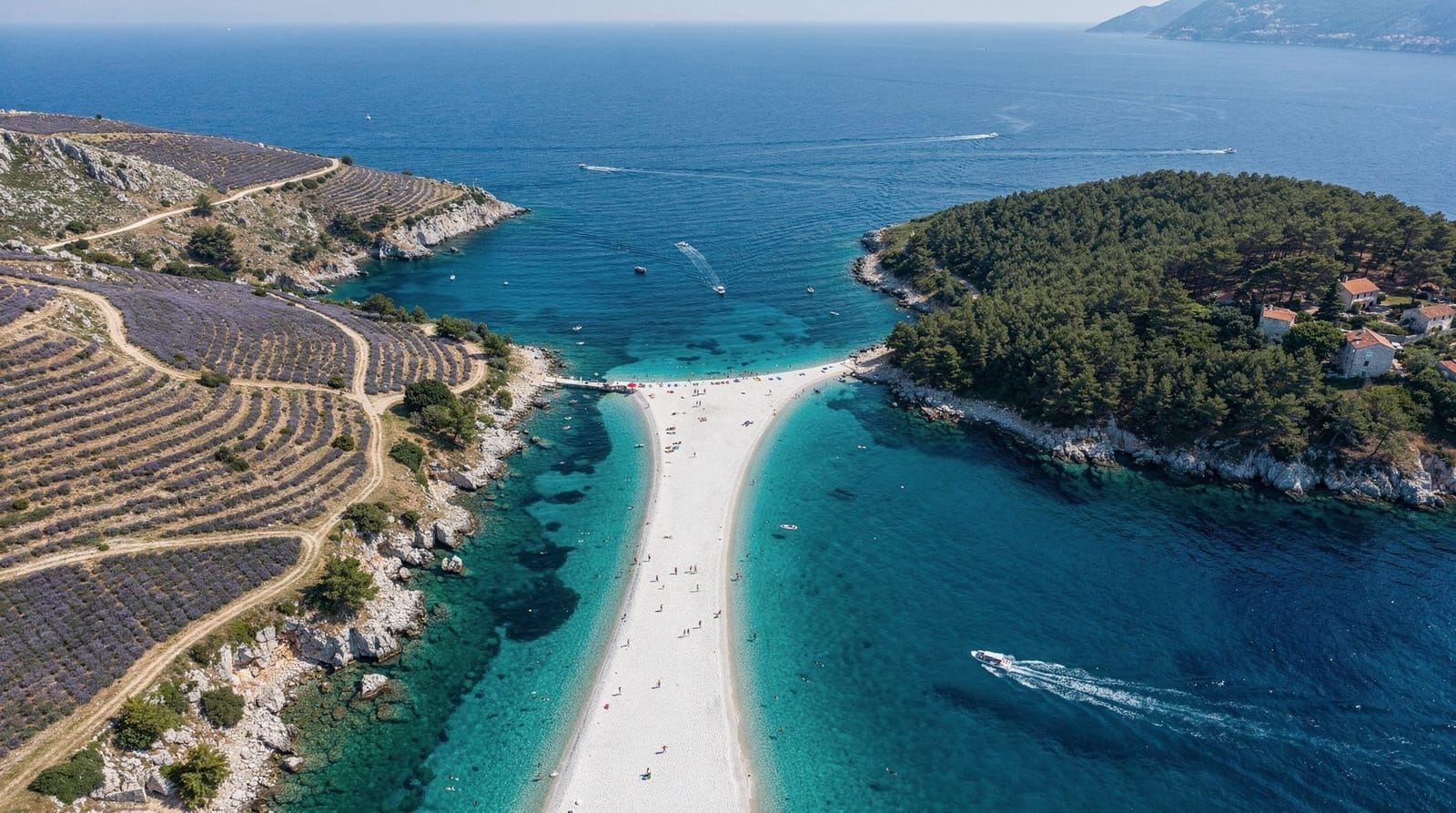
Brač is closest to Split — 50 minutes by car ferry. Its claim to fame is Zlatni Rat beach near Bol, the famous pebble spit that changes shape with the current. Brač makes a logical overnight stop before continuing to Hvar (there’s a catamaran connection Brač–Hvar in summer).
The Southern Route (from Dubrovnik)
Day 1–2: Korčula — Historic walled town, wine, Marco Polo legend. Day 3–4: Mljet — The “green island” — national park, saltwater lakes, Benedictine monastery. Bring walking shoes. Days 5–6: Elaphiti Islands — Day trips from Dubrovnik to Lopud, Šipan or Koločep.
How to move between islands
The core tool is the Jadrolinija ferry/catamaran timetable. Download or bookmark the relevant seasonal PDF. Key points:
- Not all islands have direct links to each other — you often go back to the mainland (Split) before jumping to a different island group.
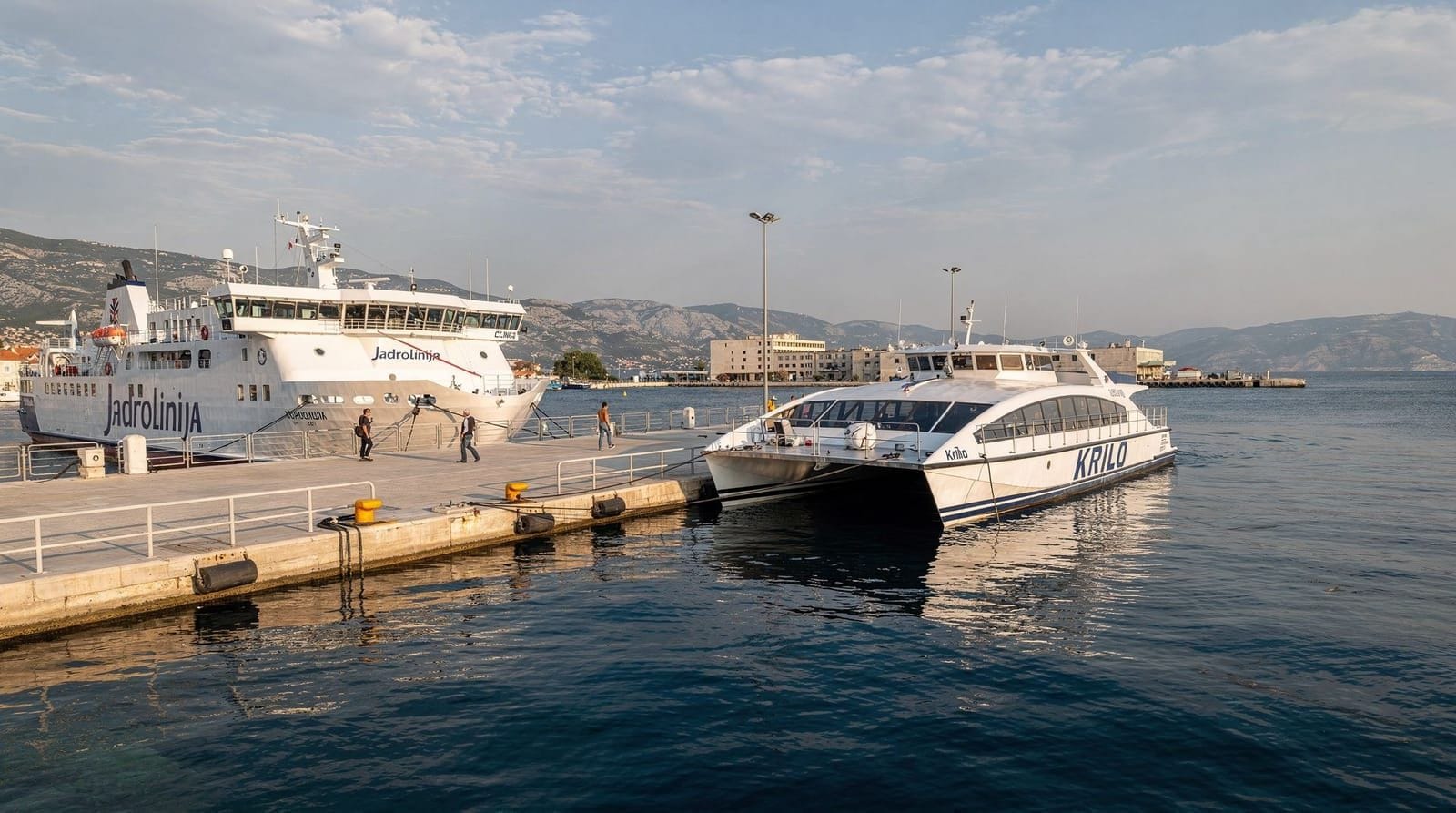
- The Hvar–Korčula crossing exists by catamaran (Jadrolinija and Krilo) but frequency is limited; check timetables carefully.
- Vis is a dead end — there’s no ferry onward to other islands without returning to Split.
- The Split–Dubrovnik coastal catamaran is the one service that threads through multiple islands in sequence.
For a full explanation of operators and booking, see our Croatia ferries guide. If you’re choosing between the two main operators for a specific crossing, the Jadrolinija vs Krilo comparison covers speed, price and comfort differences that matter more on longer routes like Split–Korčula than on the short Brač hop.
Accommodation while island hopping
Island hopping means regular check-ins and check-outs. This sounds manageable but in peak summer it becomes logistically demanding when ferries are crowded and some arrivals are mid-afternoon (too early for check-in) or your ferry is morning-early (requiring pre-dawn luggage retrieval).
Practical accommodation strategies:
Apartments over hotels: Most Croatian islands have a strong apartment rental culture — locals rent out rooms and entire apartments, often without reception desks or fixed check-in times. Agree a key exchange method in advance; many owners communicate clearly via WhatsApp and leave keys with a neighbour.
Hvar Town: The most expensive island accommodation in Croatia. Prices in July–August are extraordinary for what you get — a modest en-suite room can cost €150–€250 per night. Book months ahead or base yourself in Jelsa or Stari Grad for dramatically lower prices and local character.
Korčula and Vis: More reasonable. Korčula Town has good guesthouses within the walled old town. Vis Town and Komiža both have apartments and guesthouses; book a month ahead for peak summer.
Mljet: Very limited accommodation — a handful of guesthouses and one hotel at Polače. Book well ahead if including Mljet in your itinerary.
Eating while island hopping
Food on Croatian islands is one of the best arguments for the trip. Each island has its culinary specialties:
Hvar: Fresh grilled fish, lamb slow-roasted under the peka (a bell-shaped lid covered in embers), local lavender honey, rosé wines. The restaurants on the Pakleni Islands (reached by water taxi from Hvar Town) are particularly good.
Brač: Vitalac (grilled lamb offal, a local delicacy) and the excellent local olive oil from the Bol area. The town of Bol has good seafood restaurants facing the sea.
Vis: The freshest, least-pretentious fish restaurants in Dalmatia. Komiža on the western side specialises in pižolada (a tuna sauce) and traditional boats. Local Vugava white wine — only grown here.
Korčula: Šporki makaruli (a rich meat and pasta dish), black risotto (crni rižot) made with cuttlefish ink, and the island’s celebrated Pošip white wine.
Mljet: The saltwater lake prawn (šaran / rak from the lakes), quiet konobas, few tourist crowds. The most “away from it all” eating experience on any Croatian island.
Water taxis and local boat connections
Beyond the scheduled ferry network, a network of private and semi-scheduled water taxis connects beaches, coves and adjacent islands. These are:
- Hvar Town ↔ Pakleni Islands: Regular water taxis from the harbour, €5–€8 per person, summer only. Essential for reaching Pakleni’s famous beach bays (Palmižana, Stipanska, Vinogradišće).
- Korčula ↔ Orebić (Pelješac): A 15-minute car ferry crossing — use this if you want to explore the Pelješac Peninsula wine villages (Dingač, Postup) as a day trip from Korčula.
- Dubrovnik ↔ Lokrum: Short water taxi to the island nature reserve, 15 minutes from the old port. Day-visitor only — no overnight accommodation allowed.
- Hvar ↔ Brač (Milna–Hvar): A seasonal link runs in summer — useful for island-hopping between the two without returning to Split.
Sustainability and responsible island hopping
Croatia’s islands are under growing pressure from tourism. Hvar Town’s nightlife reputation brings tens of thousands of visitors who leave in the morning — creating a concentration of activity that strains water supply, waste systems and the character of the town.
Travelling responsibly in the islands:
- Stay at least one night rather than using them as day-trip stops — overnight visitors contribute more to the local economy.
- Eat at local konobas rather than tourist restaurants. Ask your accommodation host for recommendations.
- Hire a local boat or fisherman rather than large tour operators where possible.
- Carry a reusable water bag. Croatian island tap water is generally safe; plastic bottle waste is a growing problem on island beaches.
- Travel in shoulder season — May–June or September — when islands breathe more easily and your money is more needed.
Combining islands with the mainland
A common mistake in first-time Croatian itineraries is to treat the islands as a separate module — “island week, then mainland week.” In reality, the best itineraries weave between coast and island fluidly, using the ferry network as it was designed: to connect rather than separate.
Consider:
- Basing yourself in Split and making 1-night island trips to Brač, Hvar or Vis rather than committing to a full week offshore.
- Using Korčula as a base for day trips to the Pelješac wine peninsula and Mljet, without moving your luggage repeatedly.
- Ending in Dubrovnik after a southward island-hopping arc from Split, combining the coast catamaran with nights on Hvar and Korčula.
The Dalmatian island-hopping 7-day itinerary shows one coherent approach; the Croatia 10-day itinerary shows how to blend islands and mainland.
Budget planning for island hopping
The cost of island hopping in Croatia varies enormously depending on season and accommodation choices. Here is a realistic framework:
| Item | Budget traveller | Mid-range |
|---|---|---|
| Accommodation (per night) | €30–€50 (hostel/shared apartment) | €70–€120 (private apartment) |
| Ferry (per crossing, foot passenger) | €6–€14 | Same |
| Eating (per day) | €20–€35 (konoba lunches, market) | €40–€70 (sit-down dinners) |
| Activities | €0–€20 (beaches, walking) | €30–€60 (tours, boat trips, wine tasting) |
| Total per day | €60–€100 | €140–€220 |
Peak season (July–August) adds 30–50% to accommodation. Booking 2–3 months ahead in peak season reduces prices and guarantees choice.
For a full cost breakdown across the whole trip, see our Croatia trip cost guide.
Island-hopping with a car
It’s doable but adds logistical weight. You need to book car-ferry spaces well ahead in summer, arrive early at the port, and factor in the cost (€30–€50 per crossing per car). The freedom to drive around each island is real — particularly on large islands like Hvar and Korčula where the roads to remote beaches and inland villages are the point. But many island-hoppers find a car more burden than benefit; the main towns are small and walkable, and boats serve the beaches.
If you want the flexibility of a car on the mainland (for Plitvice Lakes, Krka, or the Dalmatian hinterland) but freedom on the islands, consider parking in Split for your island-hopping days and reclaiming the car for inland excursions. Many rental agencies in Split allow this without penalty, though it’s worth confirming parking arrangements and any mileage terms before you book, since long-term parking near the ferry terminal fills up in peak season.
What to pack for island hopping
Pack light. Lugging a large suitcase up stone stairways in Hvar Town or across the gangway of a catamaran is miserable. A backpack or soft bag you can carry on your shoulders is the ideal. Essentials: reef sandals or water shoes (pebble beaches and sea urchins are real), sunscreen (the Adriatic sun on white limestone is fierce), a reusable water bottle, and a light layer for breezy evenings on the water. Roll rather than fold clothes to save space, and keep valuables and travel documents in a single dry-bag pouch — spray from a fast catamaran crossing is more common than most first-timers expect.
Day tours as a taster
If you want to sample island hopping without the logistics, several boat tours from Split visit three to five islands in a single day — typically Hvar, Vis (Blue Cave), Brač and smaller stops. These are a legitimate way to see the highlights without carrying luggage between accommodations. The Blue Cave and 5 Islands tour from Split is one of the most popular, visiting the famous Blue Cave on Biševo and stopping at Hvar Town among other islands. For a private version, this private Hvar and Blue Cave boat tour gives more flexibility with stops and timing.
When to go
Late May–June and September are the sweet spots for island hopping: full ferry schedules, manageable crowds, lower accommodation prices than July–August, and sea temperatures comfortable for swimming (22–24°C in June, still 23–24°C in September). July–August sees maximum crowds and prices but also maximum ferries and open restaurants.
Choosing your route by travel style
Not every island-hopper wants the same trip, and the route should follow the traveller rather than the other way round — the mistake most first-time planners make is copying someone else’s itinerary wholesale rather than adapting the framework above to what they actually want out of the week. If nightlife and sailing matter most, anchor the trip on Hvar and treat Brač as a day-trip detour — the Hvar vs Brač comparison helps decide how much time each deserves. If culture and wine matter most, weight the itinerary toward Korčula and the Pelješac wine villages, with Hvar reduced to a single overnight. If you want the quietest possible islands, Vis and Mljet reward the extra ferry time with a version of Dalmatia that has largely disappeared from Hvar and Korčula in peak season. If you’re travelling with kids, Brač’s calm, shallow water and short ferry crossing make it the easiest island to add without logistical stress — see kid-friendly tours in Croatia for age-appropriate options once you’re there. For a side-by-side on the three most-visited central Dalmatian islands, the Hvar vs Brač vs Korčula guide breaks the decision down further, and the standalone island-hopping itinerary gives a day-by-day schedule rather than a route overview.
Frequently asked questions about Island Hopping in Croatia
How many islands can I visit in a week?
Two to three islands comfortably in seven days — enough time to properly explore each rather than collect stamps. A common week: Split base (2 nights), Hvar (2 nights), Korčula or Vis (2 nights), return Split. Squeezing in Brač or Mljet is possible but feels rushed.Is island hopping better from Split or Dubrovnik?
Split gives access to more islands (Hvar, Brač, Vis, Šolta, Korčula) and is the better base for the central Dalmatian archipelago. Dubrovnik is the base for the southern islands (Korčula, Mljet, Elaphiti). Many travellers do Split → islands → Dubrovnik in one direction by catamaran.Do I need to pre-book ferries for island hopping?
Foot passengers rarely need to book more than a day ahead except on the busiest summer catamarans. If you're taking a car, book car spaces at least a week ahead in July–August.Which Croatian island is the most fun for nightlife?
Hvar Town is the undisputed answer — Croatia's most vibrant party scene, with beach clubs and bars that run into the early hours. Korčula and Vis are quieter, more characterful alternatives.Can I island-hop without a car?
Yes, and many travellers prefer it. Ferries and catamarans connect all the main islands. On islands like Hvar, Korčula and Vis, the main towns are walkable and water taxis reach nearby beaches. A car is useful only for exploring remote island interiors.What is the cheapest way to island-hop in Croatia?
Take Jadrolinija car ferries as a foot passenger (cheapest per route), stay in apartments rather than hotels, and travel in May, June or September rather than July–August when accommodation prices spike 40–60%.Are there organised island-hopping tours?
Yes — day tours from Split visit multiple islands in one go. Week-long sailing and catamaran cruises are also popular, typically running Saturday to Saturday from Split.
Top experiences
Bookable activities with verified prices and instant confirmation on GetYourGuide.
Top experiences
Best-rated activities across GetYourGuide and Viator.

Mostar and Herzegovina Tour with Kravica Waterfall from Split & Trogir
- Viator

Mostar & Kravice waterfalls full-day guided tour from Split
- Viator

Split airport to Split Private transfer to 8 pax (Door to Door any location)
- Viator

Zagreb to Split Group Transfer with Plitvice Lakes guided Tour
- Viator

Zadar: Zrmanja River Kayaking, with optional transfer from Zadar
- Viator

Mostar and Kravica Waterfall Discovery Day Trip from Split or Trogir
- Viator