Mljet National Park: the green island park near Dubrovnik
Split: Krka National Park tour
Is Mljet National Park worth visiting from Dubrovnik?
Yes — Mljet is one of Croatia's most serene and underrated island parks, reachable from Dubrovnik by catamaran in about 1.5 hours. The saltwater lakes, the pine forest setting, the monastery island and the absence of crowds make it a genuine counterpoint to Dubrovnik's intensity. A full day is ideal; an overnight stay reveals the island's quieter rhythms.
| Where | Western third of Mljet island, near Dubrovnik |
| Cost | Around EUR 10-20/person entry (high season) |
| Getting there | Catamaran ~1.5-2hrs from Dubrovnik |
| Time needed | Full day; overnight recommended |
| Best time | June or September for fewer crowds |
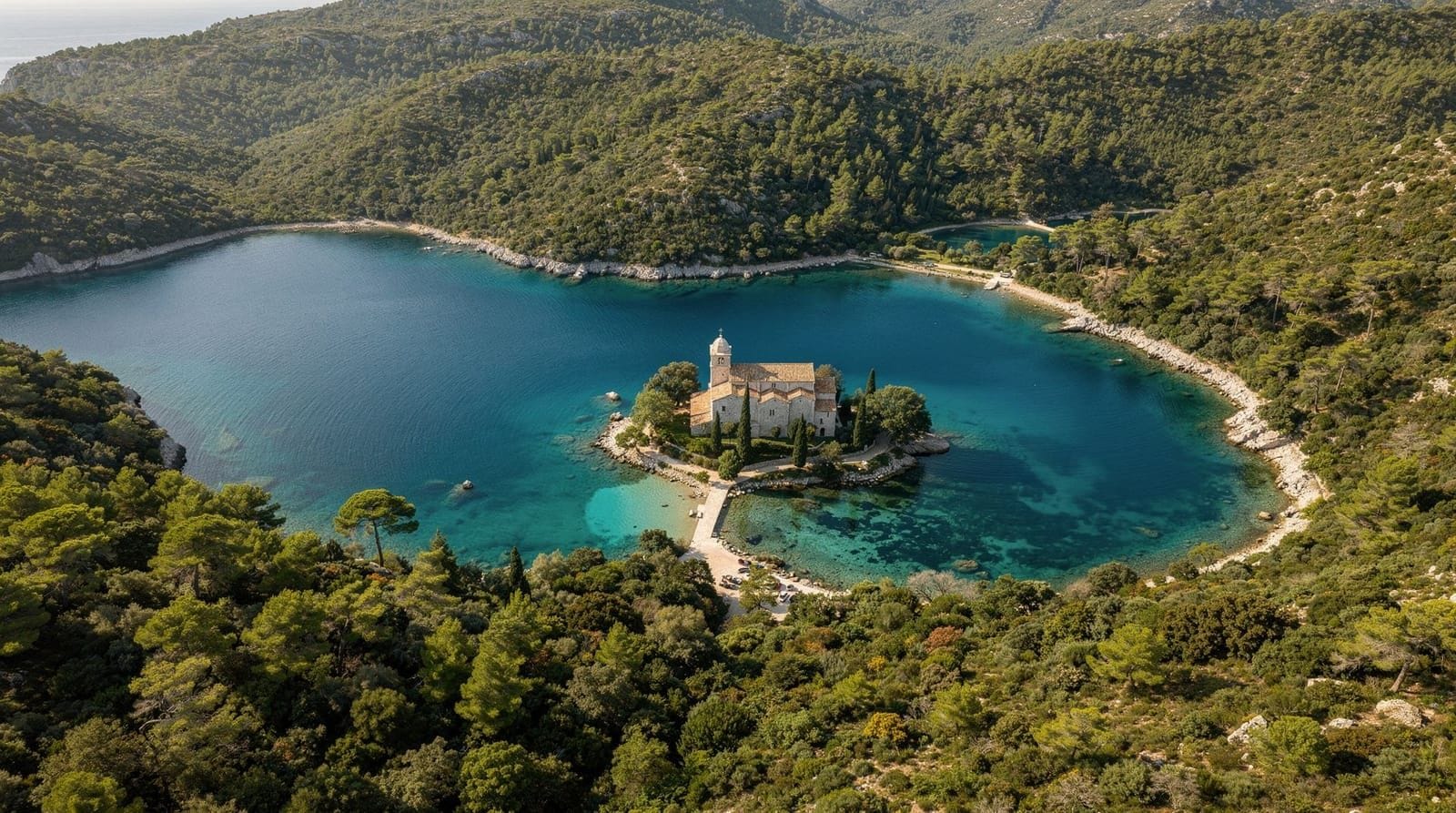
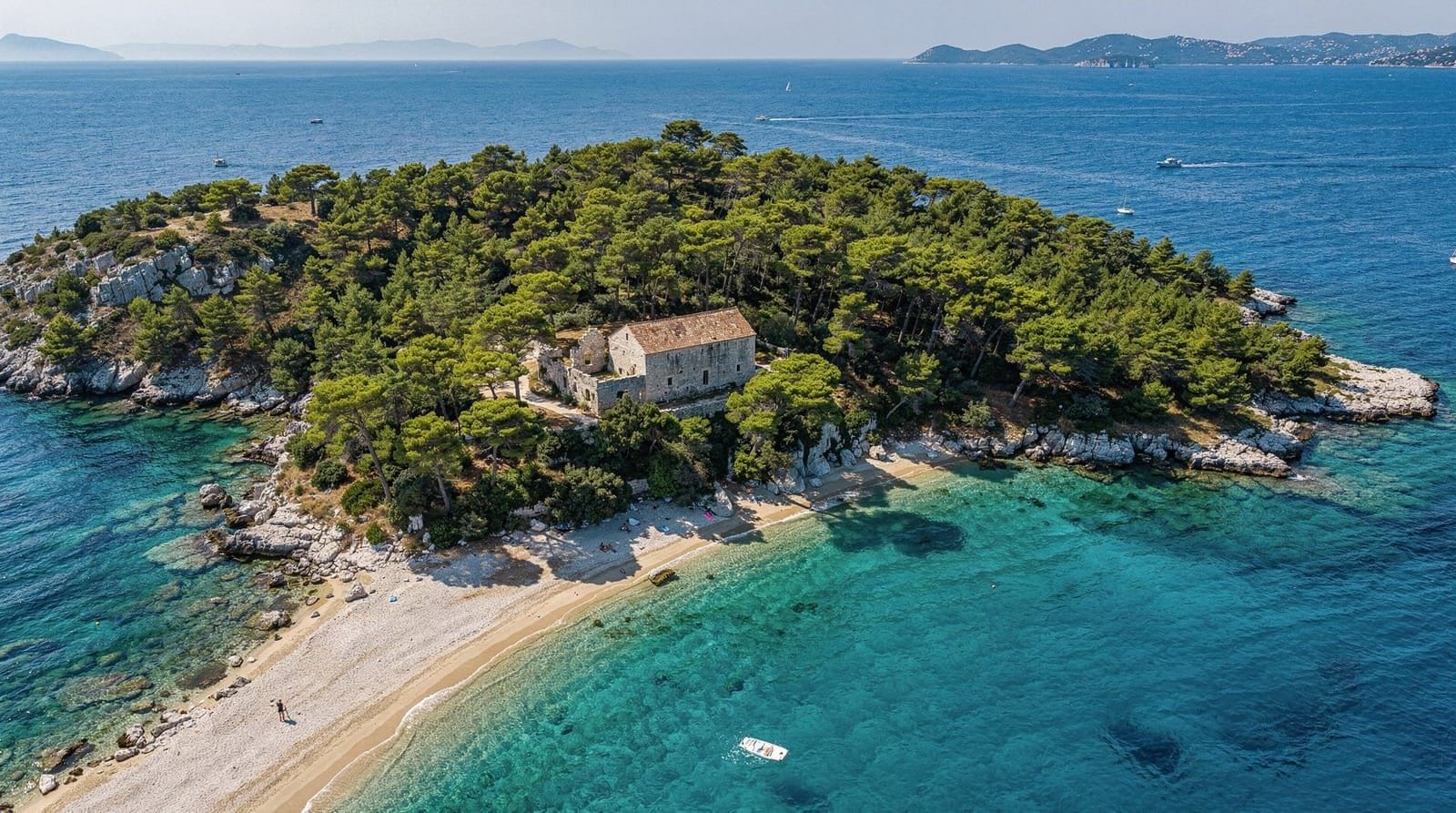
Mljet is one of Croatia’s longest islands and its greenest — pine and holm oak forests cover the western third of the island in dense Mediterranean canopy, quite unlike the bare limestone of most Dalmatian islands. Within that western section sits Mljet National Park, established in 1960 and protecting two interconnected saltwater lakes, a small 12th-century monastery island and a landscape of extraordinary tranquillity.
If Dubrovnik is Croatia’s showpiece of civilisation — architecture, history, crowds and intensity — Mljet is the opposite end of that spectrum. Visitors who spend a night on the island frequently describe the contrast as restorative. Those who come as day-trippers typically wish they had stayed longer.
The two saltwater lakes
Malo jezero (Small Lake, about 1.5 km² surface area) and Veliko jezero (Large Lake, about 3.5 km²) are the park’s defining feature. Despite being set inland, both are saltwater — connected to the open Adriatic by a narrow channel called Soline that allows tidal exchange. The connection creates a slow tidal rhythm that keeps the lakes clean and oxygenated.
The ecological result is lakes that look like freshwater but behave like marine environments — clear, mineral-rich, supporting the same species as the surrounding sea. Swimming in them is swimming in the Mediterranean in miniature: warm, protected from waves and wind, and visually stunning.
The channel between the lakes (‘the flow’ or malo morje) is a local institution. At certain tidal states, the current through the channel is strong enough to carry a swimmer — people wade in at one end of the short connection and float through, then walk back and repeat. It is one of Dalmatia’s more unusual and enjoyable small pleasures.
Water temperatures in the lakes reach 27–28°C in July–August, often warmer than the open sea.
St. Mary’s Island monastery
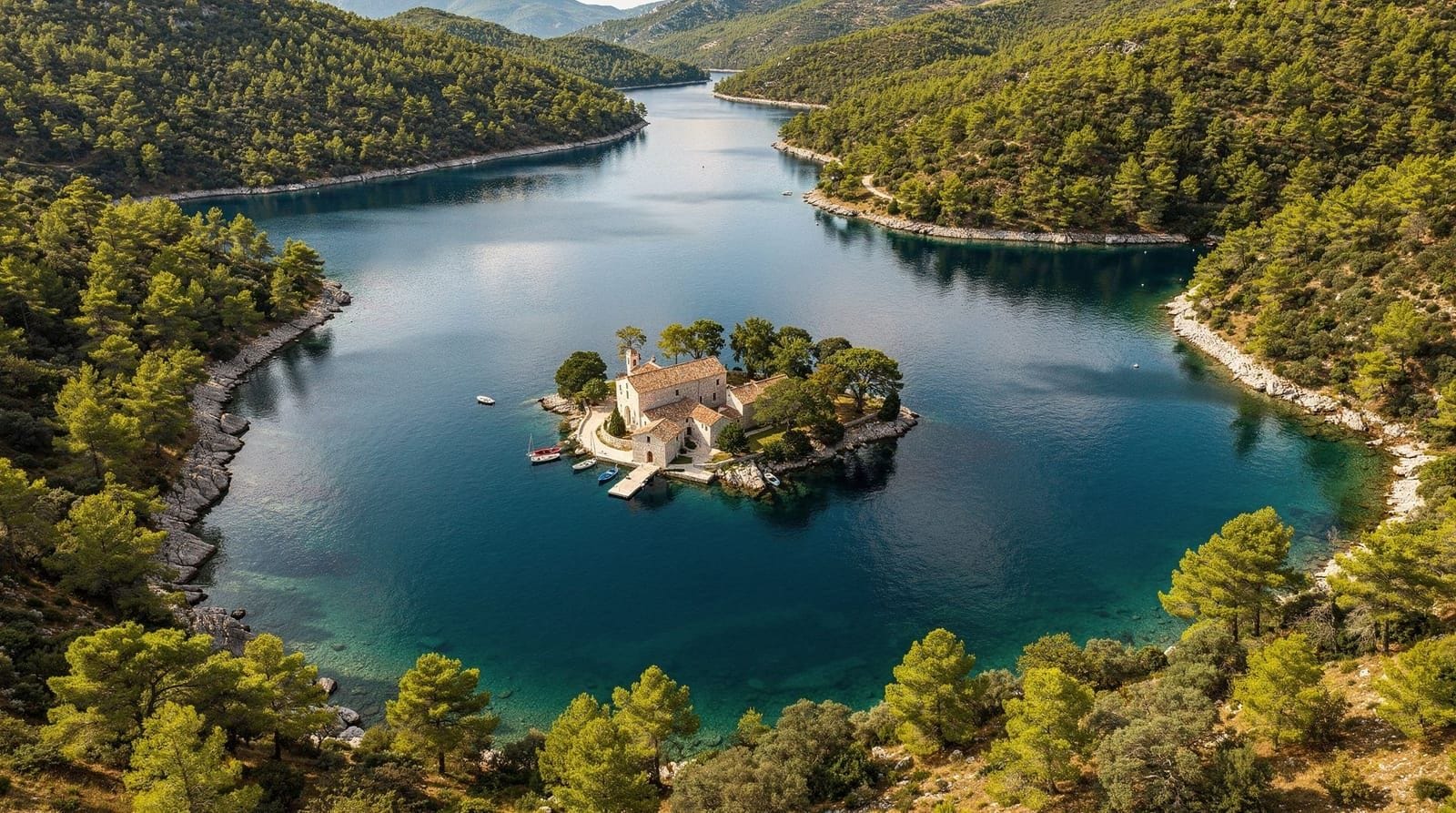
In the middle of Veliko jezero sits Sveti Marija, a tiny island whose entire surface area is occupied by a Benedictine monastery complex established in the 12th century. The monastery has had a complicated history — active as a religious house, converted to a fortress by the Ottoman threat, passed between aristocratic families, operated as a restaurant and hotel in the 20th century, and now restored as a historical monument.
A small park-operated ferry (included in the entry ticket) runs from the lake shore to the island. The monastery church contains interesting fragments of Byzantine-influenced fresco work; the courtyard and terrace look out over the lake in all directions. The island has a single konoba-style restaurant operating in summer.
Getting there from Dubrovnik
The most common approach is by catamaran from Dubrovnik’s harbour (Jadrolinija or Krilo high-speed catamarans). Services run year-round but are most frequent in summer. Key details:
- Sobra is the main port on Mljet — not inside the park. From Sobra, a local bus runs to Polače (inside the park boundary) in about 30 minutes. Bicycle rental is available at both locations.
- Polače, a tiny village inside the park, is the more convenient arrival point if you can use it. The fast Dubrovnik–Split catamaran stops here in season — check the schedule carefully as not all services call at Polače.
- Journey from Dubrovnik: 1.5–2 hours depending on service.
Timetables change seasonally. Always check current schedules at jadrolinija.hr before planning your visit.
Getting there from Split
The Split–Dubrovnik coastal catamaran passes through the Mljet channel in season. From Split, the journey is approximately 3.5–4 hours to Polače — long enough to recommend an overnight on the island rather than a day trip from Split.
Cycling the lakes
Bicycle rental at Polače and Goveđari (the village on the ridge above the lakes) costs around €10–15 per day. The circuit road around Malo jezero and the northern shore of Veliko jezero covers about 12 km of gently rolling terrain, passing swimming spots, the monastery ferry dock, viewpoints over the sea and several small jetties where you can swim directly from the road.
The circuit takes about 1.5–2 hours at a gentle pace, with stops. Most day-trippers complete it in one direction — to the monastery, a swim, lunch at the konoba — and return the same way. Those with more time can extend to the eastern side of the park area and the hilltop above Goveđari, which has panoramic views over the island.
What to eat on Mljet
Dining options inside the park are limited — intentionally so. The monastery island has one restaurant; Polače has two or three small konobe. This is not a place to come looking for gastronomic diversity. What it does have is fresh Dalmatian seafood — grilled fish, šparoge (wild asparagus when in season), octopus salad — in a setting that compensates enormously for the limited menu.
Bring picnic supplies from Dubrovnik if you want to eat freely on the lakeside. Drinking water is available at the park facilities.
Overnight stays
Staying overnight on Mljet changes the experience materially. Day-tripper boats depart by late afternoon; by evening the island belongs to those who remain. The national park area has a handful of guesthouses and apartments in Polače and the surrounding villages. Mljet island guide covers accommodation options across the full island.
The fishing village of Saplunara at the island’s eastern tip (outside the park) has a sandy beach — unusual in Dalmatia — and extremely quiet guesthouses.
Wildlife and ecology
The Mljet forest has one famous ecological curiosity: the mongoose. In the 1900s, mongooses were introduced to control the snake population (particularly the nose-horned viper). The mongooses did the job and then expanded dramatically. The snakes are now rare; the mongooses are everywhere, visible in the undergrowth throughout the day. They are not dangerous but are not shy either.
The lake system supports diverse fish populations, sea turtles (occasional visitors from the wider Adriatic) and excellent birdlife including kingfishers along the channel edges. The dense forest supports a rich invertebrate and reptile community.
Mljet as part of a sailing or island-hopping itinerary
Mljet sits between Korčula and the Elaphiti islands on the main sailing route between Split and Dubrovnik. Its position, good anchorage options and the national park make it a standard overnight stop on any weeklong sailing circuit of the southern Dalmatian islands.
Island hopping from Dubrovnik typically goes: Elaphiti islands (day trip), Mljet (overnight), Korčula (1–2 nights), Hvar (1–2 nights). Mljet’s park anchorage at Polače has limited space — arrive early in peak season.
Day trip from Dubrovnik: realistic timing
A day trip from Dubrovnik is workable but tight. The earliest catamaran typically lands you at Polače or Sobra by mid-morning, leaving roughly five to six hours before the return service — enough for a swim in Veliko jezero, the ferry to the monastery island, and a relaxed lunch, but not enough to cycle the full lake circuit as well. If your itinerary already includes the Elaphiti Islands or other day trips from Dubrovnik, treat Mljet as a separate day rather than trying to combine it with another excursion — the ferry logistics alone use up much of the available time.
Why Mljet feels different from Dubrovnik’s other day trips
Most day trips from Dubrovnik are built around a single sight — a bridge, an old town, a waterfall. Mljet is built around an absence of sights in the usual sense: no single monument dominates, and the appeal is closer to a change of pace than a checklist item. This makes it a poor fit for visitors trying to maximise the number of things seen per day, and an excellent fit for anyone who wants at least one unhurried day in a Croatia itinerary otherwise packed with old towns and boat tours. Framing your expectations this way before you go avoids the mild disappointment some rushed day-trippers report.
Frequently asked questions about Mljet National Park
How do you get to Mljet National Park from Dubrovnik?
By catamaran from Dubrovnik harbour (Jadrolinija or Krilo fast catamaran) to Sobra port on Mljet, then a short bus or bike ride to the national park at the island's western end. Journey takes about 1.5–2 hours depending on the service. Alternatively, the Dubrovnik–Split coastal catamaran stops at Polače, inside the park boundary.How much does Mljet National Park cost?
Adult entry in 2026 costs approximately €10–20 in high season. The ticket includes the ferry to St. Mary's island (Sv. Marija) on the large lake. Children under 7 enter free. If you arrive by catamaran at Polače (inside the park), you pay on entry. Check current prices at np-mljet.hr.What are the two lakes in Mljet National Park?
Malo jezero (Small Lake) and Veliko jezero (Large Lake) are both saltwater — connected to the sea by a narrow channel through which tides flow, creating a slow tidal current. Swimming in both lakes is permitted and the water is calmer, warmer and cleaner than the open sea. The channel between the lakes has a mild current that is popular for floating.Can you swim in the Mljet lakes?
Yes — this is one of Mljet's main pleasures. Both Malo jezero and Veliko jezero are swimmable throughout the park. The channel between the lakes ('the flow') has a gentle current that visitors float through at certain tidal states. Water temperature in summer reaches 27–28°C in the sheltered lakes.What is the St. Mary's island monastery?
A small island (Sveti Marija) in the middle of Veliko jezero bears a 12th-century Benedictine monastery that has had various uses over the centuries — monastery, restaurant, hotel, and now a restored historical monument open to visitors. A short ferry included in park entry runs to the island from the lake shore.Is Mljet good for cycling?
Yes — bicycle rental is widely available in the park (at Polače and Goveđari). The road around both lakes covers about 12 km of flat or gently rolling terrain and is one of the most pleasant cycle routes in Dalmatia. The route passes swimming spots, viewpoints and the monastery ferry dock.
Top experiences
Bookable activities with verified prices and instant confirmation on GetYourGuide.
Top experiences
Best-rated activities across GetYourGuide and Viator.

From Split: Plitvice Lakes National Park Guided Tour
- Viator

Krka Waterfalls Day Tour with Boat Ride from Split and Trogir
- Viator

Plitvice Lakes National Park Guided Day Tour from Split
- Viator

Krka National Park Tour with tour Guide & Wine tasting from Split & Trogir
- Viator

From Zadar: Plitvice Lakes with Boat Ride & Zadar Old town tour
- Viator

Mostar and Herzegovina Tour with Kravica Waterfall from Split & Trogir
- Viator