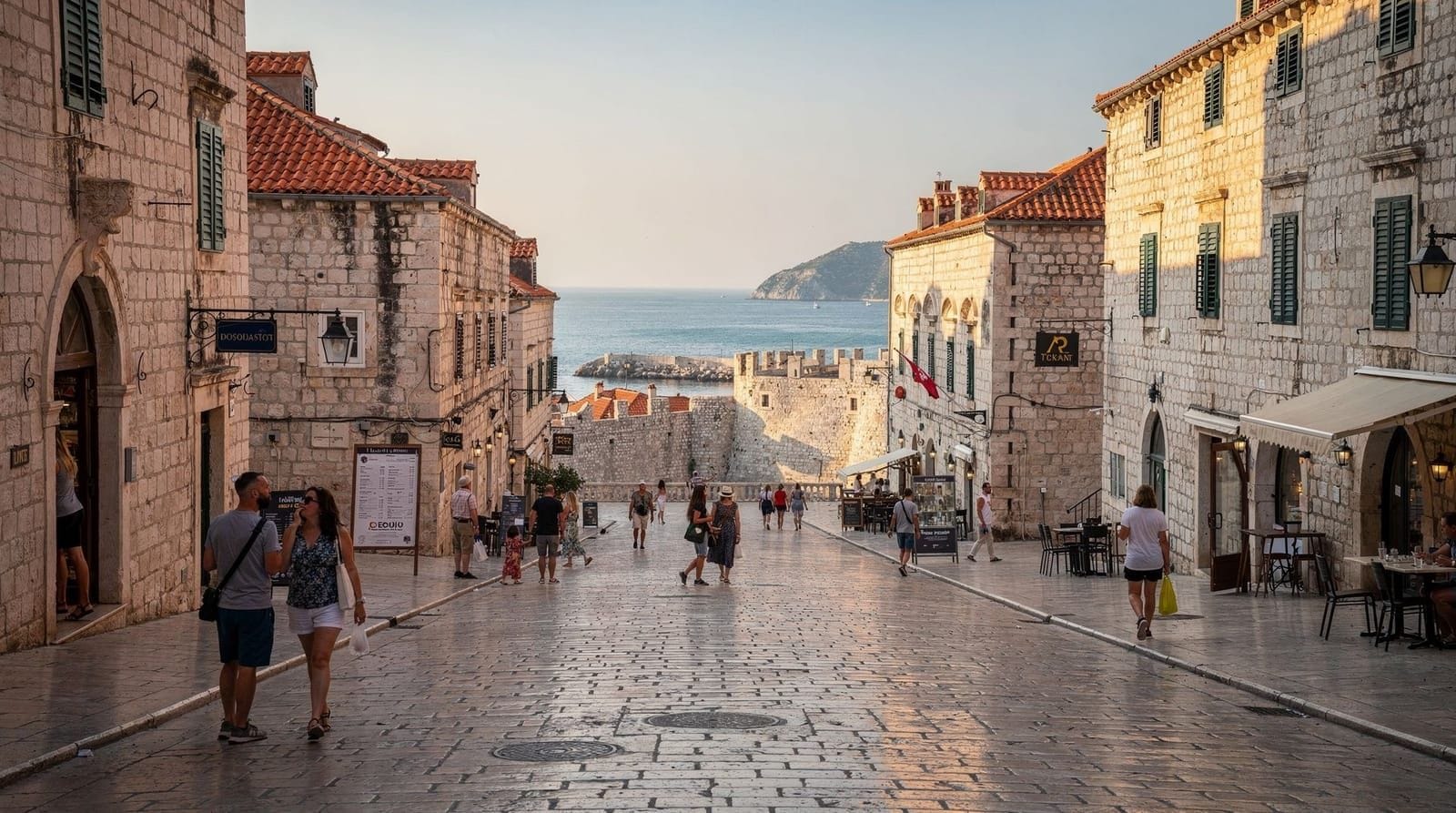
Osijek travel guide
Osijek is Slavonia's baroque fortress city on the Drava — gateway to Kopački Rit wetland, Graševina wine country, and genuinely off-the-radar…
Quick facts
- Best time
- April–October; September for wine and harvest festivals
- Days needed
- 2–3 days
- Getting there
- Train or bus from Zagreb (3–4 h); bus from Split (8 h)
- Budget per day
- €40–€80
Osijek is a city almost no international tourist ever visits, and that is the best argument for going. Slavonia’s largest city (population around 84,000), perched on the banks of the Drava river in Croatia’s flat, fertile eastern plains, is a place of genuine authenticity: a thriving university town with a compact baroque fortress district, a world-class wetland nature reserve on its doorstep, and a food and wine culture that has nothing in common with the Adriatic coast.
Slavonia — the eastern region of Croatia between the Sava, Drava, and Danube rivers — is the country’s agricultural heartland. Its paprika-dusted kulen sausage, its golden Graševina wines, and its pan-flat, poplar-lined landscapes feel more Hungarian-Austrian than Mediterranean. Osijek is the gateway to all of it, and a significant city in its own right — one of the hidden gems of Croatia that rarely makes a first-time itinerary but rewards those who add it. See the Croatian food guide for how Slavonian cooking fits the country’s wider culinary picture.
Osijek at a glance for first-time visitors
| Where | Slavonia, eastern Croatia, on the Drava river |
| Days needed | 2–3 days |
| Getting there | Train/bus from Zagreb (3–4h); own airport (OSI) with limited routes |
| Best time | May–September; September for wine and folklore festivals |
| Budget per day | €40–€80 — noticeably cheaper than the Adriatic coast |
| Highlight | Tvrđa baroque fortress + Kopački Rit wetland day trip |
Because Osijek sits so far from the coast, most visitors combine it with Zagreb rather than a Dalmatian itinerary — worth planning around if you’re renting a car in Croatia for a longer inland loop.
Tvrđa — the baroque fortress
Osijek’s greatest attraction is Tvrđa (literally “fortress”), a complete baroque military town that occupies the eastern part of the city along the Drava riverside. Built by the Habsburgs between 1712 and 1721 after the expulsion of the Ottomans, Tvrđa is one of the best-preserved baroque urban complexes in southeastern Europe — almost entirely intact, with the original grid of military buildings, officers’ quarters, churches, and the main square still functioning as living urban fabric.
Trg Svetog Trojstva (Holy Trinity Square) is the ceremonial heart of Tvrđa — a broad baroque square with a plague column (1729) at its centre, surrounded by former military headquarters that now house the Museum of Slavonia and various university faculties. The combination of architectural grandeur and student-café life gives the square a very particular character.
The Museum of Slavonia in Tvrđa covers the archaeology, ethnography, and natural history of the region in a well-presented collection — Roman finds from the ancient settlement of Mursa (which predates Osijek), ethnographic displays of Slavonian folk traditions, and natural history including Kopački Rit fauna.
The Tvrđa ramparts and riverside promenade (Šetalište Petra Preradovića) along the Drava offer views across to the floodplain and the marshes that lead toward Kopački Rit. Evening walks here, with the baroque silhouette of Tvrđa behind, are quietly beautiful.
European Avenue (Europska avenija) and Upper Town
The late 19th-century upper town between Tvrđa and the main Strossmayer Square contains some of the finest Historicist and Secession architecture in Croatia outside Zagreb. Europska avenija (European Avenue) was planned as Osijek’s grand boulevard — lined with villas and apartment buildings in a mixture of Neo-Gothic, Neo-Renaissance, and early Modernist styles that would not look out of place in Vienna or Budapest.
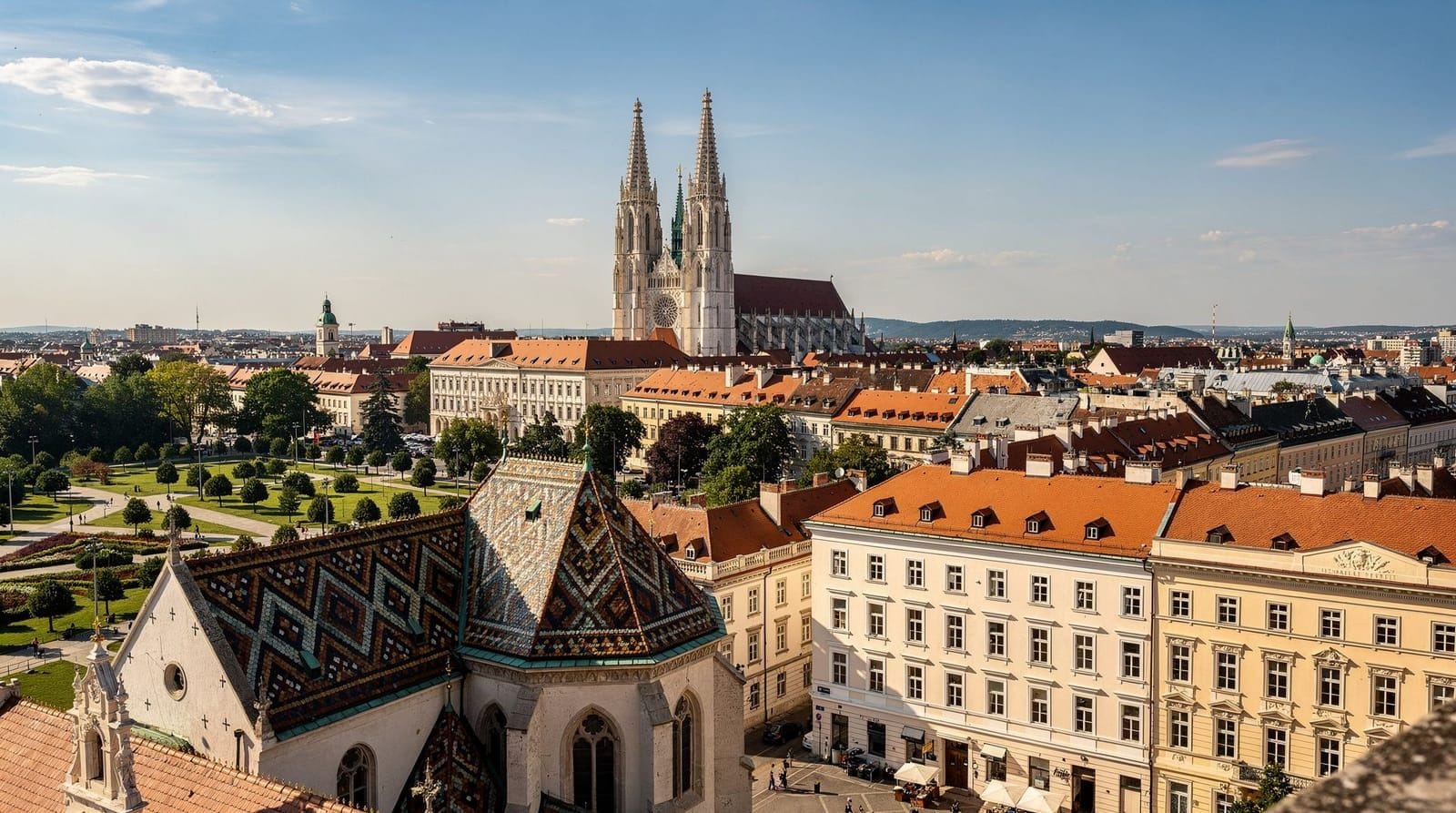
The Church of St Peter and Paul (known locally as Katedrala or “Osijek Cathedral”) at the end of the avenue is a neo-Gothic structure of considerable ambition — its 90-metre tower is the second tallest church tower in Croatia. The interior has coloured glass and tile work of note.
Croatian National Theatre Osijek on Županijska Street is an ornate neo-baroque theatre built in 1866 — the oldest professional theatre building in Croatia still in continuous use.
Kopački Rit Nature Park
Ten kilometres north of Osijek, where the Drava flows into the Danube, the Kopački Rit wetland covers around 23,000 hectares of floodplain forest, marshes, oxbow lakes, and channels. It is one of the largest and most important wetland ecosystems in Europe — comparable in ecological significance to the Danube Delta.
Bird populations: Kopački Rit is exceptional for birdwatching. The park hosts over 290 recorded bird species including white-tailed eagles (a significant breeding population), black storks, spoonbills, grey herons, cormorants, and during migration periods, huge concentrations of wildfowl. European bison were reintroduced to the park in 2012 and a herd of several dozen now roams the core reserve area.
Visiting options: Boat tours on the channels (seasonal, from the park centre near Kopačevo village) give the closest views of the water-based wildlife. Walking trails are accessible year-round from the visitor centre. Cycling along the park-edge roads covers more ground. Entry fee approximately €4–8.
Best time for birdwatching: Spring (March–May) for nesting activity and first arrivals; autumn (September–November) for migratory concentrations. Summer is good for watching herons and eagles at the fishing grounds.
Slavonian food and wine
Slavonia has one of Croatia’s richest food traditions — continental, robust, and built around paprika, pork, and river fish.
Kulen (slavonski kulen) is the great Slavonian product: a paprika-spiced cured pork sausage made from lean pork and fat with hot red pepper. It has EU Protected Designation of Origin status and is produced during the traditional winter kolinje (pig slaughter). Every Slavonian family has their own recipe; the commercial versions available in shops are a reasonable introduction.
Šaran (carp) from the Drava and Danube is a Slavonian staple — baked, in a paprika stew (fiš paprikaš), or smoked. The restaurants of Tvrđa do excellent versions of fiš paprikaš.
Čobanac is the Slavonian meat stew — several types of meat (beef, pork, lamb) slow-cooked with red pepper and onions. A warming cold-weather dish.
Graševina wine: Slavonia’s dominant white wine grape is Graševina (Italian Riesling), producing anything from simple everyday whites to complex late-harvest wines. The wine towns of Đakovo, Kutjevo, and Đurđenovac are the main production areas, 30–60 km from Osijek. Several wineries offer tastings; Kutjevo is the most visitor-oriented.
Đakovo
35 km south of Osijek, the town of Đakovo is known for two things: the Đakovo Cathedral (1882) — a red-brick neo-Romanesque basilica with twin 84-metre towers, designed by the Vienna architect Karl Rösner, considered one of the finest ecclesiastical buildings in southeastern Europe — and the Lipizzaner stud farm (Ergela lipicanske pasmine) that has been breeding Lipizzaner horses since 1506. The stud farm offers guided visits.
Đakovački vezovi (Đakovo Embroidery Festival) in late June–early July is one of Croatia’s largest folk festivals, with traditional dress, music, and the famous horse tournament (Đakovački šampionat).
Getting to Osijek
From Zagreb: Train (around 4 hours, comfortable, scenic through the Slavonian plains, approximately €15–20) or bus (3–3.5 hours, more frequent, around €12–18). Osijek has its own small airport (OSI) with limited connections.
From Budapest: Around 3.5 hours by car via the M6 motorway — Osijek functions as a natural entry/exit point for travellers combining Croatia with Hungary.
By car: Osijek is on the main A3 motorway (Zagreb–Belgrade) — exit Đakovo/Osijek.
Where to stay
Osijek has a range of mid-range hotels and modern apartment rentals. Hotel Osijek on the Drava riverfront is the traditional choice. Several smaller boutique hotels have opened in and around Tvrđa. Prices are very reasonable by Croatian coastal standards.
Where to eat
Tvrđa’s restaurants are the obvious starting point. Restoran Slavonska Kuća (traditional Slavonian cooking, kulen, čobanac) and Konoba Kod Ruže (reliable local dishes) are consistently recommended. The Drava riverbank has several terrace restaurants for summer dining.
History in brief
Osijek’s site was occupied in Roman times as the settlement of Mursa — one of the most important Roman cities in the Pannonian province. The Battle of Mursa in 351 AD, fought between the armies of the emperor Constantius II and the usurper Magnentius, was one of the largest battles in Roman history and left an estimated 54,000 dead on the Osijek floodplain. The Museum of Slavonia displays Roman finds from this period.
The medieval city was destroyed by the Ottoman conquest of 1526 and the area remained under Ottoman control for 150 years. The Ottomans built a famous wooden bridge across the Drava — reportedly 8 km long, connecting Osijek to the Turkish-held territory to the north — that was one of the engineering wonders of its era. After the Habsburg reconquest in 1687, the city was rebuilt entirely from scratch in the baroque style, which is why Tvrđa looks so complete and coherent: it was planned and built as a unit between 1712 and 1721.
The 19th century brought the railway (1870), the construction of the magnificent European Avenue (Europska avenija), and Osijek’s development as an industrial and cultural centre. The city suffered significant damage in the 1991–1995 Croatian War of Independence — it was shelled from across the Drava by Serbian forces and the eastern suburb of Nemetin was largely destroyed. Restoration since 1995 has been thorough and Tvrđa in particular has been comprehensively rehabilitated.
Expanded where to eat and drink
Osijek’s food scene is resolutely Slavonian — heavy on paprika, pork, freshwater fish, and slow-cooked stews. It is genuinely different from anything on the Croatian coast and worth exploring properly.
Traditional Slavonian restaurants:
- Slavonska Kuća (Slavonian House) in Tvrđa — the definitive address for traditional Slavonian cooking: kulen sausage platter, fiš paprikaš (carp and paprika stew), čobanac (meat stew). A bit tourist-facing but reliably good.
- Restoran Čarda Zlatni Klen on the Drava riverbank — a floating restaurant (čarda) specialising in freshwater fish; the šaran (carp) baked in paprika sauce is outstanding.
- Konoba Kod Ruže (At Rose’s) — a family-run konoba in the upper town with honest Slavonian home cooking; daily specials change with the market.
Tvrđa’s café scene: The square (Trg Svetog Trojstva) is lined with outdoor café terraces that operate from morning to midnight in summer. The student population keeps prices low and the atmosphere lively. Order a glass of Graševina white and a plate of kulen and cheese as a late afternoon snack — the quintessential Osijek experience.
Craft beer: Osijek has a growing craft beer scene. The local Craft Pub Zlatni Kip and several bars in Tvrđa stock Croatian craft beers alongside the standard lager options.
Wine: All restaurants stock Graševina; ask for producers from Kutjevo (the most reputable appellation) rather than generic Slavonian white. Dessert wines (predikatna vina) from Kutjevo — late harvest, botrytised — are world-class and almost unknown outside Croatia; if you see them on a menu, order a glass.
Getting around Osijek in detail
Osijek is spread along the Drava for several kilometres, but the core sights (Tvrđa and European Avenue) are within comfortable walking distance of each other. From the city centre (Strossmayer Square) to Tvrđa is about 2 km — a pleasant 25-minute walk along the riverbank promenade.
Public transport: Osijek has a tram network (one of only three cities in Croatia with trams, alongside Zagreb and Varaždin briefly) covering the main east-west axis. Tickets cost around €0.80. Taxis and Bolt cover the city including the 10 km to Kopački Rit.
For Kopački Rit: A car is the most flexible option. Without a car, a taxi to the Kopačevo visitor centre costs approximately €15–20. Cycling from Osijek along the Drava cycle path to the park entrance (12 km) is an excellent option in good weather — the path is flat and well-maintained.
For Đakovo: 35 km south by car (40 minutes) or bus from the Osijek bus station (several daily, 50 minutes).
What to skip — honest notes
The shopping mall strip on the outskirts — like all Croatian cities of its size, Osijek has developed commercial peripheries with large shopping centres (notably near the old bus station) that have little to recommend them. Stay in and around Tvrđa and European Avenue.
The main train station area — the train station neighbourhood is functional but not attractive. If arriving by train, take a taxi or tram directly to the old town rather than walking.
Osijek Zoo (in summer heat) — while the zoo on the Drava riverbank is genuinely well-maintained and popular with families, visiting it in July–August midday heat is uncomfortable for visitors and the animals. Go early morning or in the cooler months.
Nightlife and student life
Osijek’s 30,000-student university population makes it livelier after dark than its tourism profile suggests. The bars and clubs of Tvrđa (particularly the streets around the main square and behind the former barracks) are active from Thursday to Saturday nights, with DJs, live music events, and a genuinely local atmosphere.
Summer outdoor events: The Osijek Summer Outdoor Festival (Ljeto u Tvrđi) runs July–August with open-air concerts and theatre in the Tvrđa courtyard. The Drava riverbank has several summer beach bars (splavovi) along the city waterfront.
FAQ
Is Osijek worth visiting if I’m mainly doing the Adriatic coast? Only if you have time to spare or a specific interest in wetlands, wine, or baroque architecture — Osijek is 3–4 hours from Zagreb and much further from the coast, so it works best as an extension of a Zagreb visit rather than a coastal itinerary detour. See the general best time to visit Croatia guide for how inland Slavonia fits the seasonal picture.
Do I need a car to see Kopački Rit and Đakovo from Osijek? A car is the most flexible option for both, though Kopački Rit is reachable by taxi or bicycle (12 km, flat cycle path) and Đakovo has several daily buses. Without a car, plan a half-day for each rather than combining them in one trip.