Croatian Wine Guide
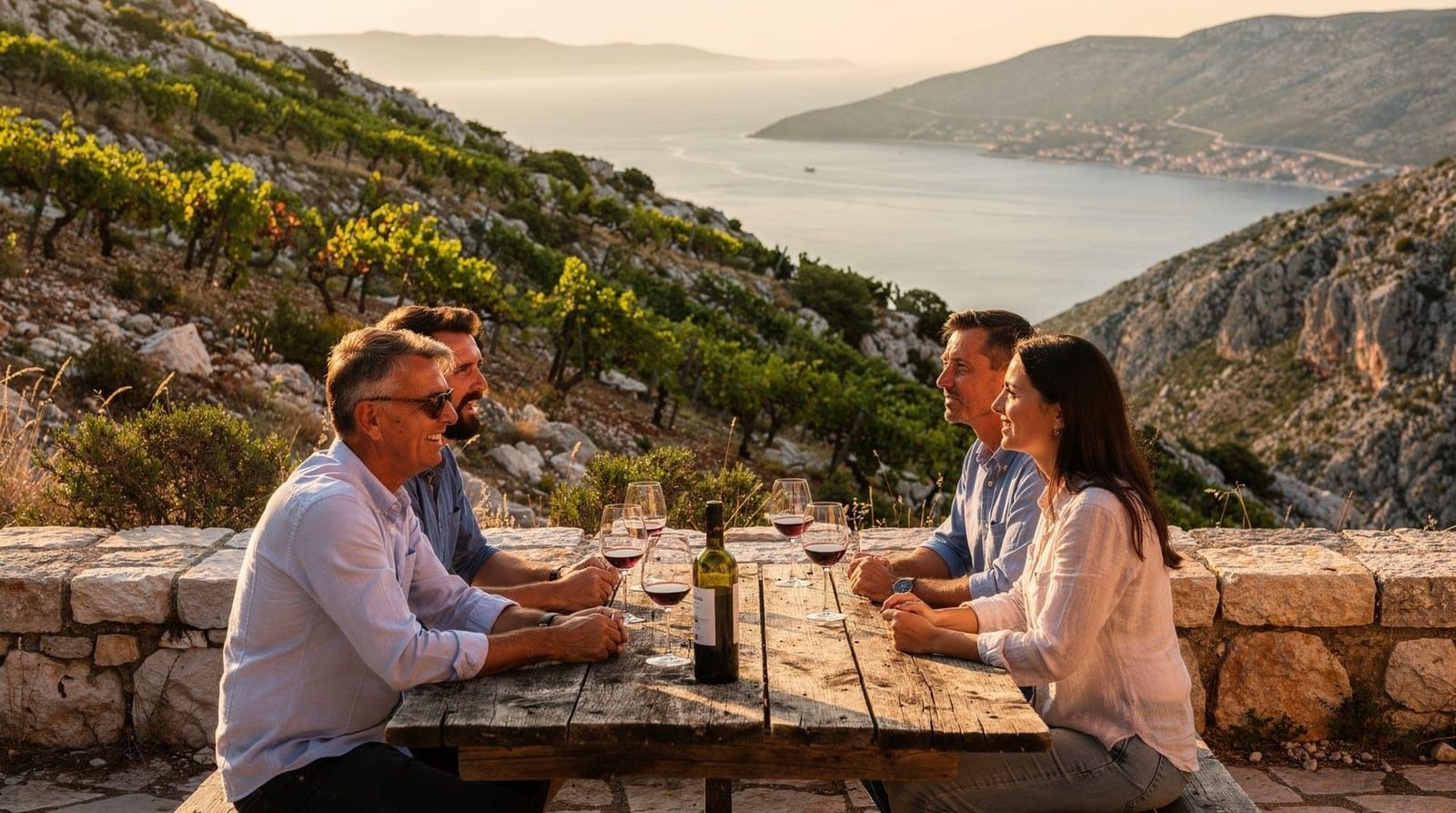
Dubrovnik: Full-day Peljesac wine tour
What wine is Croatia most famous for?
Croatia is best known for Plavac Mali, the powerful red grape grown on the steep terraces of the Pelješac peninsula in Dalmatia. It is a DNA relative of Zinfandel and Primitivo, producing wines with 14–16% alcohol, deep colour and flavours of plum, blackberry and Mediterranean herbs. In white wine, Malvazija Istarska from Istria and Pošip from the island of Korčula are the bottles most likely to surprise and impress visitors.
Why Croatian wine deserves serious attention
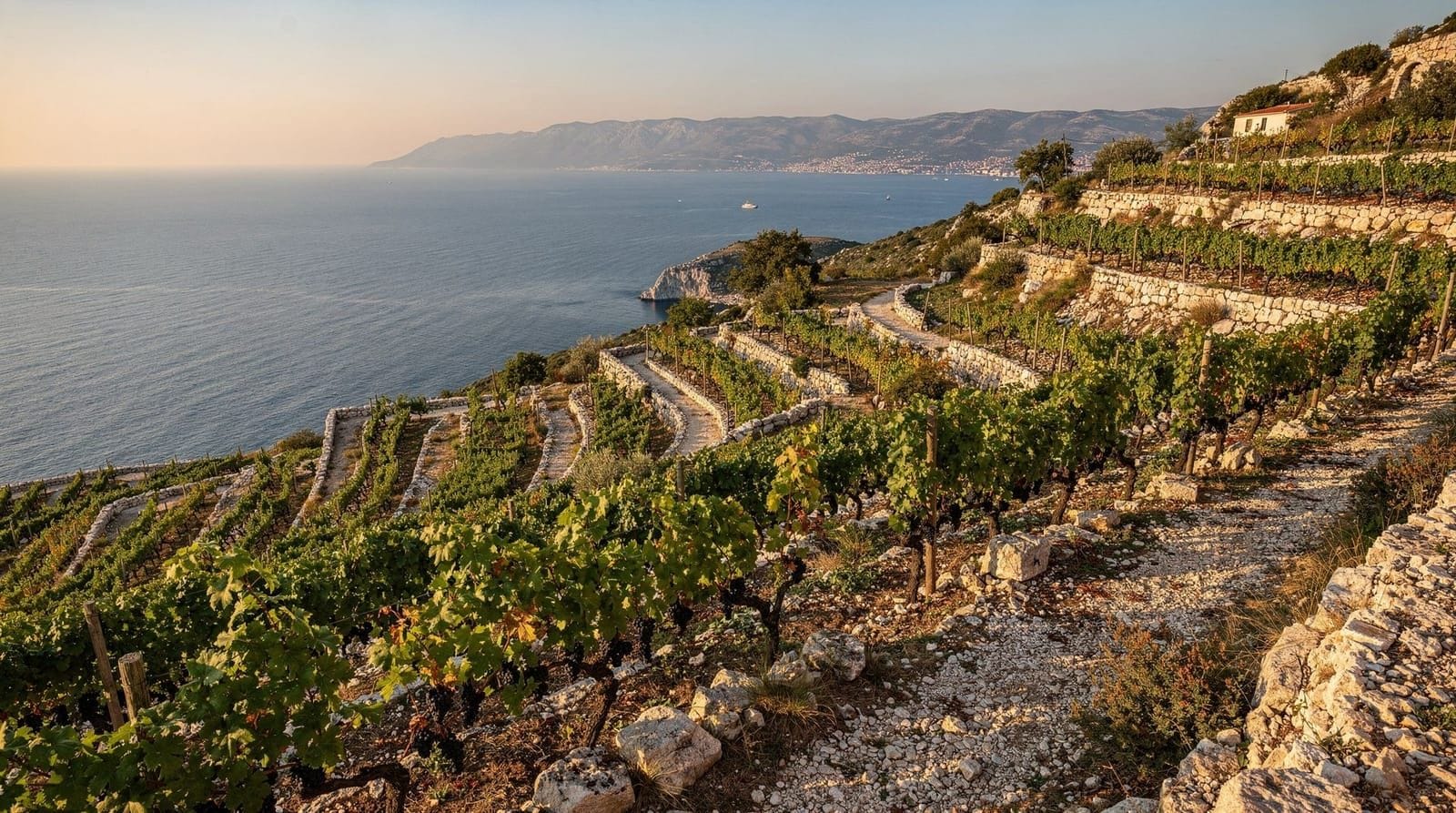
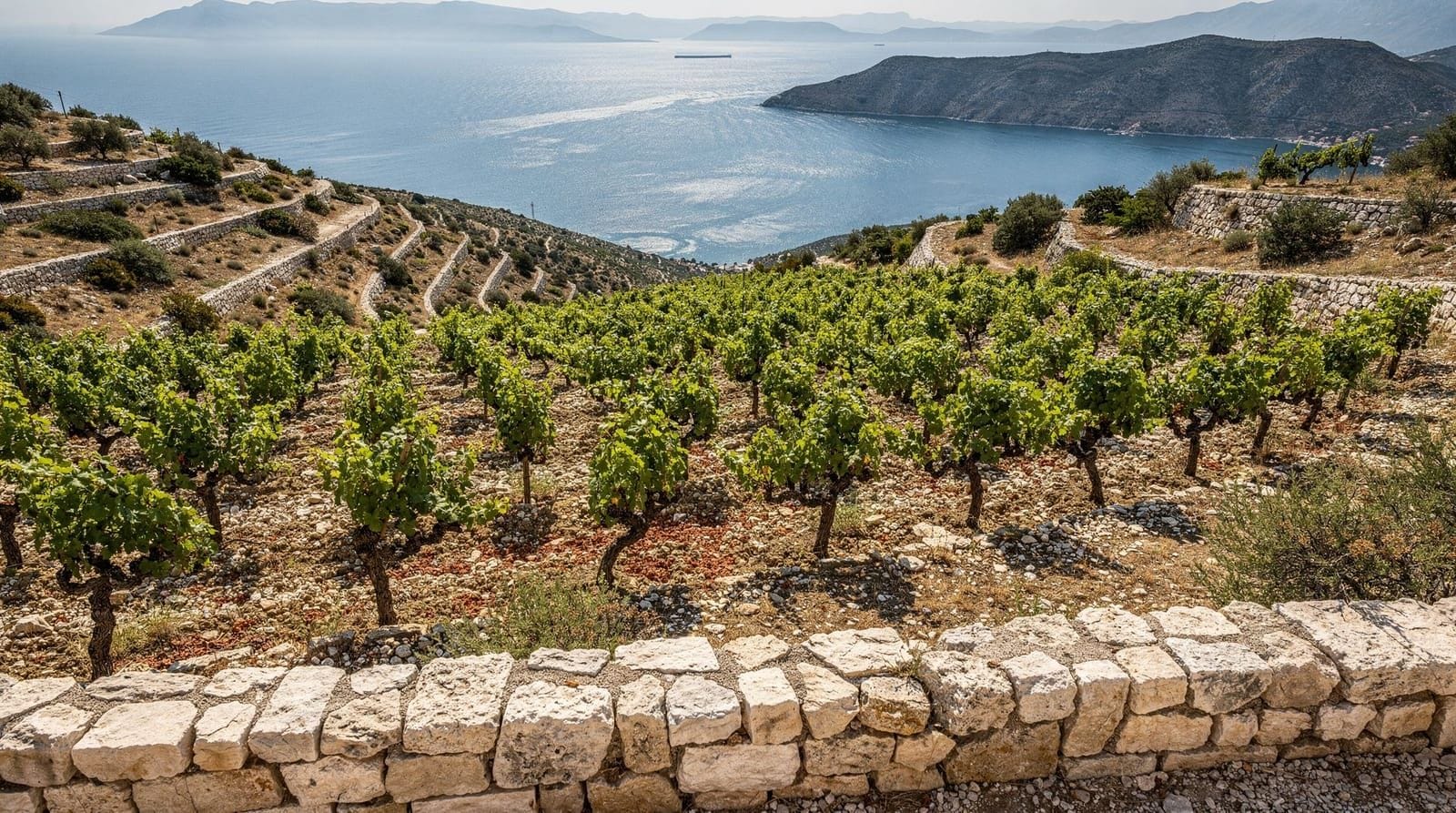
Croatia is one of Europe’s most underrated wine countries, and the gap between its reputation abroad and the quality in the glass is enormous. With over 130 indigenous grape varieties, eight distinct wine regions, and a winemaking tradition that predates the Romans, this is a country where every glass tells a different story about soil, sun and the particular stubbornness of people who grow vines on 45-degree limestone terraces above the Adriatic.
The world is slowly catching up. Since researchers at UC Davis confirmed in 2001 that Plavac Mali — Dalmatia’s flagship red grape — is a parent variety of California’s Zinfandel and Italy’s Primitivo, Croatian wine has been attracting attention from sommeliers and collectors who recognise the historic significance of the find. But the best Croatian wine is still consumed locally, poured in earthenware jugs at konobas where the menu is handwritten and the owner’s grandfather planted the vineyard.
This guide covers all eight wine regions, the key grape varieties you need to know, how to read a Croatian wine label, and the tours worth booking if you want someone else to handle the driving on those winding Dalmatian roads.
| Where | Pelješac & Dalmatia (reds), Istria (whites), 8 regions total |
| Cost | Tastings around EUR 5–15/person; bottles EUR 8–60 at the cellar |
| Time needed | Half-day tasting, or a full day for a Pelješac winery circuit |
| Getting there | Guided day trip from Dubrovnik or Split, or self-drive in Istria |
| Best time | Harvest (late Aug–Sept) for atmosphere; May–Oct for open cellars |
The eight wine regions
Dalmatia: the heart of Croatian wine culture
Dalmatia stretches along Croatia’s southern coast from Šibenik to Dubrovnik, encompassing a chain of islands, a narrow coastal strip, and several inland peninsulas. It is divided into sub-regions, each with its own character.
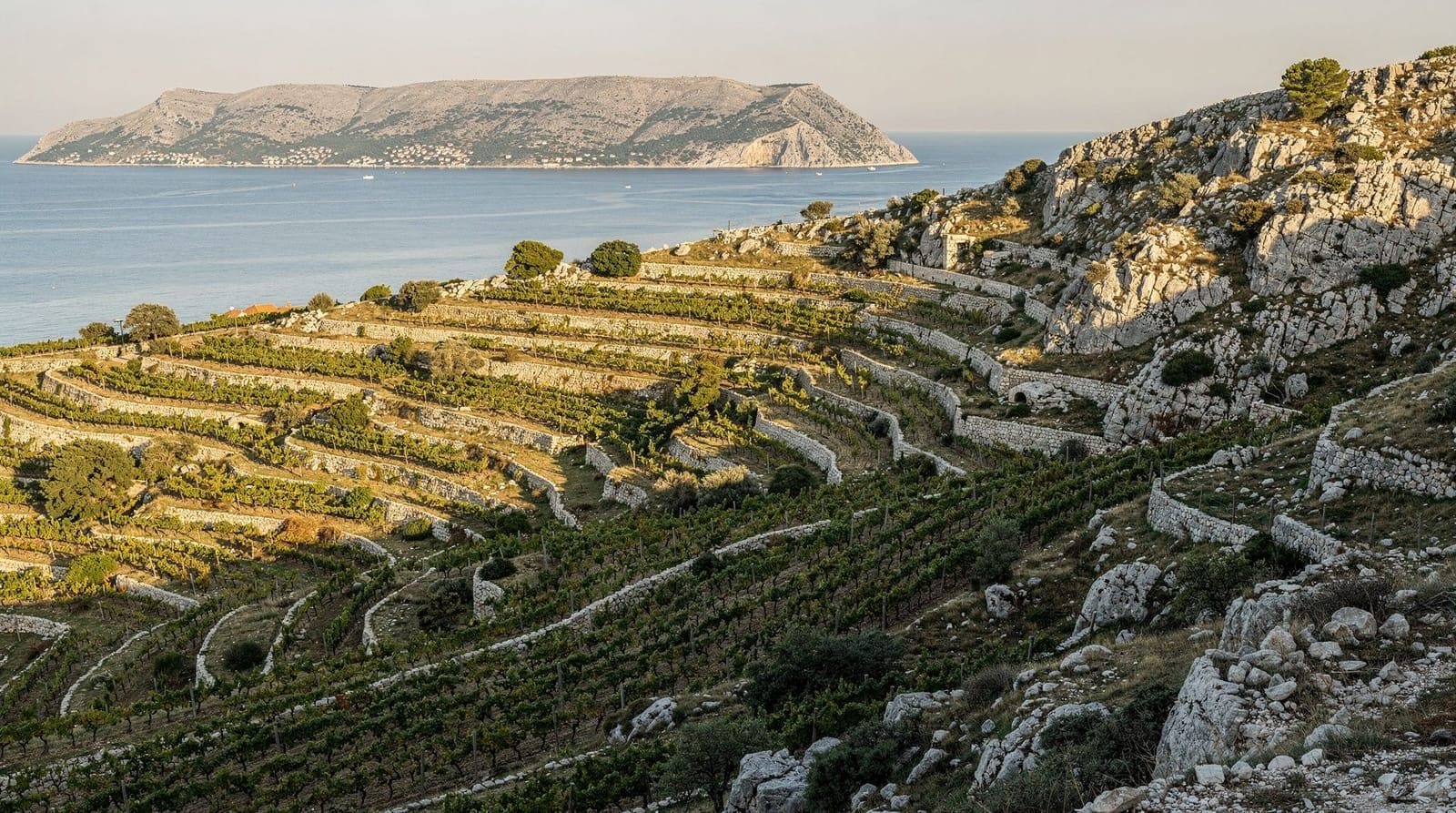
Northern and Central Dalmatia runs from the Šibenik area down past Split. The Primošten area is home to Babić, a native red grape producing wines of medium body, earthy red fruit and fine tannins. The Šibenik hinterland also grows Debit and Maraština — two whites that rarely appear on export markets but are worth finding at a local konoba. The terraced vineyards around Primošten, where Babić has been grown for centuries on hand-built dry-stone walls, were listed as a UNESCO cultural landscape in 2021.
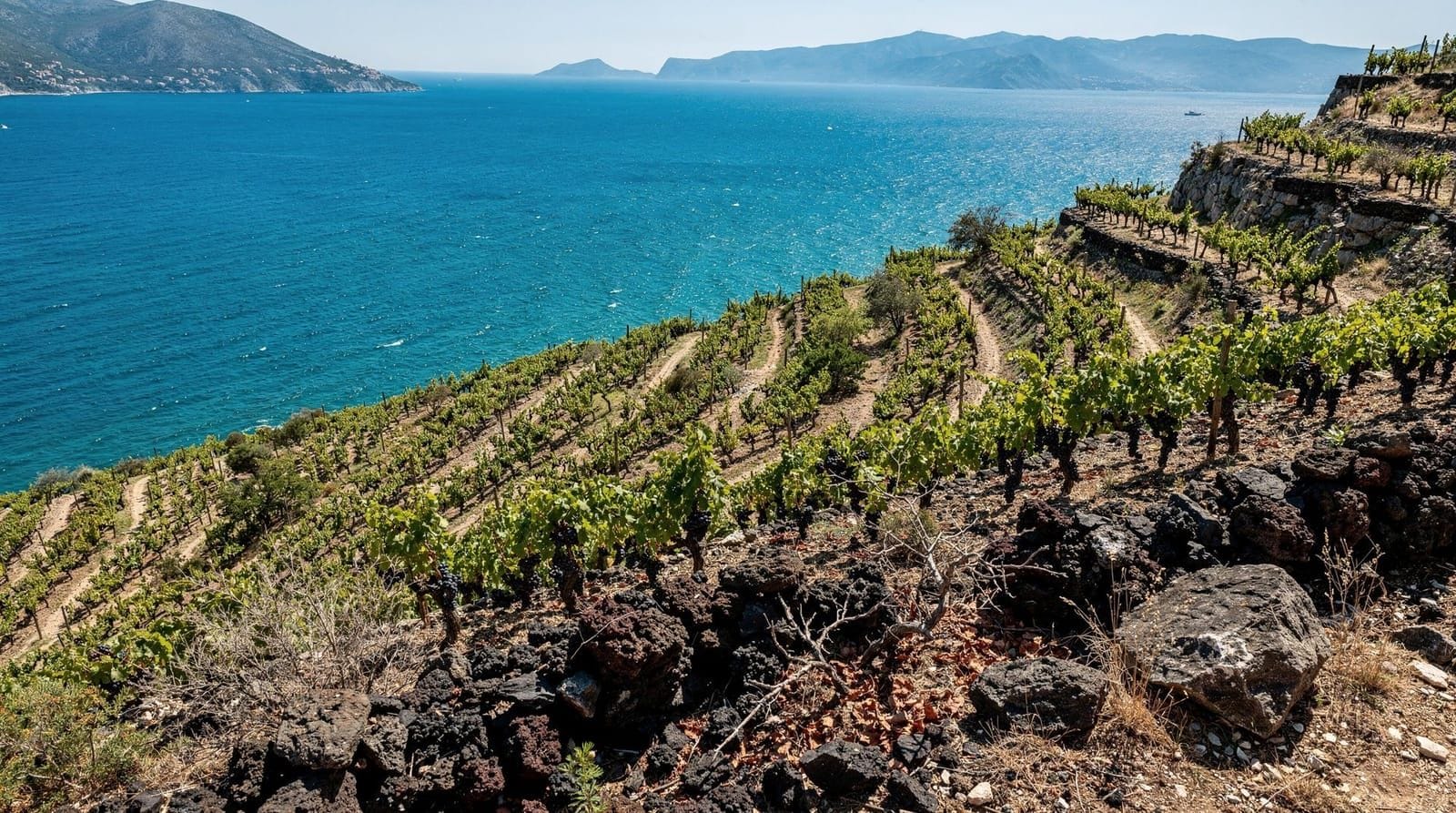
Southern Dalmatia and Pelješac is where Croatia’s most celebrated wines are made. The Pelješac peninsula juts into the Adriatic between the Neretva delta and Dubrovnik, and its steep south-facing slopes above the sea are home to Plavac Mali at its most intense. The two crown jewels are Dingač and Postup — Croatia’s only two controlled wine designations with geographic protection. Read the full story in our Plavac Mali and Pelješac guide.
The island of Korčula belongs to Southern Dalmatia and produces two entirely different wines: Pošip and Grk — both whites of serious quality. More detail in our Korčula wine guide.
Istria: the land of Malvazija and Teran
Istria is Croatia’s northwestern peninsula, jutting into the Adriatic between the Gulf of Kvarner and the Gulf of Trieste. The wine culture here is quite different from Dalmatia: the influence of Venice, Austria and Italy is visible in the grape varieties, the architecture of the wineries and the food that accompanies the wine.
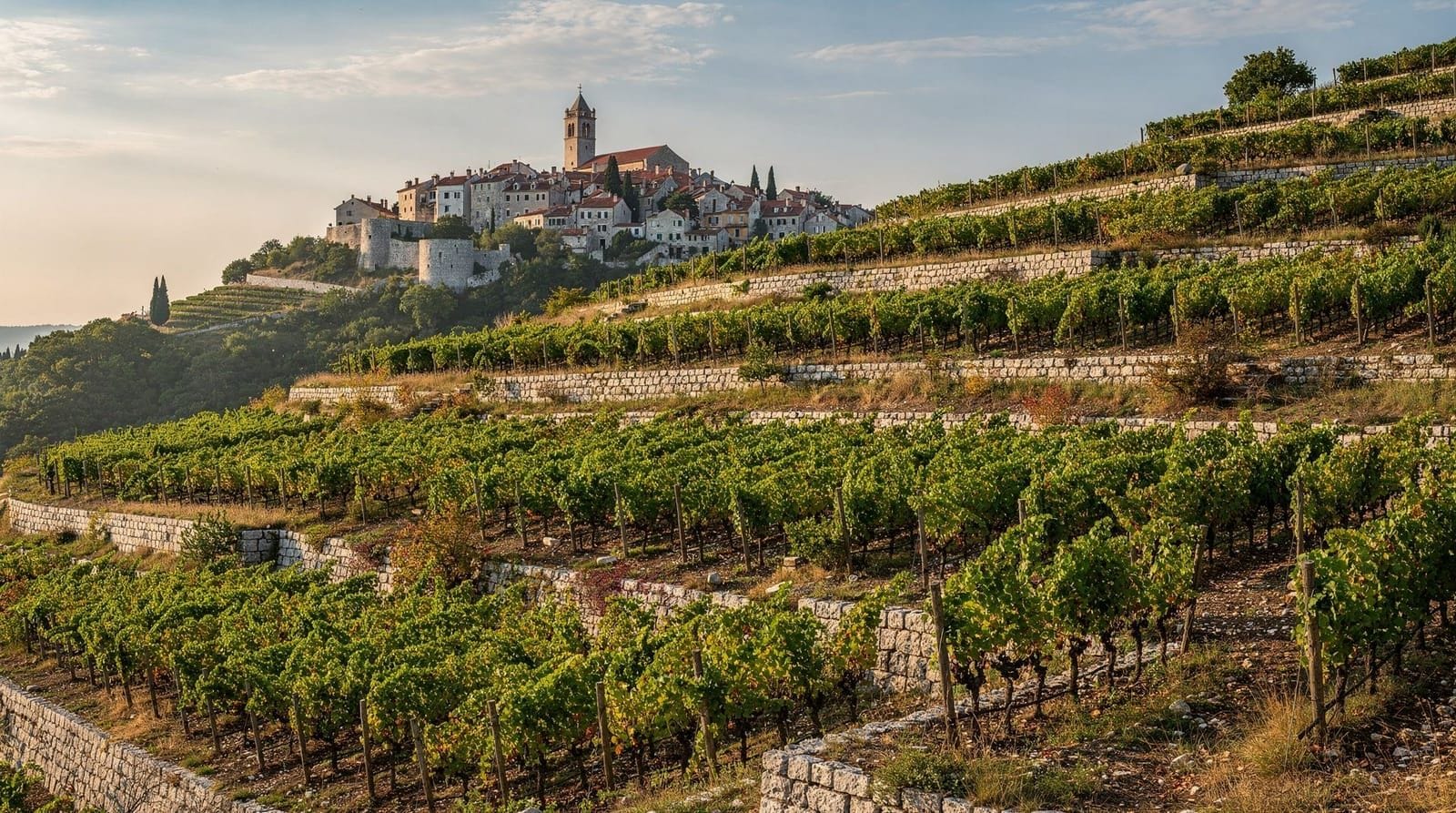
Malvazija Istarska (Malvasia Istriana) is the defining white grape — aromatic, approachable, mineral, and virtually unknown outside the region. Teran is the defining red — high in acid, earthy, deeply coloured, and a natural match for the region’s truffles and prosciutto. Motovun is the most famous hill town in wine country, and the road between Motovun and Buzet passes through a concentration of serious producers.
For a full account of Istrian wine, including the key producers and food pairings, see our Malvazija Istarska guide.
Slavonia and the Danube region: the white wine heartland
Inland Croatia — particularly the flat, continental landscape of Slavonia centred on Osijek — produces the largest volume of Croatian wine. The dominant grape is Graševina (known elsewhere as Welschriesling or Laški Rizling): a white variety that produces everything from everyday table wine to complex, long-aged expressions when yields are controlled and the site is well-chosen.
Slavonia also grows Pinot Blanc, Chardonnay and the red Frankovka (Blaufränkisch), but it is Graševina that defines the region. The wines range from simple and fresh — served cold with grilled freshwater fish from the Drava and Sava rivers — to serious bottlings from estates like Belje and Krauthaker that can age for a decade.
The Kutjevo appellation in Slavonian wine country has historic roots: Cistercian monks established vineyards here in the 13th century, and the Kutjevo winery still operates from medieval cellars. Graševina from Kutjevo is worth seeking out.
Primorje (Kvarner coast): the forgotten region
The Kvarner gulf — the body of water between Istria, the mainland coast around Opatija and Rijeka, and the islands of Krk, Lošinj and Rab — has its own wine tradition. The island of Krk is notable for Žlahtina, a light white grape that produces delicate, slightly floral wines best drunk within a year or two. Rab has small quantities of a local red called Žutica.
These wines are rarely exported and seldom appear on wine lists outside the immediate area. If you are spending time on the Kvarner islands, ask at local restaurants for the house wine — you are likely to be drinking something genuinely local that has never been reviewed, rated or photographed.
Zagreb and Zagorje: continental wines above the capital
The hills north of Zagreb — the Zagorje region — are covered with small family vineyards growing Riesling, Pinot Gris, Chardonnay and various indigenous whites. The wines are light, crisp and intended for immediate drinking. They rarely travel south to the tourist coast, but a day trip from Zagreb into the Zagorje countryside often includes a stop at a family kljet (cellar) where wine is poured alongside homemade bread and cured meats.
Sveti Ivan Zelina and Plešivica are the two most recognised sub-zones. Šember, Volarević and Korak are producers with serious reputations among Croatian wine insiders.
Međimurje: the northernmost vineyards
At Croatia’s northern tip, bordering Hungary and Slovenia, Međimurje is a region of rolling hills and a continental climate that produces aromatic whites: Riesling, Traminer, Sauvignon Blanc and the native Pušipel (Furmint). Production volumes are small, quality has improved considerably in the past decade, and wines from estates like Donat and Herinek are gaining recognition on the Croatian fine-dining circuit.
The grape varieties that matter
Red grapes
Plavac Mali is Croatia’s most important red grape by quality and reputation. Grown on the Dalmatian coast and islands, it produces wines of deep colour, high alcohol (typically 14–16%), firm tannins and flavours of dark plum, blackberry, dried fig and Mediterranean herbs — wild rosemary, thyme, sage. The DNA connection to Zinfandel and Primitivo (confirmed by University of California Davis in 2001) makes it a genuinely significant discovery in ampelography. See our dedicated Plavac Mali guide for everything about Dingač, Postup and the key Pelješac producers.
Babić is the red grape of the Šibenik area — lighter than Plavac Mali, more aromatic, with red cherry and earthy notes. It deserves wider recognition.
Plavina is a lighter Dalmatian red, often blended, best served slightly chilled at a summer lunch.
White grapes (Dalmatian)
Pošip is arguably Croatia’s finest white grape. Indigenous to Korčula, it produces full-bodied, richly textured wines with stone fruit (peach, apricot, white plum), a distinct mineral and saline finish, and enough structure to age. Unoaked versions are fresh and food-friendly; oaked versions develop complexity over 3–5 years.
Grk is rarer still — a white grape from Lumbarda village on Korčula with an unusual characteristic: the vines are all female and require a pollinator variety to set fruit. Production is tiny (under 100 hectares total), the wines intensely mineral and saline, and aged examples develop petrol and honey notes similar to aged Riesling.
Maraština (also called Rukatac) is a lighter, crisp white found across Dalmatia and the islands — the everyday white of coastal konobas.
Istrian grapes
Malvazija Istarska is the most widely planted grape in Istria, producing aromatic whites with floral, citrus and stone fruit character. It is not the same variety as any other Malvazija or Malvasia found elsewhere in the world. Quality ranges from simple beach wines to serious, complex expressions aged in amphora or old oak by natural wine producers.
Teran is Istria’s red — high in malic acid, earthy, with dark cherry and iron-mineral notes that reflect the terra rossa (red iron-rich soil) in which it grows. High acid makes it a natural food wine; pair it with anything rich or fatty.
Slavonian grapes
Graševina (Welschriesling) is Croatia’s most widely planted white grape overall. At its best in Slavonia, it produces wines of fresh apple, lemon zest and mineral character. At worst, it is a workhorse variety producing bulk wine. The difference is entirely in how the grower manages yields.
How to read a Croatian wine label
Croatian wine labels follow EU rules but use local terminology. The key terms:
- Vino vrhunske kvalitete — top quality wine (PDO level, equivalent to French AOC)
- Vino visoke kvalitete — high quality wine
- Stolno vino — table wine (most everyday drinking)
- Geografska oznaka podrijetla — geographical indication (tells you the region)
- Suho — dry; polusuho — off-dry; poluslatko — medium sweet; slatko — sweet
- Berba — harvest year (vintage)
- Podrum — cellar (often part of the producer’s name)
When a label says Dingač or Postup, you are looking at Plavac Mali from those two specific, legally protected zones on Pelješac — Croatia’s equivalent of a Grand Cru designation. See the Dingač and Postup guide for the full comparison.
The best wine tours to book
Getting yourself to a Pelješac winery under your own steam involves a two-hour drive from Dubrovnik on winding coastal roads, possible confusion about which track leads to which cellar, and the challenge of tasting wine without being able to drive home. A guided tour solves all three problems.
From Dubrovnik, a full-day Pelješac tour is the gold standard — you visit three or four wineries, taste Dingač and Postup alongside food (often including Ston oysters and local cheese), and return to Dubrovnik in the evening without having driven anywhere.
If you want to combine Pelješac with the island of Korčula, the day is longer but the contrast between Plavac Mali on the mainland and Pošip and Grk on the island is worth experiencing in a single outing:
From Split, vineyard visits with a sea view are possible within an easy day trip — the Dalmatian hinterland above Split and the Kaštela area have producers working with local varieties:
On Hvar, the island’s wine tradition centres on indigenous varieties and small family estates. A morning tasting tour gives you wine, olive oil and the experience of a working vineyard overlooking the Adriatic:
Wine routes worth driving yourself
If you have a designated driver (or a bicycle), Croatia has mapped several official wine routes:
Pelješac Wine Road runs the length of the peninsula connecting Ston, Potomje (the village at the heart of Dingač), Trstenik and Orebić. Most of the major producers are signposted from this road. Allow a full day and book at least two cellar visits in advance.
Istrian Wine and Olive Oil Road (Vinska i Maslinova Cesta) links the hilltop towns of interior Istria — Motovun, Buzet, Grožnjan, Oprtalj — with wine estates in the valleys below. The scenery rivals Tuscany and the traffic is a fraction of that in Italy. Most producers are open May through October; many offer accommodation as well as tasting.
Vis Wine Trail on the island of Vis connects producers growing Vugava — a rare indigenous white grape found almost nowhere else — with the island’s dramatic landscape of abandoned military installations and crystal-clear coves.
Tasting without a winery visit: vinotekas and wine bars
Not every trip has room for a full winery excursion, and you don’t need one to taste well. Every major coastal town has at least one serious vinoteka — a wine shop that also pours by the glass — where a knowledgeable owner will happily walk you through a flight of Plavac Mali, Pošip and Malvazija side by side. In Split and Dubrovnik, these shops cluster in the old towns and are an easy way to fill an evening between sightseeing without committing to a full-day tour. In Zagreb, the wine bar scene leans towards continental whites and lesser-known Zagorje producers that rarely make it to the coast, so it is worth a stop even if you have already tasted Dalmatian reds elsewhere.
Ordering a flight rather than a single glass is the best way to compare regions quickly — ask for one Dalmatian red, one Istrian white and one lesser-known variety like Grk or Babić, and most staff will happily build that for you even without a set menu.
Tips for wine tourism in Croatia
Book ahead: The best producers have limited cellar space and prefer appointments, even in summer. Arrive unannounced and you may find the gate locked.
Learn a few words: Dobar dan (good day), molim (please), hvala (thank you), and na zdravlje (cheers) go a long way. Many winemakers speak some English, but the effort is appreciated.
Buy at the cellar: Prices are 30–50% lower than at restaurants and you may taste before buying. Most producers accept cash; card acceptance varies.
Respect the roads: The track to Dingač drops steeply off the ridge above Potomje — it is manageable in a normal car but not recommended in poor weather. Many guided tours use minibuses precisely because of these access challenges.
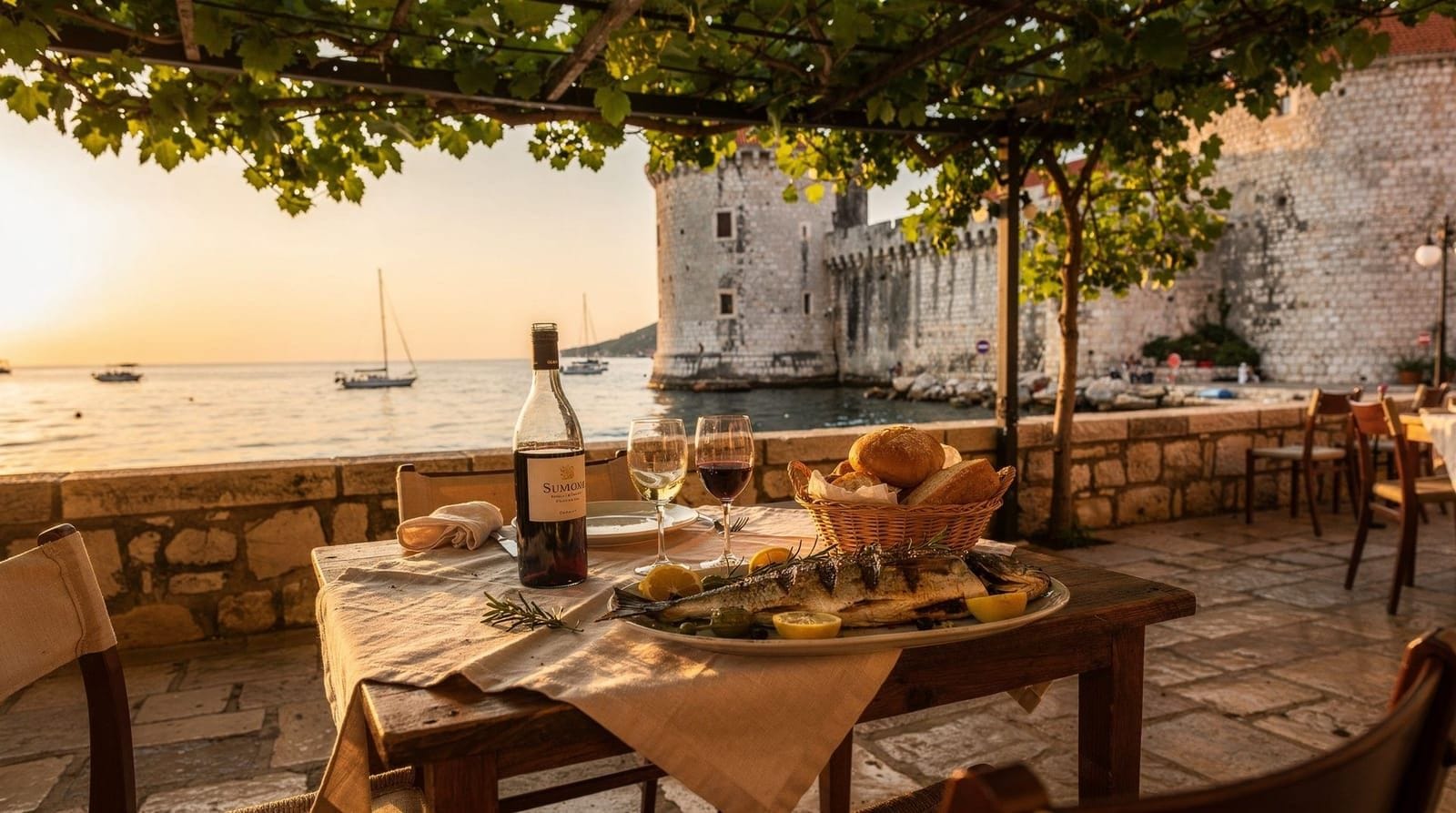
Pair with the local dalmatian cuisine: Croatian wine makes much more sense alongside food. A glass of Pošip with grilled sea bass or a Plavac Mali with lamb chops is a qualitatively different experience from tasting the same wine in isolation.
For a deeper look at specific wines and regions, follow the links in this guide or explore the Croatia wine tasting overview for practical booking advice and seasonal tips. If you are comparing the two halves of the country, the Istria vs Dalmatia guide offers an honest assessment of what each region does best.
Which wine region suits your trip
| Region | Style | Best for | Time needed |
|---|---|---|---|
| Pelješac & Dubrovnik | Bold reds (Plavac Mali, Dingač, Postup) | First-time visitors wanting the flagship red | Half-day to full day |
| Korčula | Mineral whites (Pošip, Grk) | Pairing with seafood, island-hopping | Half-day |
| Istria | Aromatic whites (Malvazija), earthy reds (Teran) | Slower, self-drive touring, truffle season | 1–2 days |
| Split & Kaštela | Mixed local varieties, sea views | A short tasting without leaving the coast | Half-day |
| Zagreb & Zagorje | Light continental whites | Combining with a Zagreb city break | Half-day |
Combining wine with the rest of your trip
A wine day rarely needs to stand alone. From Dubrovnik, the Pelješac wine road runs close to Ston, so an oyster stop before or after tastings is an easy add-on, and many guided tours already build this in. If you are island-hopping through Korčula and Hvar, a tasting on each island lets you compare Pošip and Grk against Hvar’s own indigenous whites in a single week. Travellers building a longer route should see our 10-day Croatia itinerary or the national parks and waterfalls route for how a wine day slots between Plitvice, Krka and the coast without feeling rushed.
In Istria, wine and truffles genuinely overlap: our Istrian truffles guide covers the same hill towns — Motovun, Buzet, Grožnjan — where the best Malvazija producers are based, and October combines both seasons at their peak. For a broader sense of how Istria’s pace compares to the coast, the Istria vs Dalmatia guide is a useful companion read before you decide where to base yourself.
Frequently asked questions about Croatian Wine Guide
How many indigenous grape varieties does Croatia have?
Croatia has over 130 documented indigenous grape varieties — an extraordinary number for a relatively small country. Many remain confined to tiny production areas and are almost unknown outside Croatia. The most commercially important are Plavac Mali (red, Dalmatia), Malvazija Istarska (white, Istria), Pošip (white, Korčula), Grk (white, Lumbarda/Korčula), Babić (red, Šibenik area), Teran (red, Istria), Graševina (white, Slavonia) and Maraština. Discovering lesser-known varieties at small family wineries is one of the real pleasures of wine tourism in Croatia.What does 'vino vrhunske kvalitete' mean on a Croatian wine label?
Vino vrhunske kvalitete translates as 'wine of top quality' and is Croatia's highest official wine classification, equivalent to the EU's PDO (Protected Designation of Origin) category. Below it sits vino visoke kvalitete (high quality wine) and vino kvalitete (quality wine). Bottles also carry a geografska oznaka podrijetla (geographical indication) — similar to a French appellation — that tells you which region or sub-region the grapes come from. For Pelješac wines, Dingač and Postup are Croatia's two most prestigious controlled designations.What is the best time of year to visit Croatian wine regions?
Harvest (berba) in late August and September is the most atmospheric time — wineries are buzzing, grapes are being picked on precipitous hillsides, and many estates host open cellar events. June through August gives you summer heat but most wineries are open and tours are running. For Istria, May and October are ideal: mild temperatures, fewer crowds, and truffles are in season alongside the wine. Pelješac wineries are typically open April through October, with summer being the main season.Is Croatian wine expensive?
Not by international standards. At a winery or wine shop, a solid bottle of Plavac Mali runs EUR 10–25; top Dingač or Postup from premium producers like Grgić Vina or Saints Hills can reach EUR 30–60. Malvazija Istarska from a quality producer costs EUR 8–18 at the cellar door. In restaurants, expect a 100–200% markup on retail, but even so, Croatian wine lists offer better value than most Western European countries. House wine (vino kuhće) served in a carafe is often excellent and costs EUR 4–8 per litre.Can I visit Croatian wineries without a tour?
Yes — many wineries accept walk-in visitors, particularly in Istria where agritourism is well developed. However, in Dalmatia and on Pelješac specifically, most quality producers require advance booking. The road to Dingač is narrow and winery opening hours are irregular outside the main summer season. Booking a guided wine tour from Dubrovnik or Split is the most efficient option: you get transport, a guide who knows the producers personally, and tastings at wineries that may not otherwise be accessible.What food pairs best with Croatian wine?
Plavac Mali from Pelješac is magnificent with lamb peka (slow-cooked under an iron bell), grilled lamb chops, aged Pag cheese (Paški sir) and rich meat stews like pašticada. Pošip from Korčula matches beautifully with grilled fish, squid, scampi and white meat. Malvazija Istarska is the natural companion to Istrian truffles, fresh pasta (fuži, pljukanci), seafood and light vegetable dishes. Teran's high acidity and earthy character makes it the best Croatian wine to drink alongside cured meats, game and anything cooked with mushrooms.Where can I buy Croatian wine to take home?
The best selection is at winery cellars (podrum) themselves — prices are lowest and you may taste before buying. Wine shops (vinoteka) in Zagreb, Split, Dubrovnik and Rovinj carry curated selections from across Croatia. Supermarkets like Konzum and Studenac stock decent local wines from EUR 5 upward. Be aware that EU customs rules apply if you are travelling within Europe, but outside the EU you are typically limited to 2 litres duty-free. Many producers offer online ordering with EU shipping.Do I need a car to visit Croatian wineries, or can I do it as a day trip from the coast?
You do not need to drive yourself. Guided day trips from Dubrovnik and Split reach the main Pelješac, Korčula and Kaštela wine areas without you needing a rental car or a designated driver, and they include tastings at cellars that are hard to find or book independently. If you prefer self-driving, Istria's wine road is the easiest to manage without a guide, since producers are well signposted and tolerant of walk-ins.What is the difference between Dingač and Postup?
Both are Plavac Mali from adjoining, legally protected zones on the Pelješac peninsula, but the growing conditions differ slightly. Dingač sits on the sun-baked, sea-facing slope with poorer soil and is generally considered the more powerful, concentrated of the two; Postup, just over the ridge, tends to be a touch softer and more approachable young. Serious producers make both, and tasting them side by side at a Pelješac winery is the best way to understand the difference. See the full comparison in our Dingač and Postup guide.
Top experiences
Bookable activities with verified prices and instant confirmation on GetYourGuide.
Top experiences
Best-rated activities across GetYourGuide and Viator.

Krka National Park Tour with tour Guide & Wine tasting from Split & Trogir
- Viator

Dolphin Watching & Sunset Boat Tour With Drinks & optional Dinner
- Viator

Fantastic DOLPHIN & SUNSET TOUR with dinner ( Pula-NP BRIJUNI )
- Viator

Dubrovnik Guided Group Tour with Ston Oyster tasting from Split & Trogir
- Viator

Zadar Highlights: Old Town, Sea Organ & Local Tastings
- Viator

Zadar: Luxury Island Boat Tour, Snorkeling & Unlimited Wine
- Viator