Hidden Gems in Croatia: Beyond Dubrovnik and Split
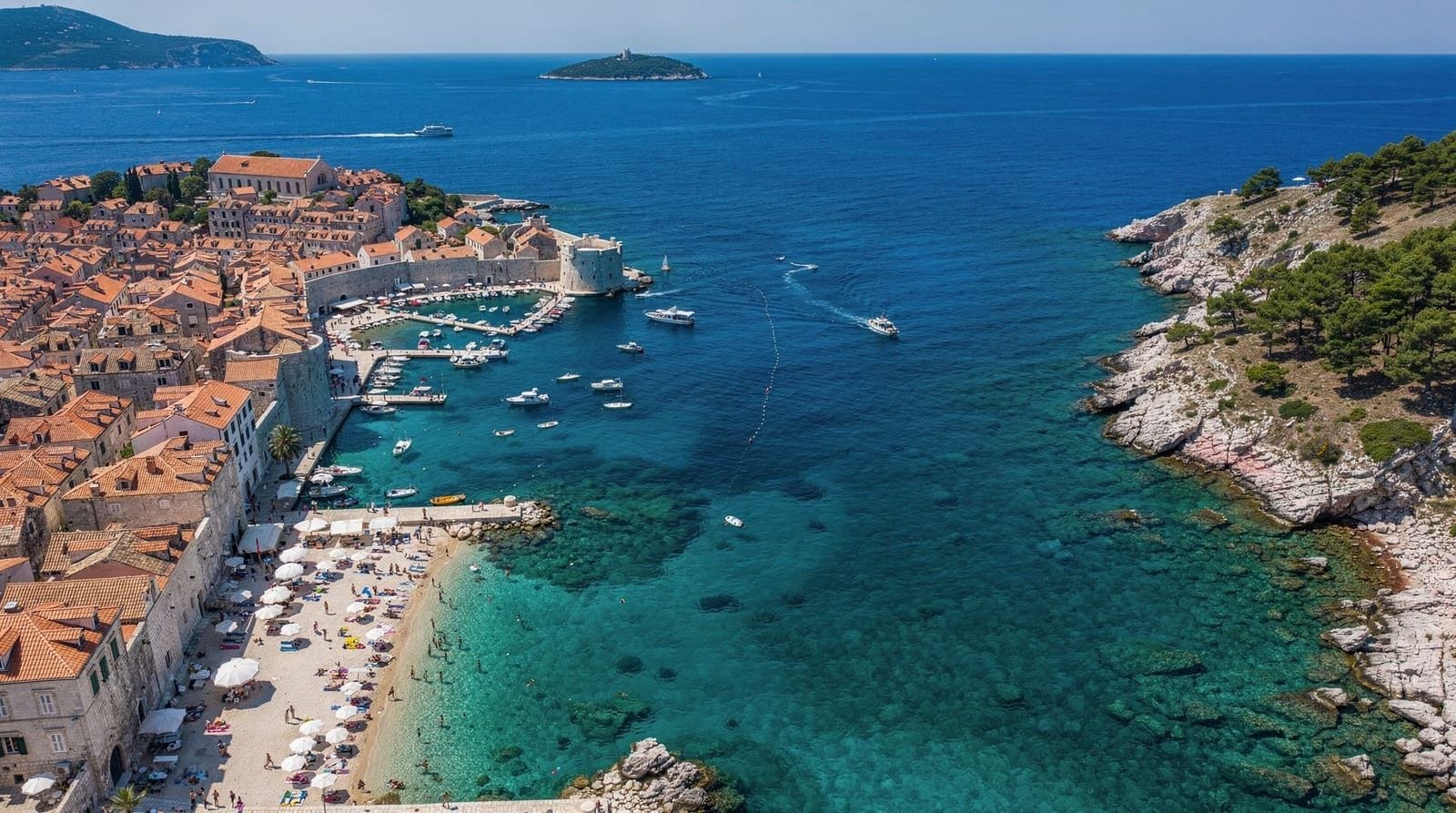
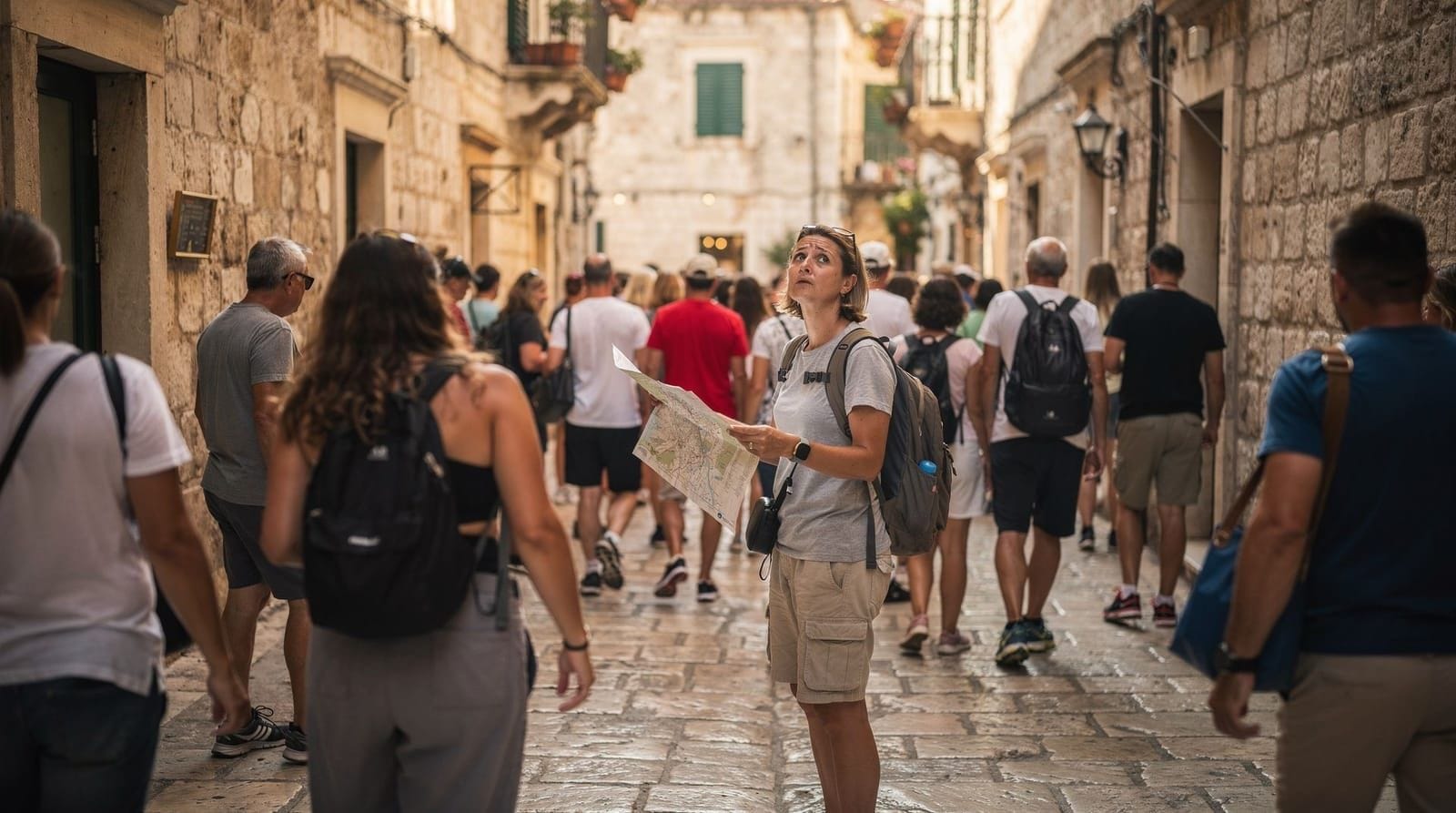
The numbers don’t lie: around 20 million tourists visit Croatia each year, concentrated on a handful of places from June through August. Dubrovnik, Hvar Town, Plitvice Lakes, Split’s Riva waterfront — these places are extraordinary, and their reputation is deserved. But standing three people deep in a queue for the Dubrovnik city walls in August starts to feel like missing the point.
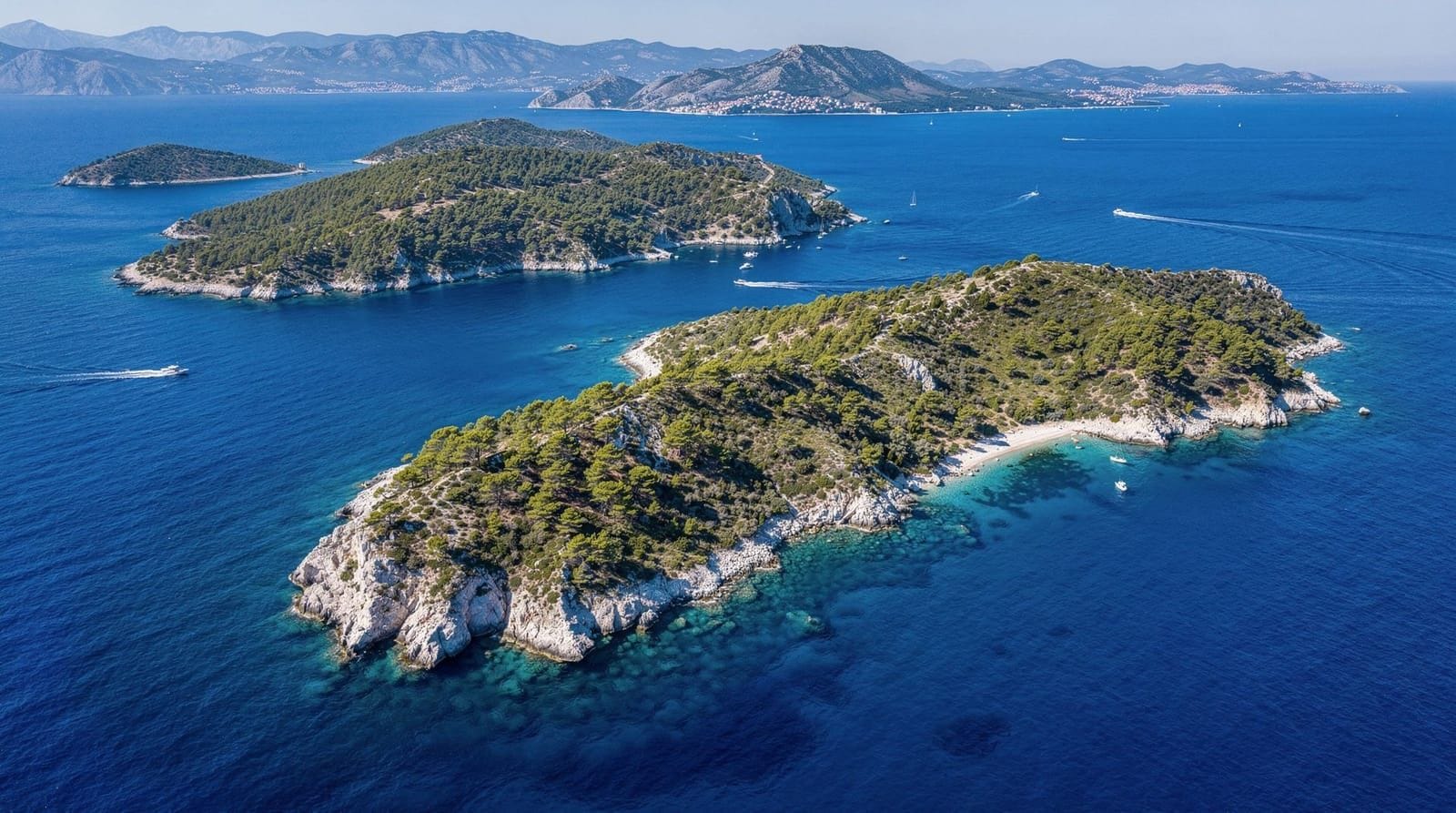
Croatia has more than 200 kilometres of coastline and islands, a continental interior that most visitors never see, and a handful of towns that are quietly excellent in their own right. Here is where to look.
| Best for | Travellers who’ve already done Dubrovnik/Split, or want to skip the queues entirely |
| Region spread | Dalmatia, Istria, Kvarner, continental Croatia (Zagreb hinterland, Slavonia) |
| Getting around | A rental car helps most; Vis and Krk are ferry-only or bridge-only |
| Best time | May, June or September — these places don’t need August crowds to feel alive |
| Cost | Generally cheaper than Dubrovnik/Hvar/Split equivalents |
Vis: The Island That Couldn’t Be Touched
Vis is the most interesting island in Dalmatia, and the explanation for why lies in its recent history. For most of the Yugoslav period, Vis was a restricted military zone — civilians couldn’t visit, which meant the tourist economy that reshaped Hvar, Brač and Korčula in the 1970s and 1980s simply didn’t happen here. When restrictions lifted in 1989, Vis was essentially intact.
What you find now is an island that feels a generation behind the rest of Dalmatia in the best possible sense. The town of Vis has Renaissance loggia, an Austrian-era fortress, and restaurants serving good fish to a mix of sailing-circuit regulars and day-trippers who made the longer ferry crossing. Komiža, on the western side, is a working fishing village with a proper harbour and a church-fortress that catches the late afternoon light dramatically.
The island’s interior hides things — abandoned Yugoslav military installations, vineyards producing Pošip and Vugava (two white wines you almost never encounter on the mainland), and Tito’s Cave (literally a wartime bunker used by Josip Broz Tito as a command post).
The Blue Cave and the Bisevo grotto are technically accessible as day trips from Vis, though most people visit as part of a Split-based island tour.
A day trip from Split covering Vis, Hvar and the Blue Cave is the standard way to see the island without committing to the overnight ferry. If you can, stay — Vis rewards a night or two.
Getting there: Jadrolinija car ferry from Split (2h 40min, a few daily in summer). Fast catamarans also serve the route, slightly faster.
Šibenik: The Cathedral City Nobody Talks About
Šibenik occupies the middle of the Dalmatian coast between Split to the south and Zadar to the north, and it gets consistently overlooked as a result. It shouldn’t.
The cathedral of St James — built between 1431 and 1555 and a UNESCO World Heritage Site since 2000 — is one of the most remarkable Gothic-Renaissance buildings in the Mediterranean. Built entirely from stone with no wood or brick in the vaulting, it was designed by Juraj Dalmatinac (Giorgio da Sebenico) and completed by Nikola Firentinac. The frieze of 71 sculpted faces ringing the exterior apse is the building’s most famous feature and worth inspecting closely.
Beyond the cathedral, Šibenik’s medieval quarters climb steeply to a 13th-century fortress (now used as a summer festival venue). The city has invested significantly in its Old Town in recent years and now has a decent restaurant and cafe scene that felt underdeveloped a decade ago.
Šibenik is also the gateway to two national parks: Krka is 12 kilometres inland; Kornati is accessible by boat tour from the nearby town of Vodice or Šibenik harbour itself. Using Šibenik as a base rather than Split puts you closer to both, with cheaper accommodation and fewer crowds.
Ston: Oysters, Walls and Almost No One
Ston sits at the neck of the Pelješac Peninsula, connected to the mainland by the most extraordinary medieval fortification in Croatia — a 5.5-kilometre stone wall system that once enclosed both Ston and the nearby village of Mali Ston. It’s the longest defensive wall in Europe after the Great Wall of China, though it has none of that wall’s fame.
The town is small. There are perhaps 2,500 people here. But the reason to come is shellfish: the Ston channel is one of the cleanest oyster and mussel farming areas in the Adriatic, and the restaurants along the waterfront in Mali Ston serve them with a directness and quality that’s hard to argue with. You eat oysters with lemon; you drink Pelješac wine (the reds are the peninsula’s main export); you listen to the water.
Ston is an easy stop on any journey from Dubrovnik north toward Split, particularly since the Pelješac Bridge eliminated the old Neum border crossing. It makes a good lunch stop on a road trip up the coast, or a base for exploring the wine villages of Pelješac (Dingač, Postup) with less time pressure than a day trip from Dubrovnik allows.
The nearby full-day wine tour of Pelješac takes in the vineyard towns and the Ston walls together — a good combination if you don’t have a car.
Samobor: The Town Twelve Kilometres from Zagreb
Samobor is a market town in the foothills of the Samobor Hills, twelve kilometres west of Zagreb — close enough to reach in 30 minutes by bus from Zagreb’s central bus station. Most visitors to Zagreb never make it.
The town has a Baroque main square that’s genuinely lovely without being self-conscious about it — locals use it as a market square, not a stage set. The old fortresses on the hillside above town are ruins now, but the walk through the forest to reach them is pleasant. The Samobor Museum has a small but interesting collection of 19th-century regional history.
The reason Samobor has any culinary fame at all is kremšnita — a Austro-Hungarian custard cream pastry that Samobor claims as its own speciality and which you can eat in any of the old-fashioned kavana (cafés) on the main square. It’s good. The local herb-based spirit, Bermet, is also made here and worth trying if you’re interested in regional Croatian drinks culture.
Use Samobor as a half-day excursion from Zagreb. It pairs well with the Zagorje castle region to the north if you have a car.
Osijek: Slavonia’s Underrated Capital
Osijek is the capital of Slavonia, Croatia’s eastern agricultural region, and it receives a tiny fraction of the visitors that flood the Dalmatian coast each summer. It’s a genuinely different Croatia — flat, green, Habsburg in character, with an architectural ambition that surprises those expecting a provincial backwater.
The Tvrđa (Fortress) district is the centrepiece: an intact 18th-century military town-within-a-town, now housing cafes, a university and a weekend night market. The main commercial avenue — the Europska avenija — has Secessionist and Art Nouveau buildings that would not look out of place in Vienna or Budapest. Osijek sits on the Drava River, and the riverfront promenade in the evening is pleasant in a way that feels completely undiscovered.
The Kopački Rit Nature Park, one of Europe’s largest floodplain wetland reserves, is 12 kilometres from the city centre. It’s outstanding for birdwatching — white-tailed eagles, black storks, spoonbills — particularly in spring and autumn when the floodwaters draw the largest variety of species.
Slavonian food deserves more attention: fish stew (fiš paprikaš) from the Drava and Sava rivers, kulen (spiced pork sausage), and the local Graševina white wine, which is one of Croatia’s best whites and almost unknown outside the country.
If you’re taking the Slavonia route between Zagreb and the coast, Osijek is worth a night rather than a drive-through.
Rovinj: Istria’s Most Atmospheric Town
Rovinj isn’t exactly hidden — it regularly appears on “underrated Italy” lists by mistake (it’s in Croatia, but the mix-up speaks to its character). It does, however, receive far fewer visitors than Dubrovnik while delivering something arguably as beautiful.
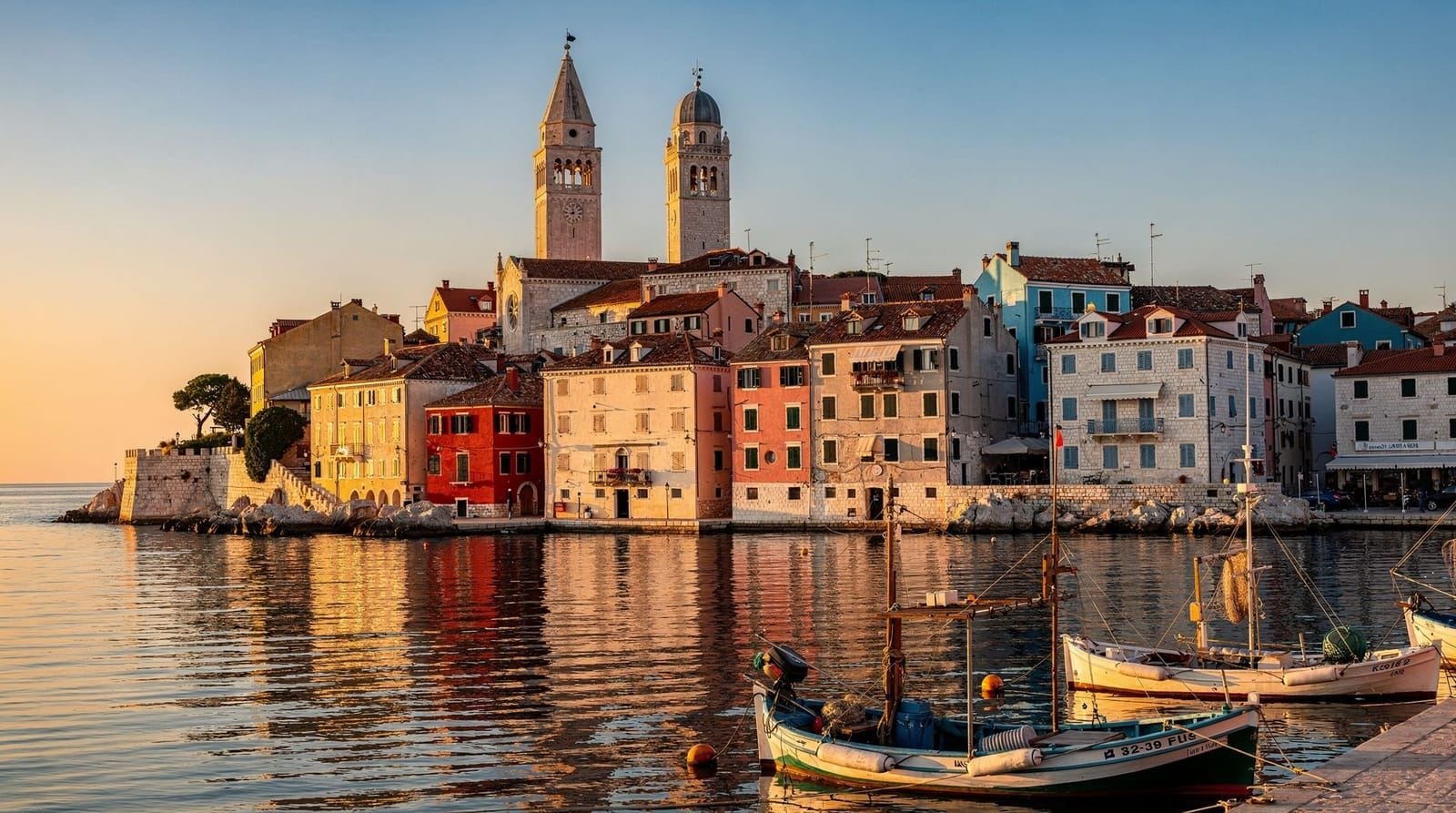
The old town occupies a small peninsula jutting into the Adriatic, with the baroque church of St Euphemia visible from almost every angle. The streets are narrow, cobbled and car-free; the harbour is lined with fishing boats and tourist boats. At sunset, the buildings on the harbour front glow in orange and terracotta. It photographs well without needing any effort.
The Rovinj archipelago — a cluster of small forested islands just offshore — is reachable by water taxi or boat tour. The Lim Fjord, a drowned valley 10 kilometres south of Rovinj, is worth an hour of anyone’s time: a narrow waterway flanked by forested cliffs, with a pirate cave at its head that sounds tacky and is actually quite striking.
A boat tour of the Lim Fjord and pirate cave from Rovinj is the standard day excursion from town, and it combines well with a morning’s wandering of Rovinj’s old town.
Rovinj is most sensibly visited as part of an Istrian circuit rather than in isolation — Poreč’s Euphrasian Basilica (UNESCO), Pula’s amphitheatre, and the hilltop town of Motovun all sit within an hour’s drive.
Trogir: A UNESCO Old Town Without the Lines
Trogir sits on a tiny island connected to the mainland by a bridge, 30 kilometres north of Split. Its entire old town is a UNESCO World Heritage Site — one of the best-preserved Romanesque-Gothic ensembles on the Adriatic coast. The Cathedral of St Lawrence has a portal, carved by Master Radovan in 1240, that art historians consider one of the finest examples of Romanesque sculpture in Europe.
None of this is secret — Trogir appears in the guidebooks. But it receives a fraction of Dubrovnik’s tourist volume, and in May or September it’s entirely possible to have the cathedral square to yourself at 8am before the tour groups arrive. The town is small enough to walk in an afternoon, which makes it a natural half-day stop when leaving or arriving at Split airport (it’s 10 minutes from the airport road).
Krk: The Island You Drive Onto
Krk is the largest island in Croatia and the only one you reach by bridge rather than ferry — a fact that changes its character entirely. Because there’s no boat crossing to plan around, Krk gets treated as a drive-through rather than a destination, which is precisely why it’s underrated. The island splits into two distinct halves: a green, cultivated north around Krk Town and Malinska, and a stark, wind-scoured limestone south around Baška, where the bora has stripped the hills bare for centuries.
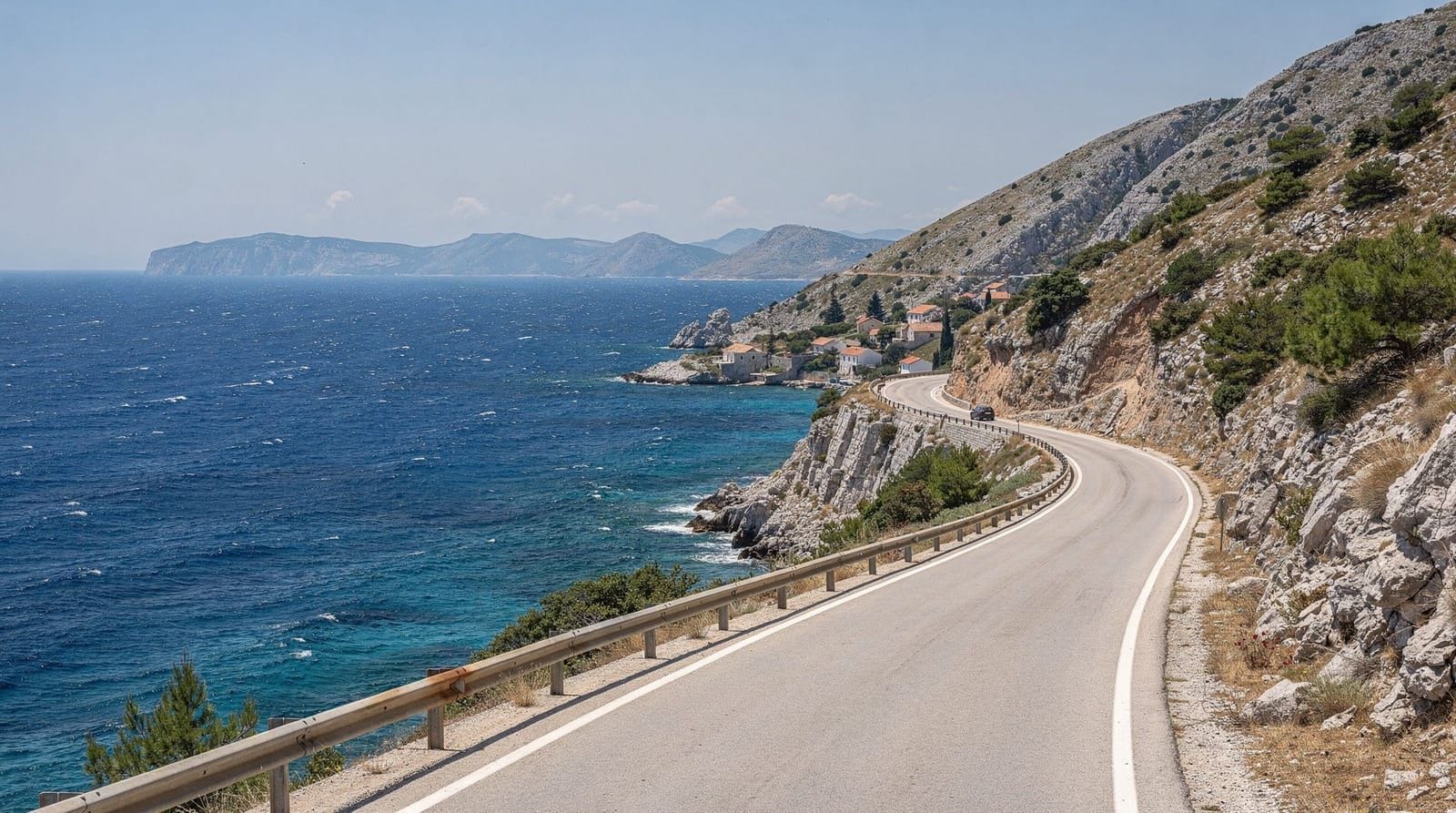
Krk Town itself has a compact Romanesque old town and a Frankopan castle on the waterfront, worth an hour’s wander. But the real reason to detour here is Baška — a long pebble beach backed by the Velebit mountains across the channel, considerably less crowded than anything on the mainland coast in July. The Baška-Batomalj road, with panoramic views down to the bay, is one of the better short drives in the Kvarner region.
Getting there: Krk Bridge connects the island directly to the mainland near Rijeka Airport, which actually sits on Krk itself — meaning some visitors land on the island without realising it. No ferry required.
Lošinj: Herbal Air and Empty Coves
Lošinj sits further out in the Kvarner archipelago than Krk, connected to neighbouring Cres by a small swing bridge, and it takes noticeably more effort to reach — which keeps the crowds proportionate to that effort. The island has marketed itself since the Austro-Hungarian era as a health resort, thanks to a microclimate of pine forests and aromatic herbs that Habsburg doctors once prescribed for respiratory conditions. It still smells faintly of rosemary and sage on a warm afternoon.
Mali Lošinj, the main town, has a curved harbour lined with 19th-century sea-captains’ villas — a legacy of the island’s Austro-Hungarian sailing-ship wealth — and a genuinely good aquarium focused on Adriatic marine life, including a dolphin research station that studies the resident bottlenose population rather than keeping animals captive. Veli Lošinj, the smaller and older of the two main settlements, is quieter still.
The coves around the island — reachable by the local passenger boat, water taxi or a rented kayak — are some of the clearest water in the northern Adriatic, and in June they’re close to empty. Rijeka, the regional hub and gateway to both Krk and Lošinj, is worth a night in its own right: a working port city with a striking modernist corniche and none of the tourist-town self-consciousness of the coast further south.
The Approach: How to Actually Find These Places
The pattern with Croatia’s hidden gems is that they sit just off the main tourist circuit — close enough to be logistically accessible, far enough that most itineraries don’t bother. A few practical points:
- A car opens all of this up. Ston, Samobor, Trogir, and Osijek are manageable by bus but far easier with wheels. See our renting a car in Croatia guide for what to know.
- Shoulder season matters more for these places than the famous ones. Dubrovnik in August is crowded and expensive but still offers the experience. Vis in August is also crowded; Vis in October is a different island.
- Island travel requires planning. Ferry schedules are limited, especially off-peak. Check the Croatia ferries guide before building an itinerary around Vis or Mljet.
The Croatia that the crowds miss is often the Croatia that rewards most. These aren’t consolation prizes — they’re places with their own reasons to exist, which is rather the point.
Which one, if you only have time for one
| Place | Best for | Time needed | Skip if |
|---|---|---|---|
| Vis | Unspoiled island atmosphere, wine, quiet fishing villages | 2+ nights | You can’t spare the ferry commitment |
| Šibenik | Architecture without the crowds, base for Krka | 1 night | You’re only doing a coastal drive-by |
| Ston | Oysters, walls, an easy stop between Dubrovnik and Split | Half a day | You need a full urban experience |
| Samobor | An easy half-day from Zagreb, kremšnita | Half a day | You’re not passing through Zagreb |
| Osijek | A genuinely different, continental Croatia | 1 night | You’re only doing the coast |
| Krk | An easy detour with no ferry logistics | Half a day–1 night | You want maximum remoteness |
| Lošinj | Genuine quiet, clear water, herbal air | 2+ nights | You’re short on time and can’t reach it |