Paklenica National Park travel guide
Paklenica in the Velebit mountains offers Croatia's best rock climbing and canyon hiking — dramatic limestone gorges near Zadar, open year-round.
Quick facts
- Best time
- April–June and September–October
- Days needed
- 1–2 days
- Getting there
- Car from Zadar (50 min); bus to Starigrad-Paklenica village
- Budget per day
- Ticket €7–€10; budget €50–€90 all in
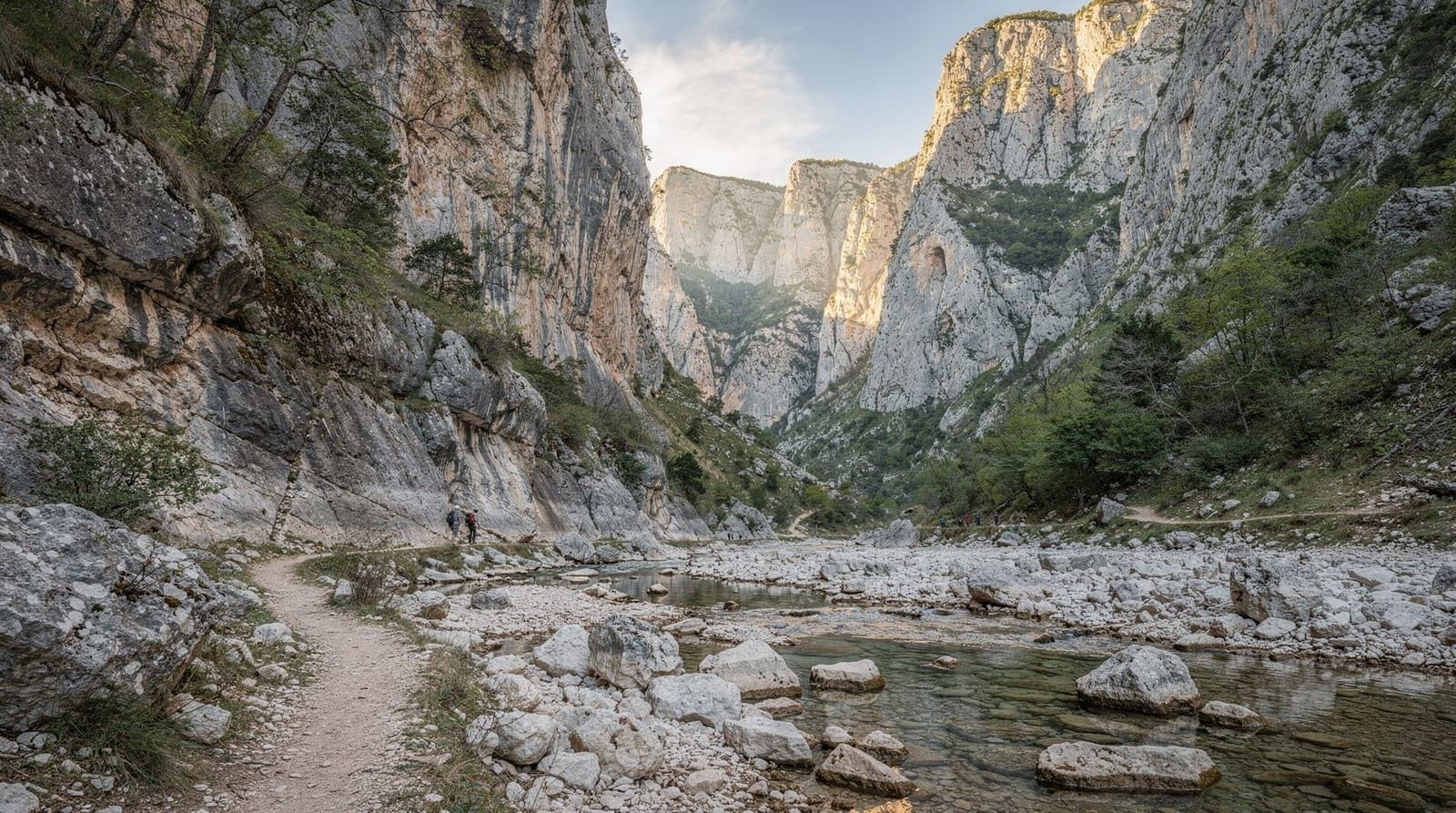
Paklenica National Park sits at a dramatic junction: the limestone walls of the Velebit mountain range plunge almost directly into the Adriatic Sea near the small coastal town of Starigrad-Paklenica, creating canyon gorges that have been cut by thousands of years of river erosion. For hikers and climbers, it is one of Croatia’s most rewarding destinations — a genuine mountain experience within an hour of the Zadar coastline.
The park encompasses two main canyons: Velika Paklenica (Big Paklenica, the main visitor route) and Mala Paklenica (Little Paklenica, wilder and less visited). Above them, the Velebit plateau rises to 1,757 metres at Vaganski Vrh — the highest point in Dalmatia — offering a full range of hiking challenges from gentle canyon walks to serious summit routes.
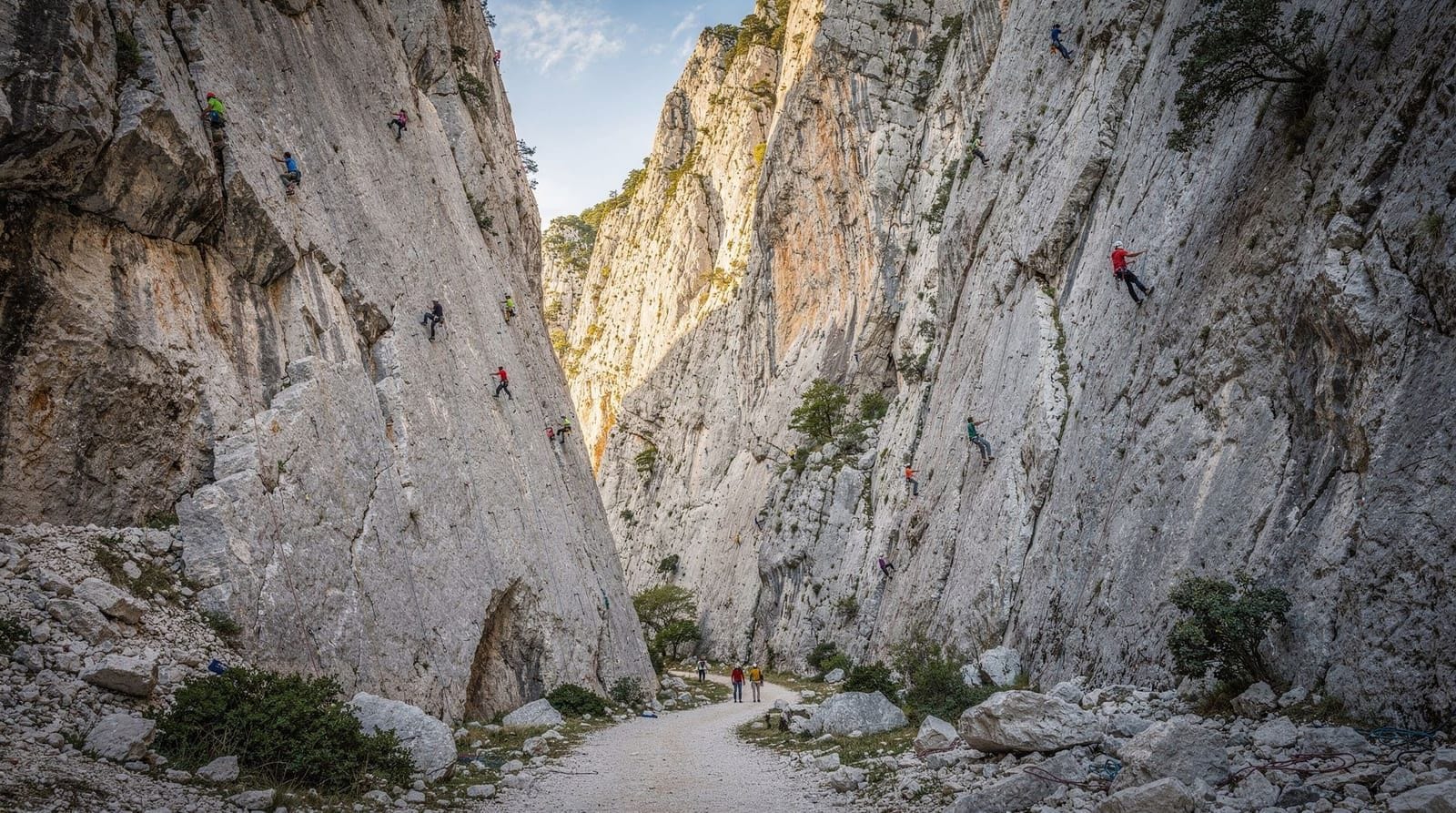
Croatia’s climbing community has long regarded Paklenica as their home crag. The Anića Kuk cliff face in Velika Paklenica — 350 metres of compact limestone rising directly from the canyon floor — hosts over 400 bolted sport climbing routes and is one of the most significant single climbing venues in southeastern Europe.
Paklenica is one of Croatia’s national parks and part of the wider Velebit Nature Park system; for a broader look at hiking in Croatia beyond this one park, or a route-by-route breakdown specifically for Paklenica, see the hiking Paklenica guide.
Velika Paklenica canyon
The main entrance to the park is from Starigrad-Paklenica village on the coastal road, leading directly into the Velika Paklenica canyon. The approach road (vehicle access permitted to a certain point, then walkers only) runs alongside the Velika Paklenica stream through increasingly dramatic canyon scenery.
The canyon walk from the park entrance to the main viewpoints and the Anića Kuk base takes around 1.5–2 hours each way on the main trail. The path climbs steadily but is well-maintained and suitable for confident hikers in good footwear. The canyon walls narrow dramatically above, with vertical limestone faces on both sides and beech forest in the valley.
The WWII bunker (Bunker Stara or Titov bunker) in the canyon is a fascinating diversion — a military tunnel complex built in 1943–44 as a mountain retreat, carved directly into the limestone. Open to visitors with a torch (or a headlamp from the park office); the cool interior temperature makes it a welcome relief in summer.
Lugarnica: the former forest ranger’s house in the upper canyon serves as a mountain hut (planinska kuća) — a rest stop with basic refreshments and the feeling of genuine mountain remoteness despite being only 2 hours from the car park.
Rock climbing in Paklenica
Paklenica is one of the top sport climbing destinations in Europe. The Anića Kuk face dominates the upper Velika Paklenica canyon and offers routes from 4c beginner level to 8c at world-class difficulty. The compact grey limestone is excellent quality — technical and continuous, with the characteristic Velebit pocket-and-crimp character.
The Mosoćka greda wall is the other major climbing area — longer multipitch routes with a serious mountain character. The approach is 45–60 minutes from the canyon floor.
For beginners: The lower Anića Kuk sectors have well-bolted, well-travelled routes in the 5a–6b range — excellent for anyone starting to lead climb outdoors or looking for a first multipitch experience with a guide.
For experienced climbers: Routes up to 400 metres on Anića Kuk proper (the upper sections are increasingly serious); and the routes on the north face of Vaganski Vrh for committed alpinists.
Several local guiding companies operate out of Starigrad-Paklenica, offering rope hire, guided climbing days, and skills courses. Enquire in advance — availability in peak season is limited.
Mala Paklenica
The smaller Mala Paklenica canyon runs parallel to Velika Paklenica, around 2 km to the northeast. It has no maintained trail and sees very few visitors — a wilderness experience for those comfortable with rough terrain and basic navigation. The canyon is narrower, wilder, and more atmospheric than Velika Paklenica.
A permit (obtainable at the park entrance) is required for Mala Paklenica. Groups are advised to have experience and good map-reading ability.
Summit hiking: Vaganski Vrh
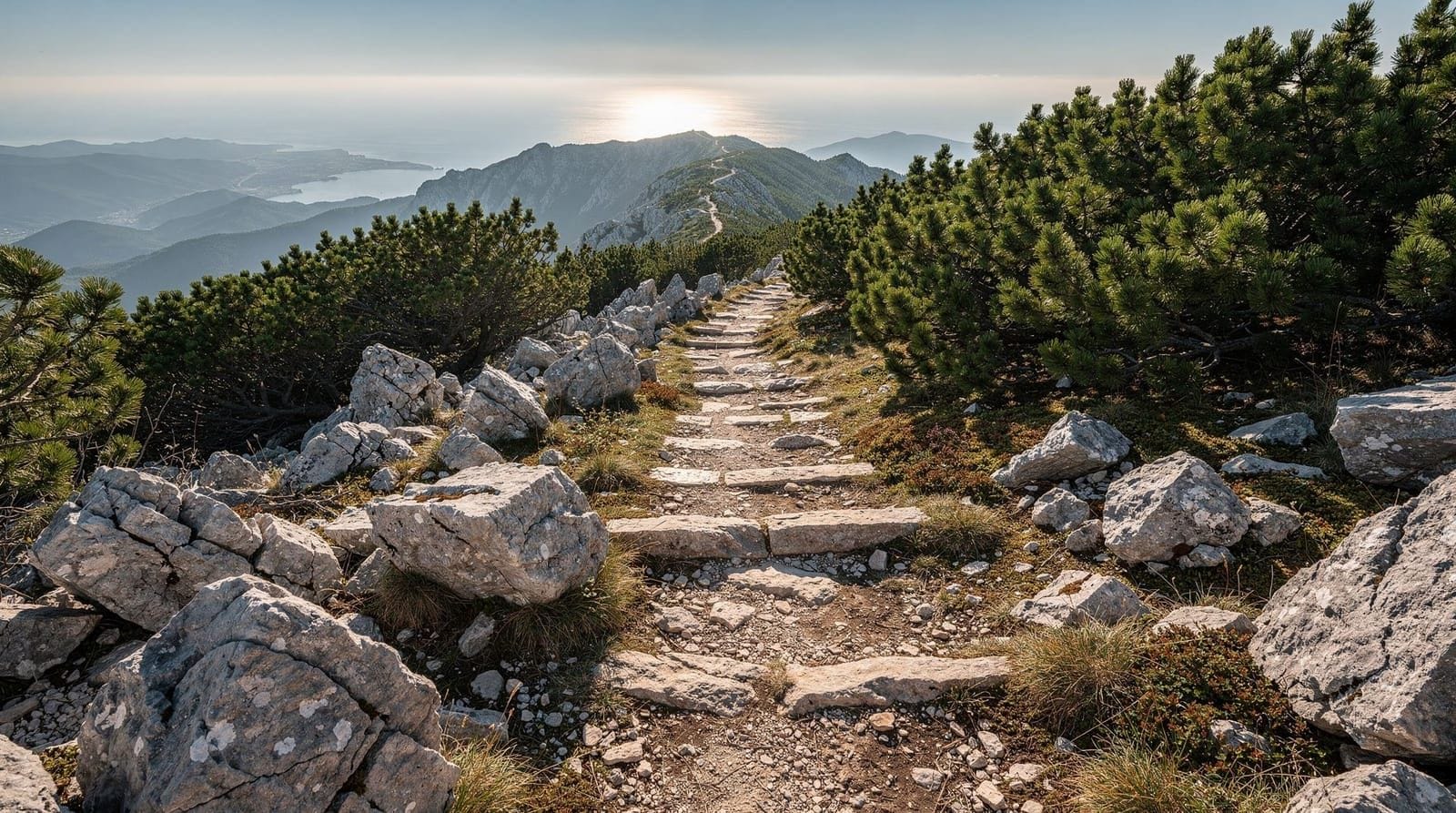
Vaganski Vrh (1,757 m) is the highest point in Paklenica National Park and the highest peak in Dalmatia. The standard ascent from the canyon takes 5–7 hours return — a strenuous but non-technical hike on marked trails. From the summit, views extend over the Adriatic to the Kvarner islands on one side and across the Velebit karst plateau on the other.
Zlatni Kuk (1,504 m) is a popular shorter alternative — a 4–5 hour circuit with good views.
Mountain huts: The park has two mountain huts (Lugarnica in Velika Paklenica and Planinarska kuća Paklenica higher on the plateau) offering basic accommodation for multi-day mountain circuits. Book ahead through the Croatian Mountaineering Association (HPS).
Wildlife
The wider Velebit mountain system — Paklenica is at its southern end — contains one of the largest concentrations of brown bears in Europe. Encounters in the Paklenica gorges are rare but possible; the population is healthy and the bears generally avoid human contact. Standard protocols apply: make noise on trails, don’t leave food out.
Griffon vultures soar above the Velebit cliffs — the Kvarner island of Cres has the main colony, but Velebit (including Paklenica) hosts regular sightings. Golden eagles also nest on the higher cliff faces.
The canyon stream in Velika Paklenica is home to the rare Huchen (Danube salmon) — a large freshwater salmonid now critically endangered. Fishing is prohibited within the park.
What to skip and practical warnings
The bunker without a torch — the WWII bunker (Titov bunker) in the canyon is genuinely interesting but completely unlit inside. Visitors who arrive without a torch or headlamp can only stand at the entrance. Torches are available for rent from the park entrance office, but bring your own for reliability.
The canyon in July–August midday — temperatures at the canyon floor can reach 35–38°C in the exposed lower section, and the main Anića Kuk wall radiates heat from the limestone surface. The early morning experience (7–9am) in the same conditions can be genuinely pleasant. If you must visit in high summer midday, go for the bunker (cool interior) and the shaded upper canyon.
Attempting Vaganski Vrh without preparation — the summit trail is marked and non-technical, but it is a serious mountain hike of 9–11 hours return that many visitors underestimate. Inadequate footwear, insufficient water, and late starts cause the majority of rescue callouts in the park. If in doubt, hire a local guide or save the summit for a cooler season.
The village of Starigrad-Paklenica for accommodation in August — the village has a reasonable range of guesthouses and apartments, but it fills completely in August and the beach area becomes crowded. Zadar (50 minutes south) offers far better accommodation options and restaurants, with Paklenica as a morning excursion.
Getting to Paklenica
By car from Zadar: Around 50 minutes north on the coastal road (D8, Magistrala) to Starigrad-Paklenica. This is by far the most practical option. Parking at the park entrance (paid in season).
By bus: Regular buses on the Split–Zadar–Rijeka coastal route stop at Starigrad-Paklenica village. From Zadar, around 1 hour.
From Split: Around 2 hours north along the coastal road.
Ticket prices
Park entry (2026 approximate): €7–10 per adult, seasonal variation. Season pass options available for multiple-day visits. Tickets at the entrance gate — considerably cheaper than Plitvice Lakes or Krka National Park, reflecting Paklenica’s focus on hiking and climbing rather than boardwalk sightseeing.
Where to stay near Paklenica
Starigrad-Paklenica village on the coast has a range of small hotels, guesthouses, and apartments — practical, unpretentious, and aimed mainly at climbers and hikers. Hotel Alan is the main hotel and organises climbing guiding. Self-catering apartments in the village are cheaper and perfectly adequate for a mountain-base stay.
Best time to visit Paklenica
April–June is optimal for hikers and climbers: moderate temperatures in the canyon (cool in the shade even in June), good trail conditions, and the park is uncrowded. The Anića Kuk gets a lot of sun from morning — start early.
September–October is excellent for hiking and the autumn colours in the beech forest. Cooler temperatures make the summit routes more comfortable.
July–August: Very hot in the canyon, especially below Anića Kuk. Climbing is best done early morning and late afternoon. Hikers heading for the upper plateau escape much of the heat.
Winter: The park is open but high routes may have snow. Canyon hiking is possible and beautifully quiet.
Photography guide
Paklenica offers exceptional photography from canyon floor to summit — dramatically different subjects at each elevation.
Velika Paklenica canyon — lower section: The approach walk passes through narrowing canyon walls that create natural framing for compositions. The best light enters the canyon in the morning (before 10am) and for a brief window in late afternoon. Midday produces harsh shadows and flat light in the deeper sections. The canyon stream, the mossy walls, and the overhanging limestone all photograph well in the diffuse shadow light that fills most of the canyon for most of the day.
Anića Kuk: The full cliff face of Anića Kuk (350 metres) is best photographed from the valley floor looking northeast, in morning light when the face receives direct sun. A telephoto lens (200–400mm equivalent) brings out the climbers on the wall as tiny figures against the grey limestone — a shot that conveys the scale more effectively than any wide angle.
Summit views (Vaganski Vrh, 1,757 m): The summit panorama on a clear day extends from the Velebit coast (Zadar visible in good conditions) across to Bosnia-Herzegovina and the inland mountains. The best photography window from the summit is 8–10am before heat haze develops. The northwest ridge approach has excellent ridge-line photography opportunities.
Wildlife: Griffon vultures circling the upper canyon walls are most active in morning thermals (10am–1pm). The canyon approach walk before the crowds arrive (7–8am) occasionally produces encounters with deer and the rare Huchen in the stream. Brown bears are theoretically possible but exceedingly rare on the main trail.
Detailed route descriptions with timings
Velika Paklenica main canyon walk:
- Start: Park entrance gate, Starigrad-Paklenica
- Time to first viewpoints: 45 minutes (gentle gradient, wide path)
- Time to WWII bunker: 1 hour 15 minutes each way
- Time to Lugarnica mountain hut: 2 hours each way
- Full return (bunker + hut): 4–5 hours, 12 km total
- Gradient: Moderate — steady climb with no technical sections
WWII bunker (Titov bunker):
- A diversion of 15–20 minutes from the main trail
- The tunnel system penetrates 100 metres into the cliff; bring a headlamp or hire a torch at the park entrance
- Temperature inside: 10–12°C year-round — extremely refreshing in summer
- Most rewarding for those with an interest in WWII Yugoslav history; the engineering of the installation is impressive
Vaganski Vrh summit route:
- Start: Lugarnica hut in upper Velika Paklenica (2 hours from the park entrance)
- Time from hut to summit: 3–4 hours (steep, marked trail, some exposed ridge)
- Total return from entrance: 9–11 hours — a serious commitment requiring an early start
- Best months: May–June and September–October (snow possible into May; intense heat in July–August)
- Essential: Hiking boots, 2 litres water, food, emergency layer
Mala Paklenica:
- Permit required from the park entrance
- No maintained trail — rough gorge scrambling
- Allow 3–4 hours for the gorge traverse to the plateau
- Suitable for: Confident scramblers with outdoor navigation experience only
- Reward: Complete solitude and a dramatically wild canyon
Combined day trip: Paklenica and Zadar
Paklenica and Zadar are an ideal pairing — mountain drama in the morning, urban culture and the Sea Organ in the afternoon.
Suggested timing:
- Leave Zadar by 8am (50 minutes drive north on the coastal road to Starigrad-Paklenica)
- 9am: Enter the park; walk the main canyon to the WWII bunker (3 hours round trip, with stops)
- 12–12:30pm: Lunch at a roadside restaurant in Starigrad-Paklenica village (several options; ask for the daily catch if fish is on the board)
- 1:30pm: Drive back to Zadar
- 2–6pm: Zadar old town — the Sea Organ, the Church of St Donatus (9th century, one of the finest Carolingian buildings in the Balkans), and the Roman Forum site
- Evening: Zadar’s famous sunset from the Sea Organ terrace
This combination gives a complete experience of the Zadar region in a single day. Climbers can swap the afternoon Zadar circuit for an afternoon on the lower Anića Kuk sectors.
FAQ
Do I need climbing experience to visit Paklenica? No — the main Velika Paklenica canyon walk to the WWII bunker and Lugarnica hut is a well-maintained trail suitable for any reasonably fit hiker in good footwear. Climbing is optional and typically arranged separately with local guiding companies.
Is Paklenica better than Plitvice or Krka for a national park visit? It depends on what you want: Paklenica suits hikers and climbers looking for a mountain-canyon experience with far fewer crowds, while Plitvice and Krka deliver the classic turquoise-lake, boardwalk scenery. Many visitors combine Paklenica with Zadar rather than treating it as a lakes-park alternative.