Paklenica National Park: hiking and climbing in Croatia's Velebit canyon
Split: Krka National Park tour
What is Paklenica National Park known for?
Paklenica is Croatia's premier hiking and rock climbing destination. The park protects two dramatic limestone canyons — Velika Paklenica and Mala Paklenica — carved into the southern Velebit massif. The main canyon walk is accessible to casual visitors; the upper gorge and surrounding peaks attract serious hikers and one of Europe's most active rock-climbing communities.
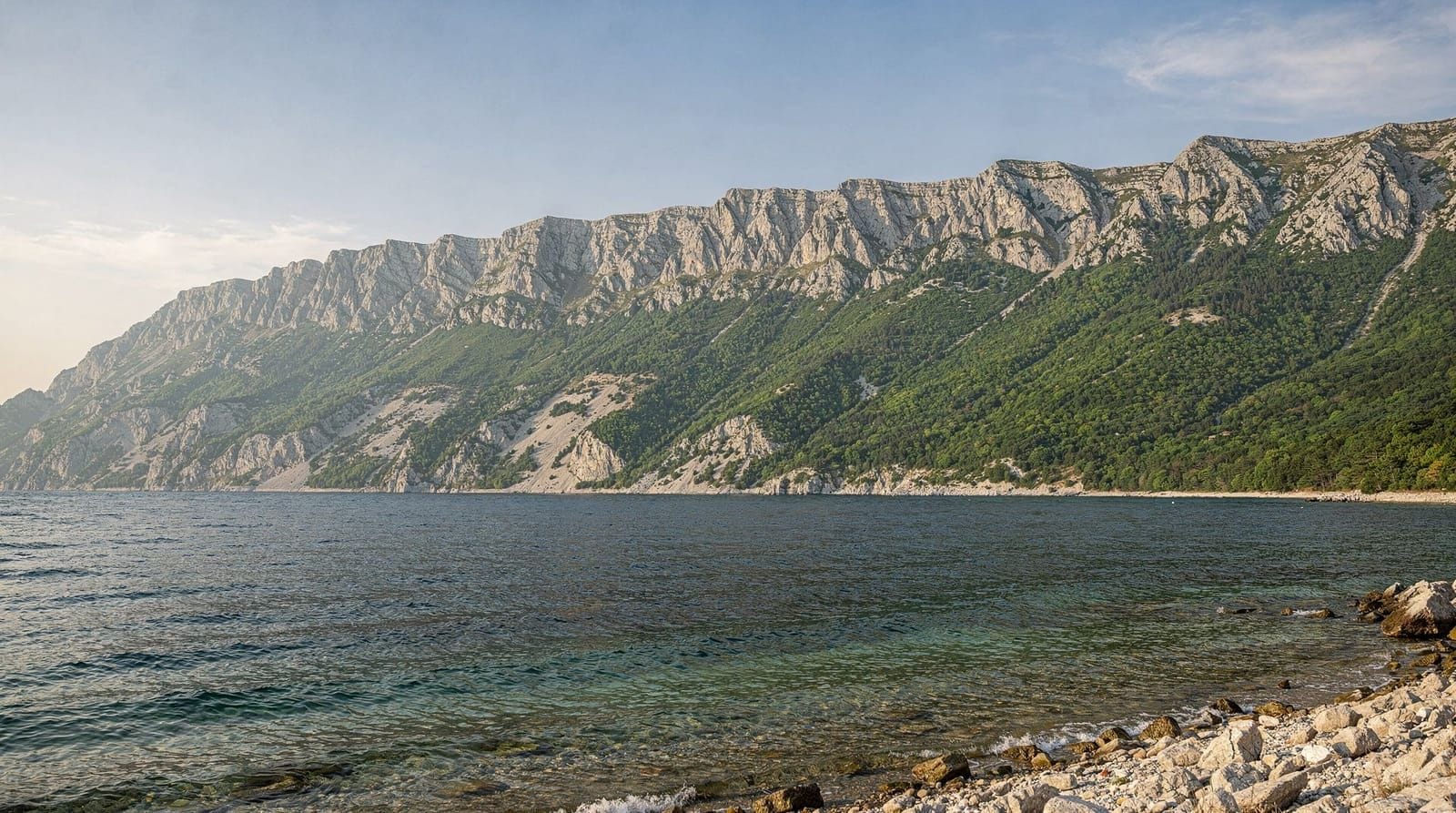
Paklenica National Park is the least typical of Croatia’s coastal parks. While Plitvice and Krka draw crowds with their waterfalls and turquoise lakes, Paklenica offers something structurally different: dramatic limestone gorges cutting into the southern Velebit range, one of the best-equipped rock-climbing venues in Europe, and hiking routes that climb from sea-level scrub to genuine alpine terrain within a few hours. This is the park for visitors who want to earn their views.
| Where | Starigrad-Paklenica, D8 coastal highway, ~45 km north of Zadar |
| Cost | Around €10–15 peak season, €7–10 shoulder season |
| Time needed | 1 hour (lower canyon) to full day (summit) |
| Getting there | Car ~45 min from Zadar; coastal buses stop at Starigrad |
| Best time | May, June, September for hiking; avoid midday heat in July–August |
Two canyons, one dominant
The park protects two parallel canyon systems carved by rivers flowing from the Velebit plateau to the Adriatic:
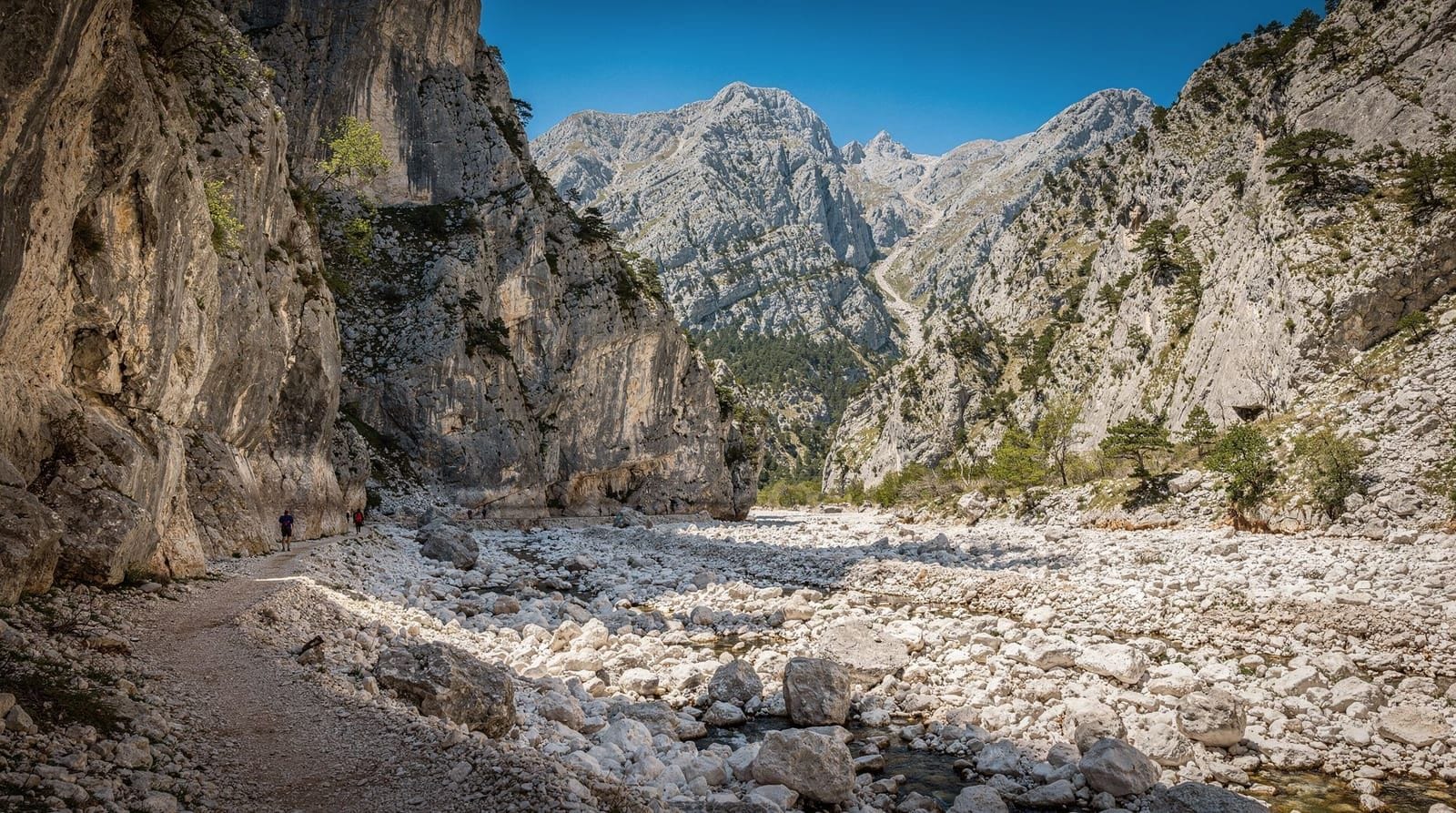
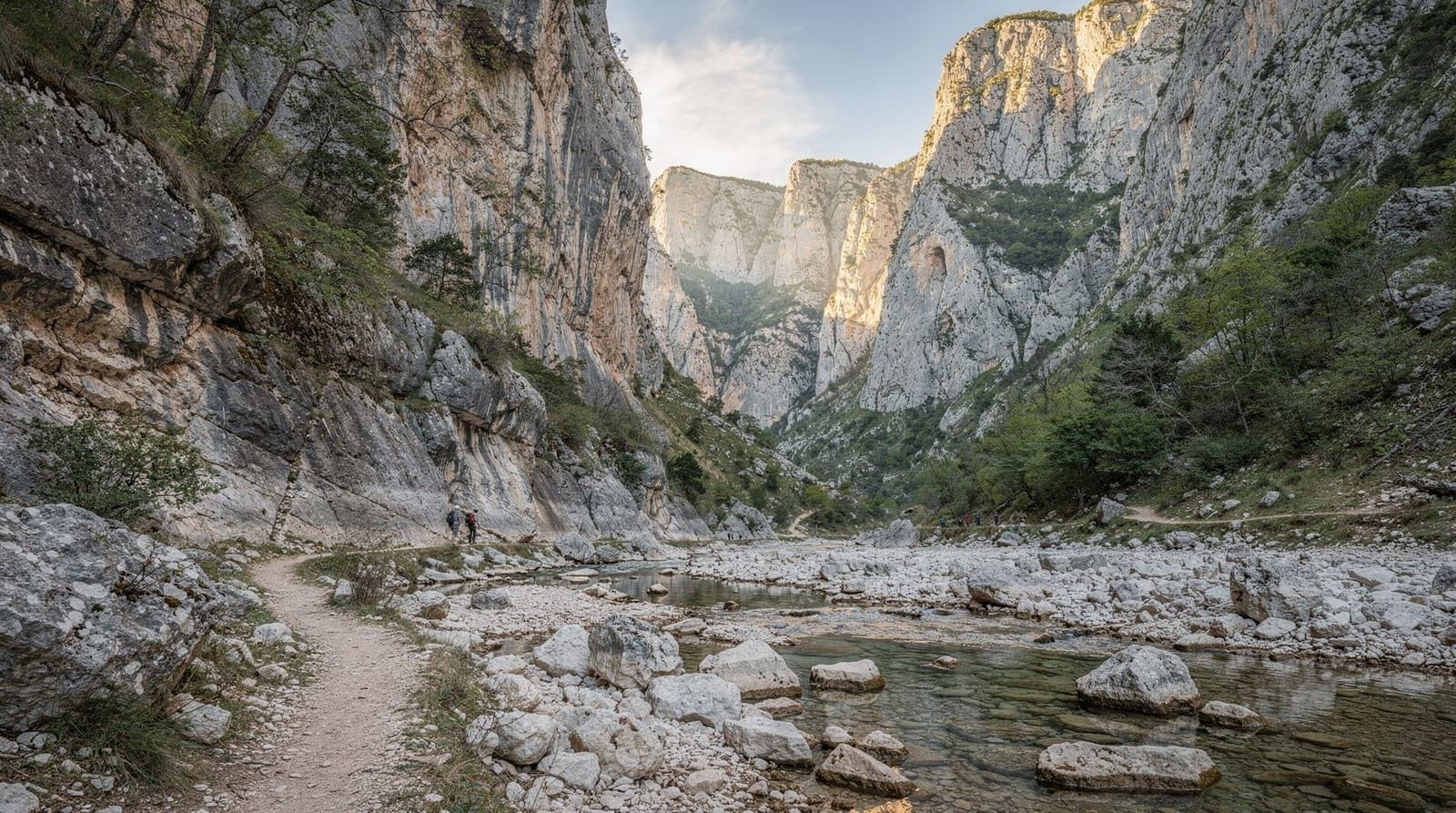
Velika Paklenica is the main canyon — a few hundred metres wide, several kilometres long, with vertical walls rising over 400 metres in its upper section. The path through the canyon bottom is clear, well-marked and begins almost immediately after the park entrance gate. The first kilometre is shaded and relatively flat; the canyon narrows dramatically in its middle section where the Paklenica stream runs over boulders. The Dom Paklenica mountain hut sits about 4.5 km from the entrance.
Mala Paklenica (Small Paklenica), to the north, is narrower, wilder and requires more route-finding ability. No maintained tourist path runs its full length — it is territory for experienced hikers who are comfortable on unmarked terrain. The contrast with the more accessible Velika canyon is sharp.
Rock climbing: why Paklenica matters
Paklenica’s international reputation is built on climbing. The Anića Kuk wall — a towering blade of limestone rising approximately 400 metres above the canyon floor — is one of the most impressive sport-climbing venues in the Mediterranean. Over 400 routes are established throughout the park, ranging from easy single-pitch slabs near the lower canyon to sustained multi-pitch lines at the highest grades.
The park hosts an annual international climbing festival (Paklenica International Climbing Meeting) that draws competitors from across Europe. The climbing infrastructure — bolted routes, established descent paths — is well maintained by the Croatian climbing community. Rental equipment is not available inside the park; bring your own or hire in Zadar.
For visitors without climbing experience who are curious, the spectacle of watching climbers on the canyon walls is part of the Velika Paklenica experience. The walls above the main trail are close enough to observe the detail of movement.
Hiking routes and difficulty
| Route | Distance | Time | Difficulty |
|---|---|---|---|
| Lower canyon (partial) | 2–3 km one way | ~1 hour | Easy |
| Full canyon to Dom Paklenica | 4.5 km one way | 3–4 hrs return | Moderate |
| Vaganski Vrh summit | Full day | 7–9 hrs return | Strenuous |
| Lugarnica circular | Multi-hour loop | Half day | Moderate–strenuous |
For a deeper trail-by-trail breakdown with waypoints and timing, see the dedicated hiking Paklenica guide.
The canyon walk (Velika Paklenica to Dom Paklenica mountain hut): The most accessible hike, 4.5 km one way, 3–4 hours return. Moderate effort, some uneven terrain, significant shade from the canyon walls. Suitable for reasonably fit adults; not a pushchair route. Children from about age 8 upward manage it comfortably.
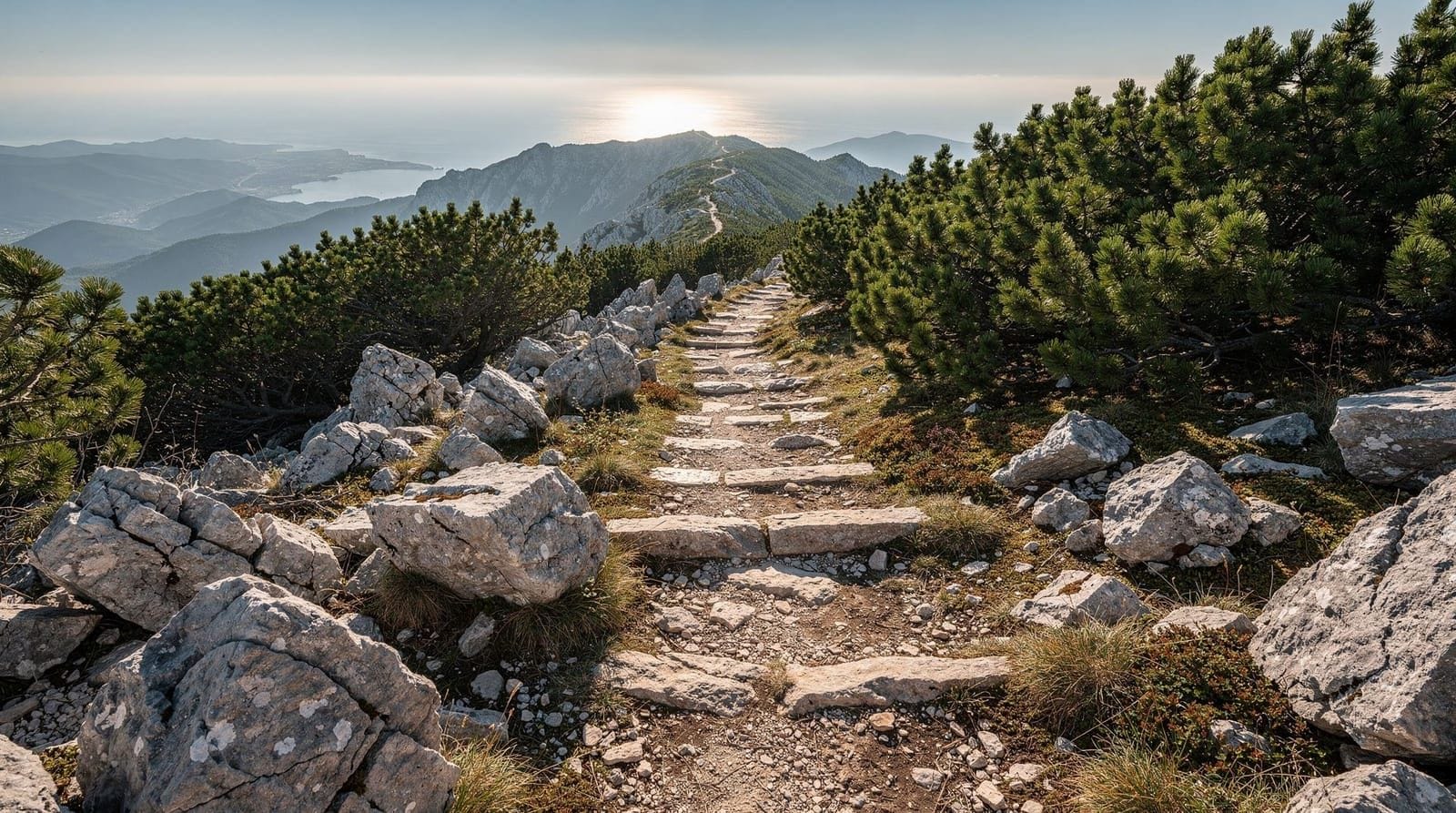
Summit route (Vaganski Vrh, 1,757 m): Full-day hike, 7–9 hours return from the canyon entrance. Serious elevation gain (over 1,600 m), route-finding required above the treeline, good mountain boots essential. In early season (May) snow may be present on the upper section. This is a genuine mountain hike, not a nature walk.
Plateau routes: Multiple trails explore the Velebit plateau between Paklenica and Velebit Nature Park to the north. These are multi-day territory, typically involving overnight stays in mountain huts.
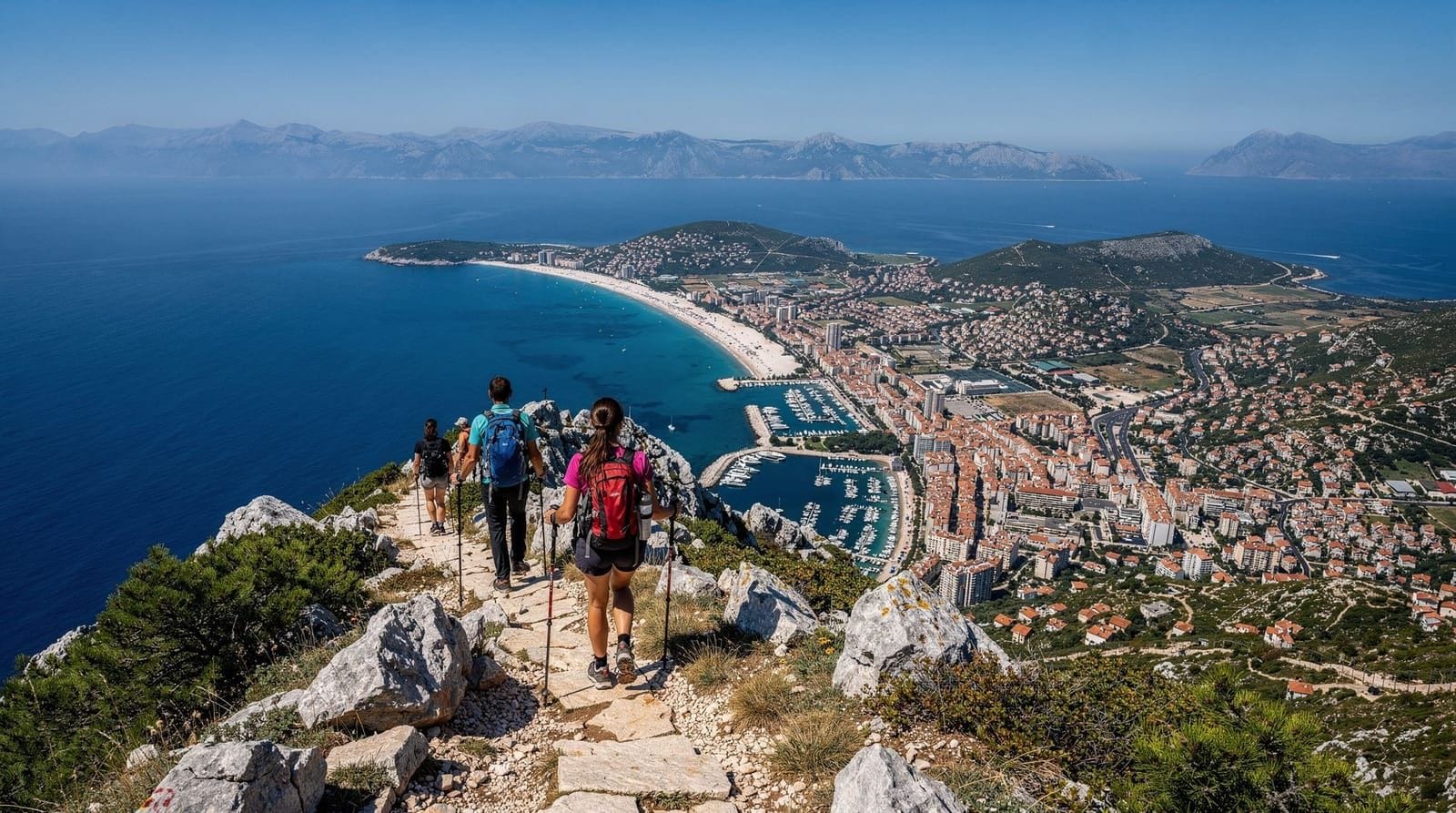
The Lugarnica route: A circular option that combines the main canyon ascent with a return along the plateau edge — impressive views across the Adriatic to the Kornati islands on clear days.
The mountain fortress: Manita Peć cave
About an hour into the main canyon walk, a signed branch trail leads to Manita Peć, a karst cave with stalactite and stalagmite formations. Guided tours of the cave interior run in season (included in a combined ticket or available separately). The cave visit adds about 1–1.5 hours to the canyon hike.
Practical information
Getting there: The park entrance is in the village of Starigrad-Paklenica, directly off the D8 coastal highway. Buses running between Zadar and Rijeka/Split stop here on request. Driving from Zadar takes about 45 minutes. Parking is available at the park entrance.
Entry fees (2026): Approximately €10–15 for adults in peak season; lower in shoulder season. Combined tickets including the cave visit are available at the entrance. Annual passes covering multiple entries are available for those staying in the area for several days.
When to go: May, June and September are ideal — reasonable temperatures for uphill hiking (Velebit gets very hot in July and August), good visibility and manageable visitor numbers. The canyon provides shade for the lower section even in summer. Spring (May) sometimes brings running water in the stream which diminishes by summer.
What to wear: Good hiking shoes or boots are essential — the canyon path is rocky in sections and the upper routes are genuinely rough. Bring more water than you think you need; the canyon has no reliable water sources beyond the mountain hut. In summer, start early (before 8 am) to avoid the midday heat.
Mountain huts: Dom Paklenica hut at the canyon head offers simple accommodation (bunk dormitories) and basic food. Booking ahead is strongly recommended for summer overnight stays. The hut is the base for early-morning summit attempts on Vaganski Vrh.
Paklenica for different travellers
Casual visitors: The lower canyon walk (first 2–3 km, return the same way) is satisfying without requiring serious fitness. The gorge scenery, the cliff walls above and the relative shade make it worthwhile even as a one-hour walk.
Hikers: The full canyon-to-hut route and the summit climbs provide as much as anyone could want. The plateau routes into Velebit territory add further depth.
Rock climbers: The park is a destination in its own right. Multiple days of climbing on the Anića Kuk and canyon walls, with accommodation in Starigrad or at the mountain hut, constitutes one of Croatia’s best adventure experiences.
Wildlife watchers: Early mornings in the upper canyon offer the best chance of spotting eagles. The beech forest zone (above the scrub and karst) holds a wider variety of birds and mammals.
Combining Paklenica with other destinations
Paklenica’s coastal highway position makes it convenient to combine with Zadar (45 km south), Šibenik (about 90 km south) or Plitvice Lakes (about 130 km northeast). The park is also the natural southern gateway to Velebit Nature Park, which covers the full mountain massif to the north. If you’re building a full day trip from Zadar itinerary, Paklenica’s lower canyon walk fits comfortably alongside a morning or afternoon in the city.
For a broader sense of how Paklenica compares to Croatia’s other protected areas, see the Croatia national parks overview, and if you’re chasing more adrenaline on the trip, the adventure sports in Croatia guide covers rafting, ziplining and diving alongside the hiking and climbing here. Biokovo, further south near Makarska, is the other major Dalmatian mountain-hiking destination worth comparing if your trip covers both regions.
Packing and safety notes
Mobile signal is patchy beyond the lower canyon, so tell someone your planned route and expected return time if you’re heading to the summit or the plateau trails. The terrain above the treeline is exposed karst with minimal shade and no reliable water sources — carry at least 2 litres per person for the summit route, more in summer heat. Weather on the Velebit plateau changes quickly; even a clear morning at the coast can turn to cloud, wind and a noticeable temperature drop higher up, so pack a windproof layer even on a hot day. First-aid basics and a fully charged phone are sensible minimums for anything beyond the marked lower canyon path.
Frequently asked questions about Paklenica National Park
How much does Paklenica National Park cost to enter?
Adult entry in 2026 costs approximately €10–15 in high season (July–August) and €7–10 in shoulder season. Children under 7 enter free. The ticket covers access to the Velika Paklenica canyon trail. Mountain hut overnight stays require separate payment at the huts.How do you get to Paklenica National Park?
The park entrance is near the village of Starigrad-Paklenica on the Dalmatian coast highway (D8), about 45 km north of Zadar and 90 km south of Rijeka. Buses on the coastal route stop at Starigrad. Driving from Zadar takes about 45 minutes.Is Paklenica good for non-climbers?
Yes — the main Velika Paklenica canyon walk is a straightforward hike on a well-marked path that leads through the gorge to a mountain hut (Dom Paklenica). The first 2–3 km are accessible to most fit visitors. You do not need to be a climber to enjoy the canyon scenery.What climbing is available in Paklenica?
Paklenica has over 400 established sport and traditional climbing routes on the canyon walls, ranging from beginner-friendly slabs to serious multi-pitch lines on the 400-metre Anića Kuk wall. It hosts an annual international climbing competition. Routes are fully equipped and internationally recognised.Can you hike to the peaks above Paklenica?
Yes — trails from the canyon lead to the Velebit plateau and peaks including Vaganski Vrh (1,757 m, the highest point of southern Velebit). Full-day hikes to the summit are strenuous, requiring good fitness and appropriate equipment. Overnight stays at Paklenica mountain hut enable multi-day routes.What wildlife lives in Paklenica National Park?
The park is part of the Velebit biosphere reserve, with brown bear and lynx populations in the wilder upper sections. Golden eagles nest on the canyon walls. The karst vegetation transitions from Mediterranean scrub in the lower canyon to beech and pine forests higher up.
Top experiences
Bookable activities with verified prices and instant confirmation on GetYourGuide.
Top experiences
Best-rated activities across GetYourGuide and Viator.

From Split: Plitvice Lakes National Park Guided Tour
- Viator

Krka Waterfalls Day Tour with Boat Ride from Split and Trogir
- Viator

Plitvice Lakes National Park Guided Day Tour from Split
- Viator

Krka National Park Tour with tour Guide & Wine tasting from Split & Trogir
- Viator

From Zadar: Plitvice Lakes with Boat Ride & Zadar Old town tour
- Viator

Mostar and Herzegovina Tour with Kravica Waterfall from Split & Trogir
- Viator