Hiking Paklenica: Croatia's best canyon hike and what you need to know
Is Paklenica National Park worth visiting for hiking?
Yes — Paklenica is Croatia's premier hiking destination and one of the finest canyon landscapes in the Balkans. The Velika Paklenica gorge delivers dramatic vertical limestone walls, a clear mountain stream, and a network of routes from a casual 2-hour canyon walk to a full-day summit ascent of Vaganski vrh (1,757 m). Rock climbers consider it one of Europe's classic destinations.
The canyon that changes everything
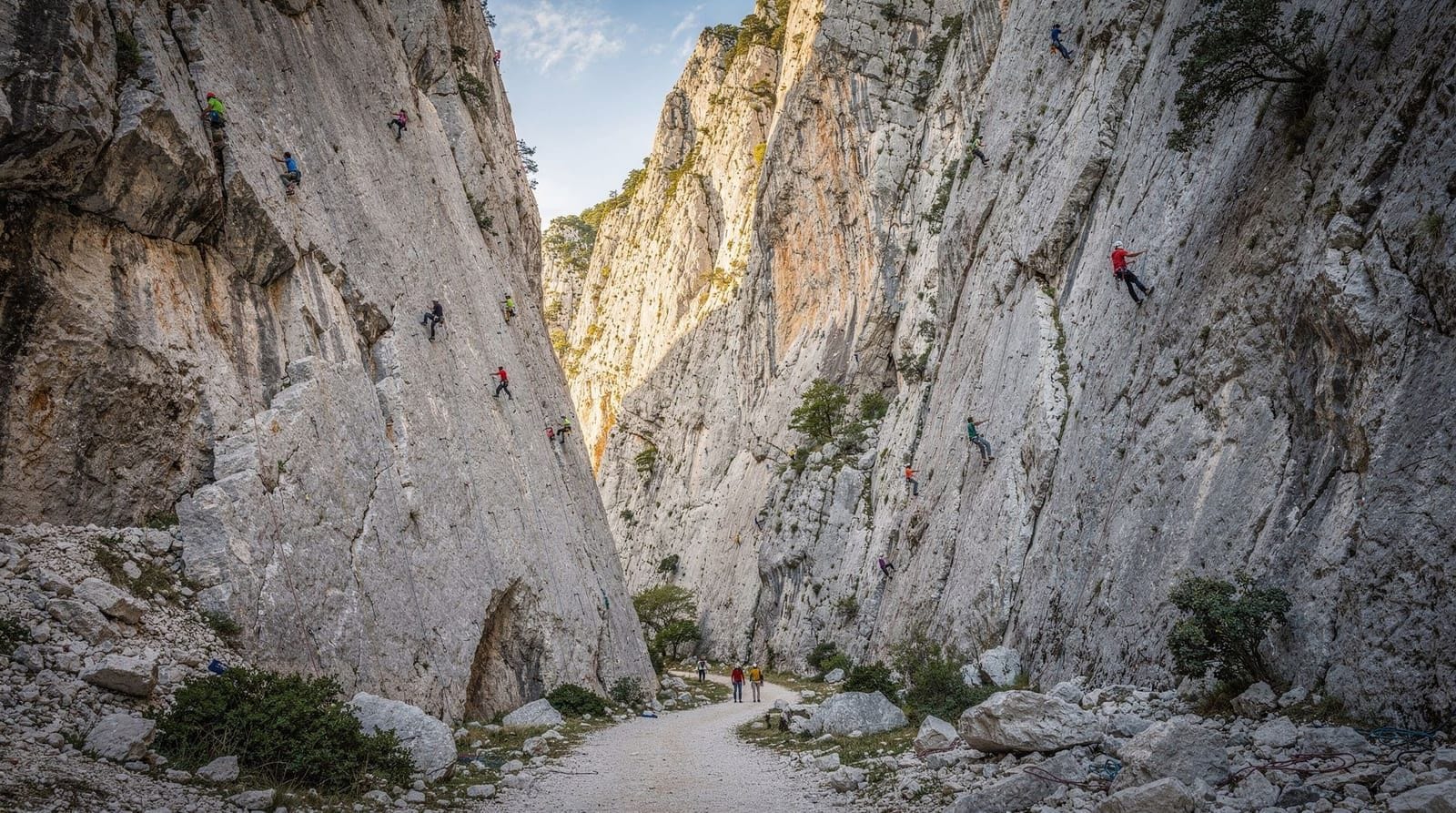
There is a moment, 30 minutes into the Velika Paklenica gorge, when the walls close above you and you understand what limestone can do. The rock is white-grey and vertical — 200, sometimes 300 metres of it on either side, carved by the river into a slot so narrow the sky is a strip. A clear mountain stream runs below the path. Swifts scream between the walls.
This is Paklenica National Park, and it is unlike anything else in Croatia. While Dubrovnik and the islands pull the crowds, Paklenica sits at the junction of the Velebit mountain range and the Adriatic, visited mainly by Croatian climbers, Slovenian hikers and a growing number of international visitors who know where to find the country’s best mountain landscape.
| Where | Starigrad-Paklenica, 40km north of Zadar |
| Cost | around €10–15 entry per adult |
| Time needed | 4–6hrs canyon walk; 10–12hrs for the Vaganski vrh summit |
| Getting there | 40–45min from Zadar by car; ~2.5–3hrs from Split |
| Best time | May–June or September–October |
The Velika Paklenica gorge: the essential hike
The gorge walk is the core Paklenica experience. From the park entrance in Starigrad-Paklenica, the main trail follows the Paklenica stream into the canyon, gradually ascending between the limestone walls.
The first two kilometres are the most dramatic: walls close, the sound of the stream fills the canyon, and vertical faces of the Anića Kuk formation rise to the west (climbers are visible as small dots on warm weekends). The trail is rocky but well-maintained, with wooden bridges over the stream at several points.
The Lugarnica junction (approx 5 km) marks where the canyon trail meets the mountain hut and the routes splitting left (continued canyon) and right (summit routes). The hut is a logical rest point and lunch stop for those not continuing higher.
The upper canyon sections are less visited — narrower, more technical, requiring scrambling in places. The trail to the summit of Vaganski vrh diverges here, climbing steeply through forest before emerging on the open limestone plateau.
Return. Most visitors turn back at the hut junction (10 km round trip, 4–6 hours at a relaxed pace with stops). The return through the canyon is equally rewarding — the afternoon light catches the walls differently to the morning.
Summit hiking: Vaganski vrh
Vaganski vrh (1,757 metres) is the second objective for serious hikers. It is a full-day undertaking and one of the most satisfying mountain days in Croatia.
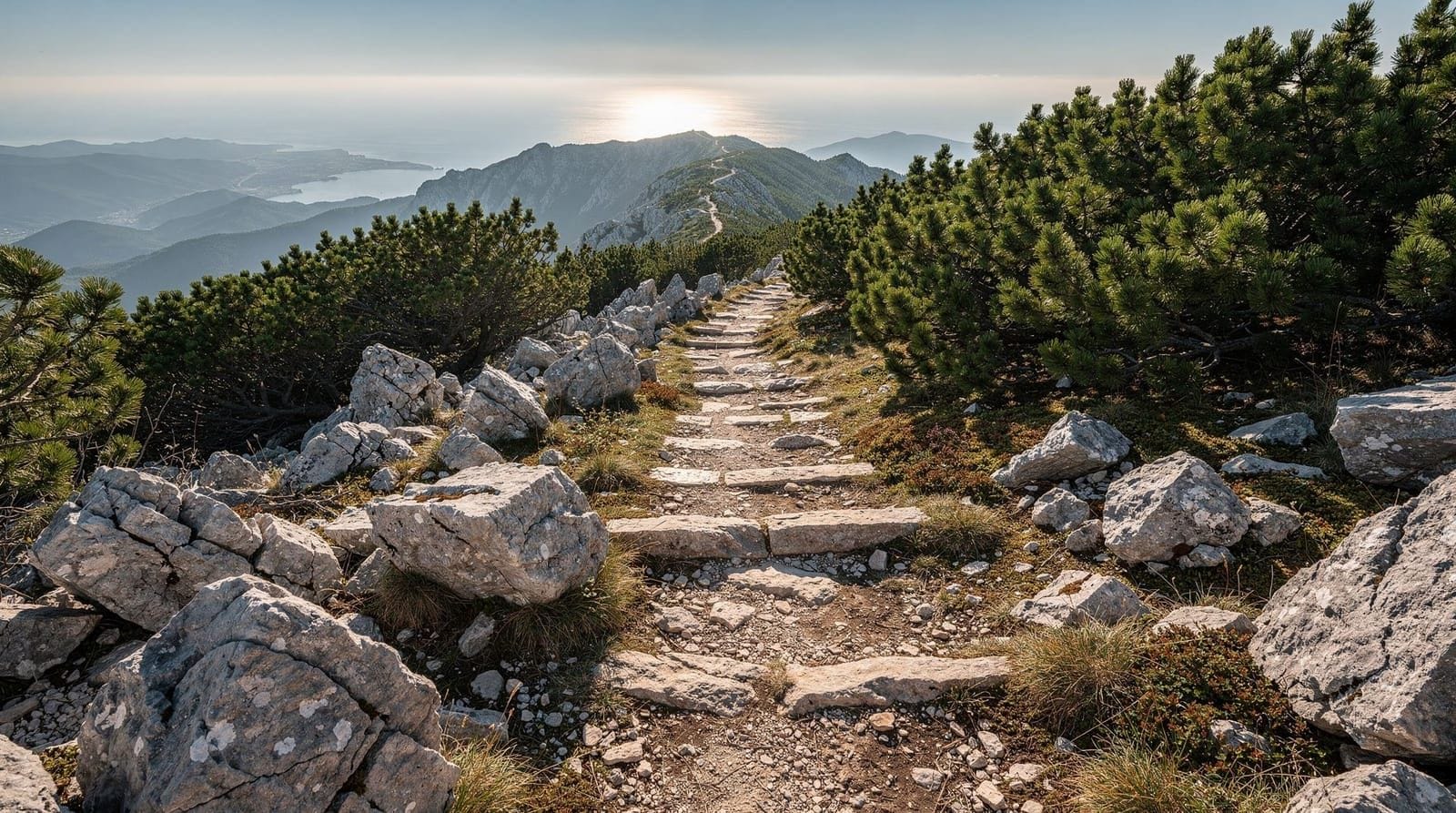
Route. From the park entrance, follow the canyon trail to the Lugarnica hut junction, then take the marked summit route north-east through dwarf pine and then open limestone plateau to the summit. Total distance: approximately 16–18 km round trip. Elevation gain: ~1,550 metres.
Time. Allow 5–7 hours ascent (depending on pace and stops) and 4–5 hours descent. Total day: 10–12 hours from the park gate. Start before 07:00 to have adequate daylight and avoid afternoon heat on the exposed upper sections.
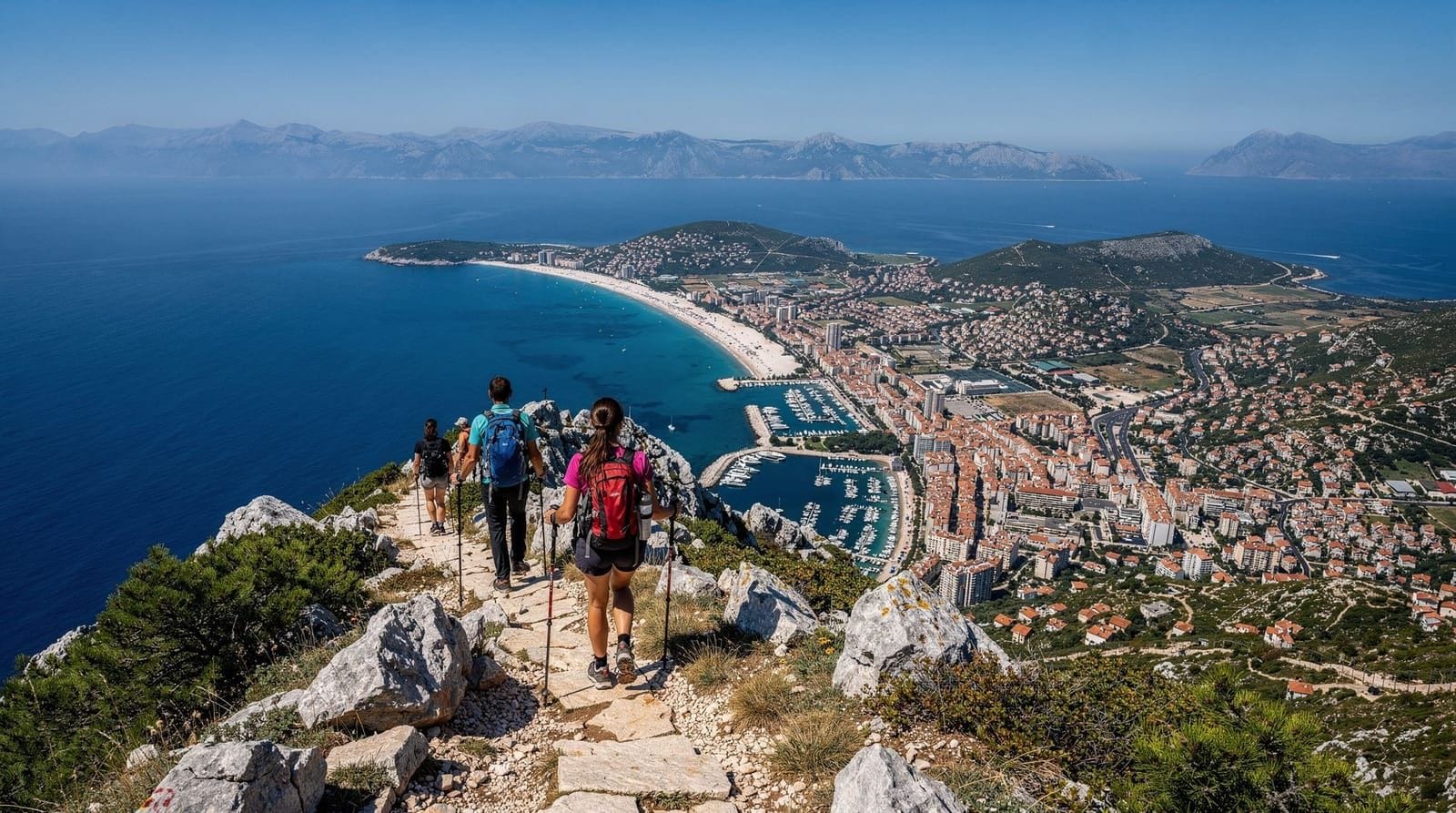
What you see. The summit plateau is a chaotic landscape of limestone pavement — grikes and clints, poljes, sink-holes — the Velebit karst at its most raw. Views: the Adriatic to the west (Zadar visible on a clear day, islands of Pag and Lošinj beyond), Bosnia’s mountains to the east, the Velebit range stretching north and south.
Requirements. This is a serious mountain day. You need: proper hiking boots (not trail runners — the limestone is sharp), trekking poles recommended, minimum 3 litres of water per person, full lunch, sun protection, windproof layer for the exposed upper section, and the ability to navigate with a map or GPS. Do not attempt in poor visibility or approaching thunderstorm — the exposed plateau is dangerous in lightning.
Rock climbing at Paklenica
Paklenica’s status in European climbing history is substantial. In the 1970s and 1980s, when sport climbing was developing as a discipline across Europe, Paklenica’s limestone walls were being pioneered by Yugoslav climbers who established routes that remain classics.
The main climbing area is the Anića Kuk face — a 300-metre vertical wall visible from the first kilometre of the canyon trail. Routes range from beginner slabs (French 5a) through established sport routes (6a–7a) to elite lines on the steepest sectors (8c–9a). The canyon also has shorter crags closer to the stream, accessible for beginners.
For non-climbers. Even if you have no intention of climbing, watching the activity on Anića Kuk from the canyon floor is a spectacle — particularly on spring weekends when dozens of climbers are on the wall simultaneously.
For those who want to try climbing. Guided climbing days with equipment rental are available from instructors based in Starigrad-Paklenica. No experience needed for an introduction day; Via Ferrata (via ferrata/iron way) routes exist in the park for those wanting a roped experience without technical climbing skill.
The Mala Paklenica gorge: the wilder alternative
While the Velika (Big) Paklenica gorge is the main attraction, the Mala (Small) Paklenica gorge runs parallel to the south — narrower, more technical, less visited, and arguably more dramatic in its narrower sections.
The Mala gorge route involves significant scrambling, route-finding on unmarked sections, and sections where the path requires using hands. It is not appropriate for those without hiking experience or in unsuitable footwear. The reward: a canyon that feels genuinely wild, with almost no other visitors even in peak season.
Practical note. The Mala Paklenica entrance requires an additional permit or is included in some guided programmes. Check with the park office at the main entrance before attempting it independently.
Practical visitor information
Park entrance fee. Approximately €10–15 per adult; children under 7 free. Payable at the entrance kiosk in Starigrad-Paklenica. The fee includes the main canyon trail.
Opening hours. The park is accessible year-round, but the kiosk is staffed from approximately April to October. Winter access is open (no fee collected) but trails may be icy above 500 metres.
Car parking. A paid car park operates at the park entrance in Starigrad. Arrive by 08:00 in July–August to secure a space.
Accommodation in Starigrad-Paklenica. Several small hotels and apartments operate in the village. Camp Paklenica is a well-established campsite with direct trail access. Advance booking essential in July–August.
Guides. Certified mountain guides for Paklenica can be arranged through the Croatian Mountain Rescue Service (HGSS) contact or via local agencies. Guides add value for the summit route and climbing introduction days; the main canyon walk does not require a guide.
When to go. May and June bring the best combination of manageable heat and full stream flow; see Croatia in May for what else lines up well with that window.
Combining Paklenica with the wider Zadar and northern Dalmatia region
Paklenica combines naturally with Zadar (40 km south) — Croatia’s often-overlooked city of Roman forum, the sea organ, and an underrated food scene. A practical two-day itinerary:
Day 1. Arrive Zadar. Old town walk, sea organ, dinner. Day 2. Early start to Paklenica (07:00), full canyon hike to the hut junction and back, return to Zadar by afternoon. Optional swim at Zaton beach en route back.
From Split (2.5–3 hours), Paklenica is too far for an easy day trip unless you are committed to an early start. Zadar-based visitors have significantly more flexibility.
Paklenica vs Biokovo: a quick comparison for hikers
| Factor | Paklenica | Biokovo |
|---|---|---|
| Canyon drama | Very high — vertical limestone walls | Less canyon character; escarpment ridge |
| Summit difficulty | Demanding (full day, 1,550m gain) | Moderate–hard (plateau start accessible by car) |
| Rock climbing | World-class | Limited |
| Base town | Starigrad-Paklenica (small village) | Makarska (full resort town) |
| Nearest city | Zadar (40 km) | Split (80 km) |
| Coastal views | Views from summit; canyon is inland | Outstanding from ridge road and Skywalk |
| Best for | Serious hikers and climbers | Adventure tourists, Skywalk visitors, ridge walkers |
Both are worth visiting on a Croatia trip if hiking in Croatia is a priority.
Beyond the trail: what else to fit into a Paklenica trip
A Paklenica day works well combined with the broader day trips from Zadar circuit — several operators run canyon-plus-city combinations that pair a morning hike with an afternoon in Zadar’s old town. Adventure travellers stacking multiple activities into one trip should also look at the adventure sports Croatia guide for rafting and canyoning options elsewhere in Dalmatia, and the Velebit Nature Park guide for what lies beyond Paklenica’s boundary if a multi-day mountain trip is on the cards. For a broader view of Croatia’s protected areas, the Croatia national parks guide covers all eight, with realistic time budgets for each.
Frequently asked questions about Hiking Paklenica
Where is Paklenica National Park and how do you get there?
Paklenica sits on the southern slopes of the Velebit mountain range, with the park entrance in the village of Starigrad-Paklenica on the Adriatic highway (A1/E65), 40 km north of Zadar. By car from Zadar: 40–45 minutes. From Split: approximately 2.5–3 hours. Local buses on the Split–Zadar–Rijeka route stop at Starigrad-Paklenica. There is no train station nearby.What are the main hiking routes in Paklenica?
Three main categories: (1) Canyon walk — the Velika Paklenica gorge floor, a 2–4 hour return walk following the stream between 200-metre walls; suitable for all fitness levels. (2) Summit routes to Vaganski vrh (1,757 m) via the Lugarnica hut — a full day, 5–7 hours ascent, demanding. (3) The Mala Paklenica gorge — narrower, wilder, requiring scrambling; for experienced hikers only. Dozens of shorter marked trails exist between these extremes.Is Paklenica suitable for beginners?
The main Velika Paklenica canyon walk (the first 3–5 km into the gorge) is suitable for fit beginners in appropriate footwear. It is not a stroll — the path is rocky and uneven — but it requires no technical skills. The summit routes and Mala Paklenica gorge are more demanding and suitable for experienced walkers with hiking experience. Proper hiking boots are essential for everything except the first 500 metres.What rock climbing is available at Paklenica?
Paklenica is one of Europe's most famous limestone climbing destinations — a staple of the European sport climbing scene since the 1970s. The main walls of Velika Paklenica offer 300+ routes from beginner (5a) to elite (9a). The Anića Kuk wall (300 metres high) is the flagship route area. Climbing gear rental and guided climbing days are available from operators in Starigrad-Paklenica. The climbing season peaks May–June and September–October.Are there mountain huts in Paklenica?
Yes — the Planinarski dom Paklenica hut at the end of the canyon (approximately 5 km from the park entrance) provides food, water and basic overnight accommodation (dormitory style, advance booking essential in summer). The Lugarnica hut higher on the mountain serves those doing the summit route. Both require membership or a day fee from non-members of Croatian mountaineering clubs.What should I bring for hiking in Paklenica?
Hiking boots with ankle support (mandatory — the trail is rocky), minimum 2 litres of water per person (there is a spring partway up the canyon but do not rely on it), sun protection, layers for altitude, and a detailed map or GPS track. For the summit route: add trekking poles, a proper lunch and emergency kit. Start early — the canyon is in shade in the morning; the upper slopes are fully exposed.Can you visit Paklenica as a day trip from Zadar or Split?
Yes, from Zadar comfortably (40–45 minutes each way). From Split, a day trip is possible (2.5–3 hours each way) but leaves less time for hiking — budget 6–7 hours on the trail for a satisfying visit, which makes the logistics tight. Overnight accommodation in Starigrad-Paklenica gives you early morning access and more time on the mountain.
Top experiences
Best-rated activities across GetYourGuide and Viator.

Rafting on Cetina River Departure from Split or Blato na Cetini village
- Viator

KAYAK ADVENTURE! Wild Coast Exploring - Snorkeling & Cliff Jumps
- Viator

Blue Bay Snorkeling & Cocktails 3 Islands Speedboat Tour
- Viator

Zadar: 3 Islands Luxury Boat Tour with Aperol Spritz & Snorkeling
- Viator

Zadar: Luxury Island Boat Tour, Snorkeling & Unlimited Wine
- Viator

Transparent Kayak Sunset to Dusk Glow Experience from Pula
- Viator