Velebit Nature Park: Croatia's great mountain range explained
Split: Krka National Park tour
What is Velebit Nature Park?
Velebit is Croatia's largest mountain range, running 145 km along the Dalmatian coast from Senj to the Krka river. The entire range is protected as a nature park and UNESCO biosphere reserve, with its northern third separately designated as Sjeverni Velebit National Park. It is Croatia's most significant mountain wilderness and the best destination for serious multi-day hiking.
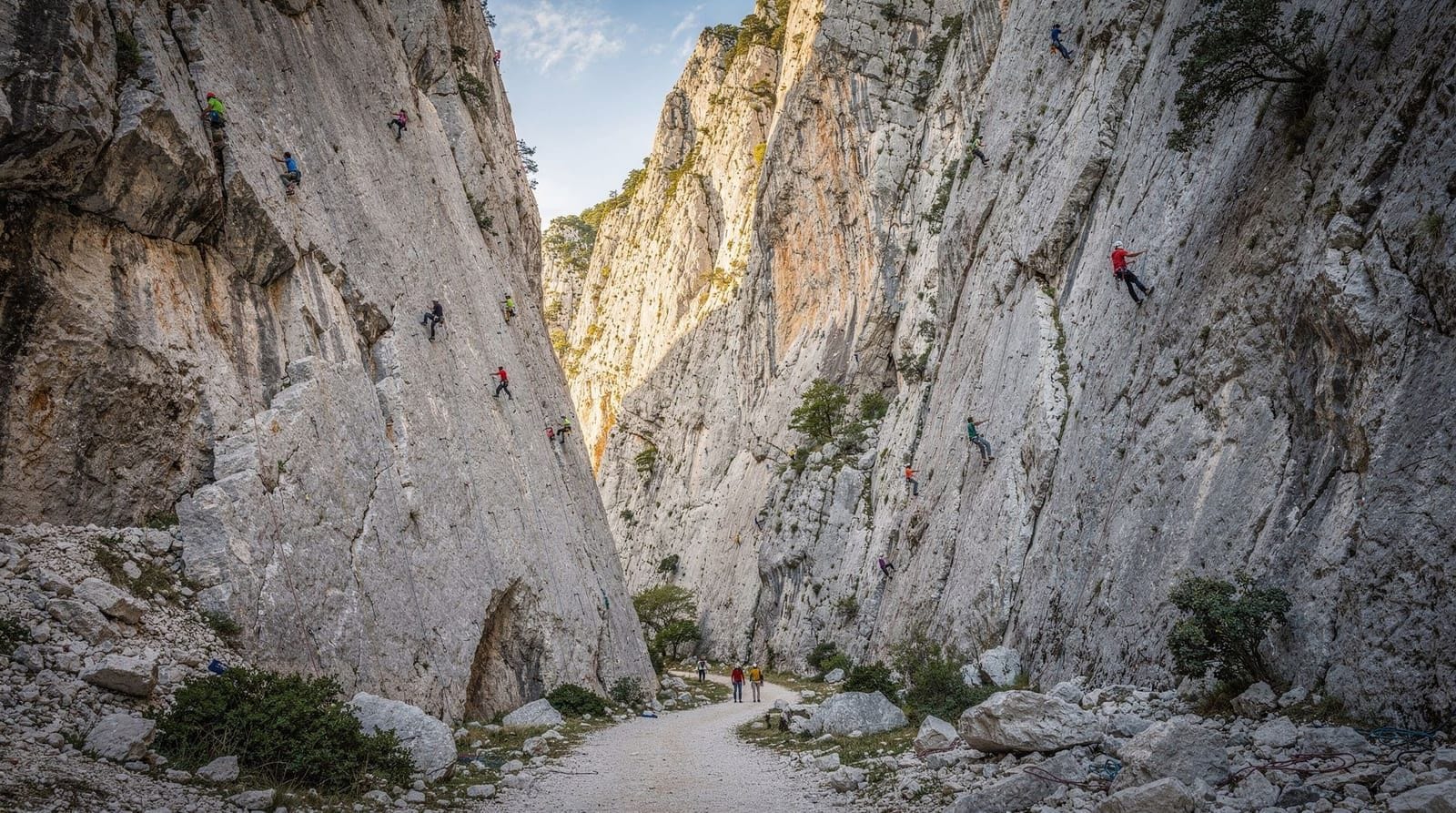
Croatia’s Adriatic coast gets most of the attention. The limestone walls rising behind it get considerably less — which is largely why the Velebit range remains one of Europe’s least crowded significant mountain areas. Stretching 145 km from Senj in the north to the Krka river canyon in the south, Velebit is Croatia’s largest mountain range and the backbone of the Dinaric Alps as they track the eastern Adriatic coast. The entire massif is protected as a UNESCO biosphere reserve and a nature park; its northern third is a national park.
For visitors who want something different from Croatia’s coast-and-islands formula, Velebit offers dramatic terrain, genuine wildlife, very few other walkers and the kind of silence that is increasingly hard to find anywhere near the Mediterranean.
| Where | 145km range along the coast, Senj to the Krka river |
| Cost | Free to walk most of the range; North Velebit National Park entry a few euros to around €10 |
| Time needed | Half day at Zavižan; 3-4 days for the full Premužić Trail |
| Getting there | Own car recommended — mountain roads from Senj, Karlobag, Jablanac or Starigrad-Paklenica |
| Best time | Late May to September; snow lingers on the ridge into early summer |
The three sections of Velebit
The range is conventionally divided into three sections, each with a different character:
North Velebit (Sjeverni Velebit National Park): The most dramatic geological section and the most protected. The Hajdučki kukovi and Rožanski kukovi are clusters of eroded limestone towers and ridges — a karst landscape that looks almost architectural in its regularity. The Zavižan weather station and botanical garden (1,594 m) is the primary visitor focal point, reachable by mountain road from the coast via Krasno. The Lukina jama cave (1,431 m depth) is the headline underground feature.
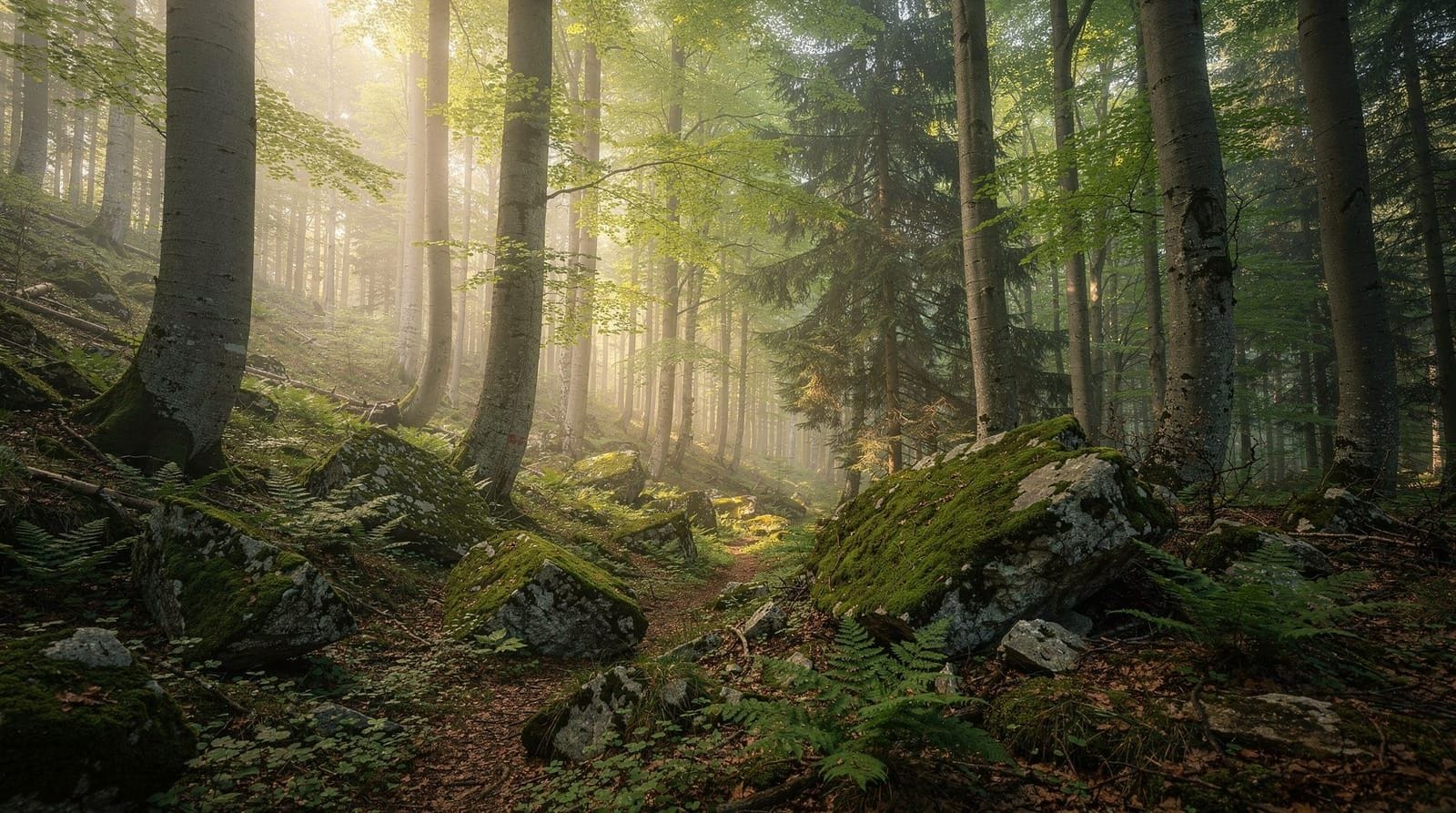
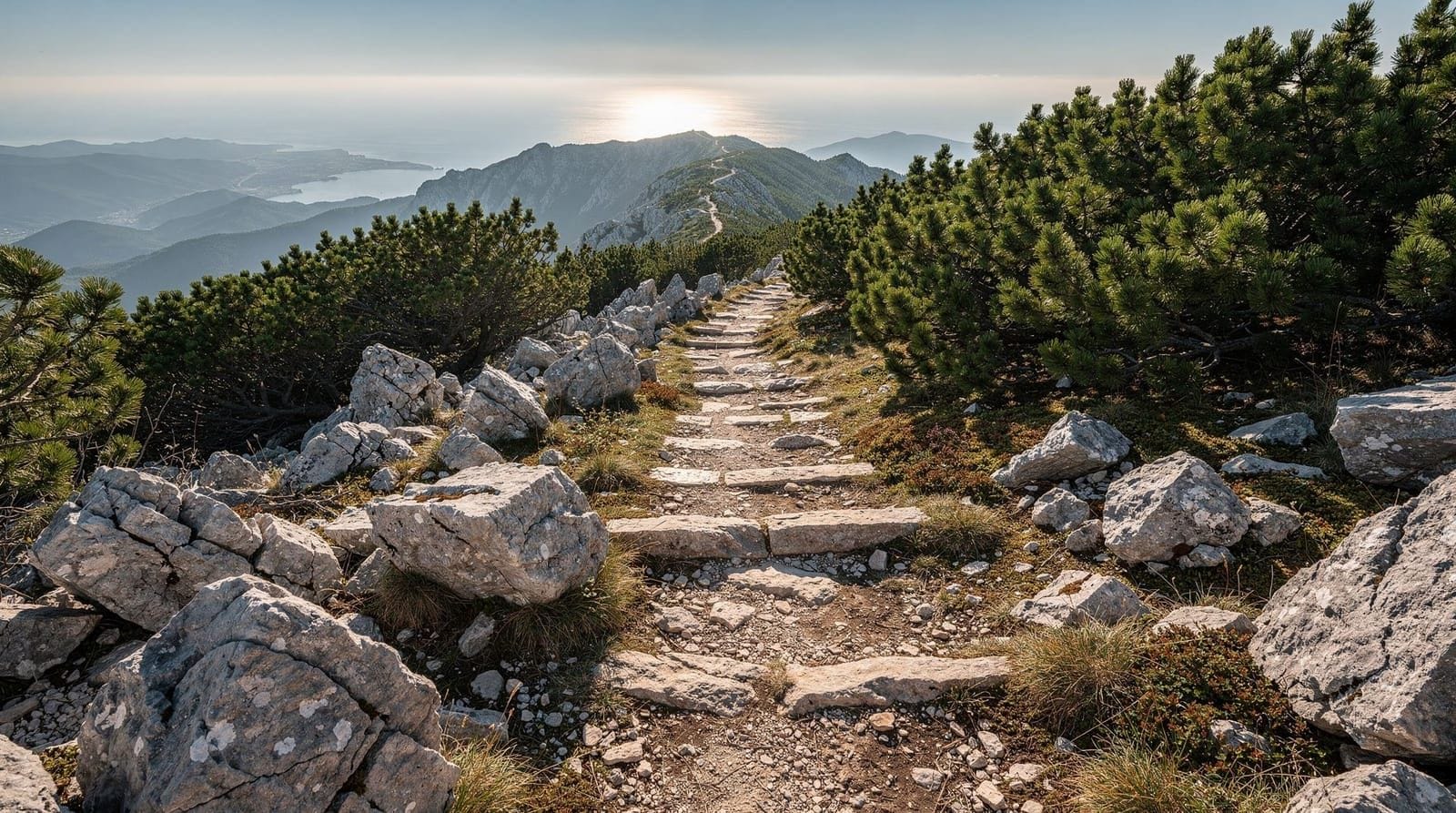
Middle Velebit: The central section, covered almost entirely by the nature park rather than the stricter national park designation. This is where the Premužić Trail runs — a 57 km hand-built mountain path from the 1930s that represents Croatia’s finest long-distance hiking achievement. The trail crosses highland meadows, karst sinkholes, beech forest and ridge sections with views over both the coast and the Lika plateau. Three mountain huts provide overnight accommodation for multi-day walkers.
South Velebit and Paklenica: The southern section terminates in the Paklenica canyon system near Starigrad-Paklenica — the entry point covered in the Paklenica National Park guide. The south also contains the Štirovača forested plateau, one of the more accessible Velebit interior areas for casual driving visits.
The Premužić Trail
Built between 1930 and 1933 by engineer Ante Premužić, this 57 km path along the Middle Velebit ridge is a work of considerable engineering skill — maintaining consistent gradient on terrain that would otherwise require brutal descent and re-ascent. Stone walls stabilise the narrower sections; drainage channels keep the path clear.
Walking the trail in its entirety typically takes 3–4 days, with nights at:
- Zavižan mountain hut (north end)
- Alan hut (midpoint)
- Baške Oštarije (southern section)
The trail requires appropriate preparation: good hiking boots, navigation tools (paper map and compass, not just phone GPS), water carrying capacity (springs are limited in summer), and awareness that rescue response in the backcountry takes time. The Croatian Mountaineering Association (HPS) publishes a dedicated Velebit trail map.
Day-section walks of the Premužić Trail are accessible from several access roads that cross the range. A popular approach is to drive the road from Jablanac or Karlobag to the Alan hut, walk a section of the trail, and return.
Wildlife on Velebit
Velebit is part of the Dinaric Arc — the chain of mountain ranges from the Alps to the Pindus that represents the last significant wildlife corridor connecting large carnivore populations in Europe. The practical result for Velebit:
Brown bear (Ursidae): The Croatian population (estimated 800–1,000 animals nationally) overlaps significantly with Velebit. Sightings are rare for day hikers — bears avoid humans actively — but tracks, diggings and scat are common for those who know what to look for. Dawn and dusk are the highest-probability windows.
Eurasian lynx: The Dinaric lynx population was functionally extinct in Croatia by the 1970s, reintroduced from Slovakia in 1973 and has slowly stabilised. Velebit is within its core range. Sightings are extremely rare — the lynx is one of Europe’s most secretive large mammals — but camera traps in research areas show consistent presence.
Grey wolf: Wolves in Croatia are protected and recovering. Their territory on Velebit is confirmed by pack monitoring, though sightings by casual walkers are uncommon.
Golden eagle: The canyon walls and cliff systems of Velebit provide nesting habitat. Visible on thermals in spring and early summer; Paklenica canyon in particular has reliable sightings.
Chamois: On the upper rocky sections, chamois are the most regularly visible large mammal for hikers.
North Velebit National Park: what to actually see
For visitors who want to experience North Velebit without committing to multi-day hiking, the Zavižan area provides a manageable entry point. The mountain road from Krasno (accessible from the coast via Senj or Otočac) reaches 1,594 m and the botanical garden. The garden contains specimen plants of the Velebit highlands, including endemic species found nowhere else — Velebit degenia (Degenia velebitica) is the national park’s symbol and flowers in May.
The educational trail system around Zavižan covers several kilometres and reaches viewpoints with panoramic vistas over the coastal Kvarner islands and the continental interior. These are accessible to visitors in good general fitness without technical mountain experience.
Rožanski kukovi and Hajdučki kukovi — the dramatic rock tower systems — are reachable from Zavižan on marked trails, but involve more committed walking (full-day return from Zavižan) on terrain that requires some boulder scrambling.
Velebit and the coast: the dramatic contrast
One of the most striking geographical facts about Velebit is the elevation change over a short horizontal distance. From the Adriatic coast at sea level to the ridge above Paklenica — 1,700 m elevation — the horizontal distance is roughly 10 km. On a clear day, you can look east from Zavižan over the continental plateau and west over the Kvarner islands to the open Adriatic.
This creates microclimates. The coastal side (Dalmatian/Mediterranean): warm, dry summers, mild winters, little snow. The continental side (Lika/Pannonian): cold winters with heavy snow, hot summers, a climate closer to central Europe than the Adriatic. The ridge itself collects weather from both directions — and is known for sudden violent storms that can develop faster than the forecasts suggest.
Access points and practical planning
From the north (Kvarner/Rijeka area): Road from Senj into the Zavižan/North Velebit area. Rijeka is about 50 km from Senj.
From the middle (Zadar area): Road from Karlobag or Jablanac across to Lika plateau, providing access to the Alan hut area for Premužić Trail sections.
From the south (Zadar/Šibenik area): The D8 coastal highway passes Starigrad-Paklenica — the gateway to South Velebit and Paklenica National Park, about 45 km from Zadar.
Mountain huts: HPS-managed huts require advance reservation for overnight stays, especially in summer. Several huts close in winter. Check availability and book through the HPS.
When to go: a season-by-season view
| Season | Conditions | Notes |
|---|---|---|
| May-June | Snow can linger on the high ridge; wildflowers including Degenia velebitica in bloom | Zavižan accessible; full ridge sections may still be snowbound |
| July-August | Warm, reliable, longest daylight; busiest period at Zavižan | Carry more water; afternoon storms possible on the ridge |
| September | Warm days, cool nights, fewer visitors | Arguably the best window for the Premužić Trail |
| October | Cooling fast, huts start closing | Only for experienced hikers with proper gear |
| Nov-April | Snow, closed huts, avalanche risk on higher sections | Not recommended without winter mountaineering experience |
If you would rather not hike: an easier alternative
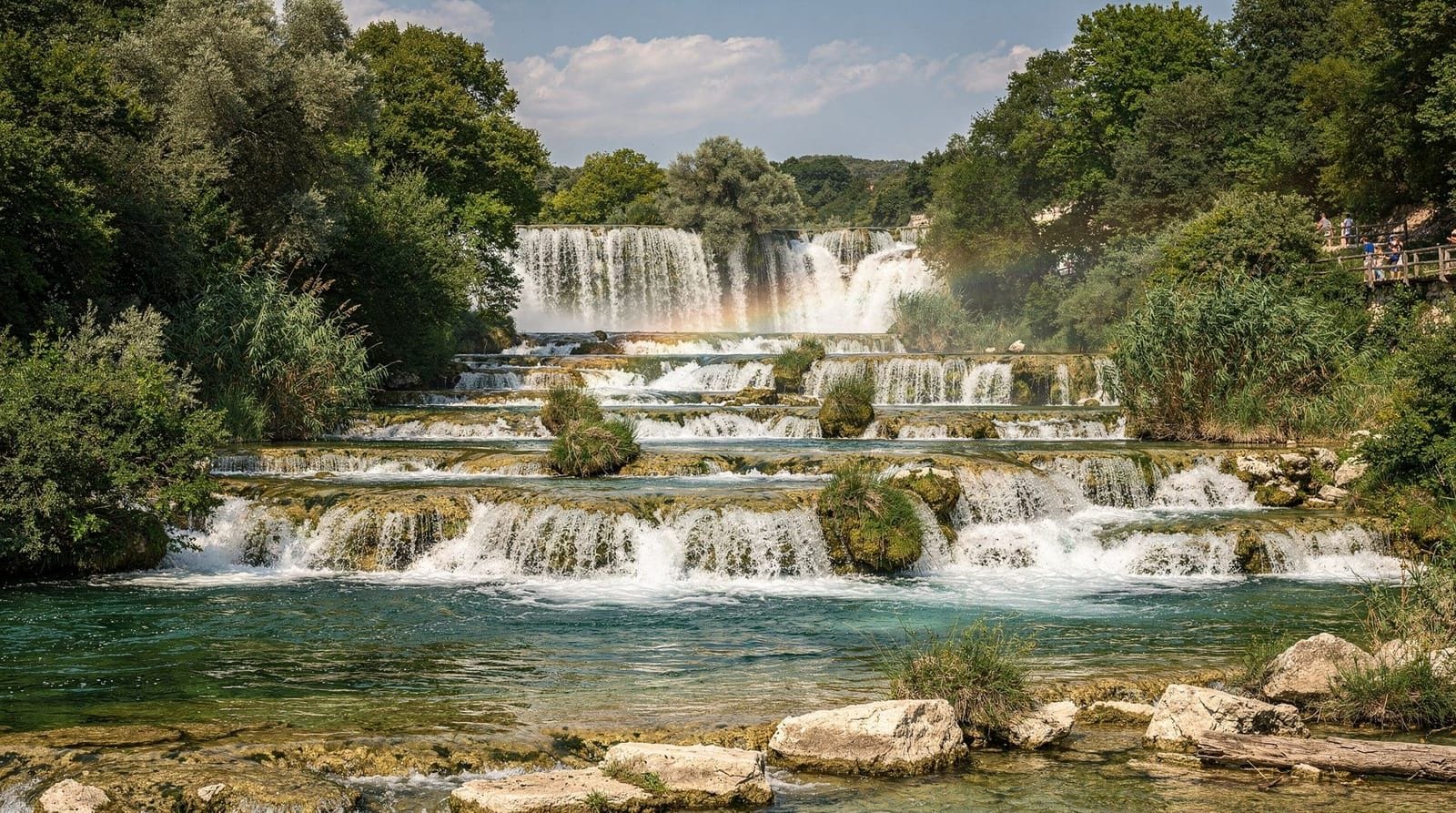
Not every visitor wants a multi-day trek, and that is a reasonable choice — Velebit’s terrain is genuinely demanding once you leave Zavižan. A gentler way to experience this part of Dalmatia’s karst landscape is a guided day trip to Krka National Park, which offers waterfalls, boardwalks and swimming without technical hiking.
Krka National Park day tour from SplitCombining Velebit with other destinations
Velebit’s position along the coast makes it compatible with various hiking in Croatia itineraries. The Paklenica end pairs naturally with Zadar, Krka National Park and the Dalmatian coast. The Zavižan end connects to Rijeka, the Kvarner islands and Risnjak National Park (about 60 km northeast).
The national parks and waterfalls route itinerary includes a Velebit section for travellers who want to cover Croatia’s main protected landscapes in a single circuit.
Frequently asked questions about Velebit Nature Park
What is the difference between Velebit Nature Park and North Velebit National Park?
Velebit Nature Park covers the entire mountain range (all three sections: north, middle and south). North Velebit National Park (Sjeverni Velebit) is a more strictly protected inner zone within the northern section, covering the most dramatic karst formations including Hajdučki kukovi, Rožanski kukovi and the Lukina jama cave system.What is the Premužić Trail?
The Premužić Trail is a 57 km mountain path built in the 1930s along the ridge of Middle Velebit. It is Croatia's most famous long-distance hiking route, crossing spectacular karst terrain, passing through highland meadows and connecting several mountain huts. It typically takes 3–4 days to walk in full.How do you access Velebit from the coast?
Multiple roads cross Velebit from the coastal D8 highway to the Lika plateau on the other side. Key access points: Senj/Zavižan road for North Velebit; Jablanac/Štirovača for the middle section; Starigrad-Paklenica/Paklenica gorge for South Velebit (Paklenica National Park).What wildlife lives in Velebit?
Brown bear, grey wolf, Eurasian lynx, wild boar, red deer, chamois and golden eagle are all resident or regularly present. The lynx population, which was reintroduced in the 1970s after local extinction, is one of the most significant in southeastern Europe. Velebit is part of the Dinaric Arc wildlife corridor connecting populations across the region.Is Velebit suitable for beginners?
Not for the remote backcountry. The main trails within North Velebit National Park around Zavižan are accessible to fit visitors with appropriate footwear and preparation. The full Premužić Trail and the wilder ridge sections require mountain hiking experience, navigation skills and proper equipment.What is the Lukina jama cave?
Lukina jama is a vertical cave shaft in North Velebit that descends 1,431 metres, making it one of the deepest caves in the world. The cave is not accessible to recreational visitors — exploration requires specialist caving equipment and considerable experience. It is mentioned for completeness as one of North Velebit's headline features.Do I need a permit or entry ticket for Velebit Nature Park?
There is no single ticket for the whole nature park, but Sjeverni Velebit National Park (North Velebit) charges a park entry fee, typically collected at the Zavižan road or main trailheads and priced similarly to Croatia's other national parks, roughly a few euros to around ten. Middle and South Velebit outside the strict national park zone are generally free to walk, aside from Paklenica's separate entry fee at the canyon gate.What should I pack for a Velebit day hike?
Sturdy hiking boots, a paper map or offline GPS track (phone signal is unreliable on the ridge), more water than you think you need since springs run dry in summer, layers for sudden temperature swings, and a basic first-aid kit. Weather on the ridge can turn quickly even on a clear coastal morning, so check the forecast the same day and be willing to turn back.
Top experiences
Bookable activities with verified prices and instant confirmation on GetYourGuide.
Top experiences
Best-rated activities across GetYourGuide and Viator.

From Split: Plitvice Lakes National Park Guided Tour
- Viator

Krka Waterfalls Day Tour with Boat Ride from Split and Trogir
- Viator

Plitvice Lakes National Park Guided Day Tour from Split
- Viator

Krka National Park Tour with tour Guide & Wine tasting from Split & Trogir
- Viator

From Zadar: Plitvice Lakes with Boat Ride & Zadar Old town tour
- Viator

Mostar and Herzegovina Tour with Kravica Waterfall from Split & Trogir
- Viator