Cycling Istria: the best routes, what to expect and how to plan your ride
Is Istria good for cycling?
Istria is one of the best cycling destinations in the Mediterranean. The peninsula has a dense network of signed routes from gentle coastal rides to demanding hill climbs, the Parenzana cycling trail on a former railway bed connecting inland hilltowns, and wine and truffle estates that reward a slower pace. The terrain suits all fitness levels; the food scene rewards stopping frequently.
Why Istria cycles differently
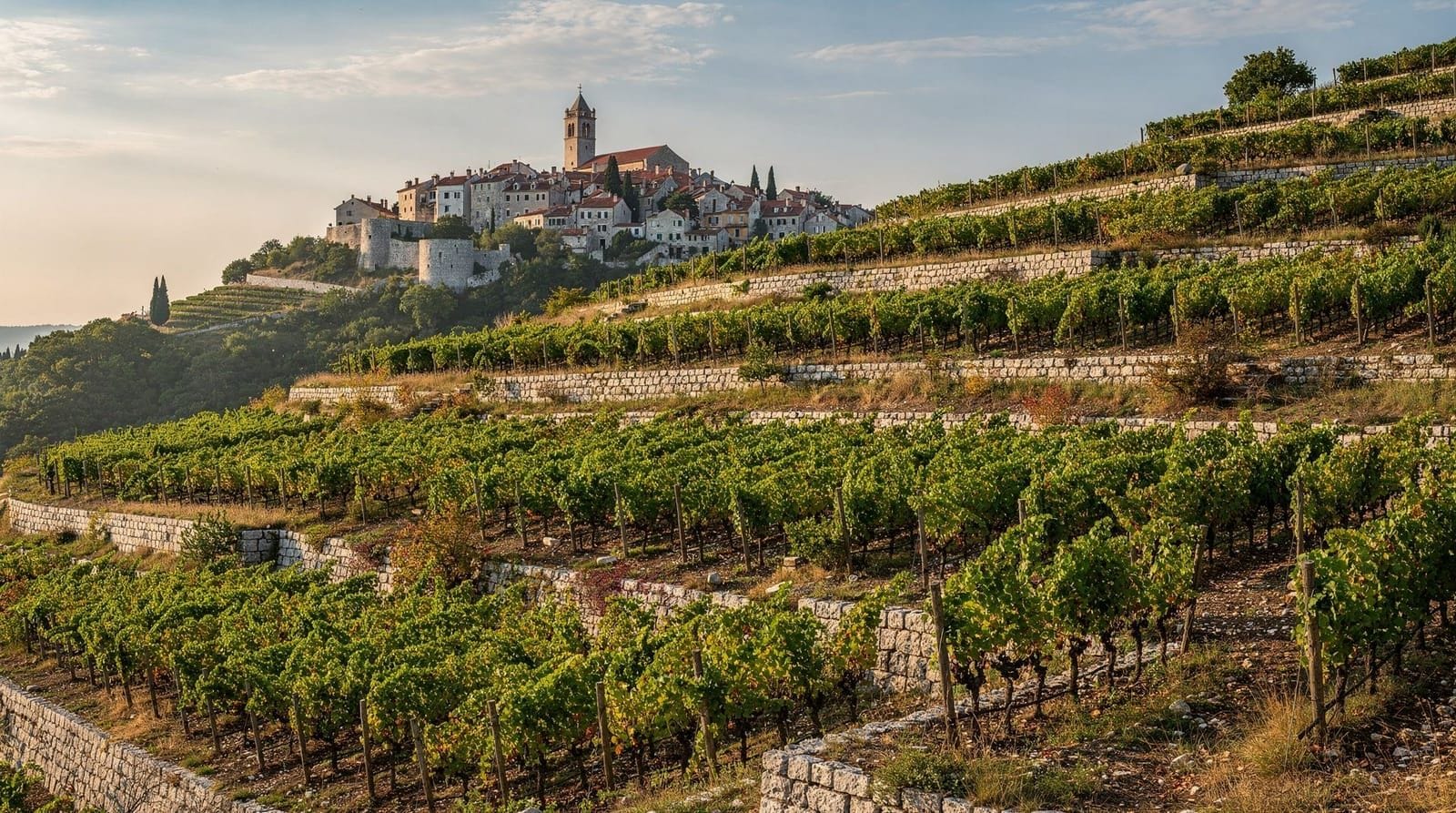
Istria is sometimes called “Croatian Tuscany” — but for cyclists, the comparison undersells it. Where Tuscany is famous for its cycling landscapes, Istria actually delivers them: quiet roads through vineyard country, olive-grove tracks between hilltop towns, a 123-km trail on a disused railway bed, and a coastal road system low enough in traffic even in summer to make road cycling genuinely pleasurable.
The region sits at a latitude similar to the Côte d’Azur, with Mediterranean climate modified by the Dinaric mountains. The peninsular geography means the highest points are rarely above 500 metres — serious enough to make climbers happy, gentle enough to make everything accessible by e-bike. And Istria’s food culture — black and white truffles, Malvazija wine, olive oil, prosciutto, fresh pasta — provides an incentive to stop frequently that few cycling destinations match.
| Where | Rovinj, Poreč, Pula and the Parenzana trail, inland Istria |
| Cost | Bike rental around EUR 15–30/day, e-bikes EUR 30–55/day |
| Time needed | Half-day loop to 2–4 days for the full Parenzana |
| Getting there | Self-drive or bus to Rovinj/Poreč/Pula, bike hire on arrival |
| Best time | May–June and September–October; avoid midday heat in July–Aug |
The Parenzana: Istria’s signature cycling trail
The Parenzana trail is the most distinctive long-distance cycling route in Istria. It follows the trackbed of the narrow-gauge Parenzana railway (1902–1935) — a 123-km line that wound through the peninsula from Trieste to Poreč, serving 33 stations in what was then Austrian territory.
The railway closed in 1935, the tracks were lifted, and the route lay dormant for decades before being restored in the 1990s and 2000s as a cycling and walking trail. It now passes through three countries, with the Croatian section running from Buje in the north through inland Istria toward Poreč on the coast.
Surface and terrain. The Croatian section is predominantly compact gravel, suitable for gravel and hybrid bikes. The railway gradient (maximum 3–4%) makes the trail accessible for all fitness levels, including families and older cyclists. Maximum altitude on the Croatian section: approximately 200 metres.
Key towns on the Croatian Parenzana. Starting from Buje (north), the trail passes through the wine hills of the interior toward Grožnjan, Motovun, Livade (famous for the Zigante truffle empire), Oprtalj and eventually connects to Poreč on the coast. Each section has its own character: vineyard slopes, forested valleys, river crossings.
Riding the whole thing. A point-to-point ride of the entire Croatian section takes 2–4 days depending on pace. Luggage transfer services (bike bag pick-up and delivery to your next accommodation) are available from specialist operators. Several cycling-friendly hotels and guesthouses along the route cater specifically to Parenzana riders.
Just a section. You do not need to ride the whole trail to appreciate it. The Motovun–Livade–Grožnjan section (30–40 km) captures the best of the interior trail in a comfortable single day from a Rovinj or Poreč base.
Cycling routes around Rovinj
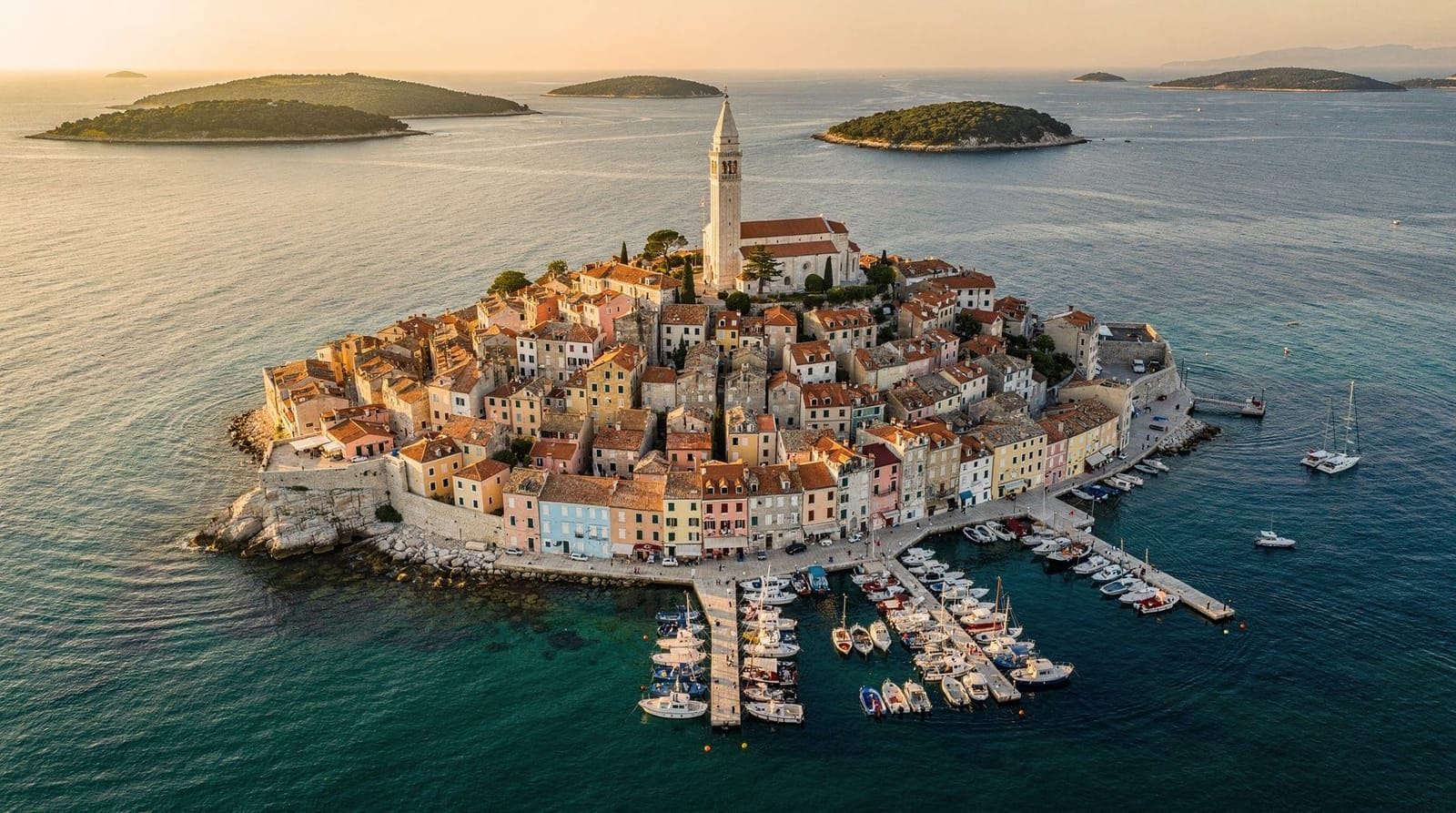
Rovinj is the most scenic base for Istrian cycling, with several well-established routes radiating from the old town.
The Lim Fjord loop (45–55 km, moderate). Head north along the coastal road toward Vrsar, descend to the Lim Bay viewpoint, continue along the fjord (a submerged river valley, technically an estuary), and return via the inland road through Štokovci. Mostly flat to gently rolling; the descent to Lim is the most dramatic moment. A popular half-day circuit.
The Rovinj peninsula coast (20–35 km, easy). South along the coast road to the Zlatni Rt (Golden Cape) park — flat, wide path through pine forest, genuinely relaxing. Suitable for families and casual riders. Connect to Punta Corrente forest park for a loop.
The wine hills loop (50–70 km, challenging). East from Rovinj into the Malvazija wine country around Bale and Kanfanar. Undulating hills, quiet tarmac roads, vineyard estates where you can stop for tastings. One of the most rewarding circuits for the combination of riding and eating.
Rovinj to Poreč (40 km one-way, moderate). Along the coastal road via Vrsar and the Lim Fjord to Poreč. The road has some traffic in summer; timing outside peak hours (before 09:00 or after 17:00) improves the experience. Return by bus (Poreč–Rovinj bus service) if riding one-way.
Cycling around Pula and the southern cape
Pula anchors the southern tip of the Istrian peninsula. The Cape Kamenjak area south of Pula — a nature park of rocky headlands, secret coves and wild scrub — is one of the most distinctive cycling landscapes in Croatia.
Cape Kamenjak circuit (30–40 km, easy–moderate). The nature park road is unpaved (gravel/sand); a mountain bike or gravel bike is needed. The circuit visits multiple swimming coves, viewpoints and the Atlantida bar-on-a-rock that juts into the sea at the cape tip. Very popular on summer mornings; earlier is better.
Pula to Medulin coastal route (20–25 km round trip, easy). Flat coast road along the Pula bay and Medulin lagoon — ideal for families, easy terrain, good swimming stops.
Combining cycling with Istrian food and wine
One of Istria’s great advantages for cyclists is the density of food experiences along even modest routes. The Malvazija wine estates around Rovinj, Motovun and Višnjan welcome cyclists; many offer direct sales and informal tastings to passing riders. The truffle town of Livade on the Parenzana trail is home to the Zigante restaurant and truffle shop.
Practical food cycling in Istria:
- Carry cash for farm-stalls and small producers who don’t take cards
- Start riding early (07:00–09:00) and take the midday break seriously (12:30–15:30 is hot)
- Plan lunch at a konoba or agritourism estate rather than a coastal tourist restaurant — the quality differential is significant and prices are lower
Guided cycling tours and self-guided packages
For visitors who want support without full-time guidance, self-guided cycling packages are well established in Istria. Several operators offer:
- Route planning with GPS tracks
- Luggage transfer between accommodations
- Bike hire (including e-bike)
- Accommodation booking along the route
This format works particularly well for the Parenzana trail (multi-day) and the wine hills tours (single or multi-day).
Fully guided group cycling tours are also widely available, typically running 5–8 cyclists with a guide van for luggage and mechanical support. These tours run in May, June and September primarily. They combine cycling with cultural stops (Motovun, Roman sites near Pula, Rovinj old town) and typically include all meals.
Practical information for cyclists in Istria
Roads. Istrian regional roads (D and Z prefixes) are generally quiet except on the main coastal road (D75 Pula–Poreč–Umag) in July–August. Interior routes are very quiet year-round. Road surfaces are good by Croatian standards.
Bike repair. Bike shops in Rovinj, Poreč and Pula provide repairs. In rural areas, you are self-reliant — carry a puncture kit, tyre levers, inner tube, pump and multi-tool as minimum.
Water. Istria has reliable tap water in all towns and villages. Carry 2–3 litres in summer; refill at bars, restaurants or village fountains. The interior is drier than the coast; plan water stops carefully on longer inland routes.
Maps and navigation. The Istria cycling map (available from tourist offices and bike rental shops) covers the Parenzana and main circuits. GPS tracks for all major routes are freely available on Komoot and Wikiloc under “cycling Istria.”
Accommodation. Cycling-friendly accommodation exists throughout the peninsula, particularly in Rovinj, Poreč, Motovun and along the Parenzana route. Look for “Bike Friendly” certification or ask operators specifically about secure bike storage.
Which route suits your fitness and time
| Route | Distance | Difficulty | Best for |
|---|---|---|---|
| Rovinj peninsula coast | 20–35 km | Easy | Families, casual riders, a relaxed half-day |
| Cape Kamenjak circuit | 30–40 km | Easy–moderate | Coves and swimming stops near Pula |
| Lim Fjord loop | 45–55 km | Moderate | Scenic half-day from a Rovinj base |
| Motovun–Livade–Grožnjan | 30–40 km | Moderate | A single-day taste of the Parenzana interior |
| Wine hills loop (Bale/Kanfanar) | 50–70 km | Challenging | Riding combined with wine tastings |
| Full Croatian Parenzana | ~80 km | Moderate, multi-day | Point-to-point riders with 2–4 days to spare |
Combining cycling with the rest of an Istria trip
Cycling pairs naturally with Istria’s other draws. If truffle season overlaps with your visit, the Motovun–Livade section of the Parenzana runs straight through the region covered in our Istrian truffles guide, so a ride and a truffle lunch fit into the same day. Riders based in Rovinj who want a rest day from the saddle can use our day trips from Rovinj guide for non-cycling options nearby, and those comparing Istria with the rest of the country should read Istria vs Dalmatia before deciding how much time to allocate to each. For couples planning a slower, food-and-wine-led trip, see the Croatia honeymoon guide — Istria’s cycling routes are a popular fit for exactly that pace. If a car is part of your plan for the rest of the trip, our renting a car in Croatia guide covers the practicalities of adding a few driving days either side of a cycling break.
Frequently asked questions about Cycling Istria
What is the Parenzana cycling trail?
The Parenzana is a 123-km multi-use trail following the route of a narrow-gauge railway that ran from Trieste (Italy) to Poreč between 1902 and 1935. The trail traverses three countries (Italy, Slovenia and Croatia) through Istrian hilltowns, vineyard country and forested valleys. The Croatian section covers roughly 80 km. The surface is compact gravel, suitable for hybrid and gravel bikes. Maximum altitude ~200 metres — achievable in 2–4 days depending on pace and detours.What cycling routes are there around Rovinj?
Rovinj sits at the centre of several excellent cycling circuits. The coastal route north along the peninsula toward Lim Bay is scenic and relatively flat. The inland route through wine estates and the Kontija forest is more undulating. A popular half-day loop goes north from Rovinj to the Lim Fjord viewpoint and back (40–50 km round trip, moderate). Rovinj's old town hill is steep and best walked, not cycled.What type of bike do you need for cycling in Istria?
Depends on your route. The Parenzana trail and most inland trails suit a gravel bike or a sturdy hybrid with medium tyres (35mm+). Road bikes work well on the tarmac coastal roads and connections between towns. Mountain bikes are overkill for most Istrian cycling — the terrain is not technical. Electric bikes (e-bikes) are increasingly popular for tackling the interior hills and are widely available to rent.When is the best time to cycle in Istria?
May and June are ideal: temperatures 18–25°C, low humidity, roads quiet, wildflowers out, vineyards green. September and October are excellent — truffle season begins, harvest atmosphere, golden light, cooler than summer. July and August are hot (30–35°C on the coast, slightly cooler inland) and roads become busier with car traffic. Spring and autumn are the consensus best seasons.Where can you rent bikes in Istria?
Bike rental is widely available in Rovinj, Poreč, Pula and Novigrad. Most hire operations offer city bikes, hybrid bikes, mountain bikes and e-bikes. Daily rates typically run €15–30 for standard bikes, €30–55 for e-bikes. Several hotels cater specifically to cyclists with secure storage, wash facilities and route information. Bring your own helmet if you prefer a specific fit — rental helmets are available but variable.Can you cycle between the Istrian hilltowns?
Yes — connecting hilltowns like Motovun, Grožnjan, Oprtalj and Buzet by bike is a rewarding multi-day challenge. The roads are quiet, the gradients are significant (hilltowns sit at 200–280 m altitude above the Mirna valley floor), and the views from the hilltop approaches are magnificent. Allow 20–40 km between towns with significant climbing. E-bikes make this particularly accessible.Is Istria suitable for family cycling?
Yes, with route selection. The flat coastal roads around Poreč, the Punta Corrente park near Rovinj and the lower sections of the Parenzana are suitable for families with children on bikes or in trailers. The inland hill routes are challenging for children. Many rental operators have child seats and tagalong bikes.How does cycling in Istria compare to cycling in Dalmatia?
Istria is significantly better suited to leisure and multi-day cycling than Dalmatia. Istria's interior is a rolling plateau with a dense network of quiet secondary roads and a dedicated trail (the Parenzana), while Dalmatia's terrain is steeper, its coastal roads carry heavier traffic, and quiet inland routes are harder to string together without local knowledge. Cyclists wanting a Dalmatian ride still do it — Pelješac's wine roads and some island routes are excellent — but Istria remains Croatia's dedicated cycling region.Do I need to book a guided cycling tour in advance?
For self-guided packages and multi-day Parenzana trips, book at least a few weeks ahead in May, June and September, since luggage-transfer slots and cycling-friendly accommodation are limited. For a single day's bike rental in Rovinj, Poreč or Pula, walk-in availability is usually fine outside the first two weeks of August.
Top experiences
Best-rated activities across GetYourGuide and Viator.

Rafting on Cetina River Departure from Split or Blato na Cetini village
- Viator

KAYAK ADVENTURE! Wild Coast Exploring - Snorkeling & Cliff Jumps
- Viator

Blue Bay Snorkeling & Cocktails 3 Islands Speedboat Tour
- Viator

Zadar: 3 Islands Luxury Boat Tour with Aperol Spritz & Snorkeling
- Viator

Zadar: Luxury Island Boat Tour, Snorkeling & Unlimited Wine
- Viator

Transparent Kayak Sunset to Dusk Glow Experience from Pula
- Viator