Ston travel guide
Complete guide to Ston — the world's second-longest medieval walls, famous Mali Ston oysters, Pelješac wine region and a peninsula day trip from Dubrovnik.
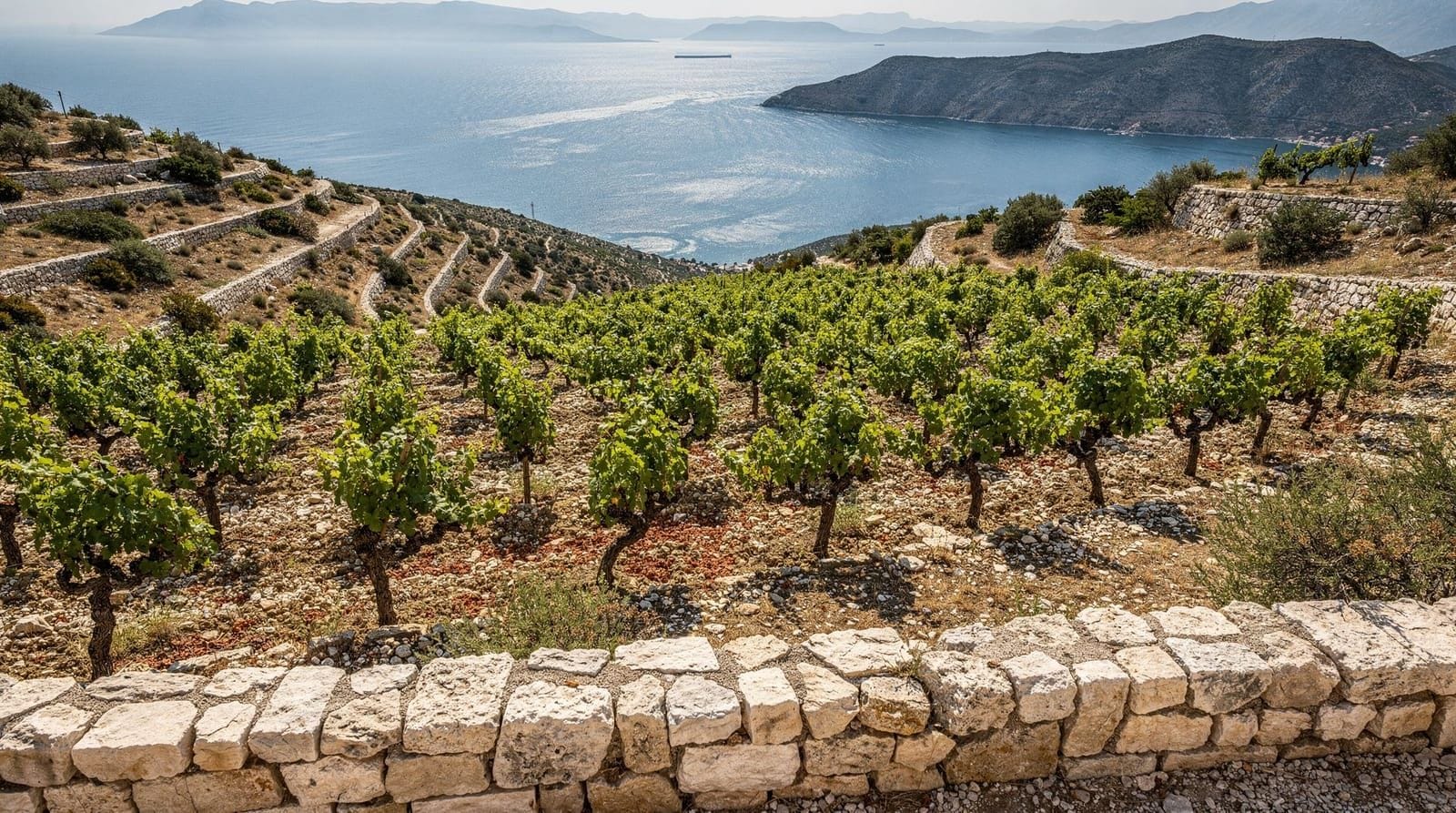
Dubrovnik: Deep red wine tour of Peljesac
Quick facts
- Best time
- Apr–Jun & Sep–Oct
- Days needed
- Half to 1 day
- Getting there
- Bus from Dubrovnik (1.5 hrs) or car via Pelješac Bridge
- Budget per day
- €40–€100
Ston and Mali Ston are twin towns at the base of the Pelješac Peninsula, linked by the world’s second-longest preserved medieval walls — 5.5 km of battlements, towers, and gates constructed from the 14th century by the Republic of Ragusa (Dubrovnik) to protect its salt pans, which were the economic foundation of the republic’s wealth. Today the salt pans still operate, the walls are walkable, and Mali Ston has become famous throughout Croatia for oysters so fresh and clean that locals eat them directly from the channel with a squeeze of lemon and nothing else.
Getting to and around Ston
By bus from Dubrovnik: Buses run 4–6 times daily (1.5 hours, €8–€12). The Pelješac Bridge (opened July 2022) makes the journey entirely overland for the first time, bypassing the Bosnia-Herzegovina coastal strip at Neum.
By car from Dubrovnik: 55 km via the Pelješac Bridge (D8 highway, toll-free on the bridge itself). Allow 50–60 minutes from Dubrovnik.
By organised tour: Most Pelješac wine tours from Dubrovnik include Ston as a starting point. The Dubrovnik–Korčula catamaran also calls at Ston (seasonal service).
Within Ston: The two towns are 1 km apart, connected by the lower section of the walls. Both are tiny; everything is walkable.
What to see and do in Ston
The medieval walls
The Great Wall of Ston (Veliki Stonton) stretches 5.5 km in a continuous circuit from Mali Ston to Ston over the hillside behind, with 40 towers and five bastions. Unlike some heritage sites, these walls are almost entirely intact and fully walkable — the full circuit takes 2–3 hours at a leisurely pace. The climb to the highest section offers panoramic views of the Pelješac Peninsula, the salt pans, and the surrounding karst landscape. Entry costs approximately €5.
Mali Ston oysters
Mali Ston Bay’s oysters are harvested from suspended lines in some of the cleanest seawater in the Adriatic and have been considered the finest in the eastern Mediterranean since Roman times. They’re served at the waterfront restaurants of Mali Ston — typically six for €10–€15, with local white wine (Grk or Pošip from Korčula). The oysters are small, intensely flavoured, and best eaten with nothing more than a drop of local lemon.
Konoba Bota Šare (Mali Ston): The most famous oyster restaurant on the Mali Ston waterfront; the phrasing “Bota Šare oysters” has become synonymous with quality throughout Croatia. Mussels are also farmed here and excellent.
Konoba Kapetanova Kuća: A strong second choice, with a wider menu including grilled fish and seafood pasta alongside the oysters.
Pelješac wine region
Pelješac produces some of Croatia’s most celebrated red wines: Plavac Mali (the parent grape of California’s Zinfandel), Postup, and Dingač. The peninsula’s south-facing slopes receive exceptional sun hours, and the ancient vineyards on the steep Dingač hillside (some of the most laborious farming in Europe — accessible only by sea in the past) produce wines of remarkable concentration.
A full-day Pelješac wine tour visits three or four estates with tastings, lunch, and context on Croatian wine cultureThe best wineries for visits include Matuško (Potomje), Miloš (Ponikve), and Grgić Vina (yes, the same Miljenko Grgić who founded Grgich Hills in Napa Valley before returning to his homeland).
This Pelješac winery day trip covers three estates with guided tastings and transport from DubrovnikThe Pelješac Peninsula in depth
Pelješac is 90 km long and rarely more than 7 km wide — a finger of limestone and vineyard extending northwest from the Dubrovnik hinterland, separated from the mainland by the narrow Neretva Delta lowlands and from Korčula Island by a 2 km strait at Orebić. It deserves more time than most visitors give it.
Orebić at the peninsula’s western tip is a pleasant small town with beaches, a Franciscan monastery, and the ferry to Korčula town (15 minutes, running approximately every 30–60 minutes). The town’s traditional naval captains’ houses reflect a prosperous maritime past; the promenade is lined with oleander and palm.
Dingač hillside: The most celebrated vineyard district in Croatia, the south-facing Dingač slopes above the sea are so steep that the original vineyards were accessible only by boat (a tunnel was eventually cut through the hillside for road access). The Matuško and Miloš wineries offer tastings; the drive along the top of the ridge gives some of the most dramatic views on the coast.
Janjina and Trstenik: Quiet villages in the Pelješac interior, off the tourist circuit entirely. Local olive groves, small agritourism operations, and the occasional family restaurant serving home-produced wine and lamb.
Ston’s salt industry
Ston’s salt pans (Stonske solane) are among the oldest in the Mediterranean — Roman records document salt production here in the 2nd century AD. The salt was the primary economic reason for Ragusa’s investment in Ston’s elaborate fortifications. Today the pans still operate and produce sea salt sold throughout Croatia. In summer, the salt crystallisation is visible from the walls; the salt pans form an unexpected and photogenic industrial-heritage landscape between the two towns.
A small Salt Museum (Muzej soli, open seasonally) tells the production history. The salt itself is available for purchase in the town shops and at several Dubrovnik food markets.
Where to stay in Ston
Ston is best visited as a day trip from Dubrovnik. For overnight stays:
Villa Koruna (Mali Ston): Comfortable mid-range hotel on the Mali Ston waterfront with a good restaurant; doubles from €90–€150. Family-run, excellent breakfast.
Private apartments: Several apartments available in Ston village itself, more affordable than Dubrovnik options. Staying overnight allows a dawn wall walk before day-tripper buses arrive — particularly recommended.
Where to eat in Ston
Konoba Bota Šare (Mali Ston): Oysters, mussels, grilled fish. The definitive Mali Ston dining experience.
Konoba Val (Ston): Good local cooking in Ston itself; roasted lamb, pasta with seafood, local Pelješac wine.
Salt Pans Café: Light meals and coffee near the Ston saltworks; a pleasant stop before or after the wall walk.
Restaurant Ostrea (Mali Ston): Second strong choice for oysters and shellfish, with a terrace over the bay.
Best time to visit Ston
April–June and September–October are ideal for combining the wall walk with wine tours: comfortable temperatures, vineyards in bloom or harvest, oysters at their best. July–August is hot for wall-walking (exposed limestone, little shade); the afternoon heat makes the climb uncomfortable. Oysters are available year-round but taste best in cooler months when algae blooms are minimal.
Ston town walk
Ston itself (distinct from Mali Ston 1 km east) is worth an hour’s exploration beyond the walls. The main square contains the Church of St Blaise (Crkva sv. Vlaha) — a 14th-century Gothic structure restored after the 1667 earthquake, with a nave of unusual elegance for a small town. The Bishop’s Palace adjacent reflects Ston’s importance as an ecclesiastical centre during the medieval period (it was briefly a bishop’s see before the diocesan reorganisation).
The salt pans between Ston and Mali Ston form a flat, reflective landscape that looks extraordinary at dawn and dusk when the pools mirror the sky. Flamingos are occasionally recorded here in late summer following incursions from the Adriatic coast; herons are permanent residents.
Walking the walls: The full circuit starts from either Ston or Mali Ston. The recommended direction is to start from Ston and walk clockwise (the steepest section at the beginning, when energy is highest). The highest tower on the southern ridge gives simultaneous views of the salt pans, Mali Ston Bay, and the Pelješac interior — an unusual panoramic combination.
Combining Ston with a Korčula day trip
Korčula island is accessible from Orebić (45 km from Ston) by ferry (15 minutes). A productive full day from Dubrovnik covers: Ston and the walls (morning) → Pelješac drive and winery stop (lunch) → Orebić ferry to Korčula town (afternoon) → ferry back to Orebić → return to Dubrovnik via Pelješac Bridge (evening). This is a long day (departure 8 am, return 9 pm) but covers three distinct heritage experiences: medieval fortifications, wine culture, and Venetian island town.
Day trips from Ston
Ston pairs naturally with a drive the length of the Pelješac Peninsula to Orebić (45 km), a pleasant ferry town facing Korčula across a 2 km strait. Korčula town is 15 minutes by ferry from Orebić — a remarkable medieval island town well worth combining with a Pelješac day. Dubrovnik is 55 km south.
Ston’s strategic importance in history
Ston was the most important defensive investment of the Republic of Ragusa outside Dubrovnik itself. The decision to build the walls (begun 1334, completed over two centuries) reflects the economic logic of the salt pans: salt was a strategic resource in medieval Europe, essential for food preservation, and the Ston pans produced enough to supply the entire Dalmatian coast and hinterland. Controlling Ston meant controlling a significant percentage of regional food security.
The walls were designed by Italian architect Michelozzo di Bartolomeo (the same architect who built the Palazzo Medici in Florence), an indication of how seriously Ragusa took the project. The fortification system incorporated the natural topography: the walls rise over the hill between the two towns, using the terrain to make a smaller garrison viable.
Sieges and survival: The walls were never successfully breached. The Republic of Ragusa was willing to pay tribute or negotiate rather than suffer the disruption to salt trade that a prolonged siege would cause. The 1667 earthquake, which devastated Dubrovnik, caused significant damage to the Ston walls; the subsequent repairs are visible in the different stonework styles at various points along the circuit.
Croatian wine: Pelješac in detail
The Pelješac wine road is one of the great undiscovered wine tourism routes in Europe — partly because it requires a car (or organised tour), partly because Croatian wine is only beginning to build the international reputation it deserves, and partly because the producers are often small family operations without the marketing infrastructure of better-known regions.
Plavac Mali: The indigenous red grape of the Pelješac peninsula is genetically identified as the parent of both California’s Zinfandel and Italy’s Primitivo — a discovery made via DNA fingerprinting in the 1990s that transformed the standing of Croatian viticulture internationally. The Pelješac version differs from both descendants: higher in alcohol (typically 14–16%), more tannic, with pronounced mineral character from the limestone soils and concentrated fruit from the intense sun on south-facing slopes.
Dingač: The appellation covers the steepest vineyards on the south-facing Pelješac coast, accessible through a road tunnel cut through the mountain in 1973. The wines from Dingač are the most concentrated and longest-lived on the peninsula; the best age well for 10–15 years. Postup is the adjacent appellation, slightly lighter in style.
The wine estates to visit:
- Matuško (Potomje village): The most celebrated family estate on the peninsula; their Dingač is internationally recognised. Tastings by appointment.
- Miloš (Ponikve): Organic viticulture, careful winemaking, the most precise and mineral Plavac Mali on the peninsula.
- Grgić Vina (Trstenik): Founded by Miljenko Grgić, who made his reputation at Chateau Montelena in California before returning to his home peninsula. The napa-trained winemaking shows in the polished Plavac Mali.
Oyster farming in Mali Ston Bay
The Mali Ston oyster business is a family industry with deep local roots. The bay’s geography — a sheltered inlet with strong tidal exchange from the open Adriatic and freshwater input from the Neretva Delta — creates water conditions ideal for bivalve cultivation. Oysters and mussels are grown on long lines suspended from floating platforms; a single oyster takes 2–3 years to reach market size.
The cultivation method (longline suspension rather than bottom-growing) keeps the oysters permanently in the water column, where food supply is most abundant. The result is an oyster that is well-fed, clean, and fast-growing by the standards of other Adriatic locations.
Visiting the oyster beds: Several Mali Ston restaurants offer boat trips to the cultivation area (typically 30–45 minutes, around €20 including oysters eaten on the boat). This is a pleasantly unusual experience — pulling an oyster from the line and eating it within minutes is a form of farm-to-table immediacy that few food experiences can match.
Practical Ston guide
Wall entry fees (2026 approximate): €5 per person for the wall walk; the circuit includes access to the towers and battlements. Purchase tickets at the Ston gate entrance.
Getting there independently: Bus from Dubrovnik bus station (Gruž) to Ston runs 4–6 times daily (1.5 hours, €8). The last return bus from Ston is typically late afternoon; check current schedules at the Dubrovnik bus station or online. Self-driving takes approximately 55 minutes from Dubrovnik via the D8 highway and Pelješac Bridge.
Combining with Mali Ston: Ston and Mali Ston are 1 km apart; the connecting walk follows the lower section of the walls. A full visit covering walls, salt pans, oyster lunch in Mali Ston, and Pelješac wine stop takes 5–6 hours from Dubrovnik — a comfortable day trip if departing by 9 am.
Parking: Free parking available in the Ston town car park, 3 minutes from the wall entrance.
Top experiences
Bookable activities with verified prices and instant confirmation on GetYourGuide.
Top-rated experiences in Ston travel guide
Best-rated activities across GetYourGuide and Viator.

Blue cave, Mamma Mia and Hvar, 5 islands speedboat tour
- Viator

Blue Cave and Hvar Tour - 5 Islands Tour from Split and Trogir
- Viator

Blue cave, Mama Mia and Hvar, 5 Island Speedboat Tour from Trogir
- Viator

From Split: Plitvice Lakes National Park Guided Tour
- Viator

Krka Waterfalls Day Tour with Boat Ride from Split and Trogir
- Viator

Plitvice Lakes National Park Guided Day Tour from Split
- Viator