Drone rules in Croatia: what you can and cannot fly legally
Can I fly a drone in Croatia?
Yes, but with significant restrictions. Croatia follows EU drone regulations (EASA categories A1/A2/A3). National parks ban drones entirely. Dubrovnik Old Town is a no-fly zone. Populated areas require category registration and distance-from-person rules. Most tourist spots where you would want aerial footage are either prohibited or restricted. Register your drone with CCAA (Croatian Civil Aviation Agency) before travelling.
Croatia is one of Europe’s most spectacular countries for aerial photography — but it is also one where drone regulations are both genuinely restrictive and actively enforced. The combination of EU aviation law, national park prohibitions and urban no-fly zones eliminates many of the locations a visitor would naturally want to film from above.
This guide explains the current regulations accurately, without softening the restrictions. If you are planning to bring a drone to Croatia, understanding these rules before you travel will save you from expensive fines or confiscated equipment.
| Legal to fly | Yes, EASA A1/A2/A3 categories apply |
| National parks | Banned outright (Plitvice, Krka, Kornati, Mljet and others) |
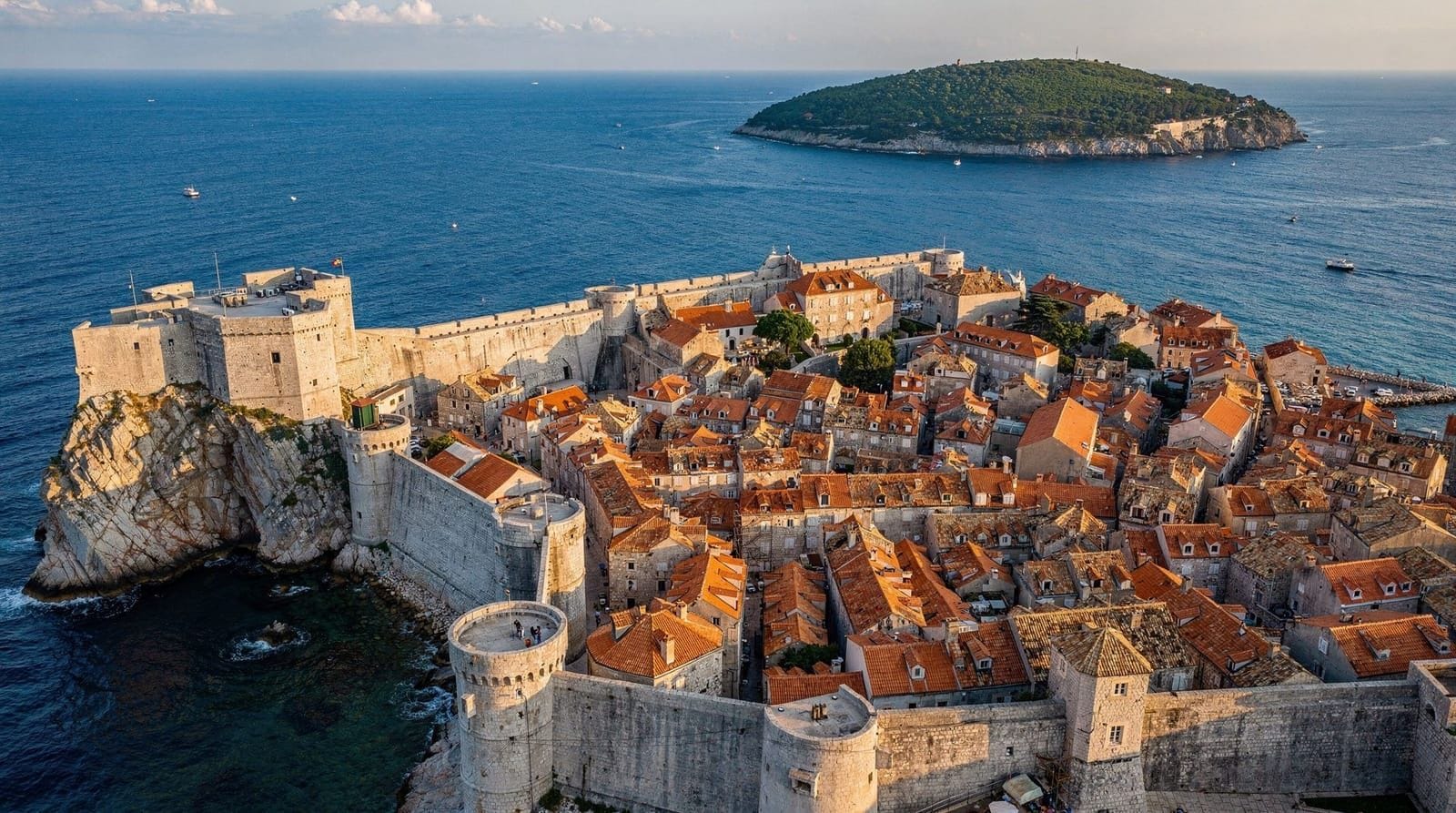
| Dubrovnik Old Town | No-fly zone, heritage + populated area |
| Registration | Required for drones over 250g, before you travel |
| Fines | Around several hundred to several thousand euros |
The EU framework: EASA categories
Croatia follows European Union Aviation Safety Agency (EASA) drone regulations, which came into full effect in January 2021 and apply across all EU member states. The regulations divide drone operations into three Open categories:
Category A1 — the practical minimum
A1 covers drones under 250g (with no camera, or cameras meeting specific low-kinetic-energy standards). The DJI Mini 2 SE and DJI Mini 3 with the camera classified as less than 250g fall in this category when flown in the right configurations.
A1 drones can fly over uninvolved people but not over assemblies. They require no registration if under 250g and meet specific safety criteria. This is the most permissive category.
Important caveat: even A1 drones cannot fly in prohibited areas (national parks, no-fly zones, restricted airspace). The category reduces operational restrictions; it does not override area prohibitions.
Category A2 — most consumer drones
Drones between 250g and 2kg (or with cameras not meeting A1 criteria) fall in A2. This includes the DJI Mini 4 Pro (with camera, classified above 250g), DJI Air 3, Autel EVO Nano+ and most popular travel drones.
A2 requirements:
- Operator registration in your home country (EU) or with CCAA (Croatia, if you are Croatian-based)
- Operator ID displayed on the drone
- Minimum 30 metres horizontal distance from uninvolved people (or 5 metres in low-speed mode with specific certification)
- Do not fly over crowds or assemblies
- Maximum 120 metres altitude above ground level
- Do not fly within restricted zones
Registration: EU operators register with their own national CAA (UK operators register with CAA UK, which is no longer EU-aligned but a similar system). Your registration is valid throughout the EU including Croatia. Bring your registration certificate and ensure your operator ID is affixed to the drone.
Category A3 — higher-risk operations
Heavier drones or operations not meeting A1/A2 criteria. Requires remote pilot competency certificates, significant distance from residential, commercial and industrial areas, and strict operational conditions. This category applies to commercial filmmakers and professional operators rather than recreational visitors.
No-fly zones in Croatia
National parks — complete ban
All Croatian national parks prohibit drone flights without specific advance permits:
- Plitvice Lakes National Park
- Krka National Park
- Kornati National Park
- Paklenica National Park
- Mljet National Park
- Brijuni National Park
- Risnjak National Park
- North Velebit National Park
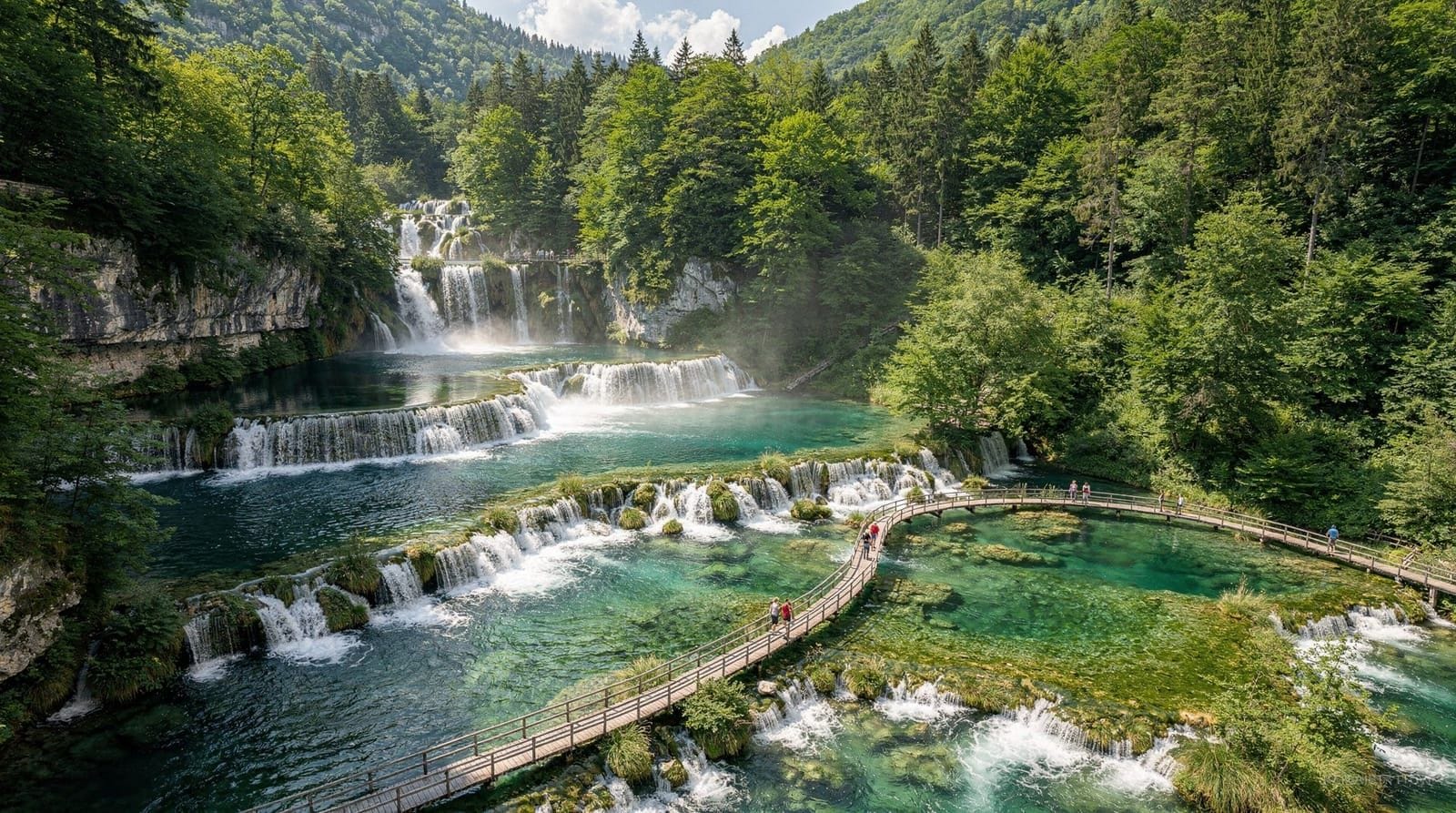
The ban applies within the entire protected area, not just the core visiting zones. Flying a drone over Plitvice Lakes — even from a position outside the park boundary with the drone crossing above the park — violates the prohibition.
Permits: theoretically available through the park authority (Javna ustanova) for each park. In practice, permits are issued for commercial filming with advance applications, detailed flight plans and payment of fees. Recreational visitors are not granted permits. Do not plan on getting a permit for a recreational flight.
Urban no-fly zones
Dubrovnik’s Old Town and surrounding area, Split city centre, Šibenik’s historic area and other populated urban zones are restricted or prohibited for drone operations under both the populated-area rules of EASA A2/A3 categories and in some cases additional local restrictions.
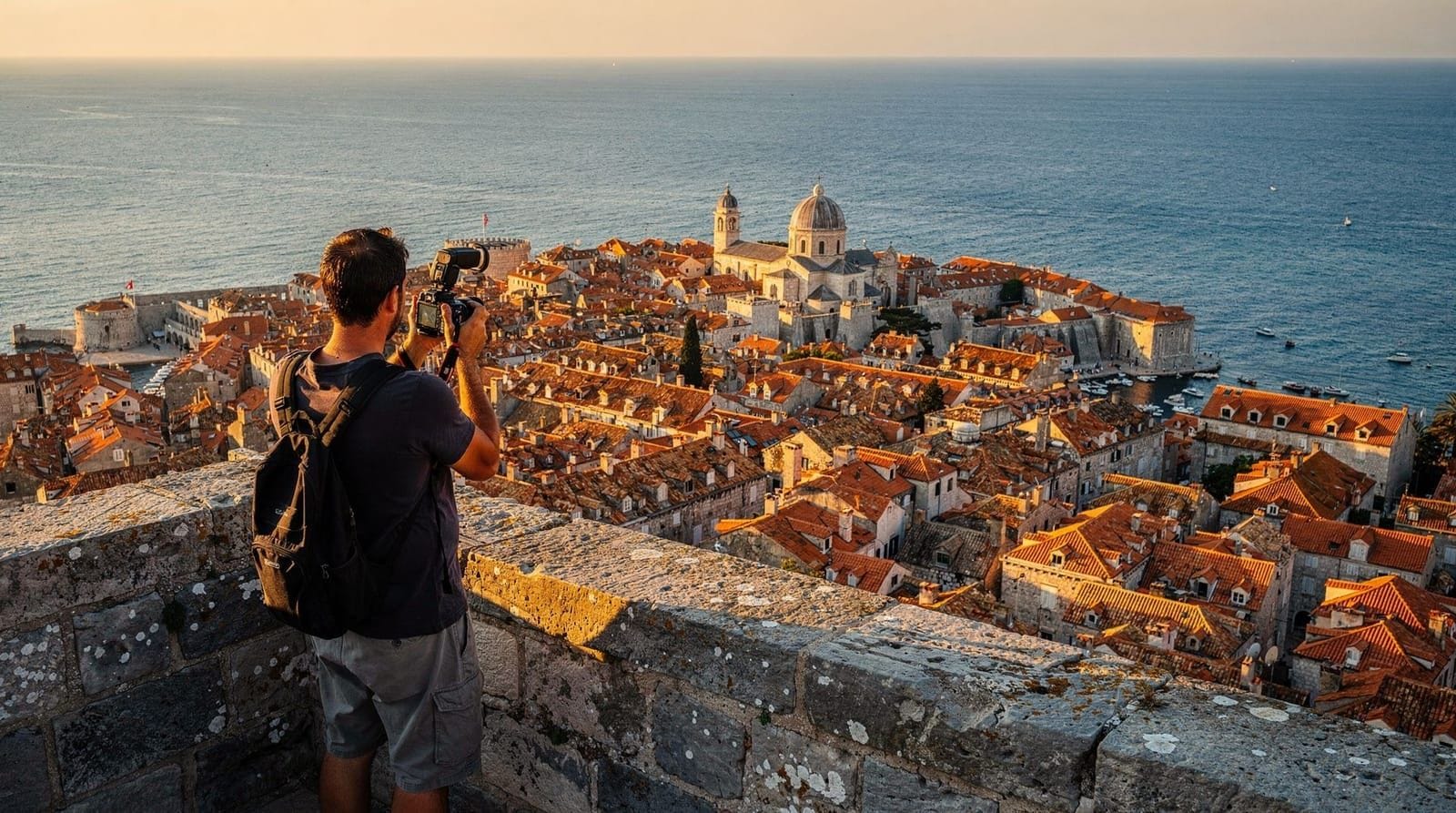
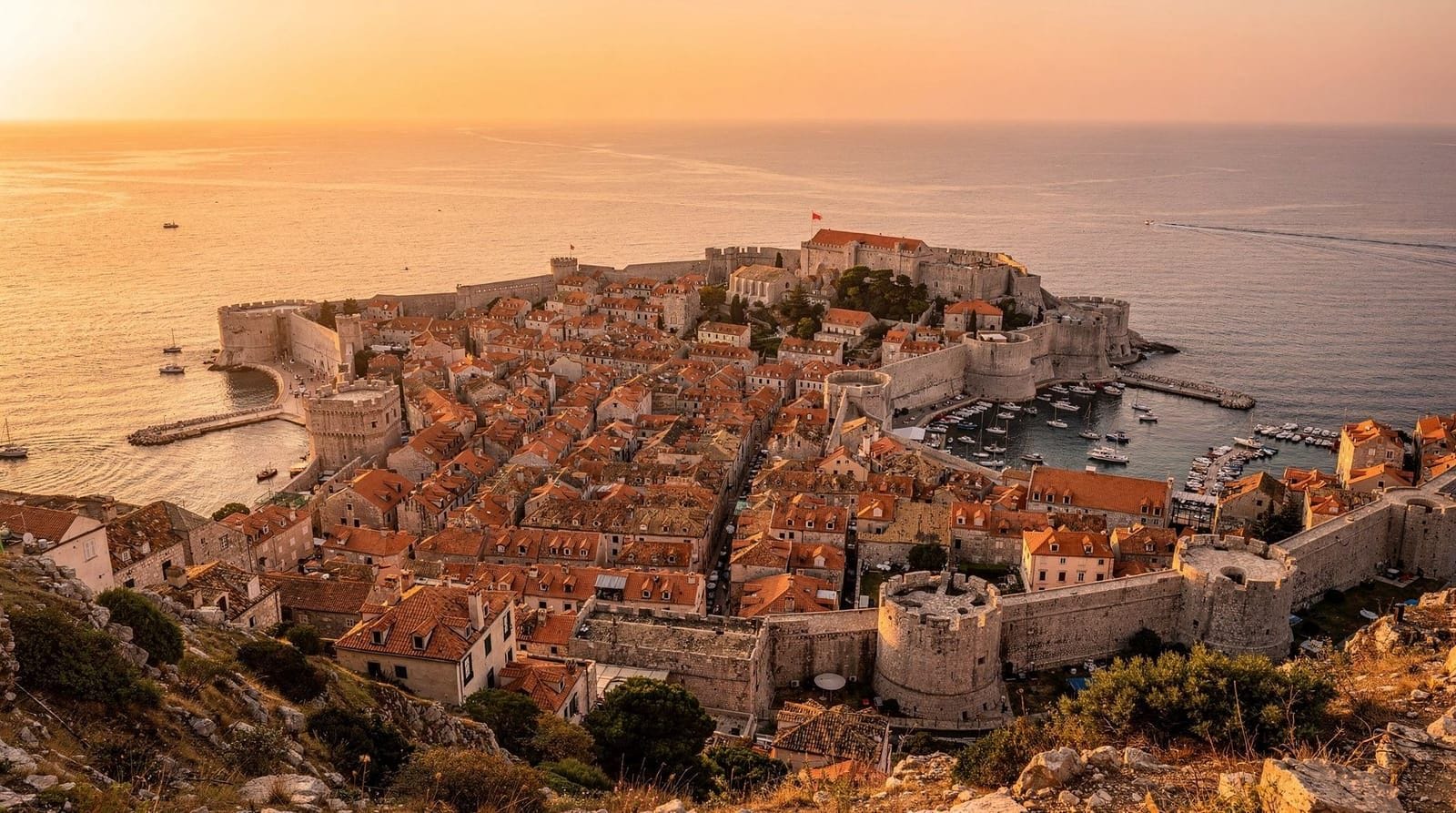
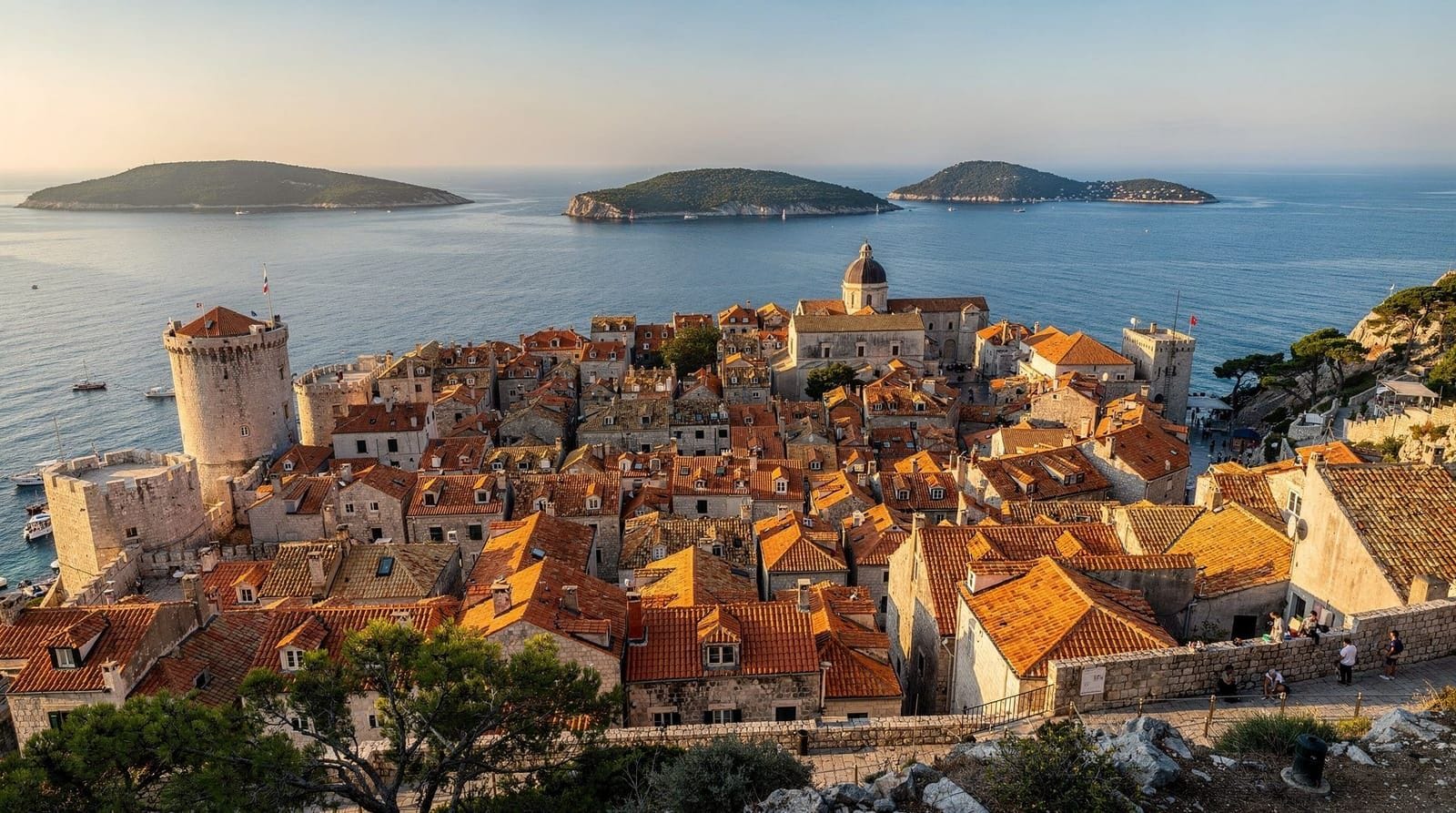
Dubrovnik specifically: the Old Town is designated a heritage protection area and is simultaneously in a populated zone with high pedestrian density. Recreational drone flights are prohibited. This is not a matter of grey interpretation — it is a clear prohibition under current rules.
Practical implication: the aerial photographs of Dubrovnik’s Old Town that you see widely published online were taken either by commercial operators with specific permits, before current regulations came into force (regulations tightened significantly in 2021), or by operators who flew illegally and got lucky.
Airport proximity zones
Dubrovnik Airport (DBV), Split Airport (SPU), Zadar Airport (ZAD), Zagreb Airport (ZAG) and Pula Airport (PUY) all have restricted airspace extending outward from the airport. The standard restricted zones are visible on the CCAA aeronautical chart (available at ccaa.hr) and in apps such as AirMap, DJI Fly’s airspace overlay or OpenSky.
Do not fly near airports without checking the specific restricted zones and, where required, requesting authorisation through the relevant systems.
Coastal military zones
Croatia’s Adriatic coastline has several military-designated zones inherited from the Yugoslav era and maintained under Croatian defence law. These zones appear on the aeronautical charts and are absolute prohibited areas. They are not always obviously visible from the ground.
How to check before flying
CCAA aeronautical chart
The Croatian Civil Aviation Agency (CCAA) maintains the authoritative aeronautical chart for Croatia, available at ccaa.hr. This map shows controlled airspace, restricted zones, military areas and other relevant designations.
Drone apps
Several apps overlay aeronautical information:
- DJI Fly: built-in airspace awareness (but note it reflects DJI’s database, which may not capture all local Croatian restrictions)
- AirMap: more comprehensive coverage including Croatian national park zones
- Altitude Angel: professional-grade airspace data used by many commercial operators
Use at least two sources when assessing whether a location is clear. Apps are useful but not authoritative — the CCAA chart is the definitive reference.
Local inquiry
For any location where you are uncertain, ask locally. The park authority (for nature areas), the local municipality or the national tourist board regional office can sometimes advise on specific restrictions. This is particularly useful for nature parks and reserves that may not appear fully in app databases.
Where drone flying is realistically feasible
After accounting for national park bans, urban no-fly zones and populated beach restrictions, the genuinely accessible locations for recreational drone flying in Croatia are:
Agricultural and rural inland areas: away from populated zones, open fields and rural landscapes throughout the interior offer legal flying. The Istrian interior — vineyards, olive groves, hilltop villages at distance — offers some photographic potential, though villages themselves may be too close for A2 operational distances.
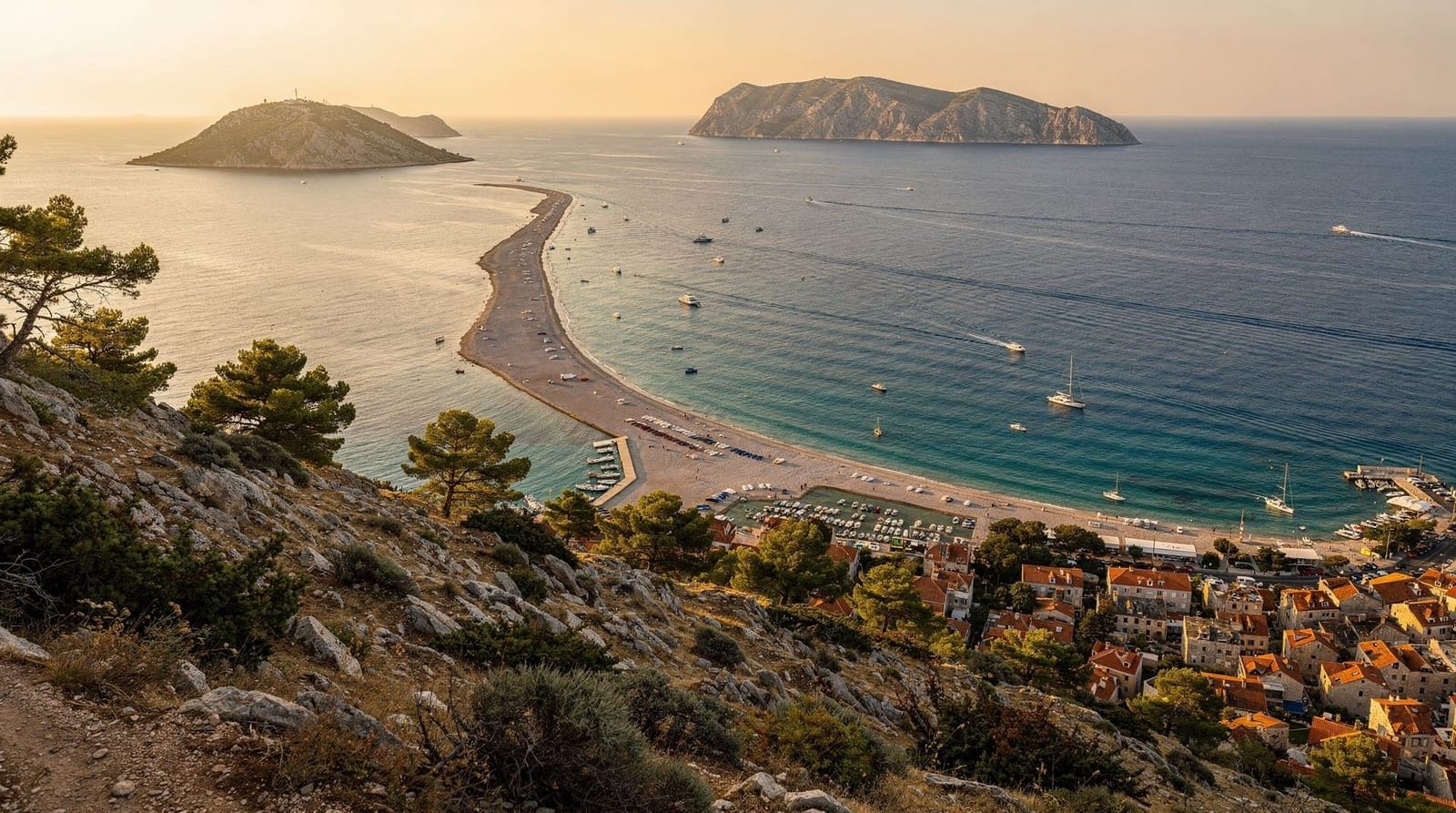
Coastal cliffs and headlands away from crowds: rocky coastal headlands that are not popular swimming beaches, particularly outside peak season, may allow legal flying if not within other restricted zones. Check each location individually.
Open sea approaches from uncrowded launch points: some operators use inflatable boats to launch drones from the sea, photographing the coastline from marine positions. This is a complex operational scenario but avoids some of the land-based restrictions.
Commercially permitted locations: a small number of commercial photography shoots have obtained specific permits for locations that would otherwise be restricted. If you are doing commercial work, work through a Croatian production company or film commissioner to navigate the permitting process.
The honest assessment for visitors
Most visitors who bring a drone to Croatia expecting to photograph its famous locations will be significantly disappointed. The locations that produce the most compelling aerial images — Dubrovnik’s Old Town, Plitvice Lakes’ turquoise cascades, the Kornati archipelago — are precisely the locations that are most restricted.
The aerial footage of Croatia that circulates online and in travel publications is overwhelmingly commercial footage shot by licensed operators with specific permits, historical footage from before current regulations, or footage shot in violation of the rules.
If aerial photography is a primary photography goal, Croatia’s current regulatory environment means you should plan for ground-level photography as your primary method, with drones as a secondary tool for the specific rural or coastal locations where flying is genuinely feasible.
For excellent ground-level photography across Croatia, see the Croatia photo spots guide and golden hour Dubrovnik guide — both of which cover the best positions and timing for photography that does not require aerial equipment.
Registration checklist before travelling to Croatia
- Register as a drone operator with your home country’s national aviation authority
- Affix your operator ID to the drone visibly
- Download CCAA aeronautical chart and an airspace app (AirMap or Altitude Angel)
- Research specific locations before travelling — do not assume you can fly at any tourist spot
- Understand the A1/A2/A3 category of your specific drone
- Carry your registration documentation at all times when operating
- Have third-party liability insurance (required under EU regulations for drones above 250g or classified higher than A1)
Where to point a camera instead
If your itinerary already includes Dubrovnik or Plitvice Lakes, plan your photography around ground-level positions rather than assuming you’ll supplement with drone footage. Dubrovnik’s city walls do the aerial job legally — from the ramparts you get elevated roofscape views that no drone permit would improve on, and Mount Srđ’s cable car gives a genuine bird’s-eye panorama without touching the no-fly zone below. At Plitvice, the boardwalks and viewpoints on the upper and lower lake trails are designed specifically to frame the cascades; see the Plitvice day trip guide for the best vantage points and timing.
For a broader shot list across the country, Croatia’s best photo spots and the Instagram-spot roundup both focus entirely on ground-level and handheld compositions, so nothing in either guide depends on a drone you may not legally be able to fly. If you’re building a full trip around photography, start with the Croatia travel guide for overall routing, then layer the specific photo guides on top.
Should you bring a drone to Croatia at all?
For most leisure travellers, the honest answer is no. The weight, the charging logistics, the registration paperwork and the real risk of a fine outweigh the limited number of locations where flying is both legal and rewarding. A drone earns its luggage space only if you have specific rural, agricultural or coastal-headland locations already planned and verified against the CCAA chart — not if the plan is “fly it wherever looks good.” If aerial footage matters to your trip, hiring a licensed local operator with existing permits for a specific shoot is more reliable than trying to legally self-fly the iconic spots.
Frequently asked questions about Drone rules in Croatia
Do I need to register my drone before flying in Croatia?
Yes, if your drone weighs more than 250g or has a camera. EU drone operators must register with their home country's CAA (or with the Croatian Civil Aviation Agency if Croatian-based). Your registration and operator ID must be displayed on the drone and presented on request.Are drones allowed in Plitvice Lakes National Park?
No. All Croatian national parks — including Plitvice Lakes, Krka, Kornati, Paklenica, Mljet, Brijuni and Risnjak — prohibit drone flights without specific written permits from the park authority. Obtaining a permit requires advance application and is rarely granted for commercial use; essentially unavailable for recreational visitors.Can I fly my drone over Dubrovnik's Old Town?
No. Dubrovnik's Old Town is within a densely populated urban zone and has additional restrictions as a heritage area. Recreational drone flights are not permitted over the Old Town. Flying there risks a significant fine and confiscation of equipment.What category of drone do EU rules apply to in Croatia?
Croatia follows EASA (European Union Aviation Safety Agency) regulations. Drones are categorised A1 (under 250g, minimal restrictions), A2 (250g–2kg, distance from people required, registration needed), and A3 (heavier or in high-risk categories, restricted areas only). Most consumer drones (DJI Mini 4 Pro, DJI Air 3) fall in A2 or higher and require registration and specific operational limits.Is beach flying allowed in Croatia?
Populated beaches in summer are considered populated areas and require maintaining minimum distance from uninvolved people (30 metres minimum in category A2, 150 metres in standard A3 operations). In practice, most Croatian beaches in season are far too crowded for safe legal drone operations. Deserted beaches in non-peak season may be technically permissible but check local restrictions.What is the fine for illegal drone flying in Croatia?
Fines for violating drone regulations in Croatia can range from several hundred to several thousand euros, plus potential drone confiscation. The penalties are applied under Croatian aviation law aligned with EU regulations. Enforcement has increased with tourism growth.Where can I legally and safely fly a drone in Croatia?
Open agricultural land, uncrowded rural areas away from populated zones, designated airspace not within restricted areas, and specific spots where local authorities have not enacted additional restrictions. Always check the SORA map (Croatian aeronautical chart) and the CCAA drone map before flying anywhere.
Top experiences
Best-rated activities across GetYourGuide and Viator.

Blue cave, Mamma Mia and Hvar, 5 islands speedboat tour
- Viator

Blue Cave and Hvar Tour - 5 Islands Tour from Split and Trogir
- Viator

Blue cave, Mama Mia and Hvar, 5 Island Speedboat Tour from Trogir
- Viator

From Split: Plitvice Lakes National Park Guided Tour
- Viator

Krka Waterfalls Day Tour with Boat Ride from Split and Trogir
- Viator

Plitvice Lakes National Park Guided Day Tour from Split
- Viator